Tag Archives: John

Kindness Not Condemnation

Kindness, Not Condemnation (CaD Rom 2) Wayfarer

Or do you show contempt for the riches of his kindness, forbearance and patience, not realizing that God’s kindness is intended to lead you to repentance?
Romans 2:4 (NIV)

Every year our town has a three-day Tulip Festival that draws giant crowds from all over the world. For the past several years, a street preacher has set up his microphone on a corner right in the middle of the festivities and spews hellfire, damnation, and condemnation to all of us sinners. While I honor everyone’s freedom of speech, it’s really annoying on multiple levels. Most of all, it’s annoying because it is contradictory to the example Jesus set and His teaching. It misrepresents what Jesus’ message is all about.

In yesterday’s chapter, I pinpointed the “one thing” that Paul wants to communicate to the Roman believers in his letter. He said he wasn’t ashamed of Jesus’ Message because it was the power of God to save all people, both Jew and Gentile. The early Jesus Movement was a cross-section of those who had been Jews their whole lives and those who had never been Jews (a.k.a. Gentiles). This created significant rifts within local gatherings of believers. Much of this letter is intended to address those rifts.

One of the most predominant rifts was the fact that the Jews felt superior because they were “God’s people” who had been given “God’s Law” through Moses. Despite the fact that the Law commanded the Jews to love their neighbors and treat them as they would want to be treated the Jews of this period had been culturally raised to see themselves as superior and all non-Jews as inferior.

To address this, Paul begins by laying down the foundational understanding that Jews and Gentiles, indeed all human beings, are equally sinners. He then points out that there are Gentiles who, despite not having the Law of Moses, live as if they did. Likewise, the Jews who boast about having the Law of Moses continue to sin and break those laws. Therefore, no one has the standing to condemn anyone else. In fact, self-righteous condemnation of others is showing contempt for God’s love:

Or do you show contempt for the riches of his kindness, forbearance and patience, not realizing that God’s kindness is intended to lead you to repentance?

When James and John wanted to call down hellfire from heaven and burn up a town that had not welcomed them, how did Jesus respond? Did He condemn the town and burn them up? No, He condemned James and John for suggesting such a thing.

That same John would later write his own version of Jesus’ story in which he points out: “For God did not send his Son into the world to condemn the world, but to save the world through him.”

So, in the quiet this morning I remind myself that the behavioral outcomes of being one with God’s Spirit include love, kindness, gentleness, and patience. Nowhere on the list of those behavioral outcomes (Gal 5:22-23) will you find judgment, condemnation, threats, or warnings. In fact, what Paul is pointing out so clearly is that the way to help lead a sinner to repentance is by being extraordinarily kind to them. That’s the very thing Jesus prescribed when He said that if someone steals your coat, give them your shirt as well. If someone asks you to walk a mile for them, walk two miles. It’s kindness that leads a sinner to repentance.

The street preachers at Tulip Time are misled and mistaken. But my response toward them is no different than with any other sinner. I am called to be kind, not condemning.

If you know anyone who might be encouraged by today’s post, please share.

Black Sheep Family

Black Sheep Family (CaD 1 Chr 5) Wayfarer

…and though Judah was the strongest of his brothers and a ruler came from him, the rights of the firstborn belonged to Joseph.
1 Chronicles 5:2 (NIV)

Along my life journey, I had a friend enter my story unexpectedly. This person may take the prize for being the most tragic individual I’ve personally met on my earthly journey. What are you supposed to do as a teenager when you borrow your dad’s car for a date but have to clean up the blood your father left in the back seat and the trunk before picking up your date? Talk about being haunted by your past. This was a heartbreaking story of a child who dealt with more than any child should have to deal with in life. It was a life that ended just as tragically.

In today’s chapter, the Chronicler shares the genealogy of the three tribes who settled east of the Jordan River. These tribes would be part of the northern kingdom of Israel that broke away from Judah and refused to recognize the lineage of King David as monarch. They were all swept away into exile by the Assyrian Empire where they remained at the time of the Chronicler’s writing.

Two prevailing thoughts come to me as I meditate on today’s chapter. First, the Chronicler once again makes it clear that he is primarily interested in the tribe of Judah, from which the Dynastic line of David hails. He makes this evident. Having established this, I find it interesting that he doesn’t shy away from presenting the genealogy of the tribes he would likely consider “black sheep.”

The tribes the Chronicler lists in today’s chapter were the rebels who shunned the tribe of Judah and David’s line. Reuben, in particular, was the dishonored firstborn who lost his paternal blessing. Unlike the Chronicler and his ancestors from Judah, who returned from exile, these tribes remained scattered across the old Assyrian empire.

But they are still family. They are still part of the story.

As I’ve explored my family’s stories on both paternal and maternal sides, I’ve discovered rifts and feuds. Mind you, I discovered nothing outside of the normal conflicts and scandals that are part of the mess that comes with being part of any family. One of the hardest things about family is that it’s not something we get to choose. My mind wanders to my friend cleaning up the blood their father left in the backseat. I can’t imagine.

As a disciple of Jesus, I cannot help but consider Jesus’ thoughts on family which are somewhat conflicting. His own flesh-and-blood mother and siblings once attempted to take control believing Jesus to have lost His mind (Mark 3:21), and Jesus responds by providing an expanded view of family. “Who are my mother and brothers?” Jesus asked before gesturing to all of His followers and declaring them family. Jesus would go on to acknowledge that many who choose to follow Him would be required to leave flesh-and-blood family behind, though he promised they would find far more family ahead than they left behind.

In the quiet this morning, I find my head and my heart holding the tension between honoring, loving, and serving my flesh-and-blood family while acknowledging that I have friends whom I consider family. It’s easy to fall into an either-or, binary mentality on either side of the issue. I find Jesus’ example to be “both-and.” Yes, He seemed to diminish His family when they thought He was out of His mind, but He also used his dying breath to ensure that a spiritual “brother” (John) would care for His physical mother, Mary. This, despite the fact that Jesus had multiple flesh-and-blood younger brothers who were socially responsible for caring for her.

Then, of course, there is the larger reality of genetics which proves that we all came from the same woman. In many ways, Jesus’ teaching is simply pointing to a much larger truth that may only be seen with perfect clarity in eternity. We humans are all one family, whether we are willing to acknowledge it or not. I’m glad that the Chronicler acknowledged his black sheep family members. I find a spiritual lesson in his honesty.

If you know anyone who might be encouraged by today’s post, please share.

Compelled

Compelled (CaD Acts 4) Wayfarer

“As for us, we cannot help speaking about what we have seen and heard.”
Acts 4:20 (NIV)

I gave a message yesterday to our local gathering of Jesus’ followers. As I got up to deliver the message I realized that the page with the message I had prepared and all my notes was still back in my home office sitting on my desk. Believe it or not, I didn’t freak out. The truth is that I have forgotten my message at home before. I just started speaking. The words just came to me. It’s always been this way.

In today’s chapter, Peter and John are arrested and thrown into the Temple jail overnight. The next morning they are brought before the Temple rulers. Luke is careful to document the names of the leaders who were there because for his contemporary readers, it was a who’s who of the Jewish authorities.

Annas was like the godfather of the Temple and its lucrative financial operations. The Temple wasn’t just a religious system. It was a business, which is why Jesus got righteously angry, turned over the tables of the moneychangers, and declared that Annas and his mob had turned the Temple “into a den of thieves.” Annas had been the high priest, but the Romans deposed him. So, Annas did what the head of all mob families do. He made sure a string of his sons and sons-in-law held the office of high priest, but everyone knew that it was Annas pulling the strings. On the night Jesus was arrested, the first place they took Him was Annas’ house.

Luke also takes care to note that the Temple leaders who arrested Peter and John were from a religious Jewish sect known as Sadducees. The Sadducees didn’t believe in resurrection or an afterlife, and it was Peter and John’s claims that Jesus was resurrected and they had witnessed it that made the Temple leaders want to shut them up, and fast.

The following day, when Peter and John are brought before the same men who conspired to have Jesus crucified, the two former fishermen from Galilee boldly and articulately repeat their message. Jesus, whom they had killed a few weeks before, had been risen from the dead. The religious leaders were in a bind. Peter and John had clearly performed a miracle, healing a well-known, local man that everyone knew had been lame his whole life. Peter and John were unschooled blue-collar deplorables from Galilee, but when they opened their mouths, they spoke with boldness and authority, reciting scriptures like they’d been to the finest rabbinical schools. So, they did the only thing they could do. They tried to bully Peter and John with threats and commanded them to keep their mouths shut.

Peter and John respond by making it clear that they can’t shut up. What they heard, saw, and experienced with Jesus compels them to speak. That’s just what they’re going to do.

As I read Peter and John’s message in the previous chapter, and their defense in today’s chapter, I could not help but remember Jesus’ words to them: “When you are brought before synagogues, rulers and authorities, do not worry about how you will defend yourselves or what you will say, for the Holy Spirit will teach you at that time what you should say.”

In the quiet this morning, I think back to when I was a young teenager and I surrendered my life to Jesus. In an experience I can’t ever forget, God told me I would proclaim His Word. From that moment on, I found that I could just start talking about Jesus, and the words would come. I have multiple people have asked me how I write these posts every weekday. It’s the same way. Some mornings I stare at a blank screen with no earthly idea what to write. I start typing, and the words come. And, what Peter and John said to the bullies who tried to shut them up in today’s chapter resonates with me. I can’t stop. I’m compelled by what I have seen, heard, and experienced following Jesus.

If you know anyone who might be encouraged by today’s post, please share.

Third Place Witness

Third Place Witness (CaD Acts 3) Wayfarer

“You killed the author of life, but God raised him from the dead. We are witnesses of this.”

“Now, fellow Israelites, I know that you acted in ignorance, as did your leaders.”

“Repent, then, and turn to God, so that your sins may be wiped out, that times of refreshing may come from the Lord…”
Acts 3:15, 17, 19 (NIV)

About the time I was in college, I remember the coffee shop phenomenon began to explode. It was my grandfather who first introduced me to a daily cup o’ Joe. I was in high school and I spent that week drinking Taster’s Choice instant. Coffee was the pot of Folgers my parents made, or else it was whatever they were brewing at the greasy spoon or the 7-11.

Suddenly, there were specialty coffee shops popping up everywhere offering different varieties and flavors of coffee beans made in special ways. Freshly roasted coffee beans from exotic places were freshly roasted and brewed for you in comfortable and intimate spaces where you wanted to hang out and enjoy your java.

In those days, everyone was talking about “a third place.” You had your home, and you had your workplace, but everyone needed “a third place” to hang out, to meet with others, and to enjoy being. Coffee shops became popular third places to be and they remain so to this day. Even in our small town here in Iowa, you can choose from three different coffee shops within a few yards of one another.

In today’s chapter, it is still the early days of the Jesus Movement. Before His ascension, Jesus told His disciples, “But you will receive power when the Holy Spirit comes on you; and you will be my witnesses in Jerusalem, and in all Judea and Samaria, and to the ends of the earth.”

Jesus told them to start in Jerusalem. There, on the day of Pentecost and the beginning of the Festival of Weeks, the outpouring of the Holy Spirit happened. Jewish pilgrims from all over the known world had come to Jerusalem for the festival. When the Holy Spirit poured into the disciples, they began proclaiming Jesus’ message in all of the various native tongues represented in the crowd. About three thousand people believed in Jesus and were baptized that day. And, most of those three thousand would go back to their native lands throughout the known world when the festival was over and tell others about Jesus, His message, and the amazing things they’d experienced.

Talk about effective word-of-mouth marketing.

For Peter and the core group of disciples. They are still in Jerusalem, and each day they go to the Temple. The Temple wasn’t just a building. It was an entire complex with courtyards and areas where people gathered. The Temple was their third place. It’s where everyone went, not only to worship and follow prescribed offerings and sacrifices, but to hang out, to converse, and to socialize. It is where Jesus hung out when He was in Jerusalem. It’s where everyone hung out when they were in Jerusalem. And so, it is where Peter and John go.

When I go to a coffee shop uptown or to the pub, I typically always run into people I know. There are usual crowds that I can make a safe bet will be there. Friends and acquaintances will pop in for a pour-over or a pint and stop to chat.

The Temple would have been the same way. In today’s chapter, Peter and John heal a beggar at one of the Temple gates. It became a sensation because everyone knew that beggar. He was there begging every day at the same place. He was a regular and all the regulars passed by him. In the Temple courts, Peter and John would have recognized regulars. Some of the religious leaders who tried and convicted Jesus would have been there, and perhaps the very Temple guards who arrested Jesus in the Garden and were the first to strike Jesus’ face with their unjust blows. All of these people would have been in the Temple when Jesus was teaching there just a few weeks before. Peter and John probably even knew people by name. They had gotten to know certain individuals when they were there every day, all day, with Jesus. That’s what happens when you hang out regularly in a “third place.”

It is this regular crowd of good religious Jews that crowds around Peter, John, and the ecstatic, jumping-for-joy, and formerly lame beggar from the Beautiful Gate. When the crowd of regulars gather around, Peter delivers to them his message.

Peter doesn’t mince words. He calls out this crowd of regulars with the leaders and soldiers listening in. Peter states that they, this group of regulars, had rejected, wronged, and killed an innocent Jesus. But this isn’t a message of anger and condemnation, it is an offering of a second chance. Peter proclaims Jesus’ resurrection, which he and John had witnessed. “You and the religious leaders were ignorant,” Peter says. Now, he offers forgiveness, redemption, and salvation if they will simply repent and believe.

In the quiet this morning, I think back to my early days of being a disciple. In those days I was taught that being a “witness” involved standing on street corners, knocking on doors, and parroting a scripted and well-rehearsed pitch to strangers. I won’t deny that some people responded. The Lord works in mysterious ways, as they say.

But today’s chapter reminds me that being my witness begins at home, in my third place with all the regulars just as the Jesus Movement began with Peter and John’s witness in Jerusalem, in the Temple. My witness is woven into all the “third places” I frequent. It is in the way I greet people with kindness. It is my patience with the barista or pub tender who is so busy I feel ignored. It is my generosity in the tips I leave or the pint I buy for the person next to me. It is in the gentleness and mercy with which I relate to individuals who may have wronged me, or who simply rub me the wrong way.

The institutional church I grew up in loved to cram being a “witness” into programs, processes, and prescribed pitches. But, the further I get in my journey, the more I have come to realize and embrace that my “witness” as a disciple of Jesus is how I interact with the regulars in my life. It begins at home with my most intimate loved ones, at my place of work with my colleagues, and in the third places I frequent with friends and community. If my witness doesn’t start here, it will never make it to the ends of the earth.

If you know anyone who might be encouraged by today’s post, please share.

Testimony & Verdict

Testimony & Verdict (CaD Jhn 21) Wayfarer

Jesus did many other things as well. If every one of them were written down, I suppose that even the whole world would not have room for the books that would be written.
John 21:25 (NIV)

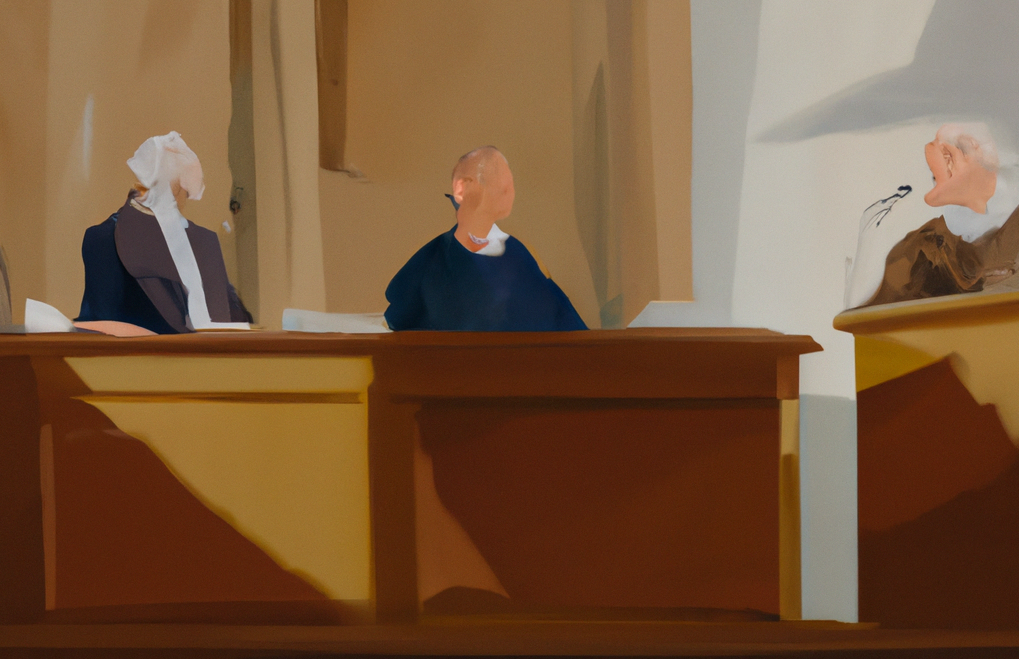
Last year I had the opportunity to give a legal deposition. It was my first time doing so, and it was an interesting experience giving testimony before a judge, court recorder, and opposing attorneys. Before the deposition, I found myself thinking a lot about the way I wanted to respond to questions. My prevailing desire was to keep my answers very clear and concise, sticking to what I knew was true based on my experience.

Today’s chapter concludes John’s account of Jesus’ story, and it ends with a fascinating bit of hyperbole observing that if every story about Jesus were written down all the world’s libraries couldn’t hold the sheer volume. That final thought reminds me as a reader that in writing his account, John had a difficult task. How do I testify to everything I saw, heard, and experienced as a disciple of Jesus in a way that is clear, concise, and communicates what is true? In crafting his testimony, John let specific numbers guide him.

Numbers play a role throughout the Great Story. Even the most casual reader will notice the recurrence of certain numbers. Different numbers have particular symbolic meanings. The number seven, for example, signifies completeness as in the seven days of creation after which God considered creation complete and called it “very good.” Three is considered a divine number as in the number of the Trinity: God the Father, God the Son, and God the Holy Ghost.

John appears to have been conscious of these numbers in structuring his testimony. He chose seven “signs” or miracles to share as well as seven “I am” statements that Jesus made. Three also makes recurring appearances as in sharing three times the risen Jesus appeared to the disciples. It’s as if John structured his testimony using those numbers as a guide to provide a “complete” and “divine” account to his readers.

John ends his account by describing the events of the third time the risen Jesus was present with the disciples. John lists seven of the disciples who went fishing on the Sea of Galilee. After getting skunked all night, morning arrives and Jesus calls to them from shore, telling them to cast their net on the right side of the boat. When they did there were so many fish in the net they couldn’t pull the haul into the boat. They had to tow it to the shore where they found Jesus was making a breakfast of grilled fish and bread (a little homage to the feeding of the 5,000 with fish and bread that John described back in chapter six).

John then shares that Jesus asked Peter to affirm his love three times, followed by three commands to Peter to “feed” and “take care” of Jesus’ “sheep.” Peter denied Jesus three times. With three affirmations and commands, Peter is restored to his position of leadership among the disciples. Jesus then foreshadows for Peter that he will one day follow Jesus in stretching out his hands in crucifixion. When Peter asks Jesus about John’s fate, Jesus says, “What’s it to you if I want him to live until I return?”

John is admittedly addressing what may have been a couple of FAQs of his contemporary first-century believers. He states quite directly that rumors were saying that he wouldn’t die, and he puts that rumor to rest. I also wonder if there weren’t those who wondered, “Why is Peter the leader of the Jesus Movement if he denied Jesus?” John’s final chapter would quell any doubt about Peter being Jesus’ appointed, “rock solid” leader.

In the quiet this morning, I am reflecting on this chapter-a-day trek through John. I have been struck this time by the beautiful and thoughtful way that John structured his account and emphasized his testimony to the truth of what he witnessed. This is John’s deposition. He uses the noun for “witness” or “testimony” 14 times and the verb for “testify” 33 times. I find upon reflection that he has given clear and concise testimony to what he knew to be true about Jesus based on his experience.

Once again, as a reader, he leaves me to decide if I believe his testimony and what verdict I will personally render regarding the question “Who is Jesus?”

If you know anyone who might be encouraged by today’s post, please share.

“The One Thing”

"The One Thing" (CaD Jhn 20) Wayfarer

Jesus performed many other signs in the presence of his disciples, which are not recorded in this book.
John 20:30 (NIV)

For a number of years, I was tasked by my local gathering of Jesus’ followers to mentor several individuals who were developing their preaching skills. It was a fun challenge, and I think I probably learned more than my protégés.

One of the things that I stressed to my charges was the importance of determining what I called “the one thing.” I encouraged them to identify “the one thing” they wanted listeners to hear and remember when they walked away.

“The one thing” is helpful in three key ways. First, it helps in developing the content by giving me a clear goal: “I want my listeners to walk away having clearly heard this one thing. So, how am I going to get there? Next, it helps to keep the message lean and on point. If I review my content and find that a certain point or illustration doesn’t really help to communicate “the one thing,” I cut it out. Third, I can be very clear with my listeners in my delivery. Sometimes I will even say, “If you hear one thing from my message this morning, I want you to hear this…”

In writing his account of Jesus’ story, John has been selective and structured in choosing the events and episodes to share. The same is true of his account of Jesus’ resurrection.

In today’s chapter, John chooses to share four quick episodes.

Early Sunday morning, Mary Magdalene arrives to tell Peter and John that Jesus’ body is missing. They run to the tomb to find Jesus’ linen grave clothes neatly folded, but Jesus’ body missing. John says of his anonymous self, “He saw and believed.”

Peter and John return to where they were staying, but Mary Magdalene remains at the grave where a very alive Jesus appears to her.

Sunday evening, Jesus’ disciples (without Thomas) are together behind locked doors. Jesus suddenly appears among them.

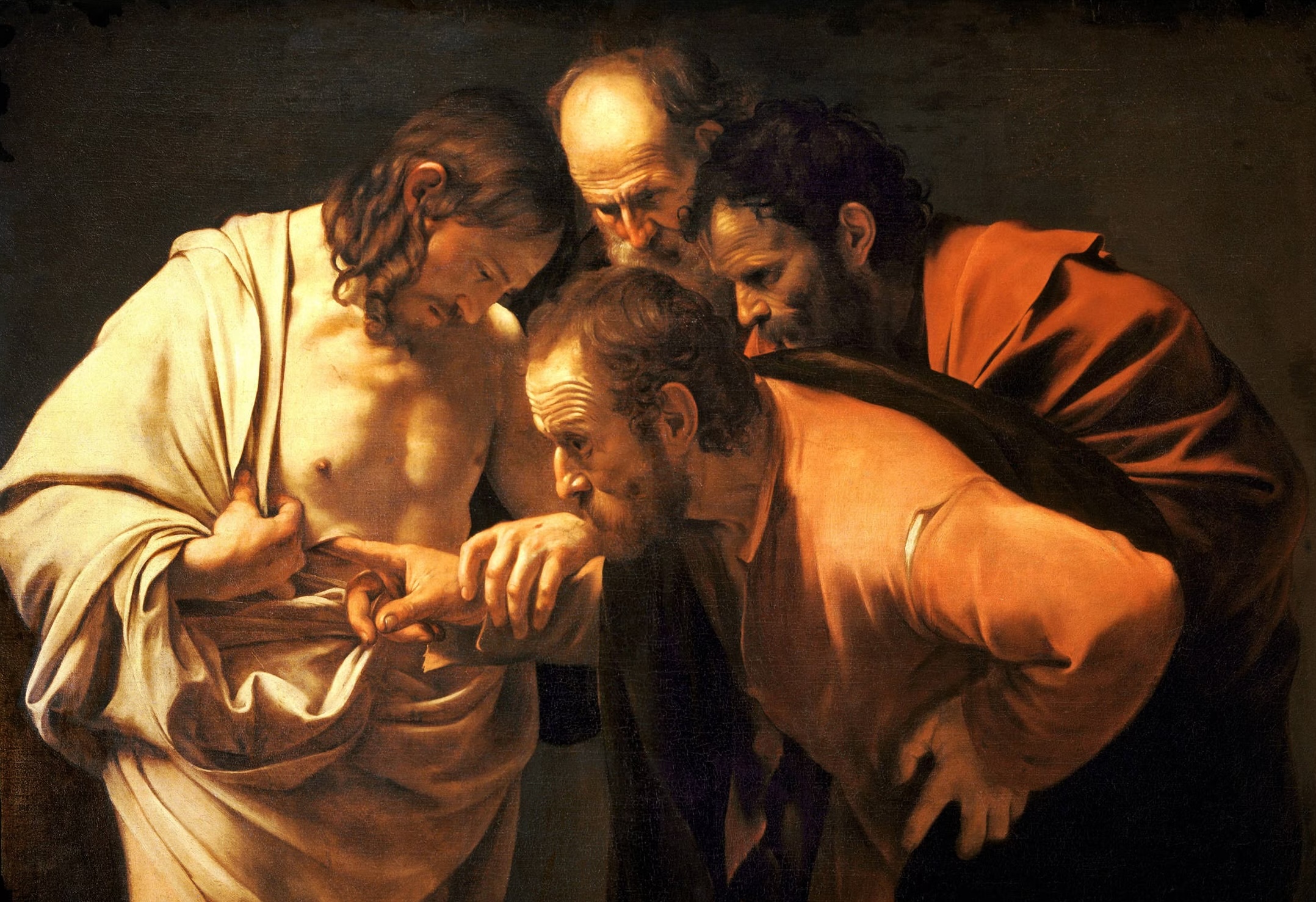
One week later, the disciples are once more together behind locked doors. This time, Thomas is present. Jesus again appears among them. He invites Thomas to put his finger in the nail wounds on his hands, his hand in the spear wound on his side. Thomas believes, and Jesus states “Blessed are those who have not seen and yet have believed”

John then shares his “one thing” when he writes: “But these are written that you may believe that Jesus is the Messiah, the Son of God, and that by believing you may have life in his name.”

In looking back at the resurrection episodes John chooses to share while being mindful of his “one thing” I can see why he chose to share the episodes he did:

John was at the empty tomb. He didn’t see Jesus, but with the empty tomb he “saw and believed.” He didn’t see the risen Christ, but already believed.

Mary saw the risen Jesus. John wants his readers to know that it wasn’t a conspiracy of “The Twelve.” Others saw the risen Jesus, talked to Him, and touched Him.

Jesus appeared to the disciples, but Thomas doubted until Jesus provided physical proof that it was Him. When Jesus shares, “blessed are those who have not see yet have believed,” John is leading his readers to the “one thing.” We, his readers, are among those who “have not seen” and he wants us to believe.

In the quiet this morning, I am mindful of the season of Lent in which believers annually walk with Jesus to the cross on Good Friday and run with John and Peter to the empty tomb on Easter Sunday. It is a time of reflection on the “one thing” of our faith: that Jesus sacrificed Himself for my sins, died on a cross, and was resurrected on the third day. This morning I glanced back on over forty years of believing in and following Jesus. Time and life have not diminished my belief. They have honed it.

I have not seen the risen Christ, but I have experienced His indwelling. I have heard His Spirit in my spirit. I have experienced His moving and working in my life so many times and in so many ways. And, I believe that I will see Him when this earthly journey is over. I’m reminded of Paul’s words to the believers in Corinth:

“For now we see only a reflection as in a mirror; then we shall see face to face. Now I know in part; then I shall know fully, even as I am fully known.”

Until then, “blessed are those who have not seen and yet have believed.”

If you know anyone who might be encouraged by today’s post, please share.

“The Man Who Saw It”

"The Man Who Saw It" (CaD Jhn 19) Wayfarer

The man who saw it has given testimony, and his testimony is true. He knows that he tells the truth, and he testifies so that you also may believe.
John 19:35 (NIV)

I have observed along my journey that certain historical events become so ubiquitous, that the actual events are lost or muddled in the pervasive contemporary and cultural understanding. The symbol of the cross, and the related crucifix, are great examples. We think nothing of the symbol of a cross on a piece of jewelry, a headstone, or a business logo. Most people associate it with the Christian religion, but I would venture to guess that if Jay Leno went “Jaywalking” on the street and asked the average person about the event that gave us the symbol, few would know much about it. They wouldn’t know that the cross was arguably among the most heinous and tortuous devices for executing a human being in history. I remember one commentator musing that if Jesus had been beheaded, women would be wearing little guillotines around their necks (granted, the guillotine wasn’t invented until centuries later, but you get the point).

Likewise, having read and studied the story of Jesus’ crucifixion for over 40 years, I confess that it is easy for me to gloss over the details that I know so well.

At the very beginning of John’s account, he tells us that “The Word became flesh and made his dwelling among us. We have seen his glory, the glory of the one and only Son, who came from the Father, full of grace and truth.” The reason for John writing this account is to present to his first-century readers his primary source memories. He subtly, but importantly, reminds us of this in these final chapters.

One of the stylistic conventions that John uses multiple times is to humbly refuse to identify himself in the narrative. He refers to himself as simply “a disciple” or “the disciple Jesus loved.” I consider John telling me “I’m not the important one. This is not about me. This is all about Jesus.”

In yesterday’s chapter, the unnamed John assists Peter in getting into the courtyard of the High Priest’s house where Jesus was being illegally tried. Peter denies Jesus, but John at that point chooses not to reveal what happens to either him or Peter. In today’s chapter, John reveals that he was at the cross with Jesus’ mother, aunt, and two other female disciples.

At the time John was writing his account, the Jesus Movement was exploding, and the astonishing claim that Jesus died and rose again was driving both faith and doubt. For the doubters, the two most plausible explanations were that 1) Jesus never died in the first place or 2) Jesus’ body was stolen by His followers and made up the resurrection story.

In today’s chapter, John is addressing the first argument of the doubters.

First, John lets me know that he was standing at the cross with Jesus’ mother and Jesus addressed him from the cross. In other words, “I was there. I saw this.”

Second, John explains that the Jews appealed to Pilate to break the legs of the three crucified men to speed up their deaths so that they could be taken down and buried before nightfall. In Jewish tradition, the new day begins at sundown, and with it being Friday afternoon, the Sabbath day of rest would begin in a few hours and no one was allowed to work, even taking a body off a cross and burying it. Crucified victims could languish for hours or days. The cause of death was typically asphyxiation from hanging on the nails in the wrists which made it hard to breathe. The only way to do so was to push up on the nails through the feet to take a breath. By breaking the legs, this was impossible, and the crucified asphyxiated much faster. John records that the Romans found Jesus dead and didn’t break his legs and they speared the dead body to ensure Jesus was dead.

Third, John reiterates that he witnessed this: “The man who saw it has given testimony, and his testimony is true. He knows that he tells the truth, and he testifies so that you also may believe.

In the quiet this morning, I tried to approach John’s account of Jesus’ trials and execution with fresh eyes, even as I allowed my knowledge of history to help me visualize the horrific details lost on most contemporary readers. I also thought about John as the eyewitness, trying to place myself in his sandals as he described the events.

In two weeks, Jesus’ followers around the world will observe Good Friday, the commemoration of Jesus’ trials and execution. I find myself grateful that our chapter-a-day journey is allowing me to contemplate and meditate on the events as that commemoration draws near. I find that heart preparation makes the difference between an observance like Good Friday being a rote religious ritual and the Spirit event it’s intended to be.

If you know anyone who might be encouraged by today’s post, please share.

Empire v. Kingdom

Empire v. Kingdom (CaD Jhn 18) Wayfarer

Jesus said, “My kingdom is not of this world. If it were, my servants would fight to prevent my arrest by the Jewish leaders. But now my kingdom is from another place.”
John 18:36

Along my life journey, I’ve personally observed corruption at different times and in different venues of various organizations. When money, power, and status are added to the mix of any human system, humans act to control and wield that money, power, and status. It’s easy to quickly think of government and business as cradles of corruption, but it happens all the time in religious systems, as well.

As John recounts the story of Jesus’ arrest and trials, he carefully sets up some of the interesting contrasts. First, there is the plot line of Peter, whom Jesus prophesied would deny he knew Jesus three times before the rooster crowed. At the arrest, John mentions Jesus’ stating “I am He” three times, then recounts Peter’s three denials, two of which are direct opposites of Jesus’ admission as Peter says, “I am not.” John is also careful to state that Peter drew a sword to protect Jesus and even cut off the ear of the High Priest’s servant. Jesus then states to Pilate that if His kingdom were of this world “my servants would fight to prevent my arrest.” However, Peter did just that. I find Jesus making two points in his statement to the Roman Governor:

First, Peter still does not understand that Jesus’ kingdom is not of this world. Coupled with Peter’s denials, Peter has dug a pretty deep hole for himself. Jesus is also making the point that He has freely and willingly submitted to a set of trials that are both illegal and illicit. He has submitted precisely because His kingdom is not like the kingdoms of this world, especially the human empires that are currently judging Him.

The religious ruling council is one of those kingdoms. They wield power and control over the people of their nation. Through the temple’s sacrificial and financial systems, they generate tremendous wealth, and they enjoy the status of being on the highest rungs of status on their socio-economic ladder. Back in chapter 11, John quotes the high priest regarding their desire to get rid of Jesus: “If we let [Jesus] go on like this, everyone will believe in him, and then the Romans will come and take away our temple and our nation.” The high priest and his cronies didn’t care about Jesus’ teaching or miracles. They cared about their hold on status, power, and money.

This brings us to the Roman Empire, arguably the greatest and longest-lasting human empire in history. They were an occupying force and ultimately held sway. In order to execute Jesus, the religious council needed the Roman Governor to make it happen.

Corrupt human empire vs. the eternal Kingdom of God.

What a contrast.

And in the quiet this morning, I’m reminded that all along this is what Jesus has been teaching and exemplifying to His disciples and followers. At some level, we have all observed and/or experienced corruption, scandal, power games, and the game of thrones. When Jesus prayed, “Your kingdom come, your will be done on earth as it is in heaven,” I believe He was praying for me and every other believer to live our lives as Kingdom people in a world of human empires both small and large.

Like Peter, I don’t think I truly got this for many years. The further I get on this earthly journey, the more I see it and understand it. Like Peter, I’ve made my own mistakes and have failed miserably as a disciple. But, Peter’s journey isn’t over in John’s account, and neither is my earthly journey. I woke up this morning, so I at least have this day to live like a citizen of God’s Kingdom in a world of human empires. The Serenity Prayer is rising in my spirit as I write this:

If you know anyone who might be encouraged by today’s post, please share.

The Spectrum of Belief

The Spectrum of Belief (CaD Jhn 12) Wayfarer

Even after Jesus had performed so many signs in their presence, they still would not believe in him.
John 12:37 (NIV)

We are just over halfway through John’s account of Jesus’ story. John now shifts the narrative to focus on the final days of Jesus’ earthly journey. Almost half of John’s account is the events leading to Jesus’ crucifixion and His subsequent resurrection.

In today’s chapter, John shares about the wake of Jesus raising Lazarus from the dead. Word spreads about the miracle. Lazarus and his sisters hold a feast to honor Jesus. Crowds are arriving for the Passover festival and the buzz is all about Jesus who raised a man named Lazarus from the dead. Everyone wants to meet both of them. It is on the wave of this #trending event that Jesus enters Jerusalem with crowds waving palm branches and proclaiming Him king.

As I sat back and looked at the structure of the chapter, it became clear to me that John prepares his readers for the final, climactic chapters by providing a survey of where people were on the spectrum of belief in Jesus.

It begins with Lazarus and his sisters, who have every reason to put their faith in Jesus. In particular, however, it is Mary who acts with humility and foresight in pouring perfume on Jesus’ feet and wiping them with her own hair. Jesus explains that she is preparing Jesus for His own burial. Mary not only believes, but she may be the only one who seems to understand what is about to happen to Jesus.

Next, John makes sure to mention Judas, his indignation at Mary wasting perfume that cost a year’s wages to give Jesus a foot bath. The money could have been sold and given to the poor, though John is sure to mention that what Judas really meant was it could be sold and put into the ministry’s money purse where he would have access to it. He will, instead, find another way to make 30 pieces of silver. Even among Jesus’ disciples was one who was on the unbelieving end of the spectrum.

Next are the crowds of Jews who have been recurring characters in John’s account. In the wake of Lazarus’ return from the grave, they are clamoring to get close to both Jesus and Lazarus. Of course, John has already made clear in the aftermath of the miracle of the Filet-o’-Fish Feast that the crowds are fickle. They’re all in on believing when it’s about free food or an entertaining spectacle, but they will move to the unbelieving side of the spectrum and chanting “Crucify Him!” in just a few days.

Then there are the religious leaders known as the Pharisees. They and the Chief Priests are hell-bent on killing Jesus, and now they add Lazarus to the hit list. How ironic that they want to kill the man who was just raised from the dead. These are the people on the extreme end of the unbelief side of the spectrum.

John then mentions Jesus’ disciples, himself included, and confesses that while they believed Jesus, they really didn’t understand what Jesus was doing or saying until after all of the events he’s recounting actually happened. So add to the spectrum those who believed, but didn’t really understand what it was that they were believing.

John also introduces us to a group of Greeks who were in town for the Passover festival. These were non-Jewish (a.k.a. Gentile) adherents to the Jewish faith but who weren’t fully circumcised converts. What’s fascinating about John adding this group to the mix is that by the time John wrote this account, the biggest controversy among the rapidly growing Jesus Movement was whether the large number of Greek Gentiles who were becoming believers must become Jewish converts before they could be considered good Christians. In response to this group of Greeks who want to meet Jesus, Jesus says “And I, when I am lifted up from the earth, I will draw all people to myself.” John’s first-century readers would have found these Greeks on the belief side of the spectrum to be very important to the mix, and a foreshadowing of the conflict within the Jesus Movement years later.

John then makes sure to mention that, despite all of Jesus’ signs and miracles, there were many unbelievers entrenched on the unbelief side of the spectrum. He seems to acknowledge those who would refuse to believe no matter what Jesus did or said.

John then mentions the Religious Leaders who secretly were on the believing side of the spectrum but who would not publicly acknowledge this. They fear the institutional union leadership who would have them kicked out (and maybe added to the hit list) if anyone were to find out they were believers.

In the quiet this morning, I can’t help but hear John’s unspoken question in the subtext. He’s given me all these different people and groups at various places on the spectrum from disbelief to belief. “So, Tom, where are you on the spectrum? With which person or group do you identify?

Of course, that’s the important question. I have to believe that it’s the motivation for John writing this primary source account in the first place. I find it fascinating that John places this belief spectrum right before the final events of the story. It’s as if John is taking my spiritual temperature leading into the climax. As a life-long disciple, I find it worthwhile to ponder this question anew, especially in this season of Lent when believers all over the world are introspectively walking through the climax of the story together.

I enter another day of this earthly journey with Jesus’ words from today’s chapter ringing in my ears: “For I did not come to judge the world but to save the world.”

If you know anyone who might be encouraged by today’s post, please share.

John (Feb-Mar 2024)

Each photo below corresponds to the chapter-a-day post/podcast for the book of John published by Tom Vander Well in January and February 2024. Click on the photo linked to each chapter to read the post.

John 1: The God Who Pitched His Tent

John 2: Signs

John 3: Loyalty to a Trusted Source

John 4: No Sign Necessary

John 5: Who Am I Living to Please?

John 6: Filet-o’-Fish or Flesh-and-Blood?

John 7: Division

John 8: Showdown

John 9: Seeing and Believing

John 10: Shepherd and Sheep

John 11: Watershed Moment

John 12: The Spectrum of Belief

John 13: Waypoints of Confusion

John 14: Peace that’s Not of this World

John 15: The Dude Abides

John 16: Contrasting Statements

John 17: Where His Footsteps Lead

John 18: Empire v. Kingdom

John 19: “The Man Who Saw It”

John 20: “The One Thing”

John 21: Testimony & Verdict