Tag Archives: Family

The Blessing

“This is the blessing that Moses the man of God pronounced on the Israelites before his death….
Deuteronomy 33:1 (NIV)

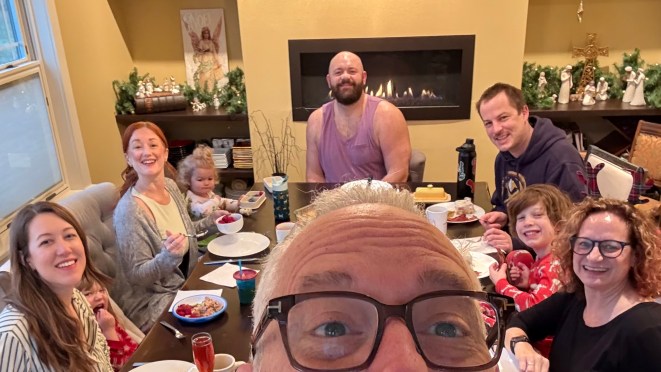
This past Sunday I delivered the morning message among our local gathering of Jesus’ followers. At the beginning of the message I showed a photograph of our family gathered on New Year’s weekend, just a few weeks ago. The entire crew was gathered at the table for a meal in all the glorious mess of three generations.

The table, the dining room floor, indeed the entire house – they get messy when the whole family gathers. And, I’m not just referring to food crumbs. That was the metaphor that carried through my message. Jesus invites the whole family to the table. It gets messy, and yet He asks us to stay.

In family (both nuclear and spiritual), every individual part contributes to the love of the whole.

Today’s chapter is Moses’ final act. His role as leader-judge-prophet-priest will end with him. His is not a box on the org chart to be filled. A succession plan was never a consideration. There’s no favored son groomed for elevation. Moses does not pout or demand a severance of legacy. He foreshadows and embodies the sentiment Paul would later express when he wrote, “I have fought the good fight, I have finished the race, I have kept the faith.”

Moses’ final act is to bless the twelve Hebrew tribes one-by-one. As I meditated on the blessings. A couple of things stood out.

First, in Jewish tradition, blessings are less about forecasting the future and more about naming reality—calling forth what is already true beneath the surface. Moses is not predicting outcomes; he is bestowing identity.

Just as I look around the table from toddler grandchildren to adult daughters and sons. Each is unique. No two are the same. They each, in their own unique identity, bring themselves to the table and with each of them comes a part of the blessing of family.

And, this leads to the next observation.

No tribe is cursed. Even the complicated ones—and, honestly they each have their own “troubles”—are not shamed. Silence, yes. Erasure, no. Where earlier stories carried fracture, Moses now offers healing through words.

And, to me, most importantly: Israel is blessed together. No tribe receives fullness apart from the others. The blessing is communal—interdependent, embodied, shared.

In the quiet this morning, I find the chapter inviting me to do something wildly countercultural:

Receive blessing without scrambling to deserve it.

Moses blesses warriors and poets, priests and homebodies, the strong and the sheltered. Not because they nailed it—but because God chose them.

It’s easy for me to slip into “blessing is a performance review” mode. Others times, my Enneagram Type Four shame whispers to my soul that God’s blessing has been passed out and I was skipped altogether.

Moses says “no” to both lies.

I am blessed before I arrive.
I am carried even when I wander.
I am named even in the silence.

That’s the beauty, and the shalom, that I find in the Great Story. Moses exits stage left. The Story goes on, even to this.very.day.

The God who went before them…
is the God who goes before me.
Jesus invited me to the table, and asked me to stay.

If you know anyone who might be encouraged by today’s post, please share.

Promotional graphic for Tom Vander Well's Wayfarer blog and podcast, featuring icons of various podcast platforms with a photo of Tom Vander Well.
These chapter-a-day blog posts are also available via podcast on all major podcast platforms including Apple, Google, and Spotify! Simply go to your podcast platform and search for “Wayfarer Tom Vander Well.” If it’s not on your platform, please let me know!
An orange square icon featuring an open book symbol in white, representing reading or education.

Stories and Choices

If the neighbor is poor, do not go to sleep with their pledge in your possession. Return their cloak by sunset so that your neighbor may sleep in it. Then they will thank you, and it will be regarded as a righteous act in the sight of the Lord your God.
Deuteronomy 24:12-13 (NIV)

Along this chapter-a-day journey, I have often referenced being a historian of my family. I was a young man when I began really digging into the past and peeking into the dusty corners of the proverbial family attic. At that point in my life journey I was on a quest of self-discovery.

My quest has revealed many things over the years. I discovered plenty of the things families don’t talk about. Most all of the flaws of everyday humanity were lurking there. I learned stories of addiction, adultery, divorce, suicides, illegitimate children, and individuals leading secret second lives.

There was also plenty of dark tragedy that was brought to light. One of my great-great grandmothers was farmed out to be a live-in housekeeper for a distant family. When one of the sons of the family got her pregnant and refused responsibility, she was left with few options. Her own sister took her in, but forced her to live in Cinderella-like seclusion not wanting anyone to know she was there.

I learned that one of my great-grandmothers was a gold digger whose many failed marriages reaped tragic results for her and two of her children.

What I also witnessed in learning my family stories, however, is a lot of human decency. My grandparents for years took care of an elderly widow who lived down the block and had no one else to care for her. I had a grandfather who gave his deadbeat alcoholic brother a second chance. He quietly did the right thing by his family even after his family unjustly gave him the shaft. There are stories of financial generosity, giving friends a place to live, helping friends and neighbors with goodness and loving kindness.

“Remember” is a word Moses uses three times in today’s chapter. He returns to what Jewish teachers called zakhor, memories that help build moral muscle.

Today’s chapter is a collection of rules Moses gives his children and grandchildren as he prepares to send them off into life while he himself lies on his deathbed. The thread that I found running through Moses’ directives is basic human decency.

Divorce with decency for the woman who has zero power or standing in the culture of that day.

Don’t take a millstone—someone’s livelihood—as collateral, and leave them with no means to earn a wage.

Don’t treat your own people with contempt.

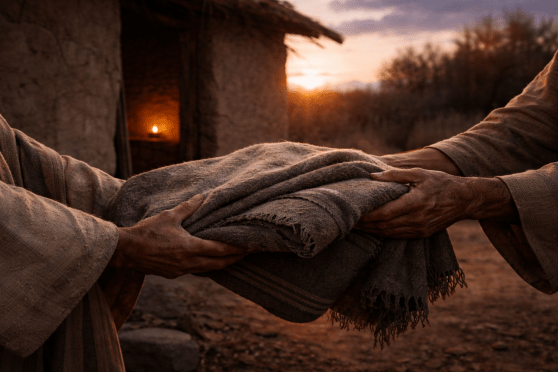
A person may owe you money and give you their cloak as collateral, but you return that cloak before nightfall. Don’t leave the poor soul cold at night.

You don’t kill children as justice for their parent’s wrongdoing, nor kill a parent for their child’s wrongdoing. Justice is for the offender, not their family.

Pay your employees promptly. Do right by those who work for you.

Do right by the poor and needy, as well. Leave harvest leftovers in the field and on the limbs and vines for the stranger, orphan, and widow to pick and eat.

As I meditated on all these things, I realized that today’s chapter was the foundation on which Jesus’ built His teaching. It’s doing right by others. It’s treating others the way I’d want to be treated. It’s using whatever authority, power, and means God’s blessed me with to love, serve, and provide – not just to those I know and love, but to those in need, even strangers, foreigners, and enemies.

In the quiet, my own zakhor memory rummaged through all of my family stories. Those stories include examples of individuals who, by faith, embodied the loving-kindness and generosity Moses (and Jesus) prescribe in today’s chapter – and those who didn’t.

This leaves me with the realization that I have a choice.

I can join one group or the other in the collective legacy of zakhor memories my great-great grandchildren will inherit. My choice is determined in a million daily thoughts, words, and actions.

If you know anyone who might be encouraged by today’s post, please share.

Promotional graphic for Tom Vander Well's Wayfarer blog and podcast, featuring icons of various podcast platforms with a photo of Tom Vander Well.
These chapter-a-day blog posts are also available via podcast on all major podcast platforms including Apple, Google, and Spotify! Simply go to your podcast platform and search for “Wayfarer Tom Vander Well.” If it’s not on your platform, please let me know!
An orange icon featuring an open book with a white outline, representing reading or educational content.

Merry Christmas 2025

Merry Christmas from the Vander Wells! It’s been a great year. Here’s the latest from our crew…

A family photo featuring a man holding a young boy, a woman holding a girl, and another young girl beside them, all smiling outdoors.

It was a big year of transition for me and Wendy at work this year. On April 1st I became the sole owner of our company Intelligentics as my long-time business partner began his journey in retirement. That brought a lot of transitions with work that have been both challenging and rewarding. I’ve been working on writing my first book, “This Call May Be Monitored (What Eavesdropping on Corporate America Taught Me About Business & Life),” which will be published early next year.

Outside of work we’ve remained busy with family, friends, and community. I continue to serve as a teaching leader at Church. I finished a one-year term as President of our local community theatre. I even returned to the stage for the first time in several years, performing in Agatha Christie’s The Mousetrap. Wendy once again directed Pella’s annual Tulip Queen Announcement Party (her 7th year!) and I once again served as Master of Ceremonies. I still get the honor of officiating a wedding here-and-there and enjoy doing P.A. for Pella High baseball (State Champs this year!).

Between fun, family, friends, and work, we enjoyed several travel experiences in 2025. I forgot how much we traveled until I went back to look at all our photos. It began with a cruise out of New Orleans that departed the day before NOLA hosted the Super Bowl – so, you know, just a few crowds we had to navigate. Wendy and I also spent long weekends in Chicago and Minneapolis to see the Cubs play, then back to Minneapolis a few weeks ago for our annual pilgrimage to the Vikings’ mother ship. We made it to South Carolina twice this year to hang with the Madison, G, and MJ. We even got to take MJ to her first baseball game (Go Fireflies!). In the fall we headed to Park City, UT for a little R&R with friends.

And of course, family! We enjoyed hosting the whole family over fourth of July when the SC crew made it back to Iowa. We also got to host Thanksgiving, and the annual Vikings-Packers Smackdown with our nephew Sam and his family. Taylor, Clayton & kids are still in Des Moines and we love having them close. We love having Milo and Sylvie to keep us busy playing in the pool, playing dress-up, and having light saber duels. They love having Papa make them Shirley Temples at the Vander Well Pub. Milo even spent the week with us this summer attending USP Drama Camp. Madison, G, and MJ are doing great in Columbia and we’re looking forward to having them here for Christmas at New Year’s this year. MJ likes to FaceTime Papa Tom in the wee hours of the morning. Papa Dean continues to live independently here in Pella. He keeps busy in his stained-glass workshop and can’t keep up with demand for his ornaments and decorative pieces. He even got a commission to create a large stained-glass piece for the new wing at Pella Regional Hospital.

Wendy and I also continue to walk life’s journey with our close-knit cadre of dear friends. From graduations and baptisms to dinners and dates, our life is so full of goodness. We are so thankful and so blessed with such a community of loved ones. God is so good.

Merry Christmas to all! Praying for a blessed and peaceful 2026 for all of us.

The Story We Tell With Our Lives

Hear, O Israel: The Lord our God, the Lord is one. Love the Lord your God with all your heart and with all your soul and with all your strength
Deuteronomy 6:4-5 (NIV)

As my family’s unofficial historian and pastor, I’ve become a repository for old family bibles.

“What should we going to do with great-grandma’s bible? Anyone want it?”

Nah! Give it to Tom.”

Yes, I will take it. The first thing I will do is look to see what it contains besides the pages and the printed text. When a Bible is well-used it collects things. Ephemera of all kinds gets stuffed in the pages. It’s fascinating what people choose to keep. Handwritten notes are often found scribbled in the margins. It can be a window into an ancestor’s head and heart.

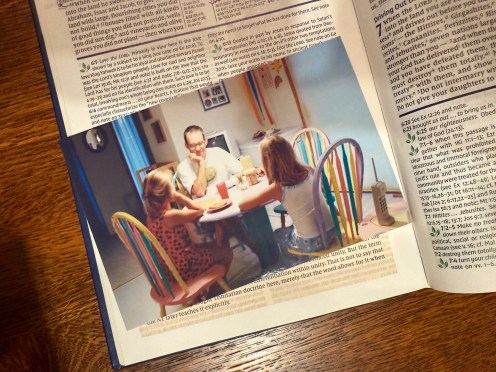
In my Bible there is a photograph. I don’t even remember putting it there. I think it randomly surfaced and I just shoved it inside the cover of my bible because it was convenient in the moment. It’s still there years later. The photograph is of my daughters and me at the breakfast table. They are about eight or nine years old and are eating their breakfast. I’m sitting there right where they found me when they got up, bible open. I’ve been doing this early morning meditation thing for a long time.

Today, our grandson Milo celebrates his eighth birthday. A generation has come and gone since that photograph in my bible was taken. When Milo comes to visit, his room is across the hall from my home office. Like me when I was his age, Milo is a morning person. So, amidst my quiet time I will hear the pocket door to my office slowly slide open and Milo will slide up on Papa’s lap. Just like my daughters used to do.

I could sit in today’s chapter for a long, long time. It is Moses at his most intimate and loving as a patriarch of his people. Remember, Deuteronomy is Moses’ final deathbed message. Today’s chapter is a loving father and grandfather’s heart fully open and on display.

Moses begins with what is known as the Shema in Jewish tradition. Shema means “hear” in Hebrew. This verse is recited morning and evening. It’s sung, whispered, shouted, taught to children as soon as they can speak. It’s what Jesus referenced as the greatest commandment. Love God with all your heart, soul, (Jesus added mind) and strength. God is one – not just a monotheism – but the unifying center of reality. Nothing exists outside of His oneness.

Moses begins with the Shema — the heartbeat of Israel. Then, like every wise elder, he moves from proclamation to formation – from hearing to teaching. Moses tells every Hebrew to share their family’s story with every child: Slavery, God’s deliverance, the miracles, the mess in the wilderness, God’s faithful provision, and the gracious promise and prosperity of the Promised Land.

“Tell them the Story,” Moses urges his children, “So they can trust the Story.”

Later in his message, Moses urges his children to action: Do what is right and good in the Lord’s sight, so that it may go well with you…”

James echoes this same sentiment in his letter to Jesus’ followers:

“Do not merely listen to the word, and so deceive yourselves. Do what it says.”
James 1:22 (NIV)

As I meditated on these things in the quiet this morning, I found myself focused on two intertwined thoughts.

First, the Hebrew word for “heart” intimates far more than just emotion. It is the wholeness of my inner self. It is the union of mind, will, and desire. To love God with my “heart” is to let Him sit enthroned on my decision-making center.

Second, I recognized that there is a flow to what Moses commands. The words can’t get from the ear to heart or hand – nor can they can’t be shared with the mouth – without passing through the mind. Perhaps that’s why our Lord added “mind” to the Shema.

Ear —> Head —> Heart —> Mouth/Hands/Feet

Along my life journey, I’ve observed individuals for whom the word has completely by-passed the heart. They hear the word. It enters the brain as plain text, rules, and religious commands. The hands might obey in legalistic fashion. The mouth regurgitates the text in heartless, rote, religious obedience.

But there’s no heart in it.

The words aren’t just laws, commands, and decrees. When channeled through grateful and believing hearts they’re paths to life, abundance, and longevity in all that God is providing in the future to which He is leading.

Here in the quiet, I find myself staring back at the photo of me at the table with my young daughters, my bible open to whatever chapter I was meditating on in the quiet that morning. I find myself looking forward to the next few weeks and the next time Milo slides open the pocket door of my office and staggers in on my lap, my bible open to whatever chapter of Deuteronomy we’ll be on that day. I look forward to sharing the Story in whatever way flows in our conversation.

My mornings in the quiet, this chapter-a-day trek, isn’t religious obedience. It’s my heartbeat. It’s my spirit breathing. It’s nourishment for my soul that fuels my day. It’s my personal embodiment of the heart of the Shema.

And so, I will tuck the photo back in my bible along with the other ephemera that I’ve mindlessly collected over the years. Perhaps one day a great-grandchild or great-great grandchild will inherit it. Perhaps it will whisper to a future generation about the pattern God established through Moses:

Hear the Story. Trust the Story. Tell the Story.

If you know anyone who might be encouraged by today’s post, please share.

Promotional graphic for Tom Vander Well's Wayfarer blog and podcast, featuring icons of various podcast platforms with a photo of Tom Vander Well.
These chapter-a-day blog posts are also available via podcast on all major podcast platforms including Apple, Google, and Spotify! Simply go to your podcast platform and search for “Wayfarer Tom Vander Well.” If it’s not on your platform, please let me know!
An open Bible with a photograph tucked inside, depicting a nostalgic moment of a parent and children at a breakfast table.

Last Day of Camp

Keep your lives free from the love of money and be content with what you have, because God has said,
“Never will I leave you;
    never will I forsake you.”
Hebrews 13:5 (NIV)

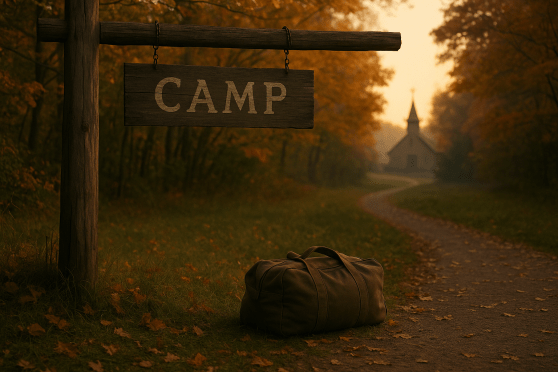
Summer camp is always a special place to be. Both as a camper, and later as a leader, and guest speaker, I have such fond memories of the laughter, adventure, friendships, and fun. For some, that fun never ends. There are entire summer camp communities where adults and families spend summers “at camp” where worship, studies, activities, and relationships become part of the rhythm of summer their entire lives.

Nevertheless, summer always ends. There is always that final day of camp. The camp fires become the embers of memory. The guitars are in their cases. The cabins have been emptied. The beds stripped. The close friendships forged in the intense togetherness (and maybe even a sparked romance) must come to an abrupt end. Cars arrive to take campers back to their disparate hometowns. Campers return to their daily routines. It is the death throes of summer, when in one moment the fun seems to end with gut punch. As you hug these people who have come to mean so much to you in such a short period of time, you know autumn’s descent is imminent. All of the real life activities and responsibilities that come with it await.

I have a very vivid memory of lying in the backseat of our family’s Mercury Marquis station wagon (yes, complete with wood paneling on the side) driving home from camp. Tears streamed down my cheeks. They dripped down on the car’s brown carpet littered with gum wrappers and spilled McDonald’s french fries. I didn’t want to go back. I wanted to live at camp forever.

Today’s final chapter of Hebrews reads like the last day of camp. No lofty theology now—no soaring angels, no mysterious Melchizedek, no blazing heavenly tabernacle. Here at the end, the gospel comes home, rolls its sleeves up, and gets practical. Earthy. Intimate.

The car is running. Your duffel bag of dirty clothes and life-long memories is already in “the way back” of the station wagon. Mom and Dad are waiting as you say your good-byes. The camp counselor who has become like a big brother or sister leans down to face you intimately. Lovingly taking your face gently in both hands, looking directly into your eyes, your counselor whispers, “Everything we’ve journeyed through together? Everything we learned? Everything we talked about in our cabin’s middle-of-the-night heart-to-hearts? Now live it.”

Today’s chapter is a heart-felt list of loving marching orders from a camp counselor to a tearful camper who doesn’t want to return to “real life.”

Love as everyday liturgy

“Keep on loving one another as brothers and sisters.”

The Greek implies continually, habitually—love not as an emotion but as a practice. Prisoners become kin. Marriage is honored, not as a cage, but as a covenant shelter. The chapter opens like it believes the mundane moments are sacred ground.

Life free from fear

“Be content… for God has said, ‘Never will I leave you; never will I forsake you.’”

It’s God whispering,
“Even if the world shakes, I’m not going anywhere.”

Remember your leaders

The writer encourages the church to imitate the faith of leaders whose lives embody Jesus.

Not heroes on pedestals—humble guides whose walk matches their talk. Like the camp counselor who was just a college kid making less money than he could have behind a fast-food counter.

Jesus: yesterday, today, and forever

It’s the spine-tingling line. The center of gravity for the whole letter.

Everything changes—priesthoods, covenants, temple curtains, seasons in the heart. And summer, too. There’s always a last day of camp.

But Jesus?
Steady as the sun.
Always the same warm presence, the same mercy, the same fierce love.

The strange altar of grace

The author points to Christ as our once-for-all offering outside the camp.
Outside the religious system. Outside the institutions and walls of the church. Outside the boundaries of status and purity.

There’s an invitation and encouragement for unkempt daily life:
“Meet Him where it’s messy. Worship Him with your life, not rituals.”

The Benediction

“May the God of peace… equip you with everything good for doing His will.”

There is no demand from a tyrannical God. It’s not a shaming you into obedience. Equip you. Like handing you warm gloves for the road home and the inevitability of autumn’s cold winds and the impending winter you know follows right behind it.

Finally: “May He work in us what is pleasing to Him.”

Not me working for God.
God working inside me.

It’s divine intimacy—God and me, heart-to-heart, breath-to-breath.

In the quiet, as I meditate on these things, Holy Spirit takes my face lovingly into both hands and looks me in the eye. Returning to the words:

“Never will I leave you;
    never will I forsake you.”

The original Greek in which this was written has no English equivalent for the structure. It’s a triple negative. It’s like repeating the word “never” three times. One source I found paraphrased it like Jesus saying this:

“I will never ever ever let you go—nope, not happening, not now, not ever.”

And so, with that encouragement from Holy Spirit, my camp counselor, I slip into the back seat of life’s Mercury Marquis station wagon and head into the real life of this new day. Some days, I just don’t want to do it.

But I have my marching orders, and I’m never alone.

If you know anyone who might be encouraged by today’s post, please share.

Putting “Religion into Practice”

Anyone who does not provide for their relatives, and especially for their own household, has denied the faith and is worse than an unbeliever.
1 Timothy 5:8 (NIV)

My Grandpa Spec had a tragic childhood. His real name was Claude but everyone called him Spec. The day of his father’s 34th birthday, Spec was ten. His father was diagnosed with Tuberculosis on that day. It was a death sentence at the time. It also meant months of financial and emotional hardship for the family. So, Spec’s father went home and committed suicide.

Spec was farmed out to his maternal grandparents in Illinois. They were hard people, but they were also people of faith. Spec’s life wasn’t enjoyable, but he was kept on a very straight and narrow path.

After the suicide Spec’s mom kept his little brother and sister with her. My grandma described her as a “gold digger.” She decided her best bet in life was to find a rich man and marry him. She jobs on the Mississippi riverboats and drug the kids with her. She had a series of marriages. Spec’s little brother became an alcoholic. It was a dysfunctional family system to say the least.

Later in life, Spec found himself with a good job in management. His brother came looking for a job. Spec gave it to him, but told him that the day he showed up to work drunk he would be fired immediately. The inevitable happened. Spec fired his brother. His brother went back to the family and bad mouthed Spec up-and-down, driving the wedge of separation between Spec and his family even deeper.

My grandma told me that when Spec’s brother died, they decided to travel to the funeral despite the tragedy and conflict that had divided them. After the funeral, the Funeral Director handed Spec the bill for his brother’s funeral and informed him that the family said he would pay it. My grandmother shared that he quietly chose to pay it, but spoke about the pain that my grandfather carried as a result of his family.

I never knew this until I was an adult. I watched Grandpa Spec care for his elderly mother with love, kindness, grace, and generosity. I had no idea the story behind their lives or their relationship until both he and his mother were dead.

Just a few months ago I was going through a tub of things my mother left behind when she transitioned to her heavenly home. Among the belongings was an old tin box with documents that had belonged to Grandpa Spec. Among them was the bill for his brother’s funeral.

In today’s chapter, Paul provides young Timothy with a host of instruction regarding how to handle the administration of benevolence within the local gathering of Jesus’ followers. The Jesus Movement was big on tangibly loving the most needy individuals in society at that time. The Roman Empire had no system of welfare. It was a brutal world for the poor and needy. Widows, orphans, the handicapped and lepers were among those with little means or hope for any kind of decent life. Jesus’ followers took them in, provided for them, and helped them survive.

Paul’s instructions are interesting to read from Timothy’s perspective. If you’re responsible for the messy decisions regarding who gets financial assistance and who does not, how do you decide? Reading between the lines of Paul’s letter you can see that a system had been emerging. Paul is sharing the things he’s learned and implemented in an effort to help Timothy with those messy and difficult decisions.

One of the things I observed amidst Paul’s instructions is that he placed on believers the responsibility for providing for one’s own family. He considered it “putting your religion into practice.” Paul goes on to state that any believer who fails to provide for their relatives and the members of their own household has “denied the faith.”

In the quiet this morning, this brought me back to Granda Spec, his brother’s funeral bill, and the gracious kindness with which he cared and provided for his mother in her old age. The gold digger mother who sent him off to live with her mean religious mother while she kept the other children. I’m sure in retrospect Spec realized that the decision probably saved his life, but no child is left unscarred when a parent’s actions communicate to a child “I don’t want you.”

No one who knew my Grandpa Spec would call him a particularly spiritual man. His faith, however, was genuine. It was proved genuine in the way he put his religion into practice; When he continually did the right thing by his family even when it cost him his money and his pride.

I’m reminded this morning that it’s not what I say I believe, but what my actions prove that I believe.

If you know anyone who might be encouraged by today’s post, please share.

Promotional graphic for Tom Vander Well's Wayfarer blog and podcast, featuring icons of various podcast platforms with a photo of Tom Vander Well.
These chapter-a-day blog posts are also available via podcast on all major podcast platforms including Apple, Google, and Spotify! Simply go to your podcast platform and search for “Wayfarer Tom Vander Well.” If it’s not on your platform, please let me know!

No Excuse

[An elder] must manage his own family well and see that his children obey him, and he must do so in a manner worthy of full respect. (If anyone does not know how to manage his own family, how can he take care of God’s church?)
1 Timothy 3: 4-5 (NIV)

I’ve mentioned in previous posts that I’m currently working on a book about my work. The working title is This Call May Be Monitored with a subtitle What Eavesdropping on Corporate America taught me about business and life. Over 30 years I’ve evaluated around 100,000 phone calls and trained individuals and teams how to improve the customer experience. It’s been a quirky career. I have learned a lot of lessons worth sharing, and as the subtitle says, many of those lessons apply to both business and life. This morning’s chapter brought one to mind that I was just writing about yesterday.

When working with clients who primarily serve internal customers (team members from their own company) or regular customers they talk to every day, I will often be told “All of this customer service stuff doesn’t apply to me. I talk to this person everyday,” or “I don’t serve customers. It’s just another employee.” The subtext of these statements is that the more you know a person and the closer you are to them means you shouldn’t have to treat them with the courtesy and quality that you would a complete stranger who calls. Follow this reasoning to its logical end and it’s a justification for putting on appearances for outsiders while you excuse treating the most important people in your life poorly.

As I observed this happening at work, it caused me to personally reevaluate my own thoughts and behaviors at home. Shouldn’t my family and my closest friends get the best of me? Why would I ever conclude that I’m excused from rude, discourteous, disrespectful, and mean behavior at home simply because it’s family? I think Wendy, my children, and my grandchildren should get the best of my love, patience, kindness, gentleness, goodness, and self-control.

This prompted me to start saying “thank you” to Wendy every time I walk into the kitchen and find her doing laundry. I’ve shared that with individuals who responded, “That’s crazy. Why would I thank my spouse for something that’s just expected? Because I’m grateful for all Wendy does for me. I want her to know how much I appreciate it. A simple “thank you” costs me nothing but has slowly changed our marriage and our household into a more courteous, appreciative, and loving environment.

In today’s chapter, Paul instructs young Timothy regarding the qualifications for leadership in the local gathering of Jesus’ followers in Ephesus. The highest rung in the evolving local leadership structure at that point of the Jesus Movement is translated “Overseer,” “Elder,” and sometimes “Bishop.” Paul makes the point that anyone who holds this position must “manage his family well.”

In the ancient world, the household (Greek: oikos) was the fundamental social unit. A leader who could manage his household well demonstrated the ability to manage the “household of God” (the church). This wasn’t just about kids behaving at the dinner table—it was about practicing justice, hospitality, and responsibility in the daily microcosm of family life.

Along my life journey, I’ve observed and worked with many men in church leadership who interpret Paul’s words as an excuse to bully, browbeat, and tyrannize their wife and children in the name of “controlling” or “managing” the household. I’ve never understood how anyone could think that this is what Jesus desires or expects. But those are extreme cases.

In the quiet this morning, I’m thinking that the more common and far more insidious problem lies in the more subtle mindset in which I believe I’m excused from treating my family with the best I’ve got when it comes to courtesy, servant-heartedness, respect, and kindness.

Now, if you’ll excuse me, I’m going to spend some quality time with the most important person in my life.

If you know anyone who might be encouraged by today’s post, please share.

Promotional graphic for Tom Vander Well's Wayfarer blog and podcast, featuring icons of various podcast platforms with a photo of Tom Vander Well.
These chapter-a-day blog posts are also available via podcast on all major podcast platforms including Apple, Google, and Spotify! Simply go to your podcast platform and search for “Wayfarer Tom Vander Well.” If it’s not on your platform, please let me know!
Logo of a Bible app featuring an open book icon, symbolizing access to scripture and religious texts.

Owning and Being Owned

Owning and Being Owned (CaD Lev 25) Wayfarer

The more I think I own something, the more it ends up owning me. A chapter-a-day podcast from Leviticus 25. The text version may always be found and shared at tomvanderwell.com.

“The land cannot be sold permanently because the land is mine and you are foreigners—you’re my tenants.”
Leviticus 25:23 (MSG)

According to the United States Census Bureau, 80 percent of the U.S. population lives in urban areas. I have learned along my life journey that when you live your life in urban America, there are certain realities of rural living that are completely lost on you. For example, here in rural Iowa, land is gold. It is among the most productive farmland in the entire world, and to those families who have owned it and worked it for generations it is priceless. I have learned that this didn’t just evolve over time. It’s part of the land’s heritage.

Our own small town here on the Iowa prairie was envisioned and founded by a Dutch pastor and his flock of largely uneducated farmers and peasants right as Iowa became a state and the Federal Government was selling the land. Our town’s founder had collected and consolidated his congregation’s monies in order to make it most efficient to purchase, survey, plat, and divide the land. It was a wise thing to do. However, his simple flock failed to understand the complexities, bureaucracy, and inefficiencies of a Federal Government 1,000 miles away in a time 15 years before the Pony Express. The process took so long that they accused their own pastor of being a con-man, cheat, and stealing their money and all of the land that they’d been promised. They threw him out of the pulpit.

The deeds for the land eventually arrived from Washington, the land was distributed appropriately, and tempers eventually eased. Nevertheless, I have observed that the precious, priceless land only grew in covetous value in the hearts of those who owned it. Ironically, the land became a modern-day golden calf to people who were among the most religiously devout people you’d ever meet. It seems they majored on some of the minor religious lessons of the Great Story and failed to learn one of the most major spiritual lessons it communicates. Families have divided, sometimes violently, over the land. In the farm crisis of the 1980s, some committed suicide when they realized that they were going to lose their family’s land to foreclosure. Along my journey, I have observed that these are the kinds of things that happen if and when I allow the things I own to own me.

Today’s chapter is incredibly fascinating. God continues to instruct His ancient Hebrew people regarding the way He wants them to live, and now He begins to get into some details of how He wants them to handle both land and property. God instructs them to give the land a sabbath rest every seven years, just like He gave people rest every seven days. How amazing that God viewed His creation, the land, as a living thing that He cared about. He wanted humanity to care about His creation, too, just as He has cared about them, delivered them from slavery, and is choosing to live among them.

God goes on to tell the Hebrews that every fiftieth year (the year after seven periods of seven years) is to be a year of Jubilee which is a giant reset button. Everyone takes the entire year off. People all return to their family land. Lands revert back to the families to whom they were originally allotted. Debts are cancelled. Reset, refresh, and restart.

This entire system is predicated on one major truth: God owns the land. It is His and the families to whom it has been allotted are merely chosen stewards to whom it has been given for caretaking and graciously providing for their own daily needs. Any perception they may have that the land is theirs and they own it is a mirage.

In the quiet this morning, that is the core spiritual lesson that erupted for me out of the text. It is the same core lesson that Jesus continued to teach.

“Don’t hoard treasure down here where it gets eaten by moths and corroded by rust or—worse!—stolen by burglars. Stockpile treasure in heaven, where it’s safe from moth and rust and burglars. It’s obvious, isn’t it? The place where your treasure is, is the place you will most want to be, and end up being.
Matthew 6:19-21 (MSG)

Jesus is the Alpha Point from which everything in creation flows. Jesus is the Omega Point to which everything in creation will return. Nothing that I own is really mine. This is the lesson I’ve watched Iowa farmers and families miss as they tear themselves and one another apart over the land they believe they own.

Everything that I am and have is from God. I am just a caretaker, an earthly manager, and a steward to whom everything I have has been given and entrusted. God was trying to communicate this to the ancient Hebrews. Jesus was trying to communicate the same thing to everyone.

The further I progress in my spiritual journey, the more I’ve come to understand and embrace that the only priceless thing in the grand scheme of things is the sacrificial gift of Jesus’ grace and mercy. The more I embrace this treasure, the more I see everything I am and have in perspective of the economy of God’s Kingdom.

The more I think I own something, the more it ends up owning me.

If you know anyone who might be encouraged by today’s post, please share.

These chapter-a-day blog posts are also available via podcast on all major podcast platforms including Apple, Google, and Spotify! Simply go to your podcast platform and search for “Wayfarer Tom Vander Well.” If it’s not on your platform, please let me know!

Across the Divide

Across the Divide (CaD Lev 8) Wayfarer

“You must stay at the entrance to the tent of meeting day and night for seven days and do what the Lord requires, so you will not die; for that is what I have been commanded.”
Leviticus 8:35 (NIV)

Throughout the Great Story, there is a clear separation established between the kingdoms of this world and our earthly realities, and the Kingdom of God which exists in a different realm, a heavenly realm, a realm of Spirit. Dotted through the Great Story are experiences in which the divide between these two realms is breached. Angelic visits are a great example. Individuals like Isaiah, Ezekiel, and John being given a glimpse of God’s throne room are another. Typically, when humans experience these breaches of the spiritual divide, the human being is reported to be scared to death.

In his exploration of Near Death Experiences (NDEs) in the book Imagine Heaven, John Burke reports what people who have physically died, experienced the other side, and were sent back describe of their experiences. He found that most described it as more real than anything in this earthly existence. Those who’ve experienced say that this earthly life is a shadow world compared to that world.

As I have considered these accounts and descriptions, I have begun, I believe, to understand holiness in a deeper way. Holiness always seemed to me to be defined as some kind of super-powered moral perfection, but the further I get in my spiritual journey, the more I realize that’s not it. The divine reality of God’s presence on the other side of the divide is overwhelming and indescribable Light, Love, Life color, beauty, wholeness, knowledge, and infinity. That’s holy.

What we experience daily on this earthly journey in a realm of sin and death is not holy. Throughout the Great Story, God is trying to reveal the glory of His Kingdom to me, allow me to choose into that Kingdom by faith, and to live my earthly life in this world of sin and death according to the principles of a Kingdom that is not of this world.

Today’s chapter is a major transformation for Aaron and his sons. Yesterday, they were just normal Hebrew dudes like every other Hebrew dude. After the events of today’s chapter and a week of camping out at the entrance to God’s tent temple, they are priests. They have a uniform, a detailed instruction manual, and they’ve been ceremonially cleansed and purified for the role of being priests for the Hebrew people with all the responsibilities that go along with it. Welcome to a whole new reality.

As I meditated on the chapter in the quiet this morning. I pondered what God is doing with these ancient Hebrews in the toddler stages of human development in history. Just the other day our granddaughter Sylvie was with us. She’s at the stage in which she’s having to learn that there are things of Papa and Yaya’s that are special. They aren’t toys to be mindlessly and carelessly played with or discarded. God is doing the same thing with the Hebrews. He’s giving them an earthly sense of a spiritual Life and death realities of God’s Kingdom. The heavenly and the earthly. The holy and the ordinary. The sacred and the profane. These are things they can hardly fathom in the same way Sylvie can hardly fathom why that fragile family heirloom she just grabbed off the table is holy in Papa and Yaya’s kingdom.

In the quiet this morning, I find myself reflecting back on the kids and grandkids visit for a few hours on Sunday. There were colorful light saber fights, playing make believe, running in circles, wrestling on the bed, video games, intense energy, laughter, love, cuddles, sharing challenges, celebration of goodness, food, drink, and did I mention love? Yes, there was a lot of love. It was holy. At least it was a taste, a hint of that ultimate reality on the other side of the divide. How might I reflect and infuse my day with a little of that holiness for those around me?

If you know anyone who might be encouraged by today’s post, please share.

These chapter-a-day blog posts are also available via podcast on all major podcast platforms including Apple, Google, and Spotify! Simply go to your podcast platform and search for “Wayfarer Tom Vander Well.” If it’s not on your platform, please let me know!

The Latest (Summer & Fall 2024)

It has been quite a year on several fronts in 2024, which is why I’m sitting here on Christmas Eve to finally update the Latest from this past summer and fall.

My last update from Spring 2024 left off after Pella’s annual Tulip Time, and May always brings the beginning of Lake season. What Wendy and I didn’t know going in was that this would be our final summer at “The Playhouse,” our place on Lake of the Ozarks that has been a part of our family for over 25 years. By the end of the summer Wendy and I decided that this season of our lives was over. God provided a very clear and simple path in selling it to friends who we know will be blessed by it, and will pass that blessing forward.

So, it was a great final summer with annual trips with friends and family. Most memorable for me was the opportunity to meet at the lake with my dad and siblings. It was the first time we’d all been together at the lake, ever, and it was a great opportunity to share time together as a family. We tried to remember the last time we’d been together as a family for more than a couple of days and we couldn’t really come up with an answer!

Taylor, Clayton, Milo, and Sylvie had been living with us from December 2023 until Tulip Time in May. They bought a house in Des Moines, but having them in Des Moines has been a much better proximity than Edinburgh, Scotland! Clayton has been working for Lutheran Services of Iowa in their Refugee Settlement program and Taylor continues to work for Storii. It’s been fun to have them nearby where we can visit them when we’re in Des Moines, take the kids out for special times with Papa and/or Yaya, and have them visit. Milo has loved coming to church with Papa, Yaya, and Papa Dean. I continue to teach regularly and even had the blessing of being asked to baptize a dear friend this Spring. We even had a very rare treat when solar flares gave us a glimpse of the Northern Lights over our house!

My dad continues to live here in Pella in independent living. He stays busy making stained glass and won the blue ribbon at the Iowa State Fair this year!

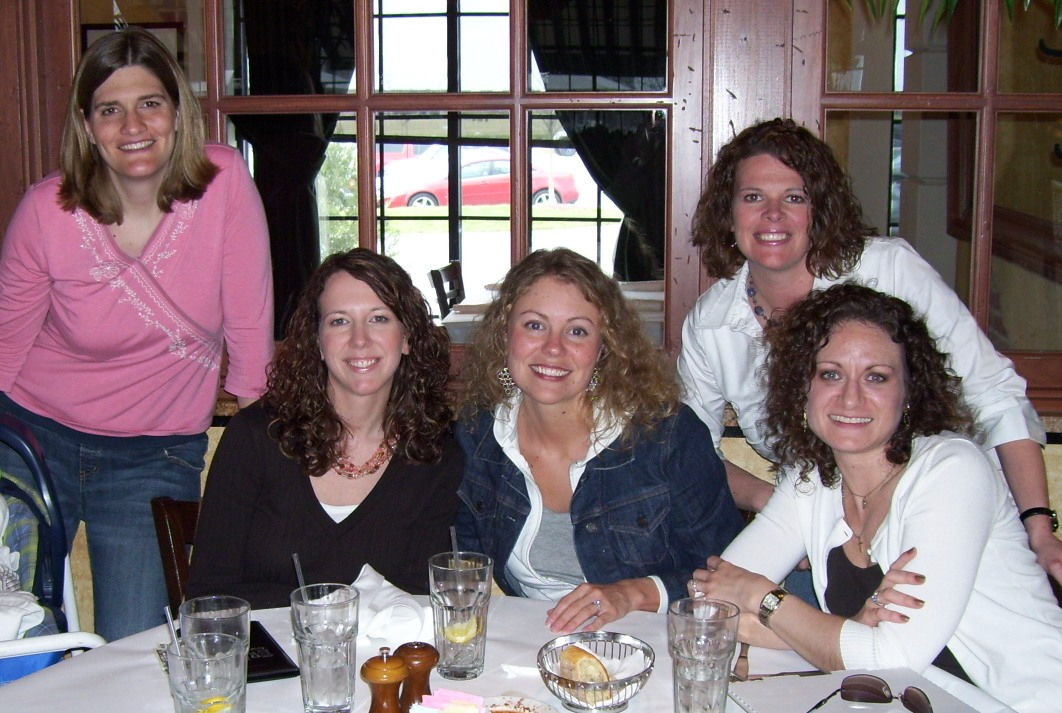
Madison, G, and MJ (Maddy Jo) continue to live in South Carolina, but we were blessed to have them home this summer. Madison continues to work at a boutique and spa in Columbia. She took a management position this year. Garrett continues in real estate, but he worked to get his teaching certificate so that he can both teach and coach football at the high school level. Late June and early July ended up being full of gatherings with family and friends as we celebrated Sylvie’s 2nd birthday and welcomed the SC crew back to Iowa for the Fourth of July weekend. The Pella VLs had us down to their pool for fun in the sun and water. Even Taylor and Maddy Kate’s Godfather Dave made an appearance! The summer also included my 40th High School Class reunion (Hoover High School Class of 1984). Wendy’s friends, “The Golden Girls” had a sleepover at our house, as well. I got to play bartender.

Of course, Wendy and I love spending time with friends over good food and good drinks. We enjoyed a couple of weekends together. In the summer, we headed to Kansas City to catch our Cubbies at Kauffman Stadium in Kansas City and had dinner with friends there. In the fall, we headed to Minneapolis for our annual pilgrimage to the Mother Ship (USBank Stadium) to watch the Vikings. We also took in a show at the Guthrie for the first time since COVID. In the fall, we headed to Park City, UT to visit friends, found our way to the top of Sundance Mountain, and enjoyed some spectacular views!

While we were in Park City, Wendy got word that her Grandma Vander Hart had passed away. As the only family member actually in Pella, Wendy has ceaselessly cared for her grandmother and her grandma’s needs for years. We returned from Utah to meet with Wendy’s family and lay Grandma to rest. I was blessed that she asked me to do her funeral.

No year is without its share of adversity. Torrential rains and drainage tiling that was blogged by tree roots combined to back up our sump pump and flood our basement twice this summer. The carpet was able to be salvaged, but the floods required us to pull up all of our carpets in the basement, tear out all of the carpet pads, and then have new carpet pads installed and the carpet re-laid. We used it as an opportunity to employ some local high school and college students. I’ll be very happy if we never have to do that again!

Wendy and I have not been involved in theatre for about six years. In the fall, I was recruited to once again run for President of our local Community Theatre. I was elected. So, we’re back in the mix of things, including presiding over Union Street Players’ annual Awards Dinner. Wendy is not on the Board but has been assisting with finances and the box office. She also helped organize the Awards Dinner. I might even make it back on stage this coming year!

We also enjoyed a visit from Wendy’s sister and her children from their home in Mazatlan this fall, as well as a wonderful picnic with our faith family from the Auditorium at Third Church.

Fall also brings Pella’s annual Tulip Queen Announcement Party. Wendy once again presided as Director of the evening’s festivities and I served once again as Master of Ceremonies. It’s always amazing to spend time with such talented young ladies who instill such hope for the future. Both Wendy and I are blessed every year to get to know these amazing women and be a part of our Community’s annual tradition.