Tag Archives: Mary

A Good Question for the Week

…but few things are needed—or indeed only one.
Luke 10:42a (NIV)

Most mornings as I sit in the quiet and meditate on the chapter there is one thing that jumps off the page. Other mornings, like this morning, there is a flow and a thread that runs through the episodes.

Today’s chapter contains four episodes. Each episode has its own lesson, but together they have a cohesive thought to send me into another work week.

First, Jesus expands the mission. Not just the Twelve now—others. Seventy-two unnamed, ordinary people.

He sends them out with almost reckless simplicity:

  • No purse
  • No bag
  • No sandals

In other words: No safety net but Me.

And what happens?
They come back breathless—“Lord, even the demons submit to us in your name!”

Jesus smiles, but gently redirects their joy:

“Do not rejoice that the spirits submit to you, but that your names are written in heaven.”

Jesus is saying, “Your identity isn’t in your power… it’s in your belonging.”

I love measurable wins—success, influence, outcomes.
Jesus whispers, “Tom, that’s not your truest scoreboard.”

My worth today is not in what I accomplish but in the quiet, unshakable reality that I am known and named.

In the second episode, Jesus grieves the towns that were centers of His ministry. They saw and heard everything… and they shrugged.

Jesus compares them to Tyre and Sidon—ancient enemies of Israel. It’s a shocking reversal: The outsiders would have responded… but you didn’t.

Familiarity can numb the soul.

I don’t drift from God because I lack information.
I drift because what was once electric becomes… ordinary.

The danger isn’t rebellion. It’s indifference.

I need to pay attention to what I’ve grown used to—grace, truth, the quiet nudges. I need to let them surprise me again.

Speaking of familiar, the third episode is the well-worn parable of the Good Samaritan.

A lawyer wants Jesus to define the limits of his responsibility. Jesus blows up the boundary lines.

A man is beaten on the road and left half-dead.
A preacher passes by…
An upstanding church member…
Then stops…one of those people… a Samaritan.

Samaritans and Jews had centuries of hostility. This isn’t just unlikely—it’s offensive. Jesus casts the enemy as the hero.

And notice the verbs:

  • He saw him
  • He felt compassion
  • He went to him
  • He bandaged
  • He carried
  • He paid

Love is not an attitude.
It’s an action, a movement toward.

My neighbor today isn’t theoretical.
It’s the inconvenient interruption right in front of me.

The road to Jericho winds its way through my day.

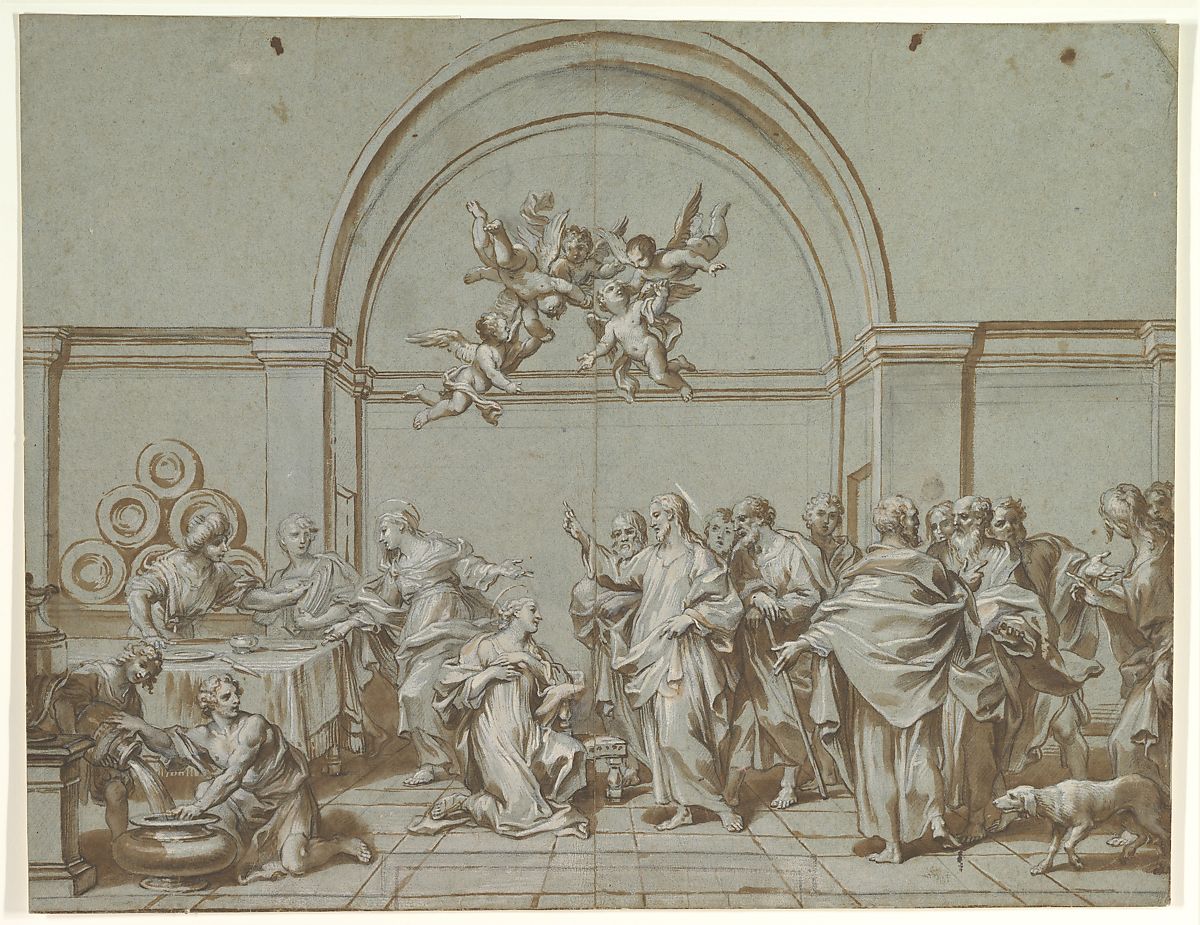
In the final episode, Jesus is having dinner at Mary and Martha’s house.

Martha is busy.
Mary is present.

Martha’s frustration spills out:

“Lord, don’t you care?”

Ugh! How many times have I whispered that question?

Jesus responds with tenderness, not rebuke:

“Martha, Martha… you’re worried and upset about many things, but only a few are needed – or indeed only one.”

“Many things” vs. “one thing.” The Greek carries the sense of fragmentation vs. wholeness.

Martha is pulled apart.
Mary is centered.
I can be very productive… and very divided inside.

The invitation isn’t to do less for Jesus.
It’s to be with Him first.

Before the emails.
Before the noise.
Before the long task list of responsibilities…

Sit down at the table.
Listen.
Let my soul breathe, and center.

And the through-line of these four episodes is an important question for my day and my week: Where is my center?

  • Is it in what I do? (the seventy-two)
  • In what I’ve grown used to? (the cities)
  • In where I draw my boundaries? (the lawyer)
  • In how busy I keep myself? (Martha)

Or…

Is it in being with Jesus—and letting everything else flow from there?

If you know anyone who might be encouraged by today’s post, please share.

Promotional graphic for Tom Vander Well's Wayfarer blog and podcast, featuring icons of various podcast platforms with a photo of Tom Vander Well.
These chapter-a-day blog posts are also available via podcast on all major podcast platforms including Apple, Google, and Spotify! Simply go to your podcast platform and search for “Wayfarer Tom Vander Well.” If it’s not on your platform, please let me know!
Icon featuring an open book symbol on an orange background.

When the Spirit Hovers Again

The angel answered, “The Holy Spirit will come on you, and the power of the Most High will overshadow you. So the holy one to be born will be called the Son of God.”
Luke 1:35 (NIV)

Yesterday we finished our trek through the story of Esther in which God providentially works through two unassuming individuals to save the Jewish people from genocide. Mordecai and his niece Esther were exiles and foreigners in Persia. Mordecai was a bureaucratic paper pusher. Esther was just a young girl.

God loves to work through unassuming people of faith.

As we begin our Lenten trek through Luke’s biography of Jesus, we see this same paradigm again.

An old priest and his wife who live in the back-country hills of Judah.
A young girl in the backwater town of Nazareth.

These are nobodies. Simple people living faithfully where life has planted them. But through them, God is going to begin a new creation.

When Mary asks the angel Gabriel how she could be pregnant, since she was a virgin, he said that God’s Spirit would “overshadow” her. That’s a fascinating word to use. The Greek word means “to overshadow,” the language used when God’s presence fills the tabernacle. It also echoes the opening chapter of the Great Story in which God’s Spirit “hovers” over the chaos and creation begins. Gabriel is announcing that through Mary a new creation is about to begin, and Mary will become like an Ark of the New Covenant.

The Ark of the Covenant was the most sacred object in Israel.

Inside it were three things:

  • The stone tablets of the Law
  • A jar of manna
  • Aaron’s priestly staff

Above it rested what was known as the mercy seat, and God’s glory—the Shekinah—was said to dwell there. In other words, the Ark represented the place where God’s presence touched the earth. And when the Ark was placed in the tabernacle, Scripture says the cloud of God’s glory “overshadowed” it — and there’s that word again.

Now watch what Luke does.

Luke structures Mary’s visit to Elizabeth so that it mirrors an earlier story in Israel’s history.

The story appears in 2 Samuel, when King David brings the Ark to Jerusalem.

Let’s compare the passages.

Ark StoryMary Story
David travels to the hill country of JudahMary travels to the hill country of Judah
David asks: “How can the ark of the Lord come to me?”Elizabeth asks: “Why am I so favored that the mother of my Lord should come to me?”
The Ark stays in the house of Obed-Edom three monthsMary stays with Elizabeth about three months
David leaps/dances before the ArkJohn leaps in Elizabeth’s womb

Now, let’s compare what was in the Ark of the Covenant and what is inside of Mary…

Ark ContentsFulfillment in Mary
Stone tablets of the LawJesus — the living Word
Jar of mannaJesus — the bread of life
Aaron’s priestly staffJesus — the ultimate High Priest

Luke begins his version of Jesus’ story by telling us that God’s glory no longer lives in a golden box inside a temple.

Instead, it lives:

  • in the womb of a teenage girl
  • in a stable outside Bethlehem
  • in the life of a wandering rabbi with the calloused hands of a carpenter

God has moved out of the temple and into the neighborhood.

And what neighborhood?

Not the Temple Mount in Jerusalem, nor in glorious Rome— but to a back water town in Galilee. A rural nowhere where you’ll find simple people of faith living quiet, every day lives.

The kind of unassuming people God loves to use.

The same Spirit who overshadowed:

  • the waters of creation
  • the tabernacle in the wilderness
  • Mary in Nazareth

now chooses to dwell in ordinary lives that say yes to Him.

In the quiet this morning, my heart is mulling over the reality that God tends to create the most world-changing things in hidden places. The very theme I saw all over the place in Esther’s story.

Before creation, there was dark water.
Before redemption, there was a quiet womb.

The Spirit doesn’t only move in thunder.

Sometimes He hovers.

Over a life.
Over a calling.
Over a slow, unseen work of grace.

And when He does, creation happens all over again.

“Therefore, if anyone is in Christ, the new creation has come: The old has gone, the new is here!
2 Corinthians 5:17 (NIV)

If you know anyone who might be encouraged by today’s post, please share.

Promotional graphic for Tom Vander Well's Wayfarer blog and podcast, featuring icons of various podcast platforms with a photo of Tom Vander Well.
These chapter-a-day blog posts are also available via podcast on all major podcast platforms including Apple, Google, and Spotify! Simply go to your podcast platform and search for “Wayfarer Tom Vander Well.” If it’s not on your platform, please let me know!
Icon representing an open book on an orange background.

Black Sheep Family

Black Sheep Family (CaD 1 Chr 5) Wayfarer

…and though Judah was the strongest of his brothers and a ruler came from him, the rights of the firstborn belonged to Joseph.
1 Chronicles 5:2 (NIV)

Along my life journey, I had a friend enter my story unexpectedly. This person may take the prize for being the most tragic individual I’ve personally met on my earthly journey. What are you supposed to do as a teenager when you borrow your dad’s car for a date but have to clean up the blood your father left in the back seat and the trunk before picking up your date? Talk about being haunted by your past. This was a heartbreaking story of a child who dealt with more than any child should have to deal with in life. It was a life that ended just as tragically.

In today’s chapter, the Chronicler shares the genealogy of the three tribes who settled east of the Jordan River. These tribes would be part of the northern kingdom of Israel that broke away from Judah and refused to recognize the lineage of King David as monarch. They were all swept away into exile by the Assyrian Empire where they remained at the time of the Chronicler’s writing.

Two prevailing thoughts come to me as I meditate on today’s chapter. First, the Chronicler once again makes it clear that he is primarily interested in the tribe of Judah, from which the Dynastic line of David hails. He makes this evident. Having established this, I find it interesting that he doesn’t shy away from presenting the genealogy of the tribes he would likely consider “black sheep.”

The tribes the Chronicler lists in today’s chapter were the rebels who shunned the tribe of Judah and David’s line. Reuben, in particular, was the dishonored firstborn who lost his paternal blessing. Unlike the Chronicler and his ancestors from Judah, who returned from exile, these tribes remained scattered across the old Assyrian empire.

But they are still family. They are still part of the story.

As I’ve explored my family’s stories on both paternal and maternal sides, I’ve discovered rifts and feuds. Mind you, I discovered nothing outside of the normal conflicts and scandals that are part of the mess that comes with being part of any family. One of the hardest things about family is that it’s not something we get to choose. My mind wanders to my friend cleaning up the blood their father left in the backseat. I can’t imagine.

As a disciple of Jesus, I cannot help but consider Jesus’ thoughts on family which are somewhat conflicting. His own flesh-and-blood mother and siblings once attempted to take control believing Jesus to have lost His mind (Mark 3:21), and Jesus responds by providing an expanded view of family. “Who are my mother and brothers?” Jesus asked before gesturing to all of His followers and declaring them family. Jesus would go on to acknowledge that many who choose to follow Him would be required to leave flesh-and-blood family behind, though he promised they would find far more family ahead than they left behind.

In the quiet this morning, I find my head and my heart holding the tension between honoring, loving, and serving my flesh-and-blood family while acknowledging that I have friends whom I consider family. It’s easy to fall into an either-or, binary mentality on either side of the issue. I find Jesus’ example to be “both-and.” Yes, He seemed to diminish His family when they thought He was out of His mind, but He also used his dying breath to ensure that a spiritual “brother” (John) would care for His physical mother, Mary. This, despite the fact that Jesus had multiple flesh-and-blood younger brothers who were socially responsible for caring for her.

Then, of course, there is the larger reality of genetics which proves that we all came from the same woman. In many ways, Jesus’ teaching is simply pointing to a much larger truth that may only be seen with perfect clarity in eternity. We humans are all one family, whether we are willing to acknowledge it or not. I’m glad that the Chronicler acknowledged his black sheep family members. I find a spiritual lesson in his honesty.

If you know anyone who might be encouraged by today’s post, please share.

Watershed Moment

Watershed Moment (CaD Jhn 11) Wayfarer

“But Rabbi,” they said, “a short while ago the Jews there tried to stone you, and yet you are going back?”
John 11:8 (NIV)

Certain movie scenes stand out in my memory because of the way the entire storyline of a movie hinges on that one moment. For example, in The Godfather, it is Michael’s late-night visit to the hospital to find his father alone. In the darkness, he whispers to his father, “It’s okay. I’m with you now.” From that point on, the son who wanted nothing to do with his father’s business will be on a trajectory to become the very thing he once despised.

Today’s chapter contains a similar dramatic and pivotal episode in Jesus’ story. This is the seventh and final miraculous “sign” that John chooses to share before shifting to Jesus’ fateful and final days. It is not only the most dramatic of the seven because of the miracle itself, but because the event pushes Jesus’ enemies into a conspiracy to commit murder and rid themselves of Jesus once-and-for-all.

The conflict between Jesus and the chief priests in Jerusalem was already at a boiling point. Jesus had escaped attempts to arrest Him and stone Him the last time He had been in Jerusalem. Because of this, He left the region altogether. But now Jesus gets word that His good friend, Lazarus is gravely ill. Lazarus and his sisters live in Bethany, a stone’s throw from Jerusalem and the Chief Priests.

By the time Jesus arrived, Lazarus had been lying in the grave for four days. Mourners from Jerusalem had gathered to comfort the family. There is a big crowd on hand.

Part of the drama of the moment for me is in John’s careful crafting of the human emotion of the moment. He emphasizes Jesus’ love for Lazarus and his sisters. There’s the wailing and lamenting of the friends gathered with the sisters at the tomb. John also records Jesus’ own emotions with the simple declaration “Jesus wept.” And then, amid the grief and despair, Jesus orders the stone rolled away and loudly commands Lazarus to exit the grave.

The raising of Lazarus from the dead was a watershed moment on multiple levels. The crowd of witnesses and the public display ensured that word would spread like wildfire. The proximity to Jerusalem ensured that word would quickly reach Jesus’ enemies. With this particular sign, Jesus also foreshadows the impending end of His own earthly journey through death to resurrection. Lazarus, meanwhile, would be a living witness to Jesus’ miraculous power, leading Jesus’ enemies to conspire to send him back to the grave as well.

As I meditated on this dramatic scene in the quiet this morning, it once again seemed clear to me that Jesus was not a victim of circumstance. He was very clearly driving the action. Jesus had already declared how His earthly journey would end. With the raising of Lazarus, He was putting the wheels into motion that would lead right where He always knew things would end up.

Along my own earthly journey as a disciple of Jesus, I have been able to look back on my journey and see how certain watershed moments in my story were instrumental in driving the action. Even difficult and hard times have resulted in spiritual growth, deeper levels of maturity, and they have led to places where I’ve experienced life in greater and more fulfilling ways.

The story of Lazarus is really a microcosm of the Great Story itself. Death leads to new life just as winter leads to spring. Or, as David penned in his lyrics of Psalm 30, weeping may last for the night, but joy comes in the morning.

I find this a good reminder for the start of a new work week. Just as Jesus shared with Lazarus’ sisters, if I believe Jesus truly the Resurrection and the Life, I am assured that the darkest of earthly circumstances eventually end in light, the saddest of times ultimately give way to joy, and even death itself is simply a gateway to new life.

If you know anyone who might be encouraged by today’s post, please share.

Mary and the Dudes

Mary and the Dudes (CaD Mk 14) Wayfarer

While he was in Bethany, reclining at the table in the home of Simon the Leper, a woman came with an alabaster jar of very expensive perfume, made of pure nard. She broke the jar and poured the perfume on his head.
Mark 14:3 (NIV)

In today’s chapter, Mark provides a Cliff Notes summary of the fateful night of Jesus’ arrest. As I read the familiar episodes, I was struck at the contrast between Mary’s anointing of Jesus (she is not named in Mark’s biography of Jesus, but John names her, the sister of Lazarus) with expensive perfume, and the actions/behaviors of the Twelve.

Jesus has now been speaking of His arrest, suffering, and death for some time. The response of the Twelve has ranged from silence to confusion to outright disapproval. Mark’s version of events in today’s chapter reveal the behavior of the Twelve to be disagreeable and inattentive to the weight of the moment.

Mary, on the other hand, seems to see what no one else sees. She alone embraces what is about to happen, understands the weight of it, and responds by embracing what Jesus has said would happen. Mary alone acts as a willing participant. Her actions are to bless Jesus before His passion and to metaphorically prepare Him for death. Mary is the only person who seems to see and humbly accept. And, she’s criticized for it.

Jesus’ chosen disciples, meanwhile, can’t believe one of them would betray Him. They can’t stay awake with Him, even after He asks of them this small favor. They can’t stay and stand with Jesus in His moment of need. They can’t even admit they know Him, when confronted with multiple opportunities to do so.

In the quiet this morning, I can’t help but imagine myself in the roles of both Mary and the Twelve. Luke shares that Mary was one to sit at the feet of Jesus and hang on His every word to the point that her sister was indignant (everyone, it would seem, gets indignant with Mary). As much as I would like to think that I would have Mary’s insight, I am reminded that it came at the cost of ignoring urgent things in order to invest in important things. Her devotion to “asking, seeking, and knocking” appear to be the precursor to her spiritual perception.

Have I sacrificed things distracting and urgent to invest myself in Jesus as Mary did?

I have to confess that I identify with the dudes…

Present, but imperceptive.

Great intentions, but greatly inattentive.

Braggadocios during warm-ups, but bungling in the game.

Of course, today’s chapter is not the end of the story. The dudes will keep following. They will learn. They will turn the world upside down.

I’m looking out the window at the lake as I type this. Another day has dawned, and so my story isn’t over either. I take hope in that this morning. Like the dudes, I’ll keep following, too. I’ll keep learning. Who knows? Maybe I’ll even turn a few things upside-down before this wayfaring stranger’s journey is over.

If you know anyone who might be encouraged by today’s post, please share.

“Taking the Bullet”

"Taking the Bullet" (CaD John 19) Wayfarer

When Jesus saw his mother there, and the disciple whom he loved standing nearby, he said to her, “Woman, here is your son,” and to the disciple, “Here is your mother.” From that time on, this disciple took her into his home.
John 19:26-27 (NIV)

Our local schools start up next week. Social media is filled this week with pictures of parents taking their Freshman college students to campus. Many of our friends are among them. Next week it will be pictures of the first day of school and Wendy and I will exclaim repeatedly, “Oh my word, he’s grown!” and “Goodness, she’s gotten so big!” Time marches on.

I remember my parents commenting many years ago about reaching the point in life in which they “dodged the bullet.” They had added up the number of children of friends and relatives who, along the way, they had agreed to take in if the parents met with an untimely end. It was a big number. My parents are good people.

Fast forward to today. It’s Wendy and me watching the children of our friends and relatives becoming young adults coming of age. We’re beginning to recognize that we are getting ever nearer to that same “dodge the bullet” milestone.

Today’s chapter records the torture, death sentence, crucifixion, and death of Jesus. As I continue to follow the theme of identity woven through John’s biography, there were two things that stood out.

The first is the power-play happening between the religious leaders, who could not legally execute someone under Roman law, and the Roman Governor, Pilate, who knows that Jesus was not guilty of anything deserving death. Having been politically railroaded into sentencing Jesus to crucifixion, Pilate has a sign made that identified Jesus as “King of the Jews” in three languages and placed on Jesus’ cross. He certainly did it to insult the religious leaders; Mission accomplished. I could’t help but recall Jesus telling Pilate, “My kingdom is not of this world” and Pilate’s response: “Then you are a king.” Was there, perhaps, a hint of respect for this innocent man made political scapegoat?

Jesus hung on the cross naked, bloody, bruised, and beaten. He looks down from the cross to see His own mother. Next to her stands John, the only one of The Eleven with the courage to show up. Taking into account all four biographies of Jesus in the Great Story, Jesus made seven statements from the cross. One of them was caring for His own mother, and making sure that John would care for her. “She is now your mother, John. Mom? He is now your son.”

In the quiet this morning, I think about the roles we play in the lives of others and the way that changes. Last week Wendy had coffee with Kennedy, the daughter of our friends who is heading to college today. Wendy presented her with a ring. It was a rite of passage, and Wendy made it perfectly clear that in coming into adulthood Kennedy was joining a community of women who look out for one another. The ring is to serve as a reminder to Kennedy that she has a community of women she can count on. I guess it was Wendy’s way of acknowledging that she’ll still “take the bullet” for our friends and her daughter, it just hits one differently at this stage of life’s journey.

That’s what community is really all about. We look out for one another and their loved ones. We’re willing to “take the bullet” whether that means raising a friend’s children or helping care for a friend’s parents. We have a role to play, not only in the lives of our friends, but also in the lives of their loved ones. That’s what Jesus was talking about when He told His disciples the previous night: “Greater love has no one than this: to lay down one’s life for one’s friends.” As Jesus lays down His life for John and for the sins of the world, John lays down his life for Jesus, and agrees to take in Jesus’ mother as his own.

May I always be willing to “take the bullet” so to speak, and lay down my own life, time, energy, and resources, for my friends and their loved ones.

If you know anyone who might be encouraged by today’s post, please share.

Mary and the Dudes

Mary and the Dudes (CaD Mk 14) Wayfarer

While he was in Bethany, reclining at the table in the home of Simon the Leper, a woman came with an alabaster jar of very expensive perfume, made of pure nard. She broke the jar and poured the perfume on his head.
Mark 14:3 (NIV)

In today’s chapter, Mark provides a Cliff Notes summary of the fateful night of Jesus’ arrest. As I read the familiar episodes, I was struck at the contrast between Mary’s anointing of Jesus (she is not named in Mark’s biography of Jesus, but John names her, the sister of Lazarus) with expensive perfume, and the actions/behaviors of the Twelve.

Jesus has now been speaking of His arrest, suffering, and death for some time. The response of the Twelve has ranged from silence to confusion to outright disapproval. Mark’s version of events in today’s chapter reveal the behavior of the Twelve to be disagreeable and inattentive to the weight of the moment.

Mary, on the other hand, seems to see what no one else sees. She alone embraces what is about to happen, understands the weight of it, and responds by embracing what Jesus has said would happen. Mary alone acts as a willing participant. Her actions are to bless Jesus before His passion and to metaphorically prepare Him for death. Mary is the only person who seems to see and humbly accept. And, she’s criticized for it.

Jesus’ chosen disciples, meanwhile, can’t believe one of them would betray Him. They can’t stay awake with Him, even after He asks of them this small favor. They can’t stay and stand with Jesus in His moment of need. They can’t even admit they know Him, when confronted with multiple opportunities to do so.

In the quiet this morning, I can’t help but imagine myself in the roles of both Mary and the Twelve. Luke shares that Mary was one to sit at the feet of Jesus and hang on His every word to the point that her sister was indignant (everyone, it would seem, gets indignant with Mary). As much as I would like to think that I would have Mary’s insight, I am reminded that it came at the cost of ignoring urgent things in order to invest in important things. Her devotion to “asking, seeking, and knocking” appear to be the precursor to her spiritual perception.

Have I sacrificed things distracting and urgent to invest myself in Jesus as Mary did?

I have to confess that I identify with the dudes…

Present, but imperceptive.

Great intentions, but greatly inattentive.

Braggadocios during warm-ups, but bungling in the game.

Of course, today’s chapter is not the end of the story. The dudes will keep following. They will learn. They will turn the world upside down.

I’m looking out the window at the lake as I type this. Another day has dawned, and so my story isn’t over either. I take hope in that this morning. Like the dudes, I’ll keep following, too. I’ll keep learning. Who knows? Maybe I’ll even turn a few things upside-down before this wayfaring stranger’s journey is over.

If you know anyone who might be encouraged by today’s post, please share.

A Different Playbook

A Different Playbook (CaD Mk 3) Wayfarer

Then the Pharisees went out and began to plot with the Herodians how they might kill Jesus.
Mark 3:6 (NIV)

As a student of history, I’ve observed that much of history is about those in power, how they came to power, how their power was threatened or taken away. It always makes for a good story, as Shakespeare well knew. The Bard mined a lot of historical leaders and events to write plays that are still being ceaselessly produced today.

One of the themes that runs through both history and our classic literature is that of holding on to power. I find it to be a very human thing. Once I have power, I don’t want to let go of it. This is not just true of politicians who rig the system to ensure they remain in control, or business leaders who cling to their corner office, but it’s also true of parenting. For almost two decades I am essentially ruler and lord with total authority over this child. Then I’m suddenly supposed to just “let go” of my power and authority and let her run her own life when she might make some crazy life decision? Yikes!

As I read today’s chapter, I couldn’t help but see the continued development of conflict that Mark is revealing in the text. Those representatives of the powerful religious institution who were indignant with Jesus’ teaching in yesterday’s chapter, are finding Jesus to be a growing threat to their power in today’s chapter.

Jesus’ popularity is rising off of the charts. His name is trending throughout the region, even in Jerusalem where the earthly powers of politics, commerce, and religion reign. Crowds are traveling to Galilee to see this rising star. And the people who are flocking to Him are the crowds, the masses, commoners, the sick, the poor, the simpletons in fly-over country, the deplorables.

The stakes have grown. The power brokers and their minions are no longer just watching, they are plotting:

“Some of them were looking for a reason to accuse Jesus…” (vs. 2)

Once again, Jesus thwarts their monopolistic, religious control by healing someone on the Sabbath. The crowds are cheering. This Nazarene upstart could turn the crowds against them. Mobs, protests, and violence in the streets could be the result, and that’s a threat to our power. Something must be done, and Mark tells us that something interesting happens:

“Then the Pharisees went out and began to plot with the Herodians how they might kill Jesus.” (vs. 6)

The Pharisees were religious power brokers who publicly condemned the Roman Empire who was in control of the region. The Herodians (followers of local King Herod) were local political power brokers who did business with Rome in order to get lucrative Roman contracts and Roman authority to wield local political control. These two groups publicly hated one another, and in the media they had nothing good to say about one another. However, history reveals time and time again that in the playbook of the Kingdoms of this World “the enemy of my enemy is my friend.”

Welcome to the smoke-filled back room. Have a seat. We’re just getting started. What are we to do with this “Jesus problem?”

Jesus, meanwhile, has other problems. The crowds are pressing in to the point of almost being out of control. The line of people wanting to be healed is endless. They’re coming from all over. Where are all these people going to stay? What are they going to eat? The locals are complaining about their quiet little towns being overrun with foreigners. The markets are sold out of everything!

And then Jesus’ own mother and brothers show up. They’re scared. Jesus is making powerful enemies. They are feeling the pressure themselves. Is it possible that an elder from the local synagogue was urged by higher-ups to pay Mary a friendly visit? I can imagine it…

“Mary, this isn’t good. Your boy has a good heart. I know he means well, but he’s going to get himself in big trouble with the Sanhedrin, with Herodians, and you don’t want the Romans to get involved. This could look really bad for your family. You’re a widow. Jesus is your oldest boy. He’s responsible to take care of you and instead he’s running around creating trouble for you and your family. We think it best that you talk to him. Be a good mother. Talk some sense into your boy.”

When his family heard about this, they went to take charge of him, for they said, “He is out of his mind.” (vs. 21)

Next comes the spin campaign, and those in power know how to spin a narrative. It doesn’t have to be true. It just has to come from a seemingly “reliable” and authoritative source. It has be sensational, it has to be easily repeatable, and it has to create fear and doubt in the minds of the public.

 And the teachers of the law who came down from Jerusalem said, “He is possessed by Beelzebul! By the prince of demons he is driving out demons.” (vs. 22)

In the quiet this morning, I find myself thinking that the more things change, the more they stay the same in the Kingdoms of this World and their playbook.

And Jesus’ response to all this? He sticks to His core message: “The Kingdom of God is here, and it’s not like the Kingdoms of this world”. He continues to heal, He feeds, He tells stories, and He escapes the crowds to be alone for periods of time. He refuses to bow to pressure from the envoys of worldly power. He even refuses to bow to pressure from his own mother.

Poor Mary. It’s hard to let go of authority of your adult child when He can make crazy life decisions that affect the whole family. I think it’s lovely that as Jesus hung on the cross one of the last things He did was to see to it that His friend John would care for His earthly mother.

The further I get on my own life journey, I find myself seeing the Kingdoms of this World with greater clarity on all levels. As that happens, I hear the Spirit calling me to understand that being an Ambassador of the Kingdom of God on earth means living in the World, but following a different playbook.

“Consider it Joy” (Again)

"Consider it Joy" (Again) [CaD Ps 86] Wayfarer

Bring joy to your servant, Lord,
    for I put my trust in you.

Psalm 86:4 (NIV)

For centuries, followers of Jesus around the world have annually recognized different seasons of the calendar year as they relate to celebrated holidays (or Holy Days) of the faith. We are currently in a season called Advent, in which followers of Jesus prepare hearts and minds to celebrate the birth of Jesus at Christmas.

One of the metaphors that followers use in this season is the advent candle. Each of the four Sundays leading up to Christmas, and then on Christmas Eve, candles are lit reminding us that with Jesus’ birth the “Light” of heaven had come to earth. Each of the five candles represents a theme. This past Sunday was the “Joy” candle. “Joy,” as it was described among our local gathering of Jesus’ followers on Sunday is the soul’s deep happiness, contentment, and sense of well-being which is experienced regardless of circumstances.

Joy has a specific meaning for Wendy and me. Over the years I have shared in these posts about our journey through the valley of infertility. Joy was something Wendy and I found in that journey, and not a Christmas goes by without being reminded of the story of Elizabeth’s miraculous deliverance from barrenness, Mary’s miraculous conception, and of course Jesus’ humble birth. Each year I am reminded of the verse tatted on Wendy’s forearm, where it can be a constant visual reminder for both of us:

“Consider it joy when you encounter various trials…” (James 1:2)

She and I learned that sometimes joy must be consciously considered, sought after, and found as one finds buried spiritual treasure. Finding joy requires surrendering the momentary, circumstantial pain in order to seek something deeper; We reach for joy which is always “further up and further in.” The joy of Christmas is found despite the often unconsidered circumstances that stare me right in the face: a socially outcast little girl, her scandalous teen pregnancy, her equally outcast husband, and the exilic, compulsory, uncomfortable journey to a strange town. The humility of having nowhere to stay, the realities of childbirth, not in a luxurious modern birthing suite surrounded by talented caregivers, but alone in a dirty barn. I sing Joy to the World but only because I’m looking back with 20-20 hindsight at the larger story, knowing where it led.

As I read today’s chapter, Psalm 86, I was a few verses in before it struck me that it’s the first song of David I’ve encountered in Book III of the psalms. The lyrics are so personal. They are coming from deep in David’s heart. It’s another song of lament which was written at a time of personal distress. What fascinated me is that David doesn’t share any real specifics about his personal distress until the very last stanza. The song is front-loaded with David’s faith, hope, and trust. He dwells on God’s goodness, faithfulness, love, and deliverance. Only then does he describe his circumstances in light of these things.

Today’s psalm is David’s version of “Consider it joy.” And how many of his songs contain that theme? “Consider it joy” is not a one-and-done deal. It’s a perpetually repeated exercise along my spiritual journey.

It often amazes me how this chapter-a-day journey leads me right to the thing I need to read on the day I need to read it. Like David, I’ll spare you the specifics. Suffice it to say that there are days when I have to be reminded, once again, to consider joy: Surrendering the circumstances of that day in order to reach further up and further in to take hold of it.

“The Woman”

While he was in Bethany, reclining at the table in the home of Simon the Leper, a woman came with an alabaster jar of very expensive perfume, made of pure nard. She broke the jar and poured the perfume on his head.
Mark 14:3 (NIV)

In today’s chapter, Jesus was at a dinner party given in His honor. Mark wrote the shortest of the four biographies of Jesus, and his efficiency in story-telling requires that details be left out in order to get to the heart of the matter. In this case, however, I found that the omission of certain details also reduced the power of the moment.

Mark states that “a woman” anoints Jesus with some audaciously expensive perfume. John, who was present at the dinner party, explains in his account (John 12) that the person Mark calls “a woman” was Mary, the sister of Lazarus, whom Jesus had just raised from the dead. The other thing we know about Mary is that much earlier when Jesus paid a visit to the home of Mary, Martha, and Lazarus she had been chastised by her sister, Martha, for not helping with dinner (see Luke 10). Mary was intent on sitting near Jesus and listening to Him while Martha dutifully prepared supper. In John’s account of the dinner party, Martha was once again focused on serving. Mary was focused on Jesus.

I had a couple of observations as I contemplated the scene this morning.

Jesus said that Mary, in anointing him with the perfume, was preparing Him “for burial.” Because of the lack of modern embalming methods, bodies were covered in perfumes and ointments that would counteract the stench of death that the body would emit relatively quickly. Yet, Mary’s act is happening a couple of days before Jesus would be arrested and executed.

While #TheTwelve and Jesus’ other followers are deaf and defensive to Jesus repeatedly insisting that He would suffer, die, and be resurrected, Mary embraces what Jesus has been saying. She shows faith and trust that no one else did. Her act metaphorically tells Jesus, “If this is what must be done, then I’m in. I’m going to trust you, that it will be just as you said. Allow me the honor of preparing you for what you say you must do.”

Mary does this immediately after she witnessed Jesus literally calling her brother out of the grave. Mary was standing there when Jesus said to her sister Martha: “I am the resurrection and the life. The one who believes in me will live, even though they die; and whoever lives by believing in me will never die. Do you believe this?” Mary’s anointing of Jesus also symbolically says “I believe. I believe you are the Resurrection and the Life. I believe you will die and that you’ll be raised from the dead just as you said.”

It is, ironically, Judas who questions the “waste” of the expensive perfume (worth an entire year of typical wages in those days) which he says could have been sold and used for more “practical” purposes. Jesus rebukes Judas sharply. To paraphrase: “Judas, shut up and leave Mary alone. This woman understands what I’m doing better than you and the other eleven.” I can’t help but hear the echoes of Jesus repeatedly asking #TheTwelve in previous chapters: “You still don’t understand?” It was Mary, who had been intent on watching and listening to Jesus, who saw it better than anyone else. It was this rebuke that sends Judas over the edge. He leaves the dinner party to arrange his betrayal.

I also hear the echoes of Jesus’ repeated admonition, “If you have ears to hear.” Mary’s spiritual ears were wide open to hear what no one else heard. Her spiritual eyes saw what no one else did. She was the only one connecting the spiritual dots between what Jesus had said and done raising her brother from the dead, and what Jesus said was going to happen to Him. And, she was the one who had been intent on sticking close to Jesus to watch, listen, and learn.

In the quiet this morning, I find it poignant that the person who seemed to “get it” was a woman outside of #TheTwelve. In those days, women were considered second rate to men. They were often treated as possessions and they typically had little education or social standing. It is a recurring theme in the Great Story for God to choose and to use the least, the youngest, the broken, the weak, and the marginalized to demonstrate His power. At the beginning of the Great Story is was “the woman” who was blamed for Adam and Eve’s disobedience. In this case, it was “a woman” who understands what Jesus is doing. In a few days, it will be “the women” who first hear of the resurrection. It will be “the women” who are the first to believe it. It will be “the women” who are entrusted to share the good news with #TheTwelve. I believe that there is an important lesson for me in this.

I have observed along my journey that even today it is often “the women,” like Mary, who show a greater interest in and sensitivity to the things of the Spirit, as well as a greater understanding of what God is up to. I have come to embrace that I have a lot to learn from them. I also have come to embrace the reality that it is sometimes those whom I’d least expect who get the things of God better than I do. Mary reminds me that in this spiritual journey, humility is required.