Tag Archives: Jesus Movement

Cities of Refuge

“The accused must stay in the city of refuge until the death of the high priest; only after the death of the high priest may they return to their own property.
Numbers 35:28 (NIV)

Our city of Pella here on the Iowa prairie has an incredible history. It was created by a Dutch pastor and his congregation who were fleeing religious persecution from the state church in the Netherlands. It was named Pella after an ancient city called Pella that was a “city of refuge” and to which early Christians fled from persecution and an impending war in Jerusalem between the Jews and Romans.

In today’s chapter, God commands Moses to create six evenly distributed towns throughout the Promised Land where the tribe of Levi would settle. Remember, the Levites were responsible for maintaining God’s traveling tent temple and the overseeing the entire on-going sacrificial system. God was their inheritance, not a plot of land. Nevertheless, they needed a place to live, so six cities were created for the Levites and God designated them “cities of refuge.”

In the entire history and development of human civilization, today’s chapter stands as a critical and revolutionary step forward. Other ancient cultures had largely undeveloped policies regarding sanctuary for the accused. God didn’t invent the idea of sanctuary out of thin air in today’s chapter, but He transformed a scattered, uneven practice into a theologically rich, justice-mercy structure that was unique to Israel and transformed the principles and policies of human justice.

There were six cities evenly distributed. The cities were Levite towns, meaning that the accused was under the protection of the priests and both mercy and justice were viewed directly as coming from God’s appointed representatives. The accused could not leave the walls of the city of refuge until the death of the high priest, so fleeing from an avenger was not just a blank check of forgiveness. There were boundaries to which the accused must adhere. There was also a very clear system that God put in place that required witnesses and a form of due process. Humanity had never seen anything like it.

Cities of refuge became a part of the human landscape and they have had a ripple effect throughout history. The early Jesus Movement largely survived and flourished because of a prophecy in which Christians were instructed to flee to ancient Pella. Had they stayed in Jerusalem, they may have been wiped out when the Romans destroyed the temple and city in 70 A.D.

In the 1800s, H.P. Scholte realized that there was little or no future for his largely poor, uneducated, and lower-class congregation members. He and his flock had no freedom of religion. He had already been imprisoned for obeying his conscience and defying the king who was head of the state controlled church. Scholte saw America for what it was, a land of opportunity where he and his followers were free worship however they wanted and where poor uneducated farmers might make a life for themselves and their descendants that would have been impossible in the Netherlands. So, he dreamed, designed, and built a new city of refuge on the Iowa prairie and named it after the ancient city that saved and launched the success of the Jesus Movement.

In the quiet this morning, as I meditate on the chapter and the history of cities of refuge, there are three things stirring in my soul:

God as Refuge: In both Jewish and Christian traditions, God carves out spaces of mercy in the midst of justice. This life journey contains moments where guilt—intentional or accidental—feels like a crushing weight. In today’s chapter God whispers: there is a place to run, and a God who receives you.

Boundaries of Grace: The city walls of the Levite towns remind me that refuge comes with boundaries. Forgiveness and safety are not license; they invite us to dwell in a different rhythm of life until God’s appointed time of release.

Death that Brings Freedom: For both Jew and Christian, the death of the High Priest as part of the system is key. It’s a reminder that death itself—Christ’s, and one day my own—is not an end but the doorway to freedom.

Grace often blooms most vividly when something old dies and something new begins.

If you know anyone who might be encouraged by today’s post, please share.

Promotional graphic for Tom Vander Well's Wayfarer blog and podcast, featuring icons of various podcast platforms with a photo of Tom Vander Well.
These chapter-a-day blog posts are also available via podcast on all major podcast platforms including Apple, Google, and Spotify! Simply go to your podcast platform and search for “Wayfarer Tom Vander Well.” If it’s not on your platform, please let me know!
Logo of Bible Gateway, featuring an open book icon and the brand name.

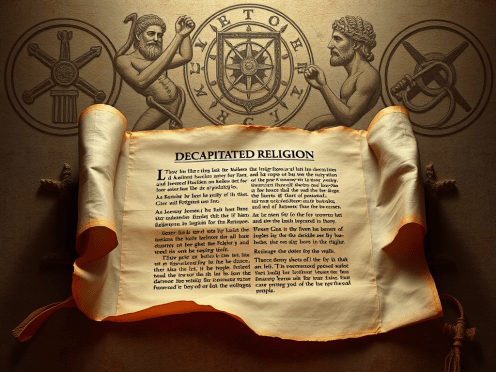
Decapitated Religion

See to it that no one takes you captive through hollow and deceptive philosophy, which depends on human tradition and the elemental spiritual forces of this world rather than on Christ.
Colossians 2:8 (NIV)

The early years of the Jesus Movement were messy. You have to think about it. All of the scripture we trek through on this chapter-a-day journey, the texts on which Christian theology has been established for 2,000 years hadn’t yet been written. They were being written as handwritten letters by Paul and the other apostles, delivered by personal carrier, distributed to each local gathering of Jesus’ followers, and read to the believers.

The first century world in which the Jesus Movement emerged was filled with religions. There was certainly the Jewish religion from which Jesus and His followers emerged. There was a pantheon of Roman gods and Greek gods that each had their own temple, cult, worship, and traditions. There was a cult worshipping Caesar as god. There were also Greek philosophies that had all the hallmarks of being religions in-and-of themselves. As local gatherings of new believers in Jesus met on a regular basis to worship, learn Jesus’ teachings, and encourage one another to live their lives daily as His disciples, they were confronted from within and without with other religious and philosophical thoughts that some individuals wanted to connect to and with Jesus.

Reading between the lines of Paul’s letter to the believers in Colossae, it is obvious that he is addressing this very reality. Others were introducing religious thoughts, traditions, and philosophies into the local gathering that had nothing to do with Jesus. Over the centuries, scholars have argued about what competing religion or philosophy Paul is addressing. I don’t think it’s one. I think he’s addressing all of it: Jewish legalism, pagan rituals and traditions, Greek philosophy, and even the worship of angels are all described by Paul’s words.

What I have found fascinating while meditating on the letter yesterday and today is to circle and count the number of times Paul uses the word “Christ.” Ten times he uses it in today’s chapter. He’ll use it 30 times total in this brief letter. So, I took some time to consider what Paul is saying about Christ:

Christ is the mystery of God.
All creation was created in Christ, through Christ, for Christ.
In Christ, all of creation holds together.
Christ is the fullness of God in bodily form.
In Christ we are brought into that fullness.
Once dead in our sin, we are made alive in Christ.
Christ is the reality of God.
Christ is the head of all power and authority.
Christ is supreme.

I then listed and compared the adjectives Paul uses in describing these competing religious and philosophical thoughts that others are trying to introduce and merge into Jesus’ teaching:

fine-sounding arguments
hollow
deceptive philosophy
human tradition
elemental spiritual forces of this world
shadow
false humility
idle notions
rules of this world destined to perish
merely human commands and teachings
mere appearance of wisdom
lacking any value in restraining sensual indulgence

Wow, what a contrast. Paul then makes a point that all of these religious and philosophical notions have “lost connection with the head and he had just identified “the head” a few paragraphs earlier as Christ. We all know of what worth the body is once it’s been decapitated.

In the quiet this morning, I find myself meditating on Jesus who is the Christ. Paul will make this point 30 times in this letter. He will make it 50 times in his letter to the believers in Ephesus. The point he is making is that the crucified and resurrected Jesus is the “anointed one,” the “messiah,” the Creator, Sustainer, Redeemer, Reality of God, Mystery of God and Supreme Head over everything.

As a disciple of Jesus, I believe that if I diminish Jesus the Christ in any way, I’ve lost connection to the head and have become decapitated from the Truth.

If you know anyone who might be encouraged by today’s post, please share.

These chapter-a-day blog posts are also available via podcast on all major podcast platforms including Apple, Google, and Spotify! Simply go to your podcast platform and search for “Wayfarer Tom Vander Well.” If it’s not on your platform, please let me know!

The Unknown Disciples

The Unknown Disciples (CaD Acts 1) Wayfarer

“Therefore it is necessary to choose one of the men who have been with us the whole time the Lord Jesus was living among us, beginning from John’s baptism to the time when Jesus was taken up from us. For one of these must become a witness with us of his resurrection.”
Acts 1:21-22 (NIV)

Over the centuries, followers of Jesus in many different varieties have adopted certain texts that are regularly used in corporate gatherings. One of them is known as the Apostle’s Creed, which is a statement of core beliefs. Among the stated beliefs is that of “the holy catholic Church.” For those of the Protestant persuasion, this statement prompts a lot of head-scratching. “Wait a minute. We’re not Catholic!?”

The word catholic is an adjective meaning “broad or wide-ranging in tastes, interests, or the like; having sympathies with all; broad-minded; liberal.” The Apostles Creed isn’t referring to the institution of the Roman Catholic Church, but rather it is referring to all believers around the globe of every persuasion.

Along my journey, it has been my observation that most believers don’t give this specific belief statement much thought. We tend to think in terms of our particular silo like loyal fans of a particular sports team. We stay in our lane, attend our team’s gatherings, and largely don’t think much about the other teams in our league, let alone in other leagues around the world. Yet, the Great Story ends with a picture of eternity in which there are people of “every tribe and language and people and nation.”

Today we begin our chapter-a-day trek through the Acts of the Apostles or just Acts. It is the history of the early Jesus Movement from Jesus’. resurrection through the first, roughly, thirty years. It is written by Dr. Luke, the same man who investigated and wrote an account of Jesus’ story that we know by his name, Luke. A physician by vocation, Luke became a follower of Jesus whose investigation into the Jesus story led him to become an associate of the Apostles. He eventually traveled with the Apostle Paul, writing some of Acts of the Apostles as an eyewitness account of what happened.

What struck me in Luke’s opening chapter was his mention of just how many followers were around during Jesus’ resurrection and in the earliest days of the Movement. I tend to think just in terms of the eleven disciples (the Twelve, minus Judas) and the Marys who were at the tomb. Luke describes about a hundred and twenty people who were regularly meeting together with Jesus’ disciples after the resurrection. When it came time to fill Judas’ open position in the Twelve, the stipulation was that it had to be a person who had been a follower and member of Jesus’ entourage from His baptism all the way through to His resurrection. There were enough of them that two were appointed who then drew straws.

I contemplated these 120 unnamed, largely forgotten believers. Many of them had been just as faithful in following Jesus throughout His ministry as the Twelve had been. It wasn’t just the Twelve and a few women who interacted with the risen Jesus. In his letter to the believers in Corinth, Paul states the total number of people who witnessed the risen Jesus was around 500 over the 40 days between His resurrection and ascension. Paul even states that most of them were still alive if the Corinthians wanted to corroborate his statement.

In the quiet this morning, I meditated on the fact that relatively few individuals got mentioned and top billing in the history of the Jesus Movement. There was a whole host of unknown, unmentioned followers who had their own personal Jesus story. They were a crucial part of participating in and carrying out Jesus’ mission. It is not unlike the realization of what it means when I say the Apostles Creed and state that I believe in the “holy, catholic Church.” I’m stating that I believe there are fellow believers of different persuasions around the world, but do I really think about them in more than a mental acknowledgment that they exist?

For the past several years, Wendy and I have regularly prayed for a group of orphans being raised in an orphanage on the other side of the world. We have photos and names of each one of the orphans in a little photo album. We pray for them each by name as part of our daily prayers. We support the work that is providing for them. It’s amazing how, over time, our prayers have led to genuine care and concern for them. It’s a small thing, but it’s a tangible way to put action to our belief statement. If I really believe what I say I believe, I want to be both mindful and active in supporting all of the unknown and (to me) anonymous disciples around the world.

If you know anyone who might be encouraged by today’s post, please share.

The Spectrum of Belief

The Spectrum of Belief (CaD Jhn 12) Wayfarer

Even after Jesus had performed so many signs in their presence, they still would not believe in him.
John 12:37 (NIV)

We are just over halfway through John’s account of Jesus’ story. John now shifts the narrative to focus on the final days of Jesus’ earthly journey. Almost half of John’s account is the events leading to Jesus’ crucifixion and His subsequent resurrection.

In today’s chapter, John shares about the wake of Jesus raising Lazarus from the dead. Word spreads about the miracle. Lazarus and his sisters hold a feast to honor Jesus. Crowds are arriving for the Passover festival and the buzz is all about Jesus who raised a man named Lazarus from the dead. Everyone wants to meet both of them. It is on the wave of this #trending event that Jesus enters Jerusalem with crowds waving palm branches and proclaiming Him king.

As I sat back and looked at the structure of the chapter, it became clear to me that John prepares his readers for the final, climactic chapters by providing a survey of where people were on the spectrum of belief in Jesus.

It begins with Lazarus and his sisters, who have every reason to put their faith in Jesus. In particular, however, it is Mary who acts with humility and foresight in pouring perfume on Jesus’ feet and wiping them with her own hair. Jesus explains that she is preparing Jesus for His own burial. Mary not only believes, but she may be the only one who seems to understand what is about to happen to Jesus.

Next, John makes sure to mention Judas, his indignation at Mary wasting perfume that cost a year’s wages to give Jesus a foot bath. The money could have been sold and given to the poor, though John is sure to mention that what Judas really meant was it could be sold and put into the ministry’s money purse where he would have access to it. He will, instead, find another way to make 30 pieces of silver. Even among Jesus’ disciples was one who was on the unbelieving end of the spectrum.

Next are the crowds of Jews who have been recurring characters in John’s account. In the wake of Lazarus’ return from the grave, they are clamoring to get close to both Jesus and Lazarus. Of course, John has already made clear in the aftermath of the miracle of the Filet-o’-Fish Feast that the crowds are fickle. They’re all in on believing when it’s about free food or an entertaining spectacle, but they will move to the unbelieving side of the spectrum and chanting “Crucify Him!” in just a few days.

Then there are the religious leaders known as the Pharisees. They and the Chief Priests are hell-bent on killing Jesus, and now they add Lazarus to the hit list. How ironic that they want to kill the man who was just raised from the dead. These are the people on the extreme end of the unbelief side of the spectrum.

John then mentions Jesus’ disciples, himself included, and confesses that while they believed Jesus, they really didn’t understand what Jesus was doing or saying until after all of the events he’s recounting actually happened. So add to the spectrum those who believed, but didn’t really understand what it was that they were believing.

John also introduces us to a group of Greeks who were in town for the Passover festival. These were non-Jewish (a.k.a. Gentile) adherents to the Jewish faith but who weren’t fully circumcised converts. What’s fascinating about John adding this group to the mix is that by the time John wrote this account, the biggest controversy among the rapidly growing Jesus Movement was whether the large number of Greek Gentiles who were becoming believers must become Jewish converts before they could be considered good Christians. In response to this group of Greeks who want to meet Jesus, Jesus says “And I, when I am lifted up from the earth, I will draw all people to myself.” John’s first-century readers would have found these Greeks on the belief side of the spectrum to be very important to the mix, and a foreshadowing of the conflict within the Jesus Movement years later.

John then makes sure to mention that, despite all of Jesus’ signs and miracles, there were many unbelievers entrenched on the unbelief side of the spectrum. He seems to acknowledge those who would refuse to believe no matter what Jesus did or said.

John then mentions the Religious Leaders who secretly were on the believing side of the spectrum but who would not publicly acknowledge this. They fear the institutional union leadership who would have them kicked out (and maybe added to the hit list) if anyone were to find out they were believers.

In the quiet this morning, I can’t help but hear John’s unspoken question in the subtext. He’s given me all these different people and groups at various places on the spectrum from disbelief to belief. “So, Tom, where are you on the spectrum? With which person or group do you identify?

Of course, that’s the important question. I have to believe that it’s the motivation for John writing this primary source account in the first place. I find it fascinating that John places this belief spectrum right before the final events of the story. It’s as if John is taking my spiritual temperature leading into the climax. As a life-long disciple, I find it worthwhile to ponder this question anew, especially in this season of Lent when believers all over the world are introspectively walking through the climax of the story together.

I enter another day of this earthly journey with Jesus’ words from today’s chapter ringing in my ears: “For I did not come to judge the world but to save the world.”

If you know anyone who might be encouraged by today’s post, please share.

Ladies First

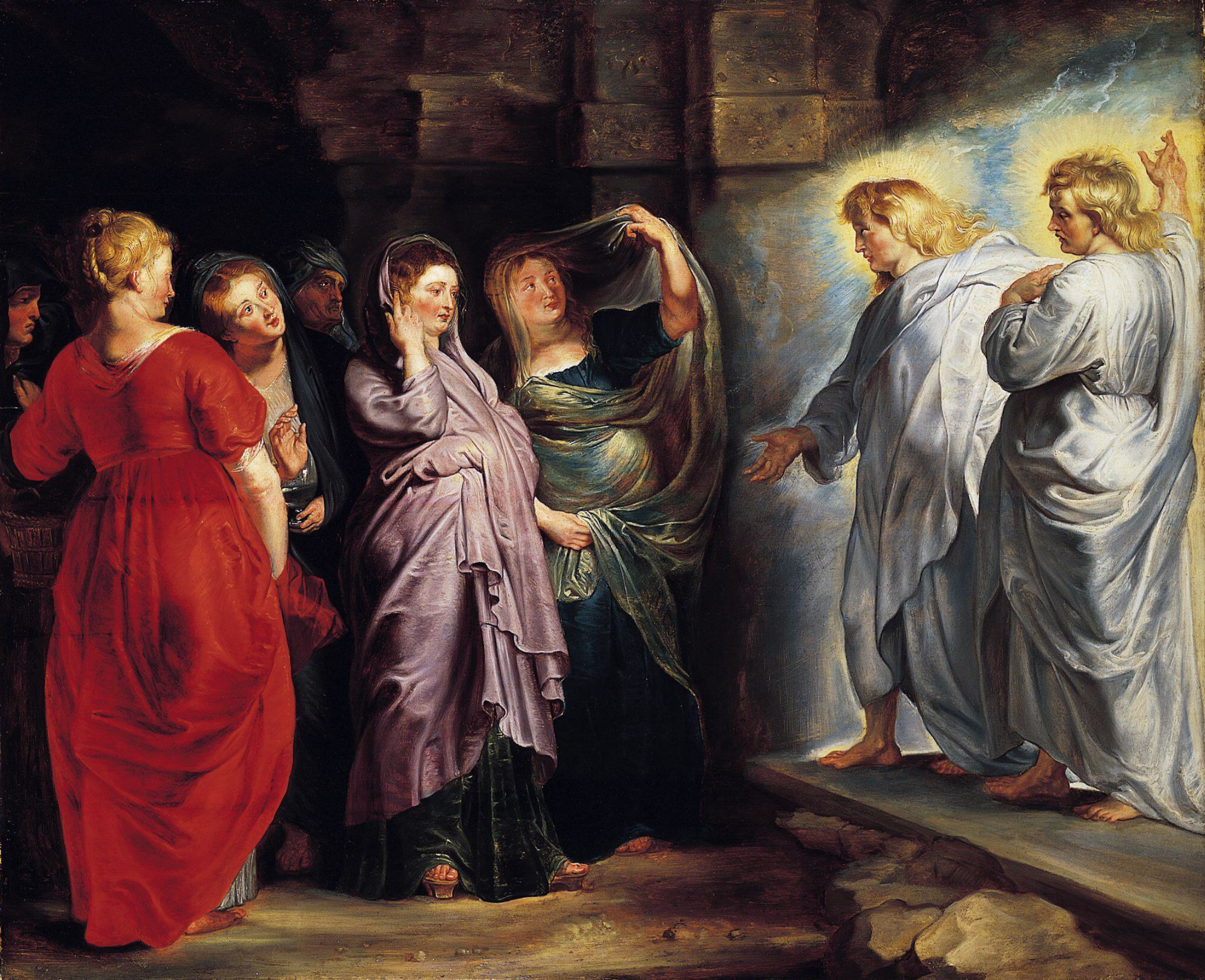
When they came back from the tomb, they told all these things to the Eleven and to all the others. It was Mary Magdalene, Joanna, Mary the mother of James, and the others with them who told this to the apostles. But they did not believe the women, because their words seemed to them like nonsense.
Luke 24:9-11 (NIV)

Of the three authors of Jesus’ biographies (aka “the Gospels”), Dr. Luke is known for his attention to details not found in the other three. One of these details that stands out for me is the attention he gives to the women among Jesus’ entourage and inner circle.

Much earlier in his accounts, Luke shares with us that a group of women were traveling with Jesus and the Twelve. They were also financially supporting His miraculous mystery tour around the shores of Galilee:

After this, Jesus traveled about from one town and village to another, proclaiming the good news of the kingdom of God. The Twelve were with him, and also some women who had been cured of evil spirits and diseases: Mary (called Magdalene) from whom seven demons had come out; Joanna the wife of Chuza, the manager of Herod’s household; Susanna; and many others. These women were helping to support them out of their own means.

Luke 8:1-3 (NIV)

Contemporary followers of Jesus don’t give enough attention and credit to Jesus for radically shifting the status of women in Hebrew and Roman society. The status of women in those days was as poor as it has been throughout most of history. Women were perceived and treated as inferior to men. One of the daily prayers that a good Hebrew man would recite thanked God that he was not born a woman, a dog, or a Gentile. It was socially unacceptable for a man to speak to a woman in public. Freeborn women in the Roman Empire fared somewhat better than women in Hebrew world of Judea, but not much.

Jesus was a game-changer. He broke with convention. He spoke to women publicly. He touched them, healed them, and treated them with love and grace. It is no wonder then, that women would be among his most staunch supporters. I also find it fascinating that among the inner circle of female advocates is Joanna, the wife of the head of King Herod’s household. Another fact comes to my mind this morning that among all the accounts of Jesus’ kangaroo court trials before the Jewish High Priest, the Jewish religious authorities, the Roman Governor Pilate, and the Judean King Herod, there is only one person who speaks up on Jesus’ behalf. The wife of Pontius Pilate sent her husband a private message urging him not have anything to do with Jesus and all of the turmoil being stirred up against Him.

In the years to follow, the spread of the Jesus movement was, in part, fueled by the fact that the status of women within the movement broke with social convention. “In Christ,” Paul wrote, “there is neither male or female.” When Jesus followers gathered for their love feasts women were welcome at the table with men. It may seem like a baby step in contrast to modern society, but in the day it was a major game-changer. It should also be noted that once the Jesus Movement became an institution called the Holy Roman Empire, women were quickly stripped of what gains in status that they had been enjoying.

In the quiet this morning I find it, therefore, worth pondering that in yesterday’s chapter Luke makes it clear that it was the women of Jesus’ inner circle who followed Jesus to the cross and witnessed the entire bloody affair while the men were hiding in fear for their lives. In today’s chapter it was the women to whom word of the resurrection was first given, and the men who concluded that the silly women were being non-sensical.

The further I get in my journey, the more I find myself shedding the social and institutional conventions and norms that I was taught and absorbed growing up with regard to women. God saw fit to ensure that most of my earthly journey would be spent as the lone male in the company of amazing, strong, gifted, and wise females. I find that it has made me both more appreciative of Jesus’ rebellious change of the social conventions of His day, and more desirous to carry on that legacy.

Taking a Wrecking Ball to the Edifice Complex of Christianity

Some of his disciples were remarking about how the temple was adorned with beautiful stones and with gifts dedicated to God. But Jesus said, “As for what you see here, the time will come when not one stone will be left on another; every one of them will be thrown down.”
Luke 21:5-6 (NIV)

When I was a child, I attended a small neighborhood church that was liturgical in practice. This meant that the sanctuary was laid out in a very specific way that catered to the ancient liturgy. There was a lectern on one side that was “lower” and served common uses such as announcements and a non-clergy member reading scripture or a responsive reading. Then there was a taller lectern on the other side which was only for the reverend to preach his sermon. There was an altar where communion was served which most people in the church believed sacred space. Children were taught to stay away and be careful of offending God by going where we weren’t allowed or treating the space disrespectfully.

As a young man, I attended a giant church that had no such liturgical trappings. In this church, everything was functional. It was all about the audience’s experience. Great lighting and great sound that allowed for a great product. The pastor of this church was rabid about building bigger and better buildings for the weekly show and attracting bigger names to perform in the area.

Along my spiritual journey I’ve had to come to terms with the “edifice complex” I was taught, have witnessed, and in which I confess I have participated. There is definitely something to be said for a nice, functional space for a local gathering to meet, organize, worship, teach, learn, pray, meditate, and serve one another and the community. More about that in a moment.

There is also the spiritual reality that Jesus exemplified and taught. It was a paradigm shift massive as to be difficult for people to believe and embrace 2000 years later. It is simply this: God does not dwell in buildings.

God is omnipresent (that is, everywhere) because Jesus is the force of creation holding the universe together: “He is before all things, and in him all things hold together” (Colossians 1:17). Jesus said that after his death, resurrection and ascension, He was sending Holy Spirit to dwell in us: “And I will ask the Father, and he will give you another advocate to help you and be with you forever— the Spirit of truth. The world cannot accept him, because it neither sees him nor knows him. But you know him, for he lives with you and will be in you” (John 14:16-17). Therefore, God’s “Temple” is no longer a place in Jerusalem or a bricks-and-mortar edifice down the street. God’s Temple is the bodies, hearts, minds, lives of those who believe and follow: “Do you not know that your bodies are temples of the Holy Spirit, who is in you, whom you have received from God? You are not your own” (1 Corinthians 6:19).

For the first few centuries after Jesus’ ascension, local gatherings of believers met in one another’s homes where they shared meals, worshipped, prayed together and supported one another. Some scholars estimate that over a million followers of Jesus were meeting regularly in tens of thousands of homes around the known world.

In 312 A.D. the Roman Emporer Constantine became a Christian and Christianity quickly became the state religion of Rome. The Jesus Movement, almost overnight, became the Holy Roman Empire.

[cue: Star Wars: Vader’s Theme]

Empires are concerned with controlling masses. Controlling masses requires authority that people will respect, follow, serve, and obey. One way to control the masses is to control their religious beliefs and routines. Therefore:

  • Only “priests” or “ordained clergy” can preach, teach, marry, bury, and absolve you of your sins. (You are a “common” person with no access to God except through the Empirical structures)
  • Only individuals appointed by the supreme authority and his minions (Caesar, Pope, Cardinal, Bishop) are allowed to be priests or ordained clergy. (You have little hope of becoming clergy unless you jump through many difficult and expensive academic and religious hoops set up by the Empire’s institutions. Probably not unless you know someone or a have a lot of money to bribe, oops, I mean, “donate” to the Empirical authorities – which is how we will wind up with wealthy children and corrupt individuals becoming the Pope)
  • The words used for teaching and the worship of God will now only be sung, written, read and spoken in Latin, which the uneducated masses will not understand. (This makes it easier for the Empirical religious authorities to control said masses of uneducated followers as they become dependent on the Empirical authorities for everything including knowledge, forgiveness, salvation, the salvation of loved ones prayed out of purgatory, and et cetera [<– that’s Latin, btw])
  • Worship must now be centered within an opulent, massive, awe-inspiring structure that stands out in the middle of the squalid little local shacks and structures people live in and use for daily business. (The Empirical institution thus reminds people wordlessly, day and night, that both God and the Empirical institution are higher, better, and different than you are in your poor little common life. It is both something for you to ever reach for and something to which you will never reach without the Empirical institution itself making a way for you)

And, that was the beginning of the edifice complex for followers of Jesus. I find it a fascinating contrast to today’s chapter. Jesus is in Jerusalem. It is the last week of His earthly journey. Jesus has spent most of His three-year ministry speaking to crowds on hillsides, fields, and from a boat to throngs of people sitting on the shore. He also spoke in small-town synagogues. His followers of backwater fishermen and men from small towns in Galilee were awed by the massive Temple in Jerusalem. Jesus, however, shrugged it off with the foreknowledge of what would become of it:

“As for what you see here, the time will come when not one stone will be left on another; every one of them will be thrown down.”

A couple of thoughts this morning as I ponder these things along side of almost 40 years regularly journeying through God’s Message:

  • I believe a functional, central location for followers of Jesus to gather is a good thing.
  • I believe that making meeting spaces beautiful, inviting, welcoming, clean, and efficient are good things, even God-honoring things, for everyone who gathers there.
  • I believe that architecture is both a highly specialized craft and a creative art form that can powerfully embody and express many things with breathtaking beauty.
  • I believe that the churches and cathedrals built throughout history are works of art that have much to offer in both history lessons and inspiring us creatively and spiritually.
  • I also believe that a building can become an object of worship rather than a setting for it.
  • I don’t believe that a church building, it’s rooms, altars, stained-glass, podiums, and decorations are sacred in any way (though they can be special in many different ways and on many different levels).
  • I believe that it is the individual human beings of simple and sincere faith who gather within a church building and it is their corporate and collective worship, prayer, and fellowship that are sacred.
  • I believe that a church building and an institution’s emphasis can subtly convince individuals that they attend the church rather than being the church as Jesus intended.
  • I have observed very sincere individuals who believe the following, perhaps without giving it much thought: God resides in the church building. I visit God an hour every Sunday to pay respect and spiritually make the minimum premium on my eternal fire insurance policy which, I hope and trust, will get me into heaven and avoid hell. I leave God there at church to go about the other 167/168ths of my week.

This morning I imagine Jesus shrugging as he looks up at the Temple. “It’ll be a rubble heap in about 40 years,” He says to His disciples.

Then what is sacred? What lasts? What remains?” Simon the Zealot asks.

You are sacred, as is every person in whom my Spirit dwells,” Jesus replies. “What remains? The faith, hope, and love that is in you and flows out of you, Simon. And all fruit your faith, hope, and love produce in those whom you love. You are my church, Simon. You are God’s temple. And, you are more beautiful than this temple or any building a human being could construct.

What Jesus actually taught was that when individuals believe and follow, they become living, breathing, active temples of worship in which God’s Spirit dwells. What is sacred and/or profane is what we put in, what flows out and how we relate to God and others from the inside out.

Rediscovering the Organism

Now you are the body of Christ, and each one of you is a part of it.
1 Corinthians 12:27 (NIV)

I remember getting the call. There was an emergency meeting of the church elders. I was a young man and had been serving as pastor of a rural church for over a year. As I made my way to the church office for the hastily called meeting I wondered what on earth the problem was.

As it turned out, the problem was me. Apparently, I had not officially gone through the prescribed bureaucratic hoops required to become a member of the church when I was hired. One of the elders had their undies in a bunch because I’d never become a member. I sort of figured that if the congregation hired me, I was kind of automatically grandfathered in. Oh, no. How could I be serving as Pastor of the organization if I wasn’t a member of said organization? We have an existential crisis on our hands, people!!

I did my best not to laugh. At the next congregational meeting I submitted my name for membership, the congregation approved, and that little bit of silliness was put to rest.

The sad thing is that I’ve encountered similar kinds of silliness in the institutional church wherever my journey has taken me. Looking back over my journey, I’m struck at how different the institutional paradigm of “church” that I grew up with compares to the word picture of “the body of Christ” that Paul gives to the believers in Corinth in today’s chapter.

The word picture of the “Body” is a living organism made up of all believers. The church I grew up in was an organization made up of just those who chose to go through membership class, go through interviews with the elders, and accepted the “right hand of fellowship” along with a nice certificate (perfect for framing) during a Sunday morning meeting. In Paul’s word picture, every believer has a spiritual gift and has a significant part to play in contributing to the work of the Body of Christ as a whole. The church I grew up in had a few appointed “ministers” approved by the organization to do ministry. The vast majority of us were little more than spectators and financial support. Paul’s word picture of the Body is inclusive and includes all believers regardless of age, gender, social status, or ethnic background. The church I grew up in was exclusive to those who had a certificate of membership, which is why the elder in my earlier story was horrified by the notion that I was serving as their pastor but hadn’t jumped through the bureaucratic hoops of the organization to get mine.

To be sure, even in Paul’s day the church was struggling to provide some kind of organizational framework for a movement that had gone from just over 100 people to tens of thousands of people in just a few years. Nevertheless, when the organism of the Body of Christ that Paul describes in today’s chapter became an organization and then a political, social, and religious institution of the Roman Empire a couple of hundred years later, I believe something was lost.

I’ve observed along my life journey that the church institutions of my childhood are dying. The old mainline denominations have fractured and faded. People are increasingly embittered by the systemic sins of a global religious institution and its leaders who refuse to deal honestly and forthrightly with the issues. When I grew up, a politician was required to be a member of an acceptable religious organization or institution in order to be considered a good candidate. I find it fascinating that a leading politician recently stated that membership in a legacy religious organization is a sign of prejudice and hate speech, disqualifying a person from serving in a government position.

Oh my. The times, they are a changin’.

And, in the quiet this morning I’m thinking that maybe it’s a good thing. History leads me to believe that the Jesus movement is always more effective when it is persecuted and less effective when it is in power. Perhaps we’ll learn how to become an organism once again. You’re welcome to join me. I won’t even ask you to show me a certificate of membership.

From Simple Ritual to Complex Regulation

So then, whoever eats the bread or drinks the cup of the Lord in an unworthy manner will be guilty of sinning against the body and blood of the Lord.
1 Corinthians 11:27 (NIV)

On the night before His crucifixion, Jesus and His followers celebrated a ritual meal called the Passover. It is an annual remembrance of the events in the book of Exodus, in which God leads the Hebrew people out of slavery in Egypt. The ritual meal, also called a Seder, is full of metaphors and word pictures that remind participants of key events and spiritual lessons from the Exodus story. At the time of Jesus, the Passover was already an ancient ritual dating back over a thousand years.

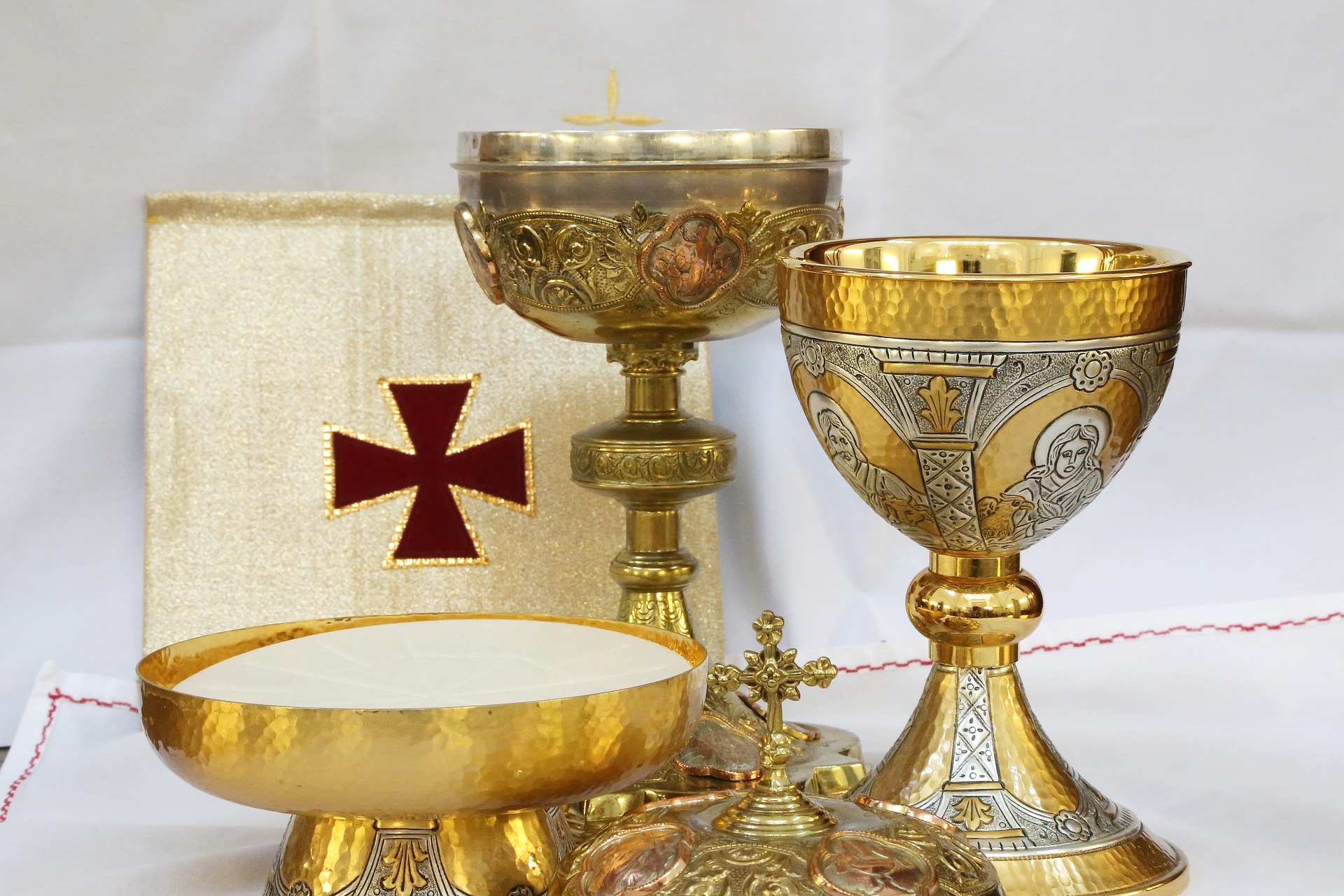
On this night, Jesus creates a new ritual and metaphor for His followers. He simply took a loaf of unleavened bread, broke it, and passed it around for His followers to partake. “This is my body, broken for you,” he said. Then he took a cup of wine and passed it, saying, “This is my blood, shed for you.” Jesus then told His followers to share in this very simple ritual when they get together as a ritual remembrance of the sacrifice He was about to make. The fact that it was done after the Passover meal layers the metaphor with even more meaning. Just as God led the people out of slavery in Egypt, Jesus is establishing a “new covenant” in which He is going to lead humanity out of slavery to sin.

Over time, this relatively simple, ritual metaphor came to be known as Communion, the Lord’s Supper, or Eucharist. As the organism of the early Jesus Movement became the Institution of the Roman church, the ritual became a much more complex religious act layered with all sorts of rules and regulations. It became the centerpiece of worship surrounded by other rituals for how it was done. Only a priest sanctioned by the church could administer it. Those who don’t belong to your particular group of believers were not welcome to participate. And so on, and so on.

As a young follower of Jesus, I was part of a relatively conservative group of believers. I can remember the verse, pasted above, from today’s chapter being used regularly among my particular tribe of believers as a word of warning to young people. It was a religious variation on the Santa Claus principle: “He’s checking his list to see if you’re naughty. You better be good or Santa won’t bring you any gifts.” When it came to communion, we were warned that we better have our hearts right and our lives free from sin or we were putting ourselves at risk of judgement.

As I’ve progressed in my spiritual journey, I’ve largely abandoned the institutional pomp, circumstance, warnings, and regulatory commands that the institutional church has laid on top of Jesus’ simple act. The warning that Paul gave in his letter to the followers of Jesus in Corinth had a very specific context. Believers met and shared a meal together, and then they ended their evening by repeating Jesus’ ritual word picture. In Corinth, some followers were creating cliques, having private meals, and excluding other believers. Some followers were getting drunk on wine and were intoxicated by the time the ritual of the bread and wine was carried out. In both cases, the metaphor of the bread and wine was profaned; It was emptied of meaning by the actions of those believers who shamelessly behaved in a way that diminished the entire meaning of the ritual.

In the quiet this morning I’m reminded that Jesus’ institution of the ritual of communion happened with no commands, rules, or regulations other than to repeat the word picture regularly when believers got together. Jesus didn’t make caveats about it only being administered by approved followers, being an exclusive ritual for only certain institutionally approved persons, or that those partaking had to approach with a certain level of holiness. In fact, the word picture itself is about Jesus sacrificing Himself because we can’t attain acceptable holiness on our own, so why would we suggest that purity and holiness are required to partake in the bread and cup? That profanes the meaning of the ritual as well.