Tag Archives: Testimony

The Rocks Remember

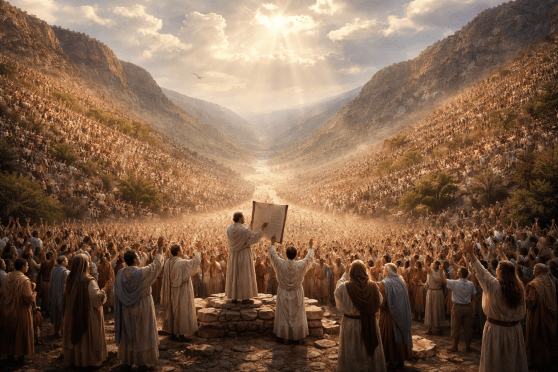
When you have crossed the Jordan, these tribes shall stand on Mount Gerizim to bless the people: Simeon, Levi, Judah, Issachar, Joseph and Benjamin. And these tribes shall stand on Mount Ebal to pronounce curses: Reuben, Gad, Asher, Zebulun, Dan and Naphtali.

The Levites shall recite to all the people of Israel in a loud voice…

Deuteronomy 27:12-14a (NIV)

In the years that Wendy and I spent summers at our house on the lake we would sit on the deck for hours overlooking the water. Especially in the morning when the world was quiet the acoustics of the water and the terrain allowed you to clearly hear conversations taking place between people on the on the other side of the cove. It was eerie.

The further I get in my earthly journey, the more I’ve realized my ignorance regarding creation’s role in the Great Story. Creation is filled with fascinating wonder that we humans continue to discover. God celebrates His creation throughout the Great Story. Creation is alive. It has a voice. It hears. It bears witness. It is a participant in all that God is doing.

When Jesus was criticized for allowing His followers to shout in celebration proclaiming He was the Messiah, He replied that if His followers didn’t shout it, the rocks would cry out. Creation itself cries out in worship.

Creation plays a central role in today’s chapter. Moses has finished reminding his children and grandchildren of the Law. Now, he gives them instructions. When they enter the Promised Land, they are to write the Law clearly on stones covered in plaster. The Law is not to be a tribal secret, it’s a public declaration to the whole world. Then God has them do something strange. Half the people are to climb Mount Ebal. The other half are to climb Mount Gerazim. Not just the priests…everyone.

The Levites and tribes on Mount Gerazim are to pronounce the blessings God promises for faithfulness and obedience (interestingly, these are not recorded in the text). The Levites and tribes on Mount Ebal are to pronounce curses and consequences for breaking God’s Laws. Interestingly, the laws prescribed to be proclaimed include behaviors that are easily the most secret and personal of sins.

This whole thing sounds really strange to our modern sensibilities, but this is where things get really cool. This is where creation plays a role in the public ratification of God’s Law.

Mount Gerazim and Mount Ebal have a really strange and unique formation. The mountains and the valley between them create a natural acoustic amphitheater and echo chamber. Even today, people standing on one mountain can hear what’s being spoken on the opposite. It gets even better. Your voice not only carries across the valley to the top of the other mountain, but it echoes back to you.

When the Levites proclaim the curses, the sound doesn’t dissipate into open wilderness. It bounces, returns, wraps around the people.

The Law doesn’t just go out.

It comes back.

Every “Amen” would echo—not theatrically, but bodily. Chest. Bones. Breath.

This is communal consent.

No one is hidden in this ceremony. Everyone participates. Everyone agrees. The people are the chorus. Accountability has a voice. And creation bears witness. The mountains hear the people shouting “Amen.” Their sound waves leave an impression. The mountains may not speak, but they remember.

Long after Moses is gone.
Long after Joshua dies.
The hills still stand there saying, “We heard you.”

God could have delivered the Law in silence for the people to accept by faith. He could have delivered it with lightning and thunder and to force the people on their knees in terror. He might have simply slipped Moses and the High Priest a parchment as they stood privately in God’s tent tabernacle.

Instead, God wanted His people to ratify His Law in a public way. He chose a place where your own voice would come back to you.

Because covenant isn’t just something you believe.

It’s something you have to hear yourself say.

There is no solo spirituality in this valley.
No quiet loopholes.
No private reinterpretations whispered into a pillow at night.

Just this aching, honest moment:

“Yes. I heard it. I said it. I agreed.”

Once I’ve heard my own voice echo off the stones, it’s awfully hard to pretend I never spoke.

And, the rocks remember.

If you know anyone who might be encouraged by today’s post, please share.

Promotional graphic for Tom Vander Well's Wayfarer blog and podcast, featuring icons of various podcast platforms with a photo of Tom Vander Well.
These chapter-a-day blog posts are also available via podcast on all major podcast platforms including Apple, Google, and Spotify! Simply go to your podcast platform and search for “Wayfarer Tom Vander Well.” If it’s not on your platform, please let me know!
An orange square icon featuring an open book outline in white.

Condemnation by Accusation

This will be my third visit to you. “Every matter must be established by the testimony of two or three witnesses.”
2 Corinthians 13:1 (NIV)

“Did you know…?” the voice asked on the other end of the phone.

Then spewed a long litany of salacious and slanderous allegations regarding someone on my team. The accusations were dripping with self-righteous condemnation. The tid-bits of gossip likely had some hints of truth to them. But the news, however true, were events in the past. It had nothing to do with me, our team, or the current state of what we needed to accomplish. What did seem clear to me was that the accuser had an agenda to tear the accused down.

And, believe me, I know what it feels like to stand in the accused’s Michael Jordans. I have been the object of public and slanderous lies intended to diminish me for the sake of the accuser’s selfish advantage. It’s a tactic as old as humanity itself, and it perpetuates because A) human nature hasn’t changed and B) it works.

Wendy and I have recently read multiple news articles that have been tracking the stories of individuals accused of sexual harassment during the wave of the #metoo movement a few years ago. It’s messy because the truth is that we live in a world in which individuals truly do use their power to sexually victimize others. Believe me, I’ve been surrounded by women my entire life and I know their stories. At the same time, amidst the many true and well-documented cases of sexual harassment and abuse you’ll find many false accusations that were not true or well-documented. The accusations alone ruined careers and lives because we live in a world in which a well-placed and well-timed accusation is often all that it takes. The human herd follows the accusation and tramples the accused underfoot.

In today’s final chapter, Paul preps the believers in Corinth for his third personal visit to the city. He is the one who has been slandered and accused by others seeking to diminish him for the gain of others. Paul begins his closing statements by quoting a matter of Jewish law. Paul was a well-educated and trained attorney in Jewish law, and Jewish Law since the time of Moses established that accusations required two or three corroborating witnesses. Paul was not about to play the game of condemnation by accusation, and he states this directly.

Likewise, I have learned along my life journey to be hesitant and discerning when others spew slanderous accusations at others. This is especially true in very public and political circumstances, but even in very personal circumstances it’s easy to get carried away with the herd. I have found it wise to quietly ask myself some hard questions before reacting or responding, including the one to which Paul refers.

Is this the accusation or slander of one potentially angry or spiteful individual toward another individual, or are there two-to-three others who can testify?
Why am I being told this accusation at all? Does it truly affect me or things for which I am responsible, or is it just gossip?
Is this an issue of legality, morality, or propriety?
Is there a history or pattern of animosity between the accuser and the accused?
Does the accuser stand to benefit from the diminishment or public condemnation of the accused, even just malicious self-satisfaction?

As I take the time to ponder these questions and others to which they lead, I typically find myself guided to wisdom regarding how I should respond.

Paul is hoping that his friends in Corinth will be similarly led to wisdom regarding the accusations that have been made about him.

If you know anyone who might be encouraged by today’s post, please share.

These chapter-a-day blog posts are also available via podcast on all major podcast platforms including Apple, Google, and Spotify! Simply go to your podcast platform and search for “Wayfarer Tom Vander Well.” If it’s not on your platform, please let me know!

Testimony & Verdict

Testimony & Verdict (CaD Jhn 21) Wayfarer

Jesus did many other things as well. If every one of them were written down, I suppose that even the whole world would not have room for the books that would be written.
John 21:25 (NIV)

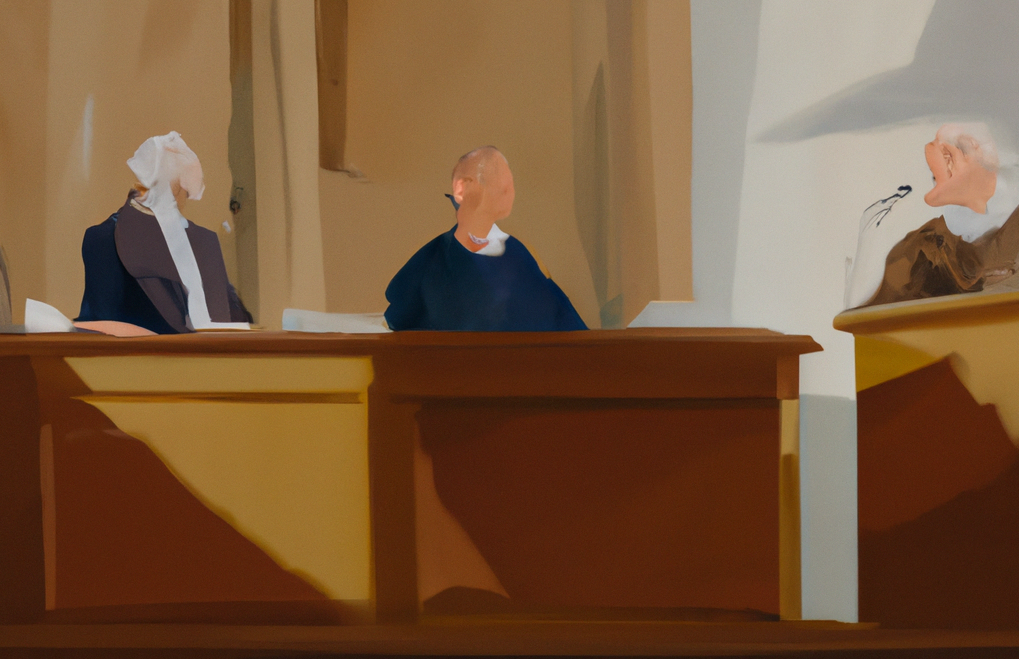
Last year I had the opportunity to give a legal deposition. It was my first time doing so, and it was an interesting experience giving testimony before a judge, court recorder, and opposing attorneys. Before the deposition, I found myself thinking a lot about the way I wanted to respond to questions. My prevailing desire was to keep my answers very clear and concise, sticking to what I knew was true based on my experience.

Today’s chapter concludes John’s account of Jesus’ story, and it ends with a fascinating bit of hyperbole observing that if every story about Jesus were written down all the world’s libraries couldn’t hold the sheer volume. That final thought reminds me as a reader that in writing his account, John had a difficult task. How do I testify to everything I saw, heard, and experienced as a disciple of Jesus in a way that is clear, concise, and communicates what is true? In crafting his testimony, John let specific numbers guide him.

Numbers play a role throughout the Great Story. Even the most casual reader will notice the recurrence of certain numbers. Different numbers have particular symbolic meanings. The number seven, for example, signifies completeness as in the seven days of creation after which God considered creation complete and called it “very good.” Three is considered a divine number as in the number of the Trinity: God the Father, God the Son, and God the Holy Ghost.

John appears to have been conscious of these numbers in structuring his testimony. He chose seven “signs” or miracles to share as well as seven “I am” statements that Jesus made. Three also makes recurring appearances as in sharing three times the risen Jesus appeared to the disciples. It’s as if John structured his testimony using those numbers as a guide to provide a “complete” and “divine” account to his readers.

John ends his account by describing the events of the third time the risen Jesus was present with the disciples. John lists seven of the disciples who went fishing on the Sea of Galilee. After getting skunked all night, morning arrives and Jesus calls to them from shore, telling them to cast their net on the right side of the boat. When they did there were so many fish in the net they couldn’t pull the haul into the boat. They had to tow it to the shore where they found Jesus was making a breakfast of grilled fish and bread (a little homage to the feeding of the 5,000 with fish and bread that John described back in chapter six).

John then shares that Jesus asked Peter to affirm his love three times, followed by three commands to Peter to “feed” and “take care” of Jesus’ “sheep.” Peter denied Jesus three times. With three affirmations and commands, Peter is restored to his position of leadership among the disciples. Jesus then foreshadows for Peter that he will one day follow Jesus in stretching out his hands in crucifixion. When Peter asks Jesus about John’s fate, Jesus says, “What’s it to you if I want him to live until I return?”

John is admittedly addressing what may have been a couple of FAQs of his contemporary first-century believers. He states quite directly that rumors were saying that he wouldn’t die, and he puts that rumor to rest. I also wonder if there weren’t those who wondered, “Why is Peter the leader of the Jesus Movement if he denied Jesus?” John’s final chapter would quell any doubt about Peter being Jesus’ appointed, “rock solid” leader.

In the quiet this morning, I am reflecting on this chapter-a-day trek through John. I have been struck this time by the beautiful and thoughtful way that John structured his account and emphasized his testimony to the truth of what he witnessed. This is John’s deposition. He uses the noun for “witness” or “testimony” 14 times and the verb for “testify” 33 times. I find upon reflection that he has given clear and concise testimony to what he knew to be true about Jesus based on his experience.

Once again, as a reader, he leaves me to decide if I believe his testimony and what verdict I will personally render regarding the question “Who is Jesus?”

If you know anyone who might be encouraged by today’s post, please share.

The Old Couple Who Lived Up on the Hill

The Old Couple Who Lived Up on the Hill (CaD Matt 20) Wayfarer

“…they began to grumble against the landowner.  ‘These who were hired last worked only one hour,’ they said, ‘and you have made them equal to us who have borne the burden of the work and the heat of the day.’

“But he answered one of them, ‘I am not being unfair to you, friend. Didn’t you agree to work for a denarius? Take your pay and go. I want to give the one who was hired last the same as I gave you. Don’t I have the right to do what I want with my own money? Or are you envious because I am generous?’”

Matthew 20:11-15 (NIV)

I was surprised to get the call. I barely knew the old couple who lived up on the hill. I’d visited them once or twice, despite people telling me not to waste my time. They’d been described as cold, grouchy, and cantankerous, but I found them pleasant enough. I don’t think they ever learned my name. I was always just “Preacher,” which I discovered happens a lot when you’re the pastor of the only church in a small town.

Granted, I don’t ever remember talking to them about much of anything except the safe pleasantries of rural Iowa conversation between acquaintances. I asked them about their lives and their stories. We drank coffee and enjoyed the quiet majesty of the view from their house, which overlooked the rolling Iowa countryside. I never invited them to church. I don’t recall that Jesus ever came up in our conversations.

The call came late in the afternoon, asking me to come immediately to the ICU unit of the regional hospital about a half-hour’s drive away. The moment I walked into the room and saw the old man who lived up on the hill, I knew the situation. I reached out and took his hand.

“You’re dying, aren’t you?” I asked gently as I took his hand and smiled.

He nodded, wordlessly.

“You don’t know where you’re going when it happens, do you?” I asked.

He shook his head.

I shared about Jesus in the simplest of terms. He listened. I asked if he’d like me to pray with him for Christ to come into heart and life.

“Yes,” he said.

By the time our short, child-like prayer was done, the tears were streaming down his cheeks. He was suddenly filled with an energy that seemed absent in his mind and body just moments before,

“Preacher!? You have to go visit my wife. Right now. Tell her what you told me. Tell her I want her to have Jesus in her heart, too. Go. Now. Right now.”

So I went, and I did as he asked. I shared in the simplest of terms. I offered to lead her in prayer as I had her husband. She prayed. She cried. I told her I would come back and visit to check on them, but I never got the chance.

He died in the ICU unit a few hours later,

A few hours after he passed on, she followed him, dying quietly at home.

I did the funeral in our little Community church with both caskets sitting in front of me. It was a tiny gathering. They hadn’t built many positive relationships in their lives. I got to share about the call, our visit, their prayers, and I talked about it never being too late to give one’s life to Christ.

After the service, I was approached by an elderly couple who told me that they had, for many years, ceaselessly visited the old couple on the hill. They’d loved on them, they’d shared Jesus with them, they’d begged them to ask Jesus into their hearts. They’d been rejected time and time again. And while they seemed glad to hear that the old couple on the hill had finally made the decision, I felt a hint of indignation underneath the surface. They’d done all the work and seemingly experienced no reward for their spiritual labor. I showed up at the last minute to harvest what they’d been sowing for all those years.

That experience came to mind this morning as I read Jesus’ parable of the workers in the vineyard. I find that there are certain parables that mean more to me the further I advance in this life journey, and this is one of them. Each group of workers agrees to work for the same wage, but when the workers who slaved away all day watch those who pitched in for the final hour receiving the same reward, they become indignant. I find it such a human response. It is neither fair nor equitable in human terms.

The economics of God’s Kingdom, however, doesn’t work like the economics of this world. That was Jesus’ point, and He famously pins this epilogue to His parable: “So the last will be first, and the first will be last.”

In the quiet this morning as I mull over the story of the old couple who lived up on the hill, I find myself asking about the motives of my own heart. Why have I followed Jesus these forty years? I find that reward is not something I think much about. I have been so blessed in this life I just assume that I’ll be among the “the first shall be last” crowd, and that’s okay with me. The reward is not my motivation. It’s gratitude for what I received that I never deserved that fuel’s my journey. It’s Paul’s words of motivation that ring true in my soul: “Christ’s love compels us.”

If you know anyone who might be encouraged by today’s post, please share.

The Hard Facts

As for the other events of Solomon’s reign, from beginning to end, are they not written in the records of Nathan the prophet, in the prophecy of Ahijah the Shilonite and in the visions of Iddo the seer concerning Jeroboam son of Nebat?
2 Chronicles 9:29 (NIV)

In today’s chapter, the author of Chronicles concludes his account of Solomon’s reign. He chooses, however, to leave out some pertinent facts provided in the eleventh chapter of 1 Kings.

Solomon was a womanizer. He married 700 wives, most of them were daughters or women from foreign royal families seeking to make political alliances with the king. On top of that, Solomon kept 300 concubines. Solomon’s wives worshiped foreign gods, and they convinced Solomon to build altars and temples to their gods. Solomon even worshipped the gods of his wives, including a couple of nasty ones who demanded child sacrifice.

By the end of his reign, Solomon’s years of conscripting slave-labor had created political problems for him. The nation his father worked so hard to unite was falling apart. Rebellions and uprisings began to occur. Prophets began prophesying the end of the united kingdom. Solomon resorted to assassination to maintain power and rid himself of threats.

All of this, the Chronicler fails to mention.

We can only assume why the writer of 2 Chronicles whitewashes Solomon’s story. Scholars believe that the Chronicles were written at the time the Hebrew exiles returned from captivity in Babylon. The temple needed to be rebuilt, and the Chronicler’s account may have been intended to drum up support for the new temple by glorifying Solomon and the old temple. This scholarly assumption concludes that the Chronicler chose to focus on Solomon’s glory and  leave the inconvenient truths buried in the bibliography.

This past Sunday at our local gathering of Jesus’ followers I gave a message about “Story.” Over the centuries the institutional church has turned the concept of “witnessing” into a host of systematic programs for communicating the theological concepts of salvation. However, when Jesus told his followers to be “witnesses” He simply meant for them to share their stories about their experiences with Him. In the opening lines of the letter that became 1 John, Jesus’ disciple literally gives the testimony “I heard him. I saw him. I touched him.” John’s story is how his experiences with Jesus transformed him from being known as a “Son of Thunder” (because of his anger and rage) to “The disciple of love.” Each of us has a story. Each of us has a God story whether that story is how we came to believe or disbelieve.

We also choose how to tell our stories, how to give witness, and what that testimony will be. We may choose to tell our story differently depending on the audience and the circumstances. This is  not only common, but I would argue that sometimes it is even wise. Nevertheless, our stories all contain hard facts. I made huge mistakes in life. I became addicted to porn as a child. My first marriage failed. I was unfaithful. I made a complete mess of things. A big theme of my God story is the grace, forgiveness, and redemption God has shown me despite my being a complete boogerhead. I can’t tell that story without also sharing some hard facts about what a deeply flawed person I am.

This morning I’m thinking about my story. I’m thinking about the hard facts of my life. My life journey is riddled with big mistakes I’ve made. To this day I struggle with being self-ish and self-centered. Wendy can give witness to my melancholy and pessimism, my emotional overreactions, and complete blindness to anyone or anything other than what I’m focused on in the moment.  But there’s also the story of my journey, of God growing me up, freeing me, and giving me second chances. There’s a story of transformation that has come from following Jesus and what God has done in me. It’s a good story.

For whatever reason, the Chronicler chose to leave out the hard facts about Solomon. It makes me sad. Our stories are much more powerful and interesting when we’re honest about the hard facts. Even tragedies make powerful stories from which we can benefit.

Something to Say

That which was from the beginning, which we have heard, which we have seen with our eyes, which we have looked at and our hands have touched—this we proclaim concerning the Word of life.
1 John 1:1 (NIV)

My local gathering of Jesus’ followers has been doing something rather novel and exciting over the past couple of years. I’m glad to have had the opportunity to be a part of it.

God’s Message teaches that every follower of Jesus receives spiritual “gifts” from Holy Spirit. Paul wrote to the believers in Corinth, “to each one the manifestation of the Spirit is given for the common good.” These “manifestations” or “gifts” are specific yet diverse bents and abilities that are intended to help build up and encourage all the other believers. One of those gifts is teaching.

For the past several hundred years the prevailing paradigm in the institutional church has been that the pulpit and the Sunday morning message at my local neighborhood church is reserved for a person (typically a man) who has received a Masters Degree at a seminary approved by whatever denomination my church belongs to. This person has received a stamp of approval from the denominational board, administration, or tribunal authorizing them to teach from the pulpit on Sunday morning.

Along my journey, here’s what I’ve observed: any individual can attend seminary and get certified whether they have a teaching gift or not. And, I’ve heard some educated and approved teachers who definitely did not have the gift of teaching. By the same token, Holy Spirit can bestow the gift of teaching on any person of any age or gender despite that person never having jumped through the educational and ecclesiastical hoops dictated by  a given denominational institution.

So, our local gather of Jesus’ followers has been identifying fellow believers within our midst who may have a Holy Spirit given gift of teaching. We’re allowing them the opportunity to try out that gift on a Sunday morning in our church’s auditorium. We’re working with them to train them up and develop that gift. I’ve been asked to lead and mentor these individuals. There is, of course, a lot more to it than I have time to explain here. It’s a work in progress, but an exciting one.

As mentor of these inexperienced preachers, one of the common fears and anxieties that I hear from individuals when tasked with teaching a large group is “Who am I to teach these people?” This nagging doubt can be paralyzing during the preparation and presentation of a message.

Just last week while I was driving to Minneapolis I started listening to a series of talks called Something to Say by Rob Bell (available for download; name your own price). One of the things that Rob brings out is the fact that everyone has the authority to speak about what he or she has witnessed and experienced in their own lives. If you’ve lost a child, then you have the authority to speak about that experience. If you swam the English Channel then you’re an authority on that subject. If you’ve been a diesel mechanic your entire life then you have the authority to speak about diagnosing and fixing a diesel engine. If you were on upper Manhattan on 9/11 then you can authoritatively speak to what happened that day from your own experience.

This morning we begin a letter written by John, one of Jesus’ inner circle of disciples, who was writing what scholars believe was a “circular letter” intended to be copied and passed around to all believers. John begins his letter the same way he begins his biography of Jesus,  by stating clearly that he is speaking to what he heard with his own ears, saw with his own eyes, touched with his own hands. “I was there,” John says. “I was with Jesus. I saw the miracles. I heard the teaching. I witness Him die on the cross. I saw Him risen from the dead. I am a primary source witness to it all.”

As I lead and mentor our fledgling group of teachers, I try to instill within them the power of our stories. In my almost 40 years of teaching, preaching, training, and presentations I have rarely had a person tell me that they remember the arcane theological point I made in a message ten years ago. I continue to have, however, a steady stream of people who tell me that they have never forgotten the story that I told even when I’ve long forgotten what it was.

I’m reminded by John this morning that I may not have all the knowledge, education, or professional training this world offers me. Neither did he. I do, however, have my stories. I have seen things, heard things, touched things, and experienced things to which I can bear witness. That means that, like John, I have something to say.

Simply Tell Them Your Story

onceuponatime“Brothers and fathers, listen to the defense that I now make before you.”
Acts 22:1 (NRSV)

For a couple of chapters the tension has been building. Paul is determined to return to Jerusalem. It has been prophesied that he will be arrested by the Jewish religious leaders as a traitor if he does. Everyone begs him not to go. Paul refuses to be deterred and now, the prophesy has been fulfilled. He finds himself in the middle of a riot. His people are screaming for his blood.

When the Roman guard arrives to break up the riot and discover who the controversy is all about, they nab Paul and take him into custody. But, Paul isn’t ready to be rescued quite yet. He wants to address the crowd and asks the Roman guards for permission. With the Romans present, the mob is a bit less zealous. Paul has a chance to speak.

He tells them his story.

He could have argued law. He could have shown from scripture the prophecies that pointed to Jesus. He could have defended his actions and refuted the accusations made against him. There were a million directions Paul could have gone with his opportunity to speak, but he simply tells them his story.

Our stories are personal. They are intimate and almost always compelling. Some, like Paul’s, are even quite dramatic. Others don’t tend to argue and refute a personal story unless it is full of lies and hyperbole.

This morning I’m reminded that, when given the opportunity, it’s always a good idea to simply tell your story.

Witness in the Spotlight of Leadership

photo by smjbk via Flickr

The Lord will vindicate me;
    your love, Lord, endures forever—
    do not abandon the works of your hands.
Psalm 138:8 (NIV)

David was a leader. After his miraculous victory over Goliath in his youth, David had been thrust into the spotlight and he never left the spotlight. David was warrior, field general, outlaw, ancient Robin Hood, spy, ruler of Judah, and King of Israel. He knew that others were constantly observing him.

What I found interesting about David’s lyrics in Psalm 138 is that he is well aware that many eyes are on him:

  • When David bows down to God, he does so in full sight of the pantheon of regional pagan gods and their followers.
  • Other kings are watching, and David knows that he has influence with them as he desires that they all exalt God as he does.
  • His foes are watching and he acknowledges that God’s protection and preservation of him stands as a testimony.

Today, I’m thinking about the role of being a leader and the ways I find myself in positions of influence. Like David, I hope and pray that as others see me in various spotlights of leadership my life, words, actions are a positive witness of God’s love, grace, forgiveness and Life giving power.

wayfarer chapter index banner

Enhanced by Zemanta

“Here I am. Did You Call Me?” (My Story)

Me and some of my Gospel Team bros on a mission trip (c. 1984)

Meanwhile, the boy Samuel served the Lord by assisting Eli. Now in those days messages from the Lord were very rare, and visions were quite uncommon.

One night Eli, who was almost blind by now, had gone to bed. The lamp of God had not yet gone out, and Samuel was sleeping in the Tabernacle near the Ark of God. Suddenly the Lord called out, “Samuel!”

“Yes?” Samuel replied. “What is it?” He got up and ran to Eli. “Here I am. Did you call me?” 1 Samuel 3:1-5a (NLT)

I have rarely told the story of the beginning of my spiritual journey. Like Samuel, I was called by God as a young man and after sharing the story with my friend Kevin for the first time this past year, he challenged me to share it in a blog post. I have been waiting for the right time. This morning as I read about God’s calling of young Samuel and see the loose parallel, I think that this is the time. Be prepared. This will be a longer post than usual.

I was raised in a nice little neighborhood Methodist church. I like to joke that despite all that I was taught in the Methodist church, I still believed in God. Like a lot of kids in the junior high or middle school age, I experienced the crisis of trying to figure out who I was in the world. I had been “confirmed” in church at the age of 13 and my parents let me know that after being confirmed I was allowed to decide for myself whether I wanted to attend church or not. I believed in God at this point. I mentally accepted the basic tenets of the Christian faith. In retrospect, however, I didn’t have a relationship with the God in whom I said I believed.

After confirmation I stopped going to church for a while. I was a good kid. I enjoyed my junior high years, but over a short period of time there grew within me a nagging confusion about life and what it all meant. I felt depressed and sunk into full blown teen angst. Realizing that I had not been to church regularly for a while I decided to return, wondering if that might not be part of the answer. I got involved in my youth group and started to feel better about things.

In February 1981, a girl in my youth group invited me to make an hour long trip to Marshalltown with her and her dad on a Friday night to hear some guy speak. She was a senior, I was a freshman, and I had a bit of a crush on her – so of course I said “yes.” There was another friend from church going and it sounded better than anything else I might be doing on that Friday night. The speaker was part of a weekend conference at a church there Marshalltown. I listened to this guy talk about God in a way I had never, ever heard before. He spoke about faith being a living relationship with God which was something very different from the simple mental acquiescence to certain spiritual truths that I had always considered “my faith.” Jesus spoke of the eyes of your heart being opened to see the truth clearly, and that night I experienced it personally. The eyes of my heart were opened for the first time. I committed my life to following Jesus. I asked Him to come into my heart to start a personal relationship together. There was a subtle, but substantial shift in my soul. I knew I would never be the same, which has proven true to this day.

My sister, Jody, is two years older than me. Upon arriving back home late that night I shared with her what had happened to me and pretty much demanded that she go with us the following night. She did, and that night I could tell that the eyes of her heart were being opened too. At the end of the service an invitation was given to any who wanted to start a relationship with Jesus and follow Him. She went forward to pray and I was left sitting in the pew praying. I remember it like it was yesterday. I was sitting about 4-5  pews back on the stage right side of the stage right section of pews.

At this point, let me explain that I don’t claim to have spiritual dreams and visions all the time. God may work that way with others, but I have only heard God speak to me clearly on a handful of occasions in 35 years (that’s another blog post, for another day). That cold Saturday night in February was the first time. As I sat in the pew praying, I suddenly felt like I was dreaming in deep REM sleep. In the dream I was sitting in the pew right where I was, but as I looked up toward the front of the church I saw myself standing on the platform speaking just like the guy whom we’d listened to the past two nights. “You are going to proclaim My Word,” a voice said to me. I knew it was God’s voice. Here I was, a young kid in Iowa, hearing God’s voice just like the boy Samuel heard in the temple in today’s chapter.

That was it. Dream over. I was back in my pew watching my sister praying to start her own relationship with Jesus. But, I knew what I saw and heard. It sounded so crazy at the time, but I knew that it was real. That night I went home and told my parents that God had called to me that night. Mom was folding clothes on the family room floor. Dad was laying on the couch. They were watching television. I think they must have wanted to check my pockets for hallucinogens.

“Okay God,” I remember praying shortly thereafter. “If you want me to do this, you’re going to have to open the doors for it to happen, because I don’t know what to do.” I began reading and studying the Bible voraciously. A few weeks later, an adult approached me at church.

“In April, we’re having a youth service,” she said. “We were wondering if you would agree to be one of the youth to share the sermon that morning.”

About eight weeks after God called to me in a dream, I preached my first message.

The following summer my parents, having seen a very distinct change in my sister and me, reaffirmed their own faith in Jesus. As a family we decided to leave our little neighborhood church and start attending another church a few blocks away. This church had a large youth group and also had a youth “Gospel Team” (think “Glee” for Christians). My sister decided to join the Gospel Team and early that fall there was a kick off concert at the church. The Gospel Team Director pulled me aside the week before the concert and asked me if I’d be willing to share my story during the concert. I agreed and during a break in the concert I shared the story about how I decided to become a follower of Jesus.

After the concert, the director sought me out. “I think you’ve got a gift,” he said. “I’m wondering if you’d be interested in joining our team. In a few weeks we’ll start going out every Sunday night to do concerts in different churches around the state. I’d like you to consider going with us and giving a message at each concert.”

And so, less than a year after hearing God’s call to proclaim His Word I was travelling around the state every week doing just that.  My Gospel Team experience led to other opportunities to speak in churches, camps, and other groups. But, the story doesn’t end there.

I attended Judson College (now University) for four years where God continued to give me opportunities to speak and to teach. I was even the campus Student Chaplain for a year. As I prepared to graduate, I wondered what I was going to do and thought I might pursue full-time pastoral ministry, but I was newly married and didn’t really want to rack up more debt with grad school. Youth Ministry is a common first step breaking into pastoral ministry, so I began applying for positions as a youth pastor.

There was one youth ministry position open that I desperately wanted, but had little chance of getting. It was a large church with a large youth group and a solid reputation. I figured that without a seminary degree and with no experience there was no way I would even be considered for the job, but I sent in my resume anyway. A few weeks later I received a phone call and a subsequent phone interview, but shortly after the interview I received the polite “thanks, but no thanks,” letter from the search committee. I continued to pursue other options.

Weeks went by and I was no further in figuring out what I was going to do after school. I interviewed and was accepted into the Master’s program in acting at the University of Iowa (ironically, my 10 Ways Being a Theatre Major Prepared Me for Success blog post is now a fixture on their department’s homepage). However, that didn’t seem like the right avenue for me any more than going to seminary. Either option would only add to my debt load and my young wife was less than thrilled with the idea of having to continue working full time to support us.

Then, out of the blue, the Chairman of the search committee for the youth pastor position I figured I would never get called me. “We’ve been praying a lot as a committee,” he said, “And the Holy Spirit keeps bringing you back into our conversation. It’s kind of crazy, but we believe we’re supposed to invite you for another interview.” And so I interviewed again. Quickly, I was asked to visit the church for a weekend round of interviews culminating in me giving the message in the Sunday morning worship service and being voted on by the congregation.

And so, I visited the church the following weekend. I breezed through the interviews. On Sunday morning I stood up on the platform to proclaim God’s Word. Incidentally, it was the same platform I had seen in my dream seven years earlier when God called me. I was interviewing for a position in the very church in Marshalltown where my faith journey following Jesus began and where I heard God’s call. The dream like vision I had been given of standing on the platform in that church was literally fulfilled.

Samuel’s story is one in a long string of examples of God calling and using the young, the weak, and the least to accomplish His purposes. My own story has caused this truth to resonate deep within me. Every person who enters into a relationship with Jesus and is a part of the body of Christ has been spiritually gifted to accomplish God’s divine purpose. This is true no matter the age, social status, gender, background, experience, history, pedigree, or educational level. You don’t need a degree, a certificate, or a stamp of approval from the board of your local church. Using the gifts you’ve been given to serve God and others is part of the daily journey of any Jesus follower.

My and my youth group of 1980s kids in parachute pants and permed hair!

Chapter-a-Day Psalm 40

I waited patiently for the Lord to help me,
    and he turned to me and heard my cry.
He lifted me out of the pit of despair,
    out of the mud and the mire.
He set my feet on solid ground
    and steadied me as I walked along.
He has given me a new song to sing,
    a hymn of praise to our God.
Psalm 40:1-3 (NLT)

Those who traverse the faith journey have a story to tell. The journey is a story in progress. It is a Pilgrim’s Progress. I started here. I followed Jesus. Now I am here. I have changed. I have progressed. That was old. This is new. That is now dead to me, while this is now alive in me.

While stuck in the Dallas Fort Worth airport this past Saturday I struck up a conversation with a man sitting next to me. He was from Nigeria and was studying for his master’s degree at North Texas University. He was a poet and a filmmaker. When I asked him about his filmmaking he said unashamedly that he decided to make films because it is the best vehicle to share the good news about Jesus. “When people asked Jesus a question,” he said, “Jesus did not respond with a chapter and verse or a sermon. He told a story.”

I thought of my friend this morning as I read the opening lines of psalm 40 and as I heard U2’s song going through my head. Everyone on the journey of faith has a story to tell.

So, what’s your story?