Tag Archives: Thomas

“The One Thing”

"The One Thing" (CaD Jhn 20) Wayfarer

Jesus performed many other signs in the presence of his disciples, which are not recorded in this book.
John 20:30 (NIV)

For a number of years, I was tasked by my local gathering of Jesus’ followers to mentor several individuals who were developing their preaching skills. It was a fun challenge, and I think I probably learned more than my protégés.

One of the things that I stressed to my charges was the importance of determining what I called “the one thing.” I encouraged them to identify “the one thing” they wanted listeners to hear and remember when they walked away.

“The one thing” is helpful in three key ways. First, it helps in developing the content by giving me a clear goal: “I want my listeners to walk away having clearly heard this one thing. So, how am I going to get there? Next, it helps to keep the message lean and on point. If I review my content and find that a certain point or illustration doesn’t really help to communicate “the one thing,” I cut it out. Third, I can be very clear with my listeners in my delivery. Sometimes I will even say, “If you hear one thing from my message this morning, I want you to hear this…”

In writing his account of Jesus’ story, John has been selective and structured in choosing the events and episodes to share. The same is true of his account of Jesus’ resurrection.

In today’s chapter, John chooses to share four quick episodes.

Early Sunday morning, Mary Magdalene arrives to tell Peter and John that Jesus’ body is missing. They run to the tomb to find Jesus’ linen grave clothes neatly folded, but Jesus’ body missing. John says of his anonymous self, “He saw and believed.”

Peter and John return to where they were staying, but Mary Magdalene remains at the grave where a very alive Jesus appears to her.

Sunday evening, Jesus’ disciples (without Thomas) are together behind locked doors. Jesus suddenly appears among them.

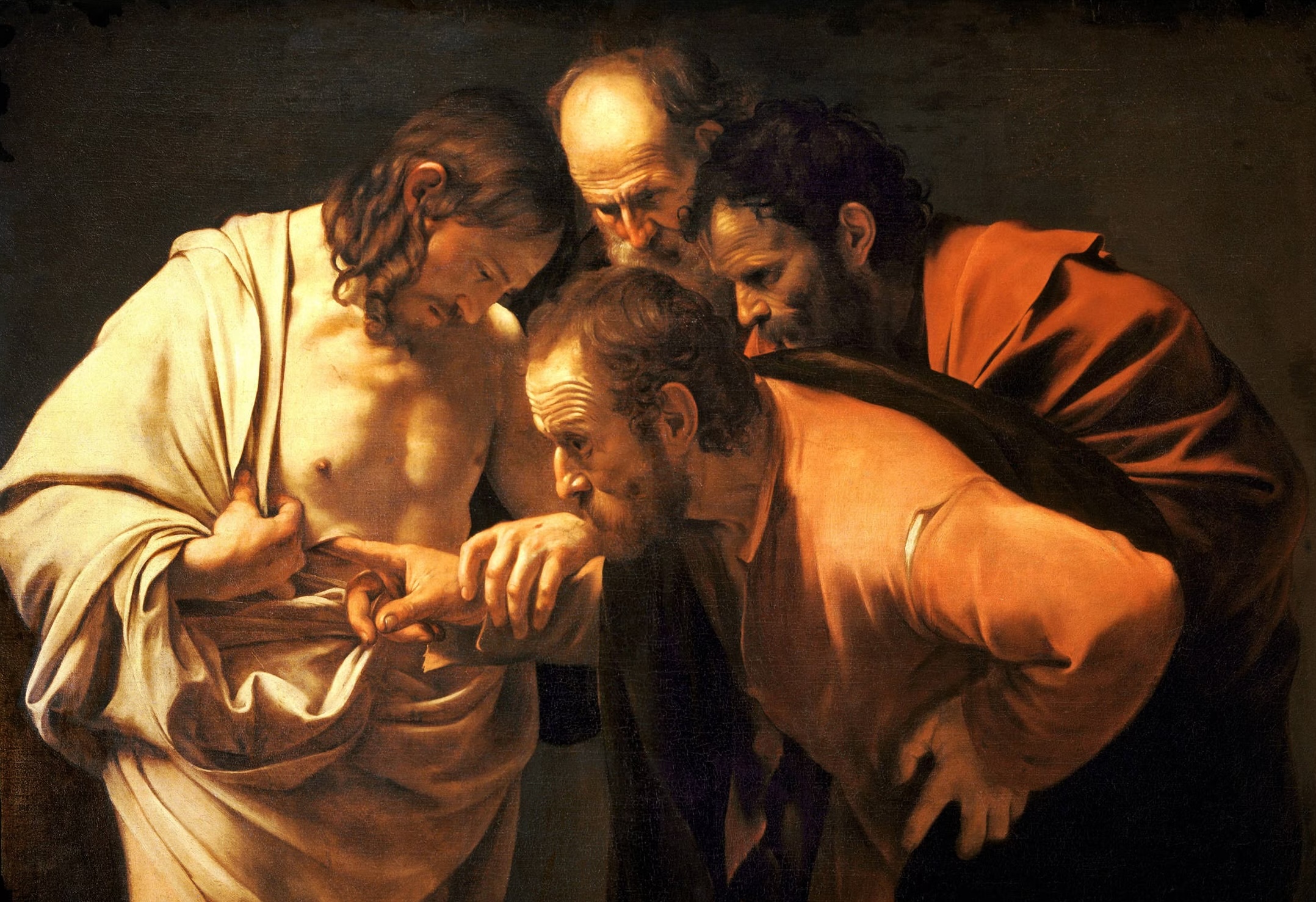
One week later, the disciples are once more together behind locked doors. This time, Thomas is present. Jesus again appears among them. He invites Thomas to put his finger in the nail wounds on his hands, his hand in the spear wound on his side. Thomas believes, and Jesus states “Blessed are those who have not seen and yet have believed”

John then shares his “one thing” when he writes: “But these are written that you may believe that Jesus is the Messiah, the Son of God, and that by believing you may have life in his name.”

In looking back at the resurrection episodes John chooses to share while being mindful of his “one thing” I can see why he chose to share the episodes he did:

John was at the empty tomb. He didn’t see Jesus, but with the empty tomb he “saw and believed.” He didn’t see the risen Christ, but already believed.

Mary saw the risen Jesus. John wants his readers to know that it wasn’t a conspiracy of “The Twelve.” Others saw the risen Jesus, talked to Him, and touched Him.

Jesus appeared to the disciples, but Thomas doubted until Jesus provided physical proof that it was Him. When Jesus shares, “blessed are those who have not see yet have believed,” John is leading his readers to the “one thing.” We, his readers, are among those who “have not seen” and he wants us to believe.

In the quiet this morning, I am mindful of the season of Lent in which believers annually walk with Jesus to the cross on Good Friday and run with John and Peter to the empty tomb on Easter Sunday. It is a time of reflection on the “one thing” of our faith: that Jesus sacrificed Himself for my sins, died on a cross, and was resurrected on the third day. This morning I glanced back on over forty years of believing in and following Jesus. Time and life have not diminished my belief. They have honed it.

I have not seen the risen Christ, but I have experienced His indwelling. I have heard His Spirit in my spirit. I have experienced His moving and working in my life so many times and in so many ways. And, I believe that I will see Him when this earthly journey is over. I’m reminded of Paul’s words to the believers in Corinth:

“For now we see only a reflection as in a mirror; then we shall see face to face. Now I know in part; then I shall know fully, even as I am fully known.”

Until then, “blessed are those who have not seen and yet have believed.”

If you know anyone who might be encouraged by today’s post, please share.

Namesake

Namesake (CaD John 20) Wayfarer

Then he said to Thomas, “Put your finger here; see my hands. Reach out your hand and put it into my side. Stop doubting and believe.”
John 20:27 (NIV)

I’m not sure why my parents named me Thomas. Perhaps there was an alliteration piece to it since they already hat Terry and Tim. It’s ironic that the etymological root of the name Thomas meant “twin,” since I wasn’t a twin and brothers are. That always felt like a mistake in my book, though my parents confessed to me that I was an “oops” baby, so there’s been no forethought given to having to name another boy.

As a child, I remember names and namesakes being discussed on the playground and in friend groups. There were certain bragging rights for those who had really cool etymological roots or definitions to their names like “King” or “Mighty Warrior.” Some kids linked their names with famous people who happened to have the same moniker.

Of course, in that playground conversation I always got linked to “doubting Thomas.”

Great.

In retrospect, as an Enneagram Type Four, it was probably prescient that my parents named me the same as Mr. Doubt. I have the deep pessimistic streak that comes naturally to Fours. I have a very vivid memory of my mom rolling her eyes at me in frustration and exclaiming, “You’re such a pessimist!” (I didn’t know what it meant at the time.) So perhaps the doubting one is an apt namesake for me, despite the angst it created within me during playground conversations.

And, Fours like to be special. We have a flair for the dramatic. So it would fit that Thomas enjoys the rather special, and dramatic moment when Jesus suddenly appears behind locked doors and tells Thomas to touch His scars and feel the hole in His side. I’ve always had a personal love for Caravaggio’s dramatic depiction of the moment.

In the quiet this morning, I find my thoughts less focused in the story, and more focused on my identity and my connection to the Story. Which is what John point out at the end of the chapter. As he is wrapping up his biography, he rather blatantly reminds his readers of the thing I’ve observed multiple times in these posts over the past few weeks. John had a limitless number of stories and anecdotes about Jesus that he could have shared with readers. He chose specific stories for a specific purpose:

Jesus performed many other signs in the presence of his disciples, which are not recorded in this book. But these are written that you may believe that Jesus is the Messiah, the Son of God, and that by believing you may have life in his name.
John 20:30-31 (NIV)

John’s biography is the first thing I read after becoming a follower of Jesus. This doubting Thomas, this pessimistic, dramatic Enneagram Four, counts myself among John’s readers who have believed and received; I am numbered among those whom Jesus named when He said to Thomas, “Blessed are those who have not seen and yet have believed.”

Mom? Dad? I think you got my name right.

If you know anyone who might be encouraged by today’s post, please share.

To Believe, or Not to Believe

Jesus said to [Thomas], “Have you believed because you have seen me? Blessed are those who have not seen and yet have come to believe.”
John 20:29 (NRSV)

It is the most startling claim of all of the startling claims that were made about Jesus. The One who cured lepers, cast out demons, made the lame walk and the blind to see. The One who raised a little girl from her deathbed and called Lazarus out of his tomb. This Jesus, whose beaten, tortured, and crucified body had lain dead and lifeless in the grave since Friday afternoon, is resurrected on Sunday morning and appears numerous times to different followers, including a sudden appearance behind locked doors to show his wounds as proof to a doubting Thomas.

There are many over the centuries who appreciate Jesus’ teachings and example, but fall short of believing the miraculous claims about Him. Yet it was the surety of the resurrected Jesus that led His followers to burst out from their hiding behind locked doors to boldly proclaim the most audacious claim of all. Each one of Jesus’ inner circle who saw Jesus present Himself to a doubting Thomas behind those locked doors would later prove willing to travel to the ends of the known world, to suffer terribly at the hands of unbelievers, and to die horrific deaths in proclaiming that which they had heard with their own ears, seen with their own eyes, and touched with their own hands.

It is one thing to nod acknowledgement and appreciation toward Jesus’ Pinterest worthy sayings. It is another thing to truly believe that Jesus is who He claimed to be and who His closest followers proclaimed Him to be though it cost them their own lives. If you believe the audacious claim, then it requires something of you. It requires everything of you.

For the record, I believe.