Tag Archives: Walls

Phase Two

Now the leaders of the people settled in Jerusalem. The rest of the people cast lots to bring one out of every ten of them to live in Jerusalem, the holy city, while the remaining nine were to stay in their own towns. The people commended all who volunteered to live in Jerusalem.
Nehemiah 11:1-2 (NIV)

Wendy and I built our house ten years ago. It’s hard to believe it was a decade ago. Not once in my life had I considered it something that I would do. I found the process both fascinating and challenging. Wendy and I have often spoken about the fact that she would absolutely do it again. She’d love to apply all of the things we learned and mistakes we made in creating a new space. I, on the other hand, would be perfectly content never to do it again. Building is a lot of work.

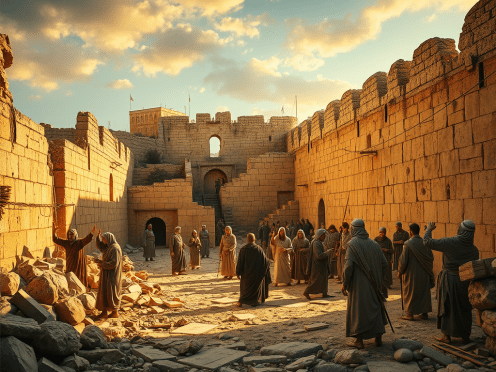
In all of the times I’ve read the story of Nehemiah, I tend to forget that when Nehemiah and the Hebrews rebuilt the walls of Jerusalem, they were building a wall around what was essentially a rubble heap. The Babylonians had utterly destroyed the city and Solomon’s Temple. Those who had resettled in the area mostly lived in outlying towns where they could survive raising crops and herds. Rebuilding the wall was the necessary Phase One project. With walls and gates in place, Jerusalem was relatively safe from enemy attack, but now the real work begins. Phase Two is making the city inhabitable and creating a community within the walls.

Today’s chapter begins with people casting lots to determine who would move inside the city walls and take up residence. They cast lots because it wasn’t something most people wanted to do. Living inside the city walls would be inconvenient, even dangerous.

Homes had to be made from the rubble. Not an easy task, nor a comfortable life while it was in process.

You were leaving the safety and security of fields and flocks (in which food was easily grown and raised) for plying a trade inside the city in a market that hadn’t been established and might not be stable.

Inside the city is where the Persian Empire’s officials, soldiers, and emissaries would be stationed (protected by the walls and gates), which meant that anyone living inside the city was under the watchful eye of the Empire, and perhaps its punitive authority.

The main activity inside the city was the Temple. Most of those living inside the City were priests and Levites in charge of the Temple’s system of sacrifices and offerings. Being a resident inside the city also meant you were under the constant religious scrutiny of the priests. There was greater pressure to follow the rules, make prescribed tithes and offerings, and maintain ritual purity than if you lived out in the fields where no one is watching.

And, while the city had walls and gates, it would be the first place that enemies would lay siege and attack. Living inside the City came with the dangers of that constant threat and the responsibility to assist with the city’s defensive needs of watchmen, guards, and gatekeepers.

I find it interesting that Nehemiah’s prescribed draft lottery to determine who would live inside the city was based on one in every ten families. The the Law of Moses, ten percent was always the prescribed amount of tithes God ask to bring as offerings to the Temple. In this case, the tithe being brought inside the city to the Temple were the people themselves. Sometimes what God requires is not my produce, but my presence.

In the early stages of our house being built, right after it was framed, Wendy and I invited our friends to come and bless it. On the concrete foundation, the wood studs and the plywood, we and our friends wrote blessings, prayers, and promises. The were many phases of building yet to be done. It would be months before the house was finished and we would move in.

In the quiet this morning, I’m reminded that Nehemiah and the Hebrews are at a similar place in their project. The walls are just the framing. There’s still a lot of hard work ahead. Sometimes, God needs people who simply have the faith and willingness to show up and do what needs to be done.

A good reminder on a Monday morning. Time to get to work!

If you know anyone who might be encouraged by today’s post, please share.

Promotional graphic for Tom Vander Well's Wayfarer blog and podcast, featuring icons of various podcast platforms with a photo of Tom Vander Well.
These chapter-a-day blog posts are also available via podcast on all major podcast platforms including Apple, Google, and Spotify! Simply go to your podcast platform and search for “Wayfarer Tom Vander Well.” If it’s not on your platform, please let me know!
Logo of Bible Gateway, featuring an open book icon on an orange background.

Refuge and Restoration

Then Nehemiah the governor, Ezra the priest and teacher of the Law, and the Levites who were instructing the people said to them all, “This day is holy to the Lord your God. Do not mourn or weep.” For all the people had been weeping as they listened to the words of the Law.
Nehemiah 8:9 (NIV)

I don’t like to be confined into a row of chairs during worship. I like to stretch out and move. Wendy is the same way. During worship among our local gathering of Jesus’ followers, we will stand in the back. Sometimes, this means that individuals entering or walking by will stop to talk. So it was one morning when I turned to find a man weeping.

“I’m drunk,” he said, though he didn’t need to say it. He reeked of it.

I smiled and nodded.

“But you’re here,” I answered. “I’m glad you are.”

He didn’t need rejection. He was drowning in rejection. He needed a refuge. How much faith did it take to walk into a worship service drunk?

My new friend had it rough. The road of life had led him to some dark and difficult places. He’d make a lot of foolish choices. He’d been raised in faith, but he walked away and chose to forget. Then, he found himself needing refuge from his fears, his failings, and his addictions. He stumbled into a worship service.

I think today’s chapter needs to be viewed in a much larger context. The Hebrew people had spent over a century living in exile. Even after 70 years, when the first exiles returned, they had largely forgotten the faith of their fathers. Reading was uncommon, and copies of the Books of Moses were rare. They were just walking life’s journey without faith or guidance. By the time Nehemiah arrived and rebuilt the walls of Jerusalem, it had been more like 140 years since the exile began.

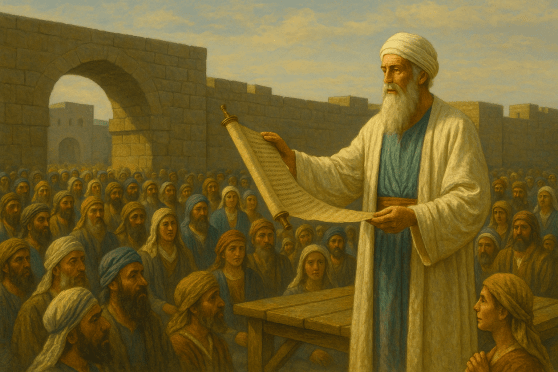
Now the walls are built. The gates are hung. For the first time in five generations the Hebrew people are together. They finally have refuge inside the city of their ancestors. The priest pulls out the Books of Moses and begins to read the Great Story from the beginning. Most of them are hearing the Story for the first time. They hear of God’s creation, His promises to Abraham, His provision for Jacob and the tribes, His deliverance of their ancestors from slavery in Egypt, His calling and covenant to be His people and what that meant.

There in the refuge of their home city, the people not only listen, but they hear God calling them home spiritually. He calls them to return to becoming the people, His children, that they were meant to be.

They begin to weep. This is all taking place by the Water Gate. The God who divides the deep and creates the universe. The God who divides the waters of the Red Sea to save them from their enemies. The God who divides the waters of the Jordan to usher them into His Promised Land. The God who washes, waters, bathes, cleanses, and renews.

Nehemiah reminds them that God is calling them out of the weeping of repentance and into the joy of restored relationship. For the first time in hundreds of years, since the time of Joshua, the people celebrate God’s prescribed festival of the tabernacles.

Both physically and spiritually, they have come back home.

Over the past year or so I’ve read a number of stories from people who have wandered home to faith. The stories follow a common theme. As young people they walked away from the faith in which they were raised. They were too intelligent to believe all that nonsense. They got educated, had careers, and wandered life’s road. But something happened along the way in the craziness of a world that has become increasingly unhinged. Drunk on fear and futility, they found themselves stumbling back home where they found a refuge, and where Life began to be restored within.

Just like Nehemiah and the Hebrews in today’s chapter. The restoration of the walls and gates led to a very different restoration. There is something spiritually universal in this story and in the experience of returning to the refuge of God’s grace and forgiveness, and finding there restoration of Life and Spirit.

In the quiet this morning, the words of an old hymn whisper in my soul:

Softly and tenderly Jesus is calling, 
calling for you and for me; 
see, on the portals he’s waiting and watching, 
watching for you and for me.
Come home, come home; 
you who are weary come home; 
earnestly, tenderly, Jesus is calling, 
calling, O sinner, come home!

If you know anyone who might be encouraged by today’s post, please share.

Promotional graphic for Tom Vander Well's Wayfarer blog and podcast, featuring icons of various podcast platforms with a photo of Tom Vander Well.
These chapter-a-day blog posts are also available via podcast on all major podcast platforms including Apple, Google, and Spotify! Simply go to your podcast platform and search for “Wayfarer Tom Vander Well.” If it’s not on your platform, please let me know!
An orange square icon featuring a stylized white open book symbol in the center, accompanied by a text underneath that reads 'Bible Gateway'.

Cities of Refuge

“The accused must stay in the city of refuge until the death of the high priest; only after the death of the high priest may they return to their own property.
Numbers 35:28 (NIV)

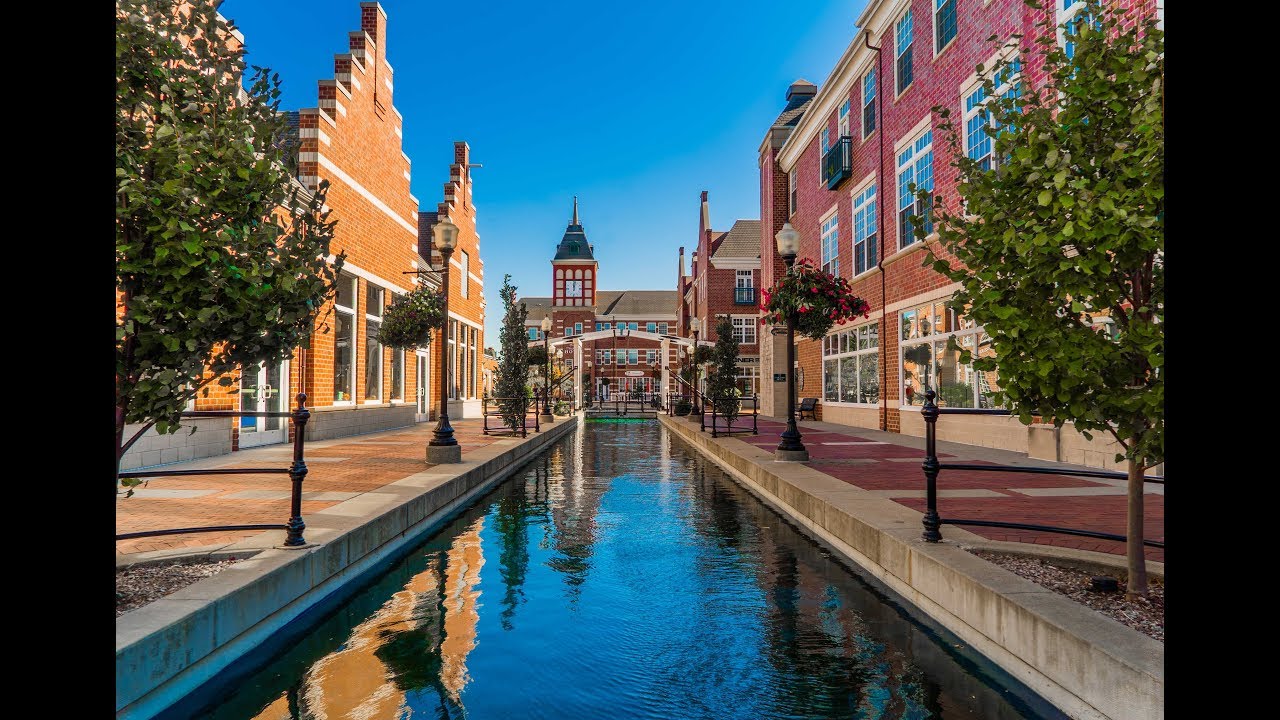
Our city of Pella here on the Iowa prairie has an incredible history. It was created by a Dutch pastor and his congregation who were fleeing religious persecution from the state church in the Netherlands. It was named Pella after an ancient city called Pella that was a “city of refuge” and to which early Christians fled from persecution and an impending war in Jerusalem between the Jews and Romans.

In today’s chapter, God commands Moses to create six evenly distributed towns throughout the Promised Land where the tribe of Levi would settle. Remember, the Levites were responsible for maintaining God’s traveling tent temple and the overseeing the entire on-going sacrificial system. God was their inheritance, not a plot of land. Nevertheless, they needed a place to live, so six cities were created for the Levites and God designated them “cities of refuge.”

In the entire history and development of human civilization, today’s chapter stands as a critical and revolutionary step forward. Other ancient cultures had largely undeveloped policies regarding sanctuary for the accused. God didn’t invent the idea of sanctuary out of thin air in today’s chapter, but He transformed a scattered, uneven practice into a theologically rich, justice-mercy structure that was unique to Israel and transformed the principles and policies of human justice.

There were six cities evenly distributed. The cities were Levite towns, meaning that the accused was under the protection of the priests and both mercy and justice were viewed directly as coming from God’s appointed representatives. The accused could not leave the walls of the city of refuge until the death of the high priest, so fleeing from an avenger was not just a blank check of forgiveness. There were boundaries to which the accused must adhere. There was also a very clear system that God put in place that required witnesses and a form of due process. Humanity had never seen anything like it.

Cities of refuge became a part of the human landscape and they have had a ripple effect throughout history. The early Jesus Movement largely survived and flourished because of a prophecy in which Christians were instructed to flee to ancient Pella. Had they stayed in Jerusalem, they may have been wiped out when the Romans destroyed the temple and city in 70 A.D.

In the 1800s, H.P. Scholte realized that there was little or no future for his largely poor, uneducated, and lower-class congregation members. He and his flock had no freedom of religion. He had already been imprisoned for obeying his conscience and defying the king who was head of the state controlled church. Scholte saw America for what it was, a land of opportunity where he and his followers were free worship however they wanted and where poor uneducated farmers might make a life for themselves and their descendants that would have been impossible in the Netherlands. So, he dreamed, designed, and built a new city of refuge on the Iowa prairie and named it after the ancient city that saved and launched the success of the Jesus Movement.

In the quiet this morning, as I meditate on the chapter and the history of cities of refuge, there are three things stirring in my soul:

God as Refuge: In both Jewish and Christian traditions, God carves out spaces of mercy in the midst of justice. This life journey contains moments where guilt—intentional or accidental—feels like a crushing weight. In today’s chapter God whispers: there is a place to run, and a God who receives you.

Boundaries of Grace: The city walls of the Levite towns remind me that refuge comes with boundaries. Forgiveness and safety are not license; they invite us to dwell in a different rhythm of life until God’s appointed time of release.

Death that Brings Freedom: For both Jew and Christian, the death of the High Priest as part of the system is key. It’s a reminder that death itself—Christ’s, and one day my own—is not an end but the doorway to freedom.

Grace often blooms most vividly when something old dies and something new begins.

If you know anyone who might be encouraged by today’s post, please share.

Promotional graphic for Tom Vander Well's Wayfarer blog and podcast, featuring icons of various podcast platforms with a photo of Tom Vander Well.
These chapter-a-day blog posts are also available via podcast on all major podcast platforms including Apple, Google, and Spotify! Simply go to your podcast platform and search for “Wayfarer Tom Vander Well.” If it’s not on your platform, please let me know!
Logo of Bible Gateway, featuring an open book icon and the brand name.

Tearing Down Walls

Tearing Down Walls (CaD Ezk 46) Wayfarer

“‘The prince must not take any of the inheritance of the people, driving them off their property. He is to give his sons their inheritance out of his own property, so that not one of my people will be separated from their property.’”
Ezekiel 46:18 (NIV)

There was a fascinating article in the Wall Street Journal this past week about some of the political wrangling in the U.K. They have two “houses” in their government, too. However, their houses began with one being for the “common” people and the other being for those with a royal title. Today, the House of Lords does not look like it did when it was instituted but there is a certain percentage of members who are there because they inherited a royal title from a father or grandfather. There’s a push by the new Prime Minister to force them and push the old aristocracy into extinction.

This article came to mind this morning as I continued to read Ezekiel’s ideal vision of Israel’s restoration. Today’s chapter continues to provide instructions for how things are to function. There were two things that stand out with regard to “the Prince” and all the other people of Israel.

First, the Prince was to enter into the Temple with all of the other people, and he was to exit with all of the other people. No special entrances or VIP gate. The Prince is no different than any other person. In Ezekiel’s day, this was a radical idea.

A bit later in the chapter Zeke explains that the Prince has no power to take away anyone’s land and claim it for himself. This was a common practice in monarchies throughout history. In fact, hundreds of years before Ezekiel, the people of Israel wanted a king like all the other nations around them. The prophet Samuel warned them that a king would take whatever he wanted from them, whenever he wanted, including their land.

[A king] will take the best of your fields and vineyards and olive groves and give them to his attendants.
1 Samuel 8:14 (NIV)

In Zeke’s vision of how things can and should be, the Prince has his land that he can give to his descendants as he chooses, but he cannot take anyone else’s land “so that not one of my people will be separated from their property.’” This was a radical idea in Ezekiel’s day. The Prince is no different from the common every day citizen. Every family has their allotment that cannot be taken away.

In the quiet this morning, I think about this game that humanity has played throughout history. We divide people into distinctions of royal and common, aristocrats and bourgeoisie, Popular and losers, blue bloods and the masses, elites and the lower class. Even today, I can own my own land and have it taken away by eminent domain.

Not only that, but along my journey I’ve observed that even here in the States, where we supposedly have done away with old forms of monarchy and aristocracy, we still essentially turn our Presidents, politicians, and celebrities into royalty. What is it in humanity that perpetually builds these distinctions?

As a disciple of Jesus, I can’t help to think about the fact that Jesus came to build on this seed that Ezekiel’s vision is planting and do something new. Jesus came to tear down distinctions of race, class, and gender:

There is neither Jew nor Gentile, neither slave nor free, nor is there male and female, for you are all one in Christ Jesus.  If you belong to Christ, then you are Abraham’s seed, and heirs according to the promise.
Galatians 3:28-39 (NIV)

This begs two questions of me:

Where have I, or my culture, rebuilt a wall of distinction that Jesus purposefully tore down?

How can I personally tear it back down in my heart, mind, and actions?

If you know anyone who might be encouraged by today’s post, please share.

Foolish Anxiety and Real Threats

They said to me, “Those who survived the exile and are back in the province are in great trouble and disgrace. The wall of Jerusalem is broken down, and its gates have been burned with fire.”
Nehemiah 1:3 (NIV)

The immigration of large people groups tend to happen in waves. The town of Pella, Iowa, where I live was founded by a group of Dutch immigrants in the 1800s. It happened, however, in waves. The first group arrived on the Iowa prairie in 1847 and began a settlement. They were the trailblazers. In his book Iowa Letters, Johan Stellingwerff, chronicles the letters sent back and forth between the first wave of settlers and their families back home who were still preparing to make the voyage:

“Dear Parents,

I write specially about the expenses of my journey…The journey from Borton, New York, or Baltimore is tiresom and damaging for freight because of reloading. It is better and cheaper via New Orleans…..

Hendrik Hospers

It is important for readers to understand that for the exiles returning to the city of Jerusalem from their captivity in Babylon and Persia, the same is also true.

For many years, the books of Ezra and Nehemiah were considered one book with two sections. They were authored by two different leaders of the waves of returning exiles. There were actually three waves of people who returned. The first was c. 538 BC led by Zerubbabel (the rebuilt Temple of Solomon is commonly referenced by historians as Zerubbabel’s Temple). Ezra led the next wave c. 458 BC. Nehemiah led the third c. 432 BC.

In today’s opening chapter of Nehemiah, the author records the word that came back to him from the returned exiles in Jerusalem. The news was not good. The walls of Jerusalem were in ruins and the gates of the city were burned and useless. It’s hard for us to appreciate the magnitude of this reality for the people of that time. Raiding armies were common among the many tribes and factions in the region. Plundering and pillaging were common and walls were an essential deterrent. The success of the exiles in their return and rebuilding of the city was in peril if there were no walls or gates to protect them from outside armies and/or raiding parties.

It may be hard to relate to everyday life in the 21st century, but the truth is that in life and in business, I find myself mindful of potential threats. There are threats of weather for which we must prepare our home and property. There is the threat of catastrophic life events against which we buy insurance for our health and lives.

Along my life journey, I have struggled to find the balance between being prepared for unexpected threats and being worried about them. I am more convinced than ever that I live in a culture in which politicians, media, special interest groups, and corporations peddle a non-stop stream of fear and apocalyptic predictions, which in turn create human reactions in large numbers of people, which in turn leads to clicks, views, ads, votes, sales, revenues, and etc. Wisdom is required.

Yesterday, among our local gathering of Jesus followers I was reminded that the Kingdom of God is not in trouble.

Nevertheless, I have a responsibility to my wife, my family, my employees, and my loved ones. There is wisdom in taking honest stock of potential threats that could seriously affect our well-being, and to take realistic precautions. When Nehemiah heard that the walls of Jerusalem were in ruins and the gates of the city had burned down, he was not motivated by unrealistic fear but by wisdom with regard to very real threats to his loved ones and his people. Two previous waves of exiles had failed to address a very real threat to their existence, and Nehemiah immediately knows that something must be done.

As I begin this new day and this new work week, I find myself asking for wisdom in discerning between fear-mongering, foolish anxiety, and real threats.

Building Silos

This is what the Lord commands for Zelophehad’s daughters: They may marry anyone they please as long as they marry within their father’s tribal clan.
Numbers 36:6 (NIV)

Almost every morning Wendy and I meet in our dining room for our requisite cups of coffee and tea. We read the newspaper together and start each day catching up on current events and solving the worlds problems. Over weeks and months and years we begin to see patterns that you can count on. For example, no matter what piece of legislation is presented by Congress here in America, all parties will get out their crystal balls and predict either blissful utopia or utter apocalypse depending on which side of the aisle they butter their womb-to-the-tomb pension and benefits package. The same clichés will be used like worn-out rags for the public while behind closed doors congressional staffers will be hammering out appeals and deals.

Along life’s journey I’ve observed that there are always unintended consequences to virtually any law. Laws may benefit the majority but will typically have unintended negative effect for others. Laws always get amended, altered and changed by additional legislation or by interpretations and clarifications from the judicial branch. It’s just the way the system works.

In today’s chapter we finish our journey through the ancient book of Numbers with a rather odd, anti-climactic story. A few chapters ago the unmarried daughters of a guy named Zelophehad approached Moses and argued that their father’s inheritance should pass to them, even though they were women. Women in near east cultures of that day could not own property and, in fact, were typically considered the property of their fathers or husbands. In a law that was incredibly progressive for the time, Moses agreed with the orphaned daughters and set up a new law granting unmarried daughters of a dead father the father’s inheritance. The inheritance would then pass to their husband if/when they eventually married.

Today we have an appeal to the original law. The ruling men in the tribe begin to ask themselves “What ifs.” It would not surprise me if multiple men from various tribes were lining up in an ancient version of The Bachelorette. Marrying Zelophehad’s daughters and getting your hands on Zelophehad’s inheritance would be a lucrative deal. “Mazel tov!”

The problem was that tribal inheritance in the promised land was to be set in stone and absolute. Land was not to pass back and forth from one tribe to another. The case of Zelophehad’s daughters created a problem. Their father’s land would go to their future husband. If they married outside the clan then their tribes land would be owned by another tribe. Moses quickly amends the original law stating that Zelophehad’s daughters must marry inside their own tribal clan.

Of course, when you follow the news long enough and acquaint yourself with human history you begin to see patterns. Today’s amendment will have its own unintended effect. When human tribes isolate and insulate themselves socially it creates “us versus them” mentalities. Eventually the tribes would turn against one another in a protracted civil war.

This morning I’m thinking about tribes and clans. In the business world we often speak of “Silos” in which departments and divisions of corporations operate within themselves and largely function in exclusion to the corporation as a whole. In the world of institutional Christianity we see this same paradigm in silos we call denominations. Across the U.S. I see silos in politics and in my own community I see silos culturally among groups with different ideas and interests. Silos we build with the best of intentions to shore up the identity and cohesion of certain groups become exclusionary protectorates that eventually contribute negatively to the whole.

The further I get in my life journey the more inclined I am to stop building silos and to start tearing them down.


Every Leader Wears a Target

The burden bearers carried their loads in such a way that each labored on the work with one hand and with the other held a weapon.
Nehemiah 4:17 (NRSV)

Along life’s journey I’ve learned that when set yourself up to lead almost any effort, no matter how noble your intent, you will always encounter opposition. Parents trying to lead their family well will experience opposition from children, so-called experts, other parents telling them they’re doing it wrong, or the grandparents telling them they’re screwing up the kids. Teachers leading a classroom have to wear emotional body armor against the slings and arrows they get from all sides. Every preacher on Sunday morning, no matter how true his or her message, has at least a few congregation members who will serve up roast pastor for their Sunday dinner. The greater the task being led, the more virulent the opposition will be.

patton george bailey w text

In this life, God has not led me on roads where I have been called upon to take on monumental leadership roles. I have never been Patton called on to lead armies in saving the free world from Hitler’s minions. I have always been George Bailey fighting the relatively silly skirmishes of Bedford Falls. Still, I am always amazed at how universally this paradigm holds true. People are people. Stand in a position of leadership and you wear a target on your chest.

So it was that Nehemiah and the people building the walls of Jerusalem encountered opposition from their neighbors and enemies in today’s chapter. Their enemies did not want the wall rebuilt. They did not want Judah to rebuild its regional power. They wanted the walls and gates to remain in heaps of rubble. And so, with the threat of their work being attacked, the laborers had to build the wall with one hand, and had to be prepared to defend their work with the other.

I love that word picture as I wear my relatively minor mantels of leadership. I have to be prepared for opposition as I lead any kind of task. Of course, I’ve also learned that not all opposition or criticism is malicious or divisive. Quite often it is criticism that makes me aware of my blind spots and helps me shore up areas of need. Wise King Solomon said, “The wounds of a friend are better than the kisses of an enemy.” Word. I’ve discovered that wisdom is often required to discern the difference between constructive criticism and opposition of ill intent. I’m still learning.

chapter a day banner 2015

When the Walls Come a Tumblin’ Down

[The travelers from Judah] replied, “The survivors there in the province who escaped captivity are in great trouble and shame; the wall of Jerusalem is broken down, and its gates have been destroyed by fire.”

When I heard these words I sat down and wept, and mourned for days, fasting and praying before the God of heaven.
Nehemiah 1:3-4 (NRSV)

In ancient days, a nations walls were everything. Every major city (which subsequently controlled the nearby lands) was surrounded by walls. Walls were your security, making it impossible for enemies to easily invade. Walls were your pride. Their height, width, and engineering told the world how prosperous, industrious, and educated you were. Your gates were your calling card. Being the weakest point of defense, your gate said everything about you. The more secure, enamored, and embellished the gate, the more your city state would be held in high esteem.

The book of Nehemiah is about the walls and the gate of the city of Jerusalem, which had been destroyed (along with Solomon’s temple) by the Babylonian empire in 587 B.C. Most of the nations best and brightest were carried off into captivity in Babylon. Ezra, Nehemiah and their families were among them. As the scene is established in the opening sequence of today’s chapter, Nehemiah runs into some travelers who had arrived in Babylon from back home. He inquires about the state of their homeland and capitol city, and learns that the walls and gates had been utterly destroyed. The remnant back home feel utter shame.

If you have no walls, you are nothing.

Nehemiah’s reaction to the news was telling. He is grief stricken. He weeps. He fasts. He prays and confesses to God his sins, the sins of his family, and the sins of his nation.

We don’t have literal walls surrounding our homes and capitols [Unless you live in a gated community…there’s a good conversation to be explored there. Trump’s promised border wall is another interesting parallel conversation, but I digress] Walls as a line of defense became obsolete hundreds of years ago. The word picture, however, still carries weight for me in my personal life. I still build walls, metaphorically, around my heart and life. I build walls of protection against forces spiritual, emotional, relational, and cultural. I erect walls of possessions and words revealing to others what I want them to see, while hiding safely that which I desire to hide. I engineer relational walls that warn people off, walls that keep people out, and gates of relationship that open and close at my will.

And, my walls can crumble and fall just like Jerusalem’s.

On my left bicep I have a tat that references Psalm 51. It is an ancient song of confession, the lyrics written by King David at a moment when the walls of Jerusalem stood tall and proud, but the walls of his personal life had come crashing to the ground. The gates to his soul lay in utter ruin. It is on my left bicep because the ancients identified left, and left-handedness (I’m a lefty, btw), with foolishness, iniquity, and sin. It is on my bicep because it is a reminder to me that my strength is not in the quality of the walls I build around myself, but in humility and the utter honesty of my confession.

Nehemiah is having a Psalm 51 moment. I have had my own (multiple times). Walls crash and burn. Life sometimes lays in ruin before us. I have learned along the journey that in those moments when life crumbles around me the key to finding seeds of redemption and restoration lie not in the strength of my biceps, but in the condition of my spirit. Nehemiah gets it, too.

Confession of a Spiritual Brick Layer

 For there is no difference between Jew and Gentile—the same Lord is Lord of all and richly blesses all who call on him.
Romans 10:12 (NIV)

Six years ago Wendy and I were in London and had the pleasure of attending the National Theatre. The production that night was a fascinating play about the different waves of modern immigrants who flooded into London over the past few hundred years. The play was set in one low rent tenement building that became home to all of these various ethnic groups, and in the pub on the street below.

When the French Huguenots moved in the poor Brits in the pub grumbled about the “F*#@ing French!

When the Indians moved in the assimilated French Huguenots in the pub grumbled about the “F*#@ing Indians!

When the Irish moved in during the Great Famine the assimilated Indians in the pub grumbled about the “F*#@ing Irish!

When the Russian Jews moved in during the Russian pogroms the assimilated Irish in the pub grumbled about the “F*#@ing Jews!

You get the picture. We are such a homogenous and exclusionary society. Even in the “great melting pot” of the United States, which over the past 250 years may have easily become the most racially and culturally diverse society in the history of the earth, we still grumble about the next wave of immigrants. We feel suspicious about people who aren’t “American” and don’t speak English.  We talk about building giant walls to keep people out.

I have observed that followers of Jesus are not immune to this phenomenon. As children we are taught to sing:

“red and yellow, black and white,
they are precious in His sight,
Jesus loves the little children of the world.”

What our Sunday School teachers left out was the bit about these children not being particularly precious in our sight. They didn’t teach us the qualification about these children being “precious in His sight in their own country of origin.”

In today’s chapter, Paul announces to those following Jesus in Rome that the walls the people of Israel had built up in their hearts to exclude non-Jews (known as Gentiles) had been toppled once and for all by Jesus. Beyond that, read the Jesus story and you discover Him toppling walls between genders, walls between social strata, and walls between political camps. Wherever those walls still exist today (and they exist all over the place), it’s because we who have followed Jesus have exerted ourselves to rebuild those walls in our hearts, lives, homes, churches, and communities.

Today I’m reading my own post and examining my own heart. As usual, as I point my finger at others there are three pointing back at me. I live in an incredibly homogenous community comfortable in its lack of diversity. I must confess to you: evidence suggest that I am quite an accomplished spiritual brick layer myself.

God, will you lend me your sledgehammer?

Thanks.

Step back, please.


chapter a day banner 2015

Foundational Inscriptions

2010 03 Playhouse BasementUnless the Lord builds the house,
    the builders labor in vain.
Psalm 127:1a (NIV)

When I was a teenager my parents began making regular summer visits to the Lake of the Ozarks in Missouri. When I was just out of college and the girls were babies, my folks would rent a house for a week or so each summer and invite the family to join them there. I can remember taking long sunset boat rides during those years. Dad would gun the engine and we would jet off across the water. Conversation was nigh unto impossible, so I would sit in the bow of the boat just dream. I would day dream of owning my own place on the lake someday, though at the time I considered it a pipe dream.

By the time the girls were in elementary school my parents had bought a small trailer home on a lakeshore plot there. Just over a decade later they were ready to sell, and Wendy and I were in a position of investing in the place. What had only been a pipe-dream a decade or two before was actually becoming a reality. We pulled the trailer home off the land, had a walk out basement foundation poured and put a manufactured home on the foundation. In the spring of 2010, a group of friends gathered in the bare basement to begin a summer long task of finishing it.

The first morning of construction I gathered the guys together and handed them each a black Sharpie. With the above verse fresh on my mind, I asked each of them to pray for the place, to pick a verse from God’s Message and to write it somewhere on the bare cement foundation. The verses they each wrote on the walls are covered over with insulation, framing, and drywall, but we will never forget what is written there.

Next weekend I’m taking a small group of guys for a little winter retreat at the lake. In another month or so Wendy and I will begin making regular trips down to prepare for another season of family, friends, fun, rest, relaxation and sun. It’s become a part of the seasonal flow of life for us. I don’t know about Wendy, but I still shake my head with wonder from time to time. We have been blessed, and I don’t want to lose sight of the source of our blessings nor cease to forget what is written on the foundation. I want the love, laughter, tears, and conversations which take place in that house to have eternal value. I never want our labor to have been in vain.

Enhanced by Zemanta