Tag Archives: Nehemiah 1

New Season, Big Challenge

When I heard these things, I sat down and wept. For some days I mourned and fasted and prayed before the God of heaven.
Nehemiah 1:4 (NIV)

It will forever be one of the most critical and difficult moments of my entire life journey. I still remember it like it was yesterday. I remember sitting in my home office. I remember my desk by the window and the afternoon sunlight streaming through the window. It was fall.

I had been through years of wilderness in so many ways. God had promised me so many times in so many ways that He had great plans on the other side of this wilderness. There was a Promised Land coming. I had been waiting. I had been slogging. I had been asking, seeking, and knocking.

On that fall afternoon I realized that it was time. This new season in life was about to begin. I thought that it would be a joyous moment. I thought that it would be triumphant and thrilling. It was none of those things.

For the new season to begin, my marriage had to end.

The setting of any story is important, and the story of Nehemiah cannot be fully appreciated without the setting.

We are in the ancient empire of Persia, in what today is southwest Iran. Over a century before, the city of Jerusalem had been destroyed. The Hebrew people had been taken into exile. In the game of thrones, theBabylonian empire fell to the emerging Persian empire. Some of the exiles had returned to Jerusalem, but others like Nehemiah remained and flourished.

Nehemiah finds himself at a critical inflection point in the Great Story. This is not a random moment. It’s been foreshadowed and foretold for centuries.

God through Moses initially made His covenant with the Hebrew people and told them that if they broke the covenant they would end up in exile among other nations. He goes on to promise that even then His love will not fail and He will bring them back. (see Deuteronomy 30:1-5)

The prophets later echoed this same warning and promise. Jeremiah repeatedly warned his people that they would end up in exile in Babylon if they didn’t repent. When it happened, Jeremiah wrote the exiles a letter and said:

“Build houses and settle down; plant gardens and eat what they produce. Marry and have sons and daughters; find wives for your sons and give your daughters in marriage, so that they too may have sons and daughters. Increase in number there; do not decrease. Also, seek the peace and prosperity of the city to which I have carried you into exile. Pray to the Lord for it, because if it prospers, you too will prosper.”

“This is what the Lord says: ‘When seventy years are completed for Babylon, I will come to you and fulfill my good promise to bring you back to this place. For I know the plans I have for you,’ declares the Lord, ‘plans to prosper you and not to harm you, plans to give you hope and a future. Then you will call on me and come and pray to me, and I will listen to you. You will seek me and find me when you seek me with all your heart. I will be found by you,’ declares the Lord, ‘and will bring you back from captivity.’”
Jeremiah 29:5-7, 10-14 (NIV)

As the book of Nehemiah opens, this is the moment. Nehemiah has done exactly what God commanded through Jeremiah. He has a great life. He’s an advisor and protector of the Persian emperor, Artaxerxes. He’s made a good life for himself and his family. He’s helped the Persian empire prosper and he has prospered in return. Now, it’s time to return from exile, to go home – back to the family’s land in Jerusalem.

Sometimes what seems like it should be a really joyous moment is actually a very painful one.

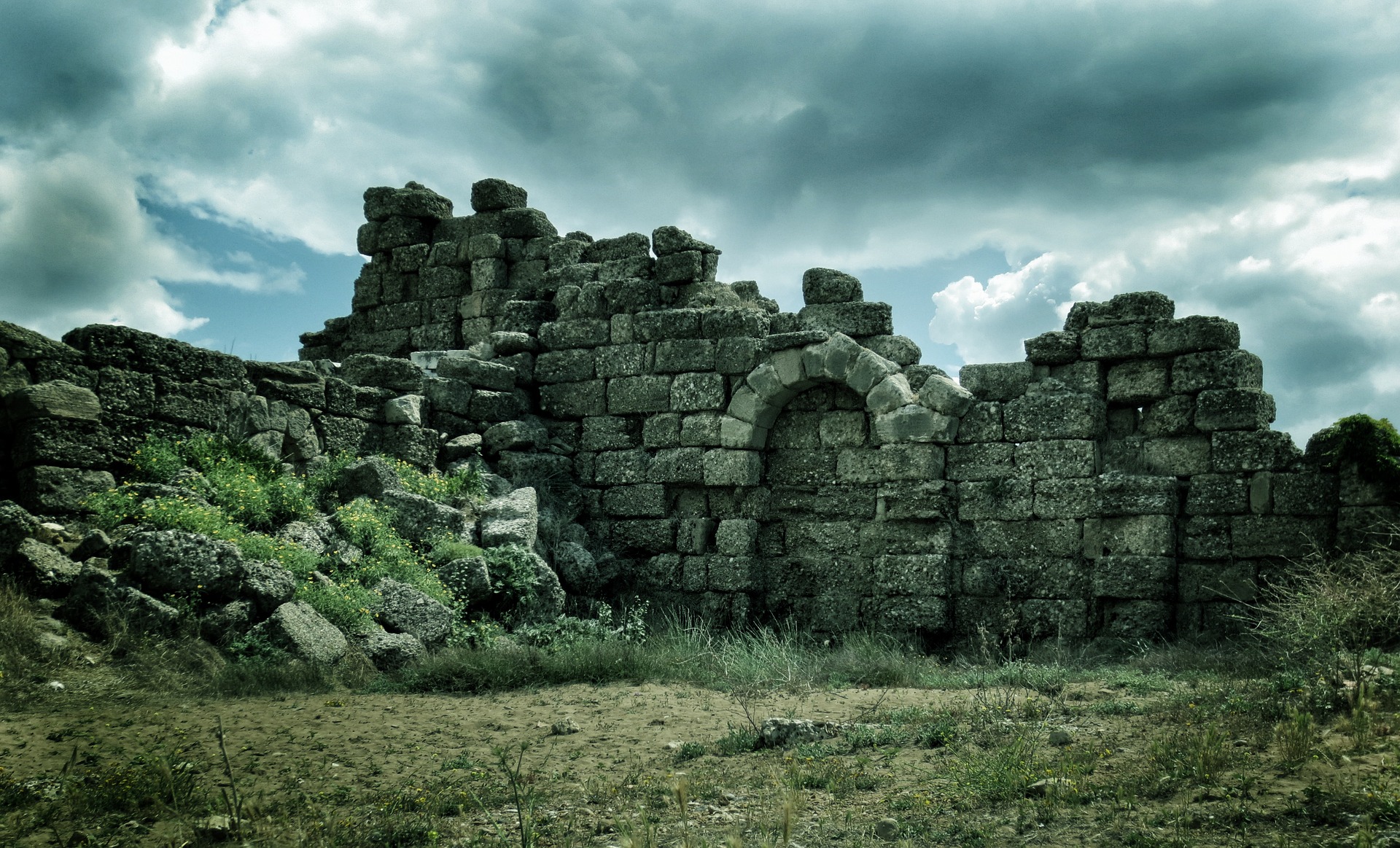
What precipitates Nehemiah’s return is word of just how bad things are back in Jerusalem. Yes, some exiles had returned but the situation is dire. The city’s walls were broken. There were no gates. It was defenseless chaos. There would be no prosperity for God’s people, they might not even survive, if something didn’t happen quickly.

The moment humbles Nehemiah and sends him to his knees. He remembers God’s love and promise, he repents, he prays for the guidance and inner resources he’ll need. The next season for Nehemiah will change the course of Israel’s history. It kick-start what is known as the Second Temple period that will be one of the most important in Jewish history. In that Second Temple period Jesus, the Messiah, will arrive. But the season starts with a challenge for which Nehemiah is not sure he’s ready.

Been there. Done that.

God had really great plans for me. Plans full of hope and a good future with Wendy, the girls, and each of their families. But sometimes the best seasons begin with the greatest challenges.

If you know anyone who might be encouraged by today’s post, please share.

Promotional graphic for Tom Vander Well's Wayfarer blog and podcast, featuring icons of various podcast platforms with a photo of Tom Vander Well.
These chapter-a-day blog posts are also available via podcast on all major podcast platforms including Apple, Google, and Spotify! Simply go to your podcast platform and search for “Wayfarer Tom Vander Well.” If it’s not on your platform, please let me know!

Foolish Anxiety and Real Threats

They said to me, “Those who survived the exile and are back in the province are in great trouble and disgrace. The wall of Jerusalem is broken down, and its gates have been burned with fire.”
Nehemiah 1:3 (NIV)

The immigration of large people groups tend to happen in waves. The town of Pella, Iowa, where I live was founded by a group of Dutch immigrants in the 1800s. It happened, however, in waves. The first group arrived on the Iowa prairie in 1847 and began a settlement. They were the trailblazers. In his book Iowa Letters, Johan Stellingwerff, chronicles the letters sent back and forth between the first wave of settlers and their families back home who were still preparing to make the voyage:

“Dear Parents,

I write specially about the expenses of my journey…The journey from Borton, New York, or Baltimore is tiresom and damaging for freight because of reloading. It is better and cheaper via New Orleans…..

Hendrik Hospers

It is important for readers to understand that for the exiles returning to the city of Jerusalem from their captivity in Babylon and Persia, the same is also true.

For many years, the books of Ezra and Nehemiah were considered one book with two sections. They were authored by two different leaders of the waves of returning exiles. There were actually three waves of people who returned. The first was c. 538 BC led by Zerubbabel (the rebuilt Temple of Solomon is commonly referenced by historians as Zerubbabel’s Temple). Ezra led the next wave c. 458 BC. Nehemiah led the third c. 432 BC.

In today’s opening chapter of Nehemiah, the author records the word that came back to him from the returned exiles in Jerusalem. The news was not good. The walls of Jerusalem were in ruins and the gates of the city were burned and useless. It’s hard for us to appreciate the magnitude of this reality for the people of that time. Raiding armies were common among the many tribes and factions in the region. Plundering and pillaging were common and walls were an essential deterrent. The success of the exiles in their return and rebuilding of the city was in peril if there were no walls or gates to protect them from outside armies and/or raiding parties.

It may be hard to relate to everyday life in the 21st century, but the truth is that in life and in business, I find myself mindful of potential threats. There are threats of weather for which we must prepare our home and property. There is the threat of catastrophic life events against which we buy insurance for our health and lives.

Along my life journey, I have struggled to find the balance between being prepared for unexpected threats and being worried about them. I am more convinced than ever that I live in a culture in which politicians, media, special interest groups, and corporations peddle a non-stop stream of fear and apocalyptic predictions, which in turn create human reactions in large numbers of people, which in turn leads to clicks, views, ads, votes, sales, revenues, and etc. Wisdom is required.

Yesterday, among our local gathering of Jesus followers I was reminded that the Kingdom of God is not in trouble.

Nevertheless, I have a responsibility to my wife, my family, my employees, and my loved ones. There is wisdom in taking honest stock of potential threats that could seriously affect our well-being, and to take realistic precautions. When Nehemiah heard that the walls of Jerusalem were in ruins and the gates of the city had burned down, he was not motivated by unrealistic fear but by wisdom with regard to very real threats to his loved ones and his people. Two previous waves of exiles had failed to address a very real threat to their existence, and Nehemiah immediately knows that something must be done.

As I begin this new day and this new work week, I find myself asking for wisdom in discerning between fear-mongering, foolish anxiety, and real threats.

When the Walls Come a Tumblin’ Down

[The travelers from Judah] replied, “The survivors there in the province who escaped captivity are in great trouble and shame; the wall of Jerusalem is broken down, and its gates have been destroyed by fire.”

When I heard these words I sat down and wept, and mourned for days, fasting and praying before the God of heaven.
Nehemiah 1:3-4 (NRSV)

In ancient days, a nations walls were everything. Every major city (which subsequently controlled the nearby lands) was surrounded by walls. Walls were your security, making it impossible for enemies to easily invade. Walls were your pride. Their height, width, and engineering told the world how prosperous, industrious, and educated you were. Your gates were your calling card. Being the weakest point of defense, your gate said everything about you. The more secure, enamored, and embellished the gate, the more your city state would be held in high esteem.

The book of Nehemiah is about the walls and the gate of the city of Jerusalem, which had been destroyed (along with Solomon’s temple) by the Babylonian empire in 587 B.C. Most of the nations best and brightest were carried off into captivity in Babylon. Ezra, Nehemiah and their families were among them. As the scene is established in the opening sequence of today’s chapter, Nehemiah runs into some travelers who had arrived in Babylon from back home. He inquires about the state of their homeland and capitol city, and learns that the walls and gates had been utterly destroyed. The remnant back home feel utter shame.

If you have no walls, you are nothing.

Nehemiah’s reaction to the news was telling. He is grief stricken. He weeps. He fasts. He prays and confesses to God his sins, the sins of his family, and the sins of his nation.

We don’t have literal walls surrounding our homes and capitols [Unless you live in a gated community…there’s a good conversation to be explored there. Trump’s promised border wall is another interesting parallel conversation, but I digress] Walls as a line of defense became obsolete hundreds of years ago. The word picture, however, still carries weight for me in my personal life. I still build walls, metaphorically, around my heart and life. I build walls of protection against forces spiritual, emotional, relational, and cultural. I erect walls of possessions and words revealing to others what I want them to see, while hiding safely that which I desire to hide. I engineer relational walls that warn people off, walls that keep people out, and gates of relationship that open and close at my will.

And, my walls can crumble and fall just like Jerusalem’s.

On my left bicep I have a tat that references Psalm 51. It is an ancient song of confession, the lyrics written by King David at a moment when the walls of Jerusalem stood tall and proud, but the walls of his personal life had come crashing to the ground. The gates to his soul lay in utter ruin. It is on my left bicep because the ancients identified left, and left-handedness (I’m a lefty, btw), with foolishness, iniquity, and sin. It is on my bicep because it is a reminder to me that my strength is not in the quality of the walls I build around myself, but in humility and the utter honesty of my confession.

Nehemiah is having a Psalm 51 moment. I have had my own (multiple times). Walls crash and burn. Life sometimes lays in ruin before us. I have learned along the journey that in those moments when life crumbles around me the key to finding seeds of redemption and restoration lie not in the strength of my biceps, but in the condition of my spirit. Nehemiah gets it, too.