Tag Archives: Rubble

Phase Two

Now the leaders of the people settled in Jerusalem. The rest of the people cast lots to bring one out of every ten of them to live in Jerusalem, the holy city, while the remaining nine were to stay in their own towns. The people commended all who volunteered to live in Jerusalem.
Nehemiah 11:1-2 (NIV)

Wendy and I built our house ten years ago. It’s hard to believe it was a decade ago. Not once in my life had I considered it something that I would do. I found the process both fascinating and challenging. Wendy and I have often spoken about the fact that she would absolutely do it again. She’d love to apply all of the things we learned and mistakes we made in creating a new space. I, on the other hand, would be perfectly content never to do it again. Building is a lot of work.

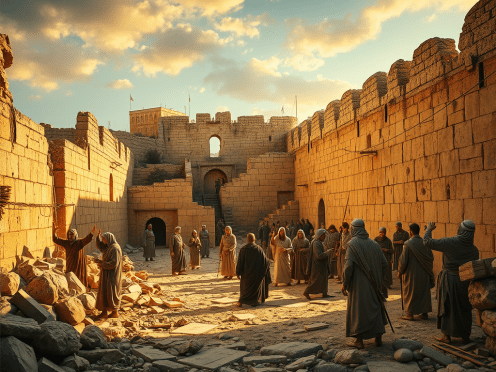
In all of the times I’ve read the story of Nehemiah, I tend to forget that when Nehemiah and the Hebrews rebuilt the walls of Jerusalem, they were building a wall around what was essentially a rubble heap. The Babylonians had utterly destroyed the city and Solomon’s Temple. Those who had resettled in the area mostly lived in outlying towns where they could survive raising crops and herds. Rebuilding the wall was the necessary Phase One project. With walls and gates in place, Jerusalem was relatively safe from enemy attack, but now the real work begins. Phase Two is making the city inhabitable and creating a community within the walls.

Today’s chapter begins with people casting lots to determine who would move inside the city walls and take up residence. They cast lots because it wasn’t something most people wanted to do. Living inside the city walls would be inconvenient, even dangerous.

Homes had to be made from the rubble. Not an easy task, nor a comfortable life while it was in process.

You were leaving the safety and security of fields and flocks (in which food was easily grown and raised) for plying a trade inside the city in a market that hadn’t been established and might not be stable.

Inside the city is where the Persian Empire’s officials, soldiers, and emissaries would be stationed (protected by the walls and gates), which meant that anyone living inside the city was under the watchful eye of the Empire, and perhaps its punitive authority.

The main activity inside the city was the Temple. Most of those living inside the City were priests and Levites in charge of the Temple’s system of sacrifices and offerings. Being a resident inside the city also meant you were under the constant religious scrutiny of the priests. There was greater pressure to follow the rules, make prescribed tithes and offerings, and maintain ritual purity than if you lived out in the fields where no one is watching.

And, while the city had walls and gates, it would be the first place that enemies would lay siege and attack. Living inside the City came with the dangers of that constant threat and the responsibility to assist with the city’s defensive needs of watchmen, guards, and gatekeepers.

I find it interesting that Nehemiah’s prescribed draft lottery to determine who would live inside the city was based on one in every ten families. The the Law of Moses, ten percent was always the prescribed amount of tithes God ask to bring as offerings to the Temple. In this case, the tithe being brought inside the city to the Temple were the people themselves. Sometimes what God requires is not my produce, but my presence.

In the early stages of our house being built, right after it was framed, Wendy and I invited our friends to come and bless it. On the concrete foundation, the wood studs and the plywood, we and our friends wrote blessings, prayers, and promises. The were many phases of building yet to be done. It would be months before the house was finished and we would move in.

In the quiet this morning, I’m reminded that Nehemiah and the Hebrews are at a similar place in their project. The walls are just the framing. There’s still a lot of hard work ahead. Sometimes, God needs people who simply have the faith and willingness to show up and do what needs to be done.

A good reminder on a Monday morning. Time to get to work!

If you know anyone who might be encouraged by today’s post, please share.

Promotional graphic for Tom Vander Well's Wayfarer blog and podcast, featuring icons of various podcast platforms with a photo of Tom Vander Well.
These chapter-a-day blog posts are also available via podcast on all major podcast platforms including Apple, Google, and Spotify! Simply go to your podcast platform and search for “Wayfarer Tom Vander Well.” If it’s not on your platform, please let me know!
Logo of Bible Gateway, featuring an open book icon on an orange background.

Of Riches and Rubble

Of Riches and Rubble (CaD Mk 13) Wayfarer

As Jesus was leaving the temple, one of his disciples said to him, “Look, Teacher! What massive stones! What magnificent buildings!”

“Do you see all these great buildings?” replied Jesus. “Not one stone here will be left on another; every one will be thrown down.”

Mark 13:1-2 (NIV)

I still remember my first trip to Chicago. I had never been to a major city. My hometown of Des Moines was my only frame of reference, and even at a young age I knew Des Moines like the back of my hand. A person could get from one end of the Des Moines to the other in about 20 minutes. It just wasn’t that big. Chicago was a revelation. I and my friends went to the observation deck of the John Hancock building, and I stared out at city as far as my eye could see. It was impressive.

For Jesus’ followers, the pilgrimage to Jerusalem, and to the Temple, was a similar experience. As far as we know, the Twelve were from small rural villages in the Galilee, and the Temple complex in Jerusalem was the equivalent of the John Hancock building, the Sears Tower, or the Empire State Building.

Casual readers may not realize that the temple in Jesus’ day was not the same Temple that Solomon built. That temple was razed to the ground by the Babylonians in 586 B.C. A generation later, it was rebuilt by Hebrews who returned from exile. Then, Herod the Great came to power around 37 B.C.

Like many egomaniacal tyrants, Herod had an edifice complex. He wasn’t Jewish, but he understood that his constituency was, and the temple in Jerusalem was the center of that constituency’s worldly power. Herod was shrewd. He knew it was in his political best interest not only to keep peace with the power brokers of the Jewish community, but he knew it would be even better if this potential threat to his power felt indebted to him. So, Herod decided to invest his vast riches to fix-up the five-hundred year old Temple.

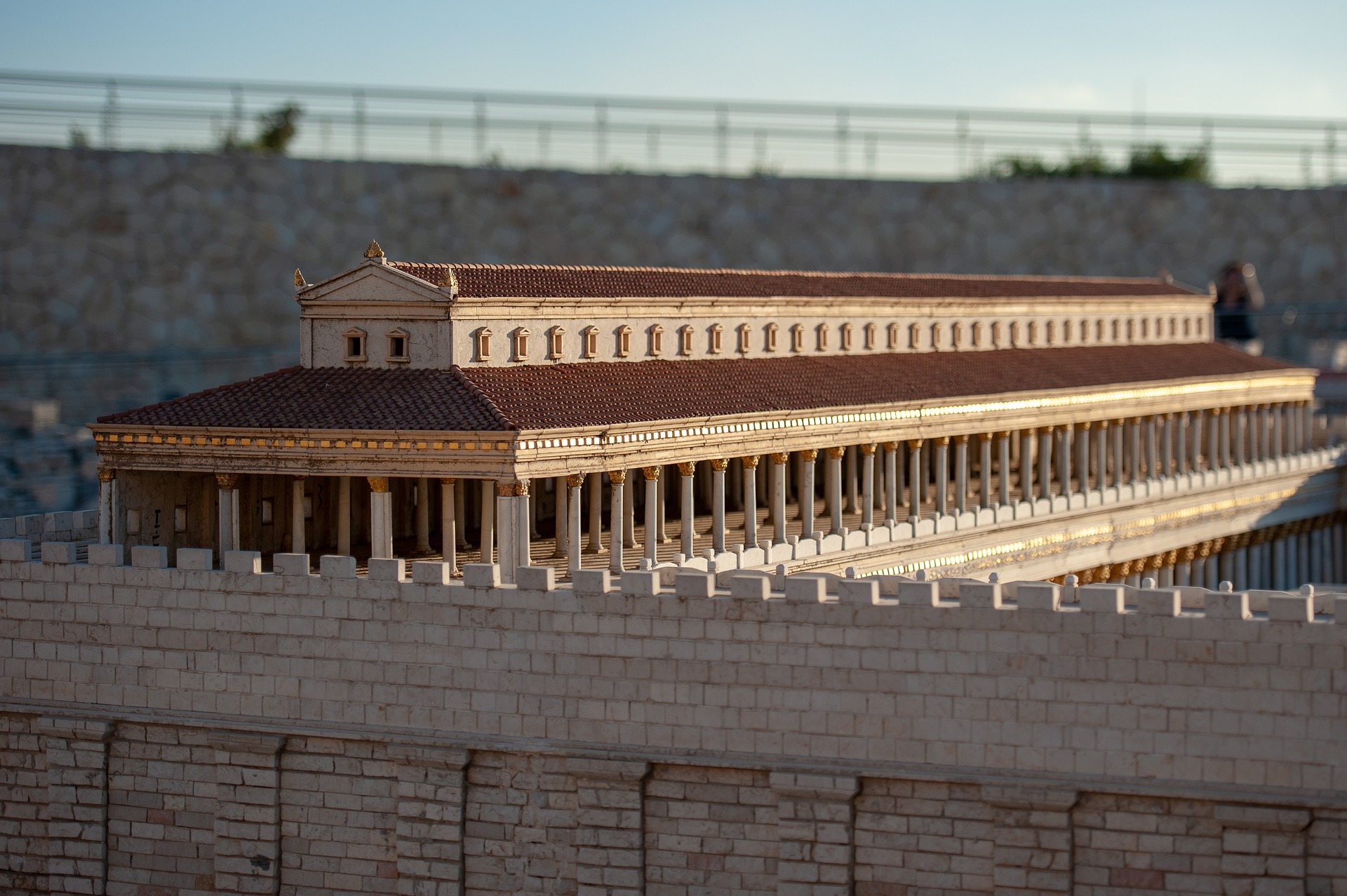
Of course, egomaniacal tyrants with edifice complexes aren’t just going to do a little sprucing up. They have to spend their vast riches to build something that will bear their name (whether officially or unofficially) so the size of the project must be in relative proportion to the size to their egos. The original size of the Temple was relatively small compared to the impressive temples built by the Greeks and Romans. Herod made sure to not just rebuild the Temple itself, but he built an entire Temple complex around it. Sure enough, it’s still known today as “Herod’s Temple.”

That’s why, in today’s chapter, Jesus’ disciples are still exclaiming what a magnificent complex it is even after they’ve spent two entire days listening to Jesus teach in the Temple courts. They can’t get over the sheer size and architectural beauty of it.

And then, Jesus ruins the moment: “It will all be rubble 40 years from now.”

And, it was. The political tension between the Jewish people and their Roman occupiers will continue to grow. There will be wars and rumors of war. It will eventually boil over. The Romans will raze Jerusalem and Herod’s Temple in the year 70 A.D.

Enjoy the view while you can.

In the quiet this morning I couldn’t help but think of the spiritual lesson in this brief exchange. The rest of today’s chapter is Jesus’ prophetic foreshadowing of where the Great Story is headed in the climactic final chapters. It’s not idyllic.

Wars
Earthquakes
Famine
Deception
Tyranny
Families divided
Betrayal
Hatred
Exile
Darkness

I’m reminded as I contemplate it that every good story ends up there. The death eaters descend on Hogwarts. Gandalf and Aragorn stand surrounded and outnumbered at the Black Gate of Mordor. Aslan is bound and lying on the White Witch’s stone table. Jesus lies dead and buried in a borrowed tomb.

There’s always darkness before the dawn.

Without catastrophe there’s no eucatastrophe.

“Be careful what your heart treasures,” Jesus said. “Cars rust and end up at the dump. Today’s fashions will end up at the thrift store where nobody wants them. That expensive gadget will be obsolete in a year. Herod’s Temple will be nothing but rubble in a generation.”

“Invest in the only things that remain,” Holy Spirit whispers to me in the quiet. “Faith, hope, and love.”

I’m off into another day reminded to enjoy the view while I can.

If you know anyone who might be encouraged by today’s post, please share.