Tag Archives: Nehemiah 11

Phase Two

Now the leaders of the people settled in Jerusalem. The rest of the people cast lots to bring one out of every ten of them to live in Jerusalem, the holy city, while the remaining nine were to stay in their own towns. The people commended all who volunteered to live in Jerusalem.
Nehemiah 11:1-2 (NIV)

Wendy and I built our house ten years ago. It’s hard to believe it was a decade ago. Not once in my life had I considered it something that I would do. I found the process both fascinating and challenging. Wendy and I have often spoken about the fact that she would absolutely do it again. She’d love to apply all of the things we learned and mistakes we made in creating a new space. I, on the other hand, would be perfectly content never to do it again. Building is a lot of work.

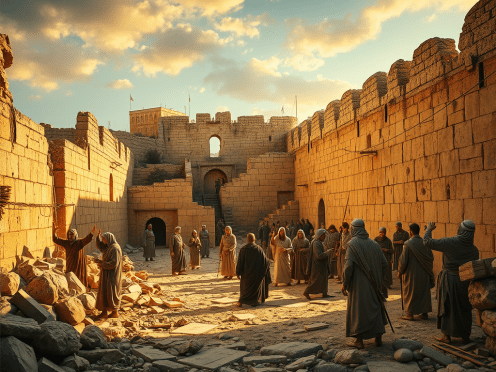
In all of the times I’ve read the story of Nehemiah, I tend to forget that when Nehemiah and the Hebrews rebuilt the walls of Jerusalem, they were building a wall around what was essentially a rubble heap. The Babylonians had utterly destroyed the city and Solomon’s Temple. Those who had resettled in the area mostly lived in outlying towns where they could survive raising crops and herds. Rebuilding the wall was the necessary Phase One project. With walls and gates in place, Jerusalem was relatively safe from enemy attack, but now the real work begins. Phase Two is making the city inhabitable and creating a community within the walls.

Today’s chapter begins with people casting lots to determine who would move inside the city walls and take up residence. They cast lots because it wasn’t something most people wanted to do. Living inside the city walls would be inconvenient, even dangerous.

Homes had to be made from the rubble. Not an easy task, nor a comfortable life while it was in process.

You were leaving the safety and security of fields and flocks (in which food was easily grown and raised) for plying a trade inside the city in a market that hadn’t been established and might not be stable.

Inside the city is where the Persian Empire’s officials, soldiers, and emissaries would be stationed (protected by the walls and gates), which meant that anyone living inside the city was under the watchful eye of the Empire, and perhaps its punitive authority.

The main activity inside the city was the Temple. Most of those living inside the City were priests and Levites in charge of the Temple’s system of sacrifices and offerings. Being a resident inside the city also meant you were under the constant religious scrutiny of the priests. There was greater pressure to follow the rules, make prescribed tithes and offerings, and maintain ritual purity than if you lived out in the fields where no one is watching.

And, while the city had walls and gates, it would be the first place that enemies would lay siege and attack. Living inside the City came with the dangers of that constant threat and the responsibility to assist with the city’s defensive needs of watchmen, guards, and gatekeepers.

I find it interesting that Nehemiah’s prescribed draft lottery to determine who would live inside the city was based on one in every ten families. The the Law of Moses, ten percent was always the prescribed amount of tithes God ask to bring as offerings to the Temple. In this case, the tithe being brought inside the city to the Temple were the people themselves. Sometimes what God requires is not my produce, but my presence.

In the early stages of our house being built, right after it was framed, Wendy and I invited our friends to come and bless it. On the concrete foundation, the wood studs and the plywood, we and our friends wrote blessings, prayers, and promises. The were many phases of building yet to be done. It would be months before the house was finished and we would move in.

In the quiet this morning, I’m reminded that Nehemiah and the Hebrews are at a similar place in their project. The walls are just the framing. There’s still a lot of hard work ahead. Sometimes, God needs people who simply have the faith and willingness to show up and do what needs to be done.

A good reminder on a Monday morning. Time to get to work!

If you know anyone who might be encouraged by today’s post, please share.

Promotional graphic for Tom Vander Well's Wayfarer blog and podcast, featuring icons of various podcast platforms with a photo of Tom Vander Well.
These chapter-a-day blog posts are also available via podcast on all major podcast platforms including Apple, Google, and Spotify! Simply go to your podcast platform and search for “Wayfarer Tom Vander Well.” If it’s not on your platform, please let me know!
Logo of Bible Gateway, featuring an open book icon on an orange background.

When Exile Becomes Home

Now the leaders of the people settled in Jerusalem. The rest of the people cast lots to bring one out of every ten of them to live in Jerusalem, the holy city, while the remaining nine were to stay in their own towns.
Nehemiah 11:1 (NIV)

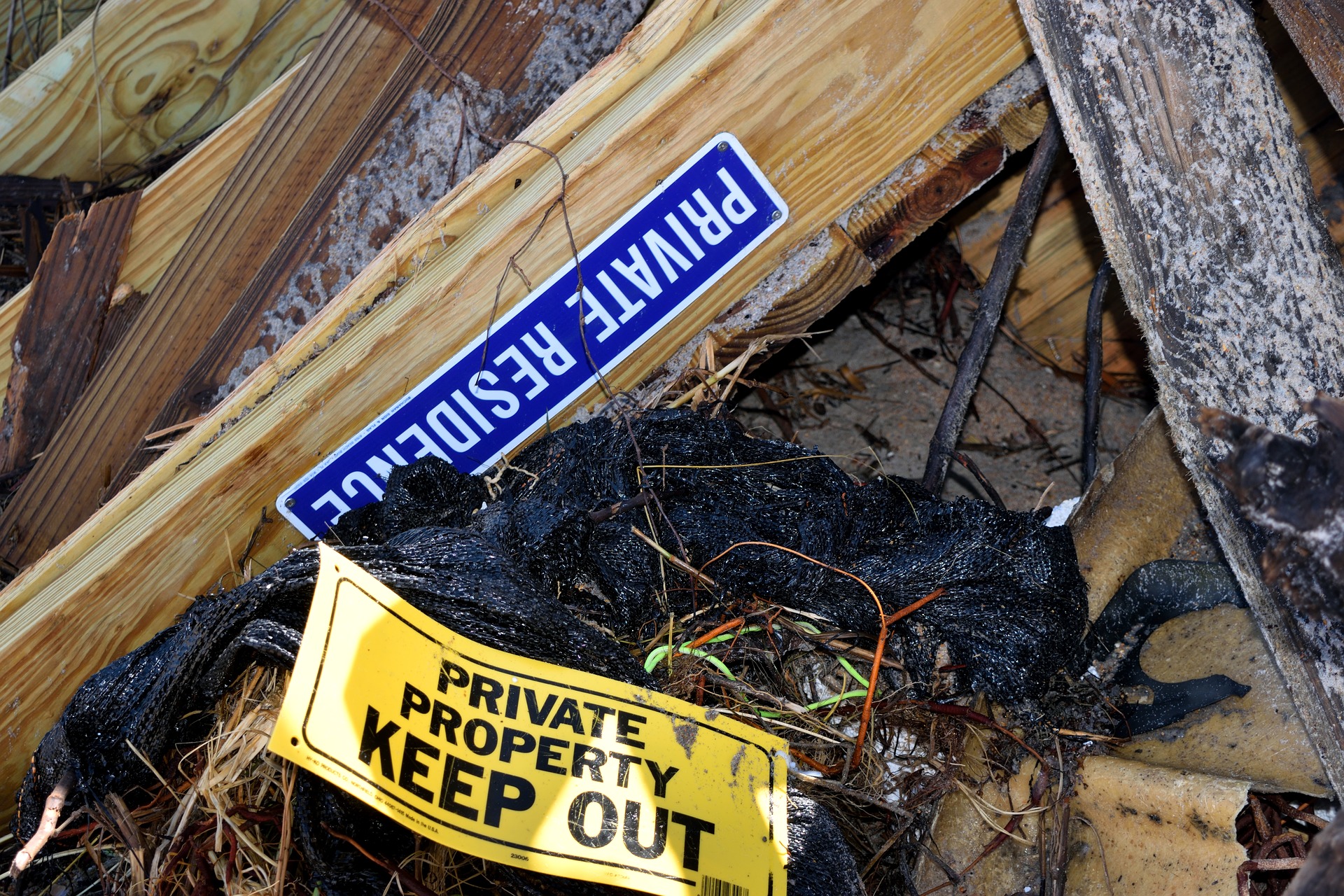
In recent weeks the Bahamas were struck by Hurricane Dorian. The devastation was immense. Fresh in my mind are the images of the rubble as entire communities appear to have been completely leveled. I can’t imagine how difficult it must be to get supplies to the island and how expensive and labor-intensive it will be to rebuild. I’m sure that there will be some survivors who will be evacuated and never return to their homes.

It’s easy for me to read the handful of chapters of Nehemiah and get the sense that the walls of Jerusalem were quickly rebuilt by the returned exiles, the gates were put in their place, and suddenly Jerusalem was settled. Mission accomplished! The people moved in and all was well. But, it didn’t work that way.

The Babylonian’s destruction of the city was devastating. It wasn’t just the walls and Solomon’s Temple that were leveled. The Babylonians destroyed and burned dwellings. Those who were left in the area seem to have largely resettled in nearby towns. The exiles who returned preferred not to live in the rubble of Jerusalem where redevelopment and rebuilding would be hard and costly. Most exiles would prefer to live easier in the countryside outside the city.

Governor Nehemiah and his fellow leaders implemented a forced repopulation of the city by forcing ten percent of the people to move into the city as decided by an ancient form of lottery. This type of forced repopulation was somewhat common in ancient times.

I was reminded as I read the chapter this morning that many of the Hebrews taken into exile never returned home. Jewish communities in Persia lived and thrived near ancient Babylon until modern times. Those who did return faced many difficulties and hardships. Rebuilding isn’t easy. Sometimes exile becomes permanent. Our concept of “home” shifts.

There’s a spiritual lesson in that for me. Among our local gathering of Jesus’ followers, we are continuing to explore the broader theme of exile. I mentioned in a message I gave a few weeks ago that exile is universal in the Bible. Once Adam and Eve are banished from the Garden of Eden they became exiles. We all did. Paul and Peter both wrote that this world is not our home; we are citizens of heaven.

I’ve observed, however, that it is very easy for my mind and spirit to be repatriated in my earthly exile. I make this world my home. I put down roots. I store up possessions. I build a home (that could easily be blown apart by a tornado just as the Bahamas were devastated by Hurricane Dorian). I invest in my earthly future. Eventually, without even giving it much thought, I find myself treating my earthly exile as if it’s my eternal home. I think that’s what Jesus was getting at…

“Don’t hoard treasure down here where it gets eaten by moths and corroded by rust or—worse!—stolen by burglars. Stockpile treasure in heaven, where it’s safe from moth and rust and burglars. It’s obvious, isn’t it? The place where your treasure is, is the place you will most want to be, and end up being.

Jesus

In the quiet this morning I’m reminded that God’s Message repeatedly speaks of our days being numbered. Just as Nehemiah cast lots that brought exiles back into the City of Jerusalem, my number will come up one day and my exile will be over. I will return to what John’s Revelation calls the New Jerusalem. In the meantime, I’m left figuring out how to tangibly do what Jesus instructed. I must learn how to invest less time, energy, and resources on my earthly exile, and transfer the investment into God’s eternal Kingdom.

Community Spirit

The rest of the people cast lots to bring one out of every ten of them to live in Jerusalem, the holy city, while the remaining nine were to stay in their own towns.
Nehemiah 11:1 (NIV)

Last night was a beautiful summer evening. Wendy and I shuffled across the street at the invitation of our neighbors Kevin and Linda. We sat in their front yard and sipped cold drinks as the sun set and the stars came out on a cloudless sky. As always, the conversation with our friends meandered into diverse topics. One of the topics was that of community support.

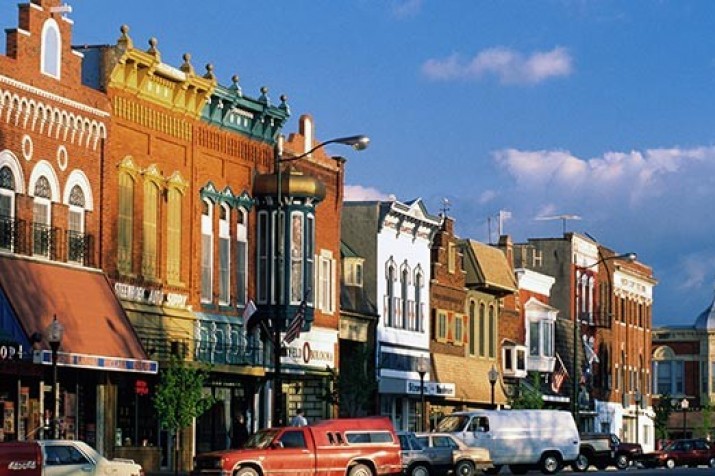
We live in a thriving small town in Iowa. Our little town is a hoppin’ place. When you go to “the square” during the day you’re often going to hunt for a good parking spot. Housing is in short supply compared to the demand of those moving in (another topic of our conversation). Many rural towns our size would love to have such a problems.

There are a number of reasons for our town’s success, but one of them is simply community support. “Buy local” aren’t just buzzwords here. There is a true spirit among residents of supporting local businesses. You feel the expectation, and you generally feel good when you’re a part of making the community successful. Our conversation with Kevin and Linda last night meandered into the sticky wicket that residents face in discerning when to bite the bullet and pay higher prices to support local and when/if it becomes fiscally foolish to do so.

In today’s chapter, the Israelites around Jerusalem were facing similar dilemma of community support. They had restored the broken down walls and gates of Jerusalem. They had resurrected worship at the temple. But, their efforts would be in vain if people didn’t actually live inside the city wall and support the local urban renewal project. So, they cast lots (the ancient version of drawing straws) and chose ten percent of the families from among the tribes. These families were to “support local” and move themselves within the city walls and do their part for the community. The fact that they had to draw lots makes me wonder just how excited those families were about moving into the rubble.

This morning I’m thinking about community. I’m thinking about the support that is required to make communities, small businesses, and community organizations run. Without a spirit of community among the individual members, the whole suffers. Jesus’ teachings of washing each other’s feet and loving others more than we love ourselves is woven into the spirit of community. We need each other.


chapter a day banner 2015