Tag Archives: Opposition

Not Without Struggle

Meanwhile, the people in Judah said, “The strength of the laborers is giving out, and there is so much rubble that we cannot rebuild the wall.”
Nehemiah 4:10 (NIV)

It’s October, which means post season baseball. Alas, our beloved Cubs made it to October this year but they didn’t have what they needed to get past the Division Series. C’est la vie.

Of course, the World Series will now and forever bring back memories of 2016, the year the Cubs broke their 108 year World Series drought and all of the legendary curses. For the most part, I remember that final out and the joy of that moment. A few weeks ago I watched the documentary of the World Series that year and spent some time remembering the Cubs’ journey through the entire post season.

It brought back a memory of lying in bed after the Cubs lost one of the play off games. I had descended into one of my brooding puddles of pessimism. Wendy, ever my life guard when I’m at risk for drowning in that puddle, quietly reminded me that great stories always have moments when things look darkest. It’s in overcoming the struggles that great stories are made. As I recounted all of the struggles of that post season and the World Series saga, I was reminded of just how many there were.

That came to mind this morning as I read today’s chapter. Nehemiah’s project of rebuilding Jerusalem’s walls is in full swing. Today’s chapter is all about the struggle from without and within. They are surrounded by enemies who don’t want Jerusalem rebuilt. Those enemies join forces and plot to attack and stop the project. They are insulted, jeered, and mocked. There is a constant threat of attack both night and day. At the same time, the people are getting worn out from the constant labor required. The excitement has worn off and the long slog is taking its toll on everyone. As I read the chapter I could feel the fear, the weariness, the discouragement.

If I were standing in Nehemiah’s sandals, I would be descending into. a brooding puddle of pessimism. But Nehemiah was the right man for the job. The first thing he always did was pray. He then forged a plan for continuing the work while defending the project both night and day. He created a system of alarm and a plan of action should the city be attacked. He continued to prayed constantly and he repeatedly encouraged everyone to trust God to both defend them and provide what was needed to see the project through.

I mentioned in yesterday’s post/podcast that every human endeavor of which I’ve been a part has encountered some kind of challenge, obstacle, and/or opposition. I sometimes wonder why I’m ever surprised by this. We are part of the Great Story, and Wendy’s observation holds true. There is no great story without conflict and struggle. It’s what makes the climactic final chapter so powerful.

I find myself thinking through the challenges and struggles I’m currently facing at work and in life. Nehemiah’s example feels a simple and apt reminder. Pray, plan, work the plan, and keep reminding myself of God’s eternal promises.

Time to get back to it. Have a great day, friend.

If you know anyone who might be encouraged by today’s post, please share.

Promotional graphic for Tom Vander Well's Wayfarer blog and podcast, featuring icons of various podcast platforms with a photo of Tom Vander Well.
These chapter-a-day blog posts are also available via podcast on all major podcast platforms including Apple, Google, and Spotify! Simply go to your podcast platform and search for “Wayfarer Tom Vander Well.” If it’s not on your platform, please let me know!
An orange icon featuring an open book symbol, representing a Bible or scripture resource.

Amidst the Conflict

Amidst the Conflict (CaD Matt 12) Wayfarer

Anyone who speaks a word against the Son of Man will be forgiven, but anyone who speaks against the Holy Spirit will not be forgiven, either in this age or in the age to come.”
Matthew 12:32 (NIV)

My heart is heavy and sad this morning. I have recently found myself in the midst of many conflicts. I don’t like conflict. I confess that I don’t do it particularly well. I happen to be married to an Enneagram Type 8 for whom conflict is a form of intimacy. I, as an Enneagram Type 4, find that conflict triggers my deep sense of shame. It means we’ve had to learn some creative dance moves when it comes to conflict.

The conflict I’ve been experiencing lately is not with Wendy, however. It’s not really even with me. It’s within a human system of which I’m a part. Members of that system are drowning in negativity toward others. When I have to be around it I’m left feeling like my soul is soiled. It’s like I crave a spiritual and emotional shower. Even if I take one, I’m left with an acute sense of sadness as I’m drying off.

Perhaps it’s a bit of synchronicity that today’s chapter is focused on the conflict between Jesus and his most caustic critics. Ironically, it was the institutional religious establishment who led the opposition to Jesus. The Pharisees, in particular, were a powerful political constituency in the leadership of the Hebrew religious system of that day. Matthew offers a trinity (there’s that number three again from Matthew the Quirk) of episodes highlighting the conflict. Matthew focuses on the religious leaders motives:

“But the Pharisees went out and plotted how they might kill Jesus.”

“But when the Pharisees heard [that Jesus healed a demon possessed man], they said, “It is only by Beelzebul, the prince of demons, that this fellow drives out demons.”

“Then some of the Pharisees and teachers of the law said to him, ‘Teacher, we want to see a sign from you.'”

What Matthew makes obvious is that there was zero openness to Jesus’ teaching. They viewed Jesus as a threat. He was a wrench in the human religious system they controlled; A system that was the source of their personal power. Everything they did was motivated by a self-centered desire to maintain personal control of the system that fed their ego, social status, and religious self-righteousness. Theirs was a system of exclusivity and strict adherence to social, cultural, and traditional norms. Jesus was an outsider. He didn’t fit any of the norms, and He possessed both power and authority that threatened them. Whenever a fundamentalist system built on exclusivity encounters such as threat, it will always circle the wagons and declare the threat evil.

What struck me this morning as I read these three episodes is the contrast between Jesus’ actions and teachings and the reactions of his enemies. His disciples, hungry, simply and casually slid their hands over heads of grain as they walked through the field in order to have a snack. A man with a hand shriveled and disfigured is miraculously healed. A demon-possessed man is freed from the evil that had captured and kidnapped his body and soul.

These are all good things.

Jesus’ enemies declares them all evil.

In the midst of Jesus’ response, He famously mentions that there is one sin that is unforgivable, and that is to “speak against” the Holy Spirit. What does that mean? It means exactly what His opponents are doing. To look at something good and call it evil. To oppose what God is doing with selfish motives. To exclude those whom God loves and in whom God is working for personal gain and self-satisfaction.

Which brings me back to my sadness. The personal attacks. The whispered, salacious accusations. The threats used as systemic leverage. I’m reminded this morning that Jesus’ death and resurrection did not change evil. For now, evil remains and perpetuates the same systemic paradigms that Jesus faced in today’s chapter. What Jesus’ death and resurrection did change is me. As a disciple of Jesus, I am called to navigate, be present, and participate in broken human systems and the evil I find within them in order to bring the power and presence of God’s love and shalom as I best as I am able.

I confess that most of the time I don’t want to do so.

Did I mention that I hate conflict?

In the quiet this morning, God’s Spirit whispers to my spirit: “Whoever wants to be my disciple must deny themselves and take up their cross and follow me.” I guess that means following Him into unhealthy human systems in which evil wreaks havoc and perpetuates conflict.

The words of an old hymn rise from the memory banks in reply as I contemplate Holy Week next week, and as I think about Good Friday in seven days:

King of my life, I crown thee now.
Thine shall the glory be.
Lest I forget thy thorn-crowned brow
Lead me to Calvary.
Lest I forget Gethsemane.
Lest I forget Thine agony.
Lest I forget thy love for me,
Lead me to Calvary.

If you know anyone who might be encouraged by today’s post, please share.

These chapter-a-day blog posts are also available via podcast on all major podcast platforms including Apple, Google, and Spotify! Simply go to your podcast platform and search for “Wayfarer Tom Vander Well.” If it’s not on your platform, please let me know!

Opposition!

Now John’s disciples and the Pharisees were fasting. Some people came and asked Jesus, “How is it that John’s disciples and the disciples of the Pharisees are fasting, but yours are not?”
Mark 2:18 (NIV)

One of the things that I have learned along my life journey and in my career is that when you step up into the spotlight in front of a group of people, and you have something to say, you make yourself an easy target. When the something you have to say pushes against the orthodoxy of whatever group you’re addressing, then you’re an easy target stirring a hornet’s nest.

Mark’s biography of Jesus is the shortest of the four biographies of Jesus known as the “gospels” (Gospel means “good news”). In fact it’s 3700 words shorter than the next one on the list as far as word count (John) and almost 10,700 words shorter than Luke’s account.

What that means is that Mark is moving fast through the story and he’s only sharing the essentials. John wrote at the end of his biography that if all the stories were told about Jesus that could be told then all the libraries in the world could not contain them all. So, it begs the question of me as a reader, what can I learn from the choices Mark is making?

In today’s chapter, Mark shares four quick scenes from the early days of Jesus’ ministry. In each of the four, Jesus’ words or actions are challenged by others. Three of the four challenges come from different constituencies.

Jesus tells a man that his sins are forgiven, and “teachers of the law” told him he’d committed blasphemy. “Teachers of the law” refers to Scribes, which can be considered vocational lawyers who spent their lives interpreting the Law of Moses (the first five books of the Bible).

In the next scene, Jesus is having dinner with His new disciple, Levi (Matthew). Matthew was a tax collector, which meant he was seen as a Roman collaborator, he had money, and he didn’t hang out with good, religious Jews. Jesus is challenged by “teachers of the law who were Pharisees.” The Pharisees were a quasi-political party who held sway over the Jewish religion in Jesus’ day. So these challengers were not only vocational lawyers, but they were members of the most powerful political party within the rulers of Judaism. They challenged Jesus for mingling with socially and religiously unacceptable people.

As Jesus is beginning His ministry, His cousin John the Baptist, is at the height of his own popularity. John was rogue preacher. The same religious and political establishment who challenged Jesus, challenged John as well. John had a huge following with a lot of his own disciples. So in this next scene, it becomes clear that John has his disciples fasting and they notice that Jesus’ disciples are not. I love that Mark mentions “some people” who questioned this because along my life journey I’ve had many experiences with being told that “some people” have taken issue with something I’ve said or done. Even Jesus is getting the “some people” challenges from within the constituency of people who would naturally be His likely supporters and followers.

The final scene Mark shares has to do with rule-keeping. This time it is the straight-out members of the Pharisees who challenge the fact that Jesus’ disciples were picking off grain in a field for an afternoon snack. It happened to be the Sabbath, a religious day of rest that Pharisees policed to a fault.

In these four scenes, mark is telling us:

Jesus claimed to have the divine authority to forgive sins, and did a miracle to prove it. The religious establishment called it blasphemy.

Jesus socialized with people who were socially unacceptable to the fundamentalist and orthodox religious set.

Even the anti-establishment, populist types who were followers of John and were keenly interested in what Jesus was doing challenged the fact that He didn’t demand the same rigorous spiritual disciplines that John did.

And Jesus taught His disciples to follow the Spirit of the law of the Sabbath and not worry so much about the rule-keeping bureaucrats who took it upon themselves to police such things and punish the rule-breakers. Those rule-keeping bureaucrats got stirred up like hornets when Jesus claimed that His authority as “Lord of the Sabbath” trumped their authority as bureaucratic, establishment minions.

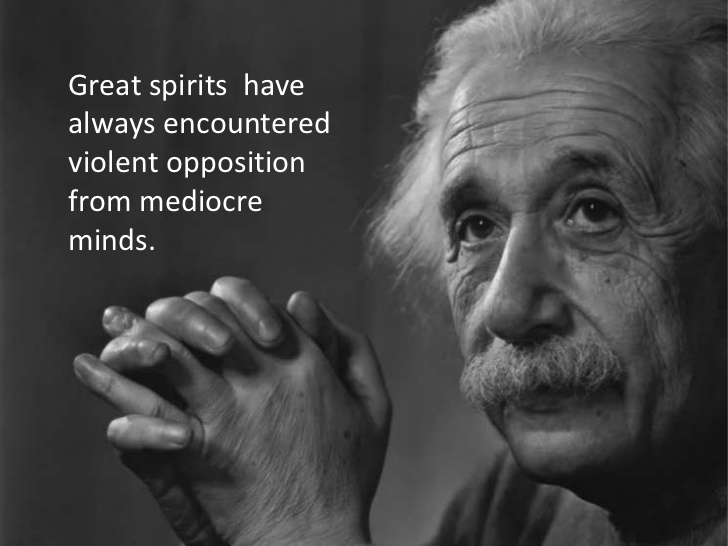
In the quiet this morning, I’m reminded of a quote by Albert Einstein who said that “Great spirits have always encountered violent opposition from mediocre minds.” I can’t help but be reminded that life is not only full of challenges, but also challengers. Mark seems to be telling me that Jesus Himself was challenged and opposed on all sides by both His supporters and His detractors. In the same way, I can expect to be challenged when I am being who God calls me to be, doing what God calls me do to, just like Jesus.

As a disciple of Jesus, I already know what He expects of me when challenged. It starts in my spirit which He tells me should be love, kindness, gentleness, and self-control. It then comes out in the form of blessing and praying for those who challenge me, hate me, and say all sorts of bad things about me. Jesus said,

“Not only that—count yourselves blessed every time people put you down or throw you out or speak lies about you to discredit me. What it means is that the truth is too close for comfort and they are uncomfortable. You can be glad when that happens—give a cheer, even!—for though they don’t like it, I do! And all heaven applauds. And know that you are in good company. My prophets and witnesses have always gotten into this kind of trouble.
Matthew 5:11-12 (MSG)

If you know anyone who might be encouraged by today’s post, please share.

Growing Things Change

Growing Things Change (CaD Acts 6) Wayfarer

In those days when the number of disciples was increasing, the Hellenistic Jews among them complained against the Hebraic Jews because their widows were being overlooked in the daily distribution of food.

Opposition arose, however, from members of the Synagogue of the Freedmen (as it was called)—Jews of Cyrene and Alexandria as well as the provinces of Cilicia and Asia—who began to argue with Stephen.
Acts 6:1,9 (NIV)

I saw a funny meme the other day of a father holding his three-month-old baby. The baby had doubled in weight in the three months since birth. At this rate of growth, the father calculated, the kid would weigh trillions of pounds by the time it was ten years old.

Healthy things grow…
Growing things change…
Change challenges me…
Challenge leads me to trust God…
Trusting God leads to obedience…
Obedience leads to health…
Healthy things grow…

A friend shared this with me many years ago, and I know that I have referenced it at least once before (After blogging for 17 years, I’m bound to repeat a few things!). I have always loved this little mantra because I have experienced it to be true in my life, and I have observed it to be true in both others and in healthy and growing human systems.

The early Jesus Movement was an organic, growing human system. In the first six chapters of Acts, Luke references the growing number of believers five times. At the beginning of the book, Luke records the number of believers right after Jesus’ ascension as about 120. In chapter 4, Luke numbers the believers at 5,000. He’s mentioned rapid growth twice since mentioning the 5,000.

Growing things change…

Having been a leader in a number of different systems and organizations along my life journey, I can only imagine the changes required by the Apostles to accommodate the rapid pace of growth. It was not only a change in numbers, but in geography too. Many of the first believers on the day of Pentecost in the second chapter were from all over the known world. In today’s chapter, Stephen is sharing Jesus’ teaching with a synagogue outside the Temple. The cozy little group of early believers sharing all things in common wouldn’t have been cozy for long.

Change challenges me…

Luke records the first challenges faced by the growing Movement in today’s chapter. There is a challenge from within in the form of anger between ethnic factions within the Movement. There were also challenges from without in the form of false accusations made against them to the Temple rulers who had already persecuted the Apostles.

Challenge leads me to trust God…

Luke also records in today’s chapter that the Apostles appointed more men to help with the daily duties the Movement had established for caring for the daily needs of its members. The needs of the system are expanding, and with it the system has to distribute responsibilities to more members of the system. This, in itself, requires trust not only in the members taking on the responsibilities but also in God to provide for and enable a rapidly growing organism.

In the quiet this morning, my meditation on the changes in the early Jesus Movement has me thinking about change in general. Life never stops changing. I’m facing some life changes right now, in fact. This means there will always be challenges. How I handle the change is, I believe, a barometer of my spiritual health. I can follow the path of trust and obedience to greater levels of spiritual health and growth, or I can follow the path of anger, resentment, complaint, and depression which becomes an unhealthy cycle for me and everyone around me.

Lord, help me trust and obey that I might spiritually grow with every challenge.

If you know anyone who might be encouraged by today’s post, please share.

Jesus, the Impudent Dinner Guest

Jesus, the Impudent Dinner Guest (CaD Lk 11) Wayfarer

When Jesus had finished speaking, a Pharisee invited him to eat with him; so he went in and reclined at the table. But the Pharisee was surprised when he noticed that Jesus did not first wash before the meal.
Luke 11:37-38 (NIV)

Along my journey, I have found that people across the spectrum, from antagonistic critics to well-intentioned church members, have an ignorant perception of Jesus based on what others have said about Him or how religious institutions have portrayed Him. It’s one of the reasons I continue on this chapter-a-day journey. As I return again and again to the primary source material, it never fails to inform me in often mind-altering ways.

For example, in today’s chapter lies an episode about Jesus that I’ve never heard directly addressed in a sermon or a book.

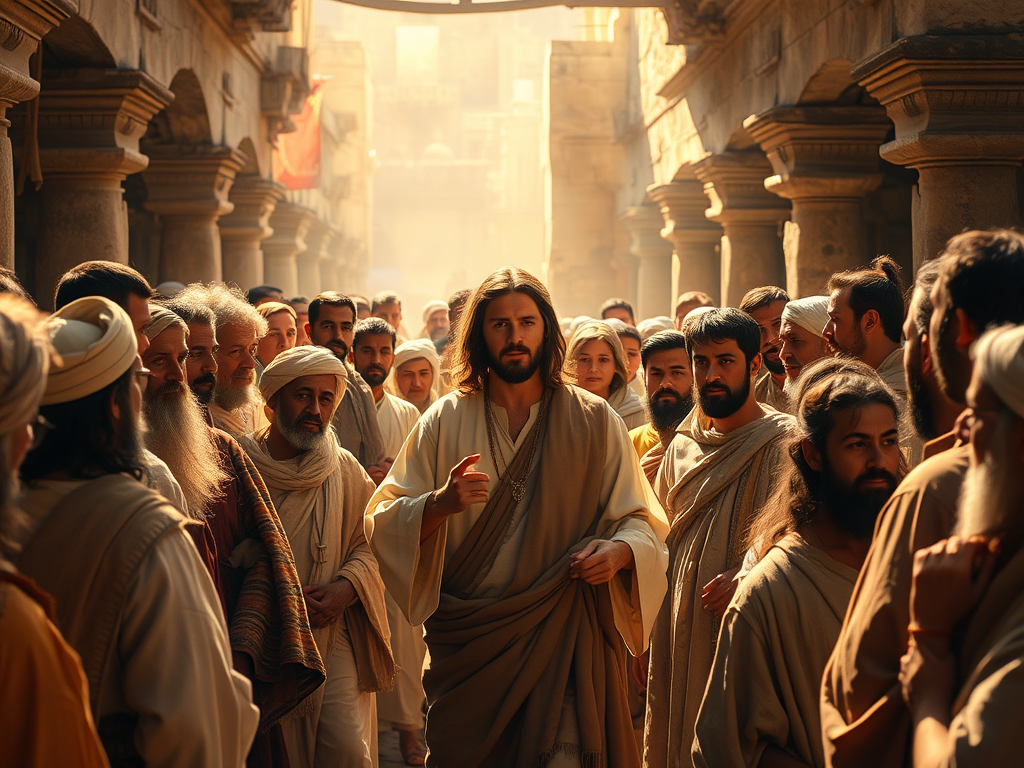
Jesus is making His way toward Jerusalem, stopping in towns and villages along the way to do His thing. He teaches, heals the sick, and casts out demons from the possessed. He is, however, facing increasing criticism and opposition. The greatest opposition is coming from the institutional religious authority over the very faith Jesus is from and represents.

In one town, a Pharisee invites Jesus to dinner at his house. The Pharisees were a powerful organization within the larger Hebrew authority system. Made up mostly of prominent, wealthy, and connected businessmen, the Pharisees presided over local religious matters along with lawyers who were experts in the Law of Moses. Think of a cadre of the most wealthy and influential businessmen in your town or city having authority over commerce and religion and civil affairs. Being invited to a Pharisee’s home to dine with his lot would have been a huge deal.

Jesus accepts the dinner invite and becomes arguably the most impudent and offensive dinner guest in recorded history.

First, Jesus refuses to wash before dinner. To this day, you’ll find washbasins out in the open in the restaurants of Jerusalem for the orthodox to ritually wash before eating. Jesus’ refusal is a slap in the face of his host, and He does it in order to make a point. Jesus looks at this local cabal of mucky-mucks and says:

“Now then, you Pharisees clean the outside of the cup and dish, but inside you are full of greed and wickedness. You foolish people! Did not the one who made the outside make the inside also? But now as for what is inside you—be generous to the poor, and everything will be clean for you.”

This is rude. Jesus is insulting His host and his fellow dinner guests. In the culture of Jesus’ day, this was socially unacceptable. It’s hard to even put into today’s terms. It would be like taking your drink and throwing it into the face of your host. The Pharisee and his colleagues would have been appalled and immediately defensive, thinking “How can this country preacher from the sticks say I am not generous to the poor?! He doesn’t even know me! I always give exactly the tithe that God’s Law dictates I must give!”

Jesus raises the ante on His boorish behavior by reading their thoughts and continuing:

“Woe to you Pharisees! Yes, yes, I know you dutifully give God a tenth of your mint, rue and all other kinds of garden herbs to keep the letter of the law, but you neglect the heart of the law: justice and the love of God. You should have practiced the latter without leaving the former undone.

Jesus doesn’t wait for their reply to this before He raises the stakes even higher:

“Woe to you Pharisees! All you care about is having VIP seating in the synagogues and having people in town treat you like you’re all that and a bag of chips!”

There, dining with the Pharisee is a lawyer, who is not technically a card-carrying member of the Pharisee club, but a prominent colleague and social ally. The lawyer comes to his insulted host’s defense, calls Jesus to a social point-of-order, and informs Jesus that when He insults his Pharisee host, Jesus is insulting him as well.

Jesus quickly goes all-in to insult the lawyers as well.

“And you lawyers, woe to you! You load people down with your authoritative lists of ‘dos and don’ts’ that make their lives more difficult. You feel all powerful, telling people what to do, but then you sit there feeling smug and won’t lift one finger to help them.”

While Luke doesn’t provide the details, I don’t think Jesus got anything to eat. In fact, Luke implies that the Pharisee and his friends threw Jesus out of his house, or perhaps Jesus simply walked out, because the next thing the good doctor writes is: “When Jesus went outside, the Pharisees and the teachers of the law began to oppose him fiercely.”

In the quiet this morning, I find myself meditating on both the fact that Jesus acted in a rude and socially unacceptable manner and that in 2000 years since we rarely address or acknowledge this fact.

In His dinner party rant, Jesus provides a clue to both His anger and His impertinence. He states that from “Abel to Zechariah” (which is like me saying “From Genesis to Revelation”) it has been the institutional religious fundamentalism and authority thing that His host and friends represent that led to the murder of the prophets God sent to the Hebrew people throughout history. And, the handwriting is already on the wall. Jesus told His disciples in yesterday’s chapter: This same system will kill Him, as well.

I’ve observed along my life journey that the institutional religious fundamentalism and authority thing can be found amidst all of the world’s major religions. I believe that it’s what happens when sinful human beings turn religion into a kingdom of this world. I have always found it fascinating that it was the one thing that Jesus opposed so vehemently that He was willing to break every socially acceptable custom in order to call it out. Ironically, with acts like His impudent dinner behavior, Jesus pushes His opposition to call His bet, go all-in themselves, and kill Him.

The further I get in my journey, the more contrast the eyes of my heart see between the ways of God and the ways of the institutional religious fundamentalism and authority thing. And, the more my heart desires to pursue the former while joining Jesus in opposition to the latter.

If you know anyone who might be encouraged by today’s post, please share.

“A God in Heaven”

"A God in Heaven" (CaD Dan 2) Wayfarer

Daniel replied, “No wise man, enchanter, magician or diviner can explain to the king the mystery he has asked about, but there is a God in heaven who reveals mysteries.
Daniel 2:27-28 (NIV)

Along my life journey, I’ve witnessed an amazing amount of change. We are in the age of technology, and my generation has arguably witnessed more technological advances in our lifetime than any other generation in human history. Among my favorites in the daily scroll of memes are those that remind me of life in my childhood. It was so, so different.

The change I’ve witnessed, however, has not been merely technological. It has also been cultural, intellectual, and spiritual. It is also said that we are now living in a post-Christian age, and I have observed this shift. Most of the. mainline Protestant denominational institutions that existed and held sway have fractured, imploded, and exist as a shell of their former selves. Church attendance was waning before the pandemic. Recent research shows that COVID accelerated that decline and shuttered many small churches altogether.

Culture wars enflamed by divisive politics, racial tension, and the pandemic seem to have not only accelerated the decline of institutional Christianity but fostered increased antipathy, even hatred. Consider this headline from Time magazine, a headline that was unthinkable from a major news outlet forty years ago: “Regular Christians are No Longer Welcome in American Culture.”

When I was a youth, it was Christian power brokers who sought to use politics and institutions to cancel enemies, threaten opponents, and enforce their ideology across the cultural spectrum. I have observed the pendulum swing to the opposite side in my lifetime. It is a different group of power brokers who have become the dominant voice of culture, canceling enemies and threatening dissenters, silencing opposition, and promoting its ideology as gospel truth that is not to be questioned or doubted.

I live in the most fascinating of times.

I can’t imagine the cultural shift that Daniel experienced as he was pulled from the life he knew, was drug to a foreign land, forced into a re-education program, and placed into the service of the king who destroyed his home and slaughtered his people. And, in the midst of it, God says He wants Daniel and his people to embrace this change and be a blessing to his enemy.

A couple of days ago, I wrote of the “wilderness” that Jung and Campbell noticed every hero goes through in all the great stories. The fourth step in that wilderness journey is that the hero “encounters allies and enemies, undergoes challenges from which no escape seems possible. The stakes are clearly life and death.

In today’s chapter, Daniel finds himself with just such a challenge. The King has a dream and demands that his magicians, astrologers, enchanters, and wise men both tell him what the dream was and what it meant. If they don’t, he’s going to kill them all, including our hero Daniel and his friends. Daniel and his friends pray, and God gives Daniel the answer in a night vision.

When Daniel approaches the king the following day, he makes clear that he had no part in divining the answer and interpretation, but “there is a God in heaven who reveals mysteries.” The title “God of Heaven” is a title used by Abraham back in Genesis, but then it doesn’t appear again until the exile and post-exile writings of Chronicles, Ezra, and Nehemiah. It appears that Daniel found a name for God that was acceptable to both him and his pagan Persian enemy. He finds a way to bridge the cultural gap and introduce the king to his God who has “raised him up” despite his ignorance of the fact. God making Himself known to King Nebuchadnezzar is a theme in Daniel’s story arc.

In the quiet this morning, I think about myself as a disciple of Jesus living in a culture that I observe becoming increasingly oppositional. At the same time, I observe fellow believers becoming angry, defiant, and oppositional in return. I, however, see in Daniel’s story an example to follow. If I truly believe what I say I believe, this includes the truth of Daniel’s prayer in today’s chapter:

“[God] changes times and seasons;
    he deposes kings and raises up others.”

If God was in control, even in the change of “times and seasons” that Daniel experienced being thrust into Babylonian captivity, then I think I have to consider the change in times and seasons I have witnessed and experienced to also be part of the Great Story that God is authoring. And if that is true, then Daniel’s example of remaining faithful in the courts of his enemy and humbly finding ways to introduce his enemy to God is an example I think God would have me follow in similar (albeit not as extreme…yet) circumstances.

If you know anyone who might be encouraged by today’s post, please share.

The Nehemiah Two-Step

They all plotted together to come and fight against Jerusalem and stir up trouble against it. But we prayed to our God and posted a guard day and night to meet this threat.
Nehemiah 4:8-9 (NIV)

This life journey always comes with a certain amount of opposition. It can come from any number of sources, and it can take multiple forms. Opposition can be spiritual, emotional, relational, physical, personal, internal, public, subversive, passive, violent, and etc. We all face opposition, conflict, and threats from time to time, even if it is in relatively small ways.

In today’s chapter, the exiles attempting to repair the walls of Jerusalem encounter opposition from the neighboring tribes. Conflict with these tribes and towns had been part of the political landscape of the area for centuries, so it was not a surprise. It was expected.

I found it fascinating that Nehemiah records a “two-step” response to the threats. I think the “Nehemiah Two-Step” is a great move to know when I find myself dancing with the fires of opposition in any form that the antagonistic force might present itself. The first step was to pray. The second step was to respond with the appropriate action.

Along my life journey, I’ve experienced many times when I get this very simple dance move wrong:

  • I pray without responding with action. In hindsight, I realize that sometimes I have placed all the responsibility on God with the expectations that He will supernaturally make it all okay without me being responsible for doing my part.
  • I act without praying. Other times, a threat or attack comes and it elicits from me an immediate reaction. When I react without praying, I’ve come to realize that I have refused to seek, submit, and subscribe to my higher authority. My reactions are often raging but not rational, passionate but not prudent, willful but not wise.
  • I act before I pray. When I get the order wrong, I find myself determining the response I think is warranted and then ask God to honor my plan rather than honoring God to seek His plan for how I should respond.

In the quiet this morning, as I pondered these things, I was reminded of this quote:

“Great spirits have always encountered violent opposition from mediocre minds.”

Albert Einstein

The great scientist’s words have always reminded me that no matter what I set out to accomplish, I can expect opposition. And, it’s likely that the greater endeavor I attempt, the greater opposition I’m likely to face.

From a spiritual perspective, God’s Message continually reminds me of the same thing. Specifically, that spiritual opposition is always a threat:

Be alert and of sober mind. Your enemy the devil prowls around like a roaring lion looking for someone to devour.

I Peter 5:8 (NIV)

I long ago recognized that the time I spend, first thing in the morning, in quiet reading, writing, and contemplation has a positive effect on the rest of my day. It’s another form of the “Nehemiah two-step.” Pray, then act.

So, now I’ve prayed. It’s time to take action on today’s task list.

Have a great day, my friend.

Facing Opposition

Korah son of Izhar, the son of Kohath, the son of Levi, and certain Reubenites—Dathan and Abiram, sons of Eliab, and On son of Peleth—became insolent and rose up against Moses. With them were 250 Israelite men, well-known community leaders who had been appointed members of the council.
Numbers 16:1-2 (NIV)

Every leader of an organization, whether it be politics, business, community, church, or non-profit, will face opposition. It is, I’m afraid, simply part of the  territory.

In today’s chapter, Moses and his brother Aaron face yet another round of opposition to their leadership. They’ve already faced multiple waves of criticism, experienced sharp drops of popularity, and had to address multiple acts of defiance. Now, a Levite and three men from the tribe of Dan were ring-leaders of a 250 person rebellion. Their beef was that Moses and Aaron sat a lone at the top of the religious system. They wanted a piece of the power. “We’re all holy,” they argued. “Why is it only the two of you alone get to enter the Lord’s presence and speak for the Lord?” 

I’ve found it very common for leaders to face opposition from members of the group who envy all of the benefits of leadership. I also have found that these individuals often ignore the very real responsibilities and burdens that come along with that leadership. I’ve also observed that where there are a few passionate opposition leaders, you will soon find a growing group of supporters that they will have stirred up in order to support their own feelings and desires.

We later find that part of the opposition wasn’t just about power and control, but about material possessions. The Levites weren’t allowed to own property. God intended for them to take care of the temple and to be provided for through the temple and the offerings and sacrifices of the other tribes. Those opposed to Moses and Aaron’s leadership eventually reveal that what they want is the ability to own property like everyone else.

I’ve observed that opposition is often rooted in others’ appetites for power/control, money, or both.

I also observe this morning a couple of important lessons from Moses’ response to this latest round of opposition:

  • Moses didn’t ignore the opposition. Moses acknowledged the opposition and even allowed for a test of their opposition. He confronted Korah the Levite directly. He attempted to speak with the leaders of the opposition from Dan, but they wouldn’t speak to him. Opposition rarely just goes away and it often refuses direct communication. Left unchecked, opposition typically grows to become a larger and larger issue. Good leaders rise to the challenge and find ways to address opposition. There are many and diverse ways of addressing it, but I have learned (in some cases through failure, I confess) that it needs to be addressed.
  • Moses differentiated between opposition and the whole.  Rather than stepping back and accepting God’s anger to burn against the entire assembly, Moses’ pled for the consequences to be confined to those responsible. It’s easy from a position of leadership to perceive that the opposition is greater than it really is. Trying to remain objective and place responsibility and consequences where they are due can be critical to future success.
  • Moses continued to exhibit love and compassion for those under his leadership. At the end of the chapter we find Moses pleading with Aaron to make atonement for the entire assembly before a plague gets too far out of hand. It is easy when frustrated by opposition and the weariness of leadership to stop caring. Moses continued to exhibit deep concern for the people, despite the never-ending headaches they caused him.

This morning I’m thinking about my own experiences and qualities as a leader. I’ve had my share of successes along the way, but I’ve also failed at every one of the three leadership qualities I observed in Moses this morning. Specific situations, individuals, and circumstances come to mind. As I ponder these failures it humbly brings a final thought on leadership to mind: I can’t let failure stop me from trying. Learning from failure is perhaps the most critical lesson any leader can embrace.

As I get ready to start my day, a familiar quote from Teddy Roosevelt comes to mind:

“It is not the critic who counts; not the man who points out how the strong man stumbles, or where the doer of deeds could have done them better. The credit belongs to the man who is actually in the arena, whose face is marred by dust and sweat and blood; who strives valiantly; who errs, who comes short again and again, because there is no effort without error and shortcoming; but who does actually strive to do the deeds; who knows great enthusiasms, the great devotions; who spends himself in a worthy cause; who at the best knows in the end the triumph of high achievement, and who at the worst, if he fails, at least fails while daring greatly, so that his place shall never be with those cold and timid souls who neither know victory nor defeat.”

Opposition is Inevitable

But the Pharisees said, “It is by the prince of demons that [Jesus] drives out demons.”
Matthew 9:34 (NIV)

One of the things I have noticed over recent years is the divergent poles of political thought on both sides of the political spectrum. One side thinks that everything they believe is “all good” and whatever the opposition believes is “all bad.” Those in the middle who desire to seek compromise are pulled apart by the extremes on both sides. No matter what good any one tries to do or say, they are immediately attacked, slandered, criticized and their thoughts summarily dismissed.

I found it interesting that amidst Jesus’ unprecedented display of divine power and love He experiences criticism and negativity on all sides.

  • Jesus extends forgiveness to a paralytic, then heals the man … and the religious leaders dismiss Him a blasphemer.
  • Jesus shows love in reaching out to Matthew, the tax collector, and his friends … and He is condemned by the religious leaders for being with sinners, and criticized by the disciples of John the Baptist for partying and not fasting.
  • Jesus arrives to raise the synagogue leader’s daughter from the dead … and He is laughed at by the mourners gathered there.
  • Jesus quietly heals two blind men, restoring their sight. He asks only that they keep quiet about it … and they do the opposite of what Jesus asked.
  • Jesus casts out a demon who had made a man mute … and the good religious people said that Jesus must be the Prince of Demons.

Along life’s road I have come to understand that you can do nothing worthwhile in this world without being criticized and condemned by somebody. Opposition is inevitable in this world, even to the things of God’s Spirit. Today I witness Jesus, who is healing, forgiving, loving, raising the dead and releasing people from spiritual bondage. At every turn He is being criticized, dismissed, ignored, laughed at, and condemned.

Why should I think that it would be any different for me?

This morning I’m reminded that no matter where Jesus leads and no matter what I am called to do, I will encounter some measure of doubt, criticism, hatred and opposition. My job is to press on, keep my eyes focused on Jesus, and to love even those who criticize me for it.

Great spirits have always encountered violent opposition from mediocre minds.” – Albert Einstein

Every Leader Wears a Target

The burden bearers carried their loads in such a way that each labored on the work with one hand and with the other held a weapon.
Nehemiah 4:17 (NRSV)

Along life’s journey I’ve learned that when set yourself up to lead almost any effort, no matter how noble your intent, you will always encounter opposition. Parents trying to lead their family well will experience opposition from children, so-called experts, other parents telling them they’re doing it wrong, or the grandparents telling them they’re screwing up the kids. Teachers leading a classroom have to wear emotional body armor against the slings and arrows they get from all sides. Every preacher on Sunday morning, no matter how true his or her message, has at least a few congregation members who will serve up roast pastor for their Sunday dinner. The greater the task being led, the more virulent the opposition will be.

patton george bailey w text

In this life, God has not led me on roads where I have been called upon to take on monumental leadership roles. I have never been Patton called on to lead armies in saving the free world from Hitler’s minions. I have always been George Bailey fighting the relatively silly skirmishes of Bedford Falls. Still, I am always amazed at how universally this paradigm holds true. People are people. Stand in a position of leadership and you wear a target on your chest.

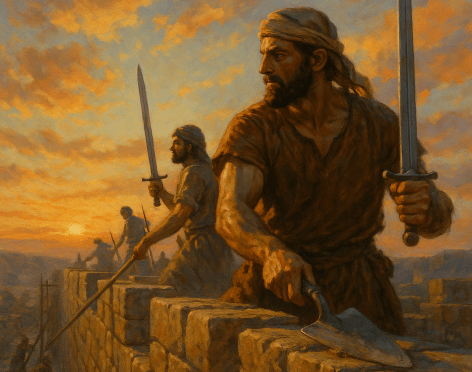
So it was that Nehemiah and the people building the walls of Jerusalem encountered opposition from their neighbors and enemies in today’s chapter. Their enemies did not want the wall rebuilt. They did not want Judah to rebuild its regional power. They wanted the walls and gates to remain in heaps of rubble. And so, with the threat of their work being attacked, the laborers had to build the wall with one hand, and had to be prepared to defend their work with the other.

I love that word picture as I wear my relatively minor mantels of leadership. I have to be prepared for opposition as I lead any kind of task. Of course, I’ve also learned that not all opposition or criticism is malicious or divisive. Quite often it is criticism that makes me aware of my blind spots and helps me shore up areas of need. Wise King Solomon said, “The wounds of a friend are better than the kisses of an enemy.” Word. I’ve discovered that wisdom is often required to discern the difference between constructive criticism and opposition of ill intent. I’m still learning.

chapter a day banner 2015