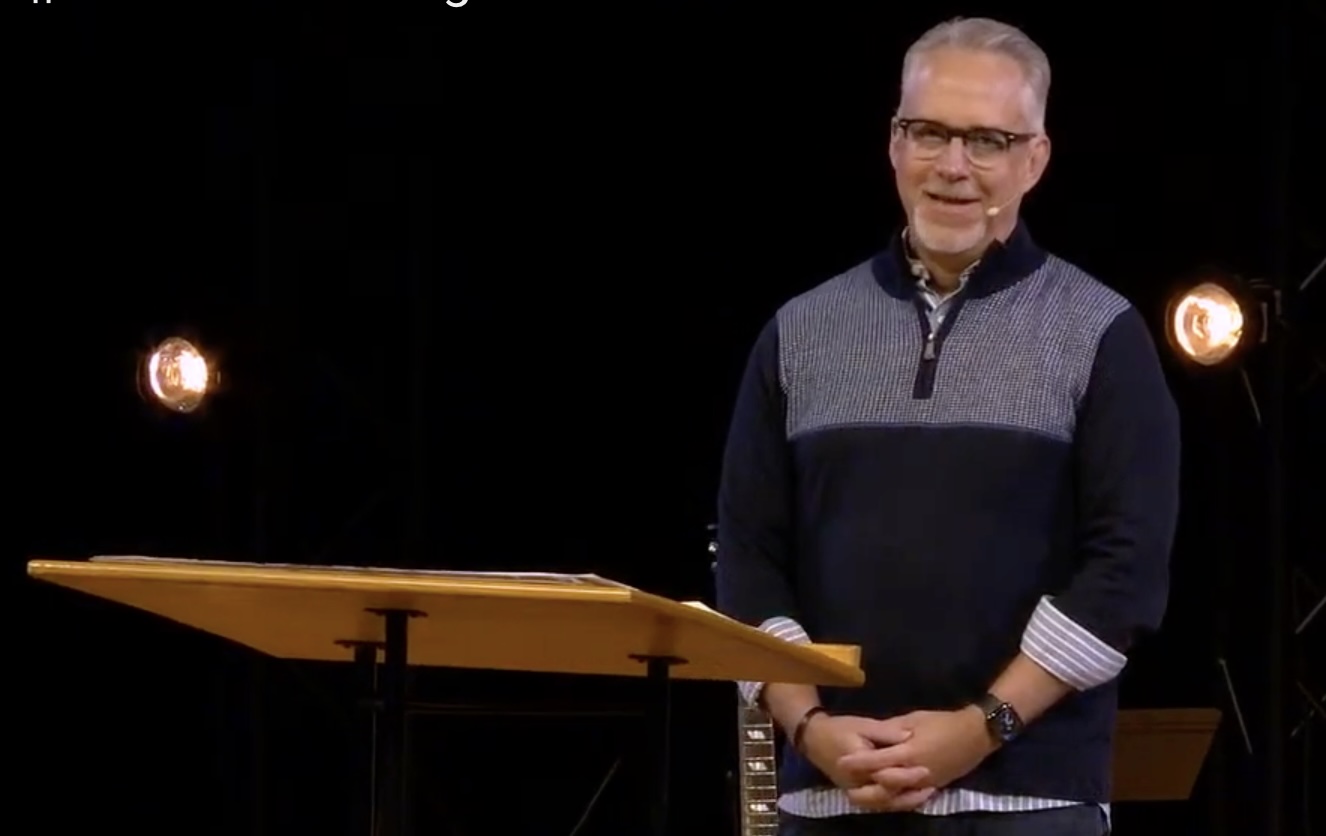
This past Sunday I was asked to give an hour-long presentation about the history of our community and its founder. Our church is spending an entire year focused on one of our core values: Refuge Over Rejection.
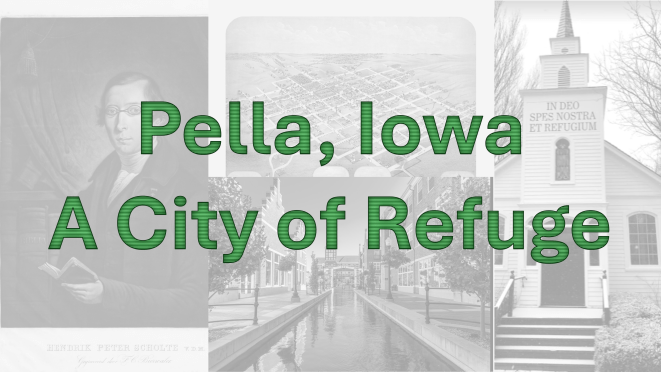
Our little Iowa community was envisioned, planned, and created by one amazing man, Hendrik Pieter Scholte. In the 1840s he was a pastor who desired to leave religious persecution in the Netherlands and create for his flock “A City of Refuge” on the Iowa prairie.
This is the story.
It is also a prompting of what this legacy means for our faith community seeking to be a “refuge” in our world today.
“But make up your mind not to worry beforehand…” Luke 21:14 (NIV)
Something new is coming. It’s already here. It will change everything. And everyone can feel it.
Artificial Intelligence.
Everyone is talking about AI. It’s everywhere.
Among clients and business circles, it is the number one topic of conversation.
What can AI do for us? How will AI transform our business? What does the future look like with AI?
And whenever something comes along with the transformative power to change “normal” life as we know it, it stirs within human minds…
Doubts. Fears. Anxieties.
What is going to happen to me?
On April 26th I’ve been asked to give a presentation about the story behind our little town of Pella, Iowa. It’s a fascinating story about one man, a Pastor in the Netherlands, who was suffering persecution from the religious establishment for not submitting to their authority — not unlike how I described Jesus in yesterday’s post/podcast. He also saw little or no long-term future for the poor among his flock in the social and economic class system of Europe.
He envisioned creating a little town on the Iowa prairie in America. It would be a “city of refuge” to which he and his flock could flee, be free, and find hope and a future.
He called the town he envisioned Pella.
He called it this for a very good reason.
Today’s chapter is fascinating. Jesus prophetically tells His disciples about the future. It’s not a pretty picture.
The Temple they’re standing in will be reduced to rubble. Armies will surround Jerusalem. They will be seized and persecuted.
And when they see that happening Jesus said,
“Then let those who are in Judea flee to the mountains, let those in the city get out, and let those in the country not enter the city.”
What most people don’t know is that around 65 A.D. the political tension in Jerusalem was at an all-time high. The Jewish people were rebelling against the Roman Empire. The Roman Empire was persecuting both Jews and Christians. In 70 A.D. Rome will surround and destroy the city and the Temple — just as Jesus said.
A prophet rose among the Christians in Jerusalem. The prophet told all the Christians to flee to a city of refuge near Galilee. They packed up their lives. They fled with everything they had.
Historians have suggested that had they not done this, Christianity may have ended with the Roman destruction of Jerusalem.
The city to which they fled was called Pella.
As Jesus speaks to His disciples about this time of transformative turbulence, change, and even hardship He tells them something interesting.
“Make up your minds beforehand not to worry…”
Trust God. Trust the Story God is authoring. Remember the sparrows. Your heavenly Father’s got you.
And faith is a mindset. It’s planted long before it’s harvested. It’s prepared well before it’s needed. It’s a choice I make long before I see armies gathering.
In the quiet this morning, this reminds me of the fears and anxieties that come with any transformative time of change and turbulence.
Like AI changing life as we know it.
“Make up your minds beforehand not to worry,” Jesus said.
The believers fled to Pella, just as Jesus prophetically suggested they should in today’s chapter. They found a city of refuge. They lived and flourished.
The persecuted believers in the Netherlands fled to the Iowa prairie and created their own city of refuge called Pella. They lived and found hope and a future. I know. I live here amidst their legacy.
As David (who knew a thing or two about transformative life-change) wrote in his lyrics to Psalm 62:
Trust in him at all times, you people; pour out your hearts to him, for God is our refuge. Psalm 62:8 (NIV)
I’ve seen a lot of change in life in my 60 years.
Man walking on the moon. The advent of the personal computer. The internet connecting the world. The phone in my hand with more computing power than the technology that put man on the moon.
And now… AI.
I don’t know how it’s going to transform life and business.
But I’ve made up my mind beforehand not to worry.
I know where to run.
Faith isn’t the absence of chaos. It’s knowing where to go when the chaos comes.
If you know anyone who might be encouraged by today’s post, please share.
These chapter-a-day blog posts are also available via podcast on all major podcast platforms including Apple, Google, and Spotify! Simply go to your podcast platform and search for “Wayfarer Tom Vander Well.” If it’s not on your platform, please let me know!
Submit yourselves for the Lord’s sake to every human authority: whether to the emperor, as the supreme authority, or to governors, who are sent by him to punish those who do wrong and to commend those who do right.
Show proper respect to everyone, love the family of believers, fear God, honor the emperor. 1 Peter 2:13-14, 17 (NIV)
I have for many years had a recurring brainstorm that returns every four years or so like the spring rains on the fields of Iowa. Every four years potential Presidential candidates from all political persuasions pass through Iowa for months in anticipation of the Iowa caucuses.
What if we invited them for dinner? We’d extend an invite to every one of them who passes through town. Just the candidate (and perhaps spouse) breaking bread and sharing a meal with just me and Wendy here in our dining room. Nothing fancy. No press. Just a meal and a private chat.
I think we’d learn a lot, not just about the candidate’s views, but the candidates themselves. Wendy and I have long held the position that we may not agree with a candidate’s politics, but we’d be willing to host any candidate – no matter their party or lack thereof – for a nice meal and respectful conversation. (For the record, I am not affiliated with any political party)
Today’s chapter is a head-on collision of Kingdom of God posture in human empire territory where the kingdoms of this world rule. Jesus’ counter-cultural kingdom ethic is on full display through the very man He once called ‘the rock..
First we have to understand the context of Peter’s letter which was written sometime around 60-64 A.D. Peter also references being in “Babylon” in his personal greetings (5:13). ‘Babylon’ was code for Rome.
Why does Peter use code? It is a time of rising hostility toward Christians. The storm clouds are gathering, and within a few short years Nero will unleash brutal persecution. It’s one of the reasons that the letter is being written in the first place. Referencing Rome as “Babylon” served multiple metaphorical purposes:
It protects believers if the letter is intercepted.
It frames Rome theologically: not merely a city, but an empire embodying exile and oppression.
It reminds Jewish believers of the first exile under literal Babylon.
And who is on the throne? Nero. That Nero. Corrupt. The one who will famously fiddle while Rome burns, then blame who? Christians.
Nero was volatile, self-indulgent, increasingly paranoid—and within a few years would unleash brutal violence against Christians.
Peter is not naïve. He knows who sits on the throne.
Which makes his instruction feel less like polite civic advice and more like defiant kingdom theology. Peter doesn’t tell believers to “burn it down.” He says, “honor (literally choose in your hearts to attach worth to him) the Emperor.”
Peter’s logic runs like this:
You are aliens and strangers (2:11).
Your loyalty is to Christ.
Therefore you are free.
Therefore you do not need to grasp for power.
Therefore you can show honor—even to flawed rulers.
This isn’t endorsement. It’s witness.
The early Christians were not passive. They were faithful. And faithfulness sometimes meant suffering rather than seizing power.
Peter is not baptizing Nero. He’s refusing to let Nero define conduct for followers of Jesus.
For me as a disciple of Jesus, this lands like a dagger in the heart of modern outrage culture: God through Peter commands honor in a world where the emperor will kill him. And Nero will have Peter crucified just a few years after this letter is written, the words of the risen Jesus echoing in his soul…
“Very truly I tell you, when you were younger you dressed yourself and went where you wanted; but when you are old you will stretch out your hands, and someone else will dress you and lead you where you do not want to go.” John 21:18 (NIV)
As I meditate on these things in the quiet this morning, I find that God’s demand that I honor governing authorities is not a demand that I agree with them, approve of them, sanctify them, or remain silent about injustice. The demand is that I refuse to dehumanize them. In a culture that delights in contempt, Peter commands dignity.
That was radical under Nero.
It may be more radical now.
Which brings me back to my recurrent brewing brainstorm. If any candidates thinking about a run in 2028 find themselves coming through Pella on their Iowa Caucus tour, let Wendy and me know. You have an open invitation for dinner and a chat.
If you know anyone who might be encouraged by today’s post, please share.
These chapter-a-day blog posts are also available via podcast on all major podcast platforms including Apple, Google, and Spotify! Simply go to your podcast platform and search for “Wayfarer Tom Vander Well.” If it’s not on your platform, please let me know!
This is an illustration for the present time, indicating that the gifts and sacrifices being offered were not able to clear the conscience of the worshiper. They are only a matter of food and drink and various ceremonial washings—external regulations applying until the time of the new order. Hebrews 9:9-10 (NIV)
Troubled times.
Political corruption. Nationalism zealously on the rise. Assassinations increasingly common.
Political resentments. Religious fervor. Arrogance of the ruling class.
I’m not talking about today. This was Jerusalem and Judea as the author of Hebrews is writing to his audience. It is a time of increasing tension, political upheaval, and rising violence. Rome has forcefully appointed their own handpicked priests to serve in Jerusalem’s temple. They are, of course, corrupt and the Jews are livid. Angry young nationalists begin committing acts of terror, sparking Roman crackdowns. Then, a Roman procurator embezzles money from the temple’s bank accounts. When the news breaks protests erupt throughout the city. Jerusalem is a powder keg, and the fuse has just been lit.
For the Christians to whom the author is writing, the political situation is simply insult to injury. The persecution of Christians had already begun. Nero had already blamed the Christians for the burning of Rome. Paul, if he hasn’t already been executed, is languishing deep in the dungeons of Mamertine prison Rome. In Jerusalem, a prophetic oracle had spoken telling all the Christians to flee to a City of Refuge east of the Jordan River, a city named Pella. They listened. They fled, and it would ultimately mean the survival of the Jesus Movement.
Fear, anxiety, and uncertainty are the daily realities of any follower of Jesus. Rejected by Jews and despised by Rome, being a follower of Jesus was an invitation to suffering. For Jewish believers, there was the ever present temptation to simply renounce Jesus and return to the tradition they had known their entire lives. At least within Judaism there were still legal rights and social protections amidst the troubles. It was a matter of physical human survival.
Was being a follower of Jesus really worth it?
These are the people the author of Hebrews is addressing. It is possible that the Jewish believers now in Pella are his core audience. How easy it would be to simply walk away from the persecution, the threat suffering, and the constant fear. Just say, “I made a mistake. I don’t think I believe this Jesus stuff after all.”
If I place my feet into the sandals of a Jewish believer in Pella, the message of today’s chapter takes on an entirely new layer of meaning. The author is telling me that that the old order I’ve known my entire life, the religious tradition in which I was raised, is passing away. Jesus came to spiritually fulfill what the old order never could. Jesus’ ultimate sacrifice, once for all, completed the work of spiritual redemption for everyone for all eternity. The old system is now obsolete.
“Don’t go back,” the author is gently pleading with his readers. “It may seem like a pragmatic choice in the moment, but there’s nothing for you back there. Old things have passed away. Trust the Story that Jesus gave us. Out of this chaos, new things are coming – eternal things which will make our momentary earthly afflictions pale in comparison.
Then the author weaves in Christ as the eternal God in a trinity of “appearances.”
God who was…
“But now once at the end of the ages He has appeared to put away sin by the sacrifice of Himself.” Hebrews 9:26
God who is…
“Christ has entered… into heaven itself, now to appear in the presence of God for us.” Hebrews 9:24
God who is yet to come…
“He will appear a second time, not to bear sin, but to bring salvation to those who eagerly wait for Him.” Hebrews 9:28
In the quiet this morning, I can’t help but find encouragement here in my own home office in a little city of refuge named Pella. In an hour or so I will sit with Wendy and we will peruse the headlines.
Political corruption. Nationalism zealously on the rise. Assassinations increasingly common. Political resentments. Religious fervor. Arrogance of the ruling class.
Within a few years of today’s chapter being penned, the author of Hebrews‘ readers would know for certain that he had been correct. Roman Legions would march on Jerusalem. The temple would be reduced to rubble, just as Jesus had prophesied. Jews would be scattered through the known world. All of the Jewish genealogical records required to determine who was a descendant of Aaron and therefore could be priest were utterly destroyed. The old sacrificial system was finished for good.
What remains?
A High Priest in heaven appearing right now in God’s presence to make intercession for me and you. One who will appear to bring salvation and redeem all things.
Like the believers in ancient Pella who first read the words of today’s chapter for the very first time, I just have to trust the Story.
If you know anyone who might be encouraged by today’s post, please share.
These chapter-a-day blog posts are also available via podcast on all major podcast platforms including Apple, Google, and Spotify! Simply go to your podcast platform and search for “Wayfarer Tom Vander Well.” If it’s not on your platform, please let me know!
“The accused must stay in the city of refuge until the death of the high priest; only after the death of the high priest may they return to their own property.” Numbers 35:28 (NIV)
Our city of Pella here on the Iowa prairie has an incredible history. It was created by a Dutch pastor and his congregation who were fleeing religious persecution from the state church in the Netherlands. It was named Pella after an ancient city called Pella that was a “city of refuge” and to which early Christians fled from persecution and an impending war in Jerusalem between the Jews and Romans.
In today’s chapter, God commands Moses to create six evenly distributed towns throughout the Promised Land where the tribe of Levi would settle. Remember, the Levites were responsible for maintaining God’s traveling tent temple and the overseeing the entire on-going sacrificial system. God was their inheritance, not a plot of land. Nevertheless, they needed a place to live, so six cities were created for the Levites and God designated them “cities of refuge.”
In the entire history and development of human civilization, today’s chapter stands as a critical and revolutionary step forward. Other ancient cultures had largely undeveloped policies regarding sanctuary for the accused. God didn’t invent the idea of sanctuary out of thin air in today’s chapter, but He transformed a scattered, uneven practice into a theologically rich, justice-mercy structure that was unique to Israel and transformed the principles and policies of human justice.
There were six cities evenly distributed. The cities were Levite towns, meaning that the accused was under the protection of the priests and both mercy and justice were viewed directly as coming from God’s appointed representatives. The accused could not leave the walls of the city of refuge until the death of the high priest, so fleeing from an avenger was not just a blank check of forgiveness. There were boundaries to which the accused must adhere. There was also a very clear system that God put in place that required witnesses and a form of due process. Humanity had never seen anything like it.
Cities of refuge became a part of the human landscape and they have had a ripple effect throughout history. The early Jesus Movement largely survived and flourished because of a prophecy in which Christians were instructed to flee to ancient Pella. Had they stayed in Jerusalem, they may have been wiped out when the Romans destroyed the temple and city in 70 A.D.
In the 1800s, H.P. Scholte realized that there was little or no future for his largely poor, uneducated, and lower-class congregation members. He and his flock had no freedom of religion. He had already been imprisoned for obeying his conscience and defying the king who was head of the state controlled church. Scholte saw America for what it was, a land of opportunity where he and his followers were free worship however they wanted and where poor uneducated farmers might make a life for themselves and their descendants that would have been impossible in the Netherlands. So, he dreamed, designed, and built a new city of refuge on the Iowa prairie and named it after the ancient city that saved and launched the success of the Jesus Movement.
In the quiet this morning, as I meditate on the chapter and the history of cities of refuge, there are three things stirring in my soul:
God as Refuge: In both Jewish and Christian traditions, God carves out spaces of mercy in the midst of justice. This life journey contains moments where guilt—intentional or accidental—feels like a crushing weight. In today’s chapter God whispers: there is a place to run, and a God who receives you.
Boundaries of Grace: The city walls of the Levite towns remind me that refuge comes with boundaries. Forgiveness and safety are not license; they invite us to dwell in a different rhythm of life until God’s appointed time of release.
Death that Brings Freedom: For both Jew and Christian, the death of the High Priest as part of the system is key. It’s a reminder that death itself—Christ’s, and one day my own—is not an end but the doorway to freedom.
Grace often blooms most vividly when something old dies and something new begins.
If you know anyone who might be encouraged by today’s post, please share.
These chapter-a-day blog posts are also available via podcast on all major podcast platforms including Apple, Google, and Spotify! Simply go to your podcast platform and search for “Wayfarer Tom Vander Well.” If it’s not on your platform, please let me know!
In today’s chapter, Jesus famously teaches the crowds in parables, and the subject of His parables are all about soil, seeds, and weeds. This got me thinking a bit about the spiritual parable of my own experiences this season…
I’ve already mowed my lawn a couple of times. It was 10 years ago that Wendy and I moved into our newly constructed house. The company we hired to do our lawn was one of the more difficult contractors we worked with in the process. The soil on our property wasn’t the greatest and we had loads of black dirt brought in to supplement it. Even so, the yard was not grated well, and the soil was not spread well. The result has been a decade of trouble and hard work. Every spring as I break out the lawn mower and begin working the lawn I confess feeling a bit embittered regarding how much better and easier it would be if the soil had been done well, and done right, from the beginning.
Meanwhile, inside the house I’ve been experimenting with one of those countertop herb gardens advertised online. I have confessed many times in these posts/podcasts to my brown thumbs and lack of ability to successfully garden, even while living my entire life on the richest, most productive farmland on the face of the earth. I’m happy to say that my tiny little herb garden has been highly productive despite the multiple mistakes I’ve made getting started. I’ve been supplementing my dinner salads with Romain lettuce from countertop. Our supply of fresh Basil is slowly growing, and I’ve got plenty of fresh mint growing to mix some Mojitos to enjoy on the back patio this summer.
One of the things I’ve noticed about my little countertop herb garden has been both the soil, which I’ve never seen anything like it in my life, and the watering system which is genius in allowing the soil to soak up what the plants need without drowning them and takes my human incompetence and lack of disciplined attention out of the equation.
Which has me thinking about Jesus’ parable in the quiet this morning. The difference between the 25% of seeds that became productive and fruitful plants in Jesus’ parable and the 75% of seeds who didn’t make it was the quality of the soil. Which has me thinking about my contrasting experiences with my lawn and my countertop herb garden. The profoundly simple question Jesus’ parable, and my experience, leads to is: “What is the quality of the spiritual soil of my heart, mind, and life?”
As I meditated on Jesus’ parable, I realized that there are both things that I control and things that are out of my control with regard to the spiritual cultivation of my heart and mind. I don’t completely control the weather of life, the circumstances around me, or even the weeds that might have been sown to my right or left and are flourishing to my perpetual aggravation. I do, however, control the inflows of what I draw into my eyes, my ears, my heart, my mind, and my body. I control my time and my energy expenditure. I can push my spiritual roots deeper where springs of Living Water can nourish me, or I can simply choose to soak up the shallow and toxic run-off this world ceaselessly sheds from its surface.
The words of the SerenityPrayer came to me as I pushed my roots deeper this morning:
Lord, grant me the serenity to accept the things I cannot change, the courage to change the things I can, and the wisdom to know the difference.
Or, in other words:
Lord, help me to be the best spiritual soil I can be for Your Word to take root that my life might be as fruitful and productive as possible today. Grant me patience, grace, and peace amidst the weeds and weather of this world that I do not control. And give me wisdom to know the difference.
If you know anyone who might be encouraged by today’s post, please share.
These chapter-a-day blog posts are also available via podcast on all major podcast platforms including Apple, Google, and Spotify! Simply go to your podcast platform and search for “Wayfarer Tom Vander Well.” If it’s not on your platform, please let me know!
The more I think I own something, the more it ends up owning me. A chapter-a-day podcast from Leviticus 25. The text version may always be found and shared at tomvanderwell.com.
“The land cannot be sold permanently because the land is mine and you are foreigners—you’re my tenants.” Leviticus 25:23 (MSG)
According to the United States Census Bureau, 80 percent of the U.S. population lives in urban areas. I have learned along my life journey that when you live your life in urban America, there are certain realities of rural living that are completely lost on you. For example, here in rural Iowa, land is gold. It is among the most productive farmland in the entire world, and to those families who have owned it and worked it for generations it is priceless. I have learned that this didn’t just evolve over time. It’s part of the land’s heritage.
Our own small town here on the Iowa prairie was envisioned and founded by a Dutch pastor and his flock of largely uneducated farmers and peasants right as Iowa became a state and the Federal Government was selling the land. Our town’s founder had collected and consolidated his congregation’s monies in order to make it most efficient to purchase, survey, plat, and divide the land. It was a wise thing to do. However, his simple flock failed to understand the complexities, bureaucracy, and inefficiencies of a Federal Government 1,000 miles away in a time 15 years before the Pony Express. The process took so long that they accused their own pastor of being a con-man, cheat, and stealing their money and all of the land that they’d been promised. They threw him out of the pulpit.
The deeds for the land eventually arrived from Washington, the land was distributed appropriately, and tempers eventually eased. Nevertheless, I have observed that the precious, priceless land only grew in covetous value in the hearts of those who owned it. Ironically, the land became a modern-day golden calf to people who were among the most religiously devout people you’d ever meet. It seems they majored on some of the minor religious lessons of the Great Story and failed to learn one of the most major spiritual lessons it communicates. Families have divided, sometimes violently, over the land. In the farm crisis of the 1980s, some committed suicide when they realized that they were going to lose their family’s land to foreclosure. Along my journey, I have observed that these are the kinds of things that happen if and when I allow the things I own to own me.
Today’s chapter is incredibly fascinating. God continues to instruct His ancient Hebrew people regarding the way He wants them to live, and now He begins to get into some details of how He wants them to handle both land and property. God instructs them to give the land a sabbath rest every seven years, just like He gave people rest every seven days. How amazing that God viewed His creation, the land, as a living thing that He cared about. He wanted humanity to care about His creation, too, just as He has cared about them, delivered them from slavery, and is choosing to live among them.
God goes on to tell the Hebrews that every fiftieth year (the year after seven periods of seven years) is to be a year of Jubilee which is a giant reset button. Everyone takes the entire year off. People all return to their family land. Lands revert back to the families to whom they were originally allotted. Debts are cancelled. Reset, refresh, and restart.
This entire system is predicated on one major truth: God owns the land. It is His and the families to whom it has been allotted are merely chosen stewards to whom it has been given for caretaking and graciously providing for their own daily needs. Any perception they may have that the land is theirs and they own it is a mirage.
In the quiet this morning, that is the core spiritual lesson that erupted for me out of the text. It is the same core lesson that Jesus continued to teach.
“Don’t hoard treasure down here where it gets eaten by moths and corroded by rust or—worse!—stolen by burglars. Stockpile treasure in heaven, where it’s safe from moth and rust and burglars. It’s obvious, isn’t it? The place where your treasure is, is the place you will most want to be, and end up being.” Matthew 6:19-21 (MSG)
Jesus is the Alpha Point from which everything in creation flows. Jesus is the Omega Point to which everything in creation will return. Nothing that I own is really mine. This is the lesson I’ve watched Iowa farmers and families miss as they tear themselves and one another apart over the land they believe they own.
Everything that I am and have is from God. I am just a caretaker, an earthly manager, and a steward to whom everything I have has been given and entrusted. God was trying to communicate this to the ancient Hebrews. Jesus was trying to communicate the same thing to everyone.
The further I progress in my spiritual journey, the more I’ve come to understand and embrace that the only priceless thing in the grand scheme of things is the sacrificial gift of Jesus’ grace and mercy. The more I embrace this treasure, the more I see everything I am and have in perspective of the economy of God’s Kingdom.
The more I think I own something, the more it ends up owning me.
If you know anyone who might be encouraged by today’s post, please share.
These chapter-a-day blog posts are also available via podcast on all major podcast platforms including Apple, Google, and Spotify! Simply go to your podcast platform and search for “Wayfarer Tom Vander Well.” If it’s not on your platform, please let me know!
Several recent messages have been added to the “Messages” page at tomvanderwell.com where there’s an archive of Tom’s messages from the past decade. Cheers! New Messages added:
It has been quite a year on several fronts in 2024, which is why I’m sitting here on Christmas Eve to finally update the Latest from this past summer and fall.
My last update from Spring 2024 left off after Pella’s annual Tulip Time, and May always brings the beginning of Lake season. What Wendy and I didn’t know going in was that this would be our final summer at “The Playhouse,” our place on Lake of the Ozarks that has been a part of our family for over 25 years. By the end of the summer Wendy and I decided that this season of our lives was over. God provided a very clear and simple path in selling it to friends who we know will be blessed by it, and will pass that blessing forward.
So, it was a great final summer with annual trips with friends and family. Most memorable for me was the opportunity to meet at the lake with my dad and siblings. It was the first time we’d all been together at the lake, ever, and it was a great opportunity to share time together as a family. We tried to remember the last time we’d been together as a family for more than a couple of days and we couldn’t really come up with an answer!
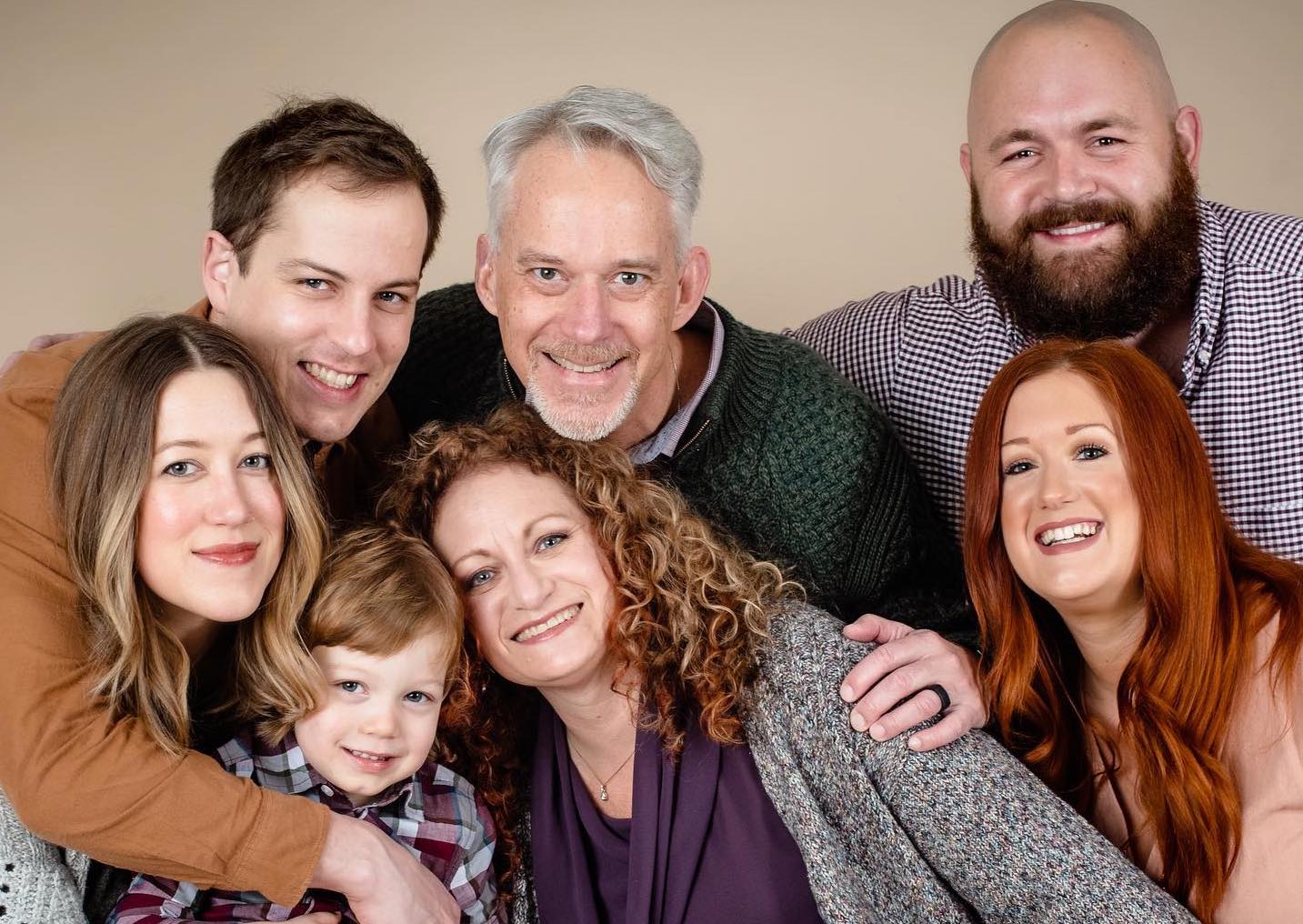
Taylor, Clayton, Milo, and Sylvie had been living with us from December 2023 until Tulip Time in May. They bought a house in Des Moines, but having them in Des Moines has been a much better proximity than Edinburgh, Scotland! Clayton has been working for Lutheran Services of Iowa in their Refugee Settlement program and Taylor continues to work for Storii. It’s been fun to have them nearby where we can visit them when we’re in Des Moines, take the kids out for special times with Papa and/or Yaya, and have them visit. Milo has loved coming to church with Papa, Yaya, and Papa Dean. I continue to teach regularly and even had the blessing of being asked to baptize a dear friend this Spring. We even had a very rare treat when solar flares gave us a glimpse of the Northern Lights over our house!
My dad continues to live here in Pella in independent living. He stays busy making stained glass and won the blue ribbon at the Iowa State Fair this year!
Madison, G, and MJ (Maddy Jo) continue to live in South Carolina, but we were blessed to have them home this summer. Madison continues to work at a boutique and spa in Columbia. She took a management position this year. Garrett continues in real estate, but he worked to get his teaching certificate so that he can both teach and coach football at the high school level. Late June and early July ended up being full of gatherings with family and friends as we celebrated Sylvie’s 2nd birthday and welcomed the SC crew back to Iowa for the Fourth of July weekend. The Pella VLs had us down to their pool for fun in the sun and water. Even Taylor and Maddy Kate’s Godfather Dave made an appearance! The summer also included my 40th High School Class reunion (Hoover High School Class of 1984). Wendy’s friends, “The Golden Girls” had a sleepover at our house, as well. I got to play bartender.
Of course, Wendy and I love spending time with friends over good food and good drinks. We enjoyed a couple of weekends together. In the summer, we headed to Kansas City to catch our Cubbies at Kauffman Stadium in Kansas City and had dinner with friends there. In the fall, we headed to Minneapolis for our annual pilgrimage to the Mother Ship (USBank Stadium) to watch the Vikings. We also took in a show at the Guthrie for the first time since COVID. In the fall, we headed to Park City, UT to visit friends, found our way to the top of Sundance Mountain, and enjoyed some spectacular views!
While we were in Park City, Wendy got word that her Grandma Vander Hart had passed away. As the only family member actually in Pella, Wendy has ceaselessly cared for her grandmother and her grandma’s needs for years. We returned from Utah to meet with Wendy’s family and lay Grandma to rest. I was blessed that she asked me to do her funeral.
No year is without its share of adversity. Torrential rains and drainage tiling that was blogged by tree roots combined to back up our sump pump and flood our basement twice this summer. The carpet was able to be salvaged, but the floods required us to pull up all of our carpets in the basement, tear out all of the carpet pads, and then have new carpet pads installed and the carpet re-laid. We used it as an opportunity to employ some local high school and college students. I’ll be very happy if we never have to do that again!
Wendy and I have not been involved in theatre for about six years. In the fall, I was recruited to once again run for President of our local Community Theatre. I was elected. So, we’re back in the mix of things, including presiding over Union Street Players’ annual Awards Dinner. Wendy is not on the Board but has been assisting with finances and the box office. She also helped organize the Awards Dinner. I might even make it back on stage this coming year!
We also enjoyed a visit from Wendy’s sister and her children from their home in Mazatlan this fall, as well as a wonderful picnic with our faith family from the Auditorium at Third Church.
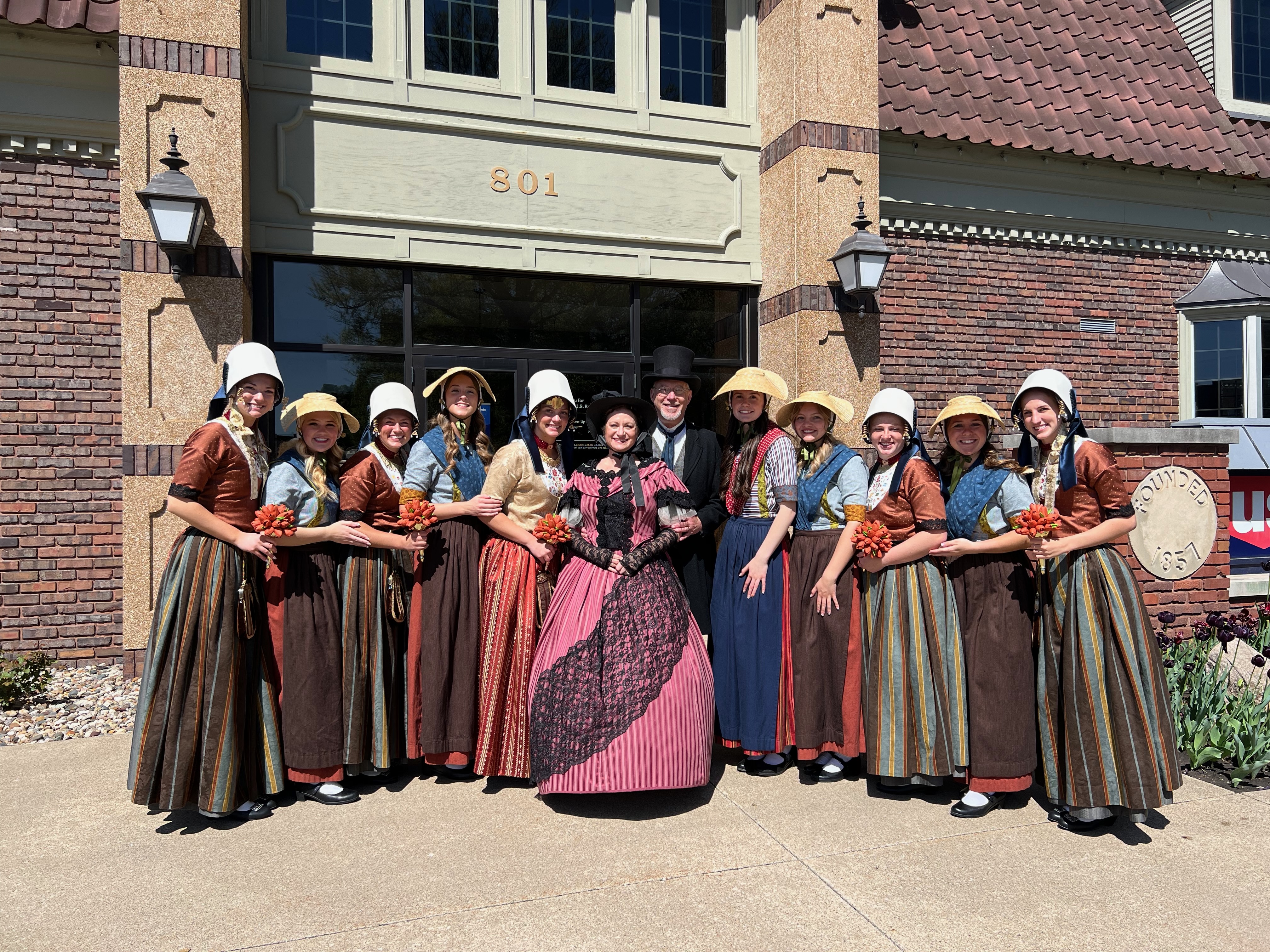
Fall also brings Pella’s annual Tulip Queen Announcement Party. Wendy once again presided as Director of the evening’s festivities and I served once again as Master of Ceremonies. It’s always amazing to spend time with such talented young ladies who instill such hope for the future. Both Wendy and I are blessed every year to get to know these amazing women and be a part of our Community’s annual tradition.
When the wall collapses, will people not ask you, “Where is the whitewash you covered it with?” Ezekiel 13:12 (NIV)
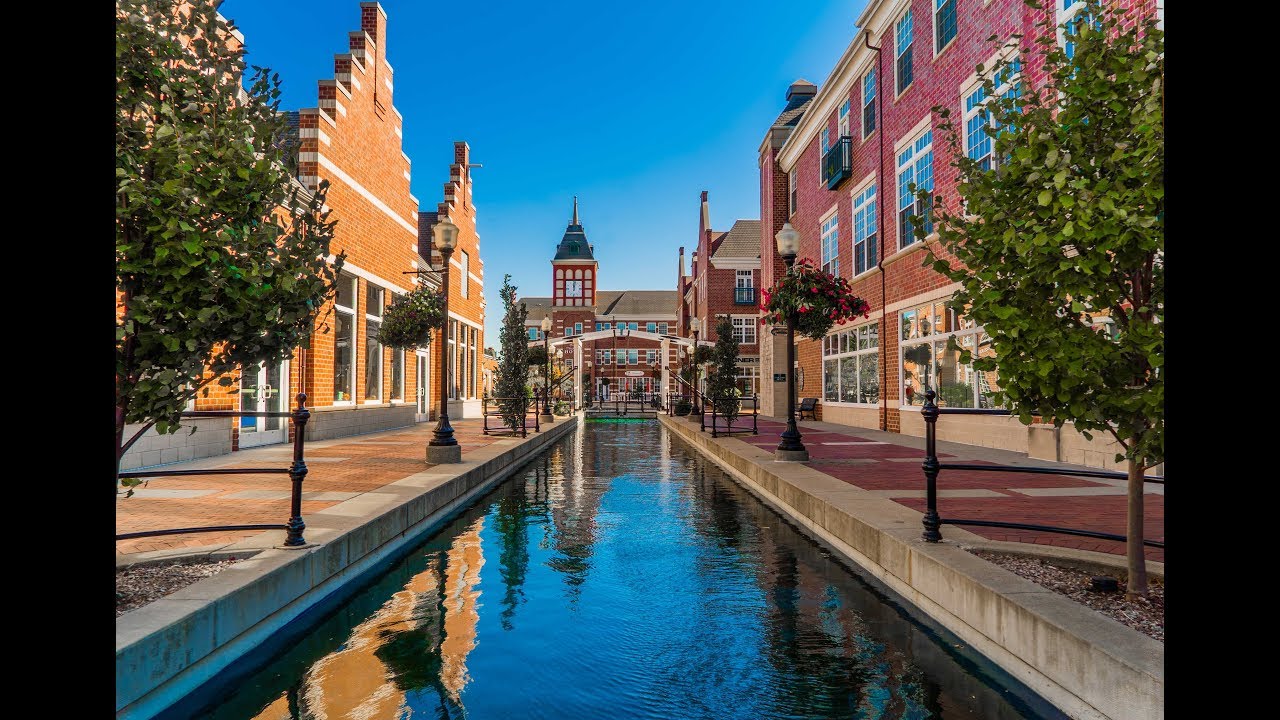
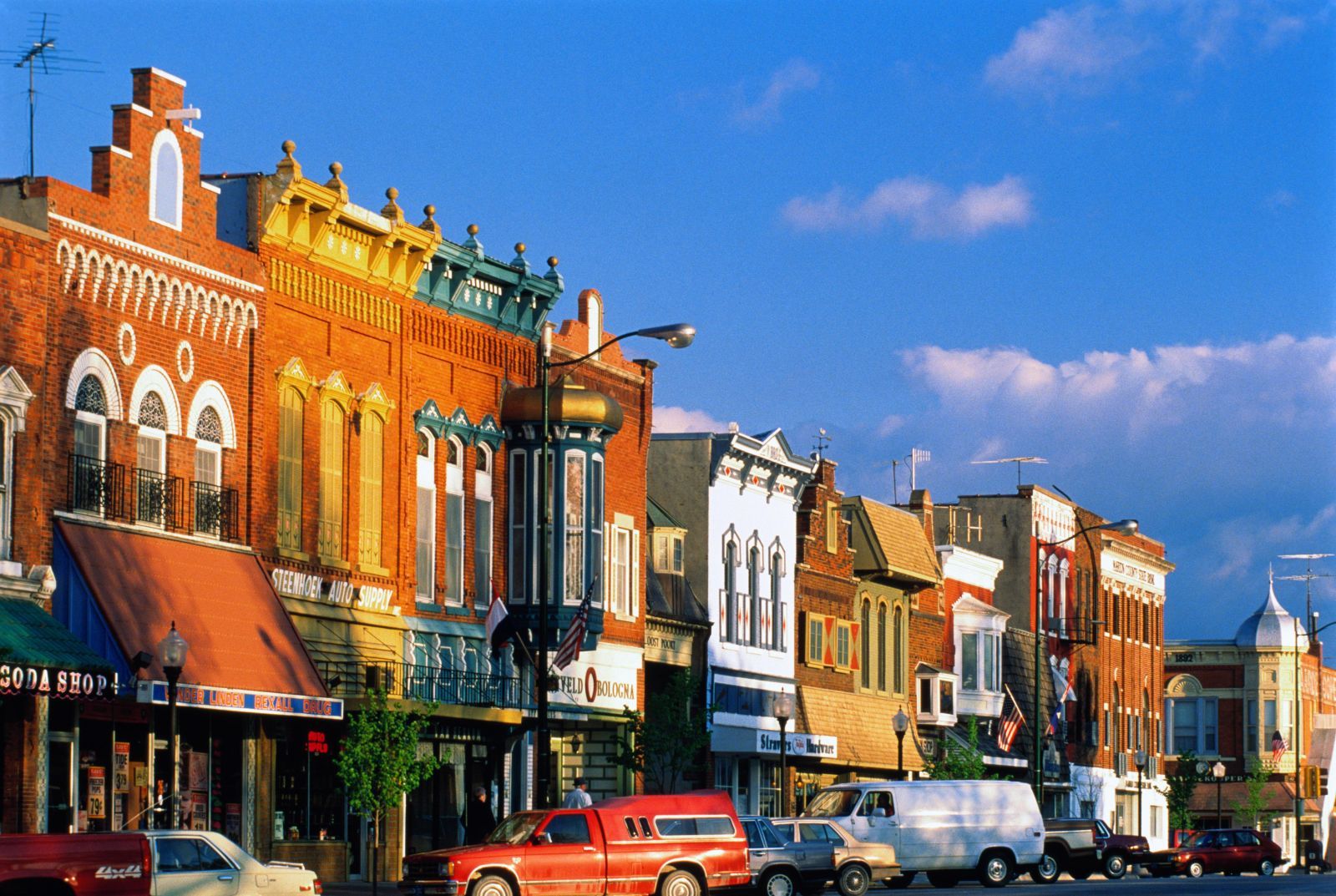
The Iowa town where Wendy and I live is a unique place. Pella was founded by a Dutch pastor and his flock back in 1847. They were fleeing religious persecution back in Netherlands and were intent on creating “a city of refuge” on the Iowa prairie. Visitors from the Netherlands today will often say that Pella is more Dutch than the Netherlands itself. Dutch heritage is so woven into the town that any commercial businesses must include classic Dutch architectural design flourishes on their buildings. Even Walmart and McDonalds comply (see the featured photo on today’s post).
Of course, the architectural flourishes are just that. Behind the doors of that cute looking shop on the square, it’s just a building like any other building. In some cases, that building is 170 years old and in critically major disrepair. This has led to locals using the metaphor of a “Dutch Front.” The front of the building looks cute, quaint, and Dutch, but on the inside it’s a hell-hole. The metaphor is often (and aptly) used to describe people who keep up self-righteous, religious appearances for public consumption, but whose actual lives are filled with greed, anger, slander, hypocrisy, and critical spirits.
In today’s chapter, God has Ezekiel prophesy against false prophets and professional diviners and spiritualists who practiced black magic. I was fascinated that God’s metaphor for false prophets was basically the same metaphor as our Dutch Front. In Zeke’s day, a strong wall around the city protected it from an enemy attack. God tells Zeke that the false prophets of his day were like a “flimsy wall” that had been whitewashed to look good. These prophets would tell people what they wanted to hear, that everything was going to be okay and that they would live in peace, while God was trying to warn them of the impending doom and destruction.
In the quiet this morning, I find myself meditating on this metaphor. Even Jesus used a form of it with the hypocritical religious Pharisees of His day:
“Woe to you, teachers of the law and Pharisees, you hypocrites! You are like whitewashed tombs, which look beautiful on the outside but on the inside are full of the bones of the dead and everything unclean.”
There are two truths that I have observed along my life journey that come to mind as I reflect on Jesus’ words.
First, there is no one perfect and even the most sincerely devout individual has blind spots and imperfections. We are all works in progress. I have known critics and non-believers who are quick to paint any and all self-proclaimed believers with the same coat of whitewash in an effort to justify their unbelief and poor life choices. It is a very human thing to generalize an entire subset of humanity as “those people.” It makes easier for us to dismiss them instead of understanding them.
Second, Jesus was most critical of self-righteous, fundamentalist religious-types. Much like the false prophets, they played the religious game, they even thought they were being devoutly sincere, but they were blind to the spiritual reality. Their hearts weren’t seeking after the heart of God, but rather were seeking public approval ratings that made them feel good while ignoring the heart changes inside that desperately needed to be made.
In the quiet this morning, I find myself standing in the tension. Look hard enough and you will find my flaws. My wife, my children, and my inner circle of friends know them very well. As a disciple of Jesus, my first priority is not to seek and point out the flaws and hypocrisies of others. My priority is to be God’s perpetual and faithful cardiac patient. My heart has to perpetually change if I am going to be the disciple God calls me to be: My life, words, and actions increasingly blossoming with the Fruit of the Spirit. There is a time and place for calling out sin and hypocrisy just like Zeke in his day, and Jesus in His. Yet, I’m reminded that His criticism of the religious leaders was a very small part of His story, which was primarily about His healing and restorative sacrificial love for others. May my life increasingly reflect His.
If you know anyone who might be encouraged by today’s post, please share.