Tag Archives: Property

Tearing Down Walls

Tearing Down Walls (CaD Ezk 46) Wayfarer

“‘The prince must not take any of the inheritance of the people, driving them off their property. He is to give his sons their inheritance out of his own property, so that not one of my people will be separated from their property.’”
Ezekiel 46:18 (NIV)

There was a fascinating article in the Wall Street Journal this past week about some of the political wrangling in the U.K. They have two “houses” in their government, too. However, their houses began with one being for the “common” people and the other being for those with a royal title. Today, the House of Lords does not look like it did when it was instituted but there is a certain percentage of members who are there because they inherited a royal title from a father or grandfather. There’s a push by the new Prime Minister to force them and push the old aristocracy into extinction.

This article came to mind this morning as I continued to read Ezekiel’s ideal vision of Israel’s restoration. Today’s chapter continues to provide instructions for how things are to function. There were two things that stand out with regard to “the Prince” and all the other people of Israel.

First, the Prince was to enter into the Temple with all of the other people, and he was to exit with all of the other people. No special entrances or VIP gate. The Prince is no different than any other person. In Ezekiel’s day, this was a radical idea.

A bit later in the chapter Zeke explains that the Prince has no power to take away anyone’s land and claim it for himself. This was a common practice in monarchies throughout history. In fact, hundreds of years before Ezekiel, the people of Israel wanted a king like all the other nations around them. The prophet Samuel warned them that a king would take whatever he wanted from them, whenever he wanted, including their land.

[A king] will take the best of your fields and vineyards and olive groves and give them to his attendants.
1 Samuel 8:14 (NIV)

In Zeke’s vision of how things can and should be, the Prince has his land that he can give to his descendants as he chooses, but he cannot take anyone else’s land “so that not one of my people will be separated from their property.’” This was a radical idea in Ezekiel’s day. The Prince is no different from the common every day citizen. Every family has their allotment that cannot be taken away.

In the quiet this morning, I think about this game that humanity has played throughout history. We divide people into distinctions of royal and common, aristocrats and bourgeoisie, Popular and losers, blue bloods and the masses, elites and the lower class. Even today, I can own my own land and have it taken away by eminent domain.

Not only that, but along my journey I’ve observed that even here in the States, where we supposedly have done away with old forms of monarchy and aristocracy, we still essentially turn our Presidents, politicians, and celebrities into royalty. What is it in humanity that perpetually builds these distinctions?

As a disciple of Jesus, I can’t help to think about the fact that Jesus came to build on this seed that Ezekiel’s vision is planting and do something new. Jesus came to tear down distinctions of race, class, and gender:

There is neither Jew nor Gentile, neither slave nor free, nor is there male and female, for you are all one in Christ Jesus.  If you belong to Christ, then you are Abraham’s seed, and heirs according to the promise.
Galatians 3:28-39 (NIV)

This begs two questions of me:

Where have I, or my culture, rebuilt a wall of distinction that Jesus purposefully tore down?

How can I personally tear it back down in my heart, mind, and actions?

If you know anyone who might be encouraged by today’s post, please share.

My Inheritance

My Inheritance (CaD Jos 13) Wayfarer

But to the tribe of Levi he gave no inheritance, since the food offerings presented to the Lord, the God of Israel, are their inheritance, as he promised them.
Joshua 13:14 (NIV)

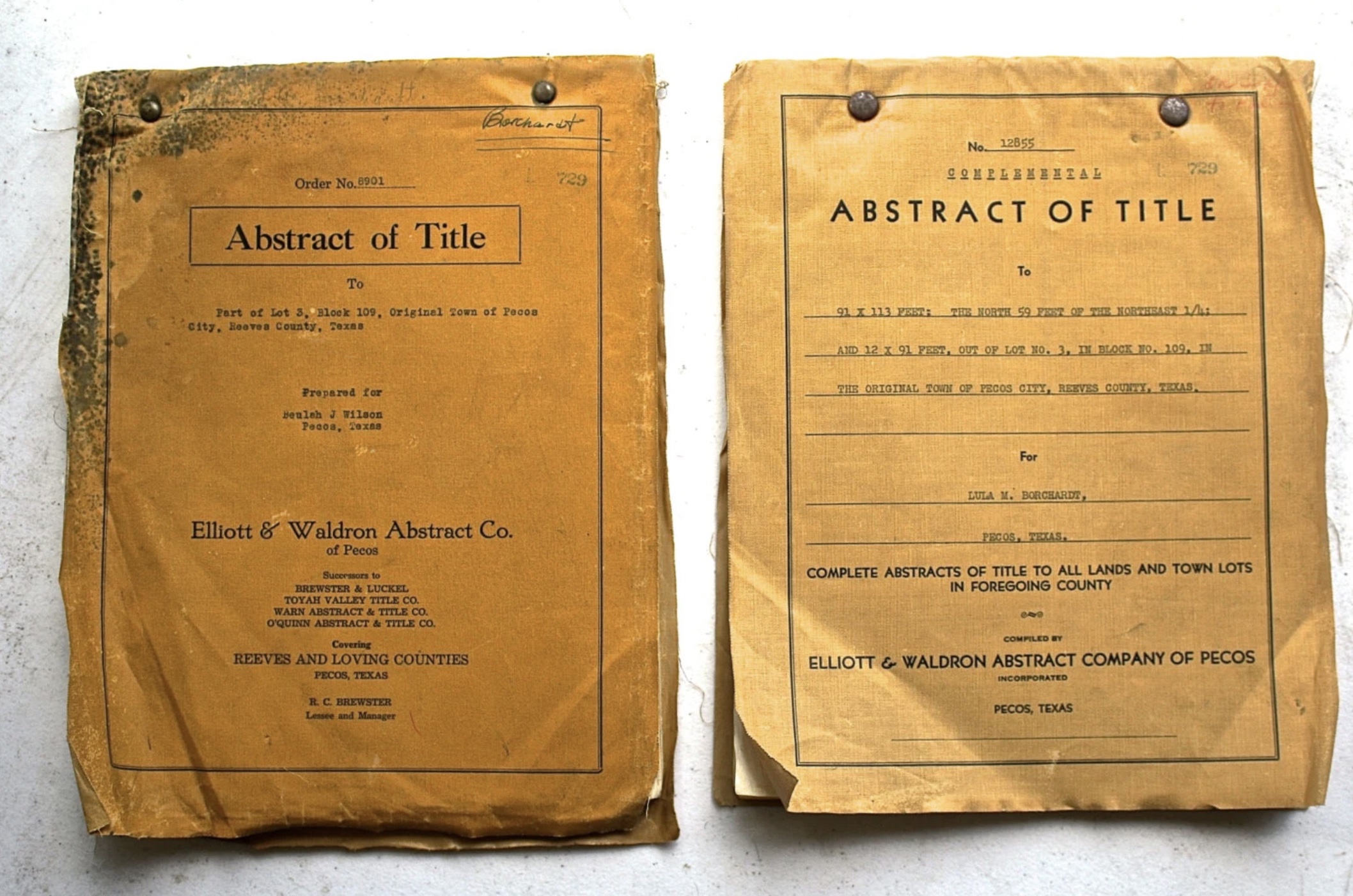
I worked many different jobs earning my way through college back in the day. One of the more fascinating jobs was as an abstractor. An abstract is a legal document that provides the description and history of a plot of land. The abstract gets continually updated whenever something legal happens to that land such as changing ownership, a tax lien placed against the property, a mortgage, or a release of that mortgage. It’s full of legalese, but an abstract can provide fascinating tidbits about the history of a property.

In today’s chapter, we enter a section of the book of Joshua that served as a kind of ancient abstract for the twelve Hebrew tribes as the Promised Land was divided and each tribe was assigned a section of land. It’s about as spiritually inspiring as, well, reading an abstract. However, just as with an abstract, there are some worthwhile tidbits amidst all the legalese.

The abstract of the Promised Land begins in today’s chapter with what is essentially an ancient form of the legal description of the lands east of the River Jordan that had been assigned by Moses at the request of the tribes of Reuben, Gad, and half of the tribe of Manasseh. It’s formally structured and begins with a summary description of the land given to those two-and-a-half tribes. It then provides a description of each tribe’s allotted land.

The thing that stands out is that in verses 13 and 44, the tribe of Levi is reminded that they will not be allotted any land. God assigned the tribe of Levi to serve all of the tribes by serving the Temple and being God’s spiritual servants among all the tribes. The offerings and sacrifices of the 11 other tribes provided the Levites with their life’s provision, but never would they have an earthly plot of land to call their own. As verse 33 puts it: “the LORD, the God of Israel, is their inheritance.”

What struck me as I mulled this over in the quiet this morning, is the fact that the Levitical design will be expanded by Jesus. During His earthly ministry, Jesus instructed His followers to spiritually live like the tribe of Levi:

“Don’t hoard treasure down here where it gets eaten by moths and corroded by rust or—worse!—stolen by burglars. Stockpile treasure in heaven, where it’s safe from moth and rust and burglars. It’s obvious, isn’t it? The place where your treasure is, is the place you will most want to be, and end up being…

What I’m trying to do here is to get you to relax, to not be so preoccupied with getting, so you can respond to God’s giving. People who don’t know God and the way he works fuss over these things, but you know both God and how he works. Steep your life in God-reality, God-initiative, God-provisions. Don’t worry about missing out. You’ll find all your everyday human concerns will be met.” Matthew 6:19-21;31-32 (MSG)

Like the Levites, followers of Jesus were dispersed throughout the entire world to serve God, to be focused on the matters of Spirit, and to trust God for their provision. As the old-timey gospel song put it: “This world is not my home, I’m just a passin’ through.”

As a follower of Jesus, I am a spiritual descendant of the Levites. My treasure, my spiritual inheritance, doesn’t have an earthly abstract or legal description. Jesus said He would go and prepare a place for me. As the author of Hebrews put it: “For here [on earth] we do not have an enduring city, but we are looking for the city that is to come.”

In the meantime, just like the Levites, I serve God where I’m planted, wherever I go, and wherever I might be scattered.

If you know anyone who might be encouraged by today’s post, please share.

“Give Me Land, Lots of Land…”

So they finished dividing the land.
Joshua 19:51 (NRSV)

When I was in college I took a semester off and worked as an abstractor. It was tedious, monotonous work. In the morning a stack of property abstracts sat on my desk in the Polk County Office Building. One by one I would walk a legal history of property around the Recorder’s Office checking various land and tax records for buyers, sellers, and the property itself to make sure that the abstract was accurate and no one was trying to pull something (on at least one occasion, I caught people attempting to do just that).

That semester my acquaintance with property records and their arcane legal descriptions gave me an appreciation for the value and importance we humans place on land.

“Give me land, lots of land, with the starry sky above!”

I finished my college career and a few years later found myself leading a congregation in a small Iowa farm town of 300. As a city boy, this was my first real exposure to the way farming exists for so many in my home state: legacy, business, family, inheritance, and life. It is hard to appreciate just how inseparable people become with the land they and their family possess.

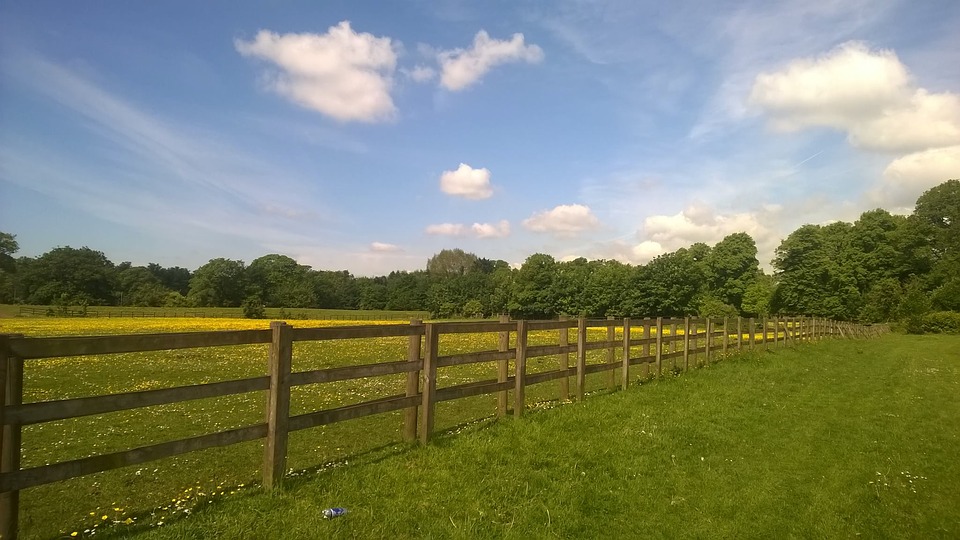
Every Sunday there two old farmers who sat in the back pews as far away from one another as possible. The two had a long standing dispute over a boundary line and fence between their adjacent properties. They never spoke to one another.

As I read through today’s chapter, which is basically an ancient abstract, I had all sorts of thoughts about land and the value we place on it. The property descriptions laid out in these chapters are so black and white, but you have to believe that there are all sorts of stories and emotions that the book of Joshua does not record. Families feeling cheated that another tribe got more land. A tribe thinking they should have such and such a village, river, well, forest amidst their property. Tribes disputing exactly how to interpret what it meant that the boundary “touched Tabor.” In time, these tribes would end up in a bloody civil war. How much bad blood was rooted in resentments hidden in these property descriptions.

This morning I’m thinking about God’s original admonishment that we should “subdue” the earth, and how we may have misinterpreted His intent. History teaches me that we’re really good at misinterpreting things. I’m thinking about Jesus who owned so little and encouraged his followers to hold on loosely to the things of this earth (including, I imagine, the earth itself). I’m thinking about Iowans intimate relationship with the land from which we make our livings and feed the world. I’m pondering the ways that possessions, including that same land, can end up coming before and between relationships.

I’m happy not to be an abstractor.

Respecting the Stuff of Others

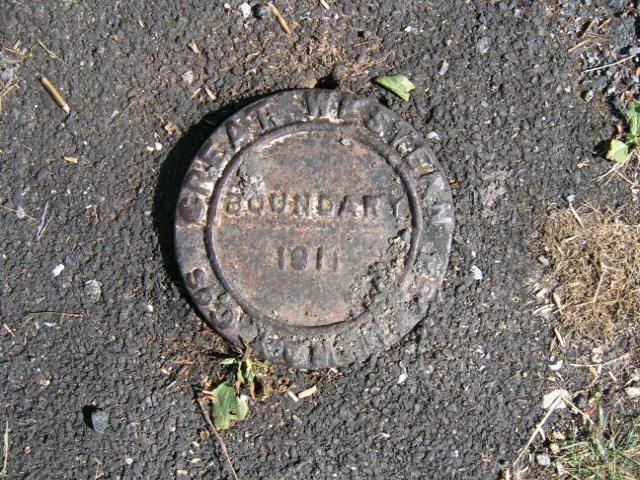
You must not move your neighbor’s boundary marker, set up by former generations, on the property that will be allotted to you in the land that the Lord your God is giving you to possess.
Deuteronomy 19:14 (NRSV)

I was on the road last week making numerous presentations for several client teams that we serve. Over the course of the week I was in and out of six different conference rooms in four different buildings across three geographical locations. There is a small principle that I have followed across the 23 years I’ve been working for many different clients: Always leave the room cleaner than you found it.

This can be difficult when I’m jetting from one room or location to make it to another on time. Nevertheless, before leaving a conference room I try to always straighten the chairs, put things away, pick up and throw away any trash left out, turn off the projector, retract the screen, and turn the lights out upon exit. It is a simple principle to respect the property of our client.

In today’s chapter, amidst all sorts of legal ramblings and rumination about intentional and unintentional homicide, there is stuck this one little command: Don’t move your neighbor’s boundary marker. In other words, respect that which belongs to your neighbor, and don’t take it for yourself.

One of my “life chapters” is Psalm 112 which states that good will come to the person who is generous and lends freely, and I try to be generous with all the stuff with which God has blessed me. When I lend something out I appreciate when it is returned in good shape and has been well cared for. I try to always do the same for the things other lend to me.

Today, I’m reminded of the simple principle of respecting other people’s stuff the way I appreciate my stuff respected.

Chapter-a-Day Numbers 32

estranged
Image by Norma Desmond via Flickr

They continued, “If you think we’ve done a good job so far, give us this country for our inheritance. Don’t make us go across the Jordan.” Numbers 32:5 (MSG)

Land is a funny thing. Along life’s journey I’ve watched families and friends become enemies over land disputes. I’ve watched people fall into deep bitterness, anger, and resentment over arguments about boundary lines and the inheritance of land. I’ve written a lot about how things have changed since the time of Moses, but there are some things that I observe never change.

I knew two upstanding men who, each week at church, claimed a pew on the opposite side of one another in the sanctuary. They’d been feuding over a boundary line between their farms for decades and refused to speak to one another or sit near one another in church. In another case, I watched as parents used land and their children’s inheritance as a tool of manipulation and power which ultimately divided the family. I’ve seen siblings back bite and slander their brothers and sisters throughout their parent’s funeral as they squabble over who is going to get what in the estate. I’ve known people so focused on maximizing and increasing their land wealth that they isolated themselves until their land became a relational island.

Today, I’m reminded that the things of God can’t be bought or sold, nor can they be hoarded, deeded, or put into our last will and testament. Land, like all earthly possessions will end up possessing us if we do not guard our hearts closely.

Enhanced by Zemanta