Tag Archives: Sacrifice

The Many, Not Me

The Many, Not Me (CaD 1 Cor 10) Wayfarer

…even as I try to please everyone in every way. For I am not seeking my own good but the good of many, so that they may be saved.
1 Corinthians 10:33 (NIV)

Wendy and I have many, many differences. Quite often those differences are at odds with one another. Our brains are wired differently and it’s taken years for us to understand how the other one thinks. Of course, there are both strengths and weaknesses in how each of us think and operate.

Eight years ago Wendy directed a show for our local community theatre called The Christmas Post. It was the third time she’d directed it. It’s a great musical and Wendy is a great director. People loved it, and people loved being in it.

A few years ago Wendy was inducted into our community theatre’s Walk of Fame, and I had the honor of providing her induction speech. I shared my first experience of being around Wendy, which happened to be on stage. I was performing in South Pacific and she was the prop master. There was a scene in which I’m served a sandwich and she asked me what kind of sandwich I like so that she could make sure that every dress rehearsal and every performance I had a fresh sandwich that I liked on stage which she took the time to prepare herself.

That might not sound like a big deal to you, but this is theatre. This is community theatre. I’m used to prop people not even giving a single thought about that sandwich until the night of the first dress rehearsal when I have to ask them, “Where’s my sandwich?” They then run across the street to the Dollar Store to see if they happen to have an expired loaf of bread we can have for free or buy the cheapest loaf of white bread on the rack. They will then put two slices of white bread on the plate.

“No one’s in the audience is going to see that it’s just bread,” they’ll tell me.

By the end of the run the bread will have mold on it. Gross, but, I’m told “It’s okay. No one can see that!”

Wendy would never do that. She was in charge of props and she was going to ensure that if I was going to have a sandwich on stage it’s going to be a real sandwich, a fresh sandwich, and a sandwich I actually like and might even consider eating during the scene. It was the most considerate a stage crew member had ever been to me in my countless stage experiences. It was a small thing, but I was grateful, and impressed.

I shared in her induction speech a side of Wendy that few people see or appreciate. As her husband I watch her spend her time, energy, and resources thinking about everyone. And it’s not just with theatre. She does it with family, work, and friends. It’s so innate to her that she doesn’t even know that she’s doing it. She wants everyone to have a good experience and every detail of everything she plans is painstakingly thought through and structured so as to be considerate of the whole.

In today’s chapter, Paul once again reminds the believers in Corinth of the importance of being considerate of others. As he writes about his own approach, he describes Wendy: “not seeking my own good but the good of many.”

I confess that I am not naturally like that. I have always had a very active inner world and I live a lot of the time preoccupied inside my own head. One of the things Wendy has pointed out to me on numerous occasions is that I had an entire conversation with her inside my head and forgot that I didn’t actually have it with her in real life!

Mea culpa.

I have learned from Wendy’s example of thinking about the “many, not me.” It’s one of the first things that endeared me to her, and it’s one of the things I will forever try to learn from her, and emulate. It is so absolutely spot on with what Jesus tried to teach His disciples when He washed their feet on the night before He was executed. It’s what He exemplified to us all the next day when He became the sacrificial lamb for our sins.

It’s about the many, not me.

If you know anyone who might be encouraged by today’s post, please share.

These chapter-a-day blog posts are also available via podcast on all major podcast platforms including Apple, Google, and Spotify! Simply go to your podcast platform and search for “Wayfarer Tom Vander Well.” If it’s not on your platform, please let me know!

Awkward Moment at the Pub Part II

Awkward Moment at the Pub Part II (CaD 1 Cor 8) Wayfarer

Therefore, if what I eat causes my brother or sister to fall into sin, I will never eat meat again, so that I will not cause them to fall.
1 Corinthians 8:13 (NIV)

In the 18 years I’ve been writing this chapter-a-day blog, I’ve always found it fascinating which posts resonate with people. There are days that what I write something that I think a lot of people are going to want to read and no one does. Then there are days that I just sort of write a quick post and throw it out there and suddenly it’s getting unexpectedly read and shared all over the place.

Last week I wrote about an awkward moment I had in the pub in which a Christian couple I know stopped to talk to me as I was sitting at the bar having a pint, but they refused to actually enter the pub. Instead, they stood and semi-shouted their conversation with me while making sure they didn’t cross the threshold. It was a popular post and even yesterday I had people stop me to ask if the story was true (it was).

Today’s chapter addresses an issue that was creating conflict with the Corinthian believers of Paul’s day. It is, however, not an issue that we deal with here in the 21st century. In the pagan religious culture of Greece and Rome, there were pagan temples everywhere, and people regularly sacrificed animals at these temples. The meat from the sacrifices found their way to the local market and were sold as food to anyone who would buy it. Among the followers of Jesus in Corinth there were those who felt that they could not, with a clear conscience, purchase and eat meat that had been sacrificed to a pagan god. Others among the Corinthian believers thought it was not a big deal. The two factions were at odds with one another and things were getting heated.

While meat being sacrificed to a pagan Roman god is not an issue today, I’d like to return to my friends who stood outside the doorway of the pub making sure their feet didn’t cross the threshold. It was obvious that my friends had been taught, and believed, that it was wrong to enter an establishment that serves alcohol. I’m equally sure that they are teetotalers. As silly as I might think they are being, it is certainly a matter of conscience for them and this is the point that Paul is making with the abstainers and eaters in Corinth.

I might disagree with my friends’ personal views on having a beer or entering a pub, but as a disciple of Jesus I am called to consider others ahead of myself.

“Do nothing out of selfish ambition or vain conceit.Rather, in humility value others above yourselves, not looking to your own interests but each of you to the interests of the others.
Philippians 2:3-4 (NIV)

Knowing their feelings about drinking, I’m going to be considerate of those feelings if I find myself having a meal with them or socializing with them. I’m not going to flaunt the freedom of conscience I have if it’s going to create tension with my friends. Rather, I’m going to humbly respect their feelings and choose not to drink around them. In fact, if the awkward conversation at the door were to ever happen again, I think the right thing for me to do is simply leave my pint at the bar for a minute and step out onto the sidewalk to have a chat.

In the quiet this morning, I’m reminded that Jesus calls me to be considerate and servant-hearted with others. Sometimes this means that I serve others by submitting to their customs or preferences even if I don’t share them.

If you know anyone who might be encouraged by today’s post, please share.

These chapter-a-day blog posts are also available via podcast on all major podcast platforms including Apple, Google, and Spotify! Simply go to your podcast platform and search for “Wayfarer Tom Vander Well.” If it’s not on your platform, please let me know!

The Lead

Not so with you. Instead, whoever wants to become great among you must be your servant, and whoever wants to be first must be slave of all.
Mark 10:43-44 (NIV)

I got a call the other day from a team member. I don’t know what the issue was, it went unstated, but my employee sheepishly asked me if I would help complete a project for them. The truth is, I have an incredibly packed schedule both for work and in our personal lives. It is the holidays, after all. I won’t get paid for doing this team members work for them. Nevertheless, without hesitation I agreed to do whatever my team member needed me to do.

My immediate agreement to assist was predicated on two things. First, as a disciple of Jesus I’m told that with leadership comes the responsibility to serve, not to be served. Jesus states that clearly to His disciples in today’s chapter.

Second, this was modeled for me by our company’s founder thirty years ago when I was a young husband and father with two toddlers at home and didn’t know what in the heck I was doing most days. My boss rarely left a phone conversation without asking if there was anything he could do for me. There were two very distinct moments in those early years that his question came while I was dying under a crush of work. Both times, I sheepishly responded with a request for him to help me finish my work. He didn’t hesitate to do what I asked him to do, and he never held that over my head or made me pay in any way. I never forgot that. I’m now the one in his position, and my gratitude compels me to follow his example and pay it forward.

One the things I’ve learned to look for in this chapter-a-day journey are patterns. In each of the last three chapters Jesus has told His disciples that He’s going to be arrested by His enemies, be handed over to the Romans, and then be beaten, flogged, and executed. In each instance, the very next things that happens is that the disciples respond by denouncing this or arguing over who among them is going to get a promotion. All three times, Jesus responds by reminding His followers that those who want to be great have to be the servant of all.

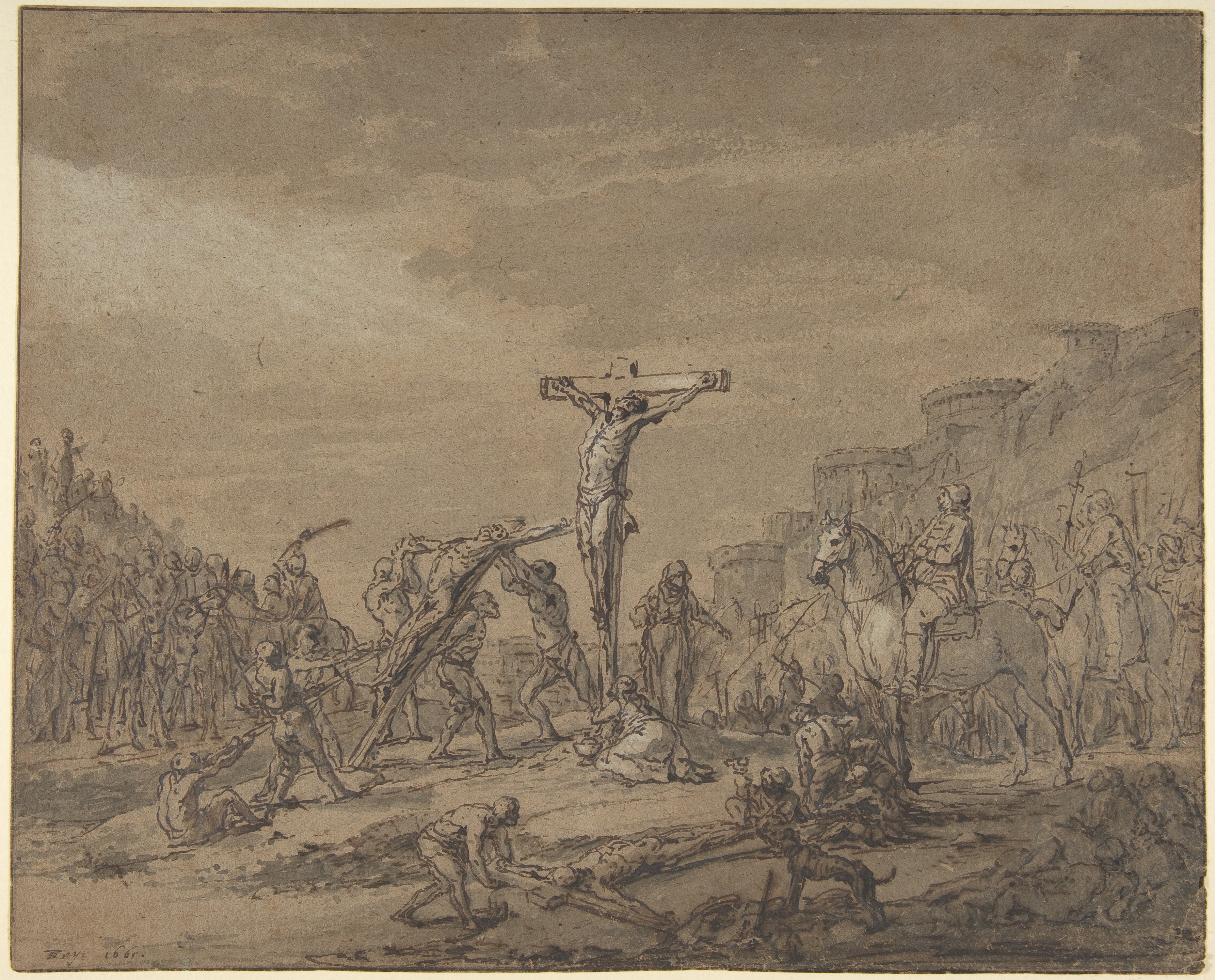
In a few chapters, Jesus will give me, and all of humanity, the greatest example of this principle. He will follow through with His trinity of prophetic predictions. The Son of God will sacrifice Himself for all, for me.

In the quiet this morning, I’m feeling the weight of Jesus example as well as a deep sense of gratitude. This compels in me a desire to follow His example, and pay it forward.

If you know anyone who might be encouraged by today’s post, please share.

These chapter-a-day blog posts are also available via podcast on all major podcast platforms including Apple, Google, and Spotify! Simply go to your podcast platform and search for “Wayfarer Tom Vander Well.” If it’s not on your platform, please let me know!

Living Lesson

Living Lesson (CaD Hos 3) Wayfarer

So I bought [Gomer] for fifteen shekels of silver and about a homer and a lethek of barley.
Hosea 3:2 (NIV)

I was coaching a client last week on their Enneagram Type. As I was getting to know the person’s story, I learned that they were the youngest in birth order among their siblings. My client talked about a reality that I also experienced as the youngest child. The youngest child gets to watch all the older siblings in relationship and conflict with parents. This becomes a living lesson in child-parent relationships that can inform the younger sibling what to do, or what not to do, to avoid parental conflict, wrath, and punishment.

In the opening chapters of Hosea, God tells Hosea to marry a promiscuous and adulterous woman. The purpose of this was so that Hosea’s own marriage, his daily reality, would become a living, metaphorical, prophetic message for everyone who knew him and his situation. Life as prophetic performance art.

Today’s chapter is very short. It’s a prophetic exclamation point punctuating Hosea’s obedience, and the very real circumstances he found himself living out because of it. His wife Gomer was, as anticipated, adulterous and fell into a relationship with another man. But there was more to it than sleeping with another man. While the exact circumstances are sketchy, the text makes it clear that Gomer found herself deep in some kind of debt. In order for Hosea to bring Gomer back and restore their marital relationship he was required to pay the debt. Once he has her back, Hosea proclaims that there will be a period of sexual abstinence between them.

There is no mystery in the metaphor. Hosea makes it clear that this period of marital exile is a living picture of the exile that the nation of Israel will experience when they are taken captive by the Assyrians. Just as this period of abstinence is intended to restore the spiritual marital commitment between Hosea and Gomer, it is amidst exile that Israel’s hearts will be changed and they will rediscover God as their first love.

In the quiet this morning, I find myself moved by the fact that Hosea not only took his wife Gomer back after her adulteries, but that he had to pay her debts in order to do so. It is a living picture of Jesus’ own sacrifice, to pay the debt of my willful and repeated choices to go my own way. In paying my debts, Jesus opened the possibility that relationship might be restored between me and God.

Growing up, I learned lessons from the living example of my siblings as I watched them in relationship with my parents. As a result, my own adolescent years were relatively peaceful. In the same way, Hosea’s broken marriage, the redeeming of his unfaithful wife, and his sacrificial love for her are intended to be a living example. The poor choices I make with my free will break relationship with God just like when a spouse freely chooses to commit adultery. But Jesus chose to pay my debt in order that the relationship might be eternally restored. The only thing left to decide is how I will respond to His sacrificial love.

As I enter another work week this morning, I find myself grateful for that love, and motivated to be as faithful to Jesus as Jesus proved Himself faithful for me.

May my life be a positive, living lesson for others to see and follow.

If you know anyone who might be encouraged by today’s post, please share.

Freedom and Sacrifice

“But even if he does not [save us from the fire], we want you to know, Your Majesty, that we will not serve your gods or worship the image of gold you have set up.”
Daniel 3:18 (NIV)

Tomorrow is Independence Day here in the States. Wendy and I will be celebrating from the lake. Fireworks are legal here in the state of Missouri and it is always a night of loud and bright celebration as people light fireworks off of the end of their docks and over the cove. It’s a lot of fun right up to the time you’re ready to sleep.

I’ve lived my entire life in a nation where freedoms of speech and religion are protected and where life and liberty are held sacred. Despite this fact, I’ve observed along my life journey that there are subtle forms of social, political, religious, and cultural pressure to conform. I find it fascinating that I came of age at a time when religious conservatives wanted to dictate their particular morals and standards on the nation. Now, I find that it’s the other side who appear to want to demand wholesale adherence to a host of social, cultural, and political beliefs they hold sacred.

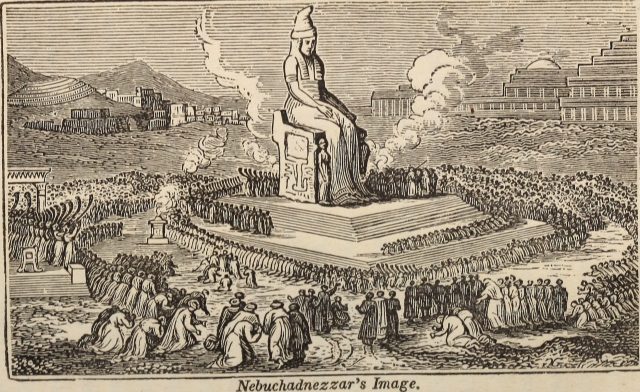
These examples notwithstanding, I have always found it a bit hard to fully understand or appreciate the predicament that Shadrach, Meshach, and Abednego find themselves in today’s chapter. They are exiles in a foreign land. They are minorities holding a very different set of beliefs than their captors. They have likely had to learn to live among society and culture that was very foreign to them while trying to maintain a  sense of their identity and faith.

King Nebuchadnezzar’s demand that all bow down to the statue he had erected was somewhat of a common practice in that ancient culture. It was a litmus test of obedience. Interestingly, as I read some commentary on today’s chapter, I found that scholars are split on whether the Hebrew trio would have been breaking the Law of Moses if they had chosen to bow down. This makes it an even more fascinating episode for me. If it wasn’t a black and white matter of religious law, but a gray area of their personal conscience before God, then their refusal to bow become even more meaningful.

In the quiet this morning I find myself thinking about my own personal beliefs. Where’s the line(s) that my conscience and my faith would not allow me to cross? I even find myself silently asking “For what am I willing to sacrifice my life?” On one hand, this feels like an overly dramatic and exaggerated question given the fact that I live in a land of freedom and I don’t anticipate ever having to face such a trial. On the other hand, I am fully aware that around the world people are facing this very real question on a daily basis. There continue to be dictators, tyrants, and regimes perfectly willing to execute those unwilling to bow to their political, cultural, social, and/or religious demands.

For what am I willing to sacrifice my life?

Today, I find myself whispering a prayer of gratitude for those men and women from every culture, ethnicity, religion, and political persuasion who sacrificed their lives across the centuries that I might walk my entire life journey on this earth without seriously having to answer that question.

If you know anyone who might be encouraged by today’s post, please share.

Paying the Price (or Not)

Paying the Price (or Not) [CaD 2 Sam 24] Wayfarer

But the king replied to Araunah, “No, I insist on paying you for it. I will not sacrifice to the Lord my God burnt offerings that cost me nothing.” 2 Samuel 24:24 (NIV)

It was almost cliche. It was the first weekend that my sister and I, as teenagers, had been left alone in the house. My parents headed to Le Mars to spend the weekend with Grandpa Vander Well. I was fourteen. My sister was sixteen. We were given the standard parental instructions not to have anyone over, to keep the house clean while they were gone, yada, yada, yada, blah, blah, blah.

We invited a few people over. I honestly remember it only being a few people. Nevertheless, word spread that there was a party at the Vander Wells, whose parents were out of town. Somehow, the kids kept coming that night. At one point I remember hiding in the laundry room because of the chaos outside. I’m not sure when I realized that things were out of control. Perhaps it was when members of the football team began daring each other to successfully jump from the roof of our house onto the roof of the detached garage.

This, of course, was the pre-cell phone era. News took longer to travel. The parents got home on Sunday evening. The house was picked up and spotless. We thought we’d gotten away with it. I’m not sure which neighbor ratted us out, but on Monday morning Jody and I were quickly tried in a kitchen tribunal and found guilty as charged. I could have made a defense that it was Jody’s idea and the crowd was mostly older kids who Jody knew. I could have pled the defense that our older siblings, Tim and Terry, never got in trouble for the parties that they had when the rest of us were gone. Forget it. I knew it was useless.

We were grounded for a week. I didn’t argue. I didn’t complain. I didn’t whine. I was guilty and I knew it. I gladly paid the price for my sin.

I was struck by David’s response to Arauna, who offered to give David everything he needed to atone for his mistake. David understood the spiritual principle that the price has to be paid for your mistake. David had blown it and he deserved to pay the price of the sacrifice. I had blown it and knew I had to do a week in the 3107 Madison penitentiary as the price for my infraction.

I think almost all of us know when we blow it, whether we wish to admit it or not. I think almost all of us understand that we deserve to pay the price for our mistakes. What is difficult is to accept that Jesus paid the price for me. That’s what the cross was all about. When I arrive at the metaphorical threshing floor seeking to make some sacrifice to atone for what I’ve done, Jesus says “I’ve already paid the price. I’ve already made the sacrifice, once and for all. The only thing you have to do is accept it.

For me, the spiritual economics of this cut against the grain of everything I’ve experienced and have been taught. I want to pay the price for my sin. I need to pay the price for my sin. I can’t believe that my guilty conscience can be absolved in any other way than for me to personally pay the price and feel the pain. So, I self-flagellate. I become Robert Di Nero, the repentant slave trader in The Mission (watch the movie clip below), dragging a heavy sack of armor up a rocky cliff as penance to confront the people he’d been enslaving because I simply cannot believe that forgiveness can be found by any other means than personally paying a heavy price.

How ironic that, for some, the obstacle to believing in Jesus is simply accepting and allowing Him to have paid the price for us.

Today, I’m thinking about the things I do out of guilt for what I’ve done, rather than gratitude for what Jesus did for me when He paid the price and made the sacrifice I deserved to make. And, I’m uttering a prayer of thanksgiving.

  A Note to Readers
I’m taking a blogging sabbatical and will be editing and re-publishing my chapter-a-day thoughts on David’s continued story in 2 Samuel while I’m taking a little time off to focus on a few other priorities. Thanks for reading.
Today’s post was originally published in May 2014
.

Note: The featured image on today’s post was created with Wonder A.I.

If you know anyone who might be encouraged by today’s post, please share.

Vertical and Horizontal

Vertical and Horizontal (CaD Heb 13) Wayfarer

Through Jesus, therefore, let us continually offer to God a sacrifice of praise—the fruit of lips that openly profess his name. And do not forget to do good and to share with others, for with such sacrifices God is pleased.
Hebrews 13:15-16 (NIV)

I began yesterday with coffee and an English muffin at a friend’s office. We chatted about what is going on in each other’s lives. We shared about the challenges we’re facing with family, work, and our bodies that are feeling the natural strains of age. We prayed together. It was a good start to the day.

It was St. Patrick’s Day, so Wendy and I knocked off of work a little early and met friends in the late afternoon for a pint and some Irish music. As the after-work crowds began to swell we were on our way to pick up pizza and retire to their house where we continued sharing life and conversation. Their college-age child was home on Spring Break and we got the whole 411 on life, studies, and relationships at school.

It was a fun day. It was late by the time we returned home.

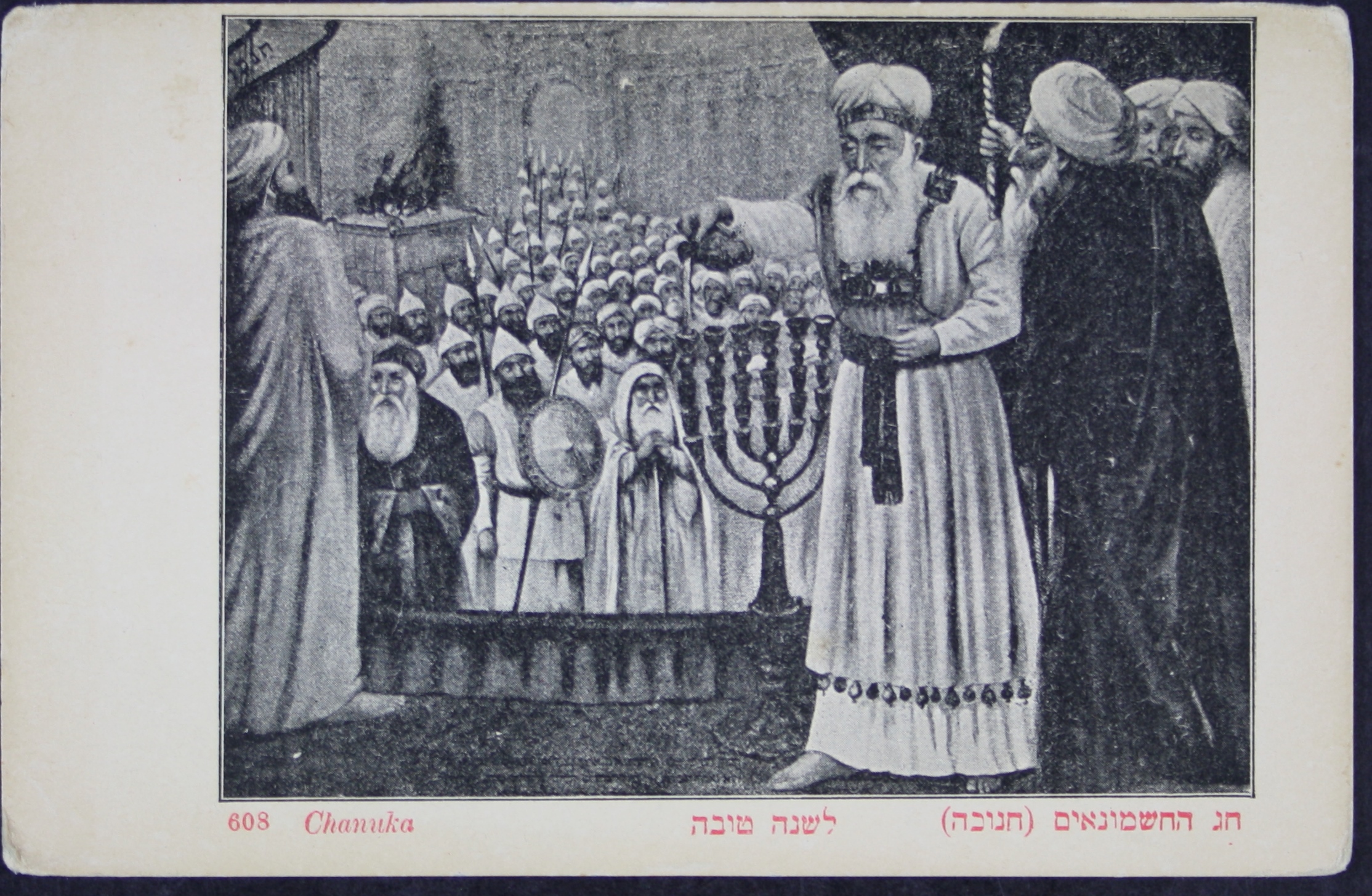
In today’s final chapter of Hebrews, the author wraps up his letter with more exhortations to the Hebrew followers of Jesus for whom the letter was addressed. Throughout these instructions are more than subtle allusions to the old sacrificial system of Moses that the author has argued was fulfilled by Jesus and is no longer valid or necessary.

In that old system, there were all sorts of ritual religious sacrifices that an individual was expected to make in order to stay in good standing with God. Of course, like all religious rituals, it is possible for a person to go through the motions without there being a heart or life change, and the author has argued that Jesus has provided the once-for-all sacrifice through His death and resurrection.

“So, are there no more sacrifices?” the author hears his readers asking.

Yes, the author answers. The sacrifice of self just as Jesus taught that His followers must take up their own cross in following Him. Jesus’ word picture tells me that I’m supposed to die to myself, to sacrifice myself for God and others. The author provides a picture of this in continuous sacrifices that are both vertical (me to God) and horizontal (me to others). The vertical sacrifice is that I consciously, willfully stay connected to God through offering my praise and prayer (which is simply conversation). The horizontal sacrifice is my goodness and generosity towards others. Not just physical gifts and needs, but also the generosity and goodness of life and spirit through relationships and sharing the life journey together.

Which made me think of my day yesterday. Along my life journey, I’ve experienced that good relationships, the kind that is mutually and spiritually life-giving, require the ongoing generosity of time, conscious thought, intention, energy, vulnerability, and grace. Over time and in every case, every one of those ingredients becomes sacrificial for me as my friends may need more from me at certain times than I can comfortably provide. But the same is true on the other side of the equation. I need them at times and in ways that require their sacrificial generosity.

With Jesus, I can never get around the reality that He emptied Himself, left heaven, came to Earth, and endured the suffering of a horrific death. He sacrificed everything for me. I can ignore that fact. I might allow other thoughts and distractions to drive it from my mind, but it’s always there. What is asked of me in return? To live in a relationship that is essentially no different than my horizontal ones: time, conscious thought, intention, energy, vulnerability, and generosity that comes out in worship, prayer, life, obedience, trust, hope, and perseverance.

I’m grateful this morning for life-giving relationships, both horizontal and vertical.

If you know anyone who might be encouraged by today’s post, please share.

The Sober Truth

The Sober Truth (CaD Heb 9) Wayfarer

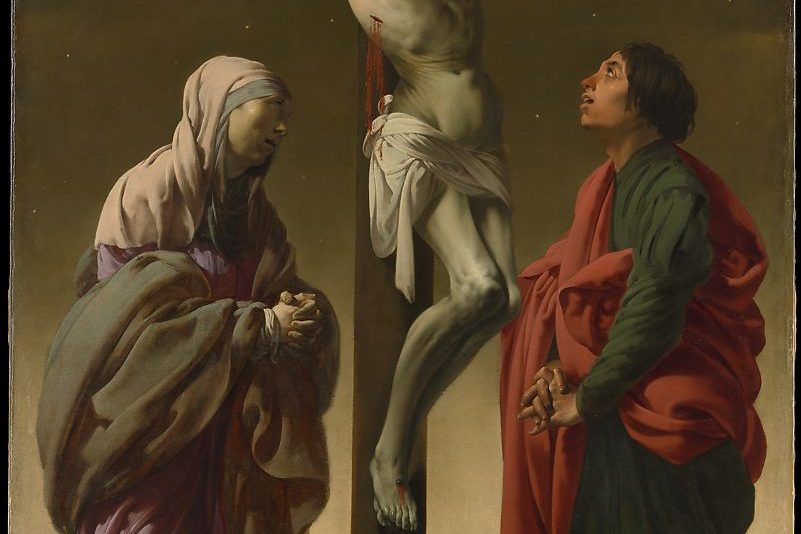
Just as people are destined to die once, and after that to face judgment, so Christ was sacrificed once to take away the sins of many…
Hebrews 9:27-28a (NIV)

This past week I began listening to an audiobook recommended by a friend, entitled Imagine Heaven by John Burke. The author was a self-avowed skeptic who spent some 30 years gathering and studying stories from all over the world of those who have had a Near Death Experience (NDE); Individuals who were clinically dead, briefly experienced what comes next, and then were sent back.

Here’s the truth: I’m dying. I’m not sure I could begin my week with a more sobering observation, but it is true. According to the scientists who study these things, I reached the pinnacle of my physical development between 25 (muscle strength) and 30 (bone mass). From that point forward, despite the fact that I am probably more fit for my age than I was back then, my body is in slow but steady decline. Fortunately, the mind, psyche, and spirit can still grow and develop through the life journey despite my brain processing power peaking at age 18. Nevertheless, I cannot escape the fact that my body is making a persistent and irreversible descent towards death.

In today’s chapter, the author of Hebrews continues to compare the covenant and sacrificial system that God prescribed for Moses and the Hebrew people to the new covenant established by Jesus through His sacrificial death. At the beginning of the Great Story, Adam and Eve’s sin ushered in the reality of death:

“By the sweat of your brow
    you will eat your food
until you return to the ground,
    since from it you were taken;
for dust you are
    and to dust you will return.”

Genesis 3:19 (NIV)

From the beginning, humanity has, by and large, fought death, feared death, and sought to escape death. Along my life journey, I’ve observed that most people living a life of relative wealth, freedom, and affluence tend to distract themselves from thinking about it at all. Some are so enamored with the distractions that their indulgence leads to the very thing they were trying to distract themselves from thinking about. Then I’ve observed a few are so dissatisfied, wearied, or wounded that they prefer death to empty distractions.

In the quiet this morning, I find myself thinking about death as a follower of Jesus. Today’s chapter lays out quite plainly that Jesus suffered His horrific death in fulfillment of a once-and-for-all sacrifice that not only made Moses’ old sacrificial system obsolete, it completely transforms my perception of death. Jesus taught that death is the gateway to Life. Death is no longer something I need to fight but something to welcome. It is no longer something to fear, but to celebrate. It is no longer something to escape, but to embrace. The many testimonies of those who experience NDEs concur. One of the common themes of those who were given a taste of heaven is the fact that they didn’t want to come back.

If I truly believe what I say I believe, and death is not something I need to fear or ignore via distraction, how does that inform what I do with my life today? For me, I find that it frees me to live more intentionally with the eternal in mind. My physical descent towards earthly death is ultimately leading toward an ascent to eternal life. My purpose each day on this earthly path of descent is to love God with everything I’ve got while loving others as I love myself as Jesus laid out as the way of trust, lament, humility, justice, compassion, right motive, peacemaking, surrender, and radical love.

If you know anyone who might be encouraged by today’s post, please share.

The Gray

The Gray (CaD Heb 7) Wayfarer

The former regulation [the Law of Moses] is set aside because it was weak and useless (for the law made nothing perfect), and a better hope is introduced, by which we draw near to God.
Hebrews 7:18-19 (NIV)

I have a confession to make this morning, As the youngest of four children, seven years younger than my eldest twin brothers, I took full advantage of my birth position. Some of this was good. For example, I remember observing what patterns of behavior and/or argument actually escalated our parents’ anger and frustration. Not only was the conflict unpleasant but it never worked out well for my sibling. I correspondingly avoided making those same mistakes and had a relatively pleasant childhood and adolescence in the department of parental relations.

It wasn’t all good, however. Being the youngest also afforded me the opportunity of learning how and when to take advantage of skirting rules and, by and large, how to get away with it. The age gap between me and my twin brothers was key to this. When I was twelve, my brother Tim was 19. At little sibs weekend at the University, I not only got to enjoy attending a college keg party and drinking beer but also made a lasting memory with my brother. Tim had me stand around the keg with him. When cute girls came to fill their red solo cups, Tim leveraged the novelty of my presence to find out who they were as he introduced me as his genius little brother who was a Freshman at the university that year.

Long story short, I learned along the way that rules were meant to be skirted, not broken. I became quite adept at getting away with all sorts of things as I stealthily discovered a parallel dimension of gray that existed (at least in my perception) around the black-and-white rules.

In today’s chapter, the author of the letter to the early Hebrew followers of Jesus is explaining how the Jewish priesthood and Law of Moses have been completed and transformed by Jesus. The Law of Moses took sinful humans born to Aaron and Levi and made them part of a human system of rules, rituals, and sacrifices for the forgiveness of sin. The human priest first had to atone for his own sin so he could then atone for the sins of the people. Jesus was the sinless, spotless once-and-for-all sacrifice, risen from the dead, and existing eternally at the right hand of the Father, a forever high priest. He is not a priest of the Law of Moses, the author declares, but of the mysterious eternal order of Melchizedek that is older and greater than the Law of Moses.

The author boldly states that the Law of Moses was “weak” and “useless” arguing that rules can never make a person perfect. Ah, there’s the rub. Religious rule-keeping never deals with the self-centered motives and uncontrollable appetites at the core of the human heart. In my case, it was my personal motives and appetites that fueled my finding of gray areas in which I justified skirting rules for my own personal pleasures and advantages.

In the quiet this morning, I find myself thinking back to some of the things I used to get away with skirting rules, from silly to the somewhat sinister. I may have gotten away with a lot of things, but my heart knew that it wasn’t right. I knew, even at a young age, that I needed more than just rules. I needed to deal with the core issues of a self-centered heart and appetites run amok. I discovered what the author of Hebrews is revealing, Jesus who became the ultimate sacrifice for my core heart issues, an eternal, living high-priest who understands my weaknesses and receives me with mercy and grace.

It still doesn’t make me perfect, but it does make me forgiven. I am no longer bound to rules that only prove that good, I am not. I am freed to live out the love, and good, that I ought.

If you know anyone who might be encouraged by today’s post, please share.

Faith Challenge

Faith Challenge (CaD Gen 22) Wayfarer

Then God said, “Take your son, your only son, whom you love—Isaac—and go to the region of Moriah. Sacrifice him there as a burnt offering on a mountain I will show you.”
Genesis 22:2 (NIV)

Today’s chapter is one of the most profound and mysterious events in the Great Story. Scholars explain that there is nothing like it in other ancient cultures or religions with regard to their stories, texts, or religious rituals. Even within the Great Story it is unique. God tells Abraham to make another journey of faith “to a mountain I will show you” where he will sacrifice his own beloved son, Isaac.

WHAT?!

I know. It’s a head scratcher.

As I meditated on the story this morning, I had three observations.

First, this is the climax of Abraham’s story. From this point on, Abraham is making preparations for he and Sarah’s burials, getting Isaac marries, and settling his inheritance. This climactic event bookends the beginning of Abraham’s story.

When we first meet Abraham God tells him to pick-up leave his family, tribe, and home and follow God to a “land I will show you.” In a sense, God told Abraham “leave that which you know and love (e.g. your home and tribe), have faith to follow me.” The faith journey results in the promised son, Isaac. Isaac is the object of Abraham’s love. Now God calls Abraham to leave once more “to a mountain I will show you,” to bring with him what he loves (e.g. his son) and sacrifice him to God. It is an ultimate test of faith.

I couldn’t help but think about Peter and John on the shores of Galilee in the final chapter of John’s biography of Jesus. There is a parallel “bookending” of their faith journeys. It was on this shore that Jesus first said, “Follow me.” Now, the resurrected Christ once again calls them to follow, this time informing Peter that it will ultimately lead to suffering and death.

A faith journey doesn’t end in this earthbound lifetime. One doesn’t retire, nor do things get easier before the journey’s end. In Abraham’s case, in Peter’s case, you find yourself circling back to the beginning and the challenges of faith only get harder.

Second, Abraham’s statement to Isaac (“God himself will provide the lamb for the burnt offering, my son.”) proves to be both a statement of faith and a prophetic foreshadowing of the climactic end to this event. It springs from everything Abraham has experienced in his relationship with God through the years. God has made the covenant with Abraham, God has led Abraham to the land as promised. God has given Abraham a son as promised. As crazy and extreme as God’s request sounds, Abraham draws on all that God has done to make this ultimate faith journey.

We don’t like to talk about it much in our culture, but Jesus regularly told His followers that the faith journey required giving everything. Like Abraham, it might mean leaving family behind. Like Abraham, it requires faith to provide an ultimate sacrifice, taking up one’s own cross and following to the crucifixion of self.

Third, the foreshadowing of Jesus’ story in the events of today’s chapter can’t be ignored. In asking Abraham to sacrifice the son he loves, he unwittingly becomes a living metaphor of God himself, who will one day give His beloved Son as a sacrifice for the sins of the world. God providing Abraham a ram to sacrifice in place of Isaac introduces the notion of substitutionary sacrifice. At the time of Abraham, this was a wholly unique concept.

“God will provide the lamb,” Abraham presciently states to Isaac.

Another bookend. We are in the beginning chapters of the Great Story. Themes are being introduced, foundations laid, as well as foreshadows of what’s to come. In the final chapters of the Great Story, John is given a Revelation of the throne room of heaven.

Those gathered worship singing. Then I looked and heard the voice of many angels, numbering thousands upon thousands, and ten thousand times ten thousand. They encircled the throne and the living creatures and the elders. In a loud voice they were saying:

“Worthy is the Lamb, who was slain,
    to receive power and wealth and wisdom and strength
    and honor and glory and praise!”

Then I heard every creature in heaven and on earth and under the earth and on the sea, and all that is in them, saying:

“To him who sits on the throne and to the Lamb
    be praise and honor and glory and power,
for ever and ever!”

The story of Abraham is the seminal event in what will ultimately be God’s act of redemption. Abraham blazes the trail of faith. Abraham foreshadows what God is going to do. Abraham’s faith echoes through history past, it resonates through the crucified Christ, and it is transmitted into the prophesied future.

God will provide the Lamb.

If you know anyone who might be encouraged by today’s post, please share.