Tag Archives: Communication

The Many, Not Me

The Many, Not Me (CaD 1 Cor 10) Wayfarer

…even as I try to please everyone in every way. For I am not seeking my own good but the good of many, so that they may be saved.
1 Corinthians 10:33 (NIV)

Wendy and I have many, many differences. Quite often those differences are at odds with one another. Our brains are wired differently and it’s taken years for us to understand how the other one thinks. Of course, there are both strengths and weaknesses in how each of us think and operate.

Eight years ago Wendy directed a show for our local community theatre called The Christmas Post. It was the third time she’d directed it. It’s a great musical and Wendy is a great director. People loved it, and people loved being in it.

A few years ago Wendy was inducted into our community theatre’s Walk of Fame, and I had the honor of providing her induction speech. I shared my first experience of being around Wendy, which happened to be on stage. I was performing in South Pacific and she was the prop master. There was a scene in which I’m served a sandwich and she asked me what kind of sandwich I like so that she could make sure that every dress rehearsal and every performance I had a fresh sandwich that I liked on stage which she took the time to prepare herself.

That might not sound like a big deal to you, but this is theatre. This is community theatre. I’m used to prop people not even giving a single thought about that sandwich until the night of the first dress rehearsal when I have to ask them, “Where’s my sandwich?” They then run across the street to the Dollar Store to see if they happen to have an expired loaf of bread we can have for free or buy the cheapest loaf of white bread on the rack. They will then put two slices of white bread on the plate.

“No one’s in the audience is going to see that it’s just bread,” they’ll tell me.

By the end of the run the bread will have mold on it. Gross, but, I’m told “It’s okay. No one can see that!”

Wendy would never do that. She was in charge of props and she was going to ensure that if I was going to have a sandwich on stage it’s going to be a real sandwich, a fresh sandwich, and a sandwich I actually like and might even consider eating during the scene. It was the most considerate a stage crew member had ever been to me in my countless stage experiences. It was a small thing, but I was grateful, and impressed.

I shared in her induction speech a side of Wendy that few people see or appreciate. As her husband I watch her spend her time, energy, and resources thinking about everyone. And it’s not just with theatre. She does it with family, work, and friends. It’s so innate to her that she doesn’t even know that she’s doing it. She wants everyone to have a good experience and every detail of everything she plans is painstakingly thought through and structured so as to be considerate of the whole.

In today’s chapter, Paul once again reminds the believers in Corinth of the importance of being considerate of others. As he writes about his own approach, he describes Wendy: “not seeking my own good but the good of many.”

I confess that I am not naturally like that. I have always had a very active inner world and I live a lot of the time preoccupied inside my own head. One of the things Wendy has pointed out to me on numerous occasions is that I had an entire conversation with her inside my head and forgot that I didn’t actually have it with her in real life!

Mea culpa.

I have learned from Wendy’s example of thinking about the “many, not me.” It’s one of the first things that endeared me to her, and it’s one of the things I will forever try to learn from her, and emulate. It is so absolutely spot on with what Jesus tried to teach His disciples when He washed their feet on the night before He was executed. It’s what He exemplified to us all the next day when He became the sacrificial lamb for our sins.

It’s about the many, not me.

If you know anyone who might be encouraged by today’s post, please share.

These chapter-a-day blog posts are also available via podcast on all major podcast platforms including Apple, Google, and Spotify! Simply go to your podcast platform and search for “Wayfarer Tom Vander Well.” If it’s not on your platform, please let me know!

Wordplay in The Word

Wordplay in The Word (CaD Mi 1) Wayfarer

One of the things that is lost on modern readers is the wordplay that Micah used when he wrote his messages in Hebrew. A chapter-a-day podcast from Micah 1. The text version may be found and shared at tomvanderwell.com.

For Samaria’s plague is incurable;
    it has spread to Judah.
It has reached the very gate of my people,
    even to Jerusalem itself.
Micah 1:9 (NIV)

Back in the day, my hometown of Des Moines had two daily newspapers. The Des Moines Register was delivered in the morning and The Des Moines Tribune was delivered in the afternoon. Ours was a Tribune household. Families were usually one or the other. On Sunday, both Register and Tribune subscribers got the “Sunday paper” which was huge. It was filled with entire sections you didn’t get on weekdays, the comics had their own section printed in color, and there were a million flier ads for all the major department stores.

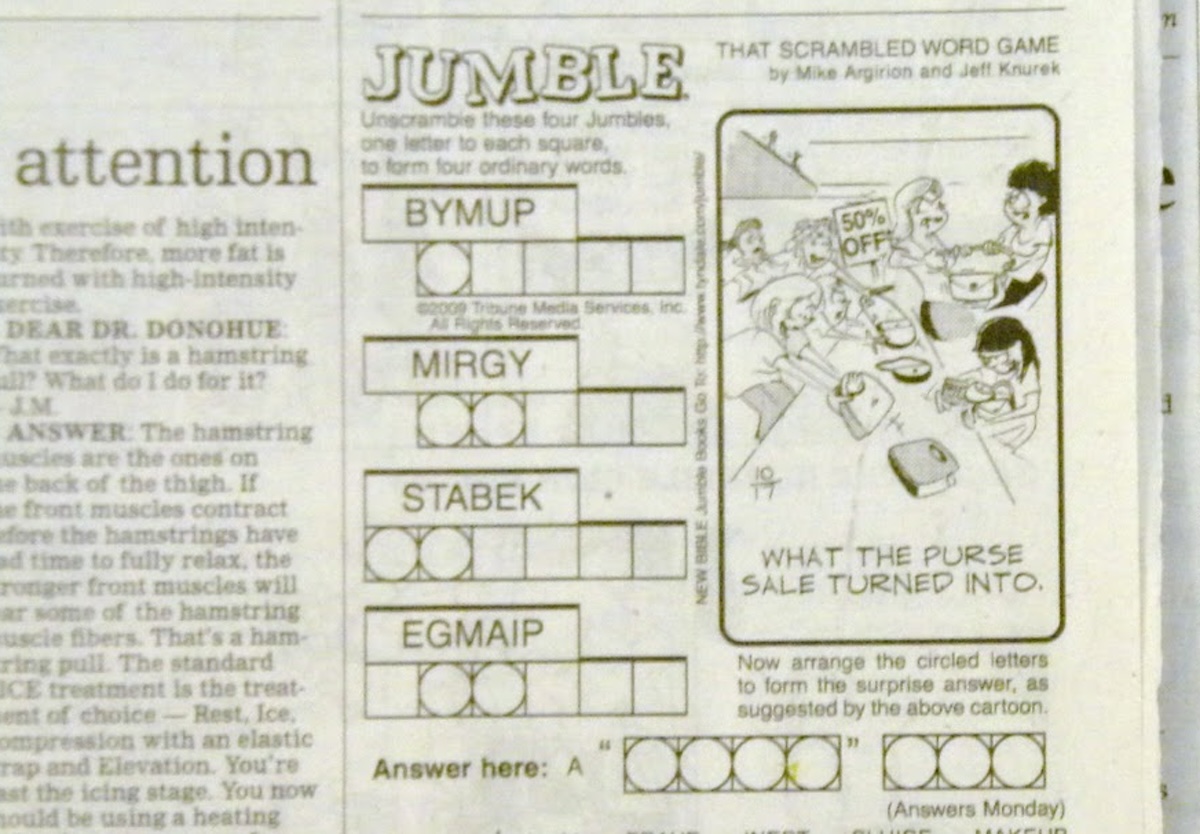
The “Sunday paper” was a weekly big deal. One of the reasons was that the Sunday Register had “Jumble” word puzzles that weren’t printed in the daily Tribune. My mom loved to spend her Sunday afternoons solving the puzzle of jumbled-up letters that would make words which would then provide the clues to a final word that was the punchline to an accompanying cartoon. I grew up loving to help, and I think it planted a seed in me. I’ve always loved word puzzles, and as I grew up I gained a fondness for learning new words, the history of words, and the use of creative wordplay in writing. It’s one of the reasons I’ve always loved Shakespeare. He was a master at playing with words in creative ways.

Today, this chapter-a-day journey begins a quick trek through the writing of the ancient prophet Micah. Micah was from a small town in Judah when ancient Israel had been divided into the two kingdoms of Israel (in the north) and Judah (in the south). It was a time of political, religious, and moral corruption, and Micah was speaking out to the people of both nations to warn them of God’s impending judgment. Micah correctly prophesied that both Israel and Judah would suffer destruction at the hands of the Assyrian Empire.

One of the things that is lost on modern readers is the wordplay that Micah used when he wrote his messages in Hebrew. Much like Shakespeare, Micah uses clever wordplay that weaves irony and sarcasm that would have made his messages memorable in their day. In today’s chapter, Micah uses the names of actual towns and cities where his audience lived and links them to sound-alike words in his message. As I mulled this over in the quiet this morning, I created a little word game for myself as I thought about some of the towns around where we live and how I might use them Micah-like:

You who live in Sully will be sullied by the rubble of your destroyed homes.

Those in Leighton will search for someone to lighten the burden of God’s judgment without success.

There will be no revenge for the people of Montezuma after the instrument of God’s wrath is finished.

The residents of Galesburg will reap the whirlwind of the Lord’s anger.

In the quiet this morning, the old Mary Poppins song came to mind with the message “A spoonful of sugar helps the medicine go down.” The ancient prophet’s message was harsh spiritual medicine for his audience. I have to believe that the wordplay in his writing was intended to make the message both memorable and easier to swallow. That’s not a bad reminder for me, or anyone who finds themselves having to communicate a bitter pill.

If you know anyone who might be encouraged by today’s post, please share.

A Pattern of P.R.A.Y.E.R.

A Pattern of P.R.A.Y.E.R. (CaD Dan 9) Wayfarer

So I turned to the Lord God and pleaded with him in prayer and petition, in fasting, and in sackcloth and ashes.
Daniel 9:3 (NIV)

Like most couples I know, Wendy and I are very different in temperament. Along this life journey, I’ve observed that there is a lot of truth to the adage that opposites attract. Most couples I’ve ever known have been very different. In general, I think this makes for good partnerships between people who need the strengths of their husband or wife to help make up for weaknesses in their own temperaments. Like Rocky explained about his love for Adrian: “I got gaps. She got gaps. Together, we fill gaps, y’know?”

The challenge comes when our differences become buried seeds of anger and bitterness rather than the grateful acknowledgment that, despite being annoying, our differences can help one another understand the goodness of other ways of thinking, communicating, and being.

Just last night, there arose a flash of conflict between Wendy and me rooted in the stark difference in the way we think and operate. Wendy is an external processor who likes to talk through even the smallest of daily decisions. I am an internal processor who takes a casual remark, has an internal conversation about it in my head, and then outputs an assumption of what was meant. There are positives and negatives to both external and internal processing. If we can graciously overcome our occasionally acute annoyances with our differences, we can gratefully learn from one another.

In my spiritual journey, I’ve always operated from the foundational understanding that prayer is a conversation of spirit between me and God. Conversations between me and Wendy can look very different at different moments. We often have quick, utility conversations about what needs to be done and who is doing what on the task list. We regularly have casual conversations about the news of the day or something one of us heard on a podcast. We occasionally have rather intense “come to Jesus” conversations when an intimate issue needs to be confronted between us. When time and space allow, we have deeply personal conversations about where each of us is spiritually, emotionally, physically, and/or relationally. Each conversation can look very different.

In the same way, I’ve always found that conversations with God take different forms at different moments. I’ve written about “popcorn prayers” that get uttered at the moment like popping my head into Wendy’s office to ask what she was thinking for dinner. I also write letters to God because writing gives me time to think and process and I find that there’s something good for me in physically getting my thoughts out on a page.

Daniel’s prayer in today’s chapter jumped out at me as I read it today, not for the words, but for the pattern:

  • He began by preparing himself with humility that included fasting and ritual before he even launched into his conversation (vs. 3).
  • He began, just like the Chain Reaction of Praise, with words of praise and worship acknowledging God’s greatness and love (vs. 4).
  • He then launches into an honest confession of the many ways he and his people have fallen short and an acknowledgment of the consequences of those sins. (vss. 5-14).
  • As he confesses, Daniel continues to recognize God’s righteousness, mercy, forgiveness, and deliverance (vs. 7, 9, 15).
  • It is only after all of this that Daniel utters his actual petition before God (vss. 16-19).

As I meditated on this in the quiet this morning, I thought Daniel’s prayer to be a great template I can follow when I am bringing emotional and heartfelt requests to God. I could even use this acrostic:

Prepare with humility
Raise up words of praise and worship
Acknowledge God’s righteousness, love, and mercy
Yield my failures and faults in confession
Esteem God’s goodness as you confess and…
Request your needs and desires

Marriage has taught me that improving communication is always an opportunity for improvement no matter how long we’ve been in the relationship. The same is true of my relationship with God. I can always improve my communication, and sometimes that happens by learning a new pattern of prayer.

If you know anyone who might be encouraged by today’s post, please share.

The Medium Matters

Now Joab son of Zeruiah perceived that the king’s mind was on Absalom. Joab sent to Tekoa and brought from there a wise woman. He said to her, “Pretend to be a mourner; put on mourning garments, do not anoint yourself with oil, but behave like a woman who has been mourning many days for the dead. Go to the king and speak to him as follows.” And Joab put the words into her mouth. 2 Samuel 14:1-3 (NSRV)

A few weeks ago, while Wendy and I were spending a few days at the lake, we watched the movie 12 Years a Slave. The Academy Award-winning movie is based on a book written during the abolition movement in America and is the autobiography of a free African American living in the north who was kidnapped, smuggled to the south, and sold into slavery. His story was so powerful, and so powerfully told, that Wendy and I sat speechless on the couch as the credits rolled, tears streaking down our cheeks. Our hearts had been rent. It was, for me, a history lesson, a parable about the human condition, and a call to continue opening my eyes, my mouth, my pen, and my wallet to address similar injustices that still exist in this world today.

One of the reasons I love the arts, and the dramatic arts, in particular, is their ability to communicate spiritual truths and move people to action in a way that no other mode of communication does. I remember during one of the final read-throughs of my script Ham Buns and Potato Salad before we were to go into production one of the female readers, emotionally shaken by the story, exclaimed that we had better have counselors available at the back of the theatre because of the emotions and painful memories it might stir within audience members. I was taken aback by her strong emotional response after simply being part of a table reading of the script. I took it as a compliment that the script and the story stirred her that deeply. As a writer, it gratified me to know that the story had effectively reached at least one person at that level.

Today’s chapter is one that I studied in depth while pursuing my theatre degree in college. It is one of only a few stories of acting told throughout the entirety of the Great Story. Joab needed to get through to King David. Perhaps he’d seen how Nathan’s story of the rich man stealing the poor man’s only lamb had gotten through to the king. David couldn’t see his blind spot even if Joab tried to reveal it to him plainly, but when Joab cloaked it in a metaphorical story, David could finally see his own situation clearly. Joab decides to hire an actor, costuming her in mourning clothes, using a little make-up to make it look like she’d been grieving, and giving her a script to follow. She played the part brilliantly. What impresses me is that she took the part and nailed the role knowing that the King, once it was revealed that he’d been conned, could easily have ordered her death for “deceiving” him with her charade.

I believe that we don’t give enough thought to how we communicate. Not only on a corporate level but also on an interpersonal one. Most every human conflict can be traced back to a breakdown in communication. I believe equally that the hope of redemption and restoration hinges on our ability to communicate it, not only clearly, but in multiple channels and mediums. It was during the pandemic that I start recording these chapter-a-day posts and publishing them as a podcast. I’ve had multiple people confess to me that they never read my posts, but they faithfully listen to the podcast. There’s a lesson in that. Sometimes I have to change the medium of my communication in order for the person on the other end to receive the message.

 A Note to Readers
I’m taking a blogging sabbatical and will be re-publishing my chapter-a-day thoughts on David’s continued story in 2 Samuel while I’m take a little time off in order to focus on a few other priorities. Thanks for reading.
Today’s post was originally published in May 2014
.

Today’s featured image was created with Wonder A.I.

If you know anyone who might be encouraged by today’s post, please share.

Evolution of Conversation

Evolution of Conversation (CaD Jos 10) Wayfarer

There has never been a day like it before or since, a day when the Lord listened to a human being. Surely the Lord was fighting for Israel!
Joshua 10:14 (NIV)

Communication between parent and child changes so much over time. Wendy and I are loving watching our kids parent a four-year-old, and hearing the silly things that our grandson comes up with. The last I heard, Milo’s recommended name for the little sister in mommy’s tummy was “Harry Houdini.” Hey, the kid has a point. She does still have yet to escape the womb.

Conversations with my daughters changed and evolved over time. From the simple discussions with a toddler to the incessant “why” phase and then the years of instruction to navigating the life changes of adolescence. Then come the years of parental exile when it becomes obvious I’m not high on the conversational priority list. As they leave the nest, there begins a phase of requesting help and answering questions about the functional “how-tos” of life on your own which leads also to more adult conversation in which more complex topics are addressed, including the hard conversations required to address unresolved issues from the past.

I have always talked about the fact that humanity’s relationship with God across time reflects the development of the relationship between a parent and child from birth to adulthood.

In today’s chapter, we’re still in the toddler stages of humanity’s relationship with God. Joshua and the army continue their conquest of the land of Canaan. First, their new allies, the Gibeonites, are attacked by a coalition of neighboring forces and cry out to Joshua for help. After defeating this coalition of forces, the army continues a campaign to subdue the region.

In one fascinating aside, Joshua cries out to God to stop the sun and moon. Interpretations of this event vary. Literalists believe that God miraculously stopped time. Others argue that the sun and moon in the sky together were a bad omen for their opponents and Joshua wanted to extend the fear. What struck me, however, was the author’s observation that this was a first, that God would listen to a human being.

This being a momentous event, that of God listening to a human being, struck me because, in my post-Jesus reality, I am encouraged to “pray without ceasing” (1 Thess 5:17). Jesus encouraged His followers to literally “ask, seek, and knock” in prayer, explaining that a good father wouldn’t give a stone to his child if asked for bread (Matt. 5:7-11). Prayer is such a continuous part of my inner dialogue and my daily life, that it is hard for me to fathom a reality in which I didn’t think God would listen, and respond.

Humanity’s relationship with God has changed drastically between the days of Joshua and today. The very act of prayer has developed and evolved over time. I also can’t forget that with a Creator God, everything that He makes is layered with meaning. This development and evolution of communication also took place within my spiritual life cycle. From the moment I was “born again” in spirit to the place I am on my spiritual journey 40 years later, my relationship and conversations with God have grown, developed, and matured.

God’s relationship with humanity. My relationship with my parents. My children’s relationship with me. My relationship with God. My relationship with others. There is a natural growth and development of communication that takes place over time. In each relationship, I have a responsibility for the communication on my end. If I fail in that responsibility, the relationship suffers and may even die.

Thus saith the Mandalorian: “This is the way.”

If you know anyone who might be encouraged by today’s post, please share.

Words of Life or Death

The tongue has the power of life and death…
Proverbs 18:21 (NIV)

I once knew a person who was educated, bright, and quite capable. For a short period of time, we were companions on a stretch of the journey. On occasion, we experienced the normal stresses of life, and I observed that this person could get inordinately out-of-sorts. I could watch anxiety and insecurity take over their entire person. In acute moments, they would blurt: “I’M NOT STUPID!”

The thing was, not once when this blurt made its exclamatory appearance did anyone ever hint that our friend was stupid. In fact, no one I knew in our circle would have even thought such a thing. Whenever it happened it was an awkward, inappropriate moment.

I quickly suspected that somewhere in this person’s impressionable childhood years there was a parent, and older sibling, or an adult of significant influence who had repeatedly, in a derogatory fashion, told them they were stupid. Now, the words played in their head like a tape recording on a ceaseless loop.

Over the years, I’ve had the privilege of leading various groups of people through creativity workshops and classes. One of the key parts of the class is to identify the negative messages in our heads that create resistance to our creative urges. Almost always, these “blurts” are messages planted in our brains when we were young.

  • “You’re stupid.”
  • “You’ll never amount to anything.”
  • “You’re ugly.”
  • “Why do you waste your time with that shit?”
  • “I wish you were dead.”

I’ve heard so many stories along the way. In some cases, the words were truly evil, and were said with evil intent from a twisted soul. More often, I believe the harmful words were uttered in a moment of parental stress and the adult had no earthly idea that their momentary anger just planted a seed in the soul of a child that would bear rotten fruit in years of self-deprecation and insecurity.

The tongue has the power of life and death,” says the Sage in today’s chapter.

Never in the history of the world have we, as human beings, had instant access to so many words and voices. Never in the history of the world have we, as human beings, had the ability to broadcast our words from the palm of our hand to the entire world. Never in the history of the world have we, as human beings, had such power, with our words, to be an agent of life or death.

In the quiet this morning I find myself thinking about my words. I’m thinking about the words I speak to others. I’m thinking about the words I write and broadcast. I’m thinking about the words and voices I allow, by choice or apathy, to enter my head and heart.

Immediately, God’s ancient words come to mind:

“This day I call the heavens and the earth as witnesses against you that I have set before you life and death, blessings and curses. Now choose life…”

(By the way, you’re not stupid.)

Featured photo by Larah McElroy via Flickr

Managing Misinterpreted Motives

For the appeal we make does not spring from error or impure motives, nor are we trying to trick you.
1 Thessalonians 2:3 (NIV)

Some time ago I was invited into a meeting with the executive leader of an organization which I served. What quickly became clear in the meeting was that my motives had been called into question by certain individuals. My colleague simply desired to clarify my desires and wants as it related to my service and position within the organization. I quickly answered the questions posed to me and clearly stated my motives for serving and leading. The meeting quickly ended.

In yesterday’s post I discussed my need to continually and personally define my own motivations for the things I do and say. Along my life journey I’ve found this to be a critical step in understanding myself and making healthy decisions about my time, task list, resources, and relationships. But there’s a corollary importance to understanding my motivations, and that’s the reality that others are watching my actions, listening to my words, observing my relationships, and weighing my decisions. Others will question and make their own conclusions about my motives.

Paul spent the introduction of his letter to the believers in Thessalonica complimenting the pure motives of their accomplishments, toil, and perseverance in the faith. In today’s chapter Paul shifts focus to shine the spotlight on his own motivations in relationship to the believers with whom he’d had little time to spend.

One of the constant threats to the small communities of early believers was outside voices who could distract and even destroy their faith. There were angry Jewish zealots branding Paul as a crazy heretic, and demanding that followers of Jesus must obey all Jewish customs. There were traveling charlatans claiming to be preachers of the faith, but who quickly demanded that the local believers pay them for their service and provide for all their personal needs. Then there were local tradesman and trade unions whose livelihoods were centered in casting likenesses of all the pagan idols and deities. They saw Paul and his anti-pagan message as a threat to their pocketbooks and attempted to protect their livelihoods by accusing Paul and his companions of being a threat to Rome itself.

I thought that today’s chapter read like a resume as Paul attempts to make his personal motivations perfectly clear to his friends. He’s preemptively providing the believers with reminders they will need as others will most certainly try to cast doubts into their minds regarding Paul and his motives:

  • We proclaimed the Message despite persecutions and threats to our own lives. (vs. 2)
  • We weren’t trying to trick you, our motives were pure. (vs. 3)
  • We weren’t flattering you like salesmen or covering up some secret motivation of greed to get money or resources from you. (vs. 5). In fact, I used my tent making skills to provide for myself so that you wouldn’t have to provide for me. (vs. 9)
  • We treated you like a loving father (vs. 11) caring for you, and as a nursing mother cares for her baby. (vs. 7)
  • We didn’t abandon you and move on for any other reason than we were forced to do so. We desperately want to come back and see you but have been prevented from doing so. (vss. 17-18)

This morning I’m reminded that I can’t control what other people think or say. I do, however, control what I do and say. Sometimes it’s important to be mindful of how my motives might be misinterpreted. It’s wise, at times, to anticipate how misconceptions regarding my own motives might thwart the good I am trying to do. Paul’s example has me thinking about the fact that it is sometimes judicious to make motives clear and head off the misconceptions that experience teaches me may arise.

Have a great day and a wonderful weekend, my friend. The first snowflakes of winter fell on us yesterday. Stay warm.

The Runaway Train of My Brain

we take captive every thought to make it obedient to Christ.
2 Corinthians 10:5b (NIV)

When I was in 8th grade I learned how to diagram sentences in English class and how great stories were structured. In high school I learned how to break down stories and characters into their component parts and how to construct a cohesive presentation. In college I learned how to critique, how to “beat” a script, and how to storyboard an idea. In my personal work with multiple counselors I’ve learned how to recognize my own patterns of thought and the conversations I’m always having with myself. I’m still a work in progress but I’ve been learning over my entire life journey how to meta-communicate. That is, to think not only about what is being communicated but how it’s being communicated.

I happen to be married to Wendy, who does the same thing. It makes marriage interesting.

Thus it was that when I came across the phrase above from today’s chapter what initially struck me was not the spiritual meaning of this phrase, but the fact that it is a recurring theme in conversation between Wendy and me. “Taking every thought captive” comes up regularly in our discussions as we process through patterns of thought and behavior. So, I’ve been thinking about that in the quiet this morning.

I’ve realized along my life journey that my thoughts are often a runaway train. My brains neurons, synapses and transmitters got wired a certain way like a set track and when particular situations or circumstances present themselves my thoughts mindlessly follow where that track leads. There’s no meta-communication. There’s no thought about my thoughts. I just follow the tracks and end up at the same stations of words, emotions, behaviors and situations.

When “taking every thought captive” comes up in conversation between Wendy and me, we are essentially referencing the process from the old Westerns of riding fast to grab control of the train engine and pull on the hand brake. We’re forcing ourselves to think about our thinking and then do something about it.

Wait a minute. I keep going to down this ‘train’ of thought and I never like where it leads me (or us). Why am I thinking this way? What situation/experience/circumstance/word triggered my brain engine to take off down this track? What assumptions have I made in thinking this way? What am I not considering? What am I afraid of? What do my thoughts, words, and actions reveal about what it is I really want or desire? What am I not seeing in my limited view of the situation? Is my perspective skewed, and, if so, by what?”

Forcing myself to consider and answer these questions put the brakes on the runaway train, take the mindless thoughts captive, and begin the process of choosing new paths of thought toward better places in life and relationship.

This morning I’m thankful for God-given brains that are naturally powerful at learning, adapting, and changing. I’m grateful for God who is infinitely gracious with this wayfarer’s life-long journey of chasing down runaway thoughts and laying down new tracks. I am equally grateful for the spiritual power that assists in the mental processing. I am reminded that Jesus great commandment includes loving God with all of my mind as well as my heart, soul, and strength.

Now, if you’ll excuse me, I have a train to catch.

The Power of Expressing “Willingness”

not because you must, but because you are willing
1 Peter 5:2 (NIV)

My company measures service quality (e.g. “Your call may be monitored for quality assurance and training purposes“) and then we train and coach agents how to provide a better customer experience when talking on the phone or other mediums of communication.

I’ve always taught my clients that Rule #1 of Customer Service is “do the best you can with what you have” because every team member at every level of the organization is limited in some way. The problem is that we tend to get mired in the excuses and frustrations of what we can’t do instead of what we can. Front line agents may not be empowered to functionally do everything for the customer they would like to do, but they often underestimate the power they have to positively impact the customer experience simply by what they say and how they say it.

One of the most under utilized skills in customer service is expressing a willingness to help, to listen, to take responsibility, and to serve. In the business world we call it an “ownership statement.”

Here’s what I hear on about 95 percent of the calls I assess:

Customer: I have a question about my account.
Agent: Account number?

That’s an agent doing what they are obligated to do. But when you simply and consistently communicate a positive, willing attitude you improve the customer experience:

Customer: I have a question about my account.
Agent: Sure, Mr. Vander Well. I’ll be happy to help. May I have your account number, please?”

There is so much power in simply communicating a positive, willing spirit. And it goes so much further than customer service business transactions. This is what Peter was getting at in this morning’s chapter when he told the leaders among Jesus’ followers to carry out their responsibilities “not out of obligation but because you are willing.” I can improve how I relate with my friends, family, and loved ones simply by learning to consistently communicate willingness:

Friend: Hey Tom, are you available to help me move a piano?
Me: Happy to help. When do you need me to be there?

Wendy: Tom? Will you carry the laundry to the laundry room?
Me: You got it, my love. Laundry Man is on his way.

Madison: Dad? Can you get me a new insurance card?
Me: I’d love to, sweetie. Let me call our agent and arrange it.

I know it sounds simple because it is. We can positively impact every one of our interpersonal relationship experiences by simply and consistently communicating a little positive willingness. And, my experience is that “what goes around, comes around.” Give a little positive willingness and you just might find that “it will be given unto you.”

I’m going to focus on expressing willingness with every opportunity I’m given today. Will you join me?

Express Yourself

The Lord said to me, “Take a large scroll and write on it with an ordinary pen: Maher-Shalal-Hash-Baz.” So I called in Uriah the priest and Zechariah son of Jeberekiah as reliable witnesses for me. Then I made love to the prophetess,and she conceived and gave birth to a son. And the Lord said to me, “Name him Maher-Shalal-Hash-Baz. For before the boy knows how to say ‘My father’ or ‘My mother,’ the wealth of Damascus and the plunder of Samaria will be carried off by the king of Assyria.”
Isaiah 8:1-4 (NIV)

The world of the ancient Hebrew prophets was a whacky place in which everything in their lives was fair game for being living metaphors of their spiritual messages. Marrying a prostitute, walking around the city naked strapped to an ox yoke, and building a city out of Legos in the middle of the city square in order to lay siege to it are among a few of the rather bizarre word pictures God had them act out.

The poor sons of Isaiah had the enjoyable distinction of being born to be given names from their father’s prophetic work. And, I have to believe it likely got them ridiculed and beat up on the ancient playgrounds of Jerusalem:

  • She’ar-Ya’shuv meant “a remnant shall return” which foreshadows the people of Judah who were taken into captivity in Babylon, and the remnant who returned to restore the temple (as told by Nehemiah).
  • Maher-Shalal-Hash-Baz meant “spoil quickly, rush to the plunder” which foreshadowed the impending attack and plunder of King Ahaz’s enemies by the Assyrians.

While S-Ya and the Baz-man may have names that seem very strange to us today, the act of layering names of our children with meaning is not new. Taylor and Madison both have middle names that reference women in my family, one on my mother’s side and the other on my dad’s. While Madison is not named for the street I grew up on, I love the added layer of meaning it has for me. It is quite common to give children names layered with meaning by naming them after role-models, inspirational figures, Biblical characters, and etc.

We all do things metaphorically. We layer things with meaning. Metaphor is God’s language. It’s God’s modus-operandi in communicating. Made in God’s image, we all inherently do it. We express ourselves (who we are, and what we believe/think) in what we wear, drive, hang on our walls, do with our time, and post on social media. The prophets simply pushed the envelope. Prompted by God, they were more intentional and more creative with their metaphors.

This morning I’m thinking once again about how I wordlessly express myself, both unconsciously and intentionally. I am no ancient prophet, but it seems to me I have an opportunity, perhaps even an obligation, to be mindful and intentional in all the ways I express myself.

chapter a day banner 2015