Tag Archives: Atonement

Sacrifice and Scapegoats

Sacrifice and Scapegoats (CaD Lev 16) Wayfarer

[Aaron, the high pries] is to lay both hands on the head of the live goat and confess over it all the wickedness and rebellion of the Israelites—all their sins—and put them on the goat’s head. He shall send the goat away into the wilderness in the care of someone appointed for the task. The goat will carry on itself all their sins to a remote place; and the man shall release it in the wilderness.
Leviticus 16:21-22 (NIV)

They are playing baseball in Arizona and Florida. Spring Training is underway and the regular season is right around the corner. Wendy and I have already begun watching some of the Cubs’ spring training games. Hope springs eternal every March for baseball fans.

Several years ago, I was fascinated when ESPN made a documentary about one of the most infamous events in the history of the Cubs and all of sports. With one out in the top of the 8th inning and a 3-0 lead, the 2003 Cubs were just five outs away from punching their ticket to the World Series for the first time since 1945. A fly ball to left field fell right on the edge of the wall and a fan named Steve Bartman reached out to catch it as the Left Fielder, Moises Alou attempted to do the same. The ball was bobbled. Alou was furious. The Cubs fell apart, giving up eight runs. The crowd turned on Bartman. They taunted him, threw beer on him, threatened him, and the police were called to escort him from Wrigley Field. It was one of the most tragic events I’ve ever witnessed.

The ESPN documentary about the incident was entitled Catching Hell and in the documentary they explored the theme of scapegoating in sports. One life-long, loyal fan does what any human being at a baseball game naturally does. I’ve been going to baseball games my entire life and I’ve always dreamed of catching a foul ball. It’s never happened. Bartman does what I would have done, what anyone would have done. But suddenly, the pent up frustrations, anger, and even rage of an entire tribe of fans is channeled into blaming this one innocent member of their own tribe for the perpetual failures of their team. The documentary went into the history of scapegoating, which led them to today’s chapter.

In the sacrificial system that God set up for the ancient Hebrews there were regular offerings for sin that people brought to God’s traveling ten temple. These included “sin” offerings. Yet, once a year, God prescribed a “Day of Atonement.” It was the only time that the high priest (or anyone) entered the “Most Holy Place” in the traveling tent temple where the Ark of the Covenant was placed [cue: Indiana Jones theme]. This was the one major sacrificial offering for the sins of all the Hebrew people and priests. The high priest actually starts with two goats. One will be sacrificed. The other is the scapegoat. The high priest lays his hands on the scapegoat and the sins of the entire nation are transferred to it. That goat is led into the wilderness and released, metaphorically carrying away the sins of the people. (BTW: Have you ever noticed that the symbol of Satanism is the head of a goat?)

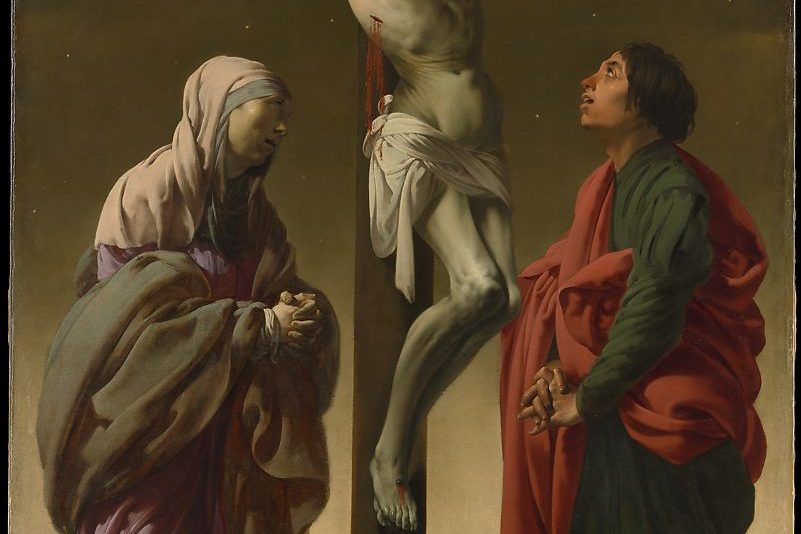
Today’s chapter is, once again, key in understanding who Jesus was and what He came to accomplish. Jesus was the ultimate atoning sacrifice bringing grace and forgiveness to all who would believe and receive it. All of sin was placed on Him, God’s own innocent Son. As Paul put it: “God made Him who had no sin to be sin for us.”

Nevertheless, we continue to scapegoat individuals in all sorts of situations rather than doing what Jesus called on me to do as His disciple and forgive, as I’ve been forgiven. Jesus even exemplified this while hanging on the cross when He said, “Father, forgive them. They have no idea what they are doing.” The institutional church failed to do this when, once they became the Holy Roman Empire and had all of the worldly power, they decided to make the Jewish people scapegoats for executing Jesus (despite the fact that Jesus made it clear this was the way it was meant to be, and chastised Peter and the boys for trying to stop it or use violence in His defense). The rise of antisemitism and the scapegoating of the Jewish people within the church evolved over time, but it began with the first Christian Emperor, Constantine in the 4th century. If you watch the news, you know it is still happening today.

In the quiet this morning, I’m reminded how relevant Leviticus is today for those who are willing to see it. As a disciple of Jesus, I’m reminded that I am called to follow Jesus’ example and graciously forgive, even when the rest of the crowd is scapegoating and every ounce of me feels like jumping on the toxic gravy-train. I’m also equally reminded that Jesus’ atoning sacrifice means that grace, mercy, and redemption are available to anyone, regardless of their sins – even scapegoats.

In 2016, after winning their first World Series since 1908, the Chicago Cubs owners and organization quietly delivered one of the team’s World Series rings to Steve Bartman.

If you know anyone who might be encouraged by today’s post, please share.

These chapter-a-day blog posts are also available via podcast on all major podcast platforms including Apple, Google, and Spotify! Simply go to your podcast platform and search for “Wayfarer Tom Vander Well.” If it’s not on your platform, please let me know!

Lay Your Hands

Lay Your Hands (CaD Lev 4) Wayfarer

The elders of the community are to lay their hands on the bull’s head before the Lord, and the bull shall be slaughtered before the Lord.
Leviticus 4:15 (NIV)

I did not grow up on a farm, but Wendy did. It’s been fun for me over the years to hear the stories of her and her six siblings and the adventures they had. There’s the story of Wendy’s dad having to sell a bull in order to have the money to buy their wedding rings. There are also the stories of her and her siblings raising livestock and showing them at the county fair, a tradition some readers may not realize is still very much alive in rural America. And of course, there are the requisite stories of the siblings first realizing as children that the hamburger they were eating was actually the cow they raised, cared for, and knew by name. That is a reality most of us never experience.

One of the things that modern readers struggle with most is the blood and guts of ancient sacrifices in Leviticus. It is so foreign to both our modern realities as well as sensibilities. In today’s chapter, the fourth of the five main offerings God is introducing to the ancient Hebrews is presented, and it’s a big one. It’s the “sin” offering. As I meditated on today’s chapter, I realized that there’s so much here that I could write a book to delve into all of it. So, I want to stick with two simple concepts.

First of all, the Great Story establishes in the very beginning that when Adam and Eve used their free will to do the one thing that was forbidden to them, it introduced a spiritual problem within humanity called sin. The spiritual problem resulted in a subsequent problem: physical death. The sacrificial system being established for the ancient Hebrews is establishing another spiritual reality: for the sin/death problem to be addressed, a substitutionary sacrifice must be offered. This is why Jesus’ death and subsequent resurrection is essential to our faith. The seeds of understanding what Jesus would ultimately do are here in today’s chapter. Without Leviticus and today’s chapter, one’s understanding of Jesus and what He did are incomplete and at risk of being grossly misunderstood.

Second of all, I find it fascinating that with each sacrificial offering, it was required for those making the sacrifice to “lay hands” on the sacrificial animal. I can’t help but think about Wendy and her siblings and the intimacy they experienced in the process of raising, caring for, and knowing the animal who would ultimately be sacrificed to put food on the family table. This was the common human experience throughout human history until the last 150 years. God insisted that there be a human connection, the laying of hands and an intimate touch, between the sinner needing forgiveness and the animal that was about to be sacrificed on his or her behalf.

For modern readers who get squeamish about the notion of animal sacrifice, I’d like to point out that every year here in America there are approximately 35 million cows systemically slaughtered so we can grab a quarter pounder at the McDonalds drive-through on a whim or pick up a wonderfully convenient, prepackaged pound of ground beef at the grocery store. Most of us never see the cows. We never raise them. We don’t care for them from birth, give them a name, feed them as calves, or transport them to their death. And yet 100,000 cows will be sacrificed today on the altar of our modern convenience and blissful human ignorance and arrogance.

If you ask me, there is something that seems innately more real and nobly human when there was an intimate connection between a human and the animal that was sacrificed, whether that be for sin or for the daily sustenance required for survival. Keep in mind that the food from most of the sacrifices in Leviticus ended up putting daily food and nourishment on the table of the entire Hebrew tribe of Levi and their families. For them, the sacrificial system was part of daily survival in the brutal reality they lived in each day.

Which leads me to where my heart and mind ended up in the quiet this morning. I was raised in the church. I learned all the stories of the Bible. I went through the classes and got my membership certificate, but it still wasn’t real for me. Then came an evening when it all became real, and I understood the reality of my own pride and willful, sinful choices. I made the mind, heart, and spirit connection between what Jesus willingly suffered on the cross and the forgiveness of my pride and willful, sinful choices. In a spiritual sense, it wasn’t until I “laid my hands” on Jesus and made that intimate connection between my sin and His sacrifice that I understood His amazing grace and my undeserved salvation.

If you know anyone who might be encouraged by today’s post, please share.

These chapter-a-day blog posts are also available via podcast on all major podcast platforms including Apple, Google, and Spotify! Simply go to your podcast platform and search for “Wayfarer Tom Vander Well.” If it’s not on your platform, please let me know!

Explicit Sin, Explicit Message

At every street corner you built your lofty shrines and degraded your beauty, spreading your legs with increasing promiscuity to anyone who passed by.
Ezekiel 16:25 (NIV)

Jerusalem is a fascinating city. It is a city filled with tensions. And it is amazing to experience. It’s crazy to think that a tiny little Canaanite town thousands of years old became, and remains to this day, the most political and religious hot spot of the entire world.

Today’s long chapter is a prophetic message God gave to Ezekiel specifically about the city of Jerusalem. To make sense of Ezekiel’s message, it helps to know a little about Jerusalem’s history.

Jerusalem began as a Canaanite village. It was David who made it his Capital city. At the time he did so, it was a Jebusite city. Only after David’s reign was it considered Israelite. Its multi-cultural history made it a city of political and religious tension from the beginning.

Ezekiel’s message is a long metaphorical story about a non-Jewish baby girl thrown into a field and left to die. God wills the girl to live, cares for her as she grows, and when she flowers into a woman He marries her. She, however, is unfaithful to God, her husband. She becomes an adulterer and a temple prostitute for pagan worship. She sacrifices her children in pagan rituals. Eventually, she then runs after her clients and freely gives herself to them seeking their protection.

If you read the chapter, and I encourage you to do so, it gets rather graphic in its descriptives of her “spreading her legs” for her neighbors and even describes one of them, Egypt, as having an – ahem – very large penis. I confess my curiosity this morning and, just for fun, I pulled up that verse in Bible Gateway and compared every English translation to see how translators handled the reference. Fascinating, some ignored it completely. Some disguised it in vague euphemisms such as “great of flesh” and “lustful.” Others went with a little more specific “well-endowed,” “large member,” or “large genitals.”

Of course, Ezekiel was pulling no punches and the people of his day would have known exactly what he was talking about. He was accurately describing actual Egyptian fertility idols, common in that day, depicting an Egyptian man with a protruding giant erect penis.

And this is the point. The prophets like Ezekiel get very graphic in their messages because the extreme nature of the sins that they were addressing, including ritualized sexual immorality and ritual child sacrifice.

I have to remember that Ezekiel is living in Babylon and the Babylonians had their own version of sex and fertility cults and rituals. The Ishtar Festival, in particular was known for its sexual and moral debauchery. This may very well have fueled the metaphorical rawness of his message.

The adulterous wife was an apt description of Jerusalem. While it had become the chosen city of God’s people, the city itself remained the hometown of both Jews and pagan Canaanites. The pagan residents may have politically gone along with prevailing wind of Jewish authority, but it would always struggle to be faithful to the God of David.

God’s judgment on Jerusalem is pronounced as the just consequences of her adultery, prostitution, infanticide, and social injustices. What is fascinating, however, is that this judgment is not final. God promises to remain faithful, to restore, and to redeem His bride. Not only that, but God declares that He will personally make atonement for her sins:

So I will establish my covenant with you, and you will know that I am the Lord. Then, when I make atonement for you for all you have done…

Fast forward about 500 years and this is exactly what Jesus did when He died on the cross outside the very city of Jerusalem, over which He lovingly laments:

“Jerusalem, Jerusalem, you who kill the prophets and stone those sent to you, how often I have longed to gather your children together, as a hen gathers her chicks under her wings, and you were not willing. Look, your house is left to you desolate.”

With Jesus, the metaphor switches from Jerusalem being the bride to Jerusalem being the prodigal child. Jesus moves the bride metaphor and applies it to His followers. Which, for me, means that as the bride I find in Ezekiel’s explicit message to Jerusalem both a warning and a comforting truth. If I stray from Jesus, I can expect to experience the consequences of my thoughts, words, and actions. However, while it’s easy to focus on Jerusalem’s sins, the most amazing and important piece of the message is God’s sacrificial love and faithfulness in spite of those sins. This reminds me that no matter how much I stray or how deeply I may fall into sin, His sacrificial love and infinite grace will always extend further and deeper.

If you know anyone who might be encouraged by today’s post, please share.

The Gray

The Gray (CaD Heb 7) Wayfarer

The former regulation [the Law of Moses] is set aside because it was weak and useless (for the law made nothing perfect), and a better hope is introduced, by which we draw near to God.
Hebrews 7:18-19 (NIV)

I have a confession to make this morning, As the youngest of four children, seven years younger than my eldest twin brothers, I took full advantage of my birth position. Some of this was good. For example, I remember observing what patterns of behavior and/or argument actually escalated our parents’ anger and frustration. Not only was the conflict unpleasant but it never worked out well for my sibling. I correspondingly avoided making those same mistakes and had a relatively pleasant childhood and adolescence in the department of parental relations.

It wasn’t all good, however. Being the youngest also afforded me the opportunity of learning how and when to take advantage of skirting rules and, by and large, how to get away with it. The age gap between me and my twin brothers was key to this. When I was twelve, my brother Tim was 19. At little sibs weekend at the University, I not only got to enjoy attending a college keg party and drinking beer but also made a lasting memory with my brother. Tim had me stand around the keg with him. When cute girls came to fill their red solo cups, Tim leveraged the novelty of my presence to find out who they were as he introduced me as his genius little brother who was a Freshman at the university that year.

Long story short, I learned along the way that rules were meant to be skirted, not broken. I became quite adept at getting away with all sorts of things as I stealthily discovered a parallel dimension of gray that existed (at least in my perception) around the black-and-white rules.

In today’s chapter, the author of the letter to the early Hebrew followers of Jesus is explaining how the Jewish priesthood and Law of Moses have been completed and transformed by Jesus. The Law of Moses took sinful humans born to Aaron and Levi and made them part of a human system of rules, rituals, and sacrifices for the forgiveness of sin. The human priest first had to atone for his own sin so he could then atone for the sins of the people. Jesus was the sinless, spotless once-and-for-all sacrifice, risen from the dead, and existing eternally at the right hand of the Father, a forever high priest. He is not a priest of the Law of Moses, the author declares, but of the mysterious eternal order of Melchizedek that is older and greater than the Law of Moses.

The author boldly states that the Law of Moses was “weak” and “useless” arguing that rules can never make a person perfect. Ah, there’s the rub. Religious rule-keeping never deals with the self-centered motives and uncontrollable appetites at the core of the human heart. In my case, it was my personal motives and appetites that fueled my finding of gray areas in which I justified skirting rules for my own personal pleasures and advantages.

In the quiet this morning, I find myself thinking back to some of the things I used to get away with skirting rules, from silly to the somewhat sinister. I may have gotten away with a lot of things, but my heart knew that it wasn’t right. I knew, even at a young age, that I needed more than just rules. I needed to deal with the core issues of a self-centered heart and appetites run amok. I discovered what the author of Hebrews is revealing, Jesus who became the ultimate sacrifice for my core heart issues, an eternal, living high-priest who understands my weaknesses and receives me with mercy and grace.

It still doesn’t make me perfect, but it does make me forgiven. I am no longer bound to rules that only prove that good, I am not. I am freed to live out the love, and good, that I ought.

If you know anyone who might be encouraged by today’s post, please share.

Another Choice

Another Choice (CaD Ex 29) Wayfarer

…Aaron and his sons shall eat the flesh of the ram and the bread that is in the basket, at the entrance of the tent of meeting. They themselves shall eat the food by which atonement is made…
Exodus 29:32-33 (NRSVCE)

Along my life journey, I have observed that we like things simple. In fact, we like things in twos, binary, either-or, black-or-white. Even when it comes to spiritual matters, human beings find it easiest to reduce things down to binary terms.

We teach children that they are either “good” or “naughty.” It’s one or the other. As David Sedaris once noted, if you’re naughty then Santa will fill your stocking with coal. If you’re good and live in America, Santa will pretty much give you whatever you want.

As an adult, I am supposed to mature in my understanding, but I’m not sure I do it all that well. The systems still largely cater to lumping me in one of two binary choices. I’m either a Republican or a Democrat. I’m either left or right, liberal or conservative. I’m either woke or a racist. I’m either selflessly trying to protect the world from COVID or I’m selfishly contributing to the perpetuation of the pandemic. I’m either FoxNews or CNN. I am privileged or oppressed.

Even in spiritual terms, I am good or evil, going to heaven or hell, saved or sinner.

For the ancient Hebrews we read about in today’s chapter, they spiritually saw things in a binary option, as well: clean or unclean. The ancient Hebrews perceived that they moved spiritually back and forth between clean and unclean based on what they ate, what they touched, or bodily fluids were recently excreted. If you were unclean, then you needed to cleanse yourself in order to be “clean” before God. It happened all the time.

In today’s chapter, God is cultivating another spiritual level altogether as the system of worship and sacrifice is prescribed through Moses: being “holy.” The text describes a strange, mysterious, and somewhat gross set of rituals that consecrated Aaron and his boys to make them “holy” priests who could stand before God to represent their people.

What fascinated me as I read about all of the rituals was the fact that Aaron and the priests were asked to sacrifice a bull and a ram and then eventually they would eat the meat of the animal whose blood was shed to atone (that is, to make right and correct what is wrong) for their sin.

Hold the phone.

Fast forward 1500 years or so. Jesus is in the middle of nowhere with thousands of people. They’re all hungry (yeah, kind of like Moses and the Hebrews). When Jesus asks the Twelve what they can spare from their lunch box, it’s nothing but a loaf of Wonder Bread and a couple of fish sticks. Jesus has them split it into baskets and then spread out and start serving the people. Miraculously, there was enough filet-o’-fish sandwiches for everyone plus leftovers (Sounds a lot like the Manna and quail God provided for the Hebrews).

That night, Jesus slips into a boat and goes to another region. The next day, the crowds hurried to rush around the shore and find Jesus before lunchtime. They were thinking in the simplest of binary terms. I’m hungry. Jesus is giving out food.

Then Jesus does something very, well, un-Jesus-like. He cuts them off. No more free meals:

When they found him back across the sea, they said, “Rabbi, when did you get here?”

Jesus answered, “You’ve come looking for me not because you saw God in my actions but because I fed you, filled your stomachs—and for free.

“Don’t waste your energy striving for perishable food like that. Work for the food that sticks with you, food that nourishes your lasting life, food the Son of Man provides. He and what he does are guaranteed by God the Father to last.”

To that they said, “Well, what do we do then to get in on God’s works?”

Jesus said, “Throw your lot in with the One that God has sent. That kind of a commitment gets you in on God’s works.”

They waffled: “Why don’t you give us a clue about who you are, just a hint of what’s going on? When we see what’s up, we’ll commit ourselves. Show us what you can do. Moses fed our ancestors with bread in the desert. It says so in the Scriptures: ‘He gave them bread from heaven to eat.’”

Jesus responded, “The real significance of that Scripture is not that Moses gave you bread from heaven but that my Father is right now offering you bread from heaven, the real bread. The Bread of God came down out of heaven and is giving life to the world.”

They jumped at that: “Master, give us this bread, now and forever!”

Jesus said, “I am the Bread of Life. The person who aligns with me hungers no more and thirsts no more, ever. I have told you this explicitly because even though you have seen me in action, you don’t really believe me…

“Only insofar as you eat and drink flesh and blood, the flesh and blood of the Son of Man, do you have life within you.”

from John 6 (MSG)

In the quiet this morning I can’t help but once again see the parallel between the Exodus story, and the Jesus story. Exodus was the foreshadow provided to an infant nation. Jesus came to mature our understanding of what God’s Kingdom is all about in contrast to the simple satiation and indulgence of our earthbound appetites of the flesh. The Kingdom of God is not like the kingdoms of this world, and it requires the eyes and ears of my heart to see and hear beyond the simplistic choices fed to me by this world.

As mentioned in the last couple of posts, Jesus’ death was the fulfillment of the word-picture God gave Moses and Hebrews in the sacrificial system. Aaron sacrificed a bull, was sprinkled with the blood, and then ate the sacrifice to make things right.

Jesus came to be the sacrifice.

“This is my body broken for you,” He said as he passed the bread and told His followers to eat.

“This is my blood shed for you,” He said as he passed the wine and told His followers to drink.

Just like Aaron and his boys, we spiritually consume the sacrifice.

The sacrifice consumes us.

Everything is made right.

Holy.

Jesus said to the crowds that day:

“Every person the Father gives me eventually comes running to me. And once that person is with me, I hold on and don’t let go. I came down from heaven not to follow my own whim but to accomplish the will of the One who sent me.

“This, in a nutshell, is that will: that everything handed over to me by the Father be completed—not a single detail missed—and at the wrap-up of time I have everything and everyone put together, upright and whole. This is what my Father wants: that anyone who sees the Son and trusts who he is and what he does and then aligns with him will enter real life, eternal life. My part is to put them on their feet alive and whole at the completion of time.”

Until that day, I keep pressin’ on, one-step-at-time, one-day-at-a-time trying to be an agent of God’s Kingdom on this earth. So begins another day in the journey.

Have a great day, my friend.

If you know anyone who might be encouraged by today’s post, please share.

Transformed by Love

He is the atoning sacrifice for our sins, and not only for ours but also for the sins of the whole world.
1 John 2:2 (NIV)

As I mentioned in my previous post, the letters of John are, chronologically, the last of the letters to have been written by Jesus’ apostles. Tradition holds that John outlived all of the other apostles and is the only of the original Twelve to die of natural causes. The rest were all martyred for their faith.

The indisputable theme of John’s writing and life is love. He was known as “the disciple Jesus’ loved.” He was the only disciple with the courage to personally show up at the crucifixion. Jesus, while hanging on the cross, entrusted John with the care of His mother. As you might expect, having been the last of Jesus’ disciples, John was sought out and revered by Jesus’ followers. Tradition holds that, in his old age, John said nothing except “Children, love one another” over and over and over again.

What’s fascinating about the perpetual theme of love in John’s writing and the description of John as a person consumed with love is that it stands in stark contrast to the John we meet in the biographies of Jesus written by Matthew, Mark, and Luke. John and his brother James were nicknamed “Sons of Thunder” for their intense anger and rage. At least twice John pleaded with Jesus to call down fire from heaven and burn up those he was condemning. John, his brother James, and their mother were at the center of multiple attempts to selfishly claim positional power within Jesus’ followers.

John was transformed from a raging, self-centered Son of Thunder into a generous, humble man who knew nothing but “love one another.”

In today’s chapter, John makes an interesting statement. He states that Jesus’ death was the atoning sacrifice for “the sins of the whole world.” In ancient times, a sacrifice of atonement was an offering or a literal animal sacrifice intended as a type of penance for wrongdoing in order to appease God and ward off God’s wrath. The atoning sacrifice was limited to the person making the sacrifice, or in the case of the sacrificial system handed down through Moses it was limited to the people of Israel. Jesus’ sacrificial death, however, was unlimited atonement. It was a sacrifice for the sins of the whole world.

I have often observed that Jesus’ followers often get focused on doctrine to the exclusion of the very things those doctrines mean (I’m including myself in this). If Jesus died for the sins of the whole world, then every person in the world is a person for whom Jesus died. If I truly believe what I say I believe, then I think that simple fact should transform how I view others, how I address others, and how I treat others.

My life should be transformed by love the same way John’s was. If not, then something is amiss. Or, as John put it in today’s chapter:

Anyone who claims to be in the light but hates a brother or sister is still in the darkness.

The Fat

All fat is the Lord’s. It shall be a perpetual statute throughout your generations, in all your settlements: you must not eat any fat or any blood.
Leviticus 3:16b-17 (NRSV)

I am married to a fabulous cook. Anyone who has had one of Wendy’s amazing cheesecakes can attest to this. Just this past Saturday she made a Italian chicken and pasta dinner that I’m still thinking about it. When it comes to grilling, however, I am the grill master at our house. If we’re going to grill meat, then I’m in charge, from choosing the meat, to preparing it and grilling it.

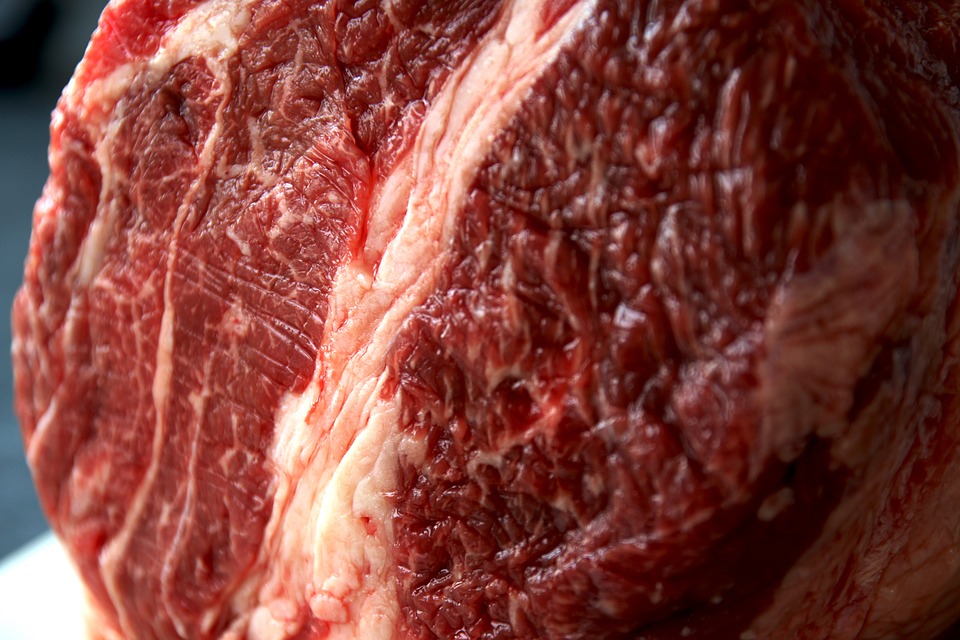
I don’t claim to be great with the grill, but I’ve learned a few things along the journey. For example, if you’re going to choose a nice steak then you have to look for a cut which has good “marbling.” In other words, the fat runs throughout the lean and creates an effect that looks a bit like marble. It’s the fat throughout the meat that melts and creates a juicy steak. Fat makes it a “choice” steak.

In order for those of us in 21t century western culture to being to wrap our heads around the ancient  semitic sacrificial system, we have to understand the metaphors involved. To the Israelites, blood was synonymous with life. So when a sacrifice bled and died on the altar it was viewed a substitutionary death for the death God had prescribed to all humanity back in the Garden of Eden. That’s why Jesus is referred to as the “Lamb of God,” as His death on the cross was the substitutionary, sacrificial death for humanity – once for all.

Likewise, the fat of the sacrifice represented how good it was. Just as  a good cut of steak, marbled with fat, is known to be the best – so an animal’s fat was was made it a choice sacrifice. It was the “best.”

Today, I’m reminded of two things:

  • A sacrifice isn’t a sacrifice if it really doesn’t cost me a thing.
  • A sacrifice is giving my best, not my leftovers.


Sacrifice and At-one-ment

You shall lay your hand on the head of the burnt-offering, and it shall be acceptable in your behalf as atonement for you.
Leviticus 1:4 (NRSV)

I have blogged through the book of Leviticus only once since starting this chapter-a-day blogging journey ten years ago. That compares to the 2-3 times I’ve blogged through most of the other books in God’s Message. The reason for this is not a mystery. Leviticus is not an easy read and it’s even more difficult for most people to understand in a 21st century western culture. And yet, it’s part of the Great Story. Without it, our understanding of the story God is telling through history is incomplete.

Leviticus is ancient legal text. It’s part of what’s known as “The Law of Moses” (a.k.a. “The Books of Law” and “The Torah”) which is the first five books of what we commonly know as the Old Testament. Leviticus is a rule book and an instruction manual for the people of Israel regarding the system of sacrifices and offerings they were to make to God. As we see in today’s opening chapter, it’s a bloody affair.

The underlying reason for this gory, intricate system of sacrifices is given. If you blink you might miss it:

“…and it shall be acceptable in your behalf as atonement for you.”

The word “atonement” is not one we use much anymore. It’s a medieval word and the meaning is simple if you just break the word apart: at-one-ment. It’s to make two things one or to bring two dissonant parts into harmony.

We have to think about it in context of the story. The Great Story begins with creation, and with God placing Adam and Eve in the Garden of Eden. Adam and Eve disobey God. They committed a sin by knowingly doing what they had been commanded not to do. God banishes them from the Garden. They are told that the punishment for their sin was that they would be separated from God and they would have to die a physical death. The punishment of sin was death.

In the Book of Leviticus, God is providing a prescriptive remedy for this situation. The appropriate animal, without defect, sacrificed on the altar would make temporary at-one-ment for that person and God. The person bringing the animal would place their hand on the animal and the animal became a substitutionary, sacrificial death for their sin. The death sentence God place on all of us in the Garden of Eden was transferred to the sacrifice.

This is a foreshadowing of the story. Leviticus sets the theme. The temporary sacrifices which the people of Israel made over and over again would one day be replaced by a permanent solution. The sacrifice of God’s own Son. The Lamb of God, without defect, sacrificed once for all.

This morning I’m thinking about foreshadows. I’m thinking how glad I am to have been born in the 20th century A.D. and not the 20th century B.C. I’m thinking about the long list of my own sins and acts of willful disobedience. I’m thinking about the physical death that I will eventually experience. I’m thinking about the nagging sense of loneliness, confusion, and spiritual isolation I felt before experiencing at-one-ment when I entered into relationship with Jesus and followed.


chapter a day banner 2015

featured photo: Mate Marschalko via Flickr

I am Achan

And Achan answered Joshua, “It is true; I am the one who sinned against the Lord God of Israel. This is what I did: when I saw among the spoil a beautiful mantle from Shinar, and two hundred shekels of silver, and a bar of gold weighing fifty shekels, then I coveted them and took them. They now lie hidden in the ground inside my tent, with the silver underneath.”
Joshua 7:20-21 (NRSV)

The story of Achan is fascinating. God miraculously delivers the city of Jericho to Joshua and his big band of trumpet players. The walls of the city come tumbling down and the nation of Israel plunders the city with one simple rule: don’t take any of the pagan idols or things used in the worship of the idols and false gods of the people of Jericho. Does this remind you of anything? (Hint: “You can eat of any tree of the garden except for that one in the middle.”)

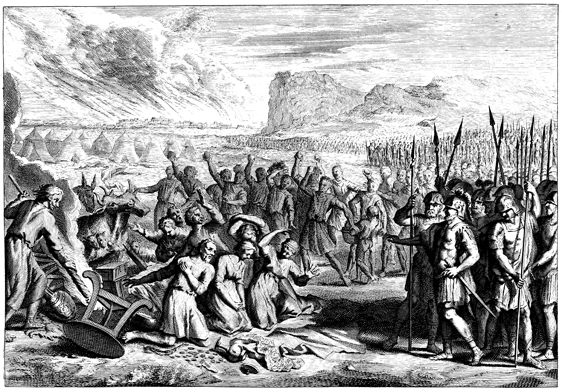
Sure enough, a man name Achan takes some forbidden spoil for himself in direct disobedience to the order (that would be calls sin) and then hides it by burying it in his tent (that would be called shame). God clues Joshua in that someone has disobeyed and, eventually, Achan is confronted and confesses his sin. Achan and his entire family are stoned to death to rid the nation of sin (that would be called a “scapegoat”).

When I was younger, I always saw the story of Achan from the idealistic view of the majority. “Achan, how could you ruin it for the whole nation? Dude, you knew the rules! How simple was it just to do the right thing? What an idiot!

As I have progressed in my life journey I have increasingly come to terms with a simple fact: I am Achan. I am the child who, at the age of five, stole all the envelopes with money in them off my grandparent’s Christmas tree and buried them in my suitcase. I am the one who is guilty of lying, and cheating, and stealing, and breaking my word, and being disobedient to God and my loved ones. Not just once, mind you, but over and over and over again. If I point the finger at Achan, there are three pointing back at me.

In the context of the Great Story, Achan serves as a thematic waypoint. Achan hearkens us back to Eden and reminds us that the problem of sin has not been dealt with.  Achan reminds us, in the moment, of one of the meta-themes of God’s great story: one little sin taints the whole. As Jesus put it, one smidgen of yeast affects the whole loaf. Achan reflects our fallen human nature’s penchant to blame one for the failure of the whole, and a Cubs fan need only to hear the name Bartman to realize that human nature has not changed across time. Finally, the story of Achan is a foreshadow of the solution God will provide when He will send His one and only Son to be the One who will die the death that idol stealing and  Christmas money stealing criminals deserve. Jesus will be the sacrificial lamb and make atonement for the whole.

This morning I am once again humbled by an honest reflection of my own shortcomings. I am thinking about Achan and accepting that I am him. Throw the rocks, man. I deserve it. I am once again grateful for that which we have just celebrated: God becoming man to die for my sin, to take my shame on His shoulders, and then to rise from the grave to give grace, hope, forgiveness, and redemption to one such as me.


chapter a day banner 2015

Marriage as Metaphor

Michael Buesking illustrates another prophet, Hosea, whose adulterous marriage became a word picture of God's relationship with His people. Buesking's artwork can be found by clicking on the image or at prophetasartist.com
Michael Buesking illustrates another prophet, Hosea, whose adulterous marriage became a word picture of God’s relationship with His people. Buesking’s artwork can be found by clicking on the image or at prophetasartist.com

“Later I passed by, and when I looked at you and saw that you were old enough for love, I spread the corner of my garment over you and covered your naked body. I gave you my solemn oath and entered into a covenant with you, declares the Sovereign Lord, and you became mine.” Ezekiel 16:8 (NIV)

Across all human relationships, the marital relationship is unique in many respects. Two people choose to enter into a covenant relationship with one another, to be exclusively faithful and more completely intimate with that person than with any other. Marriage is the closest thing we have on Earth to embody the relationship God desires to have with each of us, and God uses the marriage relationship over and over again to embody the intimate relationship He desires to have with each of us.

In today’s chapter, God once again instructs Ezekiel to use marriage as a metaphor describing God’s relationship with the people of Israel. He uses imagery around the marital traditions of that day. God chooses Israel as His bride and enters into a marriage covenant, but Israel commits adultery by chasing after other lovers in the form of the many gods and idols that were popular in that culture.

God makes it prophetically clear that He will not ignore the unfaithfulness of His bride. There will be disgrace and consequences in the siege and destruction of Jerusalem. Yet, in the end of the chapter God makes it clear that He will continue to honor His covenant; There will be a remnant who will survive and return to Jerusalem. God says he will make atonement for the adulterous sins committed; He will send His Son to be the atoning sacrifice for sin, once for all.

Today I am struck that God, through Ezekiel, has been speaking the same message in many different metaphors and word pictures. I find that in the human experience not everyone “gets” a message the same way. Some people connect with one medium, some with another. A word picture may be profoundly revelatory to one person while another person remains blind to the message. Across the book of Ezekiel I am impressed at how God is desperately trying to get through to His people, His spouse. He keeps trying to get through.