Tag Archives: Death

Wise Investments

Since you call on a Father who judges each person’s work impartially, live out your time as foreigners here in reverent fear.
1 Peter 1:17 (NIV)

I’m always amazed how much you learn about someone simply by listening.

The old man at the retirement center had a lot on his mind. His brain worked at a feverish pace despite being advanced in years. I was impressed. I could almost see it spinning inside his silver pated cranium as the stream of his consciousness flowed from his lips.

Money.
Finance.
Business.
Debts.
Investments.
Real Estate.
Savings.

The future.

When my new acquaintance learned that I was once a pastor there a definite shift in the course of his stream of consciousness. The questions started flowing directly at me.

Along the journey, I’ve had a number of people want to pick my brain about prophecy and the end times. Some chase theories. Others chase reassurance.

What’s going to happen to me?
How afraid should I be?
How can I insulate myself from what’s coming?

For the sharp old man, I sensed there was a hope of leveraging insider knowledge for personal gain. In every market crash there are always a few who make a fortune. I could see his brain calculating the possibilities.

It was a fascinating conversation, even though I think I may have disappointed him. The greatest religious scholars of Jesus’ day were completely wrong in their theories regarding who the Messiah would be. They didn’t even recognize Him when He was standing among them. The only ones who correctly interpreted His arrival were Zoroastrian priests from Persia who arrived with gifts of gold, frankincense, and myrrh.

If all of those religious scholars got it wrong with Jesus first coming, I suspect we’ll all get it wrong with Jesus’ second coming. Even Jesus shrugged and said He didn’t know when it would be. I think trying to predict anything is a fool’s errand. I was sorry to disappoint my new friend looking for an edge.

I dusted off one of my favorite old jokes for him and told him I when it came to Revelation I consider myself a “pan-tribulationist.” It’s all going to pan-out in the end.

[cue: rimshot]

As I left the retirement center that day I thought about my new friend. What struck me most about our conversation was how invested he was in this earthly life. He had been retired for who knows how many years. Who knows how many days he has left on this earthly journey but it doesn’t take a prophet to know there’s a precariously small amount of sand left in his hourglass. Even if he reads the tea leaves and escapes the coming Tribulation as the one who made the right financial play, what will it profit him?

I felt a pang of sadness as Jesus’ words echoed in my soul.

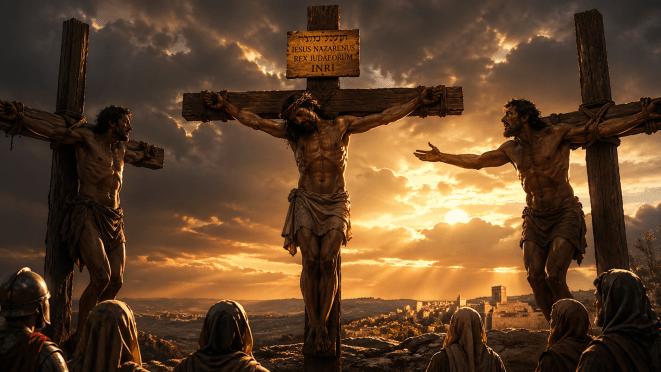
“Don’t hoard treasure down here where it gets eaten by moths and corroded by rust or—worse!—stolen by burglars. Stockpile treasure in heaven, where it’s safe from moth and rust and burglars. It’s obvious, isn’t it? The place where your treasure is, is the place you will most want to be, and end up being.
Matthew 6:19-21 (MSG)

Peter’s letter was written to a largely non-Jewish audience of Jesus followers. Like the recipients of James’ letter, these believers had been scattered by persecution. Interestingly, Peter begins his letter to non-Jewish believers by referencing a deeply Jewish paradigm: exile.

Exile is one of the overarching themes of the entire Great Story. Some scholars consider it the primary theme. As these believers live scattered abroad living in strange places far from the homes they knew Peter is saying to his Gentile brothers and sisters, “Welcome to the club!”

Later in the chapter, Peter takes the paradigm a step further. He tells his audience to consider themselves permanent “foreigners.” As the old song says, “This earth is not our home, we’re just passing through,” or the other old song I personally favor, “I’m just a poor wayfaring stranger travelin’ through this world of woe.”

Peter was urging his fellow believers to embrace the very words Jesus spoke to him. Consider your investment strategy.

Eighty-years or so on this earth – I leave everything behind.
Eternity waits beyond, and I can begin investing today.

I don’t know. If I really believe what I say I believe, then the portfolio I really want to invest in seems pretty clear.

I never saw my friend again. By now, I suspect his earthly journey is finished.

I hope he made some deposits in his eternal accounts.

If you know anyone who might be encouraged by today’s post, please share.

Promotional graphic for Tom Vander Well's Wayfarer blog and podcast, featuring icons of various podcast platforms with a photo of Tom Vander Well.
These chapter-a-day blog posts are also available via podcast on all major podcast platforms including Apple, Google, and Spotify! Simply go to your podcast platform and search for “Wayfarer Tom Vander Well.” If it’s not on your platform, please let me know!
Icon featuring an open book on an orange background, symbolizing reading or education.

Final Message

Now, Israel, hear the decrees and laws I am about to teach you.
Deuteronomy 4:1 (NIV)

There is a seriousness about Life that takes stage whenever Death is standing in the wings. I’ve experienced in hospitals and the rooms of hospice. I’ve observed it in homes where families tend to their loved one’s final days. The seriousness can take many different forms, but I find that they are always holy moments.

I find it important as I meditate on the chapters of Deuteronomy to remember that this entire book is one of those holy moments. Death is standing on the banks of the Jordan River in wait for Moses. Moses is ancient. His body is decimated with age. His face is lined with the stress of decades of leadership. Deuteronomy is Moses taking the face of his people lovingly in his withered hands and looking them in the eye one last time. These are the words of his deathbed.

“Listen,” he is whispering with final breath earnestness. “No. Really listen to me.”

When Moses uses the word “hear” it is the Hebrew word shema. It is more than auditory reception. Shema is listening with your heart as well as your ears. It’s hearing channeled into action. It is listening that love transforms into obedience. It’s the same Jesus asked whenever He said, “Those who have ears to really hear, hear this….”

Suddenly, the words of today’s chapter have another layer of meaning. They are the love-filled plea of the man who has given everything to lead his people. I don’t just want to read the words. I want to shema what Moses is communicating in this holy moment as I see Death standing in the background along Jordan’s shore.

Guard the appetites of your heart. Moses begins with a plea to his people to guard their hearts. They serve a living God. They’ve seen what He can do. They’ve heard His voice though they saw no form. There is no form that can adequately represent His being. So don’t fashion idols for yourselves and bow down to animals, or people, or the sun. Don’t give your love and devotion to things that can never love you back.

Be ever aware of God’s nearness. God is with them. He’s pitched His tent in the center of their camp. He goes before them. He goes with them. He is not god up above somewhere. God is always right here, right now.

Remember. Remember. Remember. Moses repeats the word over and over again.

Remember the fire on the mountain.
Remember the voice with no form.
Remember the covenant.
Remember who rescued you.
Remember who claimed you.

Memory is a mentor. The moment you begin to forget you are one step closer towards being lost. Then Moses prophetically foresees that his children, whom he knows all too well, will indeed lose their way.

Home awaits every prodigal. He wraps up his message by reminding them that no matter how far they wander, no matter how badly they lose their way, God is waiting. He’s not waiting with crossed arms but arms that are open. It doesn’t matter what distant pig stye they find themselves mired in. If they, like the prodigal, will seek Him with all their heart they will find Father God there on the porch at home with his eyes glued to the driveway. He just waiting to welcome the prodigal home and celebrate His lost child’s return.

I feel a weight in my meditations in the quiet of my home office this morning. Placing my feet in the sandals of a child of Israel standing along the Jordan River listening to Moses’ heartfelt final plea gives the words added potency. Suddenly the message is more meaningful. Life suddenly gets more serious whenever Death is near.

The neighbor’s diesel pick-up truck has begun to idle across the street. It’s my daily reminder that it’s time to move out of the quiet and into all that awaits me on the calendar and task list of the day. Thankfully, I’m unaware of Death being anywhere nearby today. Nevertheless, I head out with the heart of Moses’ message informing how I want to go about whatever awaits me.

Have a great day, my friend.

If you know anyone who might be encouraged by today’s post, please share.

Promotional graphic for Tom Vander Well's Wayfarer blog and podcast, featuring icons of various podcast platforms with a photo of Tom Vander Well.
These chapter-a-day blog posts are also available via podcast on all major podcast platforms including Apple, Google, and Spotify! Simply go to your podcast platform and search for “Wayfarer Tom Vander Well.” If it’s not on your platform, please let me know!
Icon representing a Bible with an open book illustration, emphasizing scripture study and accessibility.

Momento Mori

The Lord said to Moses, “Take vengeance on the Midianites for the Israelites. After that, you will be gathered to your people.”
Numbers 31:1 (NIV)

Along my life journey, I’ve experienced walking along side friends and loved ones who received tragic diagnoses. My mother had both auto-immune hepatitis and Alzheimer’s, both of them incurable and ultimately fatal. My father lives with Multiple Myeloma. It’s understandably unnerving to discover that this human body has fallen prey to an incurable disease that will cut one’s life shorter than expected and lead to death.

In walking along side individuals facing this tragic reality, I’ve found it fascinating to observe their attitudes and actions. It’s always a bit different, and I’ve come to understand that every individual has to find their own way through the experience. Not surprisingly, I commonly observe the stages of grief as individuals grapple with their difficult reality: denial, anger, bargaining, depression, and acceptance. I have also observed individuals getting stuck in one or more of those stages seemingly incapable of progressing to the place of acceptance. In other individuals, I’ve observed a gracious and spiritually mature embrace of the inevitable that I’ve admired and respected.

Today’s chapter begins with such a death sentence. God’s man, Moses, is told that he’s going to die. God has just one more task for Mo to carry out. Mo is tasked with leading God’s vengeance against the Midianites who had conscripted the seer Balaam to curse the Hebrews and then conspired to seduce and spiritually corrupt the Hebrew men into immorality and pagan worship.

Make no mistake, it’s a thorny chapter that caused me to wrestle with God in my meditations. Nevertheless, I kept coming back to that first verse. Moses’ death sentence.

What struck me is that Moses quickly and faithfully carries out the task God gives him the way he has faithfully carried out God’s instructions for decades. There’s no hint of grief, anger, bargaining, or depression. Moses was not like the depressed prophet Elijah who ran to Mount Sinai and wallowed in self-pity. Moses carries on. He is obedient. He does what he’s always done.

In walking with loved ones on their journey through terminal diagnoses and the road that follows, I’ve come to embrace the truth that every human being has a terminal diagnosis from the day we are born. We live in a fallen world under the curse of death. I am going to die. Medical science tells us that physical and mental development ends in our mid-twenties. After that, humans can only work to maintain optimal health for our age, but the body continues to age and that aging process is a slow descent toward a physical death no one escapes.

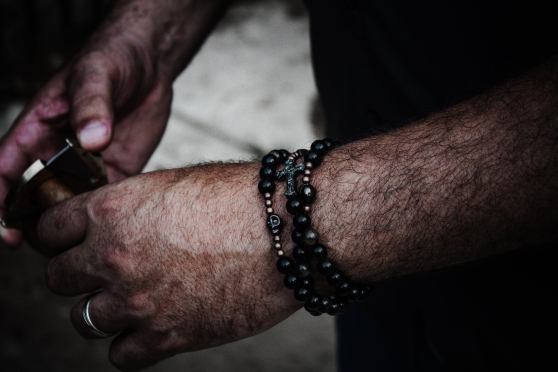
I have a bracelet I wear. Actually, it’s a Roman Catholic rosary, though I’m obviously not Catholic. The rosary, however, was crafted with a motif rooted in a medieval school of thought called Momento Mori that was adopted by monks and crusader knights alike.

Momento Mori is Latin and it translates “Remember your deathor more aptly “Remember you’re going to die.” It was a school of Christian thought in which individuals constantly kept the death sentence we all live under at the front of our conscious thought rather than stuffing it back in the recesses of cognitive denial. The notion of Momento Mori was that being daily reminded of, and meditating on, my mortality, it will motivate me to see this day differently, react differently, relate differently, and live differently. Momento Mori is working through the stages of grief and coming to acceptance of my impending death long before a doctor walks into the room and tells me I have cancer.

In the quiet this morning, I observe that Moses seems to have embraced the spirit of Momento Mori. Mo has humbly been obedient, despite being flawed and making tragic mistakes, ever since God appeared to him in the burning bush and announced He had a job. It isn’t recorded that he was rattled by the pronouncement that death will quickly follow this next task. He simply carries out the task.

Today is day 21,684 of my earthly journey. While it is probable that I will wake up to day 21,685 tomorrow morning, it is not guaranteed.

May I humbly live out this day faithfully following Jesus and being obedient to those things to which God has called me.

Momento Mori.

For anyone interested, the bracelet I reference, also pictured in today’s featured photo can be purchased from Crux Invicta.

If you know anyone who might be encouraged by today’s post, please share.

Promotional graphic for Tom Vander Well's Wayfarer blog and podcast, featuring icons of various podcast platforms with a photo of Tom Vander Well.
These chapter-a-day blog posts are also available via podcast on all major podcast platforms including Apple, Google, and Spotify! Simply go to your podcast platform and search for “Wayfarer Tom Vander Well.” If it’s not on your platform, please let me know!
A bracelet designed with a 'Momento Mori' motif, symbolizing the reminder of mortality, possibly displayed alongside a Bible or spiritual context.

The Mystery of the Red Heifer

“This is a requirement of the law that the Lord has commanded: Tell the Israelites to bring you a red heifer without defect or blemish and that has never been under a yoke. Give it to Eleazar the priest; it is to be taken outside the camp and slaughtered in his presence.
Numbers 19:2-3 (NIV)

I do love a good mystery. In fact, over the past year I’ve been making my way through a gritty series of mysteries by Alan Parks centered on a Glasgow police detective named Harry McCoy. I highly recommend, though only for those who aren’t squeamish about the reality of the depths of human depravity.

One of the things I’ve learned to embrace and appreciate along my spiritual journey is the mysteries of the Great Story. There are certainly things that are clearly known, but then there are pieces of the Story wrapped in mystery. As always, I am reminded of Richard Rohr’s take that mystery is not something that we can’t understand but rather something that we can endlessly understand. Because metaphor is layered with meaning, the mystery is like an eternal dance in which we can participate on this side of heaven. It can move me, inspire me, stretch me, and even wear me out at times, but the dance is never done. It’s always there waiting for me on the dance floor.

So we come to one of the most paradoxical and profound mysteries in the entire Great Story: the mystery of the red heifer. According to Jewish scholarship, this is what the sage of Ecclesiastes is referring to in Ecclesiastes 7:23 which they interpret as: “All this I have tested with wisdom… but the red heifer remains far from me.” Other Jewish scholarship simply throws up its hands and says, “It’s the Torah. Don’t try to understand it. Just obey it.”

Hmmmm. Mysterious. I love a good mystery. Let’s dance.

In short, the red heifer was taken outside the camp and slaughtered. Then it was completely burned. The ashes were used to create holy water used to purify anyone who was ceremonially unclean because they had come into contact with a corpse. What’s strange is that the priest who handles the slaughter and burning of the red heifer becomes ceremonially unclean in doing so. So what is meant to cleanse the impure because of death makes the priest who slaughters and burns the red heifer impure. The red heifer is unlike anything else in all of the Levitical rituals and sacrificial system.

As I continued to let my head and heart dance with the mystery this morning, I found myself two-stepping into the metaphor as it relates to the Messiah. There are modern Jewish groups who see the return of the red heifer ritual as a critical precursor to the coming of the Messiah and what they believe will be the building of the Third Temple in Jerusalem and the restoration of the sacrificial system. In fact, some farmers in Israel raise red heifers for this purpose.

Of course, as a disciple of Jesus, I make a turn on the dance floor with the knowledge that the Messiah has come, and I dip into the metaphor and mystery of the red heifer as a foreshadowing of Jesus’ sacrificial death in which the pure was made impure as He took upon Himself the sin of the world, and through that death the living water flowed into which I am baptized in the likeness of His death and raised in the likeness of His resurrection, cleansed and purified from sin and death.

Red Heifer (Numbers 19)Jesus (New Testament)
Female, spotless, redHuman, sinless, born in flesh (blood and dust)
Slain outside the campCrucified outside Jerusalem
Burned entirelyBody fully given—nothing held back
Ashes mixed with water for cleansingBlood and water flow from his side (John 19:34)
Cleanses from death’s defilementCleanses from death itself—eternal life
Sacrifice must be repeatedOnce for all (Hebrews 10:10)

So, in the quiet this morning, I emerge from this dance with the mystery of the red heifer not confused or discouraged lake the Sage of Ecclesiastes, but energized by the notion that there are layers and depth of spiritual understanding that transcend my human knowledge and understanding. It speaks to me of what Jesus taught, that purity doesn’t come from avoiding death, but following Jesus and walking through it.

Thanks for dancing with me, my friend. Hope you enjoyed spinning into the mystery.

If you know anyone who might be encouraged by today’s post, please share.

Promotional graphic for Tom Vander Well's Wayfarer blog and podcast, featuring icons of various podcast platforms with a photo of Tom Vander Well.
These chapter-a-day blog posts are also available via podcast on all major podcast platforms including Apple, Google, and Spotify! Simply go to your podcast platform and search for “Wayfarer Tom Vander Well.” If it’s not on your platform, please let me know!

I Choose

The next day Moses entered the tent and saw that Aaron’s staff, which represented the tribe of Levi, had not only sprouted but had budded, blossomed and produced almonds.
Numbers 17:8 (NIV)

This past week, I have been enjoying the fruit of our little herb garden here at Vander Well Manor. I’m happy to report that I have not only managed to keep our little garden growing, but it’s even yielded some abundance! I’ve had lots of Jalapeno peppers which I’ve been dicing and adding my queso. I also used parsley and basil in making a homemade almond salsa verde which we’ve used on both grilled chicken and grilled salmon. It was really good.

When God began talking to the Hebrews about His dwelling among them, He boiled things down into very simple terms: life and death:

This day I call the heavens and the earth as witnesses against you that I have set before you life and death, blessings and curses. Now choose life, so that you and your children may live and that you may love the Lord your God, listen to his voice, and hold fast to him. For the Lord is your life, and he will give you many years in the land he swore to give to your fathers, Abraham, Isaac and Jacob.
Deuteronomy 30:19-20 (NIV)

Along my spiritual journey, I’ve come to realize that this is a great way to summarize the entire Great Story.

God is a wellspring of life.
Creation
Order
Fruitfulness
Abundance
Resurrection
Contentment

Evil rejoices in death.
Destruction
Chaos
Infertility
Scarcity
Decay

Discontent

When reading the ancient texts, I’ve learned that it’s important to pay attention to how things are ordered (God loves order).

In yesterday’s chapter, a massive rebellion breaks out against Moses and Aaron. It begins with a man named Korah and 250 leaders who attempted a leadership coup. By the time all was said and done “the whole Israelite community” had joined in the discontented grumbling. The consequences of standing up and rebelling against what God had ordained was swift judgement and death for the 250 instigators.

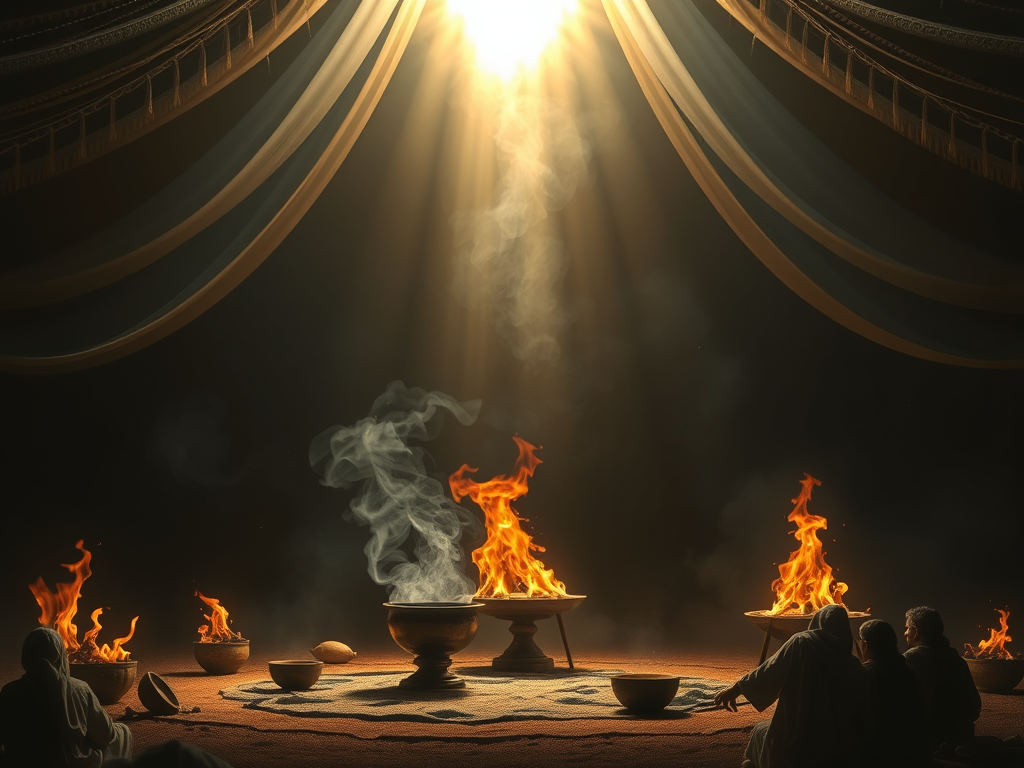
In today’s short chapter, God instructs Moses to have the head of each tribe bring a wooden staff to God’s traveling tent Temple with their name engraved on it. Aaron brought the staff for the tribe of Levi. Moses placed all twelve inside the tent overnight. By morning, nothing had changed about eleven of the wooden staves. Aaron’s however, had not only budded, but it had blossomed and produced almonds.

What in the world?!

A few thoughts about God giving the Hebrews this metaphor:

First, dead wooden staves do not sprout, let alone do they produce fruit. The miracle of Aaron’s rod not only provides the Hebrews with an undeniable sign of God’s choice of Aaron and his son as priests, but His miracle reminds them that it is God’s choice. Aaron’s staff was no different than any of theirs. God’s choice was not based on Aaron’s merit, but on God’s gracious choice intended to bring life and blessing through Aaron to everyone in the community.

Second, the miracle stands in contrast to Korah’s rebellion in which discontent led to conflict, chaos, and death. Quietly, God’s swift miracle restores order and brings fruitfulness. Jewish scholars have long observed that almonds are among the earliest to blossom. God’s metaphorically reminding the Hebrews of a truth that God’s chosen King, David, would so poetically and lyrically phrase:

For his anger lasts only a moment,
    but his favor lasts a lifetime;
weeping may stay for the night,
    but rejoicing comes in the morning.
Psalm 30:5 (NIV)

Finally, God’s miracle reminds the Hebrews of what He’s been telling them from the beginning. He is the God of Creation, who is all about life and abundance. Before the miracle, God told Moses that the staff He chose would “bud.” Aaron’s staff did far more than that. As Jesus, God’s Son would later tell us, “I came that you might have life in abundance!”

So in the quiet this morning, I’m simply reminded that I choose.

With my choices each day I am choosing one or the other. I can make choices out of discontent, envy, anger, and pride that lead towards perpetual disorder, conflict, and chaos in life. Or, I can make choices out of faith in and obedience to the way of Jesus in which love for God and love for others leads to contentment, order, gratitude that is fruitful and life-giving for myself and everyone around me (like an herb garden!).

What does my life say about the nature of my choices?
What do my choices say about the condition of my heart?

If you know anyone who might be encouraged by today’s post, please share.

Promotional graphic for Tom Vander Well's Wayfarer blog and podcast, featuring icons of various podcast platforms with a photo of Tom Vander Well.
These chapter-a-day blog posts are also available via podcast on all major podcast platforms including Apple, Google, and Spotify! Simply go to your podcast platform and search for “Wayfarer Tom Vander Well.” If it’s not on your platform, please let me know!
A collection of wooden staffs, representing the tribes of Israel, displayed in a tent setting.

The Divergent Paths of Fear and Faith

“Why is the Lord bringing us to this land only to let us fall by the sword? Our wives and children will be taken as plunder. Wouldn’t it be better for us to go back to Egypt?”
Numbers 14:3 (NIV)

As a purely base human instinct for survival, fear is essential. Our brains react to situations instinctively to warn us and cause us to be cautious of or to flee potentially fatal dangers. As a disciple of Jesus, I have found that the spiritual journey requires the development of faith that overcomes fear. Fear is the enemy of faith. Where Jesus leads me is away from the fear of death. In fact, where Jesus leads, I walk into death as He did, believing what He asked the sister of Lazarus to believe:

“I am the resurrection and the life. The one who believes in me will live, even though they die; and whoever lives by believing in me will never die.”

Today’s chapter is one of the most crucial waypoints in the Great Story. Having quickly reached the Promised Land, the Hebrew tribes are at a point of decision. Will they have faith that the God who miraculously delivered them from Pharaoh and 400 years of slavery will also deliver to them the land He’s been promising all along, or will they now refuse to go where He is leading them?

I found an interesting pattern emerge from the story starting in yesterday’s chapter and continuing into today’s fateful moment of decision.

It begins with fear, expressed in the spies report back to Moses:

“But the people who live there are powerful, and the cities are fortified and very large. We even saw descendants of Anak there.”

As the fear grew, it led the spies to exaggerate, lie, and deceive the people as they spread false claims:

“But the men who had gone up with him said, ‘We can’t attack those people; they are stronger than we are.” And they spread among the Israelites a bad report about the land they had explored. They said, “The land we explored devours those living in it. All the people we saw there are of great size. We saw the Nephilim there (the descendants of Anak come from the Nephilim). We seemed like grasshoppers in our own eyes, and we looked the same to them.”

The fear, fueled by deception, leads the people to doubt and a presumption:

Why is the Lord bringing us to this land only to let us fall by the sword? Our wives and children will be taken as plunder.

They don’t know this negative outcome is going to happen, but their fear has led them to believe it. Fear has led to a kind of shadow faith, the firm belief in their pessimistic presumptions.

As a confirmed pessimist, I know this road to presumption really well. I’ve trodden its path many times on this earthly journey. In fact, I can see it play out constantly in the doomsday predictions that come from both sides of the political aisle as well as conspiratorial groups that are ever with us. As Wendy and I sit over breakfast every morning and read through the news, not a day goes by that there isn’t at least one headline proclaiming some kind of doomsday scenario. I’ve observed that not only is fear a base human instinct, but its also both contagious and creates reactive responses. Among those active responses is clicking on the doomsday articles to find out how we’re all going to die, which makes media outlets money, which is why they love printing doomsday articles.

The spies fear led to deceptive exaggeration that spread their fears like contagion throughout the Hebrew camp, leading to a reactive uprising against Moses and Aaron, along with the threat to murder Joshua and Caleb for even suggesting that they enter the Promised Land. I see that same pattern happen over and over again in our own world.

Fear —> Exaggeration/Deception —> Presumption —> Reaction

In the quiet this morning, I find God’s Spirit reminding me of all the ways that Jesus called me to live by faith, not fear. All of the ways He calls me to respond with faith rather than reacting to fear. All of the ways He tells me that God’s Spirit leads to a place where my flesh instinct to fear death must give way to an understanding that the path to Life leads through death to the Resurrection.

Like the Hebrews camped outside the Promised Land, if I’m afraid to have faith that following Jesus where He is leading me will ultimately lead to Life, then I will find my fear leading me to all sorts of deadly presumptions this side of the eternal Promised Land.

If you know anyone who might be encouraged by today’s post, please share.

Promotional graphic for Tom Vander Well's Wayfarer blog and podcast, featuring icons of various podcast platforms with a photo of Tom Vander Well.
These chapter-a-day blog posts are also available via podcast on all major podcast platforms including Apple, Google, and Spotify! Simply go to your podcast platform and search for “Wayfarer Tom Vander Well.” If it’s not on your platform, please let me know!

My Desire

“Because of the increase of wickedness, the love of most will grow cold, but the one who stands firm to the end will be saved.”
Matthew 24:12-13 (NIV)

One of the spiritual lessons that I’ve learned along my earthly journey is to be aware of synergies between different things in my life and meditations. I begin each weekday reading a chapter and sharing my thoughts in this post/podcast, but my trek through the Great Story does not end here. I listen to and read other sources of study and meditation. I study as part of preparation for messages I’ve been tasked to give. Usually it’s like striking down a separate path of thought. Sometimes, those roads converge, and it’s then that I have learned to pay heed.

I’ve mentioned in previous posts/podcasts that I’ve been listening to a series of podcasts by the Bible Project on the metaphor of mountains throughout the Great Story. One of the most impactful for me was an episode about the prophet Elijah. Elijah had a great spiritual victory on Mount Carmel, but despite the miraculous and big-screen worthy triumph he inexplicably sank into suicidal depression. He flees to Mount Sinai where he gives up, hands in his resignation, and God accepts it.

Elijah did not finish well.

Nevertheless, the prophet Malachi prophesied that Elijah would return. Jesus stated clearly that John the Baptist was that Elijah. Just this past Sunday I gave a message in which John sends his disciples to Jesus to ask if He is really the Messiah or if he should expect someone else. John was languishing in Herod’s prison. It was not what he expected, and it prompted a crisis of faith. Jesus cryptically tells John to expect no such miraculous deliverance, then adds: “Blessed is anyone who does not stumble on account of me.”

John did not finish well.

Just last week I celebrated my 59th birthday. That mean’s I’ve entered my 60th lap around the sun. And, that has me thinking about what’s out there on the horizon.

In today’s chapter, Jesus has left the Temple and His showdown with the power brokers of that earthly religious kingdom. He and His disciples camp out on the Mount of Olives just outside of Jerusalem (More synergy. There’s that theme of mountains cropping up!). Jesus is talking about the end times. As I read all the prophetic words that create so many questions, I decided to focus in on what can’t be questioned. I paid heed to the things Jesus demanded of His disciples in light of the events He prophesied. I found three (and there’s that number three again).

Don’t be alarmed. (vs. 6)
Don’t let your love grow cold; Stand firm to the end. (vss. 12-13)
Keep watch. Be ready. (vs. 42, 44)

In the quiet this morning, I find myself simply feeling the desire to spiritually end this earthly journey well and meditating on that desire. I don’t know the number of my days. I could have 31 years (or 14,976 days) left on this earthly journey and make it to 100. Nevertheless, there are certainly fewer days ahead than there are behind (today is day 21,558). The world I observe around me is not the same place I remember from my youth. I can already see how easy to fall into cynicism, criticism, negativity, and despair. I witness it in others. But, I have yet to see what Jesus described as “distress, unequaled from the beginning of the world until now—and never to be equaled again. And, the fruit of the Spirit includes the attributes of joy, peace, patience, and faithfulness.

So I enter this another day of the journey determined to practicing the things I need to do to keep cultivating and bearing the fruit of God’s Spirit to the end. Not being alarmed, not letting my live grow cold, and being ready for the end. The end of my days, or the end of the age, whichever comes first.

If you know anyone who might be encouraged by today’s post, please share.

These chapter-a-day blog posts are also available via podcast on all major podcast platforms including Apple, Google, and Spotify! Simply go to your podcast platform and search for “Wayfarer Tom Vander Well.” If it’s not on your platform, please let me know!

Of Doctors and Priests

Of Doctors and Priests (CaD Lev 14) Wayfarer

The priest who pronounces them clean shall present both the one to be cleansed and their offerings before the Lord at the entrance to the tent of meeting.
Leviticus 14:11 (NIV)

In the past few weeks, Wendy and I have had a smattering of medical appointments and procedures of various kinds. There is more to come in the near future. As much as I hate to admit it, our bodies are showing the signs of our ages (Wendy is way younger than me! 😉). As I mentioned in yesterday’s post/podcast, no matter how good medical science gets, there is ultimately no antidote for the eventuality of our bodies aging and dying. Of course, there have been and always will be those who continue to seek that holy grail.

Which had me thinking as I read today’s chapter. Yesterday described the process by which the newly appointed Hebrew priests would examine, diagnose, and quarantine those individuals who showed signs of a skin disease that could be contagious. In today’s chapter, the priests are instructed how to examine and then prescribe a healthy person’s return to the Community. This included a ceremonial ritual for cleansing outside the camp followed by a regimen of washing both body and clothes, and shaving off all hair. The individual was then allowed into the camp, but there was a seven-day period in which the individual did not go into their family’s tent/house. If after seven days there was no sign of relapse, on the eighth day they went to the same priest who declared them clean and he would make an offering to the Lord to atone for the cleansed person. Then they could return to their family tent.

What struck me as I read these instructions was the role of the priest, who is acting very much as a doctor. Have you ever noticed the universal symbol we still use today for medicine and healthcare? It originates right out of the story of Moses and these Hebrew tribes escaping from slavery and beginning this new way of living in the wilderness. In Numbers 21, the people are being plagued by poisonous snakes. Moses makes a bronze snake, places it on a pole, and everyone who is bitten by a snake looks at it and lives.

So the first doctors in this tradition were priests, and there was a connection between God, health, and healing. Two thoughts, make that three, are churning in mind.

First, in all of my years of involvement with churches of every shape, size, and tradition, I’ve never experienced one that truly addresses, emphasizes, and attempts to help people make the spiritual connection between their spiritual life and their physical health. As Paul put it to the believers in Corinth:

Do you not know that your bodies are temples of the Holy Spirit, who is in you, whom you have received from God? You are not your own; you were bought at a price. Therefore honor God with your bodies.
1 Corinthians 6:19-20 (NIV)

Second, as I’ve observed my aging grandparents and parents in these final seasons of earthly life, I can’t help but observe the healthcare system. The system appears to me to be largely designed to profit by helping a human beings stay alive as long as possible. There is a lot of money to be made in doing so. As the body ages there a multiple things that begin to breakdown. For every single one of them there are examinations, tests, scans, procedures, drugs, and regular follow-up visits. And for every thing on that list there is a price tag.

As I think about this from a spiritual perspective, it strikes me that the what the healthcare system really wants to do is to help humans avoid death as long as possible. On one hand, this is a natural human instinct. The pursuit of longer, more productive lives is worthy. I’ve observed along my journey, however, that worthy human pursuits almost always have the propensity to be twisted in spiritually dark ways. Voldemort was pursuing the eternal avoidance of death. Dr. Frankenstein, too.

Have we made the medical establishment modern day priests who will extend our lives in a form of Godless religion?

At what point does the avoidance of death at all costs become empty of any kind of Life?

At what point does an industry designed to profit from helping people avoid death become just a modern tower of Babel built with DNA strands, stem cells, technology, and pharmaceuticals?

And this brings me to the third thought rummaging around in my mind and soul this morning. At the very core of everything God is doing in Leviticus, at the core of everything Jesus taught, is an unescapable spiritual paradox: If I want to experience Life, I am required to face death and embrace it. Jesus was very clear that He came to this earth to die as the ultimate sacrifice for my sin. It was a willful and servant-hearted act of love, surrender, and sacrifice. He calls me to follow in his footsteps every day. If I really want to Live, I must daily pursue the death of my pride and selfish desires to pursue love, surrender, and sacrifice

And wouldn’t you know it? I have observed that even this spiritual truth appears to have been twisted by some into a pursuit of death in a selfish desire to avoid life. It seems the healthcare industry and some governments are more than willing to profit from this, as well.

Lord, help me to die to myself that I might live for You and others.

If you know anyone who might be encouraged by today’s post, please share.

These chapter-a-day blog posts are also available via podcast on all major podcast platforms including Apple, Google, and Spotify! Simply go to your podcast platform and search for “Wayfarer Tom Vander Well.” If it’s not on your platform, please let me know!

Seriously

Seriously (CaD Lev 10) Wayfarer

Aaron’s sons Nadab and Abihu took their censers, put fire in them and added incense; and they offered unauthorized fire before the Lord, contrary to his command. So fire came out from the presence of the Lord and consumed them, and they died before the Lord.
Leviticus 10:1-2 (NIV)

Our daughters are very different individuals. When they were young, Taylor was always dutiful, sweet and soft-hearted. If she was caught being naughty, all it took was my “dad look” to reduce her to tears. Madison was entirely a different matter.

One day I was headed out to run an errand and I heard Taylor screaming in the back yard. I investigated and found Madison hitting her big sister in the head with a whiffle-ball bat. With righteous paternal anger, I yelled and scooped Madison up in my arms. I decided to throw her in her car seat and take her with me on my errand so I could have a serious talk with my little one about assault and battery with a deadly weapon.

“Madison?! You NEVER hit people with something like a baseball bat! It’s dangerous and you can seriously hurt people!” I yelled as I looked at her in her car seat from the rear view mirror.

“How do you know?” the she replied casually from her car seat.

“Because it’s happened, Madison! People have been hit with baseball bats and have ended up in the hospital. Some people have even DIED!”

“But, daddy, how do you know?” she asked again, seemingly unfazed by my obvious anger and raised voice.

“Because it was in the NEWS! Someone got hit in the head and died and they reported it in the NEWS!” I screamed, my temper reaching DEFCON FIVE.

There was a long pause. Perhaps I finally got through to her.

“Daddy?” came the sweet voice from the back seat.

“WHAT?!” I yelled.

“Grandma says you can’t always believe what they say on the news.”

Sometimes, it is lost on children just how serious a matter can be.

In yesterday’s chapter, Aaron and his sons began their new lives as priests. Aaron offered God’s prescribed offerings for the firsts time, followed the instructions obediently, and the glory of the LORD appeared.

Today’s chapter tells a very different story. Two of Aaron’s sons fail to make the mental and spiritual transition from dudes to priests. The bros aren’t taking all this priestly stuff seriously. They start screwing around with the fire and incense in God’s tent temple. Fire from God’s presence consumed them and they died.

Sometimes, it is lost on children just how serious a matter can be.

The death of Nadab and Abihu is tragic, as are a lot of deaths that result when people don’t take mortal (and immortal) dangers seriously. For the Hebrews, this event right on the heels of Aaron’s obedience actions provide a sobering lesson. God is not playing games. When He said that He is setting before them life and death, and wants them to choose life, He wasn’t kidding. I imagine that Aarons remaining sons suddenly took their new jobs a little more seriously.

In the quiet this morning, I couldn’t help but think of a similar event in the early days of the Jesus Movement in the book of Acts. A couple named Ananias and Sapphira conspire to lie to Peter and the church about a financial matter for their personal profit. When their greedy deceit is brought to light, the couple fell dead. That incident, along with Nadab and Abihu’s tragic deaths are isolated incidents a thousand years apart from one another, but they both serve as a reminders that perhaps I should take God seriously.

If you know anyone who might be encouraged by today’s post, please share.

These chapter-a-day blog posts are also available via podcast on all major podcast platforms including Apple, Google, and Spotify! Simply go to your podcast platform and search for “Wayfarer Tom Vander Well.” If it’s not on your platform, please let me know!

Of Fat and Blood

Of Fat and Blood (CaD Lev 7) Wayfarer

“Say to the Israelites: ‘Do not eat any of the fat of cattle, sheep or goats. And wherever you live, you must not eat the blood of any bird or animal.”
Leviticus 7:23-26 (NIV)

Living in Iowa, one is spoiled when it comes to a good steak. The other week while Wendy and I were on a cruise, we treated ourselves to a fancy, upscale dinner at the ship’s onboard steak house restaurant. It was a lovely evening and we enjoyed ourselves very much. The steak I ordered was, however, just okay. The truth is that for one-third the price I could have gotten a much better steak at my local grocery store.

One of the things you learn about steak when you live in farm country is that fat is good. Fat is what helps make the lean meat even tastier. Steak experts talk about “marbling” of the steak and the fat to lean ratio. It’s a whole thing.

We are also spoiled by having fat cows. For the ancient Hebrews living in the desert wilderness, fat was a luxury and a sign of abundance.

One of the things modern readers struggle with in reading Leviticus is understanding some of the rules God put down. They seem so strange to our 21st century lives. This is true even for Biblical scholars and experts. There are certain things in this ancient Hebrew priest manual that are mysteries lost to us in the course of time. Others, however, can be understood when you translate God’s base language of metaphors.

In today’s chapter, God gives instruction that the fat of a sacrificed animal is God’s alone. Some portions of certain sacrifices could be eaten by the priests (it was how the priests and their families were provided for), some might be eaten by the person who brought it, but only God could have the fat. Fat, being a sign of health and abundance was the best. It is part of a recurring theme God is teaching the Hebrews through this entire sacrificial system. Bring God the best: the first fruits of the harvest, animals without defect, and the fat of the animal.

As for blood, it was deeply associated in the Hebrew mind with life itself. When a person was injured or slain and the blood spilled out of them, it was to them a person’s life spilling out. And God makes it abundantly clear throughout the entire Great Story that life is sacred. God even boils down the Great story on multiple occasions to a simple choice of life or death:

This day I call the heavens and the earth as witnesses against you that I have set before you life and death, blessings and curses. Now choose life, so that you and your children may live and that you may love the Lord your God, listen to his voice, and hold fast to him. For the Lord is your life, and he will give you many years in the land he swore to give to your fathers, Abraham, Isaac and Jacob.
Deuteronomy 30:19-20 (NIV)

“The thief comes only to steal and kill and destroy; I have come that they may have life, and have it to the full. – Jesus
John 10:10

To consume the blood of another living being was metaphorically consuming its sacred life.

As I meditated on this in the quiet this morning, there were two things that emerged for me.

First, I found my heart and mind returning to the idea of giving God our best. The truth is that for most of my life I feel like I gave God my leftovers. It was only as I matured in my understanding that everything I have is God’s and nothing is really mine that I truly understood generosity. Generosity is not me giving something up, but rather it’s me stewarding and channeling God’s goodness and provision to others.

Second, God is beginning to teach His people about the difference between the sacred and the ordinary. He’s introducing His people to the concept of holiness, and I believe that it was another thing that is easy for humans to twist into something it’s not. I believe it was another thing that Jesus came to reclaim and return to a heart understanding.

But there’s more of that to unpack in the chapters ahead. It is now time for me to engage in the sacred task of my vocation.

Have a great day, my friend!

uote

If you know anyone who might be encouraged by today’s post, please share.

These chapter-a-day blog posts are also available via podcast on all major podcast platforms including Apple, Google, and Spotify! Simply go to your podcast platform and search for “Wayfarer Tom Vander Well.” If it’s not on your platform, please let me know!