Tag Archives: Male

God’s Radical Decision for Women

So Moses brought [the case raised by Zelophehad’s daughters] before the Lord, and the Lord said to him, “What Zelophehad’s daughters are saying is right. You must certainly give them property as an inheritance among their father’s relatives and give their father’s inheritance to them.
Numbers 27: 5-7 (NIV)

The Hebrew tribes are camped on the Jordan River across from Jericho. On the other side of the Jordan lies the Promised Land. The time has come to take possession and everyone in the camp is talking about the land that their tribe and their families will eventually be given. The idea of land to farm and graze and a homestead for the family and future generations to live and flourish has been a common human dream throughout history.

This is a moment of promise for the Hebrews. At Mt. Sinai almost 40 years earlier God gave them a vision for this moment. He gave them his guidebook for life and community with God and others in Leviticus. God told the Hebrews that He was going to show them His ways and they would be an example to all the other nations, empires, and peoples of His ways. This included radical new ideas like a sabbath day of rest, the care for strangers, societal protection for the poor and vulnerable, and being a nation with no human king, pharaoh, or emperor.

Now, at this very moment of history on the edge of fulfilled promise of a land to call one’s own, one of the most amazing stories in the entirety of the Great Story takes place. It is a prime example of God wanting things to be different than human defaults. It is a tale no one taught or talked about in all my many years of sermons and Bible classes. It is the story of Zelophehad’s daughters.

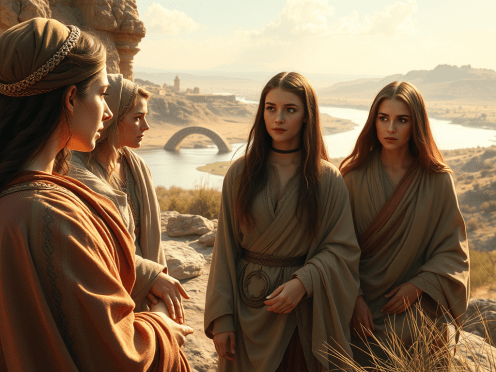
At this moment when everyone is thinking about the land they will be given, the daughters realize they have a problem. Their father died and he had no sons. It’s just the sisters. The ancient near east, especially Mesopotamia, the nations and people groups were staunchly patriarchal. Women had no autonomy. They owned no land. They could inherit no land. Everything was legally channeled through the males in the family.

So, with divine chutzpah, the daughters approach Moses and the elders of the community. This in itself was a radical departure from cultural norm. Women didn’t participate in the meetings of the elders or the formal business affairs of the community. Nevertheless, the daughters broke protocol and they made their case before Moses. They had listened and embraced what God had said at Sinai and what Torah taught about God caring about the marginal, societal protection for the vulnerable, and justice. Why should another family get their family’s promised plot of the Promised Land simply because they had no brother?

Then something more amazing happens. Moses takes the daughters’ case before God. God quickly and unequivocally decides for the daughters. Women can inherit land and own it. God sides with women and demands that it become the law of His people. While there were other ancient cultures in which women had the right to own and inherit land (Egypt being prime among them) the right typically had certain patriarchal limits. Never before had there been a divine decree that simply and directly conferred upon women the right to inherit and own their family property. This was radical.

Remember, in the Great Story everything is connected. What God is doing with physical inheritance here in Numbers is the same thing He will do with spiritual inheritance through Christ:

“Now if we are children, then we are heirs—heirs of God and co-heirs with Christ…” Romans 8:17 (NIV)

“There is neither Jew nor Gentile, neither slave nor free, nor is there male and female, for you are all one in Christ Jesus.” Galatians 3:28 (NIV)

There are two main themes that flow out of my meditation on Zelophehad’s daugthers in the quiet this morning.

First, I love the holy audacity of the daughters to step-up at the right moment and stand for what was right. It echoes the same chutzpah I see in Wendy and in our daughters. I love it. I love their heart for what’s just for everyone. I love that God blessed their courage and that God divinely cut against what was entrenched human cultural tradition. I hear echoes of the prophet Isaiah: “Your ways are not my ways.”

Second, history has taught me that human defaults and entrenched human culture traditions never change easily. In just a few chapters, the men will find a way to use human legal means to hem in the radical rights God has just granted to women. Early Christian “fathers” made similar moves to hem in the spiritual equality Jesus brought to the table. The tension remains to this day. I don’t think the tension will ever abate this side of eternity because it is connected to the consequences of the Garden in just the third chapter of the Great Story.

But, I can embrace God’s heart. I can embrace and celebrate what He did for the daughters of Zelophehad thousands of years ago and all the women their precedent effected through the centuries. I can embrace and celebrate what Christ did in bringing women to the table as full and equal heirs of God’s Kingdom. And, where it is in my ability I can speak and act in supporting and encouraging that spiritual reality and all that it means.

If you know anyone who might be encouraged by today’s post, please share.

Promotional graphic for Tom Vander Well's Wayfarer blog and podcast, featuring icons of various podcast platforms with a photo of Tom Vander Well.
These chapter-a-day blog posts are also available via podcast on all major podcast platforms including Apple, Google, and Spotify! Simply go to your podcast platform and search for “Wayfarer Tom Vander Well.” If it’s not on your platform, please let me know!
Logo of Bible Gateway, featuring an open book icon and the name 'Bible Gateway' in bold font.

Always Believe the Women

Always Believe the Women (CaD Lk 24) Wayfarer

But they did not believe the women, because their words seemed to them like nonsense.
Luke 24:11 (NIV)

Looking back on my life journey, I’m grateful that God surrounded me with women. While I have two older brothers, they are identical twins and seven years older. Thus, growing up, it was my older sister Jody who was my constant companion. We even went to the same college. Then, God blessed me with two daughters and for pretty much the next thirty years I was the lone male in the house with three females.

Being surrounded by women has been a life-long course for me in female appreciation. The fact that my earthly journey coincided with the unprecedented rise in the role, status, and rights of women has only accelerated my understanding. Back in high school, our study of world history tracked the role of women in society throughout the ages, which was huge in preparing me for the learning I’ve had to do along the way.

My thoughts on the role and status of women have changed dramatically over the years. This is not just rooted in cultural changes, but in my spiritual maturity and understanding, as well. It’s only in the last ten years that I’ve come to increasingly appreciate one of the foundational pieces of the Great Story from the very beginning. When cursing Adam, Eve, and the evil one for the original sin God tells the serpent that there will be “enmity” between him and the woman.

I believe that the struggle of women throughout history is, among many other things, a spiritual struggle. I believe that there is a special hatred that the evil one has had for women from the beginning, and men have been largely complicit in blindly accepting the schemes. I confess I have, especially in my younger years. I have a whole host of thoughts on this subject that I hope to share in a future post and podcast, so I won’t belabor the point.

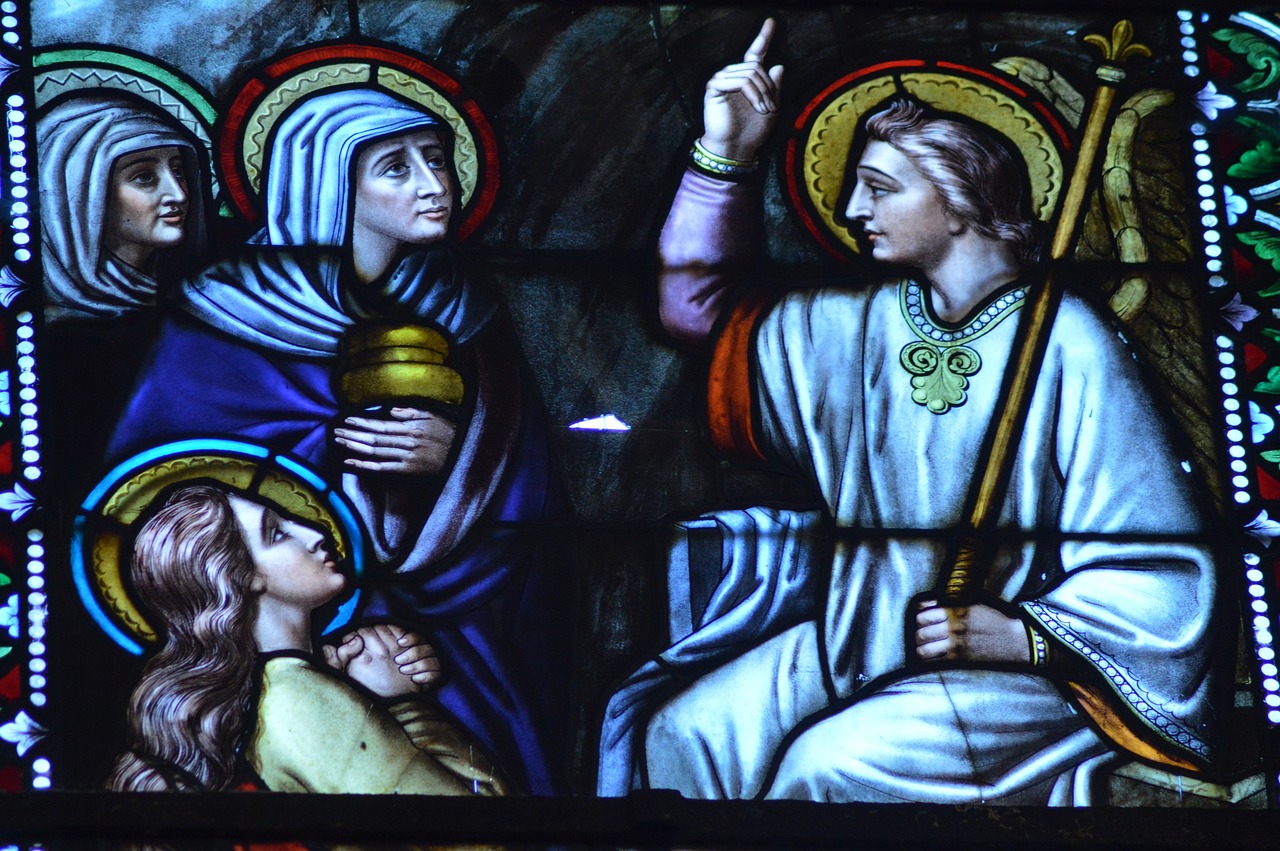
One of the things I’ve come to love about Luke’s version of the Jesus Story is the fact that he alone gives credit to the women who followed Jesus and financially made it possible. In today’s final chapter, Luke not only records that it was the women who first discovered that Jesus had risen, but he also names them. Consider that while Matthew, Mark, and John were primary sources and witnesses of events in Jesus’ story, Luke was not. He investigated the Jesus Story by interviewing and collecting evidence from primary sources. I personally believe that Luke names women like Joanna, the wife of Chuza, the manager of Herod’s household because he interviewed her. He knew her, and he recognized the role she played in being among the inner circle of followers and financing Jesus’ ministry.

I also believe, as a man who has lived a life surrounded by women, that Luke records that the Eleven (The Twelve minus Judas) did not believe the women and considered their report of the risen Lord “nonsense” because the women would have clearly remembered this detail and emphatically made a point of it in their retelling. God bless Dr. Luke for honoring them by not leaving that out.

In the quiet this morning, I find myself thinking about my mother, who crossed over into eternity this past March. There is so much more that I appreciate about her today than I did even ten years ago. I think about her mother and three sisters who influenced my life as well as their mother who was the spiritual matriarch of our clan. I think about Wendy, her mother, sisters, and grandmother. I think about my daughters and granddaughters. As I consider the base enmity that the evil one harbors for them, it creates a desire within me to honor them more, appreciate them more, and encourage them more in all the days I have left on this earth.

If I could go back in time and have a chat with Peter and the boys, I would tell them, “Dudes, trust me on this. Always believe the women. Always.

If you know anyone who might be encouraged by today’s post, please share.

Ezer Kenegdo

Ezer Kenegdo (CaD Gen 2) Wayfarer

The Lord God said, “It is not good for the man to be alone. I will make a helper suitable for him.”
Genesis 2:18 (NIV)

For whatever reason, God saw fit to surround me with women most of my entire life journey. My eldest brothers are twins, my sister came five years later, and I brought up rear. Most of my childhood the sibling dynamic in my family system was two pairs: the twins and Jody and me. When I was very young, I can remember times when dad and the twins would be off doing something and I was home with mom and Jody. It made an impression on me.

Further down life’s road, I find myself the father of two girls, and then was blessed to have Wendy’s sister live with us for a few years. I always seem to find myself in situations in which I’m surrounded by women. About four years ago I wrote a post with my first words to my grandson, discussing this very phenomenon.

I’m not complaining, mind you. I rather enjoy it most of the time. In fact, the experience has significantly changed my view and understanding of women along my life journey. For most of my early journey I loosely held a fairly fundamentalist view of the roles of men and women, husbands and wives. And, I confess that many of my views early on were downright misogynistic. My life experiences, my spiritual journey as a Jesus follower, and the amazing women in my life, have led to embracing what I consider to be a deeper understanding of women and all the incredible things they are in creation.

In today’s chapter, God looks at Adam and makes a “helper suitable for him.” The Hebrew words are ezer kenegdo. Ezer simply means “help” or “assistance.” Kenegdo is made up of three words. The study text I read this morning stated that it suggests: “someone God fashions for the man who would correspond to him.” This does not imply inferiority, weakness, or submission, but rather one who “uniquely his counterpart and uniquely suited for him.”

And that brings me to Wendy, the woman who is the definition of my ezer kengdo. We couldn’t be more different in so many ways, and the Enneagram Institute describes relationships between Fours (me) and Eights (Wendy) “the most inherently volatile” of combinations, though it adds the combination can be “one of the most creative relationship couplings.”

Wendy and I do everything together. We work together out of our home, we serve together, and we play together. There are certainly things each of us do and enjoy alone, but for the most part we are around each other 24/7/365 in our daily lives. And that’s a good thing for me. It’s a great thing for me.

I had a member of my company’s Board of Directors once ask me if I could imagine doing my job without Wendy. My response was immediate: “Absolutely not.” In fact, I can’t imagine doing it without her. I can’t imagine doing anything without her. She’s “uniquely suited” to make me better at everything I do in life, in community, and business as I like to believe I am uniquely suited to make her better in the same.

Please don’t hear what I’m not saying. We’re not perfect. We clash. We have flashes of volatility as the folks at the Enneagram Institute describe. Sometimes sparks fly. Yet that, I believe, is inherently a by-product of ezer kenegdo. Not alike, but uniquely suited.

So, in the quiet this morning, I think there are a whole host of things that I could have blogged about from today’s chapter. It is chock full of truth on multiple layers. Yet, on this chapter-a-day journey, I often find that the thing that is most meaningful to me is the thing that rises to the top of mind and soul. To me, this day, that is ezer kenegdo; that is Wendy, and all of the women with whom God has surrounded me my entire life journey to teach me about manhood, and to make me a better man.

If you know anyone who might be encouraged by today’s post, please share.

(WW) Companions for the Journey Part 2

[WW] Companions on the Journey Part 2 Wayfarer

Enjoying a stogie at “The Cigar House” in San Juan. They have a great humidor along with great environment and service.

This week it’s Part 2 of “Companions on the Journey.” My conversation with Kevin Roose about friendship, accountability, the Enneagram, and what our chapter-a-day journey has practically meant in our life journeys.

“Bless You”

Never retaliate when someone treats you wrongly, nor insult those who insult you, but instead, respond by speaking a blessing over them—because a blessing is what God promised to give you.
1 Peter 3:9 (TPT)

In over 50 years of this life journey, I have enjoyed relationships with many friends. Especially among my male friends, I have regularly encountered those individuals with what I will describe as a particular soul wound. They never received a blessing from their father.

In ancient days, a father’s blessing was a cultural ritual. The blessing was the spoken favor of the father given, typically, to his son. The first recorded blessing in the Great Story is God’s blessing to Abram:

The Lord had said to Abram, “Go from your country, your people and your father’s household to the land I will show you.

“I will make you into a great nation,
    and I will bless you;
I will make your name great,
    and you will be a blessing.
I will bless those who bless you,
    and whoever curses you I will curse;
and all peoples on earth
    will be blessed through you.”

Genesis 12:1-3 (NIV)

In Genesis 49, Jacob calls all of his sons and speaks to each one of them “the blessing appropriate for him.” It was a rite of passage, often spoken before death in those days.

Along my journey, I’ve come to realize that our culture has largely forgotten the importance of children receiving a blessing from their parents. I have come to believe that it’s important for a child to hear a blessing from both parents. I have observed, however, that a son receiving a blessing from his father has a major spiritual and emotional impact on a man’s life. I have known men who received nothing but curses from their fathers, and I have known men who received nothing but silence from their fathers. The soul wound is often hidden behind a male ego and masculine bravado, but I’ve seen how it can cut deep and create all sorts of spiritual, emotional, and relational handicaps.

Speaking a blessing doesn’t have to be a formal ritual, though it certainly can be a very meaningful rite of passage when it’s done that way. The most simple blessings are simply words of love and affirmation:

  • “I love you.”
  • “You’ve got this. I believe in you.”
  • “You’re going to be okay. I know it.”
  • “I’m proud of you.”
  • “That was great. Well done.”
  • “You are loveable, valuable, and capable.”
  • “I have no doubt that you will succeed at whatever you’re led to do in this life.”

In today’s chapter, it struck me that Peter instructed believers to specifically speak a blessing over those who wrong you. I find myself wondering if we even know how to do that anymore, even with those we love, let alone doing it with our enemies. Given what I see on social media, cursing appears to be de rigueur.

In the quiet this morning, I’m discovering my renewed desire to bring blessings back. There’s a reason why I speak a blessing at the end of my podcast. I would love for blessings to become fashionable again, but I suppose that means I’ve got to start being more intentional about it. So, here you go, my friend. Receive an old Celtic blessing from this wayfaring stranger (I spoke it as I posted it):

May the blessings of the Light be upon you,
Light without and Light within,
And in all your comings and goings,
May you ever have a kindly greeting
From those you meet along the road.

Have a great day. Press on. You’ve got this.

Everyday People Making a Difference

Now Stephen, a man full of God’s grace and power, performed great wonders and signs among the people.
Acts 6:6 (NIV)

When I became a follower of Jesus as a young person, it so happened that my sister and a handful of other young people from our mainline Protestant church had made similar decisions. Excited about what God was doing in our lives, we had some great ideas about how we could share the good news. We thought it would be cool to do a series of meetings over a weekend with live music and to invite a good speaker that people would want to hear. So, we took our idea to the pastor and educational administrator of our church. Our idea was shot down immediately.

This was the first of many run-ins I’ve had along my journey with institutional churches. Most traditional, institutional churches have been historically hierarchical (and patriarchal, as well). Authority is given from the top-down, and power is dispensed and brokered just as it was among the temple priests and teachers of the law in Jesus’ day; Just as it is in almost any large institution. My friends and I were shot down because we were just kids, our idea was not approved by the denominational institution, and the speaker we wanted, while highly educated and capable, wasn’t credentialed in our particular denomination.

The thing I find fascinating in reading through the book of Acts is this early, dynamic explosion of faith. Thousands were choosing to follow Jesus, believe His resurrection, and give everything to what had become a “movement.” But it was different than the institutional Temple where it began. The Temple divided people. There was a section for women, a section for Gentiles (non-Jews), and a section only for priests. The followers of Jesus, however, met together. Everyone met together, ate together, and prayed together whether old, young, male, female, Jew, Gentile, slave, or priest.

In the institutional, hierarchical Temple, only priests and approved teachers of the law had the authority to do certain things. When the Holy Spirit pours out in and through the followers of Jesus, suddenly the “unschooled, unlearned” believers began teaching and speaking with spiritual authority. Signs and wonders began to be displayed through all believers, irregardless of education, age, gender, tribe, or social standing.

In today’s chapter, a man named Stephen is described as having performed many signs and wonders. He speaks in a synagogue and, filled with Holy Spirit, argues circles around the institutional lawyers and teachers. Stephen wasn’t one of the twelve. He wasn’t an original apostle. He was just another member of the “Body” of Christ. He was simply an every day believer, filled with Holy Spirit, ministering to people whenever, wherever he could.

Last night there was a meeting at our house with brothers and sister from among our local gathering of Jesus’ followers. Those who sat around our dining room table are going to be teaching in the coming weeks. There were two pastors from our local gathering’s staff, but there was also a banker, a diesel mechanic, a corporate middle manager, and a small business owner. Everyday people, male and female, older and younger, classically educated and not, all together using the gifts of the Holy Spirit in obedience to the Greatest Commandment so the Great Commission can be fulfilled.

Jesus’ mission was never about building or protecting an institution. It was about every day people connecting with God and loving others so that anyone and everyone can make the same connection.

First Words to My Grandson

My dear grandson,

These are my first official words to you. The first of what I hope will be long and enjoyable correspondence between the two of us as you journey through this life.

This past Sunday our house was filled with women who had gathered to celebrate your mother and your impending arrival in three weeks time. I spent the day before helping Grandma Wendy cooking, cleaning, decorating, and running errands to make sure that the stage was set for the occasion. As the women began to arrive I sequestered myself in the basement to be at Grandma’s beck-and-call should she need help with anything.

I was originally going to entitle this blog post Estrogen Overload as I experienced the humor of being the only male in the house with 20 females. I even used that term as I joked with some of the ladies late in the afternoon. It’s something I’m familiar with having raised two daughters and no sons. I’m quite used to being alone in the company of women.

Suddenly, it struck me that I wasn’t the only male in the room for once. There you were comfortably nestled inside your mother’s womb. Nevertheless, you were very much present. You were the very reason for the celebration. You and me with all the ladies. I smiled to myself at the very thought of it.

So, here are my first words to you, my grandson. Take a good look at these women surrounding you (I only wish we’d gotten more photos of all the ladies who were there and a photo of the entire group). Look at your adorable mother. Grandma Wendy and Grandma Brenda were there. There were three great-grandmothers and a great-great-grandmother present to celebrate you. There’s your cousin Emma, your great-aunt Jody, and your great-aunts Suzanna and Brooke who, amazingly, are younger than your Aunt Madison (I’m going to have so much fun helping you sort out all of this loving, mixed-up mess of a wonderful family). Then there are all the wonderful friends that were there along with family. These are amazing women. They have stories to tell and lessons to teach.

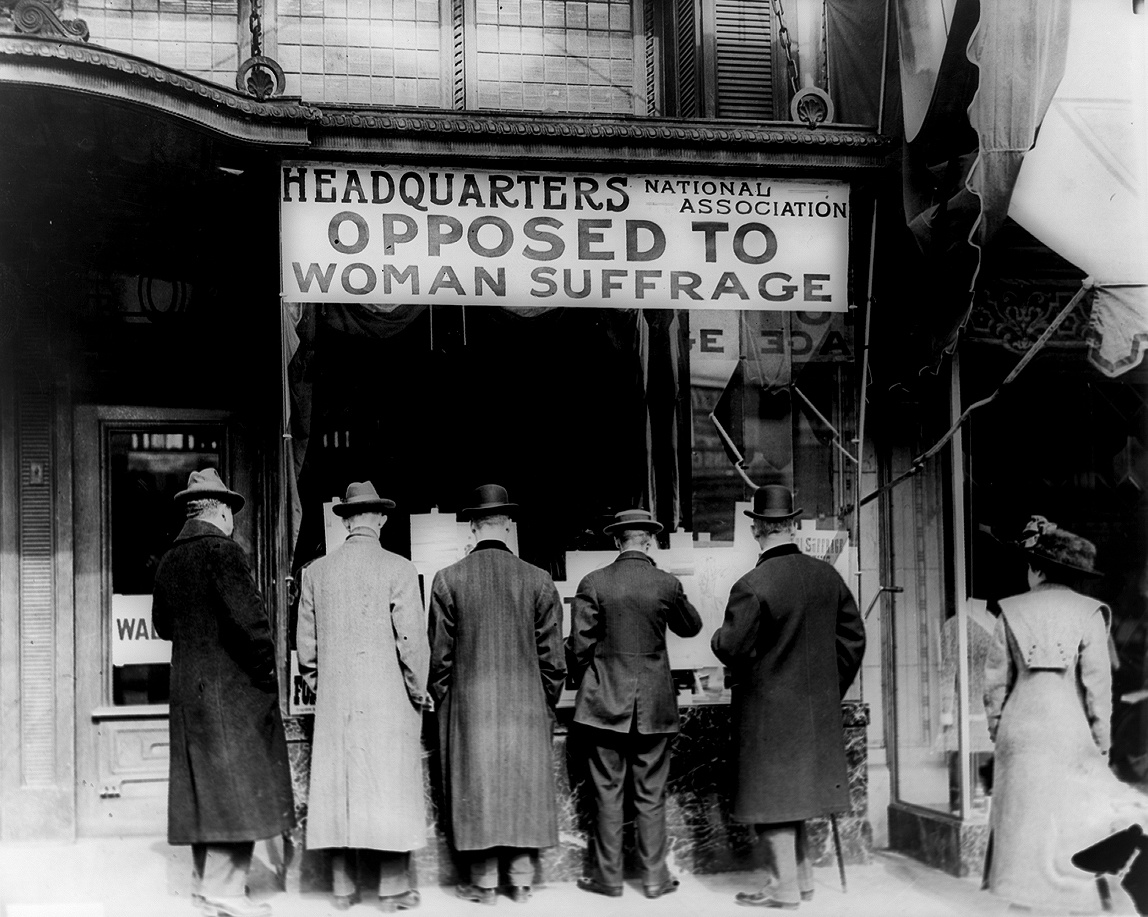
Much of human history has not been kind to our female counterparts. They have been treated like objects, servants, property, and second-class citizens because males have dictated it, encouraged it, and allowed it to be so. It is one of many sad realities of life that you’ll see and experience as you make your own way on your own path. But you will have the opportunity to make a difference simply in your thoughts, your choices, your words, and your actions.

Listen to grandpa. Hear me. Honor these women and all they represent. As a male you will find that much about females will seem mysterious to the point of frustration. There will be moments you’ll  be tempted to be dismissive, patronizing, and demeaning. Along your life journey you will be tempted to place women into two separate buckets in your mind: women to love and honor and women to diminish and objectify. You can’t have it both ways. When you embrace the latter you negate the former. I pray you will have the wisdom to resist these temptations. Someday, I’ve got a few things to share with you about the tragic foolishness of not doing so.

Respect women, all women, in the fullness of their being: body, mind and spirit. Respect the girls you grow up with, the woman you meet in a bar, the woman you work with, the woman you date, and the woman who is a stranger.  Respect them just as you respect the women in these photos. Respect women for all the ways they are different from us guys. Respect their strength. Respect their knowledge. Respect their spirit, ability, courage, and their passion. Learn their stories.  Embrace their wisdom. Love them well.

These women will make you a better man. This, I know from experience.

Thanks for being with me on Sunday. I’m sure it’s the first of many afternoons that you and I will share surrounded and outnumbered in the company of amazing women. I’ll teach you how to groan about it in manly fashion (and then secretly enjoy the heck out of it). I’m overjoyed to have your company.

Love you, little man.

Grandpa Tom

The Continuous Struggle

If a woman conceives and bears a male child, she shall be ceremonially unclean seven days…If she bears a female child, she shall be unclean two weeks….
Leviticus 12:2, 5 (NRSV)

I am going to be honest. There are still many things that cause me to scratch my head as I journey through God’s Message. I am content to accept the fact that my 21st century American brain cannot completely fathom the realities of life in the middle east c.1500 B.C. It does not stop me from being curious and inquisitive.

In today’s chapter, we read the Levitical system’s prescribed purification rights for women after they’ve given birth to a child. If a woman gave birth to a male child in the that culture she was deemed “unclean” for 40 days. If she had a female child, the period of being “unclean” doubled to 80 days. Even the scholarly text notes in my study Bible states: “It is not clear why the period of uncleanness after the birth of a baby boy (40 days) was half the period for a girl (80 days).” [cue: scratching head]

There is no doubt that ancient cultures, by-and-large, valued male births more than female births. It was a brutal period of human history. Daily life was a bloody, violent version of “king of the mountain.” Wars between tribes, clans, and towns waged non-stop. Power ebbed and flowed through never ending battles of local conquest. Boys became warriors and hunters required to protect, provide, and conquer.

The more things change, the more they stay the same. In the past year there has been a lot of press about China’s infamous program of population control, and the Chinese government’s moves to change the policy now that its unintended effects are shaking their society. Over the years China has gone to horrific lengths to control the birth rate of their people. Hearkening back to the misogynistic practices of history,  male births were preferential to female births. According to one report, by 2020 there will be 30 million more men in China than women. A certain amount of societal chaos is now anticipated.

Beyond the natural, cultural considerations, however, there is a spiritual context that has to be considered. Going back to the Garden of Eden, to original sin, and to the harsh spiritual realities that were unleashed at the beginning. God speaks to the Serpent, to Eve, and to Adam of the consequences of their willful disobedience.

Among the woeful, core consequences is “hatred” between the serpent and the woman. Misogyny is evil, and at the very beginning of the Great Story we see that Evil (a la, the Serpent) is expelled from the Garden with a core, misogynistic hatred of women. The never ending power struggle between male and female is also alluded to as a foundational spiritual consequence of the Fall and continues to be a hot topic in our society, our political campaigns, and our current events.

This morning I am, once again, amazed that God saw fit to surround me with strong, beautiful, capable, intelligent, wise women. I will confess to you that, in certain moments of life, I have experienced pangs of that common male desire to have a son and occasional pangs of grief that it was not part of the plan for me. Fascinating to think about in the context of today’s thoughts. Nevertheless, I have been blessed to be surrounded by females, and it has made me a better man.

This morning is one of those mornings when I walk away from my quiet time with more questions than answers, more curiosity than certainty. I am, however, thinking about the women in my life. I’m thinking how much I truly honor and appreciate them and their femininity. I am again inspired this morning to continually root out deep seated misogynistic tendencies in my own heart, and to seek ways to join the struggle against the enmity against women that has been present from the Fall. I have been surrounded in this life journey by women, and I love ’em.

Posts about Sex, Marriage, & Intimacy

On Remember When Wednesdays I typically look back at older posts across my ten years of blogging and re-post them for newer readers of my blog. Of late, I’ve been taking the opportunity to create a few topical lists of my chapter-a-day posts.

They say that “sex sells,” so I’ll be really interested how the stats on this post fare 😉 For today’s Remember When Wednesday, I’ve put together a list of my posts that reference sex (in a very broad, topical sense of the word).

The Art and Progression of Sexual Intimacy (Song of Songs 5)
Sexual Healing
I’m “Unclean.” If You Know What I Mean (wink, wink)
Of Twisties and Pantry Lights
Burning Down the House
A Hint of Paradise (Song of Songs 1)
With Nobody Else But Me (Song of Songs 2)
Meeting the Parents (Song of Songs 3)
Sensually Good (Song of Songs 4)
Browsing Among the Lilies (Song of Songs 6)
A Case for Delayed Gratification (Song of Songs 7)
Signed, Sealed, Delivered (Song of Songs 8)
We’re All Suckers for a Love Story
A Raving Fan of the Fairer Sex
Enjoy the Dance
Five Things That Irritate You About the Opposite Sex
Captivated
Profanity, Obscenity and Swearing
God’s X-Rated Word Pictures
Appetites and Maturity
Delicacies and Darkness
Chapter-a-Day Song of Songs 2
Chapter-a-Day Leviticus 18
Chapter-a-Day Song of Solomon 7
Chapter-a-Day 2 Kings 9
Chapter-a-Day Ephesians 5


Ladies’ Man

At that time Deborah, a prophetess, wife of Lappidoth, was judging Israel. She used to sit under the palm of Deborah between Ramah and Bethel in the hill country of Ephraim; and the Israelites came up to her for judgment.
Judges 4:4-5 (NRSV)

I love women. I’m married to an incredibly strong woman. I was the son of an amazing woman and grew up in tight relationship with an awesome sister.  My maternal family line was led by a strong spiritual matriarch. I have raised two marvelous and capable young women, and have been blessed to play a role in the lives of other wonderful young ladies. I sometimes wonder at the fact that God saw fit to surround me with women.

This reality does not diminish my masculinity, nor does it minimize the role played in my life by my father, grandfathers, brothers (both biological and spiritual), or male mentors. Rather, I find that the plethora of strong women in my life continues to complement and enhance my understanding of what it means to be a man. Looking back, I shake my head at how utterly clueless I have been through most of my life journey. Sometimes we don’t perceive certain realities until they are revealed in contrast.

As I have returned again and again to the text of Judges, I have found my appreciation for Deborah has continually increased. She has become one of my favorite characters in the Great Story. Living in a misogynistic, male dominated culture, Deborah was a model of femininity. She was both wife as well as a spiritual and civic leader. She was a gifted prophetess and marked by wisdom. She was the right woman, at the right time, to play the crucial role God had for her. She reminds me of some women I know.

Today, I’m grateful for all of the ladies in my life in whom I see facets of the spirit of Deborah. They bless me with their strength, their wisdom, their spiritual giftedness, their purpose, and their love. They continue to make me a better man.

chapter a day banner 2015