Tag Archives: Salvation

Stupid Decisions

Stupid Decisions (CaD Ezk 18) Wayfarer

Rid yourselves of all the offenses you have committed, and get a new heart and a new spirit. Why will you die, people of Israel? For I take no pleasure in the death of anyone, declares the Sovereign Lord. Repent and live!
Ezekiel 18:31-32 (NIV)

Wendy and I have several good friends who are currently residing in that stretch of life’s journey when one has the responsibility to parent teenagers. No one seems to be having any fun.

The thing about the teen years is that kids begin to get a taste of freedom and of free will, but they’re still about ten years from having fully developed brains. They make really stupid decisions. And, because they are old enough to get into serious trouble, those stupid decisions run the risk of quickly becoming tragic.

As I listen to some of the stories, it brings back memories of both Taylor and Madison. The girls were good kids and I’m happy to say they made far more good decisions that stupid decisions. But make no mistake, they both made stupid decisions. We caught a few of them. Certain stupid decisions are stupid because they’re so stupid that getting found out is a certainty. I’m certain there were stupid decisions that they got away with. Parents are stupid too, to believe that somehow our children won’t make the same stupid decisions we made when we were their age.

Stupid teenager decisions are a great example of what we call sin. We know it’s wrong, but we do it anyway. We do it for any number of reasons.

In the Great Story, sin is the major spiritual problem. It enters the Story in the third chapter of Genesis. Adam knew that he wasn’t supposed to eat the fruit of one tree. But, dang it, it looked so beautiful and juicy and he was really craving a taste of sweet succulent fruit at that moment.

Stupid decision.

Stupid decisions have consequences.

The consequence of Adam and Eve’s stupid decision, God says, is death. Not right away, but eventually. The human body will break down, wear out, and return to the dust of the earth from which it was formed. Ashes to ashes. Dust to dust.

As Paul wrote to Jesus’ followers in Rome:

sin entered the world through one man, and death through sin, and in this way death came to all people, because all sinned

The message God continues to relay to humans throughout the rest of the Great Story is that He is for life. He wants me to be for life. He wants me to experience life.

At the same time, God does not like death any more than the. parent of a teenager likes to get a call from the Police because they have a teenager in custody.

In today’s chapter, Ezekiel relays what, at the heart of it, this very simple message. In fact, it’s as simple as they come. If you make stupid decisions and live a life of selfishness, pride, stealing, cheating others, living in immorality, and never looking out for anyone but numero uno then death is the just consequence for squandering the opportunity life affords.

But that’s not what God wants. He takes no pleasure in it. It’s a tragic consequence of endless stupid decisions.

God wants life, and He even makes a way for it. Ezekiel proclaims it beautifully in today’s chapter:

Rid yourselves of all the offenses you have committed, and get a new heart and a new spirit. Why will you die, people of Israel? For I take no pleasure in the death of anyone, declares the Sovereign Lord. Repent and live!

In other words, turn around. Make different choices. Follow God. He’s offering a new heart and a new spirit. A fresh start.

Paul put it this way to the believers in Rome:

For if, by the trespass of the one man, death reigned through that one man, how much more will those who receive God’s abundant provision of grace and of the gift of righteousness reign in life through the one man, Jesus Christ!

Just as death to all came through one sin, so God would arrange for life for all to come through one death. Life…death…new life.

I will tell you, that the new life began for me when I made one good decision to take the first step:

I admitted I was powerless over my stupid decisions — that my life had become unmanageable.

This day I call the heavens and the earth as witnesses against you that I have set before you life and death, blessings and curses. Now choose life, so that you and your children may live and that you may love the Lord your God, listen to his voice, and hold fast to him.
Deuteronomy 30:19-20 (NIV)

If you know anyone who might be encouraged by today’s post, please share.

God’s True Desire

God’s True Desire (CaD Ezk 14) Wayfarer

…even if these three men—Noah, Daniel and Job—were in it, they could save only themselves by their righteousness, declares the Sovereign Lord.
Ezekiel 14:14 (NIV)

There was a credit card company who used to use the tag line: “Membership has its privileges.” And, there are certain places in life when this is true. After three decades of regular business travel, I now have certain lifetime perks as a member of various hotel and airline loyalty clubs. It certainly makes travel a little easier.

I have observed along my life journey that it’s easy to think that being a member of a church or denomination has its privileges, as well. There is, however, danger in that line of thinking. Jesus repeatedly reminded the most religious people of His day about this. Just as Ezekiel is doing in his prophetic messages.

In today’s chapter, Ezekiel is given a prophetic word for the elders who served as leaders of the exiles in Babylon. God warns them of the people’s continued idolatry and specifies that they have “set up idols in their hearts.” The original Hebrew is, however more aptly translated “set up idols upon their hearts.” It was customary and fashionable in ancient Babylon for people to wear idols and amulets on necklaces. It is possible that the Hebrew exiles had taken up this practice themselves.

In his prophetic message, Zeke mentions that God’s anger was so great that even if “Noah, Daniel, and Job” were present they alone would be spared. To Ezekiel’s listeners, this would have been a brash statement that’s lost on modern readers.

The Hebrews were proud of their status of being children of Israel, referring to Israel (aka Jacob), the son of Isaac, the son of Abraham. But before Israel or the people of Israel existed, there were characters of antiquity regarded for being righteous. They were never considered Hebrews because they existed before the Hebrews existed and were therefore considered non-Jewish gentiles.

Two of these characters we know from the Great Story itself. Noah and Job. The third figure, Daniel, is not the Daniel we know. That Daniel, of the lion’s den fame, was a contemporary of Zeke, and his story is being lived at the same time Zeke is delivering his prophesies. The Daniel Zeke is referencing is found in non-Biblical ancient texts from Canaan. They mention an ancient king from the region named Dan-el who was a man known for his incredible righteousness and justice. He cared for the widows, the orphans, and ruled with unparalleled goodness.

I find two important lessons in Zeke’s reference to these three men.

First, they were characters renown for their righteous faith and corresponding lives. Noah was a man of righteousness and goodness while the world around him was going to hell in a hand-basket. Job, despite his incredible suffering at the hands of the evil one, refused to curse God and held fast to his faith in God despite the physical, mental, and spiritual trials his suffering put him through. Dan-el was a man of justice who cared for the poor, the needy, and the outcast.

Throughout the prophets, it’s easy to focus on the idolatry that is the surface problem the Hebrews are dealing with. But it’s not just the idolatry that God is mad about. It’s the consequences of the idolatry in which the people have become self-centered, arrogant, and immoral. They aren’t doing the things that God desires most: to act justly, to love mercy, and to walk humbly with Him.

It’s important to recognize that in referencing three gentile characters from antiquity who were not Israelites, Zeke was making the point that even gentiles who didn’t have the Law of Moses acted more righteously than God’s people were. They should not expect that simply being a member of God’s people to mean they had the privilege of escaping God’s judgment. It would not shield them from God’s anger because God even considered non-Jewish gentiles more righteous than they.

I’m reminded in the quiet this morning that even today it’s easy to fall into the trap of dutiful religion (e.g. being member of a church, throwing a buck in the plate, volunteering) while ignoring the things that God tells us He really cares about. God’s true desire is that I live daily life in a way that reflects His love, generosity, mercy, and righteousness. That includes how I treat my wife and family, how I live with my neighbors, how I conduct my business, and how I conduct myself in every situation. If my heart isn’t seeking after God’s Kingdom and His righteousness, then my religious acts and church membership are a hollow waste of time.

If you know anyone who might be encouraged by today’s post, please share.

Transformation

Transformed (CaD Ezk 11) Wayfarer

I will give them an undivided heart and put a new spirit in them; I will remove from them their heart of stone and give them a heart of flesh.
Ezekiel 11:19 (NIV)

I got to bless a friend yesterday. A few weeks ago a mutual acquaintance told me how blown away he was by a conversation the two of them had. “Tom, the person I spoke with is not the same person I knew ten years ago. He’s changed!” It was a compliment of the highest order. One friend saw in the other friend the life transformation that happens when God’s Spirit indwells a willing heart. What a cool thing.

The life of John the Apostle is another wonderful story of transformation. When Jesus first meets the fisherman and his brother, they are brash men. When a village refused to let Jesus and His disciples into the town, John and his brother suggested to Jesus that He call down fire from heaven and burn the village and all the people in it. Jesus called the pair “The Sons of Thunder” for their quick, unbridled tempers.

A few years later, John is a different person. No longer “Son of Thunder,” John has become “the disciple Jesus’ loved.” That love had a transforming effect in John’s life. It is John that Jesus chooses to give the responsibility of caring for and loving His mother after His death. John’s letters repeat the importance of love over and over and over again. Late in life, the aged John reportedly said nothing but, “Little children, love one another” repeatedly.

In today’s chapter, Ezekiel’s vision, which began back in chapter nine, comes to a conclusion. Zeke, having seen God’s judgment and anger cries out and asks God if He is any of His people will survive. God responds with a promise that a remnant will survive. Exiles like Zeke will return to Jerusalem and Israel. God then gives Zeke a fascinating metaphor, telling the prophet that He will put a “new spirit” into them, “remove their heart of stone,” and “give them a heart of flesh.”

One of the powers of metaphor is that they are layered with meaning. The Hebrew people had spent 400 years in slavery in Egypt, and Egypt was a popular place to flee in times of trouble (e.g. Mary and Joseph took flight to Egypt with baby Jesus to avoid Herod’s wrath). So the beliefs and customs of Egypt were known.

The Egyptians believed that the heart was used to judge a dead person’s worthiness for the afterlife. During the mummification process, the heart would be literally weighed. A heavy heart, weighed down with guilt and shame, would not make the cut. Those who heard Zeke’s prophetic word, would have recognized that “a heart of stone” was not a good thing. To this day, we understand that a hard heart is a bad thing.

When God says He’ll remove the heart of stone and replace it with a heart of flesh, there is hope of a new life. It is a beautiful picture of the transformation that occurs in the life of Jesus’ disciples. Paul wrote that anyone who is in Christ is a “new creation.” Old things pass away and new things come. The rock-hard heart is replaced with a heart of flesh, pumping new Life into the person.

In the quiet this morning, I reflected on the transformation I’ve felt in my own life over the course of forty-plus years as a disciple. Like John, like my friend, I can look back at things I felt, things I did, and things I said and feel ashamed for all of it. I’m so grateful to God that my heart has increasingly softened and I don’t feel, act, or say the things like that any more. I pray that God continues my spiritual heart-replacement therapy as long as I am on this earthly journey. I never want God’s transforming work to end in me. Ten years from now I’d like to have someone say, “Tom’s not the person he was ten years ago! He’s changed.”

If you know anyone who might be encouraged by today’s post, please share.

Big Brother Mentality

Big Brother Mentality (CaD Rom 11) Wayfarer

And if by grace, then it cannot be based on works; if it were, grace would no longer be grace.
Romans 11:6 (NIV)

Last week, I gave a message to our local gathering of Jesus’ followers. I kicked off the message by stating that I’ve long had the idea for a book about the things that Christians always get wrong. In that message, I talked about God’s presence. My entire life I’ve listened to people pray for God to “be present” or to “Come to us.” If we really believe what we say we believe, that is the most illogical thing to pray for. If you want to know why, I encourage you to listen to the message because that’s not the subject of today’s post.

One of the other chapters of my proposed book is the subject of today’s post. Along my life journey, I’ve observed that while Christians say we believe that salvation is “by grace through faith,” we still act as if there’s a bit of meritocracy mixed in. I like to think of this kind of thinking as “Grace Plus.” “Yes salvation is by grace through faith, plus if you were really “saved” you wouldn’t [fill in the blank with a behavior that, in your mind, a real Christian wouldn’t exhibit].

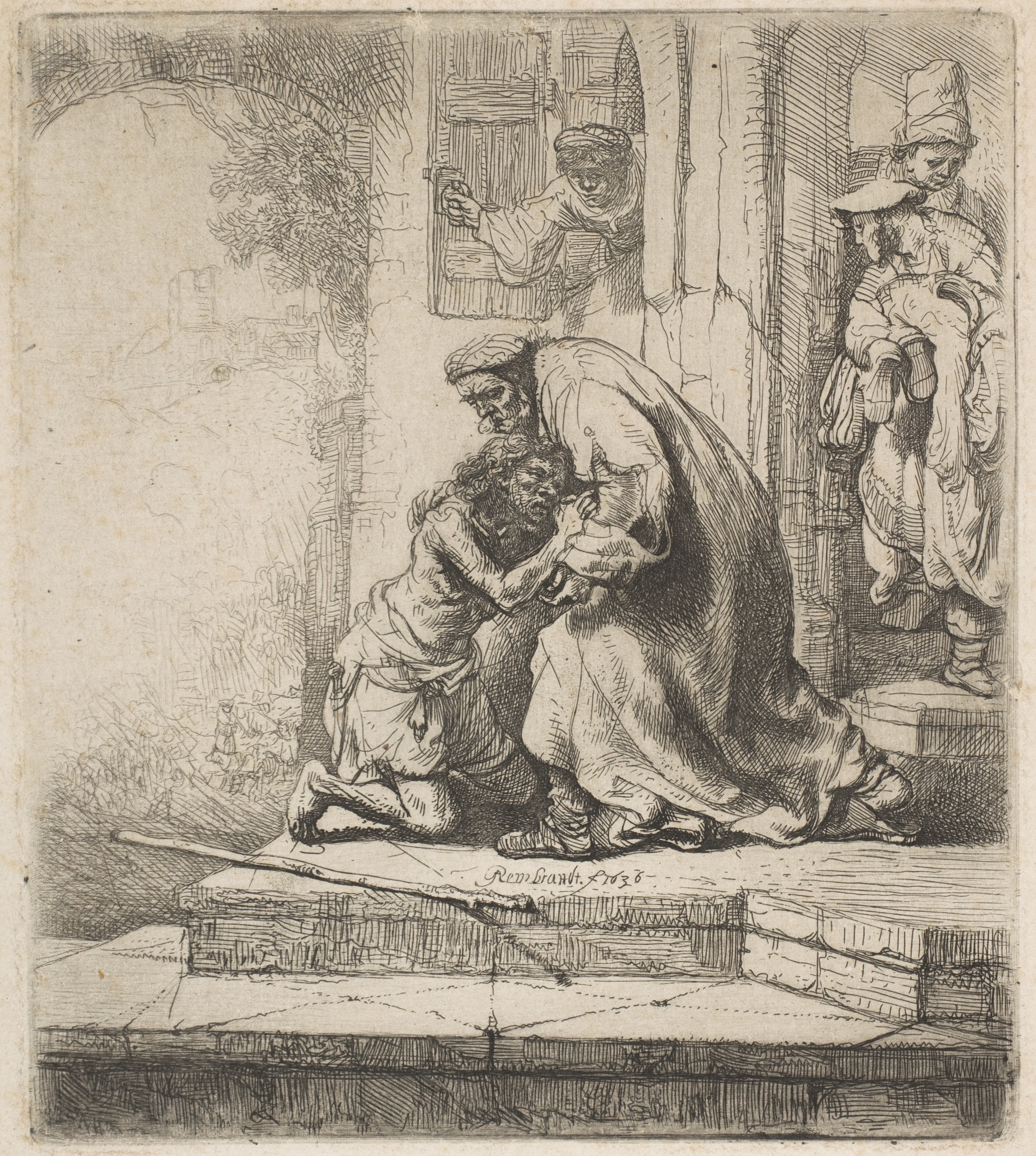
In today’s chapter, Paul addresses an implied question in his letter’s argument about salvation being for both the non-Jewish Gentiles as well as the Jewish people: “Has God rejected His people?” I am always amazed at how given we human beings are to binary, either-or, thinking. The Jewish people of Paul’s day were so proud of being “God’s chosen people” that they wanted to maintain exclusivity. Rather than perceiving the inclusion of Gentiles as followers of Jesus as God’s merciful generosity flowing from its Jewish roots, they concluded that God’s love of Gentiles must mean rejection of Israel. This attitude, by the way, is the same as the older brother in the parable of Prodigal Son. Like the father in that parable, Paul explains that God loving the “prodigal” Gentiles and celebrating their homecoming into salvation does not negate His love and purposes for “big brother” Israel. It is not an “either-or” but a “yes-and.”

The “Big Brother” thinking that Paul is addressing with his Jewish brothers and sisters is a form of the same problem that exists with those I observe with “Grace Plus” thinking. It’s a form of self-righteousness that mentally assents to God’s love as gracious and merciful, but at the heart of it still clings to the notion that our good works have some merit in making us more worthy than the dirty sinner.

In the quiet this morning, I find myself thinking of the fruits of the Spirit that Paul lists in his letter to the believers in Galatia. I thought through Big Brother’s reaction to his father’s grace and mercy toward the sinful little brother:

“The older brother became angry and refused to go in. So his father went out and pleaded with him. But he answered his father, ‘Look! All these years I’ve been slaving for you and never disobeyed your orders. Yet you never gave me even a young goat so I could celebrate with my friends. But when this son of yours who has squandered your property with prostitutes comes home, you kill the fattened calf for him!’

Then I tried to determine which of the Fruits of the Spirit he displayed in his reaction:

  • Love
  • Joy
  • Peace
  • Patience
  • Kindness
  • Goodness
  • Faithfulness
  • Gentleness
  • Self-Control

How about the Prodigal’s father? Yeah, Pops was exemplifying them all.

As a child of God, I want to have my Father’s heart which is gracious, merciful, generous, and truly loving. This means, however, that I have to surrender all of my meritocratic notions. God’s generous and gracious love for others does not diminish His love for me, it just means there’s more love to go around than I ever thought possible.

If you know anyone who might be encouraged by today’s post, please share.

Water

Water (CaD Rom 6) Wayfarer

Or don’t you know that all of us who were baptized into Christ Jesus were baptized into his death? We were therefore buried with him through baptism into death in order that, just as Christ was raised from the dead through the glory of the Father, we too may live a new life.
Romans 6:3-4 (NIV)

Over the past few months, there have been mass baptism events around the world. It’s not the type of thing that mainstream media is going to report, but it’s out there. A reported 12,000 individuals were baptized at Huntington Beach, California on Pentecost Sunday. Another nearly 5,000 were baptized in multiple events in Florida. In New Guinea, 300,000 people were baptized. Just weeks ago, I was honored when a young friend drove a long way in order that I might baptize her. It was a precious event. Just a week before that, our local gathering of Jesus’ followers baptized several people, and the place was packed with witnesses celebrating each one.

Over the years, I have repeatedly stated that God’s base language is metaphor. All of creation is an expression of God’s being and a reflection of His eternal nature. Time and time again, throughout the Great Story, God uses metaphors to communicate spiritual truth. That is what baptism is really all about, but it’s even more than that because metaphors are layered with meaning.

In Genesis 1:1 the Great Story begins with God’s Spirit moving over the “deep” regularly translated as “sea” or “waters.” In his Revelation, John describes Heaven’s throne room as having a sea that looks like crystal. From beginning to end, water plays a major role both physically and spiritually.

God destroys the world with a flood. Noah and his family are saved through the waters. Peter makes the spiritual connection between the Great Flood and the baptism of believers.

God delivers the Hebrews from slavery in Egypt and the freed slaves escape through the waters of the Red Sea. In today’s chapter, Paul writes of being freed from our slavery to sin. Spiritually, baptism is a person’s Red Sea moment.

God leads the Hebrews to the Promised Land, and they enter the Promised Land by passing through the River Jordan. Paul speaks today of the spiritual transformation of a believer from the “old life” of slavery to sin and into the “new life” in Jesus. Spiritually, baptism is also a person’s River Jordan moment.

Life for every human being begins in the protective water of the womb, As the “water breaks” it ushers the baby into their earthly journey. Jesus told Nicodemus that salvation is about being “born again” spiritually. The water of baptism metaphorically becomes a sign of the water breaking and ushering a newborn believer into their new life.

Jesus said that He came to bring us “living water,” a spring welling up within a person to eternal life. Baptism is a metaphor for being “buried” in the “living water” just as Jesus was buried in the tomb and raised up out of the “living water” just as Jesus was raised from the dead.

David presciently describes the metaphor of baptism in his lyrics to Psalm 18:

[God] reached down from on high and took hold of me;
    he drew me out of deep waters.

As I meditate on the metaphor of water and baptism in the quiet this morning, I find myself encouraged. That’s what metaphors do. They are physical reminders of spiritual truth. It was a crazy weekend of an assassination attempt and being reminded of the division, violence, and vitriol that is seemingly so prevalent in our current times. But then I think of 12,000 people on a California beach whose lives have spiritually changed for the better. I think of 5,000 people in Florida who experienced a spiritual rebirth. I try to imagine the positive impact that the transformed lives of 300,000 people could have on their nation and world as they follow Jesus into obediently loving God and loving others. I think of the smile and joy of my young friend as she came up out of the baptismal pool and gave me a hug. She was so excited about God’s spiritually transforming work inside her. Death-to-life. Buried-to-risen. Slavery-to-freedom. A new birth in which old things pass away and new things come.

Yes, there’s a lot of chaos out there in the world, but God’s Spirit is still moving over the “deep.” The Good Shepherd is still leading His flock to still waters. This wayfaring stranger is looking forward to crossing Jordan into an eternal Promised Land and seeing the crystal sea.

If you know anyone who might be encouraged by today’s post, please share.

The Difference

The Difference (CaD Rom 4) Wayfarer

What does Scripture say? “Abraham believed God, and it was credited to him as righteousness.”
Romans 4:3 (NIV)

In the entirety of the Great Story, Abraham stands out as one of the most important and influential individuals. In fact, Abraham figures into current events to this very day. Three of the major world religions (Judaism, Christianity, and Islam) trace their roots back to Abraham. The animosity between Muslims and Jews today is, in a sense, a family squabble from over four thousand years ago. Amazing.

In John 8, Jesus has a lengthy argument with his fellow Jews about Abraham. It’s a fascinating read along with today’s chapter because both Paul and Jesus are addressing the same problem in different ways. Their fellow Jews were proud of being “Abraham’s children” and letting everyone know it. Once again, Jesus points out the pesky sin problem that His people refused to see.

“If you were Abraham’s children,” said Jesus, “then you would do what Abraham did. As it is, you are looking for a way to kill me, a man who has told you the truth that I heard from God. Abraham did not do such things.

Fast forward to Paul and his fellow Jews who were now followers of Jesus and making two basic demands. 1) That their non-Jewish counterparts become circumcised and 2) They follow the law of Moses. The problem with these demands is that they perpetuate what Jesus came to confront once and for all, and Paul continues the Message: Salvation is not dependent on keeping rules and/or removing the foreskin of your penis. Salvation is a gracious gift given through faith in Jesus alone. Period.

By demanding that their Gentile counterparts be circumcised and keep the Law of Moses, the Jewish believers were going back to the very problem Jesus came to address.

So how does Paul address this? He goes back to Father Abraham, and he points out to his fellow Jews what their own scriptures say: “Abraham believed God, and it was credited to him as righteousness.” He then goes on to point out that this act of faith and accrediting of righteousness happened before the covenant of circumcision was given, and before the Law of Moses existed. They have the salvation equation backward. From the beginning, from Father Abraham, salvation has always been about God’s kind and gracious gift that is activated by simple faith.

In the quiet this morning as I meditated on Paul’s words, I realized that I have long observed the same problem Paul and Jesus were dealing with 2000 years ago. It’s so easy to slip into the mode of rule-keeping and virtue-signaling. The history of humanity proves to me that this always ends up in hypocrisy, secret sins, condemnation of others, and self-righteous pride. How cool to think that all the way back to Father Abraham God was showing us the way.

Listen to God.
Believe what He says.
Have faith that God will do what He says.
Receive the gracious gift of God’s forgiveness.
Have righteousness credited to your spiritual account.

When I experienced this, it resulted in so much gratitude. My natural response was “What can I do for you God? How can I ever thank you for this gift I don’t deserve?”

“Live in the ways I ask you. Love others as I love them. Share with others what you’re experienced in Me,” God responds.

And so, I’ve been endeavoring to do that every day of this earthly journey.

Not because I have to in order to earn salvation. Salvation is already mine. I want to do the things God asks of me out of gratitude for that gift I’ve been given.

And that makes all the difference.

If you know anyone who might be encouraged by today’s post, please share.

Rules and Rifts

Rules and Rifts (CaD Rom 3) Wayfarer

…and all are justified freely by his grace through the redemption that came by Christ Jesus.
Romans 3:24 (NIV)

Wendy and I get along remarkably well despite the fact that we have very different temperaments. Wendy is an Enneagram Type Eight (the Challenger) and I am an Enneagram Type Four (the Individualist). The Enneagram Institute calls this relational combination the most “inherently volatile.” Nevertheless, Wendy and I somehow manage to be around one another pretty much 24/7/365. Not only have we not killed one another, but we actually enjoy our perpetual proximity. The Enneagram Institute goes on to describe the Eight/Four coupling: “Both types bring passion, intensity, energy, and deep (often unconscious) feelings to all aspects of the relationship.”

Wendy and I have also found ways in which we are very different. This occasionally creates rifts between us. For example, I was raised in a home where the rule was “the door is always open and everyone is welcome at any time.” My dad would be happy to regale you with countless stories of my friends, and the friends of my siblings, stopping by at all hours unannounced.

Wendy, on the other hand, believes firmly in the rule that the kind thing to do is always let people know in advance that you’d like to stop by. Thus, we had a rift that would regularly present itself in conversation while on our way to Des Moines to visit my parents. It started like this:

Wendy: “Did you call your parents and tell them we’re coming?”

Tom: “No.”

I’ll let you imagine the rest of the conversation.

In today’s chapter, Paul continues to address the rift between Jewish and Gentile believers. The rift was rooted in the Jewish preoccupation with being rule-keepers. They had been given God’s rulebook through Moses, and good religious Jews were obsessed with keeping the rules. This presented a problem, however. It was a historic problem that presented itself almost immediately after the Law had been given. It then continued through the period of the Judges and the period of the Kings and perpetuated itself during Jesus’ ministry. Jesus confronted this problem time and time again.

The problem was relatively simple: People chose which rules they wanted to follow, and which rules they wanted to conveniently ignore. The rules that they chose to follow were the rules that others could clearly see with their own eyes.

Did you keep the sabbath?
Did you make your prescribed offerings?
Did you go to the Temple for the feast?
Did you circumcise your male children?

The rules they ignored were easier to hide and corporately convenient to simply sweep under the rug.

Did you love the foreigner in your midst and honorably treat them as you would want to be treated?
Were you generous, refusing to get rich at another’s expense?
Did you treat others lovingly and with equity?
Did you take care of the poor, the needy, and the outcast?

Jesus spent his entire three-year ministry trying to get His good religious Jewish brothers and sisters to see the problem. They cared more about Jesus keeping the rule about not working on the Sabbath (which is easy to see) and failed to see that the rule was never intended to keep them from doing something good for someone (e.g. healing, helping, lending a hand). Having God’s rulebook didn’t make the Jewish people righteous. It didn’t make them better at anything other than learning to keep up appearances with some rules while clandestinely skirting other rules for their selfish gain.

This cultural obsession with rule-keeping was deeply ingrained in them. Jews who became followers of Jesus and had been raised in this culture had a hard time not demanding that everyone be a rulekeeper. They looked down on those non-Jewish believers who never had the Law of Moses (and didn’t really care). Thus the rift.

In the quiet this morning, my mind drifted back to Wendy and me in the car on our way to Des Moines. One of the things we’ve learned about the rifts that appear in our relationship is that it’s rarely, if ever, an “either-or” issue in which one is right and the other is wrong. It’s often a “both-and.” My parents’ hospitality and generosity were wonderful aspects of a home that blessed countless people. It’s nice to know that they were always open to welcoming someone unexpectedly knocking at the door. Also, it is always a kind thing to call ahead and let people know you’re planning to stop by.

Paul is making a similar “both-and” argument for the rift between the Jew and Gentile believers. Yes, the Jews were blessed to have been given God’s rulebook, AND having the rulebook didn’t make them more righteous than the average Gentile. Both Jew and Gentile have sinned and fall short of God’s glory, AND both Jew and Gentile are justified by God’s grace through faith in Jesus alone. The spiritual realities they share are greater than the differences they experience in the rift about rules.

If you know anyone who might be encouraged by today’s post, please share.

Grace and Merit

Grace and Merit (CaD Gal 4) Wayfarer

But now that you know God—or rather are known by God—how is it that you are turning back to those weak and miserable forces? Do you wish to be enslaved by them all over again?
Galatians 4:9 (NIV)

One of the cornerstones of Jesus’ Message is that salvation is by grace through faith. Grace is unearned and unmerited favor. It’s not something one works for, achieves by effort, or earns by good behavior. It is through faith because the saving grace is activated by simply believing that Jesus is God’s Son who died for sin and rose from the dead.

I have observed along my spiritual journey that this rather simple concept is one of the hardest things for human beings to truly accept.

In today’s chapter, Paul continues to argue against the Judaisers who had convinced many believers in Galatia that they must keep all of the rituals and rules of the Law of Moses to know Christ. Paul argues that the rituals and rules, whether pagan or Jewish, are a type of slavery that never ever leads to spiritual freedom and salvation.

There is something in human beings that likes rules, rituals, and regulations. We like merit badges, certificates of membership, and achievement awards. There are lifelong church members I know who still believe that when they die God will have all of their works weighed on His divine scales. They believe that if the good outweighs they’ll get their ticket through the pearly gates.

When Jesus talked about the Day of Judgement He spoke of there being one decisive criterion. There are those human beings He knows, and those to whom He will say “I never knew you.” What is really fascinating is that Jesus described some of those He never knew as individuals who did all the religious rituals and righteous rule-keeping.

As I read through the chapter multiple times this morning I felt Paul’s frustration. Many of the Galatian believers had experienced the spiritual freedom of Jesus’ grace through faith. To go back to religious rule-keeping is like willingly taking on the shackles of a human meritocracy that never ever leads to spiritual freedom and the saving knowledge of Christ. Paul came out of that very human system, and he knows where it leads. I can feel the passion of his pleas to the Galatian believers not to fall into the merit trap.

Yesterday I was asked about my daily ritual of this chapter-a-day meditation, blog post, and podcast. I have been doing it for a long time. Is it not a religious ritual? Yes. However, the discipline of meditating on a chapter, writing my thoughts, and publishing them is rooted in a desire to channel the love, grace, and spiritual freedom I have experienced in my relationship with Jesus into my ongoing spiritual health. Believe me, I have not earned anything by doing so. By the world’s blogging standards, the humble number of subscribers and followers I have after doing it for so many years is a complete and utter failure. Yet, I’ve never done it to earn anything. I’ve done it to daily give something. The love of Jesus that I have freely received and experienced compels me to keep doing so, And, wouldn’t you know it? I find that I am spiritually filled in the process of doing so.

If you know anyone who might be encouraged by today’s post, please share.

The Spectrum of Belief

The Spectrum of Belief (CaD Jhn 12) Wayfarer

Even after Jesus had performed so many signs in their presence, they still would not believe in him.
John 12:37 (NIV)

We are just over halfway through John’s account of Jesus’ story. John now shifts the narrative to focus on the final days of Jesus’ earthly journey. Almost half of John’s account is the events leading to Jesus’ crucifixion and His subsequent resurrection.

In today’s chapter, John shares about the wake of Jesus raising Lazarus from the dead. Word spreads about the miracle. Lazarus and his sisters hold a feast to honor Jesus. Crowds are arriving for the Passover festival and the buzz is all about Jesus who raised a man named Lazarus from the dead. Everyone wants to meet both of them. It is on the wave of this #trending event that Jesus enters Jerusalem with crowds waving palm branches and proclaiming Him king.

As I sat back and looked at the structure of the chapter, it became clear to me that John prepares his readers for the final, climactic chapters by providing a survey of where people were on the spectrum of belief in Jesus.

It begins with Lazarus and his sisters, who have every reason to put their faith in Jesus. In particular, however, it is Mary who acts with humility and foresight in pouring perfume on Jesus’ feet and wiping them with her own hair. Jesus explains that she is preparing Jesus for His own burial. Mary not only believes, but she may be the only one who seems to understand what is about to happen to Jesus.

Next, John makes sure to mention Judas, his indignation at Mary wasting perfume that cost a year’s wages to give Jesus a foot bath. The money could have been sold and given to the poor, though John is sure to mention that what Judas really meant was it could be sold and put into the ministry’s money purse where he would have access to it. He will, instead, find another way to make 30 pieces of silver. Even among Jesus’ disciples was one who was on the unbelieving end of the spectrum.

Next are the crowds of Jews who have been recurring characters in John’s account. In the wake of Lazarus’ return from the grave, they are clamoring to get close to both Jesus and Lazarus. Of course, John has already made clear in the aftermath of the miracle of the Filet-o’-Fish Feast that the crowds are fickle. They’re all in on believing when it’s about free food or an entertaining spectacle, but they will move to the unbelieving side of the spectrum and chanting “Crucify Him!” in just a few days.

Then there are the religious leaders known as the Pharisees. They and the Chief Priests are hell-bent on killing Jesus, and now they add Lazarus to the hit list. How ironic that they want to kill the man who was just raised from the dead. These are the people on the extreme end of the unbelief side of the spectrum.

John then mentions Jesus’ disciples, himself included, and confesses that while they believed Jesus, they really didn’t understand what Jesus was doing or saying until after all of the events he’s recounting actually happened. So add to the spectrum those who believed, but didn’t really understand what it was that they were believing.

John also introduces us to a group of Greeks who were in town for the Passover festival. These were non-Jewish (a.k.a. Gentile) adherents to the Jewish faith but who weren’t fully circumcised converts. What’s fascinating about John adding this group to the mix is that by the time John wrote this account, the biggest controversy among the rapidly growing Jesus Movement was whether the large number of Greek Gentiles who were becoming believers must become Jewish converts before they could be considered good Christians. In response to this group of Greeks who want to meet Jesus, Jesus says “And I, when I am lifted up from the earth, I will draw all people to myself.” John’s first-century readers would have found these Greeks on the belief side of the spectrum to be very important to the mix, and a foreshadowing of the conflict within the Jesus Movement years later.

John then makes sure to mention that, despite all of Jesus’ signs and miracles, there were many unbelievers entrenched on the unbelief side of the spectrum. He seems to acknowledge those who would refuse to believe no matter what Jesus did or said.

John then mentions the Religious Leaders who secretly were on the believing side of the spectrum but who would not publicly acknowledge this. They fear the institutional union leadership who would have them kicked out (and maybe added to the hit list) if anyone were to find out they were believers.

In the quiet this morning, I can’t help but hear John’s unspoken question in the subtext. He’s given me all these different people and groups at various places on the spectrum from disbelief to belief. “So, Tom, where are you on the spectrum? With which person or group do you identify?

Of course, that’s the important question. I have to believe that it’s the motivation for John writing this primary source account in the first place. I find it fascinating that John places this belief spectrum right before the final events of the story. It’s as if John is taking my spiritual temperature leading into the climax. As a life-long disciple, I find it worthwhile to ponder this question anew, especially in this season of Lent when believers all over the world are introspectively walking through the climax of the story together.

I enter another day of this earthly journey with Jesus’ words from today’s chapter ringing in my ears: “For I did not come to judge the world but to save the world.”

If you know anyone who might be encouraged by today’s post, please share.

Filet-o’-Fish or Flesh & Blood?

Filet-o'-Fish or Flesh & Blood? (CaD Jhn 6) Wayfarer

“Very truly I tell you, you are looking for me, not because you saw the signs I performed but because you ate the loaves and had your fill.”
John 6:26 (NIV)

The further I’ve progressed in my spiritual journey the more I have come to believe that today’s chapter contains among the most critical messages that Jesus uttered in His earthly ministry.

John begins the chapter with two of the seven signs he chose to write about as he thematically presents Jesus to his readers. First, Jesus miraculously turns a couple of loaves and a few fish into an all-you-can-eat filet-o-fish feast for a crowd of thousands. That night, as The Twelve are making their way across the Sea of Galilee in stormy seas, Jesus walks on water to join them. They end up back in Capernaum, Jesus’ base of operations on the north shore of Galilee.

Meanwhile, the crowd of thousands who enjoyed the filet-o-fish woke up the next day to find that Jesus was nowhere to be found. It was common knowledge that Jesus always returned to Capernaum, so the thousands decided to hoof it in that direction. Sure enough, they find Jesus teaching in the synagogue there.

The conversation that follows is what I find to be most critical. John had already made a point that Jesus did not allow Himself to be swayed by the fame and popularity His signs created amongst the crowds. Back in chapter two John wrote, “Jesus would not entrust Himself to [the crowds], for He knew all people.” That’s a key piece in understanding Jesus’ conversation with the crowd in today’s chapter.

The crowd begins by questioning the fact that Jesus had left them for Capernaum without telling them where He was going. Jesus responds by questioning their motive for following Him, and this is the critical piece. Jesus told Nicodemus back in the third chapter that “flesh gives birth to flesh and Spirit gives birth to spirit.” Jesus now unpacks how spiritually important that distinction really is. The crowds are focused, not on God’s eternal kingdom, but on their earthly appetites. Their focus is on making Jesus king and getting free fish sandwiches for life. Jesus is focused on helping people understand that He came, not to feed the stomach, but to feed the soul. “The Spirit gives life,” He says. “The flesh counts for nothing.” He tells the crowd that from that point on, the only feast He will be providing is his flesh to eat and his blood to drink as he foreshadows His last supper and the sacrament of Communion which He will eventually leave for His followers.

I find the progression of the crowd’s attitude to be telling. It is so like a crowd. They move from eagerly seeking out the trending Jesus to trying to manipulate Him into more free food (vss 10-11) to grumbling about Him (vs. 41) to turning on one another and sharply arguing (vs 52). Eventually, the crowd walks away and stops following Jesus (vs. 66).

As a disciple of Jesus, this entire episode calls my own motives into question. Why am I following Jesus? Why do I go to church? Why would I wear the label “Christian?” Show? Spectacle? Tradition? Family Pressure? Duty? Obligation? Keeping up social appearances? Living up to someone else’s expectations? Being a good example to the kiddos? Community?

As I meditated on the crowd begging for more free lunches, I couldn’t help but remember the hated Samaritans who only needed to hear Jesus’ words and they believed. I think there is something about the Samaritans being the suffering and persecuted outcast that identifies with Jesus’ true mission which was not to be an earthly king feeding His posse’s earthly appetites, but to be a suffering servant sacrificing flesh and blood to bring eternal spiritual provision to starving, emaciated, and dying human souls. “The crowd,” on the other hand, were Jesus’ own people, and they failed to get it. John already foreshadowed this in his epic prologue: “He came to that which was his own, but his own did not receive him.”

In the quiet this morning, I find myself pondering Jesus’ continuous message to His most intimate followers:

“They hate me. They will hate you, too.”

Get ready for persecution.”

In this world, you will have trouble.”

“Blessed are you when people insult you, persecute you and falsely say all kinds of evil against you because of me. “

“They will put you out of the synagogue; in fact, the time is coming when anyone who kills you will think they are offering a service to God.”

This begs the question: Am I a filet-o-fish follower, or am I a flesh-and-blood follower?

It’s a question worth pondering. Jesus made it abundantly clear that the answer makes a difference.

If you know anyone who might be encouraged by today’s post, please share.