Tag Archives: Enneagram

Wallflower

Wallflower (CaD Matt 7) Wayfarer

“For everyone who asks receives; the one who seeks finds; and to the one who knocks, the door will be opened.
Matthew 7:8 (NIV)

The further I get on this life journey, the more things I discover about myself. When I was a young man, I thought I knew myself well, but the reality is that I didn’t know my true self at all. What I realized along the way is that self-discovery required the hero’s journey. It is only through wilderness wanderings, crisis, and trial that I discovered the means by which I uncovered things buried deep within.

It is only later in life that I have learned to recognize one of my patterns of behavior. The truth is that I am, at the heart of things, a wallflower. I don’t like to initiate things, rather I like to be invited in to things. I tend not to insert myself or take the first step. I don’t want to go chasing after things, I like to wait for things to naturally flow to me.

I have learned and experienced that this particular trait, like most quirks of personality and temperament, comes with both positive and negative consequences.

Today’s chapter is the final of three chapters that make up Jesus’ Sermon on the Mount. As He approaches the end of His message, Jesus famously tells His audience to take the initiative to spiritually ask, seek, and knock. As I read this in the quiet this morning, my soul felt familiar pangs of internal discomfort. Asking, seeking, and knocking on opportunity’s door all require initiative. They all come with the risk of failure, disappointment, and rejection. That’s where my struggle is rooted.

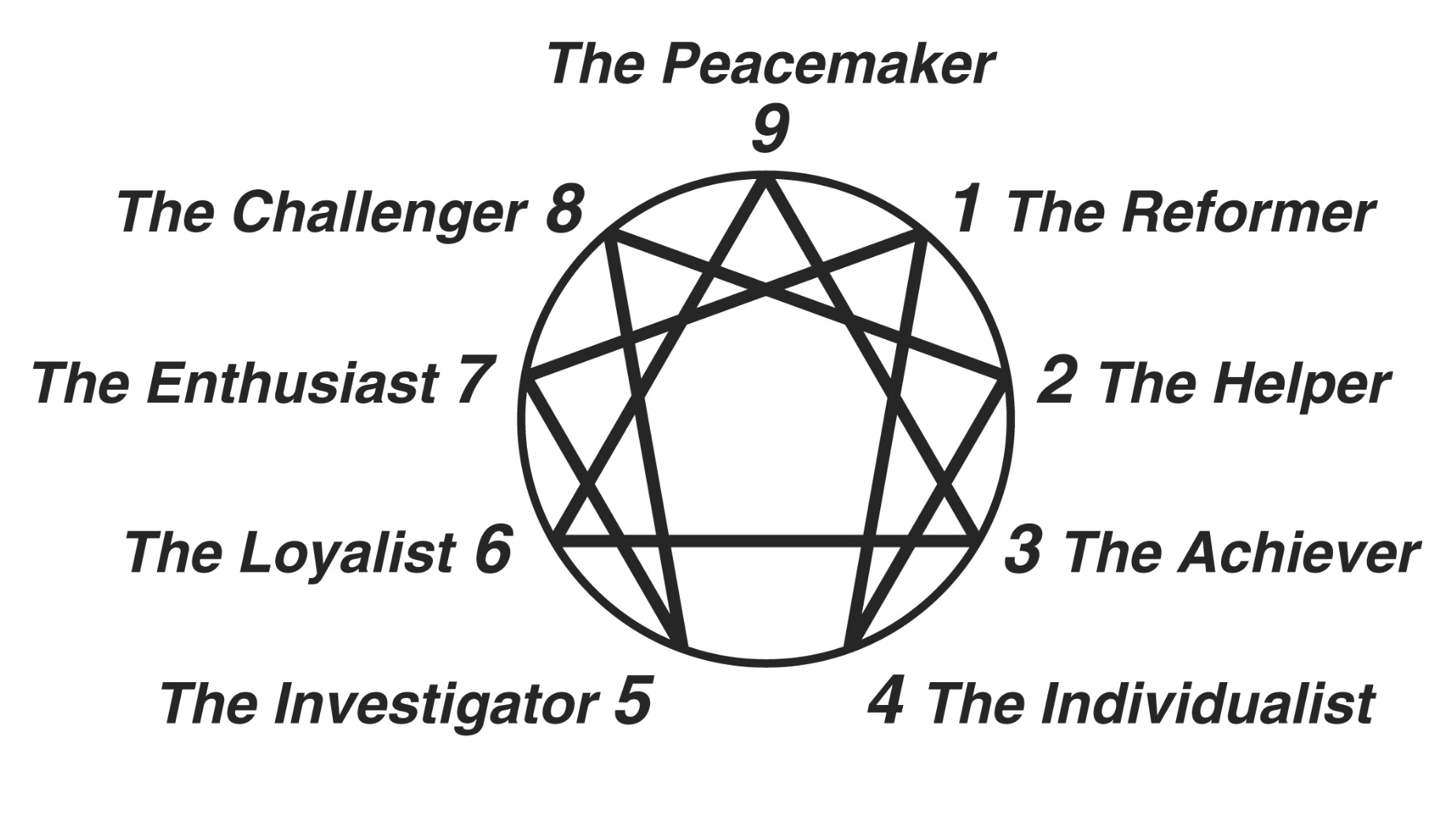
I have learned from my study of the Enneagram that across the nine types there is a triad of core struggles: fear, anger, and shame. As an Enneagram Type Four, shame is my core struggle. It is the deep sense that there is something flawed in me, that I am not enough, and I am worthless.

If I step out and take the initiative to ask, there’s a chance that the answer will be “no, not for you” and it will only reinforce my shame. Nope. I think I’ll just stand here and wait for someone to come along, notice me, and offer me what I desire.

If I seek and take the initiative to find, I could easily find myself back in the wilderness again, feeling lost and void of the things I need to find my way. Nope. I think I’ll just stand here at the edge of opportunity until someone offers to safely guide me.

If I knock, I don’t know who will open the door. I don’t know how they will respond to my interruption. Maybe they’re having dinner, or indisposed, or hate being interrupted. There’s a chance they’ll slam the door in my face. Nope. That would only reinforce my shame. It’s easier just not taking the risk. I’ll just stand here outside the door and wait for the door to open on its own.

Ugh. Even writing this honest assessment of my inner thoughts stirs my sense of shame.

In the quiet this morning, I find myself reminded of the older brother in Jesus’ story of the Prodigal Son. He was angry that His father threw a big homecoming party for his wayward, disobedient little brother. He complains that not once had his father thrown a dinner party for him and his friends. The father replies, “But, son, you never asked.”

I’m still learning. Overcoming my core struggle with shame requires me to exercise faith despite my fear. This wallflower has to have the faith to step out onto the dance floor, approach that girl with the wild head of curly, mahogany hair and mischievous look in her blue eyes and ask her to dance. Yes, she might say no. On the other hand, I might find out her name is Wendy and taking the initiative to ask her for a dance might launch the greatest and most profitable adventure of my life journey.

I’m still learning.

Lord, in the quiet this morning, I ask that you continue to teach me, I seek your grace for being a slow learner. Heavenly Father, I’m knocking on your door this morning and wondering if I might possibly have your blessing this day. Thanks.

If you know anyone who might be encouraged by today’s post, please share.

These chapter-a-day blog posts are also available via podcast on all major podcast platforms including Apple, Google, and Spotify! Simply go to your podcast platform and search for “Wayfarer Tom Vander Well.” If it’s not on your platform, please let me know!

Rules and Rifts

Rules and Rifts (CaD Rom 3) Wayfarer

…and all are justified freely by his grace through the redemption that came by Christ Jesus.
Romans 3:24 (NIV)

Wendy and I get along remarkably well despite the fact that we have very different temperaments. Wendy is an Enneagram Type Eight (the Challenger) and I am an Enneagram Type Four (the Individualist). The Enneagram Institute calls this relational combination the most “inherently volatile.” Nevertheless, Wendy and I somehow manage to be around one another pretty much 24/7/365. Not only have we not killed one another, but we actually enjoy our perpetual proximity. The Enneagram Institute goes on to describe the Eight/Four coupling: “Both types bring passion, intensity, energy, and deep (often unconscious) feelings to all aspects of the relationship.”

Wendy and I have also found ways in which we are very different. This occasionally creates rifts between us. For example, I was raised in a home where the rule was “the door is always open and everyone is welcome at any time.” My dad would be happy to regale you with countless stories of my friends, and the friends of my siblings, stopping by at all hours unannounced.

Wendy, on the other hand, believes firmly in the rule that the kind thing to do is always let people know in advance that you’d like to stop by. Thus, we had a rift that would regularly present itself in conversation while on our way to Des Moines to visit my parents. It started like this:

Wendy: “Did you call your parents and tell them we’re coming?”

Tom: “No.”

I’ll let you imagine the rest of the conversation.

In today’s chapter, Paul continues to address the rift between Jewish and Gentile believers. The rift was rooted in the Jewish preoccupation with being rule-keepers. They had been given God’s rulebook through Moses, and good religious Jews were obsessed with keeping the rules. This presented a problem, however. It was a historic problem that presented itself almost immediately after the Law had been given. It then continued through the period of the Judges and the period of the Kings and perpetuated itself during Jesus’ ministry. Jesus confronted this problem time and time again.

The problem was relatively simple: People chose which rules they wanted to follow, and which rules they wanted to conveniently ignore. The rules that they chose to follow were the rules that others could clearly see with their own eyes.

Did you keep the sabbath?
Did you make your prescribed offerings?
Did you go to the Temple for the feast?
Did you circumcise your male children?

The rules they ignored were easier to hide and corporately convenient to simply sweep under the rug.

Did you love the foreigner in your midst and honorably treat them as you would want to be treated?
Were you generous, refusing to get rich at another’s expense?
Did you treat others lovingly and with equity?
Did you take care of the poor, the needy, and the outcast?

Jesus spent his entire three-year ministry trying to get His good religious Jewish brothers and sisters to see the problem. They cared more about Jesus keeping the rule about not working on the Sabbath (which is easy to see) and failed to see that the rule was never intended to keep them from doing something good for someone (e.g. healing, helping, lending a hand). Having God’s rulebook didn’t make the Jewish people righteous. It didn’t make them better at anything other than learning to keep up appearances with some rules while clandestinely skirting other rules for their selfish gain.

This cultural obsession with rule-keeping was deeply ingrained in them. Jews who became followers of Jesus and had been raised in this culture had a hard time not demanding that everyone be a rulekeeper. They looked down on those non-Jewish believers who never had the Law of Moses (and didn’t really care). Thus the rift.

In the quiet this morning, my mind drifted back to Wendy and me in the car on our way to Des Moines. One of the things we’ve learned about the rifts that appear in our relationship is that it’s rarely, if ever, an “either-or” issue in which one is right and the other is wrong. It’s often a “both-and.” My parents’ hospitality and generosity were wonderful aspects of a home that blessed countless people. It’s nice to know that they were always open to welcoming someone unexpectedly knocking at the door. Also, it is always a kind thing to call ahead and let people know you’re planning to stop by.

Paul is making a similar “both-and” argument for the rift between the Jew and Gentile believers. Yes, the Jews were blessed to have been given God’s rulebook, AND having the rulebook didn’t make them more righteous than the average Gentile. Both Jew and Gentile have sinned and fall short of God’s glory, AND both Jew and Gentile are justified by God’s grace through faith in Jesus alone. The spiritual realities they share are greater than the differences they experience in the rift about rules.

If you know anyone who might be encouraged by today’s post, please share.

Nostalgia

Nostalgia (CaD Job 29) Wayfarer

“Oh, for the days when I was in my prime,
    when God’s intimate friendship blessed my house,
when the Almighty was still with me
    and my children were around me…”

Job 29:4-5 (NIV)

Over the past year or two, Wendy and I have been observing and discussing how the two of us think differently about time. As an Enneagram Eight, Wendy is future oriented. She is always thinking about what is ahead and what needs to be done to ensure that everything runs smoothly once we get there. As an Enneagram Four, I have a past orientation. I’m a lover of history and I’ve always had a freakish kind of memory. To this I can pull up a photo of my first grade class and tell you the name of pretty much every classmate. I could also point out the house where about half of them lived.

So, yesterday while grocery shopping Wendy asked me if we had a bottle of cranberry juice left on the shelf of the pantry because I had just opened a new bottle from the pantry the day before. In Wendy’s future orientation one should naturally make note of these things so that when we’re at the store we can get one, if needed, to make sure there’s at lest one on the shelf at all times for that morning when we run out at breakfast. I think there was one more on the pantry shelf when I opened a new bottle the day before. I think there was. I don’t know. But, I distinctly remember when I was five and we had this corner cupboard with a lazy susan, and things would fall off in the back of the cupboard and because I was the smallest my. mom would have me crawl onto the lazy susan and she’d spin me around to retrieve the fallen cans from the bottom of the cupboard in the back. That, I remember.

Herein lies the issue.

For that past twenty-some chapters, the ever-suffering Job has been sitting on his local refuse burn pile telling his three amigos that he would like to have his day in court with God. He’d like to put God on the witness stand and cross-examine the Almighty because Job is convinced that he has been wronged and God is the perpetrator. With today’s chapter, we enter a new phase of the Job story. Starting today, and with the following two chapters, Job makes his closing arguments in the metaphorical trial he’s been living out inside his head and heart.

Like a defense attorney speaking to me, his audience and jury, Job begins with a trip down Memory Lane. He waxes nostalgic of the days before that day when a rogue derecho killed all of his children and, simultaneously, some neighborhood gangs stole all of his flocks and fortune. He’s pulling the heart-strings of this past-oriented jury member. I feel it, Job. Oh how good life was, back in the day when I rode my Schwinn five-speed Stingray to the 7-Eleven on Douglas Avenue. It was a half-block east on Madison, hang a right and head south on 31st street, then just three blocks past the Cron’s house to Douglas. The 7-Eleven was on the northwest corner. It used to be a DX station. I’d fill up the Briggs and Stratton push mower. Gas was about 25 cents a gallon. But the DX closed and it became a 7-Eleven where almost every day in the summer I bought a Big Gulp for a quarter that I’d probably earned doing Scott Borg’s paper route at the VA hospital that morning.

Oh…I’m sorry…we were talking about Job, weren’t we?

Along my life journey, I’ve observed that it’s easy to glorify the past, especially for those of us who have a natural bent toward nostalgia. When life gets complicated, when I’m suffering in the present and find it difficult to see any hope for the future, I can reach back to the past like a drug. It provides cherished memories and drums up nostalgia-fueled good feelings. And, that’s what Job does in today’s chapter. The chapter follows an ancient poetic structure in which Job not only waxes nostalgic about how blessed he was, but at the center, he extolls the virtues of his generosity and benevolence (in defense of his friend Eli’s accusation in 22:9):

I was blessed (vss 2-6)
I was honored (vss 7-10)
I was generous and benevolent to the poor and needy (vss 11-17)
I was blessed (vss 18-20)
I was honored (vss 21-25)

In the quiet this morning, I am reminded that my natural bents can end up with crooked and unintended consequences. The glorification of what was can easily lead to me not being fully present in what is nor prepared for what is to come. For Job, I wonder if his trip down Memory Lane is essentially serving to emotionally pick at the scabs of his present suffering and fuel the fire of his resentment. I have learned along my life journey that sometimes I have to will and to discipline myself to be fully present in the moment, and give time and energy to preparing for what’s ahead. Gratefully, I have a partner who provides me with a really good example to follow.

If you know anyone who might be encouraged by today’s post, please share.

The Gift of Listening

The Gift of Listening (CaD Job 21) Wayfarer

“Listen carefully to my words;
    let this be the consolation you give me.”

Job 21:2 (NIV)

When I was in high school, a person I hardly knew shared with me between classes that they’d attempted suicide. In college, I had multiple individuals come out of the closet to me, while others who shared some of their darkest, most secret thoughts and feelings. As a corporate coach, I’ve had individuals confess to me their addictions, share with me their personal struggles, and break down in tears as they unloaded deep emotional wounds.

People often feel they can talk to me. This has been true my entire life, and I’ve never really understood why. I don’t ask people to share these things with me. In my early years, I was often a bit shocked when it happened and would be thinking “Why are you telling me this?!” Then, as I was doing my Enneagram coursework a couple of years ago, I was reading about my Enneagram type, the Enneagram Four:

“Fours have a deep intuition into others’ suffering and can shoulder their deep pains and feelings without being overwhelmed. It brings them great joy to connect with others on a deep level and to support them in their distress, which is a gift to the world.”

This summer, Wendy and I have enjoyed weekly watch parties with friends. First we watched The Offer on HBO, which tells the real-life story of the Producer of The Godfather and the making of one of the greatest films of all-time. We then proceeded to watch all three Godfather movies as well as the director’s alternate cut of Godfather III known as Godfather Coda.

One of my favorite scenes in the trilogy takes place in Rome, where the mafia kingpin, Michael Corleone, is visiting a Cardinal to discuss business issues the Corleone family has with the Vatican Bank. The Cardinal tells Michael, “The desire to confess is overwhelming” and talks Michael into confessing his sins. Michael subsequently turns the “family business” over to his nephew.

The power of confession is often overlooked, feared, and avoided, but it is a necessary step in the process of spiritual maturity.

One of the things I’ve learned along the way, as people have shared with me some of the most intimate details of their lives, is the truth of James’ words in his letter to followers of Jesus: “Everyone should be quick to listen, slow to speak and slow to become angry.” I haven’t been perfect at it, but I’ve gotten better at it with time. I don’t place on myself the need or responsibility to solve another person’s problems. I don’t seek to fix people or their issues. I consider the things they share with me a precious gift to hold gently, even reverently. I love by listening and receiving. My gift to that individual is simply giving heed to what is being shared and honoring their courage in sharing it.

Today’s chapter marks the end of the second round of discourses between Job and his three friends Eli, Bill, and Z. And I thought it fascinating that Job begins by asking his friends to “listen” and then adds “let this be the consolation you give me.”

Through the first two rounds of discourse, Job’s friends are all in mode to explain Job’s tragedies, to find cause for Job’s suffering, and give Job a simple solution for fixing it. Of course, they all riff off the same simple 1-2-3 premise: 1) Job has some secret sin in his life that has made God angry. 2) God is punishing Job for his hidden sins 3) Job has to do is get right with God and his fortunes will be restored.

In my experience of others sharing with me their suffering, I’ve observed that they aren’t always thinking rationally, or logically, nor have they really made sense of their feelings. They are on their own journey of understanding, and it’s important for an individual to work through all of their thoughts and feelings, rational or not. Job longs for his friends to get out of fix-it mode and simply be in empathy mode.

As I meditate on these things in the quiet this morning, the faces, voices, and stories of others and what they’ve shared with me flitting through my memory. I again confess that I have not always been a perfect listener. I’ve learned by making mistakes. Another thing I’ve learned about being a Four: “One of the biggest challenges Fours face is learning to let go of feelings from the past…” which includes guilt and shame for the mistakes I’ve made along the way.

This present trek through Job has me thinking a lot, not so much about Job’s sufferings, but about his friends inability to simply listen and empathize. One of the greatest things the book of Job has to teach me is how not to be when I find myself sitting with others in the midst of their suffering.

If you know anyone who might be encouraged by today’s post, please share.

My Core Weakness

My Core Weakness (CaD Jer 45) Wayfarer

“Should you then seek great things for yourself? Do not seek them. For I will bring disaster on all people, declares the Lord, but wherever you go I will let you escape with your life.’”
Jeremiah 45:5 (NIV)

One of the things I’ve experienced as an Enneagram coach is that it’s is common for people, upon reviewing their Enneagram Type, to say, “I don’t want that to be my Type!” In fact, there have been people I’ve encountered who insisted on mistyping themselves, whether consciously or unconsciously, because they were uncomfortable with embracing their true selves. This is, I have discovered, sometimes part of the self-discovery journey for people.

Every Enneagram Type has its core fear, core weakness, core desire, and core longing. These may manifest themselves differently in different individuals. As an Enneagram Four, my core desire is to be “special and unique” while my core weakness is the sin of envy. It’s easy for me to feel that others have something special or unique that I lack. Without realizing it, I sometimes feel an intense antagonism toward people I don’t even know that’s rooted in my envy. It’s taken a long time for me to recognize that in myself and address it.

Coming in at only five verses, Jeremiah 45 is one of the shorter chapters in the Great Story, though there are a handful that are even shorter. When the messages of Jeremiah were compiled into what we now know as the book of Jeremiah they were compiled thematically. The final chapters of the book are a kind of appendix. Today’s chapter is a fascinating, personal message that God gave Jeremiah for his friend and faithful scribe Baruch.

I saw shades of myself as I read Baruch’s lament in the quiet this morning. Baruch’s brother occupied an important position in the administration of King Zedekiah. Baruch was Jeremiah’s scribe, writing down the prophets dictated messages and then rewriting them all over again when the king burned the original copies in his anger. Let’s face it, the doom-and-gloom of Jeremiah’s prophetic works are bit repetitive and depressing. Add to that the fact that all of the anger, hatred, and animosity of Jeremiah trickled down to Baruch. When Jeremiah was banned from speaking in public, it was Baruch who got the job of proclaiming the words no one wanted to hear. Baruch sometimes got blamed when an accuser was afraid to confront the prophet himself.

“Why am I stuck doing this my whole life?” I can hear Baruch muttering to himself. “Why didn’t I get a cushy, high-profile job in the King’s administration like my brother?”

Jeremiah hears the muttering of his friend and scribe. God tells Jerry to tell Barry: “Don’t seek great things for yourself. Believe me, your brother’s story is not going to end well, but I will protect you and your life as the scribe of my anointed prophet.”

We don’t know what happened to Baruch’s brother Seraiah, though it was likely either captivity or death. Baruch, on the other hand, was still alive with Jeremiah in Egypt after the fall of Jerusalem.

In the quiet this morning, I confess that it’s always been easy for me to feel a certain level of discontent with my life. I was called specifically to do what I’m doing, and I trust that with all my being. Nevertheless, whenever I go through a tough stretch of the journey, my core desires and core weakness make it hard for me to stay in my lane without some dramatic and pessimistic brooding, and Wendy can tell you that I excel in this.

But that’s where God’s words to Baruch really resonate with me in all my “Fourness.” I can focus on obediently and faithfully fulfilling that to which I’ve been called, or I can waste a lot of time pining away in envy for what others have been called to do. The reality is that I have been and continue to be extremely blessed, and when I focus on that blessing, and the Source of that blessing, then I find contentment is soon to follow.

If you know anyone who might be encouraged by today’s post, please share.

Path and Purpose

Path and Purpose (CaD 1 Sam 20) Wayfarer

So Jonathan made a covenant with the house of David, saying, “May the Lord call David’s enemies to account.”

“As long as the son of Jesse lives on this earth, neither you nor your kingdom will be established. Now send someone to bring him to me, for he must die!”
1 Samuel 20:16, 31 (NIV)

Along my life journey, I’ve been aware of the paths on which I was led. God’s hand has guided my steps. In a few cases, the direction and guidance were as unmistakable as an exit sign on the interstate. In most cases, I was simply moving forward step-by-step, and it’s only in looking back that I realize that I was being led the entire time.

A strong sense of purpose is one of the tell-tale motivations of an Enneagram Type Four, so I get that I may sense it more deeply and recognize it more clearly than those who are motivated in other ways. I believe deeply that every life has purpose which may also be the reason I observe and consider the paths I see others taking.

I have always observed with fascination when children’s paths and purpose are placed upon them by parents and family. I have observed some individuals whose life was tyrannized by parents who demanded their children walk the path prescribed for them. It appears to be more common when family legacies, businesses, and kingdoms are involved and at stake. How fascinating it’s been to watch England’s Prince Harry try to separate from the royal family while living off the privilege of the very life he says he wants nothing to do with.

But those are the big examples. They come in quiet, everyday examples as well. I know at least one individual who was specifically raised to take over the family business, a fate for which he had no desire and for which he was never really suited. He eventually attempted to commit suicide.

What I found fascinating in today’s chapter was the motivations of father and son, Saul and Jonathan, which bring the story to a climactic event. King Saul is trying to have David killed, and he tells Jonathan that he’s doing it to preserve the throne and kingdom for Jonathan himself. And, I tend to believe that it’s more about Saul’s self-centered pride than it is about an altruistic desire for his son’s future. Jonathan, meanwhile, knows that his father is a poor leader, knows that David is God’s anointed, and appears to approach the situation with a desire for God’s purposes to prevail. Jonathan makes a covenant with “the house of David,” meaning that he is choosing loyalty to David and his descendants. He is abdicating any “right” to ascend his father’s throne.

This has me thinking back to my own path in life, and to my own choices as a parent. I’m blessed that my parents allowed me to choose my own way and placed little, or no, expectations on me (Thanks, Dad and Mom! I’m grateful.). Likewise, my heart’s desire for both Taylor and Madison was that they follow the path God had for each of them. I’ve always tried to provide guidance and wisdom, but I always believed that my role as a parent was to steward them to become the person God intended for them to be, not tyrannically demanding they become the person I envisioned or desired for them to be. I’ve discovered that entrusting my children to God doesn’t end with choosing a college or a major. It’s a life-long process.

In the quiet this morning, I am so respectful of the choice Jonathan made. Breaking with family, especially a son choosing against his own father, can be incredibly difficult. With the covenant he makes in today’s chapter, Jonathan seals his father’s fate, as well as his own, and his descendants. In so doing, he opens the path to God’s stated purposes and the eventual ascendence of David.

But the story isn’t finished. As I’ve experienced in my own life, sometimes God’s purposes take years to germinate, take root, and grow before the fruit appears. Saul is still on the throne. David is now headed into the wilderness, living life on the lam. God’s path almost always leads through the wilderness. I’m looking forward to following David and reminding myself why.

If you know anyone who might be encouraged by today’s post, please share.

Finding Forrest

Finding Forrest (CaD Matt 13) Wayfarer

Jesus spoke all these things to the crowd in parables; he did not say anything to them without using a parable.
Matthew 13:34 (NIV)

I have a confession to make. The first time that I saw the movie Forrest Gump I bawled like a baby on the way home. I remember being absolutely perplexed as I drove the tears pouring down my cheeks. I didn’t know why I was crying. I had no clue what it was about the movie that so obviously touched something so deep inside my soul.

Forrest Gump was released in 1994. That particular waypoint of my Life journey was an important one. I was 28 years old with two wee girls at home and a struggling marriage. My life was not turning out to be anything I expected it to be. I couldn’t see it at the time, but I was about to embark on the most important stretch of self-discovery of my life. It was a difficult stretch that would lead to some deep, dark valleys before I would find my way back to high places.

It would be twenty years or so before I would add a layer of self-understanding in learning about being an Enneagram Type Four. Equipped with that lens, my emotional reaction to Forrest Gump finally becomes clearer. An Enneagram Four’s core fear is that there is something hopelessly flawed in me, like Forrest’s diminished mental capacity which he can do nothing about. A Four’s core desire is to be special. The entire story of Forrest Gump is that of him being uniquely special, intersecting with the most famous people and moments of history, and most importantly having a life-changing impact on loved ones like Jenny and Lieutenant Dan. Forrest Gump tapped into core fears and desires I didn’t see at the moment. It resonated so powerfully and deeply within my being that I wept uncontrollably while having zero understanding why. I found a piece myself in the story of Forrest Gump. Such is the power of story.

In today’s chapter, Jesus speaks to the crowds following Him in a series of parables. They’re simple metaphorical stories and Matthew says that during this stretch of Jesus’ ministry He exclusively used them in teaching the crowds. Gone is the direct, plain language of the message on the hill. Jesus tells little stories about sowers, seeds, farmers, wheat, pearls, treasure, and weeds. Jesus tells His disciples that the purpose of the parables is to both reveal and conceal for spiritual purposes.

Jesus paints a simple story that draws listeners in. Once I am in, one of three things happens. First, I might not see, hear, or understand what Jesus is saying in the story. Whatever Jesus is talking about is concealed to me at this time. Second, I might find myself in the story. I am the seed that fell on the soil. I am the weeds springing up among the wheat. I am the woman who would sell everything she had in order to have the treasure Jesus is offering, and this understanding propels me forward in my spiritual journey. Third, I might find myself in the story and utterly reject what has been revealed.

In the quiet this morning, I’m feeling a bit nostalgic as I remember back to 1994. I thought that I knew so much about myself. I thought I knew so much about Jesus. Driving home from Forrest Gump weeping for unknown reasons was spiritual significant in ways I couldn’t see or understand. I found myself in the story, and it propelled my spirit forward on the journey to discover more.

If you know anyone who might be encouraged by today’s post, please share.

Stuck in a Moment

Stuck in a Moment (CaD Gen 33) Wayfarer

But Esau ran to meet Jacob and embraced him; he threw his arms around his neck and kissed him. And they wept.
Genesis 33:4 (NIV)

Many years ago I found myself back in the stomping grounds of my youth. It was late at night and I ran into an old friend. I approached to say hello and discovered he had a drink or two too many. I was shocked to find that I was greeted with anger that felt like it was seething to the point of rage. He looked like he was ready to punch me, and the air was filled with violent tension. I quickly backed away and left.

I never forgot that moment.

Ten or so years later I ran into my friend again. Needless to say, my apprehension was high when I saw him. All I could think about was the tension from ten years before. I played it cool and chose not to initiate conversation. Imagine my surprise when my friend walked up to me with a smile, greeted me warmly with a big hug, and initiated a friendly catch-up conversation. It was as if the episode a decade before had ever happened.

That moment came to mind this morning as I read today’s chapter and the reunion between twin brothers, Jacob and Esau. In this case, it had been 20 years since Jacob fled into exile to escape his brother’s rage. The last thing Jacob remembered was the aftermath of stealing Esau’s blessing and birthright. Esau was spewing anger and vengeance. In yesterday’s chapter, Jacob hears that Esau is on his way with 400 men, and he is clearly anticipating Esau to greet him with the same anger and vengeance he remembered from their last meeting. He carefully devises a plan in anticipation of a violent outcome.

Imagine Jacob’s shock when Esau runs ahead of his 400 men to embrace him, kiss him, and weep at their reunion.

Along my life journey, one of the things I’ve learned about myself is that I have a very active mind, imagination, and inner world. It comes with being an Enneagram Type Four. This is a good thing in all sorts of creative ways. I discovered it to be quite helpful as an actor, allowing me to easily suspend disbelief and live fully in the world of a play behind the fourth wall. At the same time, my active mind can also become a hindrance.

They say, “Time heals all wounds.” Sometimes it’s true, but not if my brain replays that uncomfortable, tense moment with my friend over, and over, and over again. And, I did just that. I couldn’t let it go. It was like relational PTSD. All I had to do was think about it and I was right back in that moment, feeling all of the shock, apprehension, and fear all over again. It makes it hard for me to let things go. Sometimes, I’m unable to emotionally or relationally move forward from a moment. As U2 sings it:

And you are such a fool
To worry like you do
I know it’s tough
And you can never get enough
Of what you don’t really need now
My, oh my
You’ve got to get yourself together
You’ve got stuck in a moment
And you can’t get out of it

In the quiet this morning, I wondered if Jacob was wired the same way. Paul summed up his letter to Jesus’ followers in Philippi by telling them:

whatever is true, whatever is noble, whatever is right, whatever is pure, whatever is lovely, whatever is admirable—if anything is excellent or praiseworthy—think about such things.

I’ve discovered that doing this often requires me to find the “stop” button in my brain from continuing to repeat whatever mental playlist I have on a continuous loop. I have to force myself to consciously choose a different playlist that fits Paul’s description.

I’ve found that the path of spiritual growth requires me to recognize unhealthy and unproductive ways within myself, and find the self-discipline to address them. In some cases, this is easy. In other cases, it’s an entire spiritual journey all its own.

If you know anyone who might be encouraged by today’s post, please share.

Namesake

Namesake (CaD John 20) Wayfarer

Then he said to Thomas, “Put your finger here; see my hands. Reach out your hand and put it into my side. Stop doubting and believe.”
John 20:27 (NIV)

I’m not sure why my parents named me Thomas. Perhaps there was an alliteration piece to it since they already hat Terry and Tim. It’s ironic that the etymological root of the name Thomas meant “twin,” since I wasn’t a twin and brothers are. That always felt like a mistake in my book, though my parents confessed to me that I was an “oops” baby, so there’s been no forethought given to having to name another boy.

As a child, I remember names and namesakes being discussed on the playground and in friend groups. There were certain bragging rights for those who had really cool etymological roots or definitions to their names like “King” or “Mighty Warrior.” Some kids linked their names with famous people who happened to have the same moniker.

Of course, in that playground conversation I always got linked to “doubting Thomas.”

Great.

In retrospect, as an Enneagram Type Four, it was probably prescient that my parents named me the same as Mr. Doubt. I have the deep pessimistic streak that comes naturally to Fours. I have a very vivid memory of my mom rolling her eyes at me in frustration and exclaiming, “You’re such a pessimist!” (I didn’t know what it meant at the time.) So perhaps the doubting one is an apt namesake for me, despite the angst it created within me during playground conversations.

And, Fours like to be special. We have a flair for the dramatic. So it would fit that Thomas enjoys the rather special, and dramatic moment when Jesus suddenly appears behind locked doors and tells Thomas to touch His scars and feel the hole in His side. I’ve always had a personal love for Caravaggio’s dramatic depiction of the moment.

In the quiet this morning, I find my thoughts less focused in the story, and more focused on my identity and my connection to the Story. Which is what John point out at the end of the chapter. As he is wrapping up his biography, he rather blatantly reminds his readers of the thing I’ve observed multiple times in these posts over the past few weeks. John had a limitless number of stories and anecdotes about Jesus that he could have shared with readers. He chose specific stories for a specific purpose:

Jesus performed many other signs in the presence of his disciples, which are not recorded in this book. But these are written that you may believe that Jesus is the Messiah, the Son of God, and that by believing you may have life in his name.
John 20:30-31 (NIV)

John’s biography is the first thing I read after becoming a follower of Jesus. This doubting Thomas, this pessimistic, dramatic Enneagram Four, counts myself among John’s readers who have believed and received; I am numbered among those whom Jesus named when He said to Thomas, “Blessed are those who have not seen and yet have believed.”

Mom? Dad? I think you got my name right.

If you know anyone who might be encouraged by today’s post, please share.

Peeling the Onion

Peeling the Onion (CaD James 3) Wayfarer

But if you harbor bitter envy and selfish ambition in your hearts, do not boast about it or deny the truth.
James 3: 14 (NIV)

I have discovered along my spiritual journey that spiritual growth is a lot like peeling an onion. Every time I work to peel off a layer of pride and selfishness in my life, there’s always a deeper layer waiting underneath. Motives, thoughts, behaviors, and/or actions that I never even perceived or considered before. As the prophet, Jeremiah, stated, there is no end to our sinful human natures.

In my pursuit of spiritual progress, I’ve learned that self-awareness is an essential ingredient. I am consciously and consistently attempting to monitor my feelings, thoughts, desires, and appetites. As I do so, I begin to see patterns emerge, which typically lead me to important discoveries about myself.

Wendy is an audiobook and podcast junkie. Whenever she’s doing something by herself, her ear bud is in and she’s listening to something. We typically have conversations about things we’ve been reading, listening to, and thinking about. I began to notice an intense negative reaction in my spirit whenever Wendy would speak about certain authors and podcasters. It was like fingernails on a chalkboard style reaction. As I became aware of these feelings, it begged the question:

What is that about?

Time to start peeling back another layer of the onion.

I contemplated my intense negative feelings and I made two important connections. First, this person Wendy mentioned she was listening to was currently an “It” person in popular culture. It wasn’t just Wendy mentioning the name. It was a name I was hearing mentioned from multiple people in my circles of influence. Second, this was a person I’d never even heard of until recently and suddenly this person had what seemed a proportionately huge mindshare of people around me.

So, what? Why did this seem to irritate me so much? Next, I began to contemplate what I know about myself.

I’m an Enneagram Type Four, which means that my core motivation is to find purpose and/or significance.

Could it be that my reaction was nothing more than envy that this person has successfully achieved a level of significant influence that I never have and never will?

Is it possible that my self-awareness has observed a very human reaction rooted in jealousy?

Am I witnessing selfish-ambition at work in me, desiring the purpose and significance another person has found at the expense of contentment in the purpose and significance to which I am called?

Yes. Yes. Yes.

Mea culpa.

Lord Jesus Christ, Son of the Living God, have mercy on me, a sinner.

In today’s chapter, James urges Jesus’ followers not to “harbor” bitter envy and selfish ambition. (Note: the Greek word translated “harbor” is echo. There’s more to unpack there.) This is where self-awareness leads to growth. Ever since making this discovery about myself, I’ve begun to not just feel these emotions when they occur, but to actually process them. First, I confess to the emotion and it’s root cause in me. Second, I remind myself of the path and purpose to which I’ve been called and led in my own journey. Finally, I typically say a silent prayer of blessing and gratitude for this person and the good purposes God has for them, and then express gratitude for the person I am, and purposes God has for me. I then confirm my desire and commitment to fulfill those purposes, no matter what they may be, for God’s glory.

This process has helped me to stop harboring envy and selfish ambition, and to send them sailing off into the sea of forgetfulness.

Another layer peeled.

On to the next.

Pressing on.

If you know anyone who might be encouraged by today’s post, please share.