Tag Archives: Yes And

The Tension

Pray that this will not take place in winter, because those will be days of distress unequaled from the beginning, when God created the world, until now—and never to be equaled again.
Mark 13:18-19 (NIV)

There is a great tension lying at the heart of our culture today. I’ve been observing it for the last several years. I also observe that most people are completely unaware of it.

One end of the spectrum there is a great pessimism. Anxiety and mental distress is off the charts. The pandemic and its aftermath resulted in global uncertainty, cultural divide, and political unrest that we’re still feeling today. And then there’s the fact that both sides of the cultural and political divide have unprecedented ability to stoke fear, hatred, and misinformation through social media. Fear is the great human motivator, and media outlets use it to keep people addictively reading, watching, and clicking because it’s what makes them money.

World War III, genocide, terrorism, riots, political corruption, assassinations, school shootings, health care crisis, and climate change aren’t just daily headlines, they stream at us every moment of every day through our phones, tablets, computers, and televisions.

On the other side of the spectrum there is great optimism. Hans Rosling, his book Factfulness, and his team at gapminder.org have been beating their drums to a very different tune for some time, along with intellectuals like Harvard’s Steven Pinker. They prove that if you look at the actual facts, human beings on planet earth have never had it so good. Extreme poverty is at the lowest levels ever across the globe. Wars and conflicts are killing fewer people than ever in human history. Humans are living longer, have more access to health care, more access to education, and the status of women has never been higher than in all of human history.

Interestingly, Rosling has a thirteen question multiple choice test that he administered to people around the world including gatherings like the United Nations and the worlds most prestigious universities testing people’s knowledge regarding facts about things like global poverty, population, education, and health. The results regularly revealed that he’d have gotten better test scores from a room full of monkeys randomly selecting answers.

So, which is it? Are things worse than ever, or better than ever?

Today’s chapter brought this great tension to mind, as Jesus tells His followers that the end of the Great Story is not going to be a pleasant experience. Wars, famines, earthquakes, and cataclysmic events are in store before the climactic end and new beginning.

As I have meditated on these things over the years, I have come to a couple of important personal conclusions.

First, I observe that most human beings operate in binary ways of thinking. It’s an either-or world: Red or Blue, black or white, left or right, salvation or condemnation, optimism or pessimism. But, the truth is often both-and.

For example, scholars for centuries have argued about Jesus words in today’s chapter. Was He talking about the events of the first century, or end times yet to come far in the future? I’ve heard scholars argue both, but my study of the prophetic gives me plenty of examples of it being both-and. Metaphors are layered with meaning. Jesus may have been speaking at once about the cataclysmic events in Jerusalem 70 A.D. and events thousands of years in the future. Even Jesus said in today’s chapter, “No one knows. Not even me. Only the Father”.

This also leads me to believe that the great optimism and pessimism tension is just another both-and scenario. In fact, from a spiritual perspective this makes more sense to me than anything else. If I really believe what I say I believe, then there is an Evil One and forces of evil that are dead set against God and everything God is about. It would make perfect sense that evil would twist and contort truth (e.g. things are better than any time in human history) into lies (e.g. things have never been worse) in order to stoke fear, anxiety, despair, hatred, anger, conflict, violence, and upheaval.

And this brings me to two other conclusions.

Jesus words do speak of things spiraling out of control in the end, and He clearly says to “watch” for it, and expect it. So, I am not that surprised by the steady stream of fear-inducing, anxiety-producing pessimism that I’m confronted with every day across the entire spectrum of media. I believe that things will eventually spiral out-of-control, even if there’s every reason for it not to do so. It’s been a recurring theme throughout the entire Great Story.

Finally, me responding with fear and anxiety is the exact opposite of what Jesus expects of me and His followers. Jesus’ foundational teaching from the beginning was to seek first God’s Kingdom, stop worrying about the things of this earth, and store up eternal treasures for a coming reality. This is a basic faith issue. If I really believe what I say I believe, then yes, things will ultimately go to hell in a hand basket on this earth, and I don’t have to be afraid or “worry ’bout a thing, ‘cause every little thing is gonna be alright.”

And so, I endeavor on this day, and each day, to follow Jesus command to his followers at the end of today’s chapter: “Watch!”

If you know anyone who might be encouraged by today’s post, please share.

These chapter-a-day blog posts are also available via podcast on all major podcast platforms including Apple, Google, and Spotify! Simply go to your podcast platform and search for “Wayfarer Tom Vander Well.” If it’s not on your platform, please let me know!

Big Brother Mentality

Big Brother Mentality (CaD Rom 11) Wayfarer

And if by grace, then it cannot be based on works; if it were, grace would no longer be grace.
Romans 11:6 (NIV)

Last week, I gave a message to our local gathering of Jesus’ followers. I kicked off the message by stating that I’ve long had the idea for a book about the things that Christians always get wrong. In that message, I talked about God’s presence. My entire life I’ve listened to people pray for God to “be present” or to “Come to us.” If we really believe what we say we believe, that is the most illogical thing to pray for. If you want to know why, I encourage you to listen to the message because that’s not the subject of today’s post.

One of the other chapters of my proposed book is the subject of today’s post. Along my life journey, I’ve observed that while Christians say we believe that salvation is “by grace through faith,” we still act as if there’s a bit of meritocracy mixed in. I like to think of this kind of thinking as “Grace Plus.” “Yes salvation is by grace through faith, plus if you were really “saved” you wouldn’t [fill in the blank with a behavior that, in your mind, a real Christian wouldn’t exhibit].

In today’s chapter, Paul addresses an implied question in his letter’s argument about salvation being for both the non-Jewish Gentiles as well as the Jewish people: “Has God rejected His people?” I am always amazed at how given we human beings are to binary, either-or, thinking. The Jewish people of Paul’s day were so proud of being “God’s chosen people” that they wanted to maintain exclusivity. Rather than perceiving the inclusion of Gentiles as followers of Jesus as God’s merciful generosity flowing from its Jewish roots, they concluded that God’s love of Gentiles must mean rejection of Israel. This attitude, by the way, is the same as the older brother in the parable of Prodigal Son. Like the father in that parable, Paul explains that God loving the “prodigal” Gentiles and celebrating their homecoming into salvation does not negate His love and purposes for “big brother” Israel. It is not an “either-or” but a “yes-and.”

The “Big Brother” thinking that Paul is addressing with his Jewish brothers and sisters is a form of the same problem that exists with those I observe with “Grace Plus” thinking. It’s a form of self-righteousness that mentally assents to God’s love as gracious and merciful, but at the heart of it still clings to the notion that our good works have some merit in making us more worthy than the dirty sinner.

In the quiet this morning, I find myself thinking of the fruits of the Spirit that Paul lists in his letter to the believers in Galatia. I thought through Big Brother’s reaction to his father’s grace and mercy toward the sinful little brother:

“The older brother became angry and refused to go in. So his father went out and pleaded with him. But he answered his father, ‘Look! All these years I’ve been slaving for you and never disobeyed your orders. Yet you never gave me even a young goat so I could celebrate with my friends. But when this son of yours who has squandered your property with prostitutes comes home, you kill the fattened calf for him!’

Then I tried to determine which of the Fruits of the Spirit he displayed in his reaction:

  • Love
  • Joy
  • Peace
  • Patience
  • Kindness
  • Goodness
  • Faithfulness
  • Gentleness
  • Self-Control

How about the Prodigal’s father? Yeah, Pops was exemplifying them all.

As a child of God, I want to have my Father’s heart which is gracious, merciful, generous, and truly loving. This means, however, that I have to surrender all of my meritocratic notions. God’s generous and gracious love for others does not diminish His love for me, it just means there’s more love to go around than I ever thought possible.

If you know anyone who might be encouraged by today’s post, please share.

Yes and Yes and Yes and Yes

Once, on being asked by the Pharisees when the kingdom of God would come, Jesus replied, “The coming of the kingdom of God is not something that can be observed, nor will people say, ‘Here it is,’ or ‘There it is,’ because the kingdom of God is in your midst.”
Luke 17:20-21 (NIV)

One of the things I’ve come to embrace, the further I’ve pressed into this journey, is that we as human beings are earthbound in the way we see and react to everything around us. Interacting with our world through five senses leads us to perceive and believe that spiritual things are bound by temporal limits. We think and speak of heaven and hell as fixed positions somewhere and relegate the general direction of “above” (because we look at the night sky and perceive vast and infinite unknown) and “below” (because we watch the dead be buried in the ground and the bad place to which they go must be further down). The miracles were fairy tales and the resurrection could never have happened because for the majority of us these things don’t happen in our earthly human experience.

Along the way, I’ve come to realize that Jesus was constantly speaking of things that are real, but beyond our earthbound senses. I’m reminded of the prophet Elisha and his servant. Surrounded by an entire enemy army, Elisha tells his servant “There are actually more for us than against us.” Elisha prayed that his servant’s “eyes” might be “opened” and when they were he could see a vast army of angels encircling them. (2 Kings 6)

Jesus carries on this teaching of a dimension, realm, reality, that is just as real but lies beyond the boundaries of our senses. The problem, then, is that I try to describe a reality beyond my senses but I only have the language and reality I’ve experienced through my senses to describe it. Those very attempts at description will naturally fall short because even my words and language have their earthly, human limits.

In today’s chapter, Jesus is asked when “God’s kingdom” would come. They are seeking a fixed point of time that their earthbound brains can accept and perceiving that God’s kingdom looks like an earthly kingdom. Jesus pushes back at the limits of their human perceptions:

Jesus replied, “The coming of the kingdom of God is not something that can be observed, nor will people say, ‘Here it is,’ or ‘There it is,’ because the kingdom of God is in your midst.”

It isn’t seen with human eyes, Jesus said. It’s not a fixed position that can be labeled on Google Earth. He then tells them that God’s kingdom is right in their midst, hiding in plain sight.

Now the original language Jesus used, and the language Dr. Luke used to retell the story, must be translated into English. Translations are a sticky wicket. Scholars have landed both on the phrase being “within you” and “in your midst” (there’s actually a footnote in the NIV version stating this).

Now I run into another earthbound reality of human reason, which tends to like to boil things down into binary choices: either or, right or wrong, black or white, true or false, this or that. My perpetual sojourn through the Great Story, however, has convinced me that God’s base language is metaphor, and metaphors are layered with meaning which is why the same words, phrases, stories, and passages can have different but just as relevant meaning to me today as when I studied the same passage years ago.

So was Jesus saying, “The kingdom of God is in your midst because I’m the incarnate Christ standing right in front you“?

Was Jesus saying, “The kingdom of God is not a fixed position in time and space but a place you inhabit internally and spiritually“?

Was Jesus saying, “When I am in you and you are in me, you are the kingdom of God“?

Was Jesus saying, “The kingdom of God is within you when you love God and others as I have been showing you“?

My spirit answers:

Yes, and

Yes, and

Yes, and

Yes.

In the quiet this morning I find my spirit engaged, creativity enlivened, mind curious, and heart imaginative as I think about spiritual realities beyond my earthbound senses. It’s all over the chapter in what Jesus was saying….

  • When you cause someone else to stumble, and harm innocents, you reveal your spiritual condition, and it is not the kingdom of God. (vs. 1-2)
  • When the kingdom of God is within you then forgiveness and grace will pour out of your heart and life no matter how many times you’ve been wronged. (vs. 3-4)
  • When you get beyond your earthbound senses and God’s kingdom is within, you’ll find that the “impossible” is “possible.” (vs. 6)
  • When you embrace God’s kingdom, you find peace and contentment in your divine role in the Great Story. (vs. 7-10)
  • The Kingdom of God is not tied to a particular nation, tribe, race, or institution. It’s deeper than flesh, blood, genetics, citizenship, or doctrinal adherence. A huge number of people who should “get it” don’t and even the most unlikely of outcasts and outsiders will. (vs. 11-19)
  • There will come a time when the fecal matter will be propelled with great velocity at the electric, rotary oscillator of this world; A climactic collision of that which is temporal and that which is spirit. (vs. 22-37)

Jesus was always getting His followers to see, to touch, to taste, to smell, and to feel beyond the limits of what is physical. Because when you do, it changes how you relate to everything else along your journey. It’s taken me a long time to get that. I’ve still got a long way to go.

Art History; History Art; Art, History

For since the creation of the world God’s invisible qualities—his eternal power and divine nature—have been clearly seen, being understood from what has been made, so that people are without excuse.
Romans 1:20 (NIV)

Back in college I was required to take a visual art class as part of my major. Being a lover of history I chose to take Art History II. The fascinating thing about Professor Jeff Thompson’s class was that the text book was not an Art History textbook. It was simply a History textbook.

Professor Thompson began the class with a question: “Does art merely reflect history, or does it drive history?” If you’ve read this blog for any length of time, you’ll recognize this is a binary, “either, or” question, and the answer to his question that we arrived at was “yes, and.”

What was fascinating in the course of study was the connection between all that was going on during a certain period of time of history (politics, religion, economics, and etc.) and what we were seeing in the important artworks of that period. Not only that, but also the connection between what we saw in visual art (paintings and sculptures) and the other art mediums (music, theatre, architechture, and literature). The art of each period both reflected what was happening and drove history forward.

That class planted in me a seed which has grown over time to bear much fruit of thought. Here is the root of it: In creating art, no matter the medium, artists express themselves through what they create. It cannot be otherwise. It is inherent in that act of creation itself that artists express who they really are, what they see, what they think, what they feel, and how they’ve experienced the world around them. In expressing these things, they influence the world around them and they drive the action of this Great Story.

This morning, in this chapter-a-day journey, we make our way to Paul’s letter to the followers of Jesus living in Rome, heart of the Roman Empire and epicenter of western civilization at the time. Today, art historians flock to Rome to see remnants of the ancient city with its architecture and artwork. The people Paul wrote to were surrounded by it as it was happening all around them, and to them he wrote this:

For since the creation of the world God’s invisible qualities—his eternal power and divine nature—have been clearly seen, being understood from what has been made, so that people are without excuse.

The creator revealed themselves in what was created. The Genesis poem says that humans were created in the image of the Creator. Just as Van Gogh painted the unique way he saw light and color, just as Bach channeled his love and understanding of mathematic order and the woven details of the universe into his music, just as Shakespeare expressed the tragedy of everyday humanity in the gilded trappings of man-made royalty, so God the Creator expressed  the light, energy, life, beauty, and power of their person(s) in all creation.

In the quiet this morning I’m pondering how through much of my journey I’ve viewed faith and science as living entrenched in their “either, or” camps like the armies of World War I dug in for the long haul, reduced to hurtling grenades at one another across no man’s land. At least, that’s the perception I’ve had from what has been presented to me by media who like to simplify complex issues into simple binary groups in conflict (it sells more). As I’ve proceeded in my journey I’ve met many fellow sojourners who could be easily labeled as a members of either trench, but who have wandered out into no man’s land. They observe and study and appreciate this cosmic work of art still expanding outward, still creating, still reproducing life, and  they’ve come to a “yes, and” realization, just as we did in Professor Thompson’s Art History class.

That’s where Paul begins his letter to the followers of Jesus in Rome. He starts with the expansive canvas of the cosmos through which the Creator expresses self. From the mystery of the cosmos Paul will dive into the mystery of being human, and how he sees the Creator has interacted with creation in the Great Story.

“Yes, And”

I told them, “If you think it best, give me my pay; but if not, keep it.” So they paid me thirty pieces of silver.

And the Lord said to me, “Throw it to the potter”—the handsome price at which they valued me! So I took the thirty pieces of silver and threw them to the potter at the house of the Lord.
Zechariah 11:12-13 (NIV)

Reading scholarly commentary on today’s chapter, one is confronted with two contrasting interpretations of Zechariah’s prophecy. One sees the text as a conclusion of the previous chapter and a judgement on the neighboring nations who pose an obstacle to the reestablishment of Jerusalem. Others see it as prescient judgement on the rejection of God’s Messiah Shepherd.

What struck me as I read the presentation of contrasting interpretations is that I felt as though I must make up my mind as to which one is right; Which I agreed with and which I would reject. I have been programmed by my culture and tradition to approach interpretation in a dualistic, either-or manner. When I was younger my teachers regularly presented various arguments on different interpretations of a text then argued passionately for the interpretation that the teacher was convinced was the right one. Over time I felt the subtle but pervasive expectation to align myself to groups with whom I agreed on all the right interpretations.

I felt the expectation in the arena of institutional Christianity in which I was to align loyally with the particular denomination with whom I was convinced was right (and of course all other denominations were wrong and not to be trusted). Once aligned with a denomination I found myself pressured to associate with sub-groups of thought within the denomination on hot-button issues of doctrine or scriptural interpretation; Camps who would separate at denominational meetings like the parting of the Red Sea.

This was also true of politics, especially true here in the States where everything is divided into primarily two camps at ever and increasingly estranged viewpoints moving further and further apart.

This is also true socially where one social group separates themselves from another social groups and holds the other at an arm’s length of ignorant suspicion: Blacks and whites, academics and business, science and religion, jocks and artists, preppies and burn-outs, nerds and popular kids.

Along this life journey I have found myself consistently moving toward the gray spaces between the separate camps of dualistic thought, which sometimes raises suspicions of both. I have served and worshipped among many different denominations. I have found myself socializing in starkly contrasting social groups. I find myself increasingly rejecting the polarizing extremes of both of my country’s red and blue camps.

This morning I find myself mulling over the dualistic interpretations of Zechariah’s prophecy and whispering to myself, “yes, and.” So it is with the prophetic which can be layered with meaning and revealed by a God who is consistently beyond confinement of human thought or understanding. Even Jesus, whom I believe was the incarnate Immanuel (“God with us”) was consistently found at the tension between dualistic extremes. So much so, in fact, that those of Jesus’ own religion considered Him so threatening to their entrenched, right religious interpretations that they were willing to pay to get rid of Him.

And so they paid one of Jesus’ own followers thirty pieces of silver. When Judas felt the shamed of what he had done to Jesus he threw the silver back at the priests who used the money to buy a Potter’s field to be used to bury poor dead blokes who couldn’t afford a grave.

That’s one prophecy that scholars in either interpretive camp of today’s chapter can agree is eerily present in the text that Zac wrote nearly 500 years before the events occurred.


“Yes, And”

May the God who gives endurance and encouragement give you the same attitude of mind toward each other that Christ Jesus had….
Romans 15:5 (NIV)

This past week my friend Matthew and I gave our final message in a four-week series on the topic of overcoming shame (audio can be found here). The series focused heavily on our need to own the darkness of our souls where things hidden and secreted away grow to wield power over us. We urged listeners to find safe and trustworthy places to expose things hidden in darkness to the Light.

There rose an argument among some that 1) Christ should be all we need, therefore 2) we shouldn’t need to take this step of revelation. And, if 1) we are saying that what we need to reveal our shame to another, then 2) we are saying we don’t need Christ.

Let me introduce you to a concept we use in the world of acting called, “Yes, And.” When an actor on stage is trying to figure out what his or her character is thinking we box ourselves in a corner by asking, “Does my character want this or that?” Sometimes the answer is, “Yes, my character wants this and that.” Sometimes things are not “either or” but “yes and.” Our friends on Sunday approached our message saying “its either Christ or confession.” Matthew and I were teaching that “Yes, it’s Christ and confession.”

Why else would God’s Message urge us to:

  • Wash one another’s feet?
  • Confess our sins to each other?
  • Encourage one another?
  • Admonish one another?
  • Build each other up in love?
  • Bear on another’s burdens?

The path to following Jesus includes both the vertical (me and God) and horizontal (me and my fellow believers) axis. It’s not either the vertical or the horizontal. It is, yes, the vertical and the horizontal. That’s why Paul, in today’s chapter, prays for God’s encouragement and endurance. You need both when you are in relationship with others.

In a black and white, either-or world of legalism, the mind loves to categorize information into exclusive compartments. With these exclusive mental compartments we can quickly determine that certain people, thoughts, or ideas don’t fit neatly in our compartments, and conclude therefore that they are wrong and we can dismiss them. But, Jesus has never fit neatly into any one person’s or denomination’s box and He never will.


chapter a day banner 2015Featured image: alphachimpstudio via Flickr

“There Are No Wrong Notes”

When teaching my course on creativity I have discovered an almost universal truth: My students all have an intense desire to create and express themselves through their chosen art medium(s) but they almost all don’t do it. As we journey through the course we attempt to excavate the reasons for their artistic timidity, and without fail I discover that most are plagued fear.

  • Fear of doing it wrong
  • Fear of not being good enough
  • Fear of failing at it
  • Fear of what’s deep inside of me, fear it might come out
  • Fear of looking silly
  • Fear of what my parents would say
  • Fear of what my friends might think
  • Fear that it will be bad

Circle in the Round
Circle in the Round (Photo credit: Wikipedia)

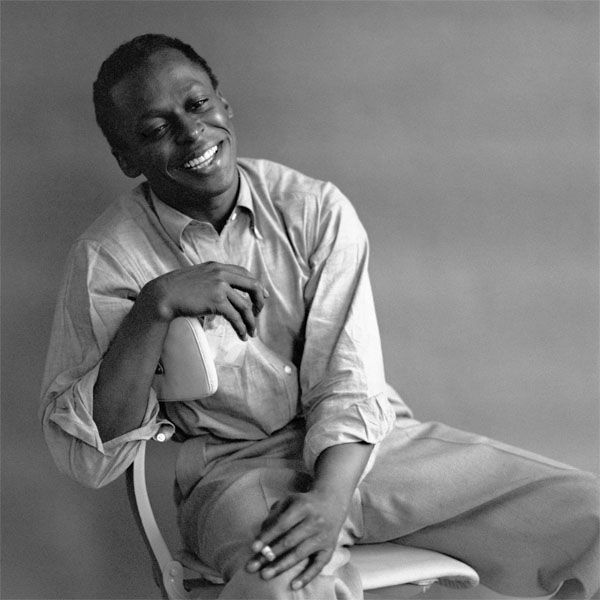
Throughout the course, as I talk about expressing yourself creatively or artistically, I incessantly quote jazz great Miles Davis:

“There are no wrong notes.”

I was reminded of this yesterday in a Wall Street Journal interview I read with another jazz great, Herbie Hancock, who recently gave a lecture about the wisdom of Miles Davis at Harvard:

Mr. Hancock recounted, for example, one extraordinary moment in Stockholm in 1967, during a performance by the [Miles Davis] quintet. “This night was magical,” he remembered. “We were communicating almost telepathically, playing ‘So What'”—one of the group’s signature pieces. “Wayne [Shorter] had taken his solo. Miles was playing and building and building, and then I played the wrong chord. It was so, so wrong. In an instant, time stood still and I felt totally shattered. Miles took a breath. And then he played this phrase that made my chord right. It didn’t seem possible. I still don’t know how he did it. But Miles hadn’t heard it as a wrong chord—he took it as an unexpected chord. He didn’t judge what I played. To use a Buddhist turn of phrase, he turned poison into medicine.”

Wendy and I talked about this story over breakfast and she reminded me that Davis was simply applying to music a concept that she and I know well from the stage. It’s the concept of “Yes And.” Like a song, a stage performance is usually meticulously orchestrated. Lines and movement are carefully prescribed to deliver the intended effect to the audience. Sometimes, however, something happens on stage which you didn’t expect:

In the moment of performance when you stand on that stage with the audience watching  you can’t stop the performance to shout “No, but wait! That’s wrong. Let’s go back and try it again.” When the unexpected happens, actors are taught to say “Yes, and I’ll go along with it. I will respond to what just happened so as to make it work into the scene. The concept of “Yes And” is particularly critical for actors who learn improvisational theatre in which there is no script or blocking to follow. You must say “Yes And” to whatever the other person on stage is doing and respond.

When Herbie Hancock played the “wrong” chord Miles Davis said “Yes, and I’m going to change the notes I’m playing to envelope that chord and redeem it. I’m going to make it right. There are no wrong notes.”

I have learned that the concept  of “Yes And” goes much deeper than jazz and stage. God, the master artist and Creator, has exemplified “Yes And” in my entire life journey. When I have totally screwed up time and time again God has responded with “Yes, and I’m going to let you learn the hard lessons that come from your choices.” When I have wandered from the path into dark places God has responded with “Yes, and I’m going to ultimately use your experiences to teach you wisdom.” When I make foolish choices God has responded “Yes, and you will find maturity in the dissonance your decisions create.”

“Yes And” applies to the art of daily life. When the fourteen year old says, out of the blue, “I want to go to Thailand next summer” I don’t say “No!” I say, “Yes, and I’m going to help you figure out if you’re really supposed to go.” When friends, spouses, children, or co-workers do the unexpected, there is wisdom in learning to say “Yes, and I’m going to give up my misguided notion that I can somehow control you, make you do my will, or know God’s prescribed path for your life.”

Please don’t read what I’m not writing. Obviously, parents have responsibility to teach our young children well and to protect them with appropriate rules and boundaries. Relationships, like the flow of music or the blocking of a scene, require a give and take between those involved. I have found, however, that when it comes to relationships we are often tempted to eat of the forbidden fruit. We are deceived into thinking that we are the god of our children, our spouses, our friends, and our co-workers.

  • “No, but I AM the only one who knows what’s best for  her.”
  • “No, but I AM the one who will choose the path for him.”
  • “No, but I AM the one who has judged correctly.”
  • “No, but I AM to be obeyed.”
  • “No, but I AM right.”

I love Herbie Hancock’s story and the wisdom of Miles Davis. When we are raised and enmeshed in the rigidity of a black and white “No But” world we quickly learn to stuff the creative impulses that Creator God knit into our souls when He sculpted us in His own image. We learn to fear the “No, but” which we have been taught will inevitably follow when we play “wrong” notes, paint the “wrong” way, draw outside the lines, or miss an entrance.

When I was younger I thought that the sad result of the Garden of Eden was that we all choose to do “wrong” and “bad” things. The further I get in the journey, the more I’ve come to realize that the true tragedy of The Fall is not the bad things that we do, but our failure to fully realize all that is good and pure and powerful and possible as children of the Creator who said “Yes and let us make man and woman in our image, in our likeness.”

Enhanced by Zemanta