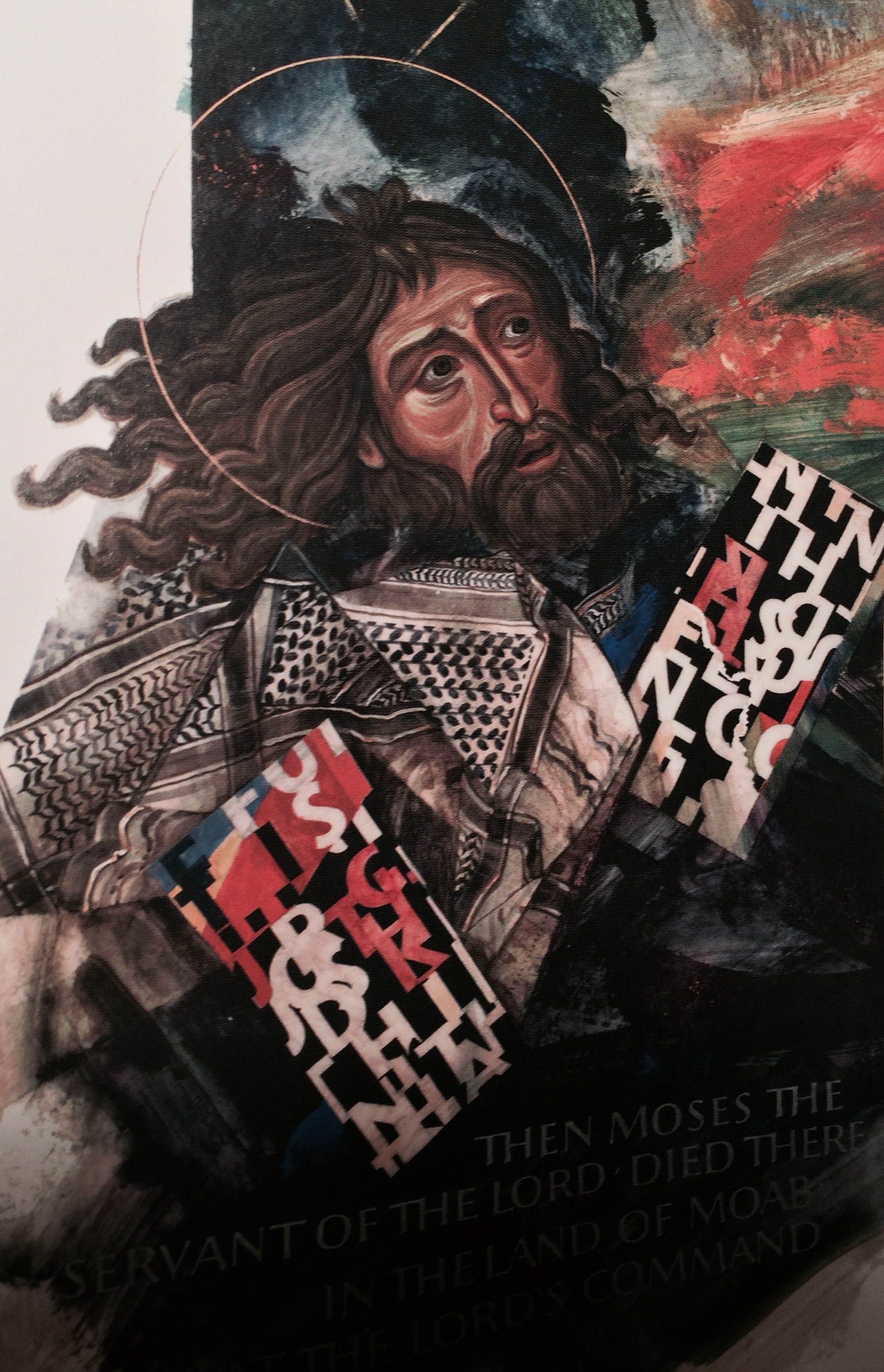
On the first day of the Festival of Unleavened Bread, the disciples came to Jesus and asked, “Where do you want us to make preparations for you to eat the Passover?”
Matthew 26:17 (NIV)
On our kitchen island downstairs is a stack of graduation announcements and corresponding cards that are waiting for me. It is the annual celebration of young people’s rite of passage known as commencement. It’s a celebration of academic completion, but it is more than that. Whether going on for more school or going off into the world to start working, it typically marks a departure from home and the beginning of a young person’s independent life journey.
Immediately before starting this chapter-a-day trek through Matthew’s version of Jesus’ story in March, we had just completed a journey through the ancient Hebrew priestly manual of Leviticus. Several times in that series I made reference to God’s leading the Hebrews out of slavery in Egypt and starting something new. It was a new way of living together in community with God, who placed Himself in a tent at the center of the Hebrew camp. Leviticus gave instructions for a series of festivals, none bigger than Passover, an annual celebration of God miraculously and graciously delivering the Hebrews from their slavery in Egypt. An event that had just happened when Leviticus was given through Moses.
It is no coincidence that the events of Jesus crucifixion and resurrection occur during the festival of Passover. It is no coincidence that Jesus establishes the sacrament of Communion during the annual Passover meal know as the Seder.
The two events connect.
Many times in the journey through Leviticus I mentioned that God was relating to humanity in the toddler stages of development. Just as God was doing something new with the establishment of Passover in the book of Leviticus, God is starting something new during this Passover celebration. Humanity has developed since Leviticus. A whole bunch of life has happened from wilderness wanderings to conquest, a period of judges, the establishment of an earthly kingdom for God’s twelve tribes that ended in divorce and civil war. Then there was a period of strife and exile followed by a period of return and restoration. It’s been a tumultuous childhood.
I think of Jesus’ death and resurrection much like graduation in our culture. For humanity, it was a rite of passage out of spiritual childhood and into spiritual adulthood. The black-and-white rules a parent lays down with a toddler don’t work with a high school senior. We have graduated from very explicit rules about not having sex animals or family members to Jesus’ teaching spiritual principles like making God’s kingdom your priority knowing that God will take care of your daily needs. The old lessons remain, the principles that lie within them are still relevant, but now the emerging adult must willfully choose to apply those principles for themselves in spiritually mature ways as they navigate life in the world on their own.
Jesus will leave His children 40 days after the resurrection. He will ascend to heaven and they will begin life on earth without His physical presence, though His spiritual presence will be readily available through Holy Spirit. Nevertheless, God is doing something new. It is a rite of passage. This Passover meal is a spiritual commencement. The bread, wine, and sacrificial lamb of the Passover Seder are transformed into the body and blood of the Lamb of God who will take away the sins of the world. Death will be defeated once and for all. Jesus Himself says it is a “new covenant.”
Everything is connected.
In the quiet this morning, I’m thinking about those young people whose graduation cards sit down in the kitchen. Oh, the places they’ll go in life.
I’m also thinking about a message I’m giving on Sunday in which I’m going to contrast “life-giving freedom” Jesus prescribes for His disciples and the “human legalism.” It is not uncommon for we humans to cling to toddler-like systems. Children never spiritually (and sometimes physically) leave. Elders continue to rule with black-and-white fundamentals and control the system through shame and fear. But that was never Jesus’ paradigm. He launched His disciples despite the fact that in today’s chapter it would seem they weren’t really ready for the task.
I don’t want to be a spiritual toddler my entire life. I want to be a healthy and productive spiritual grown up.
[cue: Pomp and Circumstance]

If you know anyone who might be encouraged by today’s post, please share.