Tag Archives: Connection

The Mountain

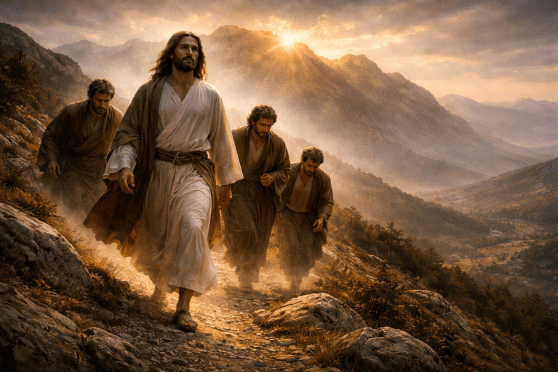
About eight days after Jesus said this, he took Peter, John and James with him and went up onto a mountain to pray.
Luke 9:28 (NIV)

This past spring a friend invited me to climb a mountain. It wasn’t a tall mountain, mind you. The rugged trail to the summit was few miles and the ascent was gentle enough that it didn’t wear me out too much. But, it was a mountain. The view was spectacular. As an Iowa boy living my life on the rolling plains, it was a rare opportunity and experience.

A year or so ago I listened to The Bible Project’s podcast series on mountains in the Bible. In case you didn’t know it, mountains are a whole theme across the Great Story, and in today’s chapter we encounter one of the most crucial examples. it’s a strange one—but once you see the connections (because in the Great Story, everything connects), it opens up in all sorts of ways.

To unpack it, we first have to travel back to our chapter-a-day trek through Exodus. In Exodus 19, Moses and the recently freed Hebrew slaves arrive at Mount Sinai and God makes a covenant with the Hebrew people.

  • Moses ascends the mountain
  • A cloud envelops it
  • God’s voice thunders
  • His face shines when he comes down
  • The Law is given

Sinai is fire and fear.
Distance. Boundaries. “Do not come too close.”

It’s holy, yes—but also heavy. The people tremble. Even Moses feels the weight of it.

Now, let’s compare that to what happens in today’s chapter.

  • Jesus ascends the mountain
  • A cloud envelops it
  • God’s voice speaks
  • Jesus’ face shines like the sun
  • And… Moses is there

Did you catch that?

Moses—the man of Sinai—now standing beside Jesus.

The Law stands next to its fulfillment.

As I meditate on the two, I find four absolutely delicious echoes.

1. The Cloud

Same symbol. Same presence.

At Sinai: terrifying mystery.
At Transfiguration: intimate revelation.

The cloud hasn’t changed.

But the way we experience it has.

2. The Voice

At Sinai: commands carved in stone.
At Transfiguration: “This is my Son… listen to him.”

That’s not just a statement—that’s a handoff.

From law → to living Word
From tablets → to a person

3. The Shining Face

Moses reflects glory.

Jesus radiates it.

One borrows the light…
The other is the light.

4. The Conversation

Luke tells us what they’re talking about:

They speak of Jesus’ “departure” — the Greek word is exodus.

Oh, that’s not accidental. That’s poetry with teeth.

Moses led the first exodus—out of Egypt.
Jesus is about to lead a greater one—out of sin and death.

Same word. Bigger story.

But the best is yet to come when it comes to what this means for me today as a disciple following Jesus.

Peter, bless his enthusiastic heart, wants to build tents.

“Let’s stay here. Let’s capture this. Let’s make it permanent.”

Oh, I feel that sentiment. I’ve felt it on several spiritual mountaintops.

I love those Sinai moments.
Those Transfiguration moments.
Those flashes of clarity where everything feels bright and certain and… safe.

But then the cloud clears.

And Jesus?

He’s alone.

Moses fades. Elijah fades. The moment fades.

Because the point was never the mountain.

It was always Him and He never stays there.

If Sinai and the stone tablets say “Obey and live,”
and the mountain of Transfiguration says “Listen to him”…

Then the question quietly slips into my morning like a hand on my back:

Am I still trying to live by laws carved in stone…
or am I actually listening to the voice?

Because it’s possible—oh, dangerously possible—to admire Sinai, respect the law, nod at the glory…

…and still not follow the Son down the mountain.

And he always comes down the mountain.

Toward people.
Toward pain.
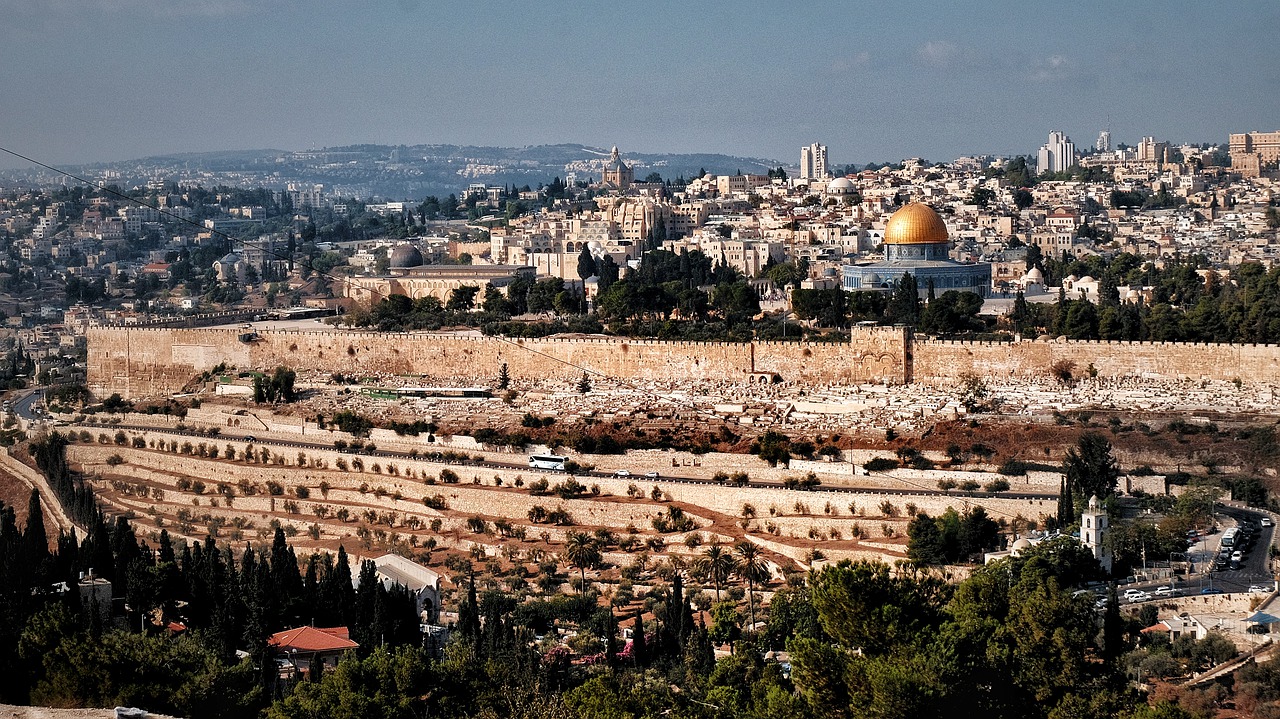
Toward Jerusalem.

And when I listen to the Voice…it’s always calling my name.

If you know anyone who might be encouraged by today’s post, please share.

Promotional graphic for Tom Vander Well's Wayfarer blog and podcast, featuring icons of various podcast platforms with a photo of Tom Vander Well.
These chapter-a-day blog posts are also available via podcast on all major podcast platforms including Apple, Google, and Spotify! Simply go to your podcast platform and search for “Wayfarer Tom Vander Well.” If it’s not on your platform, please let me know!
An orange icon featuring an open book illustration in white.

At the Table

“This will be a sign to you: You will find a baby wrapped in cloths and lying in a manger.”
Luke 2:12 (NIV)

In a couple of weeks I will celebrate my 20th anniversary of this chapter-a-day blogging and podcasting journey. I’ve been mulling that over a lot over the past year. The truth is that this was in many ways an overflow of a daily practice I carved out for many years before that. Each morning I crawl out of bed, I grab a cup of coffee and I show up at the table. There, I spend some time with God, meditating, praying, and thinking about where I find myself on life’s road.

Along this journey, I’ve observed that many people hope for a connection with God at their weekly church service. The hope is that being in a building they believe is God’s House, somewhere amidst the music, the spectacle, the communal worship, and the spoken word they will experience something special.

As a follower of Jesus I am called to gather with fellow believers regularly, and God does inhabit and work in-and-through the praise and worship of His people. I have observed, however, that this lends itself to wanting or expecting something amazing, emotional, and spectacular. Sometimes churches even try to create those moments intentionally — crafting services designed to stir powerful emotions.

My own experience is that this misses the point.

It wasn’t a conscious choice on my part to move from the story of Esther to Luke’s version of Jesus’ story. Yet, in the first two chapters I’m finding connections I’ve never seen before. In yesterday’s chapter, it was the fact that God raises simple, faithful, unassuming people into key players within the Great Story. In today’s chapter, it’s reversals. The story of Esther is known for all of its reversals of fortune. Wouldn’t you know it, today’s chapter is full of them, as well.

The best and the brightest of religious minds and thinkers expected God’s Messiah to arrive in pomp. The Messiah, it was believed, would establish an earthly throne, wipe out the Roman Empires and subdue the nations, reign in earthly glory in Jerusalem where the entire earth would come to worship him.

But through the prophet Isaiah God had already said:

“For my thoughts are not your thoughts,
    neither are your ways my ways,”
declares the Lord.”

Building on yesterday’s chapter, we find that the Messiah enters human history quietly through unassuming people of simple faith. In today’s chapter, Luke methodically present this reversal:

What People ExpectedWhat God Actually Did
The Messiah would arrive in royal splendorA baby is born quietly to a young couple of simple faith
The King would be announced to rulers and priestsAngels announce Him to shepherds in a field
The Messiah would enter the world through powerHe enters through vulnerability, lying in a manger
The religious elite would recognize Him firstTwo elderly saints quietly recognize Him in the Temple
God’s presence would remain centered in the TempleJesus begins forming relationships around everyday tables
The kingdom would overthrow Rome by forceThe kingdom begins by transforming hearts

Jesus did show up at the Temple. In fact, He does so twice in today’s chapter. Once as a baby and then as a twelve-year-old. But God’s Son is already establishing that His ways are not the ways of religious institutions. His focus will never be the Temple, because He knows that the Temple will be rubble in 40 years. He even tells His disciples this. His focus is on the table

  • The table he learns to craft with his earthly father’s training
  • The table he shares daily with family and community for thirty years
  • The table where he eats with His disciples
  • The table where he dines with tax collectors and sinners
  • The table where he has a midnight conversation with Nicodemus
  • The table where Pharisees host Him as a guest
  • The table where Lazarus throws a dinner party in His honor
  • The table where He celebrates one final Passover and blesses bread and wine

In the quiet this morning, Luke reminds me that a major paradigm shift has already begun. Jesus would go to the Temple for festivals, but His focus was never on the spectacle and bustle of the Temple. His focus was daily spent quietly at the table with others.

It’s no accident that Luke’s version of Jesus’ story begins with a baby laid in a feeding trough and ends with bread broken at a table. From the beginning, God was inviting us not to a spectacle, but to a meal.

My relationship with Jesus began in a church. Worship with my local gathering of Jesus’ followers is an essential part of the spiritual rhythm of my life. But it’s not the most transformative part. The most transformative part of my relationship with Jesus is here in the quiet of my office, every morning, at the table.

If you know anyone who might be encouraged by today’s post, please share.

Promotional graphic for Tom Vander Well's Wayfarer blog and podcast, featuring icons of various podcast platforms with a photo of Tom Vander Well.
These chapter-a-day blog posts are also available via podcast on all major podcast platforms including Apple, Google, and Spotify! Simply go to your podcast platform and search for “Wayfarer Tom Vander Well.” If it’s not on your platform, please let me know!
Icon of an open book on an orange background.

Bowing

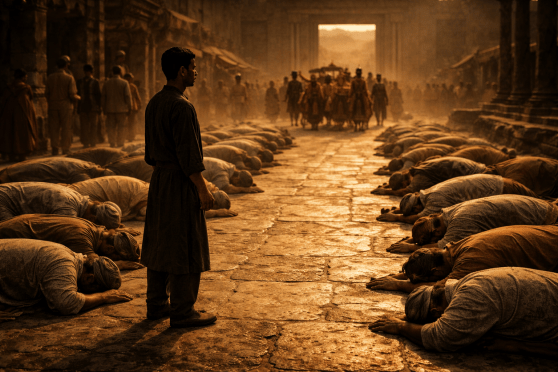
All the royal officials at the king’s gate knelt down and paid honor to Haman, for the king had commanded this concerning him. But Mordecai would not kneel down or pay him honor.
Esther 3:2 (NIV)

It’s hard to believe that in April I’ll mark twenty years of chapter-a-day blogging. Two decades of mornings like this — coffee cooling, Scripture open, asking what the Great Story is doing in my small one. Along the way, some lessons have etched themselves in my mind and soul. One of those things is the repeated refrain “everything is connected.”

With today’s chapter, the story of Esther takes a dark turn. Vashti made her exit. Esther made her entrance. Now, it’s time for the villain of the story to take the stage. His name is Haman the Agagite. He is a rising star in the Xerxes administration. He climbs the imperial ladder and finds himself in the position of Xerxes right-hand man. He’s the second most powerful man of the world’s largest empire. With the position comes wealth, status, and the ability to sway the emperor.

When Haman and his entourage enter and leave the palace each day, the people in the streets were told to bow to Haman. History is filled with examples of what tyrants, monarchs, and dictators can easily make the masses do without question. Haman the Agagite is no different than men who came before him, and many men who would come after him. He commuted to work, and an empire bent at the waist as he passed.

One man refused.

Mordecai.

For days, Mordecai stands while everyone bows. No protest. No screaming about injustice. No raised placards. Just quiet refusal. Bowing is never just political. It is always, at some level, spiritual.

Tyrants, monarchs, and dictators don’t react well to those who refuse to bow. Haman is no different. Dishonored, angry, and enraged by Mordy’s daily refusal to bow, Haman institutes an internal investigation to discover the identity of his ego’s nemesis. That’s when he discovers that Mordecai is a Jew.

Stop right there.

I mentioned in yesterday’s post/podcast that a theme of Esther are things that are hidden. With the revelation of Mordecai’s nationality, there is a hidden plot twist lost to most readers.

When introduced in the story, we learn that Uncle Mordy was a descendant of Kish of the Hebrew tribe of Benjamin.

Reach back into the Great Story hundreds of years and there was another son of Kish of the tribe of Benjamin named Saul. He was the first king of Israel. One of the climactic moments of Saul’s tragic reign happens in 1 Samuel 15. He is fighting against Agag, king of the Amalekites. His instructions were to destroy Agag’s army completely. Saul failed to do so.

Fast forward hundreds of years in the empire of Persia.

Mordecai — descendant of Kish, from the same line as Saul — meets Haman, descendant of Agag.

Saul’s disobedience left a thread unfinished — and history has a way of tugging loose threads.

What goes around, comes around.

In the Great Story, everything is connected.

Mordecai is also not alone in his refusal to bow. He has other compatriots in the same exile who endured another tyrants demand to bow. Their names were Shadrach, Meshach, and Abednego. In fact, they served the previous empire under Nebuchadnezzar with their friend Daniel. Daniel survived to serve the Persian emperor, as well. Mordecai may have even crossed paths with him as an administrator in employ of the same empire. There is a precedent for Mordecai’s quiet courage.

In the Great Story, everything is connected.

Ancient hatreds are rekindled. One man refuses to bow and sparks Haman’s prejudices against an entire people. The second most powerful man in the world’s largest empire decides to kill all the Jews in the Empire. He plots a genocide. Long before there was Hitler and Himmler there was a man named Haman.

The Great Story and our history are also connected. As I mentioned in yesterday’s post, the story God is authoring in me is part of the Great Story He is authoring between Genesis and Revelation.

In the quiet this morning, this leaves me to asking myself an important rhetorical question.

Where do I bow?

The masses in Susa simply bowed. It was practical, safe, and expected.

Only Uncle Mordy stood.

Faith often begins there, not with heroics — just a quiet spine.

One man standing exposes evil, provokes hatred, and begins deliverance. God often writes history through the smallest acts of loyalty. Mordecai’s refusal looks insignificant. But heaven notices loyalty that makes empires rage. And sometimes the whole story turns on one person who stays standing when everyone else kneels.

What would it take to make me bow?

That’s where today’s chapter ends, and where my story connects and continues.

If you know anyone who might be encouraged by today’s post, please share.

Promotional graphic for Tom Vander Well's Wayfarer blog and podcast, featuring icons of various podcast platforms with a photo of Tom Vander Well.
These chapter-a-day blog posts are also available via podcast on all major podcast platforms including Apple, Google, and Spotify! Simply go to your podcast platform and search for “Wayfarer Tom Vander Well.” If it’s not on your platform, please let me know!
An orange square icon featuring an outline of an open book in white

“I Want to See”

“I Want to See!” (CaD Matt 20) Wayfarer

“So the last will be first, and the first will be last.”
Matthew 20:16 (NIV)

Jesus is making His way to Jerusalem. Just a few weeks ago, followers of Jesus around the world just finished our annual memorial of the events that are about to transpire in Matthew’s version of The Jesus Story. Jesus well knows what is about to happen.

What struck me as I meditated on today’s chapter is the connection between the events. Jesus has just finished talking to the eagle scout, who walked away sad and chose not to follow Jesus because he was unwilling to do the one thing Jesus’ said was keeping him from entering Life. Peter points out that he and the boys had left everything to follow Jesus, which Jesus commends sharing that there will eventually be a special place in heaven for them in the end, at the “renewal of all things.”

I have to keep this in mind as we enter into today’s chapter and remember that the chapters and verses of Matthew’s version of the story were added hundreds of years after it was written. When Matthew penned these episodes, they all flowed together. Jesus is talking about who enters Life, who gets it, and who doesn’t. He utters His famous line “many who are first will be last, and many who are last will be first.” He’s talking about the economy and spiritual principles of God’s Kingdom, which operate differently than the kingdoms of this world.

To illustrate this, Jesus tells the parable at the beginning of today’s chapter. A vineyard owner hires workers to work in his vineyard throughout the course of the day. At the end of the day, they each receive the same pay. This has those who’d been working before sunset furious and crying out for union representation. But the landowner points out that they had agreed to the terms, it was his money to do with what he wanted, and the truth of the matter was that they were envious of those to whom he’d been generous. Jesus then repeats “many who are first will be last, and many who are last will be first.” The parable is an illustration of this spiritual principle, which relates back to what has just transpired.

The eagle scout chose out of God’s Kingdom economics. The disciples had chosen in.

But, they still don’t get it.

To double down on the lesson, Jesus now predicts His suffering, persecution, and death for the third time (and once again, Matthew the Quirk finds and shares the conspicuous number three). Jesus came not to set up an earthly kingdom, but to bring an eternally spiritual kingdom to earth. In the economics of God’s Kingdom, the one who gives receives, the one who is last will be first, the one who sacrifices His life will find it, and the one who dies will be born again to new life.

Just then, James and John’s mother sees an opportunity. Jesus has just mentioned that in the end, at the renewal of all things, in God’s Kingdom The Twelve will have special places of honor and a special role. She wants to make sure her boys have a special position within the special places of honor and the special roles Jesus is talking about. She pulls her boys up with her to speak to Jesus.

Jesus asks what she wants. She tells Him she wants her boys to have the positions of honor on Jesus’ left and right. She wants her boys to be first among the first. She is their union representation trying to make sure they get what she thinks they have earned, and in so doing she will have the honor of knowing her boys have positions of prominence that afford her to brag about them to all the other Jewish mothers.

She still doesn’t get it. She is spiritually blind to the very thing Jesus has been trying to say. The Father will do as He pleases with His rewards just like the vineyard owner in the parable. The economy of God’s kingdom is based on the way of the cross. You have to lay down your life in order to find it. For the record, James will be executed by Herod Agrippa. John will escape martyrdom, but not suffering. He will suffer the fate of the nations of Judah and Israel, living out his earthly journey in exile.

Matthew ends this string of episodes with Jesus healing two blind men. Ironically, Jesus asks them the same question He asked the mother of James and John: “What do you want me to do for you?”

“We want to see!” they answered.

Jesus gives them their physical sight which starkly contrasts the stubborn spiritual blindness of the disciples (and, in the case of James and John, their mother).

Today, I complete my 59th lap around the sun. In the quiet I hear God’s Spirit whisper to my spirit the same question He asked of the wife of Zebedee. The same question He asked the two blind men.

“Happy birthday, Tom. What do you want me to do for you?”

The answer is obvious. I want to see, Lord! I want spiritual sight.

If you know anyone who might be encouraged by today’s post, please share.

These chapter-a-day blog posts are also available via podcast on all major podcast platforms including Apple, Google, and Spotify! Simply go to your podcast platform and search for “Wayfarer Tom Vander Well.” If it’s not on your platform, please let me know!

Of Prophets and Plants

[Jesus] told [His disciples], “The secret of the kingdom of God has been given to you. But to those on the outside everything is said in parables so that,

“‘they may be ever seeing but never perceiving,
    and ever hearing but never understanding;
otherwise they might turn and be forgiven!’”

Mark 4:11-12 (NIV)

One of the most important themes in the Great Story up through the start of Jesus’ ministry is the heart relationship between God and the Hebrew people. God made a covenant with His people but they time and time again broke their end of it. For roughly four hundred years God’s prophets were center stage warning God’s people to repent and turn their hearts back to Him. They warned God’s people of the consequences of not doing so. The people continually refused to listen. They lost their Kingdom and were taken into exile. They eventually returned from exile and rebuilt their lives, clinging to God’s promised Messiah.

One of the things that is often lost on casual readers of Jesus’ teaching is His relationship to the ancient Hebrew prophets. In Matthew 5:17 Jesus said, “Do not think that I have come to abolish the Law or the Prophets; I have not come to abolish them but to fulfill them.” If Jesus came to abolish the prophets, then I can justify ignoring the ancient prophets. Since He said He came to fulfill them, then I think I’d better understand the prophets and their message.

In today’s chapter, Mark records Jesus’ famous parable of the Sower who scatters his seed and it falls on different types of soil. The eventual fruitfulness of the seeds was determined by the quality of the soil. When His disciples asked Jesus to explain the parable and why He spoke in them, Jesus quotes the prophet Isaiah:

Then I heard the voice of the Lord saying, “Whom shall I send? And who will go for us?”
And I said, “Here am I. Send me!”
He said, “Go and tell this people:
“‘Be ever hearing, but never understanding;
    be ever seeing, but never perceiving.’
Make the heart of this people calloused;
    make their ears dull
    and close their eyes.
Otherwise they might see with their eyes,
    hear with their ears,
    understand with their hearts,
and turn and be healed.”

Isaiah 6:8-10

The relationship between God and His people had always been like a rocky marriage. Some, like the prophets, had their hearts were in the right place. They were sincere in their faith, and devout in their covenant. But most were hard-hearted and calloused towards the things of God. Jesus claims that He is the fulfillment of the prophets, God’s Messiah who has come to reveal God’s Kingdom and fulfill the promise made through Abraham that through His people would come a blessing and salvation for all people. The irony is that God’s people, the Hebrew people, will continue to be just as they always have been. Some will see it, but many won’t.

The parable of the Sower and Jesus’ quote from Isaiah are linked. Jesus’ own people, especially the institutional religious establishment have rock-hard hearts. Jesus’ words will have no effect, any more than Isaiah’s words did to the royal and religious institutional establishments of his day.

And, of course, that is the whole point of Jesus’ parable for me as a reader. What’s the quality of soil in my heart, mind, and life? Do the spiritual seeds of this chapter-a-day journey germinate? Take root? Grow? Bear fruit in my thoughts, words, and actions during the day? If so, then the fruit of the Spirit will be increasingly evident with my wife, my family, my colleagues, my clients, my friends, and my community. They will experience in me love, joy, peace, patience, kindness, gentleness, faithfulness, goodness, and self-control.

May it ever be.

If you know anyone who might be encouraged by today’s post, please share.

Connections

Connections (CaD 1 Chr 24) Wayfarer

These were the divisions of the descendants of Aaron: The sons of Aaron were Nadab, Abihu, Eleazar and Ithamar.
1 Chronicles 24:1 (NIV)

One of the most common criticisms I hear made regarding the Bible is that it doesn’t fit together. And, to a casual 21st-century reader who is expecting a simple, chronological story by a single author, I can totally understand how it’s easy to come to this conclusion. After over 40 years of reading and studying this Great Story, which does begin in the beginning and ends with the end (and a new beginning), I actually find the opposite. More and more, I’m blown away by the connections that tie the Great Story together. Like the one I found today.

Today’s chapter is a list of the descendants of Aaron who were appointed priests to offer sacrifices and offerings in the Temple according to the Law of Moses. Aaron was Moses’ brother, and the entire Hebrew worship system was instituted roughly 1400 years before Jesus. The Chronicler is writing his account roughly 400 years before Jesus. Among the lists of the “houses” or families of priests assigned regular sacrificial duties was the house of Abijah (vs. 10). If I put my finger in our 1 Chronicles chapter and flip forward to the first chapter of Luke, I find that Zechariah, the father of John the Baptist, was from the house of Abijah as he received an angelic visit regarding his son’s miraculous birth.

From Aaron in the book of Exodus to the Chronicler’s list of priests in 1 Chronicles to Jesus’ story in Luke, the descendants of Aaron and their role in the Hebrew worship system connect the history and the Great Story across eighteen hundred years. That’s like me being able to connect my family tree back to 500 A.D. I find that amazing.

As I meditate on these new connections I made in what is arguably one of the most boring and seemingly irrelevant chapters in the entirety of Scripture, I am reminded why I continue this chapter-a-day journey and why I continue to study it from beginning to end. It never ceases to reveal more and deeper lessons of Life and Spirit. It also continues to meet me where I find myself on life’s road, to reveal the lessons I need for the moment I am in.

If you know anyone who might be encouraged by today’s post, please share.

Kings and Kingdoms

Kings & Kingdoms (CaD Lk 19) Wayfarer

As [Jesus] approached Jerusalem and saw the city, he wept over it and said, “If you, even you, had only known on this day what would bring you peace—but now it is hidden from your eyes.”
Luke 19:41-42 (NIV)

In yesterday’s chapter, I talked about the meaning that is hidden in plain sight, waiting to be found in the connection between the episodes in a given chapter. Once again this morning, I found spiritual treasure in connecting the dots.

Dr. Luke wrote back in chapter 9 that Jesus “resolutely” set out for Jerusalem. In today’s chapter, He finally arrives. But Dr. Luke adds two key episodes to give me, the reader, to put that arrival in context.

As He enters Jericho, Jesus sees a man who has climbed into a tree to get a better view of Him. This wasn’t just any man. His name was Zac, and he was a regional director for the Internal Revenue Service of that day. Just like every human system of government, the system in which Zac was an authority was filled with corruption. Zac profited from that corruption. He was part of the system that fed the evil Herod Administration and the occupational forces of Rome. He was ostracized and held with contempt by the fundamentalist religious system. Like Jesus’ disciple, Levi, Zac had chosen in to the corrupt system in order to get rich and live the good life. His own people despised him for it.

Jesus invites Himself to Zac’s house for dinner. In doing so, Jesus sets off a host of mean tweets from those who had chosen in to the fundamentalist religious system of that day in order to appear righteous and holier-than-thou. Ironically, Jesus found this system to be no less corrupt than the one to which Zac belonged. Jesus’ visit to Zac’s house ends with Zac repenting of his greed and making a decision to give away half his wealth while making restitution to those he wronged by paying them four times what he’d cheated out of them. Jesus celebrates this prodigal son who has found his way home to God’s kingdom affirming that Zac’s transformation is evidence of the kingdom He came to bring.

Jesus then tells a parable about a man of noble birth who goes to a distant land to be made king. The people despised and rejected this king. He leaves and puts people in charge of his wealth while he was away. Some invested the wealth, made a huge return, and were rewarded. One man did nothing and was stripped of what he’d been given and sacked.

First, Jesus goes to the house of a sinner so that he might find personal salvation that transforms his life and all those who know him. Jesus says, “This is what my kingdom is all about.”

Next, Jesus tells a parable about a king who goes to a distant land to be made king (much as He left heaven to bring His kingdom to earth) and leaves his followers in charge (much as He will, in about a week, leave His followers to care for the mission of His kingdom on earth). The king eventually returns and settles accounts (much as Jesus promises a Day that He will return to settle spiritual accounts).

Jerusalem is the epicenter of the Great Story. It is David’s capital city. It is where Solomon built the temple. It is where the prophets proclaimed God’s Message. But since banishment from the Garden in Genesis 3, the kingdoms of this world, under the dominion of the Prince of this World, always stand in opposition to the Kingdom of God. It happened in the wake of David’s kingdom, and Jesus knew it must happen again just as He had described in his parable earlier in the chapter: “his subjects hated him and sent a delegation after him to say, ‘We don’t want this man to be our king.’”

So the “King” enters Jerusalem as Jesus weeps for the larger spiritual tragedy that is unfolding, saying, “If you, even you, had only known on this day what would bring you peace—but now it is hidden from your eyes. The days will come upon you when your enemies will build an embankment against you and encircle you and hem you in on every side. They will dash you to the ground, you and the children within your walls. They will not leave one stone on another, because you did not recognize the time of God’s coming to you.”

With this statement, Jesus prophetically describes the very thing that will happen in 40 years when Rome lays siege to Jerusalem and destroys the city and the temple with it.

In the quiet this morning, I find myself reminded of an observation I’ve made along my spiritual journey. I find that humans, myself included, want God to be like us and the Kingdom of God to be like the earthly kingdoms we know. This is the fatal mistake that Jesus is calling out in the saving of a major sinner named Zac, in the parable of the King whose subjects hated and rejected, and in the prophetic proclamation of the city and the earthly kingdoms who were going to execute Him in a few days time.

As a disciple of Jesus, I’ve had to learn along the way that when my thoughts, words, actions, and worldview start looking like a kingdom of this world, then I’m out of sync with the Kingdom of God that Jesus invested in me, His disciple, just like the administrators in His parable. In the parable, the King’s subjects were given money to invest. In the case of Jesus, His disciples were given love, grace, mercy, and forgiveness to invest.

So, how does my investment portfolio look? What will be the return on those investments Jesus finds on the Day when He returns to settle accounts?

If you know anyone who might be encouraged by today’s post, please share.

Connected

Connected (CaD Gen 36) Wayfarer

This is the account of the family line of Esau (that is, Edom).
Genesis 36:1 (NIV)

A few years ago, Wendy and I participated in a cemetery walk for our local historical society. We have, for many years, portrayed our community’s founding couple (Hendrick Peter and Maria Scholte) at the town’s annual Tulip Festival, and so we were asked to participate in the cemetery walk. Basically, we stood by the gravestones of the couple we were portraying and when people walked by we would share a brief, scripted story about individuals we were portraying. There were other actors in different costumes stationed by gravestones around the cemetery.

While we were waiting between visitors, I began investigating the gravestones within the Scholte family plot. I was shocked to see a name I thought I recognized. When we got home that afternoon I looked it up. Sure enough, a woman buried in the Scholte family plot, Harriett Yeater Vander Linden (see featured photo on this post), was a relative of mine. Why she was buried with the Scholte family is a bit of a mystery. Especially since she wasn’t Dutch, but came from my mother’s side of the family whose ancestors all came from the British Isles. Never in a million years would I have thought I would end up living in this town portraying its founder. Never in a billion years would I have expected to find my own relative buried with his family.

It’s a small world.

Let’s face it, today’s chapter is one of those that is easily skipped over. It’s one of the genealogical records that everyone hates. All the descendants of Esau are seemingly irrelevant to my life. As an amateur historian and genealogist, however, I spent some time this morning thinking about the bigger picture of Esau’s descendants, who became a small nation called Edom.

It begins with twin brothers, Esau and Jacob. Despite Jacob’s deceit, Esau appears to have prospered on his own. In today’s chapter, they seem to have amicably separated. Esau went to an area east and south of the Dead Sea to settle. The descendants of each brother would grow to become their own tribes which, in turn, would eventually become their own nations, Edom and Israel. Later in the Great Story, the two nations will become enemies. They will war with one another. The prophet Obadiah, for example, wrote his prophetic poem specifically against Edom, predicting its destruction as he recalls that the two nations were rooted in a fraternal relationship.

As time went by and the descendants expanded, the connection was lost. Families became enemies.

One thing that has always appealed to me about history and genealogy is that it is about making connections. It’s kind of the opposite of the Israel/Edom effect I just described. As I make connections to people and the past, I learn things and grow in appreciation for others.

Genetic science has proven that we all descended from one woman referred to as “genetic Eve.” The truth is that we are all connected. Feuds, wars, prejudice, and hatred are the fruit of disconnection. When Jesus calls me to bless my enemies and to pray for those who persecute me, I believe He is calling me to make a reconnection. My enemy is my family. Jesus loves and died for my enemy just as He did for me. While the Kingdoms of this world continue to divide, disconnect, separate, and antagonize, Jesus calls me to be an Ambassador of God’s Kingdom where the goal is to be one Body, connected, unified, and loving.

I may not be able to make a difference on a national level, but I can make a difference in my circles of influence each day. The grave of my great-great-aunt Harriett Yeater Vander Linden reminds me: The connections are closer than I imagine.

If you know anyone who might be encouraged by today’s post, please share.

Just Breathe

Just Breathe (CaD Ps 150) Wayfarer

Let everything that has breath praise the Lord.
Psalm 150:6 (NIV)

With today’s chapter, Psalm 150, this chapter-a-day journey through all 150 chapters of the anthology of ancient Hebrew song lyrics is complete. The editors of the compilation chose a short, powerful song of praise for the final refrain. Some scholars believe that it may have been composed for this purpose. In the original Hebrew language, “Praise the LORD” is “Hallelu Ya.” Thus, we end the journey with a shout of “Hallelujah!” and a call for “everything that has breath” to join in the chorus.

Among my local gathering of Jesus’ followers we have a very active team of people who are committed to the spiritual discipline of prayer. They do a great job of teaching others, myself included, in ways to develop our spiritual muscle in this essential practice.

A few years ago, I learned from our prayer team a simple technique that transforms my natural rhythm of breathing into a repeated prayer. One phrase is repeated with every inhale, and another phrase is repeated on every exhale. I have personally found this helpful when I am trying to quiet myself from stress or anxiety and when I am preparing my heart to enter into corporate worship.

As for the specific phrases used, the options are endless, but I have found that certain familiar lines from Jesus teaching and the Great Story that I have particularly helpful…

Inhale: “Come to me you who are weary”
Exhale: “I will give your soul rest.”

Inhale: “Cast all my anxieties on Him.”
Exhale: “He cares for me.”

Inhale: “Holy, holy, holy is the Lord God Almighty”
Exhale: “Who was, and is, and is to come. The whole earth is full of His glory
(This one helps me breathe deeply! 🙂 )

Inhale: “Let everything that has breath”
Exhale: “Praise the LORD.”

In the quiet this morning, I find myself reflecting on my spiritual journey. As a child I was taught religion, in which empty rituals were carried out as part of a transactional process. I did the religious things in an effort to counter-balance my human failures with religious duties in the hope of earning God’s favor. After entering into a relationship with Jesus, I came to learn that the Spirit connects and holds all things together. It made all the empty religious ritual even more impotent while, at the same time, a whole knew world of possibility opened up to me. I discovered that connection with the God of creation is as simple and profound as breathing.

Just breathe.

If you know anyone who might be encouraged by today’s post, please share.

Music, Ritual, & Meaning

Music, Ritual, & Meaning (CaD Ps 118) Wayfarer

Give thanks to the Lord, for he is good;
    his love endures forever.

Psalm 118:29 (NIV)

Music plays such a fascinating role in the human experience. Music has the power to express thought and emotion in ways more potent than the mere words themselves. Music has a unique ability to bring people together in unity, even complete strangers. It happens in sporting events, in religious events, civic ceremonies, and virtually every birthday party you’ll go to or happen upon. Music is typically a part of every funeral service. I personally can’t hear Taps without it stirring emotion in me.

Last week I mentioned in these chapter-a-day posts that Psalms 113-118 make up series of songs known at the Hallel in Hebrew. They are the songs sung throughout the Hebrew feast of Passover. Today’s chapter, Psalm 118, is the final song. The lyrics were originally written to be a song of Thanksgiving that the king would sing with the people after a great victory. The “king” does most of the singing the way this song was structured, singing verses 5-21. In verses 22-27 the people rejoice over what God has done. The king then sings the final two verses.

What I found interesting as I read through and mulled over the song in the quiet this morning, is that it’s traditionally believed that Jesus and His followers were eating the Passover meal together the night He would be betrayed and arrested. If this is true, it is very possible that when Matthew records “When they had sung a hymn, they went out to the Mount of Olives” it was Psalm 118 they were singing.

With that in mind, I went back and read the lyrics again, this time I imagined Jesus singing the part of the king and His followers the part of the people. Jesus knew what was about to happen. He predicted it on multiple occasions and he pushed the buttons that put into motion the political mechanism that would seal His earthly fate. I read the lyrics, placing myself in Jesus’ sandals, knowing what was about to happen the next day and on the third day.

It gives the lyrics a whole new layer of meaning as He sings:

The Lord is with me; I will not be afraid.
    What can mere mortals do to me?

I will not die but live,
    and will proclaim what the Lord has done.

Open for me the gates of the righteous;
    I will enter and give thanks to the Lord.
This is the gate of the Lord
    through which the righteous may enter.

And as his disciples sing:

The stone the builders rejected
    has become the cornerstone;
the Lord has done this,
    and it is marvelous in our eyes.

When, after the resurrection, Peter is brought to trial before the very same religious leaders who put Jesus to death, it is this lyric that Peter quotes back to his accusers (Acts 4:11). Could it be that Peter was, at that moment, remembering singing those lyrics that fateful night just weeks earlier when he himself rejected and denied knowing Jesus?

And then I thought of Jesus, knowing that He is about to be betrayed, arrested, beaten, flogged, mocked, and crucified, singing the final words of Psalm 118 and it being the last song He would sing on His earthly journey:

Give thanks to the Lord, for he is good;
    his love endures forever.

In the quiet this morning, I once again find the irony (perhaps divine appointment?) of reading these songs during the season of Lent when followers of Jesus focus our thoughts and spirits on Jesus’ final days, His crucifixion, and His resurrection. Music plays a part in the remembrance, just as Psalm 118 likely played a part in Jesus’ remembrance of God’s breaking the bonds of Hebrew slaves and delivering them out of Egypt. Music, ritual, and meaning are threads that connect the three human events. The Exodus, the Passion, and my celebration of the Great Story in this season.