Tag Archives: Acts 2

Purpose & Timing

Purpose & Timing (CaD Acts 2) Wayfarer

When the day of Pentecost came, they were all together in one place.
Acts 2:1 (NIV)

One of the things I’ve observed throughout the Great Story is the fact that God does things with both purpose and timing. The purpose and timing happening in today’s chapter can easily go unnoticed by the modern and casual reader.

In reading and meditating on the first two chapters of Acts, I couldn’t help but notice a pattern:

Before His ministry began, Jesus spent 40 days of preparation fasting, and praying. He was then baptized by John, the Holy Spirit descended on Him, and His ministry was effectively launched.

Before their ministry began, Jesus’ disciples spent 40 days of preparation. According to their own testimony, the risen Jesus appeared to them during this period and taught them. They were then baptized in the Holy Spirit and their ministry was effectively launched. (FYI: At this point, the disciples [“follower”] became known as apostles [“sent”]).

But that’s just the top layer. The pattern gets even deeper and better, because the events of Jesus’ crucifixion, resurrection, and the outpouring of Holy Spirit are purposefully timed. They correlate to events and festivals God established through Moses back in Exodus and Leviticus at the time God established His law. What God was doing through Moses and the Law are linked to what God was doing through Jesus and the outpouring of the Holy Spirit.

The Passover festival was a celebration of God’s deliverance of His people in the final climactic plague on the Egyptians that led to the end of their slavery and the beginning of their freedom. In that plague, death came to the first-born male of every household unless the blood of a sacrificial lamb was spread across the door. The spirit of death “passed over” the households whose doors were covered in the blood of the lamb.

Jesus’ death and subsequent resurrection at the time of the Passover festival marked God’s deliverance for any who believes, leading to the end of slavery to sin and the beginning of spiritual freedom. Jesus became the sacrificial lamb, His blood poured out for all. His victory over death and resurrection made it possible for death to pass over any and all who would believe.

Pentecost was another ancient Hebrew festival, known as the Festival of Weeks. The first fruits of the harvest were celebrated and brought to the Temple as offerings. It was also traditionally commemorated as the day when God gave Moses the Law back in the book of Exodus.

So on the day of commemoration of God giving the Law through Moses, God gave the Holy Spirit to all believers. In His Message on the Mountain, Jesus said, “I didn’t come to abolish the Law (of Moses) and the Prophets, but to fulfill them.” The outpouring of the Holy Spirit was this fulfillment. To the believers in Corinth Paul wrote: “You show that you are a letter from Christ, the result of our ministry, written not with ink but with the Spirit of the living God, not on tablets of stone but on tablets of human hearts.” (emphasis added).

In kicking off the harvest celebration by the bringing of first-fruit offerings, Jesus has all of the disciples, the first fruits of His early ministry. As He once told them, “I tell you, open your eyes and look at the fields! They are ripe for harvest.” With the outpouring of the Holy Spirit and the launched ministry of taking Jesus’ Message to the world, it is a celebration of a spiritual harvest of souls reaping eternal life.

In the quiet this morning, I find myself comforted in the reminder that God works with purpose and timing. I believe this is not only true in the events described in today’s chapter, but in my life, as well. There was a lot that the Apostles still didn’t see or understand about what was happening. In the same way, I often find myself on life’s road without clarity or understanding of what God is doing or where I’m clearly being led. Nevertheless, I know God works with purpose and timing, and I will continue to trust that today as I press on in the journey.

If you know anyone who might be encouraged by today’s post, please share.

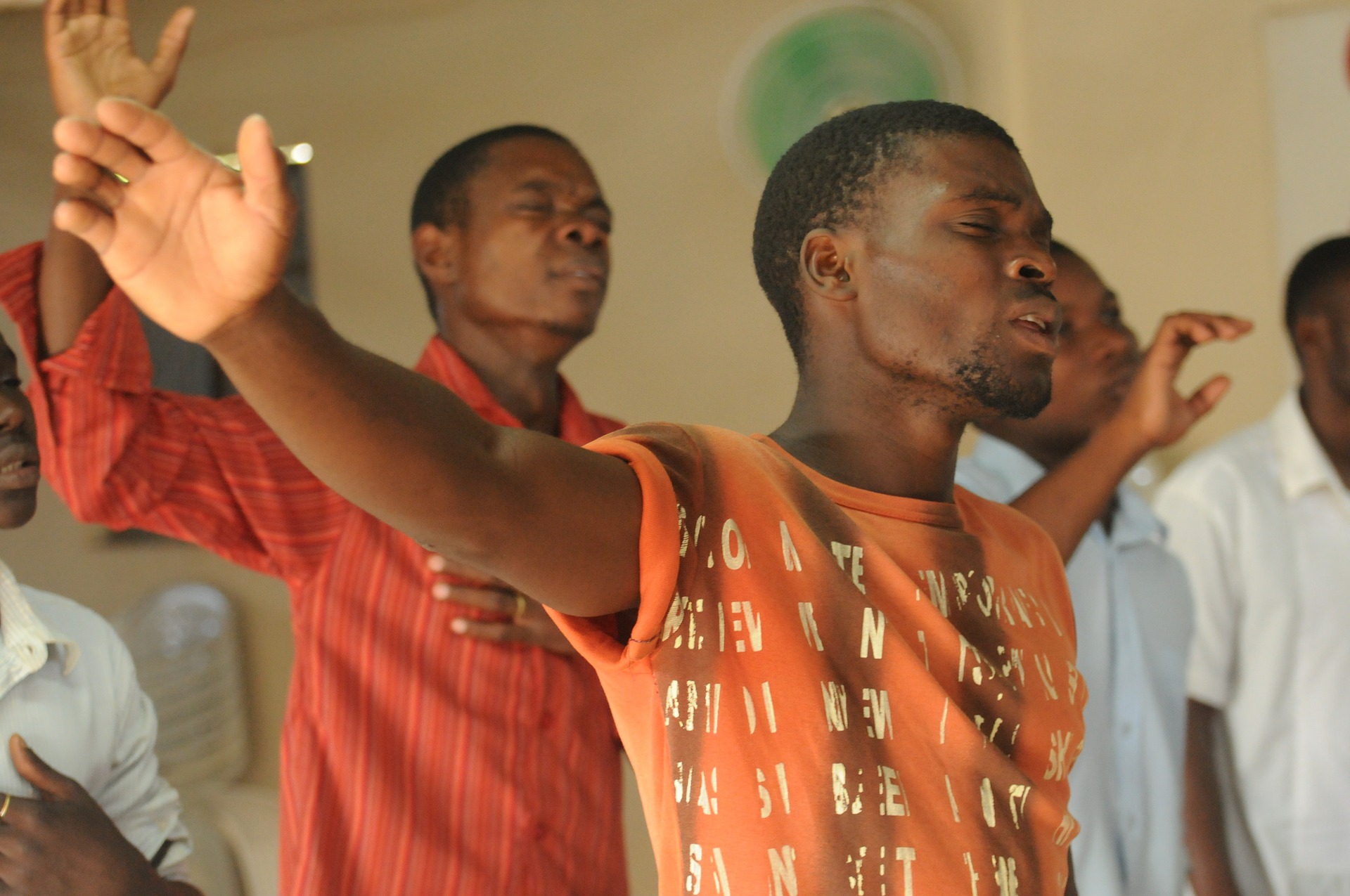
Worship Like You’re Drunk at 9 a.m.

“These people are not drunk, as you suppose. It’s only nine in the morning!”
Acts 2:15 (NIV)

I grew up in a very traditional church paradigm for a midwest American Protestant. I, and my family, were expected to dress in our “Sunday best.” Every part of the church routine was carefully planned and orchestrated. The service had a certain pageantry to it. You kept quiet. You sat up straight in the unpadded wooden pew. You stood when you were told to stand. You sang the verses you were told to sing when you were told to sing them. You sat quietly and listened. It was all very proper.

In the nearly forty years I’ve been a follower of Jesus I have worshipped in a veritable plethora of environments across cultures and denominations. Catholic and Protestant, mainline and charismatic, traditional and non-traditional, I’ve had a lot of different experiences. I’ve worshipped in a poor mountain village on Mindanao in the Philippines where chickens scurried around the dirt floor and a dog wandered in to flop to sleep under the rickety table that served as an altar where I was preaching. I’ve worshiped in silence with Quakers and in the raucous call and response of an African-American congregation. I’ve worshipped at St. Patrick’s in Dublin, the National Synagogue in Jerusalem, and with a handful of Arab believers in Nazareth.

I’ve always held an expansive view of worship. There are always things I can learn from different cultures and traditions. I have, however, made a few observations along the way.

I believe that between the Reformation and the Enlightenment, Protestants by-and-large disembodied worship. The Reformation did away with physical gestures like genuflection and kneeling. The Enlightenment convinced us that our brains were the center of the worship experience, embellished by a couple of instances of standing, singing, and maybe a recitation.

Please don’t hear what I’m not saying. I don’t think the worship paradigm in which I was raised was wrong, but perhaps I’d describe it as purposefully limited. In my perpetual journey through God’s Message I find that the call to praise and worship is always physically active with repeated encouragements to shout, lift hands, dance, sing, clap, play instruments, lift banners and the like. I have yet to come across an exhortation in the Bible asking me to praise God with my hands in my pockets, to praise God with mumbling, or to rejoice in passive sitting.

I’ve also observed, both in scriptural descriptions and in my own experiences, that when Holy Spirit pours out on a group of people at worship things can get a little weird. In today’s chapter, casual observers thought Peter and the boys were drunk at 9:00 in the morning. When King David was worshipping in the Spirit his wife became pissed off at how publicly “undignified” he was acting.

This morning I’m enjoying dusting off some old memories of diverse worship experiences in which I’ve participated. I’m also reminded by the events of Pentecost in today’s chapter that I can’t think of one description of Holy Spirit outpouring that is described as a quiet affair of public propriety. When the religious leaders chastised Jesus’ followers for their raucous outpouring of praise, Jesus replied, “If they were silenced then the rocks would cry out.”

The further I get in my journey, the less I care about what anyone else thinks. I’ll take an outpouring of Holy Spirit anytime. I’ll worship like I’m drunk at 9:00 in the morning.


From Spiritual Mountain Top to Relational Valley

Anyone who claims to be in the light but hates a brother or sister is still in the darkness.
1 John 2:9 (NIV)

A topic of much conversation in our home and circles of friends of late has been that of community. It’s a topic our local gathering of Jesus’ followers has been pushing into. In short, we’re talking about how we all do life together and related to one another. It doesn’t take long for the conversation to bring out three common observations:

  • “It is messy.”
  • “It is hard.”
  • “It is complicated.”

Yes. It always has been, and it always will be living East of Eden.

Along this life journey I often encounter those who love the description of believers in the heady first days of the Jesus’ movement as described by Dr. Luke in his book The Acts of the Apostles:

They devoted themselves to the apostles’ teaching and to fellowship, to the breaking of bread and to prayer. Everyone was filled with awe at the many wonders and signs performed by the apostles. All the believers were together and had everything in common. They sold property and possessions to give to anyone who had need. Every day they continued to meet together in the temple courts.They broke bread in their homes and ate together with glad and sincere hearts,praising God and enjoying the favor of all the people. And the Lord added to their number daily those who were being saved.

This is often held as an ideal to which all of us should strive and aspire. Striving for unity, sharing, and love in life with others is a worthy goal. I have actually had experiences that feel a lot like what Luke describes.

This idyllic experience usually happens at a camp or some kind of retreat environment. It’s that long weekend or week with other like-minded individuals in beautiful natural surroundings. I often hear it described as a “mountain-top experience.” You want to stay there. You want to bottle it up so you can can continue to consume the experience over and over and over again. When you’re at camp having a mountain-top experience you don’t want to leave and go back to “real life.” You’d love to “stay here forever.”

But, that doesn’t happen.

It didn’t happen long-term for the believers in Jerusalem, either. Jesus’ twelve disciples were scattered across the known world sharing the Message. Most of them endured violent ends. Despite the mountain-top experience of that early period of time, history tells us that the believers in Jerusalem eventually faced persecution, conflict, disagreements, strained relationships, and struggle.

Most of the books of what we call the New Testament were originally letters. The letters were by-and-large addressed to individuals or small “communities” of Jesus’ followers. What motivated the authors of the letters was typically problems that were being experienced in community. There were disagreements, relational struggles, theological controversies, moral controversies, personal controversies, persecutions, attacks from outside the community, and attacks from within the community. Leaders such as John, Peter, Paul and Timothy took up their stylus and papyrus to address these problems.

The letter of 1 John is exactly that. A philosophical movement known as gnosticism had sprung up both outside and inside the community of believers teaching things contrary to what John, the other disciples, and the leaders of the community had originally taught about Jesus and his teachings. John was writing to directly address some of these issues. Breaking down today’s chapter, I find John addressing several of them in and between the lines of almost every sentence.

What struck me this morning, however, was John’s bold claim that anyone who claimed to be in “the light” but hated someone in the community, that person was clearly not in the light, but in darkness. In other words, if you are part of Jesus, the “Light of the World” then your life will be marked by love. Jesus taught that we were to love both our friends and our enemies. John is reminding us of the utter foundation of all Jesus’ teaching. Love God. Love others. Everything else is built on these two commands. We have to get that right before anything else.

This morning I’m thinking about some of the disagreements, controversies, relational strife, strains, and struggles I know in my own life, relationships, and community. I experience the “mountain-top” for a moment or a period of time, but eventually I find myself back in the valley of relationship. Community is messy. Community is hard. Community is complicated. John’s reminder is apt.

As a follower of Jesus, I have to accept that there is no exemption from the command to love. If I’m not ceaselessly, actively working to get that right every day with every relationship, I’m not sure anything else really matters.


Summer Camp Experiences

source: Taylor Vander Well

Awe came upon everyone, because many wonders and signs were being done by the apostles. All who believed were together and had all things in common; they would sell their possessions and goods and distribute the proceeds to all, as any had need. Day by day, as they spent much time together in the temple, they broke bread at home and ate their food with glad and generous hearts, praising God and having the goodwill of all the people. And day by day the Lord added to their number those who were being saved.
Acts 2:43-47 (NRSV)

Many years ago I spent a number of weeks during my summer teaching at a youth camp here in Iowa. Summer camp is always a really fun experience. You get away from daily life and routines. You get to play fun games, run around in nature, make new friends, and have a generally wonderful time together.

During one of these weeks, there was an amazing event that happened which was unlike anything I’ve ever experienced. An outpouring of Holy Spirit occurred among a group of junior high kids during evening worship that was reminiscent of the Pentecost event described in today’s chapter.

I would have loved to have stayed at camp and experienced that event over and over and over again. It would have been fun to forget every day life and just stay in that moment, but at the end of the week I had to go home, provide for my family, and move forward in my life journey. I will be forever grateful and forever changed because of what I experienced that week, but it was a special moment for that time and place.

Along the journey I have heard many people bemoan that we do not regularly experience the events like those described in today’s chapter. They are often held as a standard towards which we should strive. While I am certainly not against striving for ideals, I have come to accept that God intercedes in supernatural ways at specific times and places for specific purposes. Mountain top summer camp experiences eventually give way to the valley of daily life. The incredible events of Pentecost would eventually give way to persecution, a scattering of Jesus’ followers, and the overwhelming necessities of managing a daily routine in a rapidly expanding grass roots organization.

Today, I am grateful for the indescribable experience I had that summer at Junior High camp. I am thankful for the things it has taught me and the ways it impacted my life journey. I am also mindful that there is just as much, if not more, spiritual growth and maturity that develops in the mundane disciplines of every day life.

wayfarer chapter index banner

Chapter-a-Day Acts 2

Grandma Jeanne got a 3D picture for a Christmas white elephant gift. Kumi tried to help her see the embedded hidden image.

[The people] stood there amazed and perplexed. “What can this mean?” they asked each other. But others in the crowd ridiculed them, saying, “They’re just drunk, that’s all!” Acts 2:12-13 (NLT)

When I was in high school and college a fad developed around strange looking three dimensional “artwork.”  A seemingly abstract, meaningless picture of colors and lines would suddenly reveal a three dimensional picture if you looked at it just right. Suddenly there were entire stores at the mall dedicated to selling these crazy pictures. Walk by the store or kiosk and you’d find people standing and trying to help their friends see the embedded 3D image.

“Can’t you see it? It’s right there!”

I find a certain parallel to God’s Message in that experience. Some people have spiritual eyes that are open to see the Truth of it and are, at some point, moved to respond to what they see. Others can look and hear the same Message and see nothing at all. Like the crowds in today’s chapter, some were immediately amazed and drawn to what Peter said. Three thousand of them chose to start their own faith journey following Jesus that day. As many, if not more, simply dismissed what they saw and heard as crazy talk from a bunch of drunk fishermen from out-of-town.

I often remind myself that Jesus said He not only came to open the eyes of those who cannot see, but also to reveal that those who think they can see are actually blind.