Tag Archives: Blood

Time to Forget

Brothers and sisters, I do not consider myself yet to have taken hold of it. But one thing I do: Forgetting what is behind and straining toward what is ahead,  I press on toward the goal to win the prize for which God has called me heavenward in Christ Jesus.
Philippians 3:13-14 (NIV)

Over the past few years, Wendy and I have discovered a difference in the way we perceive and approach life. As we have dug into it, it’s allowed us to learn about ourselves and to better understand one another. It has to do with our orientation to time.

I have a strong orientation towards the past. I’m a lover of history. I have spent much of my life digging into I and my family’s genealogy. As I contemplate current events, I tend to seek the past for context. Even as I look to the future I tend to look to the past for patterns that might inform where things are headed.

Wendy, on the other hand, is very much future oriented. Her brain is constantly looking a step or two ahead and it informs both her present tasks and their relative priorities. Life for Wendy is a constant anticipation of what is next, while I give little thought to it.

Our very different orientations towards time often creates clashes in how we function both independently and in relationship. Knowing these differences has allowed us to be more empathetic and understanding towards one another.

This past week our local gathering of Jesus’ followers focused our thoughts on Jesus’ words in the Lord’s Prayer: “forgive us our sins as we forgive those who sin against us.” Wendy and I spent some time talking about forgiveness and resentment, exploring whether or not we have truly forgiven those who have hurt us in the past.

As we continued our conversation, Wendy began quizzing me about a couple of individuals in my own life story who have been the source of considerable struggle for me. As we discussed these individuals and I have continued to meditate on my relationship with them and their impact on my life, it has struck me that my time orientation towards the past might lend itself to unhealthy thought patterns.

In today’s chapter, Paul references his own past and as a disciple of Jesus he had a lot of baggage. Once the most rabid enemy of Jesus and His followers, Paul had the blood of martyrs on his hands. Paul oversaw the stoning of Stephen. It is unknown how many other individuals suffered, were imprisoned, or died as a result of Paul’s zealous persecution of the Jesus Movement, but it is certainly likely that at least some of the opposition he constantly faced linked back to the suffering he once inflicted on others.

This came to mind as I read Paul’s words in today’s chapter:

But one thing I do: Forgetting what is behind and straining toward what is ahead,  I press on toward the goal to win the prize for which God has called me heavenward in Christ Jesus.

I happen to be entering a new stretch of my life journey. Old things are passing away. New things are emerging. As this happens, I am reminded by Paul’s words that I need to spiritually strain against my natural time orientations which often keep me mentally, emotionally, and even spiritually mired in what lies behind. There are some things on the road behind me that I need to forget in order to focus my mental, emotional, and spiritual energies on straining toward what is ahead.

Fortunately, I’m married to a partner whose natural orientation toward time can help me with that.

If you know anyone who might be encouraged by today’s post, please share.

Promotional graphic for Tom Vander Well's Wayfarer blog and podcast, featuring icons of various podcast platforms with a photo of Tom Vander Well.
These chapter-a-day blog posts are also available via podcast on all major podcast platforms including Apple, Google, and Spotify! Simply go to your podcast platform and search for “Wayfarer Tom Vander Well.” If it’s not on your platform, please let me know!
Bible Gateway logo featuring an open book icon

Humanity’s Spiritual Graduation

On the first day of the Festival of Unleavened Bread, the disciples came to Jesus and asked, “Where do you want us to make preparations for you to eat the Passover?”
Matthew 26:17 (NIV)

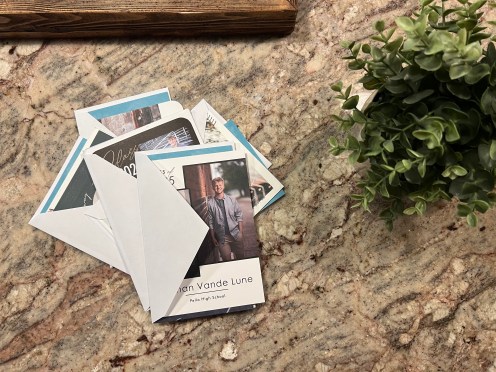
On our kitchen island downstairs is a stack of graduation announcements and corresponding cards that are waiting for me. It is the annual celebration of young people’s rite of passage known as commencement. It’s a celebration of academic completion, but it is more than that. Whether going on for more school or going off into the world to start working, it typically marks a departure from home and the beginning of a young person’s independent life journey.

Immediately before starting this chapter-a-day trek through Matthew’s version of Jesus’ story in March, we had just completed a journey through the ancient Hebrew priestly manual of Leviticus. Several times in that series I made reference to God’s leading the Hebrews out of slavery in Egypt and starting something new. It was a new way of living together in community with God, who placed Himself in a tent at the center of the Hebrew camp. Leviticus gave instructions for a series of festivals, none bigger than Passover, an annual celebration of God miraculously and graciously delivering the Hebrews from their slavery in Egypt. An event that had just happened when Leviticus was given through Moses.

It is no coincidence that the events of Jesus crucifixion and resurrection occur during the festival of Passover. It is no coincidence that Jesus establishes the sacrament of Communion during the annual Passover meal know as the Seder.

The two events connect.

Many times in the journey through Leviticus I mentioned that God was relating to humanity in the toddler stages of development. Just as God was doing something new with the establishment of Passover in the book of Leviticus, God is starting something new during this Passover celebration. Humanity has developed since Leviticus. A whole bunch of life has happened from wilderness wanderings to conquest, a period of judges, the establishment of an earthly kingdom for God’s twelve tribes that ended in divorce and civil war. Then there was a period of strife and exile followed by a period of return and restoration. It’s been a tumultuous childhood.

I think of Jesus’ death and resurrection much like graduation in our culture. For humanity, it was a rite of passage out of spiritual childhood and into spiritual adulthood. The black-and-white rules a parent lays down with a toddler don’t work with a high school senior. We have graduated from very explicit rules about not having sex animals or family members to Jesus’ teaching spiritual principles like making God’s kingdom your priority knowing that God will take care of your daily needs. The old lessons remain, the principles that lie within them are still relevant, but now the emerging adult must willfully choose to apply those principles for themselves in spiritually mature ways as they navigate life in the world on their own.

Jesus will leave His children 40 days after the resurrection. He will ascend to heaven and they will begin life on earth without His physical presence, though His spiritual presence will be readily available through Holy Spirit. Nevertheless, God is doing something new. It is a rite of passage. This Passover meal is a spiritual commencement. The bread, wine, and sacrificial lamb of the Passover Seder are transformed into the body and blood of the Lamb of God who will take away the sins of the world. Death will be defeated once and for all. Jesus Himself says it is a “new covenant.”

Everything is connected.

In the quiet this morning, I’m thinking about those young people whose graduation cards sit down in the kitchen. Oh, the places they’ll go in life.

I’m also thinking about a message I’m giving on Sunday in which I’m going to contrast “life-giving freedom” Jesus prescribes for His disciples and the “human legalism.” It is not uncommon for we humans to cling to toddler-like systems. Children never spiritually (and sometimes physically) leave. Elders continue to rule with black-and-white fundamentals and control the system through shame and fear. But that was never Jesus’ paradigm. He launched His disciples despite the fact that in today’s chapter it would seem they weren’t really ready for the task.

I don’t want to be a spiritual toddler my entire life. I want to be a healthy and productive spiritual grown up.

[cue: Pomp and Circumstance]

If you know anyone who might be encouraged by today’s post, please share.

These chapter-a-day blog posts are also available via podcast on all major podcast platforms including Apple, Google, and Spotify! Simply go to your podcast platform and search for “Wayfarer Tom Vander Well.” If it’s not on your platform, please let me know!

Of Fat and Blood

Of Fat and Blood (CaD Lev 7) Wayfarer

“Say to the Israelites: ‘Do not eat any of the fat of cattle, sheep or goats. And wherever you live, you must not eat the blood of any bird or animal.”
Leviticus 7:23-26 (NIV)

Living in Iowa, one is spoiled when it comes to a good steak. The other week while Wendy and I were on a cruise, we treated ourselves to a fancy, upscale dinner at the ship’s onboard steak house restaurant. It was a lovely evening and we enjoyed ourselves very much. The steak I ordered was, however, just okay. The truth is that for one-third the price I could have gotten a much better steak at my local grocery store.

One of the things you learn about steak when you live in farm country is that fat is good. Fat is what helps make the lean meat even tastier. Steak experts talk about “marbling” of the steak and the fat to lean ratio. It’s a whole thing.

We are also spoiled by having fat cows. For the ancient Hebrews living in the desert wilderness, fat was a luxury and a sign of abundance.

One of the things modern readers struggle with in reading Leviticus is understanding some of the rules God put down. They seem so strange to our 21st century lives. This is true even for Biblical scholars and experts. There are certain things in this ancient Hebrew priest manual that are mysteries lost to us in the course of time. Others, however, can be understood when you translate God’s base language of metaphors.

In today’s chapter, God gives instruction that the fat of a sacrificed animal is God’s alone. Some portions of certain sacrifices could be eaten by the priests (it was how the priests and their families were provided for), some might be eaten by the person who brought it, but only God could have the fat. Fat, being a sign of health and abundance was the best. It is part of a recurring theme God is teaching the Hebrews through this entire sacrificial system. Bring God the best: the first fruits of the harvest, animals without defect, and the fat of the animal.

As for blood, it was deeply associated in the Hebrew mind with life itself. When a person was injured or slain and the blood spilled out of them, it was to them a person’s life spilling out. And God makes it abundantly clear throughout the entire Great Story that life is sacred. God even boils down the Great story on multiple occasions to a simple choice of life or death:

This day I call the heavens and the earth as witnesses against you that I have set before you life and death, blessings and curses. Now choose life, so that you and your children may live and that you may love the Lord your God, listen to his voice, and hold fast to him. For the Lord is your life, and he will give you many years in the land he swore to give to your fathers, Abraham, Isaac and Jacob.
Deuteronomy 30:19-20 (NIV)

“The thief comes only to steal and kill and destroy; I have come that they may have life, and have it to the full. – Jesus
John 10:10

To consume the blood of another living being was metaphorically consuming its sacred life.

As I meditated on this in the quiet this morning, there were two things that emerged for me.

First, I found my heart and mind returning to the idea of giving God our best. The truth is that for most of my life I feel like I gave God my leftovers. It was only as I matured in my understanding that everything I have is God’s and nothing is really mine that I truly understood generosity. Generosity is not me giving something up, but rather it’s me stewarding and channeling God’s goodness and provision to others.

Second, God is beginning to teach His people about the difference between the sacred and the ordinary. He’s introducing His people to the concept of holiness, and I believe that it was another thing that is easy for humans to twist into something it’s not. I believe it was another thing that Jesus came to reclaim and return to a heart understanding.

But there’s more of that to unpack in the chapters ahead. It is now time for me to engage in the sacred task of my vocation.

Have a great day, my friend!

uote

If you know anyone who might be encouraged by today’s post, please share.

These chapter-a-day blog posts are also available via podcast on all major podcast platforms including Apple, Google, and Spotify! Simply go to your podcast platform and search for “Wayfarer Tom Vander Well.” If it’s not on your platform, please let me know!

Lay Your Hands

Lay Your Hands (CaD Lev 4) Wayfarer

The elders of the community are to lay their hands on the bull’s head before the Lord, and the bull shall be slaughtered before the Lord.
Leviticus 4:15 (NIV)

I did not grow up on a farm, but Wendy did. It’s been fun for me over the years to hear the stories of her and her six siblings and the adventures they had. There’s the story of Wendy’s dad having to sell a bull in order to have the money to buy their wedding rings. There are also the stories of her and her siblings raising livestock and showing them at the county fair, a tradition some readers may not realize is still very much alive in rural America. And of course, there are the requisite stories of the siblings first realizing as children that the hamburger they were eating was actually the cow they raised, cared for, and knew by name. That is a reality most of us never experience.

One of the things that modern readers struggle with most is the blood and guts of ancient sacrifices in Leviticus. It is so foreign to both our modern realities as well as sensibilities. In today’s chapter, the fourth of the five main offerings God is introducing to the ancient Hebrews is presented, and it’s a big one. It’s the “sin” offering. As I meditated on today’s chapter, I realized that there’s so much here that I could write a book to delve into all of it. So, I want to stick with two simple concepts.

First of all, the Great Story establishes in the very beginning that when Adam and Eve used their free will to do the one thing that was forbidden to them, it introduced a spiritual problem within humanity called sin. The spiritual problem resulted in a subsequent problem: physical death. The sacrificial system being established for the ancient Hebrews is establishing another spiritual reality: for the sin/death problem to be addressed, a substitutionary sacrifice must be offered. This is why Jesus’ death and subsequent resurrection is essential to our faith. The seeds of understanding what Jesus would ultimately do are here in today’s chapter. Without Leviticus and today’s chapter, one’s understanding of Jesus and what He did are incomplete and at risk of being grossly misunderstood.

Second of all, I find it fascinating that with each sacrificial offering, it was required for those making the sacrifice to “lay hands” on the sacrificial animal. I can’t help but think about Wendy and her siblings and the intimacy they experienced in the process of raising, caring for, and knowing the animal who would ultimately be sacrificed to put food on the family table. This was the common human experience throughout human history until the last 150 years. God insisted that there be a human connection, the laying of hands and an intimate touch, between the sinner needing forgiveness and the animal that was about to be sacrificed on his or her behalf.

For modern readers who get squeamish about the notion of animal sacrifice, I’d like to point out that every year here in America there are approximately 35 million cows systemically slaughtered so we can grab a quarter pounder at the McDonalds drive-through on a whim or pick up a wonderfully convenient, prepackaged pound of ground beef at the grocery store. Most of us never see the cows. We never raise them. We don’t care for them from birth, give them a name, feed them as calves, or transport them to their death. And yet 100,000 cows will be sacrificed today on the altar of our modern convenience and blissful human ignorance and arrogance.

If you ask me, there is something that seems innately more real and nobly human when there was an intimate connection between a human and the animal that was sacrificed, whether that be for sin or for the daily sustenance required for survival. Keep in mind that the food from most of the sacrifices in Leviticus ended up putting daily food and nourishment on the table of the entire Hebrew tribe of Levi and their families. For them, the sacrificial system was part of daily survival in the brutal reality they lived in each day.

Which leads me to where my heart and mind ended up in the quiet this morning. I was raised in the church. I learned all the stories of the Bible. I went through the classes and got my membership certificate, but it still wasn’t real for me. Then came an evening when it all became real, and I understood the reality of my own pride and willful, sinful choices. I made the mind, heart, and spirit connection between what Jesus willingly suffered on the cross and the forgiveness of my pride and willful, sinful choices. In a spiritual sense, it wasn’t until I “laid my hands” on Jesus and made that intimate connection between my sin and His sacrifice that I understood His amazing grace and my undeserved salvation.

If you know anyone who might be encouraged by today’s post, please share.

These chapter-a-day blog posts are also available via podcast on all major podcast platforms including Apple, Google, and Spotify! Simply go to your podcast platform and search for “Wayfarer Tom Vander Well.” If it’s not on your platform, please let me know!

Big Family

Big Family (CaD 1 Thess 2) Wayfarer

Just as a nursing mother cares for her children, so we cared for you. Because we loved you so much, we were delighted to share with you not only the gospel of God but our lives as well.
1 Thessalonians 2:7b-8 (NIV)

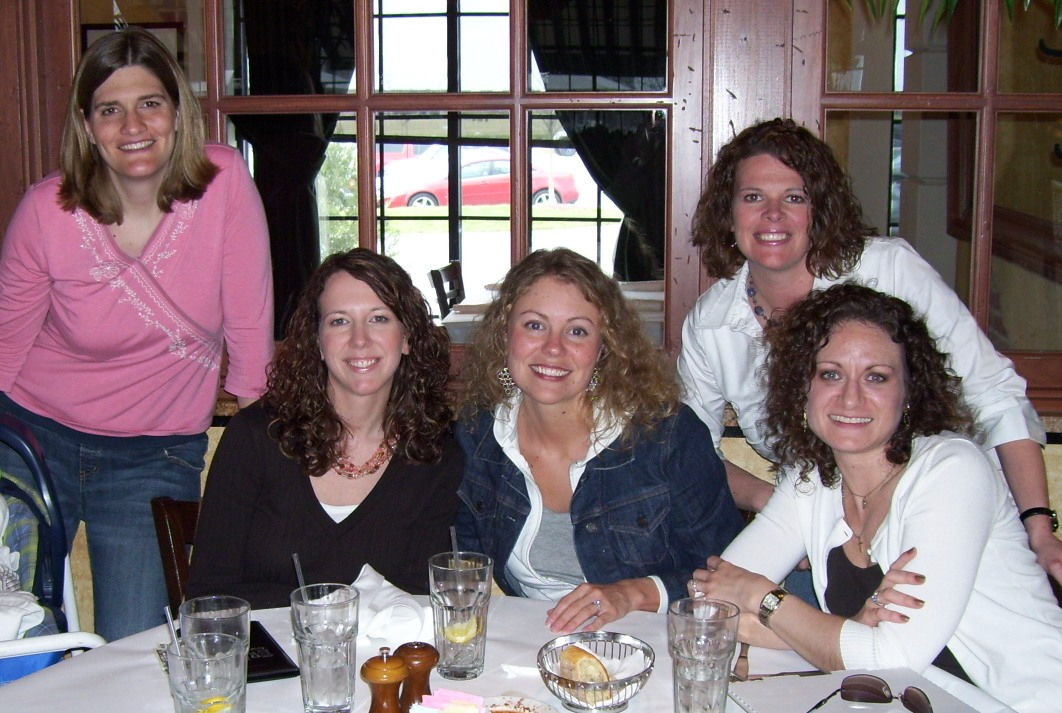
I mentioned in yesterday’s post that Wendy had her friends over this past Saturday night. This group of ladies became friends when they were all single in their twenties. They have shared life together ever since. They have been part of one another’s weddings and have celebrated and supported one another through babies, toddlers, children, and teens. They regularly communicate, make a point of seeing one another, and have enjoyed girls’ weekends together. They are “the Golden Girls.”

As a husband, it has been a quiet joy for me to watch these ladies do life together so well. And, I really mean that they do life with one another. I’ve watched them share with one another in their pain, struggles, and tragedies. They go deep, dig in, and encourage one another in every part of life. Wendy is blessed to have them. I’m blessed that she has them.

In today’s chapter, I thought it fascinating that Paul describes his and his compatriots (Timothy and Silas) brief time among the new Thessalonian believers by metaphorically naming all the key members of a nuclear family within a few verses of one another:

…”we were like young children among you.” (vs. 7a)
“Like a nursing mother cares for her children.” (vs. 7b)
“Surely you remember, brothers and sisters…” (vs. 9)
“…we dealt with each of you as a father deals with his own children.” (vs.11)

As I meditated on this in the quiet this morning, I was reminded of the time when Jesus was speaking to a house that was absolutely packed with people listening. When His mother and siblings showed up to see him, they couldn’t get in and sent a message to Him.

Standing outside, they sent someone in to call him. A crowd was sitting around him, and they told him, “Your mother and brothers are outside looking for you.”

“Who are my mother and my brothers?” he asked.

Then he looked at those seated in a circle around him and said, “Here are my mother and my brothers! Whoever does God’s will is my brother and sister and mother.”


Mark 3:31-34 (NIV)

Along my life journey, I have experienced and observed exactly what Jesus was getting at. Individuals who spiritually share life together for a period of time become a type of family. What Paul was telling his spiritual Thessalonian “children” was that he purposefully embraced all facets of family in his relationship with them. He was innocent and honest as a child. He nurtured and spiritually fed them the “milk” of God’s word. He was, at the same time, like a father as he spiritually instructed, encouraged, and equipped them. He considered them his brothers and sisters in God’s family.

I am blessed with a great nuclear family. The further I get on life’s road and hear the stories of others, the more grateful I’ve become for this. At the same time, both Wendy and I recognize that we are doubly blessed to have an extended family of individuals and couples we do life with. Along the way, I have found that Spirit goes deeper than blood in binding lives together. Jesus alluded to this multiple times.

In the quiet this morning, I find my heart whispering prayers of gratitude for my family members, both blood and Spirit. I’m thankful for a big, big family of individuals on this life journey who have nurtured me like mothers, encouraged and equipped me like fathers, and walked alongside me as siblings. I pray that I have and continue to do the same nurturing, loving, encouraging, and equipping in others’ lives.

I love that genetic science has proven that we all descended from the same woman. I have come to believe that God’s Kingdom is about embracing the reality that all of us are one big family and loving one another accordingly.

If you know anyone who might be encouraged by today’s post, please share.

Cardiac Self-Examination

Cardiac Self-Examination (CaD 2 Ki 10) Wayfarer

Yet Jehu was not careful to keep the law of the Lord, the God of Israel, with all his heart.
2 Kings 10:31a (NIV)

Much of human history is a violent, bloody affair. Pull back from the minutiae and look at it from a distance and the vast majority of it is the story of tribes and empires violently competing for power, wealth, and dominance, then clinging to that power against the next tribe or empire seeking to ascend to power in humanity’s never-ending game of King of the Mountain.

The story of Jehu the usurper in yesterday’s and today’s chapters is a microcosm of this violent game of tribes and empires. He’s a fascinating character because he was “The Son of Nobody” who was at the right place at the right time to seize a rare opportunity to ascend the political system of his tribe and to become King of the Mountain.

Being a military officer, Jehu had a front-row seat to witness and participate in the violent oppression with which Ahab and Jezebel had ruled the nation. Who knows how many atrocities Jehu had committed or overseen himself at their behest. Jehu had been told by the prophet to “destroy the house of Ahab” which certainly meant ensuring there were no male heirs left to claim the throne. Jehu, however, goes even further. He kills the King of Judah, who was Ahab and Jezebel’s son-in-law. He kills their friends, their cronies, their officials, and their known associates. He kills off all of the prophets and priests of Ahab and Jezebel’s patron pagan god, Baal, and turns the temple of Baal into a community latrine. The story is a perfect example of Jesus’ warning to Peter and His followers that violence begets violence. Ahab and Jezebel violently lived and ruled by the sword, and they violently died by it.

Jehu’s vengeance against the house of Ahab and Jezebel was beyond complete. Jehu’s devotion to God wasn’t. Jehu destroyed the worship of Ahab and Jezebel’s patron god out of vengeance against Ahab and Jezebel, not out of devotion to the God of Abraham, Isaac, and Israel. His heart wasn’t devoted to God, it was devoted to vengeance and seizing the opportunity to grab power for himself and his family. As I meditate on the story of Jehu, I consider him to be an example of one who does the right thing (ridding the nation of an evil regime) for the wrong reasons (personal gain).

So, in the quiet, that leaves me ending this week in introspection. Is there a disconnect between my heart and my actions? Do I, like Jehu, do the right things for self-centered reasons? Jehu and David were both soldiers and warriors. They were both violent men who spilled a lot of blood. God used both of them in the grand scheme of the Great Story. The difference between the two lies in their hearts. David was called “a man after God’s own heart” while Jehu’s heart seems to have been after Jehu’s own self-interest. How much of my heart is truly about God’s desires and how much is just Tom’s self-interest?

As I contemplated these questions, the Spirit reminded me of Proverbs 21:2:

A person may think their own ways are right, but the Lord weighs the heart.

I head into this weekend with a cardiac self-examination.

I want to be a David, not a Jehu (or a Yahoo).

If you know anyone who might be encouraged by today’s post, please share.

Justice Then and Now

Justice Then and Now (CaD Jos 20) Wayfarer

Then the Lord said to Joshua: “Tell the Israelites to designate the cities of refuge, as I instructed you through Moses, so that anyone who kills a person accidentally and unintentionally may flee there and find protection from the avenger of blood.
Joshua 20:1-3 (NIV)

Some of our most epic stories have ridiculously high body counts. I’ve had the joy of seeing many of Shakespeare’s plays produced on stage. His tragedies, in particular (e.g. Hamlet, Macbeth) end with seemingly everyone in the play dead. The same with the feuding Capulets and Montagues in Romeo and Juliet. The same is true in more modern epics like the Godfather trilogy in which warring families endlessly kill one another. Game of Thrones also found creative and nasty ways to rack up the body counts. Even the climactic final chapters of Harry Potter contained the death of some of my most beloved characters.

Throughout history, our epic stories are reflections of our humanity, complete with its deepest flaws and tragic ends. Ever since Abel’s blood cried out, murder, death, and vengeance have been a part of human tragedies.

In today’s chapter, God reminds Joshua of a rudimentary system of justice outlined in the law of Moses. Knowing that tragic deaths could often result in violent, systemic, and generational blood feuds between families, clans, and tribes, Cities of Refuge were designated. If a tragic death occurred unintentionally yet a person was accused of murder, the accused could flee to one of these cities of refuge. The town protected the accused from acts of vengeance until a trial could be held by the tribal assembly and a verdict rendered. It was rudimentary, but it provided a time-out so that hot tempers could cool off and vengeance could be stalled in order for justice to be carried out.

As a student of history, I have often read about the historical implications that the Law of Moses had on humanity. It’s the recognized seminal code of law on which our own system of justice is built. No human system of justice is perfect, just as no human system of government is perfect. But in the story of the Hebrews, I see God prescribing a huge step forward toward a more just society.

So what does this have to do with me here in my 21st-century life journey? First of all, I’m grateful to have very little need for a justice system thus far on my life journey. I am blessed to have lived what amounts to a relatively peaceful life. I take that for granted sometimes, and so I whisper a prayer of gratitude in the quiet this morning.

I also recognize as I meditate on the chapter that justice is more pervasive in the human experience than the weighty matters of manslaughter and capital murder. Justice is a part of every human relationship and interaction. As a follower of Jesus, I can’t ignore that He calls me to be just, generous, loving, and merciful in every relationship. Jesus taught that In God’s kingdom:

  • Cursing another person is as serious as murder.
  • Lust is as serious as adultery.
  • I shouldn’t worship God if I’ve got an interpersonal human conflict that needs to be resolved.
  • I am to forgive, as I have been forgiven, and then keep forgiving, and forgiving, and forgiving, and forgiving, as and when necessary.
  • When cursed by others, I am to return blessings.
  • When asked for a favor, I am to go above and beyond what was asked.
  • As far as I am able, I am to live at peace with every person in my circles of community and influence.

And this is not an exhaustive list. It’s just a top-of-mind list that came to me in the quiet.

And so I enter another day in the journey, endeavoring to be a person of love, mercy, generosity, and justice in a world that has always desperately needed it at every level.

If you know anyone who might be encouraged by today’s post, please share.

We Are Family

We are Family (CaD Jos 12) Wayfarer

Moses, the servant of the Lord, and the Israelites conquered them. And Moses the servant of the Lord gave their land to the Reubenites, the Gadites, and the half-tribe of Manasseh to be their possession.
Joshua 12:6 (NIV)

Last night, Wendy and I went to a local watering hole for dinner. It’s a place where locals gather and we like to sit at the bar where we can meet people and chat with the staff as we eat. Next to me was a woman whose husband died just three weeks ago. She was alone, and with the way she engaged me in conversation, I could feel her emotional desperation. Wendy received a phone call and stepped outside the restaurant to take it.

The woman shared her story, weeping off and on as she did so. She and her husband had lived at the lake, but she’d discovered that the “friends” they’d made weren’t friends at all. They partied together, but the only person who showed her any compassion through her husband’s illness and death subsequently tried to con her out of money. Her family was not with her. She was preparing to move, but was obviously alone and feeling the weight of everything. So much so, that she was pouring out her heart and grief to a perfect stranger who sat next to her at the bar.

Last week I was on the road for business and my travels afforded me several hours of windshield time driving hither and yon. I took the opportunity to spend some time talking to each of my siblings. It had been a while since I’d simply caught up with each of them. It refreshed my soul. Our lives are so spread out, and each of them is full, so it is that we can go long stretches of time without connecting. At the same time, we’re family. If any of them called and said, “I need you,” I would drop everything in a heartbeat. I know they would do the same for me.

Today’s chapter marks the end of the first half of the book of Joshua. It’s one of those chapters that seem insignificant on the surface of things. It’s like a box score of the conquest campaign, marking all of the Canaanite kings they defeated.

What struck me was the mention of Moses, who died thirteen chapters ago at the end of the book of Deuteronomy. The author of Joshua is listing off the conquest victories that made way for the lands on which the tribes would settle. He goes all the way back to before Moses died on the other side of the Jordan. Three tribes asked Moses if they could settle there. Moses pledged that as long as the three tribes supported the other tribes in the conquest of the land, they could have the land they desired (Num 32). They kept their pledge. The three tribes could go back over the Jordan to their land, as the rest of the tribes settled theirs.

This got me thinking about families. My family is more spread out on this planet than ever. When I think about my parents, siblings, and children, we’re a relatively small crew, but our life journeys have us spread out from Scotland to the southeast U.S. and all the way west to the Rocky Mountains. Yet, we are family. We are connected. That is an earthly reality.

At the same time, Jesus said that there is a Kingdom of God reality that is just as true. Jesus made it clear to His followers that they were His brothers and sisters even as His own earthly family stood outside waiting to see Him. Jesus went on to tell His followers that sometimes the Kingdom of God supersedes earthly family. Jesus recognized the possibility, especially among His Jewish followers, that being His disciple would divide families. Jesus’ ministry had even divided His own earthly family and at one point His mother and siblings wanted to have Him committed:

Then Jesus entered a house, and again a crowd gathered so that he and his disciples were not even able to eat. When his family heard about this, they went to take charge of him, for they said, “He is out of his mind.”
Mark 3:20-21 (NIV)

In the quiet this morning, I am exceedingly grateful, for I am doubly blessed. I have an earthly family who loves one another and supports one another across the miles and in spite of differences in the way we may sometimes see the world. I also have a spiritual family that is just as intimate, connected, and supportive, though the bond is Spirit and not flesh.

I’m praying this morning for the woman who is alone in her grief.

It’s a good thing to have family, both of blood and Spirit.

If you know anyone who might be encouraged by today’s post, please share.

Blood and Covenant

Blood and Covenant (CaD Gen 9) Wayfarer

“Then God said to Noah and to his sons with him: “I now establish my covenant with you and with your descendants after you…”
Genesis 9:8-9 (NIV)

As my maternal grandparents entered the home stretch of their earthly journeys, they faced difficult financial circumstances that led to a difficult decision. My grandfather’s medical needs were draining their savings which was threatening the financial security of my grandmother, who would most certainly survive my grandfather, possibly for years to come. A social worker suggested that one solution would be for my grandparents to legally divorce so that their finances would be legally split, allowing my grandmother to retain their savings under her name while my grandfather’s needs would be provided for by the State.

I was quite a young man at the time, and I have a vivid memory of my grandmother asking me what she should do. I remember it because it was the first time that I’d considered both the legality, spirituality, and the tradition of marriage. That led me to realize, perhaps for the first time, that while the institutions of both church and state are involved in the process of a couple getting married, there is absolutely no detailed prescription for marriage in the Bible other than addressing it as a basic, assumed relational construct of human familial relationship and cultural systems. So far in our chapter-a-day journey of Genesis the husband and wife relationship has been assumed but no where has there been discussion of ceremony, process, or particulars other than a man and woman leaving their respective homes and becoming “one flesh.”

So, the relational agreement between husband and wife is assumed and its process is not specifically prescribed in the Great Story. What the Great Story does address is the agreement(s) between God and humanity. In the ancient times they were called “covenants.” Once again, since we’re in the beginning of the Great Story, we are going to keep running into firsts, and in today’s chapter we come across the first “covenant” between God and humanity since expulsion from the Garden. God initiates and makes the covenant never to destroy all earthly life by natural catastrophe.

Just before this covenant, God establishes the sacredness of human life, and it is metaphorically established in blood, or “lifeblood.” The ancients recognized that when blood poured out of a person, they died. They made connection between blood and life.

So in today’s chapter God establishes the sacredness of “life,” “blood,” and “covenant.” And just as I mentioned that the flood was an earthly foreshadowing of what would be the spiritual sacrament of baptism, today’s events are an earthly foreshadowing of the spiritual metaphor in the sacrament of Communion:

Then [Jesus] took a cup, and when he had given thanks, he gave it to them, saying, “Drink from it, all of you. This is my blood of the covenant, which is poured out for many for the forgiveness of sins. Matthew 26:27-29 (NIV)

In the quiet this morning, I am once again awed by the connected themes of the Great Story from the very beginning. God is proactive, from the very beginning, in initiating a committed (a.k.a. covenant) relationship with humanity that will bring life in contrast to the death which came through disobedience and the breaking of relationship. And, God is still doing it as I remember each time I choose to step up and partake of the bread and cup as Jesus prescribed for his followers.

As for my grandparents, they chose not to take the social worker’s suggestion. My family helped to find other alternatives for them. That said, I told my grandmother that I did not believe a legal divorce on paper from the State of Iowa could ever nullify the spiritual bond of covenant and spiritual oneness or the chord of three strands woven between them and God. I believe that still. Matters of Spirit are deeper and more eternal than the reach of any human legal system on earth.

If you know anyone who might be encouraged by today’s post, please share.

Another Choice

Another Choice (CaD Ex 29) Wayfarer

…Aaron and his sons shall eat the flesh of the ram and the bread that is in the basket, at the entrance of the tent of meeting. They themselves shall eat the food by which atonement is made…
Exodus 29:32-33 (NRSVCE)

Along my life journey, I have observed that we like things simple. In fact, we like things in twos, binary, either-or, black-or-white. Even when it comes to spiritual matters, human beings find it easiest to reduce things down to binary terms.

We teach children that they are either “good” or “naughty.” It’s one or the other. As David Sedaris once noted, if you’re naughty then Santa will fill your stocking with coal. If you’re good and live in America, Santa will pretty much give you whatever you want.

As an adult, I am supposed to mature in my understanding, but I’m not sure I do it all that well. The systems still largely cater to lumping me in one of two binary choices. I’m either a Republican or a Democrat. I’m either left or right, liberal or conservative. I’m either woke or a racist. I’m either selflessly trying to protect the world from COVID or I’m selfishly contributing to the perpetuation of the pandemic. I’m either FoxNews or CNN. I am privileged or oppressed.

Even in spiritual terms, I am good or evil, going to heaven or hell, saved or sinner.

For the ancient Hebrews we read about in today’s chapter, they spiritually saw things in a binary option, as well: clean or unclean. The ancient Hebrews perceived that they moved spiritually back and forth between clean and unclean based on what they ate, what they touched, or bodily fluids were recently excreted. If you were unclean, then you needed to cleanse yourself in order to be “clean” before God. It happened all the time.

In today’s chapter, God is cultivating another spiritual level altogether as the system of worship and sacrifice is prescribed through Moses: being “holy.” The text describes a strange, mysterious, and somewhat gross set of rituals that consecrated Aaron and his boys to make them “holy” priests who could stand before God to represent their people.

What fascinated me as I read about all of the rituals was the fact that Aaron and the priests were asked to sacrifice a bull and a ram and then eventually they would eat the meat of the animal whose blood was shed to atone (that is, to make right and correct what is wrong) for their sin.

Hold the phone.

Fast forward 1500 years or so. Jesus is in the middle of nowhere with thousands of people. They’re all hungry (yeah, kind of like Moses and the Hebrews). When Jesus asks the Twelve what they can spare from their lunch box, it’s nothing but a loaf of Wonder Bread and a couple of fish sticks. Jesus has them split it into baskets and then spread out and start serving the people. Miraculously, there was enough filet-o’-fish sandwiches for everyone plus leftovers (Sounds a lot like the Manna and quail God provided for the Hebrews).

That night, Jesus slips into a boat and goes to another region. The next day, the crowds hurried to rush around the shore and find Jesus before lunchtime. They were thinking in the simplest of binary terms. I’m hungry. Jesus is giving out food.

Then Jesus does something very, well, un-Jesus-like. He cuts them off. No more free meals:

When they found him back across the sea, they said, “Rabbi, when did you get here?”

Jesus answered, “You’ve come looking for me not because you saw God in my actions but because I fed you, filled your stomachs—and for free.

“Don’t waste your energy striving for perishable food like that. Work for the food that sticks with you, food that nourishes your lasting life, food the Son of Man provides. He and what he does are guaranteed by God the Father to last.”

To that they said, “Well, what do we do then to get in on God’s works?”

Jesus said, “Throw your lot in with the One that God has sent. That kind of a commitment gets you in on God’s works.”

They waffled: “Why don’t you give us a clue about who you are, just a hint of what’s going on? When we see what’s up, we’ll commit ourselves. Show us what you can do. Moses fed our ancestors with bread in the desert. It says so in the Scriptures: ‘He gave them bread from heaven to eat.’”

Jesus responded, “The real significance of that Scripture is not that Moses gave you bread from heaven but that my Father is right now offering you bread from heaven, the real bread. The Bread of God came down out of heaven and is giving life to the world.”

They jumped at that: “Master, give us this bread, now and forever!”

Jesus said, “I am the Bread of Life. The person who aligns with me hungers no more and thirsts no more, ever. I have told you this explicitly because even though you have seen me in action, you don’t really believe me…

“Only insofar as you eat and drink flesh and blood, the flesh and blood of the Son of Man, do you have life within you.”

from John 6 (MSG)

In the quiet this morning I can’t help but once again see the parallel between the Exodus story, and the Jesus story. Exodus was the foreshadow provided to an infant nation. Jesus came to mature our understanding of what God’s Kingdom is all about in contrast to the simple satiation and indulgence of our earthbound appetites of the flesh. The Kingdom of God is not like the kingdoms of this world, and it requires the eyes and ears of my heart to see and hear beyond the simplistic choices fed to me by this world.

As mentioned in the last couple of posts, Jesus’ death was the fulfillment of the word-picture God gave Moses and Hebrews in the sacrificial system. Aaron sacrificed a bull, was sprinkled with the blood, and then ate the sacrifice to make things right.

Jesus came to be the sacrifice.

“This is my body broken for you,” He said as he passed the bread and told His followers to eat.

“This is my blood shed for you,” He said as he passed the wine and told His followers to drink.

Just like Aaron and his boys, we spiritually consume the sacrifice.

The sacrifice consumes us.

Everything is made right.

Holy.

Jesus said to the crowds that day:

“Every person the Father gives me eventually comes running to me. And once that person is with me, I hold on and don’t let go. I came down from heaven not to follow my own whim but to accomplish the will of the One who sent me.

“This, in a nutshell, is that will: that everything handed over to me by the Father be completed—not a single detail missed—and at the wrap-up of time I have everything and everyone put together, upright and whole. This is what my Father wants: that anyone who sees the Son and trusts who he is and what he does and then aligns with him will enter real life, eternal life. My part is to put them on their feet alive and whole at the completion of time.”

Until that day, I keep pressin’ on, one-step-at-time, one-day-at-a-time trying to be an agent of God’s Kingdom on this earth. So begins another day in the journey.

Have a great day, my friend.

If you know anyone who might be encouraged by today’s post, please share.