Tag Archives: Matthew 26

Humanity’s Spiritual Graduation

On the first day of the Festival of Unleavened Bread, the disciples came to Jesus and asked, “Where do you want us to make preparations for you to eat the Passover?”
Matthew 26:17 (NIV)

On our kitchen island downstairs is a stack of graduation announcements and corresponding cards that are waiting for me. It is the annual celebration of young people’s rite of passage known as commencement. It’s a celebration of academic completion, but it is more than that. Whether going on for more school or going off into the world to start working, it typically marks a departure from home and the beginning of a young person’s independent life journey.

Immediately before starting this chapter-a-day trek through Matthew’s version of Jesus’ story in March, we had just completed a journey through the ancient Hebrew priestly manual of Leviticus. Several times in that series I made reference to God’s leading the Hebrews out of slavery in Egypt and starting something new. It was a new way of living together in community with God, who placed Himself in a tent at the center of the Hebrew camp. Leviticus gave instructions for a series of festivals, none bigger than Passover, an annual celebration of God miraculously and graciously delivering the Hebrews from their slavery in Egypt. An event that had just happened when Leviticus was given through Moses.

It is no coincidence that the events of Jesus crucifixion and resurrection occur during the festival of Passover. It is no coincidence that Jesus establishes the sacrament of Communion during the annual Passover meal know as the Seder.

The two events connect.

Many times in the journey through Leviticus I mentioned that God was relating to humanity in the toddler stages of development. Just as God was doing something new with the establishment of Passover in the book of Leviticus, God is starting something new during this Passover celebration. Humanity has developed since Leviticus. A whole bunch of life has happened from wilderness wanderings to conquest, a period of judges, the establishment of an earthly kingdom for God’s twelve tribes that ended in divorce and civil war. Then there was a period of strife and exile followed by a period of return and restoration. It’s been a tumultuous childhood.

I think of Jesus’ death and resurrection much like graduation in our culture. For humanity, it was a rite of passage out of spiritual childhood and into spiritual adulthood. The black-and-white rules a parent lays down with a toddler don’t work with a high school senior. We have graduated from very explicit rules about not having sex animals or family members to Jesus’ teaching spiritual principles like making God’s kingdom your priority knowing that God will take care of your daily needs. The old lessons remain, the principles that lie within them are still relevant, but now the emerging adult must willfully choose to apply those principles for themselves in spiritually mature ways as they navigate life in the world on their own.

Jesus will leave His children 40 days after the resurrection. He will ascend to heaven and they will begin life on earth without His physical presence, though His spiritual presence will be readily available through Holy Spirit. Nevertheless, God is doing something new. It is a rite of passage. This Passover meal is a spiritual commencement. The bread, wine, and sacrificial lamb of the Passover Seder are transformed into the body and blood of the Lamb of God who will take away the sins of the world. Death will be defeated once and for all. Jesus Himself says it is a “new covenant.”

Everything is connected.

In the quiet this morning, I’m thinking about those young people whose graduation cards sit down in the kitchen. Oh, the places they’ll go in life.

I’m also thinking about a message I’m giving on Sunday in which I’m going to contrast “life-giving freedom” Jesus prescribes for His disciples and the “human legalism.” It is not uncommon for we humans to cling to toddler-like systems. Children never spiritually (and sometimes physically) leave. Elders continue to rule with black-and-white fundamentals and control the system through shame and fear. But that was never Jesus’ paradigm. He launched His disciples despite the fact that in today’s chapter it would seem they weren’t really ready for the task.

I don’t want to be a spiritual toddler my entire life. I want to be a healthy and productive spiritual grown up.

[cue: Pomp and Circumstance]

If you know anyone who might be encouraged by today’s post, please share.

These chapter-a-day blog posts are also available via podcast on all major podcast platforms including Apple, Google, and Spotify! Simply go to your podcast platform and search for “Wayfarer Tom Vander Well.” If it’s not on your platform, please let me know!

The Contrast

The Contrast (CaD Matt 26) Wayfarer

Then the chief priests and the elders of the people assembled in the palace of the high priest, whose name was Caiaphas…

While Jesus was in Bethany in the home of Simon the Leper…
Matthew 26:3,6 (NIV)

This past November, I gave a message among my local gathering of Jesus’ followers in which I shared a handful of personal lessons I learned about how the world works:

  • When a local union threatened and bullied me into quitting a part time job I’d taken for a season to save for college.
  • When a local political machine allowed their employees to smoke at work even though it was against the law for everyone else.
  • When a powerful businessman and donor of the church successfully twisted the arms of church leaders to wrongfully accuse the staff and force his will on the congregation.

The world has been having a conversation about systemic racism for the past few years, and it’s an important conversation to have. However, along my earthly journey, I’ve observed and experienced that systemic power exists in many forms and affects every person in one way or another. It’s woven into the human experience. Even Jesus was a victim of it.

I couldn’t help but notice this morning, the contrast Matthew presents between the religious power brokers at the pinnacle of the religious system, and Jesus with His followers.

The religious power brokers met in the high priest’s palace, while Jesus and His followers were guests at the home of a former leper whom He’d healed.

The religious power brokers in their palace schemed how to arrest Jesus secretly and kill Him. FYI: it was illegal to arrest someone secretly at night, and they had no legal authority to execute anyone. Meanwhile, Jesus quietly arranged to celebrate the Passover feast with His disciples in a borrowed room.

As the religious leaders broker a deal with Judas to betray Jesus in the middle of the night, Jesus assertively prepares for His fate in fellowship with His closest friends and in prayer. He has, three times in this chapter, demonstrated that He knows what is coming:

“As you know, the Passover is two days away — and the Son of Man will be handed over to be crucified.” (vs. 2)

“When she poured this perfume on my body, she did it to prepare me for burial.” (vs. 12)

“Truly I tell you, one of you will betray me.” (vs. 21)

In the quiet this morning, I can’t help but ponder the difference I see between Jesus and the religious system that killed Him and ponder Jesus’ words: “My Kingdom is not of this world.” What does that mean for me as I endeavor to follow Jesus every day of this earthly journey? As I ponder Jesus example in the chapter I come up with:

Live a life of surrender not of supremacy.
Invest in people, not possessions.
Live a life of giving, not of getting.
Always expect the Prince of this world to use the systemic power of this world to suppress the purposes of God’s kingdom on earth.

If you know anyone who might be encouraged by today’s post, please share.

Silence and Spiritual Authority

But Jesus remained silent.
Matthew 26:63 (NIV)

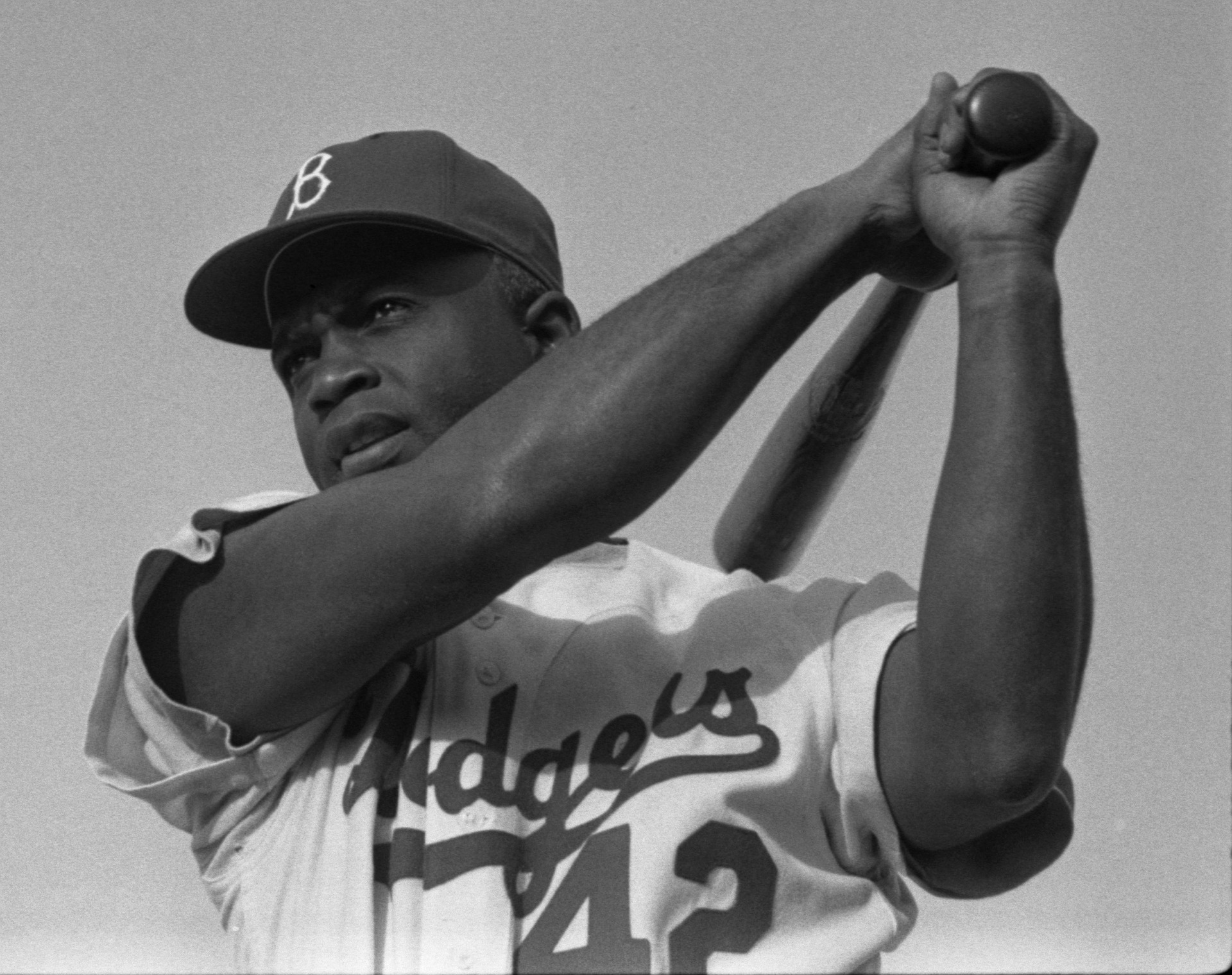
Just last week, on the 15th of April, the Major Leagues celebrated Jackie Robinson day just as it does every year. Every player in Major League Baseball wears Jackie Robinson’s number: 42. It was on April 15th, 1947 that Jackie Robinson  walked out onto Ebbets Field in Brooklyn and broke the color barrier in baseball.

This morning as I woke up in my hotel room I happened to have a documentary about Jackie Robinson playing in the background and reminded me of the familiar story. When Branch Rickey, the General Manager of the Dodgers, brought Jackie to the major leagues he made Jackie promise that for three years he would not respond to the taunts, insults, and attacks that he would face as the first black man to play in the major leagues. Jackie agreed.

The abuse Jackie faced in those years is well documented. The treatment he received in opposing cities was unjust and unfair. Racial slurs and terrible insults by opposing teams and crowds rained down on him non-stop from batting practice until the last out of the game. Pitchers threw at his head intentionally. Runners intentionally spiked him with their cleats, opening up gashes on his legs. But true to his promise, Jackie remained silent. And, he played great baseball.

It seemed like a bit of synchronicity that this morning’s chapter documented Jesus standing before His enemies. They taunted Him. They falsely accused Him. They beat Him and they mocked Him. But true to what had been prophesied, Jesus remained silent. And, He fulfilled His mission.

I’m simply reminded this morning of the power of silence in the face of personal attacks and social adversity. Human nature and our own culture desires – even demands –  justice at an intimate, interpersonal level. If insulted, return the insult. If he talks smack to me, I’m going to dish it right back. If falsely accused, make a spirited defense. On the face of it, Jesus’ encouragement to “turn the other cheek” seems foolishly weak.

But it’s not.

It took incredible courage and spiritual strength for Jackie Robinson to remain silent those three long seasons. His silence was, in fact, an act of spiritual endurance while it took a tremendous physical and mental toll.

Turning the other cheek is not running away, slinking back, or cowering in fear. Turning the other cheek requires standing in, facing your enemy, and defiantly presenting him the opportunity to do it again. It reveals and highlights the injustice. It makes known the truth of the situation.

After three years of sticking to his promise, Jackie was released from his bargain with Branch Rickey. Then it was the wisdom of Solomon that took over. “There is a time to be silent, and there is a time to speak.” Three years of remaining silent before his enemies had earned Jackie Robinson the spiritual authority to be one of the greatest voices for civil rights and social change. Jackie Robinson Day continues that legacy each April 15th.

I find it ironic that Jackie Robinson Day fell between Good Friday and Easter Sunday this year.

Jesus, likewise, followed His own teaching before the kangaroo court that had been hastily and illegally assembled to arrange His execution. He remained silent. He stood in. He faced His accusers. He turned the other cheek each time He was beaten. All that Jesus would endure took its lethal physical toll, but the spiritual power that was unleashed would conquer death itself.

Chapter-a-Day Matthew 26

That is when one of the Twelve, the one named Judas Iscariot, went to the cabal of high priests and said, “What will you give me if I hand him over to you?” They settled on thirty silver pieces. He began looking for just the right moment to hand him over. Matthew 26:14-16 (MSG)

I saw an article last week asking whether Judas Iscariot was in heaven or hell. I didn’t read it. It’s the kind of article that whips up emotions, core beliefs and drives a heated arguments. The publisher loves this, of course, because the buzz gets people reading and responding to the article for which there is really no definitive answer (on this side of eternity) so the paper can’t be faulted for taking the wrong side. It’s a silly argument from my point of view as I’ve come to believe that God’s Judgment Seat is a huge chair, and my butt isn’t that big.

Nevertheless, the question of why Judas betrayed Jesus is one I’m p0ndering this morning as I read the chapter. There were spiritual forces at work. The evil one was certainly not absent. Still, my experience is that there are usually plenty of pre-existing circumstances that make room for the enemy’s presence in a person’s heart. So, this morning I’ve been sketching out a little character study of Judas.

As I journey through the accounts of Jesus’ life and teaching, I constantly run across examples of an ongoing argument among his disciples. Who was greatest? Who was least? Who was going to have a better reward and more honorable position in eternity? There was obviously an inner circle of followers in whom Jesus’ confided and Judas was definitely not one of the inner circle. How badly did this gnaw at Judas? Did the seeds of envy and jealousy help give rise to the fruit of betrayal?

Judas was in charge of the team’s finances. Pretty important position. It was also told that Judas used the position for his own personal gain. I find it interesting that Judas’ betrayal comes immediately after Mary anoints Jesus with an extravagantly expensive perfumed oil.  Had that oil been donated and sold, Judas would have stood to profit from the exchange. Was greed worming its way around his heart, as well? How much did that play a part in tipping the scales from follower to traitor?

Judas betrayal also came at the culmination of an intense amount of conflict. Jesus created a riot when he overturned the moneychangers’ tables at the beginning of the week. There had been an escalating tone to the debate and war of words between the religious leaders and Jesus. Besides, the vision of the disciples riding the gravy train to some glorious take-over and world domination as Jesus ascended a throne in Jerusalem and kicked the Romans out was quickly getting dashed to pieces. The proverbial handwriting was on the wall. A shrewd man could see that the religious leaders would need to kill Jesus to calm the storm he was whipping up against them and to preserve their hold on political power.Besides, Jesus had increasingly been talking about the end of the world and filling his teaching with talk of his death. He was sounding like a mad man, not a king. The future for Jesus’ followers was quickly looking bleak. The pragmatic choice was to throw your lot in with the religious leaders and make enough money to get a new start when the dust settled. In retrospect, for the person concerned with self preservation, it was a simple choice.

Envy, jealousy, greed, and self-centered pragmatism. Those are the core character qualities that I see leading Judas to his decision to betray Jesus. It’s easy to roll my eyes in contempt and shake my head in disbelief at the mention of Judas’ name. However, each and every one of the character qualities which led to his actions are very present in my own heart and life. If you’d like a list of examples, I can give you an earful over coffee. The truth is, I’m not that different than Judas. This is why I’m increasingly reticent slide my rear end onto any kind of seat of judgment.

There, but for the grace of God, go I.

Lord, have mercy on me.

Creative Commons photo courtesy of Flickr and feargal