Tag Archives: Names

A Love Song that Aches

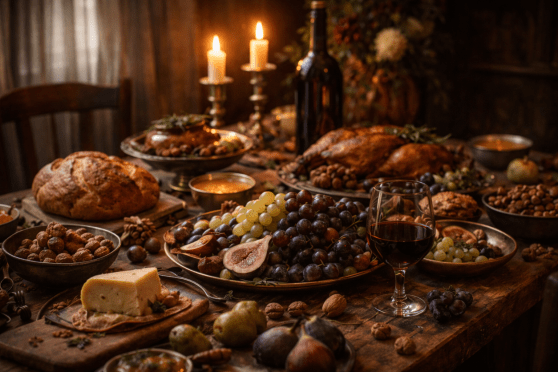
Jeshurun grew fat and kicked;
    filled with food, they became heavy and sleek.
They abandoned the God who made them
    and rejected the Rock their Savior.

Deuteronomy 32:15 (NIV)

If you hang out with Wendy and me for any length of time, you’ll soon notice that Wendy is not “Wendy” to me. She is “Luv,” or I more commonly prefer, “M’Luv.”

When I train clients on the art of customer service, I always talk about names. Names are important because names imply relationship, and customers typically desire more than a transaction when they find themselves in a tough spot – they want a personal service relationship.

One of the funny things about names is that the more intimate the relationship the more intimate the moniker we use for the “other” in relationship. An acquaintance might begin being referenced by a simple pronoun. (e.g. “him,” “her”). Relationship is established and names are learned and used (e.g. “John,” “Mary”). When relationship becomes intimate, we create pet names for one another (e.g. “Darling,” “Sweetheart”). Or, in the case of me and Wendy, “M’Luv.”

Here’s what is fascinating. When relationships break down, the cycle works in reverse. Amidst divorce, the woman I once referred to “Sweetheart” is easily reduced to “my children’s mother” or even back to the impersonal pronoun “her.”

In yesterday’s post/podcast I reference about this crazy idea God gives Moses, to give His people a song. In today’s chapter, Moses teaches the people the song. It’s a doozy. It’s less Love Me Do and more Symphonie Fantastique. Epic in length, it has five distinct movements:

  • God is introduced as The Rock—steady, faithful, just.
  • Israel is remembered as the one God carried, fed, and taught to walk.
  • Then comes the heartbreak: prosperity leads to forgetfulness; forgetfulness leads to idolatry.
  • Judgment follows—not as cruelty, but as consequence.
  • Yet the song does not end in wrath. It ends in vindication, mercy, and restoration.

The ancient Hebrews were all about structure in math, literature, poetry, and music. When it comes to song lyrics, the center of the lyrics is almost always the thematic hub and everything expands outward on either side of it. So, notice the center bullet of the summary above. The center of Moses’ Song is:

Jeshurun grew fat and kicked

As I went down the rabbit hole of meditation and study on Moses’ Song in the quiet this morning, two important things emerged for me.

First, the prophesied rebellion of God’s people does not happen out of suffering, trial, or condemnation. It happens when things go well.

Blessing increases wealth.
Wealth brings abundance.
Abundance breeds comfort…
and comfort makes us fat.

It is not in adversity we forget God, but in prosperity.

Yet notice how God addresses them at this central moment He calls them out: Jeshurun.

This is a name that is rarely used in the Great Story, and names are important.

Jeshurun can be translated “My beloved, upright people.” It’s not the common and neutral every day name “Israel.” This is a pet name — a covenantal endearment. It is an intimate moniker whispered between lovers, not shouted in public.

And, that is what makes its use here so devastating.

Despite His beloved’s forgetfulness, rebellion, and infidelity that is at the center of this love story, God does not address her with watered down formality or impersonal pronouns. He doesn’t shift to courtroom language foreshadowing divorce court. He doubles down and addresses her with a pet name reserved for the most intimate of moments.

Jeshurun.

It does three things…

Recalls Identity
This is who you were named to be.
Highlights Irony
The Upright One has developed scoliosis.
The straight one has grown crooked through comfort.
Deepens the Betrayal
This isn’t rebellion by strangers.
This is infidelity by the beloved.

At the heart of it, Moses is saying: “You did not forget God because you were oppressed. You forgot Him because you were satisfied.”

That is the ache of the song.

It is also, for me, a sobering spiritual reminder. Here in the quiet of my office I sit in prosperity and abundance smack dab in the middle of the wealthiest most affluent empire that has ever risen on the face of the earth in all of human history.

If there’s anyone at high-risk for forgetting God, it’s me.

A good reminder for me to carry into my day. A good conversation to unpack over coffee and breakfast with M’Luv.

If you know anyone who might be encouraged by today’s post, please share.

Promotional graphic for Tom Vander Well's Wayfarer blog and podcast, featuring icons of various podcast platforms with a photo of Tom Vander Well.
These chapter-a-day blog posts are also available via podcast on all major podcast platforms including Apple, Google, and Spotify! Simply go to your podcast platform and search for “Wayfarer Tom Vander Well.” If it’s not on your platform, please let me know!
Logo featuring an open book icon on an orange background.

Namesake

Namesake (CaD John 20) Wayfarer

Then he said to Thomas, “Put your finger here; see my hands. Reach out your hand and put it into my side. Stop doubting and believe.”
John 20:27 (NIV)

I’m not sure why my parents named me Thomas. Perhaps there was an alliteration piece to it since they already hat Terry and Tim. It’s ironic that the etymological root of the name Thomas meant “twin,” since I wasn’t a twin and brothers are. That always felt like a mistake in my book, though my parents confessed to me that I was an “oops” baby, so there’s been no forethought given to having to name another boy.

As a child, I remember names and namesakes being discussed on the playground and in friend groups. There were certain bragging rights for those who had really cool etymological roots or definitions to their names like “King” or “Mighty Warrior.” Some kids linked their names with famous people who happened to have the same moniker.

Of course, in that playground conversation I always got linked to “doubting Thomas.”

Great.

In retrospect, as an Enneagram Type Four, it was probably prescient that my parents named me the same as Mr. Doubt. I have the deep pessimistic streak that comes naturally to Fours. I have a very vivid memory of my mom rolling her eyes at me in frustration and exclaiming, “You’re such a pessimist!” (I didn’t know what it meant at the time.) So perhaps the doubting one is an apt namesake for me, despite the angst it created within me during playground conversations.

And, Fours like to be special. We have a flair for the dramatic. So it would fit that Thomas enjoys the rather special, and dramatic moment when Jesus suddenly appears behind locked doors and tells Thomas to touch His scars and feel the hole in His side. I’ve always had a personal love for Caravaggio’s dramatic depiction of the moment.

In the quiet this morning, I find my thoughts less focused in the story, and more focused on my identity and my connection to the Story. Which is what John point out at the end of the chapter. As he is wrapping up his biography, he rather blatantly reminds his readers of the thing I’ve observed multiple times in these posts over the past few weeks. John had a limitless number of stories and anecdotes about Jesus that he could have shared with readers. He chose specific stories for a specific purpose:

Jesus performed many other signs in the presence of his disciples, which are not recorded in this book. But these are written that you may believe that Jesus is the Messiah, the Son of God, and that by believing you may have life in his name.
John 20:30-31 (NIV)

John’s biography is the first thing I read after becoming a follower of Jesus. This doubting Thomas, this pessimistic, dramatic Enneagram Four, counts myself among John’s readers who have believed and received; I am numbered among those whom Jesus named when He said to Thomas, “Blessed are those who have not seen and yet have believed.”

Mom? Dad? I think you got my name right.

If you know anyone who might be encouraged by today’s post, please share.

Express Yourself

The Lord said to me, “Take a large scroll and write on it with an ordinary pen: Maher-Shalal-Hash-Baz.” So I called in Uriah the priest and Zechariah son of Jeberekiah as reliable witnesses for me. Then I made love to the prophetess,and she conceived and gave birth to a son. And the Lord said to me, “Name him Maher-Shalal-Hash-Baz. For before the boy knows how to say ‘My father’ or ‘My mother,’ the wealth of Damascus and the plunder of Samaria will be carried off by the king of Assyria.”
Isaiah 8:1-4 (NIV)

The world of the ancient Hebrew prophets was a whacky place in which everything in their lives was fair game for being living metaphors of their spiritual messages. Marrying a prostitute, walking around the city naked strapped to an ox yoke, and building a city out of Legos in the middle of the city square in order to lay siege to it are among a few of the rather bizarre word pictures God had them act out.

The poor sons of Isaiah had the enjoyable distinction of being born to be given names from their father’s prophetic work. And, I have to believe it likely got them ridiculed and beat up on the ancient playgrounds of Jerusalem:

  • She’ar-Ya’shuv meant “a remnant shall return” which foreshadows the people of Judah who were taken into captivity in Babylon, and the remnant who returned to restore the temple (as told by Nehemiah).
  • Maher-Shalal-Hash-Baz meant “spoil quickly, rush to the plunder” which foreshadowed the impending attack and plunder of King Ahaz’s enemies by the Assyrians.

While S-Ya and the Baz-man may have names that seem very strange to us today, the act of layering names of our children with meaning is not new. Taylor and Madison both have middle names that reference women in my family, one on my mother’s side and the other on my dad’s. While Madison is not named for the street I grew up on, I love the added layer of meaning it has for me. It is quite common to give children names layered with meaning by naming them after role-models, inspirational figures, Biblical characters, and etc.

We all do things metaphorically. We layer things with meaning. Metaphor is God’s language. It’s God’s modus-operandi in communicating. Made in God’s image, we all inherently do it. We express ourselves (who we are, and what we believe/think) in what we wear, drive, hang on our walls, do with our time, and post on social media. The prophets simply pushed the envelope. Prompted by God, they were more intentional and more creative with their metaphors.

This morning I’m thinking once again about how I wordlessly express myself, both unconsciously and intentionally. I am no ancient prophet, but it seems to me I have an opportunity, perhaps even an obligation, to be mindful and intentional in all the ways I express myself.

chapter a day banner 2015

A Car, by Any Other Name….

Tabitha Transports Taylor & Clayton from Their Wedding

So, in our family the cars have names. I know we’re not alone this (please, tell me we’re not alone in this). It seems that our autos become personified members of the family. Wendy’s 2001 Honda Accord is Sally. Our old 1991 Dodge pick-up was lovingly dubbed Tabitha by Taylor, who drove her to school for several years (Tabitha drove Taylor and Clayton away from their wedding). Madison’s first car was a Geo Metro that received the appropriate moniker, Squirt.

After many years of faithful service, Wendy decided it was time for Sally to be replaced. Admittedly, it’s a somewhat more greivous experience when you personify your cars, as if you’re hurting their feelings. So, she got her new car this past week (a Nissan Murano), but we didn’t know what to name it. Is it male? Is it female? We opted to wait on it and let the name come to us. All week we’ve referred to the car as “her” and “she,” so we were sensing it was female. Still, we didn’t have a name.

My business car is an RX350 named, shockingly, Rex. So it was yesterday, we were at Wendy’s folks and somehow the conversation came around to the naming of cars. In the course of the conversation I mentioned the fact that Rex is latin for “King” while Regina is latin for “Queen.” Wendy looked at me and it suddenly hit us at the same time. So, this morning we’re announcing to the world that Wendy’s new car is Regina (though we’ve determined her majesty prefers Reggie).

Chapter-a-Day Isaiah 7

Names. Then God told Isaiah, "Go and meet Ahaz. Take your son Shear-jashub (A-Remnant-Will-Return) with you." Isaiah 7:3 (MSG)

Names have meaning. There can be historical meaning in a name (Just ask any "Doubting Thomas"). There can be linguistic meaning in a name (Thomas is derived from an ancient word meaning "twin," which was always a head-scratcher for me because I'm not a twin, but my brothers are). Names have literary meanings (Little Tommy Tucker, for example). Names give way to nick names (Tommy, T, TV, Tompt, and Tommer Toes are a few I've had through the years).

Our names are metaphors. Something which represents something else without using "like" or "as." The word "Tom" represents me. It's not "like" me. "Tom" is me. For better or worse, names become intensely personal metaphors to which all sorts of meaning can and will be attached in many different layers.

I find it fascinating that Isaiah chose to name his son Shear-jashub which means "A Remnant-Will-Return". The name of Isaiah's son was part of his prophecy. Isaiah's life-long message is of judgement and redemption, of doom and hope. He tells of Jerusalem's imminent fall and devastation, but also of God's eventual redemption and salvation. Today's chapter is a microcosm of his message. Doom is coming (in the form of Assyria's seige of Jerusalem) but also salvation (a virgin-born Messiah).

Part of Isaiah's message is that after the people are taken into captivity, eventually a remnant would return to Jerusalem (the prophecy was fulfilled and the story told in the book of Nehemiah). So, Isaiah names his son Shear-jashub and his son becomes, metaphorically, a part of Isaiah's message. Shear-jashub represented the future, and his name represented God's prophetic message. Isaiah's child became a living, breathing, walking representation of his life-long sermon.

Creative Commons photo courtesy of Flickr and pio1976