Tag Archives: Medicine

Of Doctors and Priests

Of Doctors and Priests (CaD Lev 14) Wayfarer

The priest who pronounces them clean shall present both the one to be cleansed and their offerings before the Lord at the entrance to the tent of meeting.
Leviticus 14:11 (NIV)

In the past few weeks, Wendy and I have had a smattering of medical appointments and procedures of various kinds. There is more to come in the near future. As much as I hate to admit it, our bodies are showing the signs of our ages (Wendy is way younger than me! 😉). As I mentioned in yesterday’s post/podcast, no matter how good medical science gets, there is ultimately no antidote for the eventuality of our bodies aging and dying. Of course, there have been and always will be those who continue to seek that holy grail.

Which had me thinking as I read today’s chapter. Yesterday described the process by which the newly appointed Hebrew priests would examine, diagnose, and quarantine those individuals who showed signs of a skin disease that could be contagious. In today’s chapter, the priests are instructed how to examine and then prescribe a healthy person’s return to the Community. This included a ceremonial ritual for cleansing outside the camp followed by a regimen of washing both body and clothes, and shaving off all hair. The individual was then allowed into the camp, but there was a seven-day period in which the individual did not go into their family’s tent/house. If after seven days there was no sign of relapse, on the eighth day they went to the same priest who declared them clean and he would make an offering to the Lord to atone for the cleansed person. Then they could return to their family tent.

What struck me as I read these instructions was the role of the priest, who is acting very much as a doctor. Have you ever noticed the universal symbol we still use today for medicine and healthcare? It originates right out of the story of Moses and these Hebrew tribes escaping from slavery and beginning this new way of living in the wilderness. In Numbers 21, the people are being plagued by poisonous snakes. Moses makes a bronze snake, places it on a pole, and everyone who is bitten by a snake looks at it and lives.

So the first doctors in this tradition were priests, and there was a connection between God, health, and healing. Two thoughts, make that three, are churning in mind.

First, in all of my years of involvement with churches of every shape, size, and tradition, I’ve never experienced one that truly addresses, emphasizes, and attempts to help people make the spiritual connection between their spiritual life and their physical health. As Paul put it to the believers in Corinth:

Do you not know that your bodies are temples of the Holy Spirit, who is in you, whom you have received from God? You are not your own; you were bought at a price. Therefore honor God with your bodies.
1 Corinthians 6:19-20 (NIV)

Second, as I’ve observed my aging grandparents and parents in these final seasons of earthly life, I can’t help but observe the healthcare system. The system appears to me to be largely designed to profit by helping a human beings stay alive as long as possible. There is a lot of money to be made in doing so. As the body ages there a multiple things that begin to breakdown. For every single one of them there are examinations, tests, scans, procedures, drugs, and regular follow-up visits. And for every thing on that list there is a price tag.

As I think about this from a spiritual perspective, it strikes me that the what the healthcare system really wants to do is to help humans avoid death as long as possible. On one hand, this is a natural human instinct. The pursuit of longer, more productive lives is worthy. I’ve observed along my journey, however, that worthy human pursuits almost always have the propensity to be twisted in spiritually dark ways. Voldemort was pursuing the eternal avoidance of death. Dr. Frankenstein, too.

Have we made the medical establishment modern day priests who will extend our lives in a form of Godless religion?

At what point does the avoidance of death at all costs become empty of any kind of Life?

At what point does an industry designed to profit from helping people avoid death become just a modern tower of Babel built with DNA strands, stem cells, technology, and pharmaceuticals?

And this brings me to the third thought rummaging around in my mind and soul this morning. At the very core of everything God is doing in Leviticus, at the core of everything Jesus taught, is an unescapable spiritual paradox: If I want to experience Life, I am required to face death and embrace it. Jesus was very clear that He came to this earth to die as the ultimate sacrifice for my sin. It was a willful and servant-hearted act of love, surrender, and sacrifice. He calls me to follow in his footsteps every day. If I really want to Live, I must daily pursue the death of my pride and selfish desires to pursue love, surrender, and sacrifice

And wouldn’t you know it? I have observed that even this spiritual truth appears to have been twisted by some into a pursuit of death in a selfish desire to avoid life. It seems the healthcare industry and some governments are more than willing to profit from this, as well.

Lord, help me to die to myself that I might live for You and others.

If you know anyone who might be encouraged by today’s post, please share.

These chapter-a-day blog posts are also available via podcast on all major podcast platforms including Apple, Google, and Spotify! Simply go to your podcast platform and search for “Wayfarer Tom Vander Well.” If it’s not on your platform, please let me know!

Wordplay in The Word

Wordplay in The Word (CaD Mi 1) Wayfarer

One of the things that is lost on modern readers is the wordplay that Micah used when he wrote his messages in Hebrew. A chapter-a-day podcast from Micah 1. The text version may be found and shared at tomvanderwell.com.

For Samaria’s plague is incurable;
    it has spread to Judah.
It has reached the very gate of my people,
    even to Jerusalem itself.
Micah 1:9 (NIV)

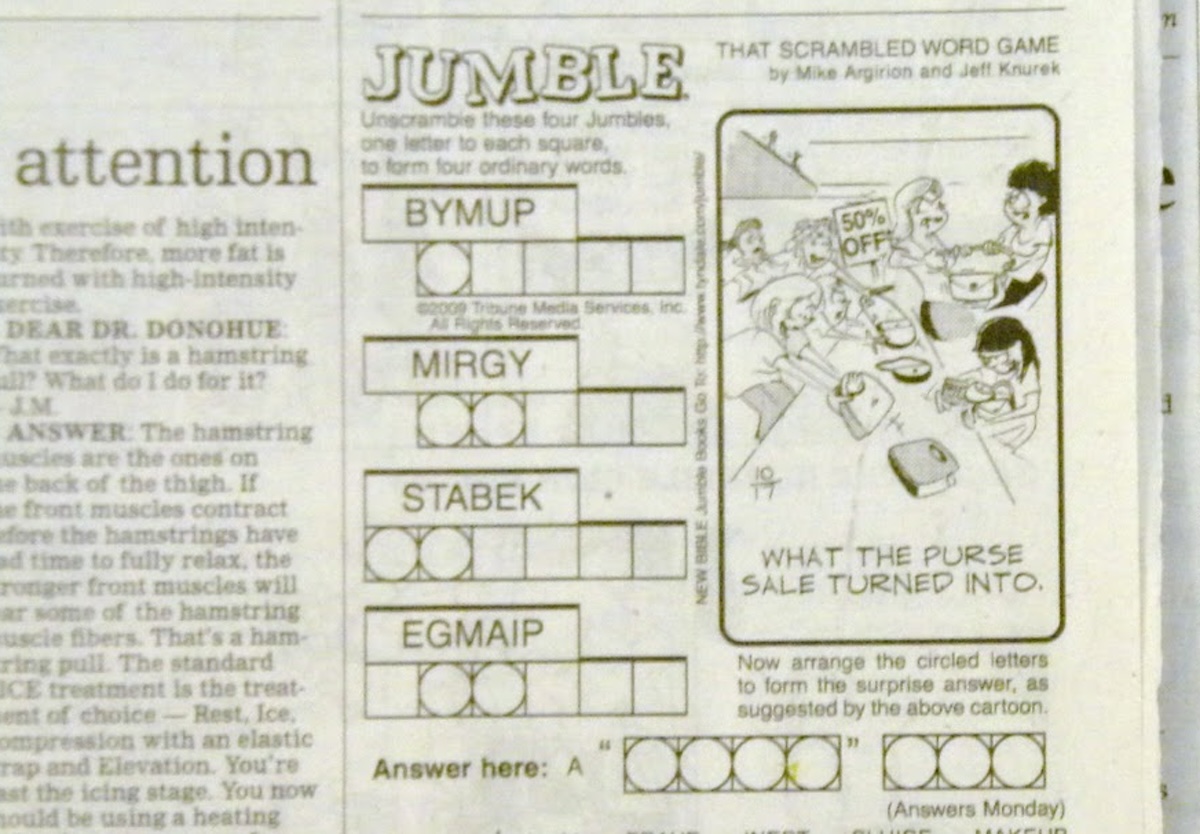
Back in the day, my hometown of Des Moines had two daily newspapers. The Des Moines Register was delivered in the morning and The Des Moines Tribune was delivered in the afternoon. Ours was a Tribune household. Families were usually one or the other. On Sunday, both Register and Tribune subscribers got the “Sunday paper” which was huge. It was filled with entire sections you didn’t get on weekdays, the comics had their own section printed in color, and there were a million flier ads for all the major department stores.

The “Sunday paper” was a weekly big deal. One of the reasons was that the Sunday Register had “Jumble” word puzzles that weren’t printed in the daily Tribune. My mom loved to spend her Sunday afternoons solving the puzzle of jumbled-up letters that would make words which would then provide the clues to a final word that was the punchline to an accompanying cartoon. I grew up loving to help, and I think it planted a seed in me. I’ve always loved word puzzles, and as I grew up I gained a fondness for learning new words, the history of words, and the use of creative wordplay in writing. It’s one of the reasons I’ve always loved Shakespeare. He was a master at playing with words in creative ways.

Today, this chapter-a-day journey begins a quick trek through the writing of the ancient prophet Micah. Micah was from a small town in Judah when ancient Israel had been divided into the two kingdoms of Israel (in the north) and Judah (in the south). It was a time of political, religious, and moral corruption, and Micah was speaking out to the people of both nations to warn them of God’s impending judgment. Micah correctly prophesied that both Israel and Judah would suffer destruction at the hands of the Assyrian Empire.

One of the things that is lost on modern readers is the wordplay that Micah used when he wrote his messages in Hebrew. Much like Shakespeare, Micah uses clever wordplay that weaves irony and sarcasm that would have made his messages memorable in their day. In today’s chapter, Micah uses the names of actual towns and cities where his audience lived and links them to sound-alike words in his message. As I mulled this over in the quiet this morning, I created a little word game for myself as I thought about some of the towns around where we live and how I might use them Micah-like:

You who live in Sully will be sullied by the rubble of your destroyed homes.

Those in Leighton will search for someone to lighten the burden of God’s judgment without success.

There will be no revenge for the people of Montezuma after the instrument of God’s wrath is finished.

The residents of Galesburg will reap the whirlwind of the Lord’s anger.

In the quiet this morning, the old Mary Poppins song came to mind with the message “A spoonful of sugar helps the medicine go down.” The ancient prophet’s message was harsh spiritual medicine for his audience. I have to believe that the wordplay in his writing was intended to make the message both memorable and easier to swallow. That’s not a bad reminder for me, or anyone who finds themselves having to communicate a bitter pill.

If you know anyone who might be encouraged by today’s post, please share.