Tag Archives: Temple

“Young and Old”

"Young and Old" (CaD 1 Chr 25) Wayfarer

Young and old alike, teacher as well as student, cast lots for their duties.
1 Chronicles 25:8 (NIV)

This past Sunday, I gave the message among our local gathering of Jesus’ followers. In the message, I shared briefly about my youth pastor, Andy, who was a real mentor to me when I was in high school.

One of the things that Andy impressed upon me and my fellow students in those days was the fact that there was no age minimum when it came to having spiritual gifts and using them for God’s Kingdom. When it came to a two-year discipleship program that Andy wanted to offer for our high school youth, he chose four students to be trained and to lead the class for both students and their parents. Encouraging us to embrace that we had spiritual gifts and that God wanted to use us even though everyone else saw us as “just kids” was transformational.

I continue to beat that same drum today. How many great things could happen if young people stopped zoning out in front of screens, chasing likes, and were given permission to embrace and unleash their spiritual gifts and passions in tangible ways?

I also mentioned in my message that spiritual gifts and using them for God’s Kingdom do not come with an expiration date, either. Just this last week I had a casual conversation with the former CEO of a global corporation who now tries to help individuals and organizations harness the opportunities represented in those who have “retired” from their careers but still have as many as 20 to 30 years of life ahead of them in their “third phase.” Our culture embraces “retirement” but nowhere in the Great Story have I ever found God telling anyone their services are no longer needed. God numbers our days for His purposes, not mine. If I wake up in the morning, there’s a purpose He has for me this day.

I thought about these things as I read another one of the admittedly boring chapters of lists. In today’s list, the Chronicler lists those members of the tribe of Levi who were musicians and assigned to play for worship in the temple. It was fascinating that the ancient Hebrews made a connection between music and spiritual sight. There was a connection between music and prophesy, synonymously referred to as “seer.” I confess that I’ve always envied gifted musicians and singers. Alas, my gifts lie elsewhere.

What struck me the most in today’s chapter was that when it came to assigning the musicians who would be responsible for playing music for worship in the Temple on a rotating basis, they cast lots. “Young and old alike, Teacher as well as student.” In other words, there was no age or educational restriction. God wanted young and old, experienced and inexperienced, both teacher and trainee to play before Him. Even a “joyful noise” is sweet music to God’s ears when it is played with a devoted and aspiring spirit.

In the quiet this morning, I find myself meditating on the difference Andy made to a generation of us back in the day. Andy believed and convinced us there was nothing we couldn’t accomplish for God if we had faith and shrugged off the restrictions society and culture placed on us, even in spiritual matters. You can still find so many of my peers from those years around the globe still focused on ushering God’s Kingdom through everything they do, no matter their vocation or calling.

I also find myself, once again, reflecting on the impending “third phase” of life that sits out there on the horizon. I have no idea exactly what that looks like. I do know, however, that my endeavor is to never retire from God’s callings and purposes for me as long as I have life and breath.

If you know anyone who might be encouraged by today’s post, please share.

Inspired by the Past

Inspired by the Past (1 Chr 22) Wayfarer

“Now devote your heart and soul to seeking the Lord your God. Begin to build the sanctuary of the Lord God…”
1 Chronicles 22:19a (NIV)

As a baseball fan, I have been enjoying the outpouring of honor for Willie Mays the past few days. Not only was Mays possibly the greatest all-around player ever, but he is among the last players who transitioned from the Negro Leagues to the Major Leagues after Jackie Robinson broke the color barrier. He is one of the greats.

“We were playing for generations of players who were held back. We had a lot to play for, not just [for] us,” Mays told John Shea, co-author of Mays’ memoir 24.

One of the things that I love about history is its power to inspire, and there is plenty of inspiration in a man like Mays who was not only a great ball player, but a stellar human being who helped move history forward out of the sickness of segregation.

As I mentioned in yesterday’s post/podcast, we have entered a new phase of 1 Chronicles. Once again, I found it important this morning to place myself in the sandals of the Chronicler and the people to whom he is writing his history of King David and the Kingdom of Israel. His generation has returned to the rubble of Jerusalem left by the Babylonian army almost a century before. Their generation has been given the monumental task of turning the debris into a new Temple.

How does he inspire them? With the history of their larger-than-life hero King David. King David’s greatest desire was to build the temple, but God made it clear that it would be his son, Solomon, who would do the job. So, David made all of the preparations he could, and in today’s chapter, he passes the responsibility to his son with history’s version of an inspirational locker room speech.

I think it’s important to note that all of these details are not found in the earlier historical account in Samuel. This is the Chronicler’s unique addition to the story. When he writes of David urging his son to succeed in completing his life’s greatest ambition he knows that he is writing to the “sons of David” who have the same task before them hundreds of years later. He is using history to inspire.

In the quiet this morning, I’m reminded that everyone has a natural bent with regard to time. My bent is to look to the past for its lessons and inspiration. Wendy’s bent, on the other hand, is to always be looking to the future so that she can plan and execute that plan well. Still, others have a bent to living in the moment and focus on the present realities. There is no right or wrong. It’s not an either-or, but a yes-and. I have learned along the journey that we all need to learn from and appreciate those who have a different bent. And from time to time everyone needs the pasto to inspire us. The Chronicler certainly understood this.

If you know anyone who might be encouraged by today’s post, please share.

House of Flesh

House of Flesh (CaD 1 Chr 17) Wayfarer

When your days are over and you go to be with your ancestors, I will raise up your offspring to succeed you, one of your own sons, and I will establish his kingdom. He is the one who will build a house for me, and I will establish his throne forever.
1 Chronicles 17:11-12 (NIV)

After living over 40 years as a disciple of Jesus, I’ve come to realize that one of the greatest spiritual challenges one has on this earthly journey is to see the things of this earthly life in the context of God’s Kingdom. If I step back and look at the theme that Jesus was always preaching it was to live my life and relate to others with a Kingdom of God perspective.

So much of daily life is filled with earthbound needs and priorities. There a jobs to do, bills to pay, kids to raise, and a never-ending list of life’s daily maintenance tasks that make me empathize with Sisyphus.

I can let all of these things distract me from God’s Kingdom, which I’ve observed to be the human default. Jesus asks me to see all of it, to approach all of it, and to execute all of it with God’s Kingdom in mind. If you read Jesus’ famous Sermon on the Mount (Matthew 5-7), you’ll basically find that it is His overarching theme of the entire thing. Approach and live out daily life with God’s Kingdom in mind.

In today’s chapter, David moves into his new palace. I picture him walking out onto the balcony and viewing the tent he had constructed as a temple for God and the Ark of the Covenant. He immediately sees the contrast in earthly terms. “I live in a gorgeous palace, while I put God in a tent. Somethings not right here.” And, I have to honor David’s sensitivity. For those of us who have gone to beautiful, opulent buildings, cathedrals, basilicas, and the like for church on Sunday, David’s thinking feels right.

“For my thoughts are not your thoughts,
    neither are your ways my ways,”
declares the Lord.”

Isaiah 55:8 (NIV)

What struck me in the quiet this morning was God’s response His appointed King, the “man after His own heart.”

“Wherever I have moved with all the Israelites, did I ever say to any of their leaders whom I commanded to shepherd my people, “Why have you not built me a house of cedar?”

God didn’t ask David to build a temple. It’s a nice thought and all, but God has other things in mind in the context of God’s Kingdom. David is thinking bricks and mortar. God’s Kingdom is about flesh, blood, and Spirit. I love that God flips David’s desire 180 degrees: “Oh no, David. You’re not going to build Me a house. I’m going to build you my kind of house!”

God then explains that He is going to channel David’s earthly kingdom into God’s eternal Kingdom. From David’s line, from the House of David, will come God’s Son who will be the King of Kings. He will build God a House made of flesh-and-blood children from every nation, tribe, people, and language who sit at the table with Him eating the bread and drinking the wine of a new covenant. From tent to temple to table.

David is thinking in the context of a building in Jerusalem in 1000 B.C. God is thinking in the context of the plans He has for an eternal Kingdom beyond time.

And there it is again. David, with all good intentions, is stuck in his earthbound thinking. God invites Him to expand his heart and mind to see things in terms of the Kingdom of God. Just like His Son Jesus invites me to do in His teaching. He who would be the One to invite me to the table for a meal of bread and wine where my flesh and blood is transformed into the Temple of the Holy Spirit.

And here I sit in the quiet on a Friday morning, with every good intention to make good on the day ahead of me. I am God’s temple, God’s Spirit in me. As I head into day 21,231 of my earthly journey, a simple ordinary day, I endeavor to live in Kingdom context. I want to see each task as a Liturgy of the Ordinary, each moment with others as a divine opportunity, and each challenge as God’s classroom to educate me on Kingdom living.

If you know anyone who might be encouraged by today’s post, please share.

The Priesthood, Then and Now

The Priesthood, Then and Now (CaD 1 Chr 6) Wayfarer

But Aaron and his descendants were the ones who presented offerings on the altar of burnt offering and on the altar of incense in connection with all that was done in the Most Holy Place, making atonement for Israel, in accordance with all that Moses the servant of God had commanded.
1 Chronicles 6:49 (NIV)

The Temple Mount in Jerusalem is arguably the most contested plot of ground on the earth. If you look at the featured photo you can see that the Al-Aqsa Mosque with its iconic golden dome and its walled courtyard sits perched on top. Many feet below is the uncovered Western wall of the Jewish temple, known as the Wailing Wall where thousands come daily to pray. You might also notice the constructed stairway from the top of the mount (under Muslim control) into the courtyard below (under Jewish control). The “mountain” is sacred to both Muslims and Jews, and the tension is ever-present.

I happened to visit the area during what is known as the 2nd Intifada in which Israel was regularly under terrorist attack. Our group was small. There were only five of us, and so we found ourselves slipping into a tour group of Jewish students to hear more about the Temple Mount, its excavation, and its future. Jerusalem is a popular tourist spot for Christians, Jews, and Muslims and you have to know that tour guides and hosts are well aware of the constituency of the groups when making their presentations. As five tag-along Christians at the back of a bunch of Jewish students, we were treated to the unabashedly Jewish presentation complete with a few jokes that disparaged Jesus and Christian beliefs.

I found it fascinating to learn that among certain Jewish groups, there are intricate plans already established for the rebuilding of a Jewish temple on the Temple Mount. The plans even allow for a return to the system of sacrifices and offerings laid out in the law of Moses. My first question was how this was even possible given the fact that only the sons of Aaron could be priests and offer sacrifices and only Levites could perform the other duties of the Temple. All of the genealogical records were destroyed with the Temple by the Romans in 70 A.D. I casually asked someone how a return to the sacrificial system could even happen since no one knew who were direct descendants of Aaron and Levi. The response was that geneticists are working on that through DNA.

Good to know.

Of course, all of those plans are predicated on the Muslims losing control of the Temple Mount and the destruction of their sacred mosque. And suddenly you have a microcosm of the conflict, rooted in thousands of years of history, that repeatedly spills over into violence to this day.

In today’s chapter, the Chronicler focuses on the tribe of Levi. In particular, he gives top billing to the descendants of Levi’s great-grandson, Aaron. They alone were the priests who could offer sacrifices according to the instructions given to Moses. As I meditated on this, I couldn’t help but consider that the Chronicler was sitting in exactly the same position our Temple Mount tour guide was hoping to be. The Temple had been destroyed by the Babylonians. The Chronicler’s generation had rebuilt it. The question I asked after our tour was extremely relevant to the Chronicler and his generation around 400 B.C. It was critical to establish the lines of Levi and Aaron so that the Temple could function properly according to the Law of Moses.

In the quiet this morning, my meditations led, as usual, to the teaching of Jesus. The week Jesus was to be executed He told His followers that the Temple would be destroyed. Exactly one generation later, the Romans fulfilled His prophetic prediction, and with the destruction of the genealogical records, the entire sacrificial system itself was dead and buried. The paradigm completely shifted. As the author of Hebrews wrote:

Unlike the other high priests, [Jesus] does not need to offer sacrifices day after day, first for his own sins, and then for the sins of the people. He sacrificed for their sins once for all when he offered himself.
Hebrews 7:27 (NIV)

As a disciple of Jesus, it doesn’t end there. The shift of paradigm goes a step further. For those who are spiritually in Christ, we are adopted as children of God and thus are children of the King and High Priest, Jesus. This is why Peter referred to all of his fellow believers as “a royal priesthood.” As a member of that priesthood, I am called upon to make a sacrifice, the sacrifice of myself. As Paul wrote to the believers in Rome:

Therefore, I urge you, brothers and sisters, in view of God’s mercy, to offer your bodies as a living sacrifice, holy and pleasing to God—this is your true and proper worship.

And as Jesus said,

“Greater love has no one than this: to lay down one’s life for one’s friends.”

And so, I enter another day on the journey; A priest endeavoring to sacrificially give myself for the sake of others.

If you know anyone who might be encouraged by today’s post, please share.

Wells and Walls

Wells and Walls (CaD Acts 7) Wayfarer

“You stiff-necked people! Your hearts and ears are still uncircumcised. You are just like your ancestors: You always resist the Holy Spirit!”
Acts 7:51 (NIV)

Of late, I’ve been reading a series of posts by a fascinating Orthodox believer and mystic in Ireland. I’d never heard of this before, but there are a great number of “holy wells” scattered across Ireland and he’s been seeking them out and documenting the adventure. There are all sorts of legends and stories that surround each well and many of them are located in extremely remote locations. Finding some of them sounds like a bit of a pilgrimage in and of itself. No matter how hard they are to find, I’m always surprised at the photos showing many people had been there and left tokens of their visit. Many obviously still believe that these wells are “thin places” where the veil between the physical realm and the spiritual realm is more permeable.

I find the “holy well” phenomenon intriguing, and it’s obviously rooted in the history of 1500 years ago when wells, and fresh water, were more critical for survival. With Jesus’ claim to be “living water springing up to eternal life,” it makes sense how a well could take on layers of metaphorical and spiritual significance. It’s unlike anything I’ve experienced here in America, though our modern history only goes back a couple of hundred years and was arguably rooted in more “enlightened” times.

Along my life journey, it has always been church buildings that I have observed people treating like sacred spaces. I can remember being taught this as a child, literally as if the building was holy and had some special divine indwelling. While I fully understand that a building dedicated to the gathering of believers in worship can take on all sorts of significance for people, the very idea of a church building goes against the core of what Jesus taught.

In today’s chapter, a young believer named Stephen is brought before the same religious rulers who conspired to have Jesus killed. The charges against him included him “speaking against this holy place” (meaning the Temple in Jerusalem) as Stephen quoted Jesus saying He would “destroy this Temple and rebuild it in three days.” For the Jews, the Temple was sacred, so when Stephen argues that “God does not dwell in houses made with human hands” he was taken out and stoned to death.

One of the things that I love most about Jesus was that He moved God’s presence out of buildings with walls made with human hands to the table where “two or three are gathered” over a good meal and conversation. God is there because God indwells the believers at the table, and there’s a shared presence in the gathering together. My body is the temple. God’s Spirit is in me and goes everywhere I go. To ignore this and believe that God resides in a sacred church building down the street where I visit Him on Sunday means I don’t get Jesus’ teaching at all. In fact, it makes me no different than the stiff-necked religious rulers throwing stones at Stephen.

So, in the quiet this morning I am reminded once again that God is in me, and my body is the temple. This means that the divine is a part of every piece of my day, even the mundane and ordinary bits. It means that when Wendy and I gather for coffee and our usual blueberry and spinach smoothies in just a few minutes there is something holy taking place if we will simply take time to recognize it. And, I don’t have to go hunting in remote locations to find a holy well, though that does seem like a really fun adventure.

If you know anyone who might be encouraged by today’s post, please share.

Tent to Temple to Table

Tent to Temple to Table (CaD Ex 25) Wayfarer

And have them make me a sanctuary, so that I may dwell among them.
Exodus 25:8 (NRSVCE)

Our children posted a rather hilarious video of Milo over the weekend. At first, we couldn’t figure out what he was doing shaking his bum towards daddy’s legs. As we listened to the audio it became more clear that Milo was making like the Stegosaurus on his shirt and shaking his spiky “tail” to protect himself from the predator, played by daddy, whom I presume was cast in the role of a T-Rex. Yesterday, on our Father’s Day FaceTime, we got to witness Milo reprise his role for us a shake his little dino-booty for Papa and Yaya’s enjoyment.

It’s a very natural thing for us to make word pictures and games for our children and grandchildren to introduce them to concepts, thoughts, and ideas that are still a little beyond their cognitive reach. Even with spiritual things we do this. Advent calendars with numbered doors help children mark the anticipation of celebrating Jesus’ birth. Christmas gifts remind us of the gifts the Magi brought the Christ child. Wendy often recalls the Nativity play she and her cousins and siblings performed each year with bathrobes and hastily collected props which helped to teach the story behind the season.

In leaving Egypt and striking out for the Promised Land, Moses and the twelve Hebrew tribes are a fledgling nation. Yahweh was introduced to Moses in the burning bush. Moses introduced the Tribes to Yahweh through interceding with Pharaoh on their behalf and delivering them from Egyptian slavery. Yahweh has already provided food in the form of Manna and led them to the mountain. In today’s chapter, God begins the process of providing a system of worship that will continue to develop a relationship of knowing and being known.

As I described in my podcast, Time (Part 1), we are still at the toddler stage of human history and development. The Ark of the Covenant (yes, the one from Raiders of the Lost Ark) and the plan for a giant traveling Tent to house God’s presence, are all tangible word pictures that their cognitive human brains could fathom revealing and expressing intangible spiritual truths about God.

Along my spiritual journey, I’ve observed that as humanity has matured so has God’s relationship with us. Jesus pushed our spiritual understanding of God. “You have heard it said,” he would begin before adding, “but I say….” I have come to believe that Jesus’ ministry, death, and resurrection were like the “age of accountability” in which we talk about when children become responsible adults. Jesus came to grow us up spiritually and to mature our understanding of what it means to become participants in the divine dance within the circle of love with Father, Son, and Spirit. On a grand scale, God is doing with humanity what Paul experienced in the microcosm of his own life:

When I was a child, I spoke like a child, I thought like a child, I reasoned like a child; when I became an adult, I put an end to childish ways.

1 Corinthians 13:11

I have also observed, however, that human beings have a way of getting stuck in our development. Many adults I know are living life mired in adolescent patterns of thought and behavior. Many church institutions are, likewise, mired in childish religious practices designed to control human social behavior, but they do very little to fulfill Jesus’ mission of bringing God’s Kingdom to earth. Again, Paul was dealing with this same thing when he wrote to Jesus’ followers in Corinth:

And so, brothers and sisters, I could not speak to you as spiritual people, but rather as people of the flesh, as infants in Christ. I fed you with milk, not solid food, for you were not ready for solid food. Even now you are still not ready, for you are still of the flesh.

1 Corinthians 3:1-3a

There is a great example of this from today’s chapter. God provided the Ark of the Covenant, and a traveling tent called the Tabernacle, as a word picture of His presence and dwelling with the wandering Hebrew people. It was a physical sign that God was with them. Once settled in the Promised land, the temple that Solomon built in Jerusalem became the central physical location of God’s presence. When Jesus came, however, He blew up the childish notion of the God of Creation residing in one place. Jesus matured our understanding of God’s very nature and the nature of God’s presence. With the pouring out of God’s Spirit to indwell every believer, Jesus transformed our understanding of God’s dwelling and presence. “Wherever two or three are gathered,” Jesus said, “I am among them.” The place of worship transitioned from the Temple to the dining room table. After the resurrection, Jesus was revealed during dinner in Emmaus, making shore-lunch for the disciples along the Sea of Galilee, and at the dinner table behind locked doors where the disciples were hiding.

Wendy and I have this quote from Brian Zahnd hanging on the fridge in our kitchen:

“The risen Christ did not appear at the temple but at meal tables. The center of God’s activity had shifted – it was no longer the temple but the table that was the holiest of all. The church would do well to think of itself, not so much as a kind of temple, but as a kind of table. This represents a fundamental shift. Consider the difference between the temple and the table. Temple is exclusive; Table is inclusive. Temple is hierarchical; Table is egalitarian. Temple is authoritarian; Table is affirming. Temple is uptight and status conscious; Table is relaxed and ‘family-style.’ Temple is rigorous enforcement of purity codes that prohibit the unclean; Table is a welcome home party celebrating the return of sinners. The temple was temporal. The table is eternal. We thought God was a diety in a temple. It turns out God is a father at a table.”

In the quiet this morning I find myself thinking about the ancient Hebrew people struggling to mature their understanding from a polytheistic society with over 1500 dieties to the one God who is trying to introduce Himself to them in ways they can understand. I am reminded of the ways Jesus tried to mature our understanding of God even further. I find myself confessing all of the ways through all of the years of my spiritual journey that I have refused to mature in some of the most basic things Jesus was teaching.

As Wendy and I sit down together to share a meal together this week, my desire is to acknowledge Jesus’ presence. To make our time of conversation, laughter, and daily bread a time of communion with God’s Spirit. I think that’s a good spiritual action step.

Bon a petite, my friend. May you find God’s Spirit at your table this week.

If you know anyone who might be encouraged by today’s post, please share.

“Good Luck Charm” Religion

"Good Luck Charm" Religion (CaD Jer 8) Wayfarer

“How can you say, ‘We are wise,
    for we have the law of the Lord,’
when actually the lying pen of the scribes
    has handled it falsely?”

Jeremiah 8:8 (NIV)

A few years ago, I was working with a group of leaders who were tasked with teaching the book of 1 Corinthians to a larger gathering of Jesus’ followers. Before we began, I made a copy of the text without any of the chapter or verse numbers listed. I changed the type face to a font that resembled actual handwriting and printed it and handed it out. I encouraged the team to put themselves in the sandals of a leader of the Jesus followers in ancient Corinth and to read the words as they were originally intended: as a personal letter from their friend Paul. It was a transformative exercise for us.

One of the things that I have to always remember on this chapter-a-day journey is that the chapter and verse designations were not part of the original writings for centuries. Manuscripts as early as the 4th century AD contain some evidence of text being divided into chapters, but it wasn’t until the 12th century that Steven Langton added the chapter divisions and it wasn’t until 1551 that a man named Robert Estienne added the verse definitions. In 1560, the first translation of the entire Great Story referred to as the Geneva Bible, employed chapters and verses throughout. They’ve been used ever since.

Chapters and verses are an essential method for study, referencing, and cross-referencing. That’s why they remain. However, in my forty-plus years of studying, I’ve found that they can also hinder my reading, understanding, and interpretation. Chapters and verses gain individual attention apart from the context of the whole in which they were intended when written. Individual verses get pulled out of context. In other cases, like today’s chapter, the entire chapter is merely a piece of a larger message. I can easily read and contemplate just today’s chapter alone without connecting it to the chapters before and after into which they fit.

In today’s chapter, I noticed that the Hebrew people of Jeremiah’s day were saying, “We are wise, for we have the law of the Lord.” Something clicked and I remembered something I read in yesterday’s chapter: “Do not trust in deceptive words and say, “This is the temple of the Lord, the temple of the Lord, the temple of the Lord!” Both chapters are really part of one message or series of messages to be read together as a unit.

Taken together, I realize that there’s a theme in Jerry’s message that I would never see if I confine myself to each individual chapter and don’t consider them together as a whole. The Hebrew people of Jeremiah’s day had misplaced their trust. They trusted in Solomon’s Temple, one of the seven wonders of the ancient world. They trusted in the “Law of the Lord” which had recently been rediscovered and made known to them. They had not, however, placed their trust in the God who gave them the Law, nor the God who inspired the building of the temple. They were treating the temple and the Law the same way they treated the other gods who they had worshipped, sometimes within the temple they were worshipping. The temple and the Law were basically good luck charms like all the other stars, idols, and pagan images they worshipped along with them.

In the quiet this morning, I thought about people whom I’ve met and known along my life journey whom I’ve observed treating their religion and their local church building, much like the people Jerry is addressing in his message, as good luck charms. When trouble comes in life (and trouble always comes in life – God even says so) I have observed their shock and anger. I have heard them express rage at God for not warding off their troubles and making their lives free of difficulty, pain, or sorrow. But God never promised that.

In fact, when Adam and Eve sinned by eating the forbidden fruit of their own free will, God said specifically that the consequences would include pain and conflict, sweat and toil, along with death and grief on our earthly journeys. Going to church and dressing my life up in religious traditions does not save me from any of those earthly realities. However, a trusting relationship with God gives me what I need to endure troubles in such a way that qualities like faith and perseverance, peace and maturity, along with joy and hope hone me to become more like Jesus, who endured more undeserved trouble than I could ever imagine and did so on my behalf.

Once again, a Bob Dylan lyric came to mind as I pondered these things this morning:

Trouble in the city, trouble in the farm
You got your rabbit’s foot, you got your good-luck charm
But they can’t help you none when there’s trouble

If you know anyone who might be encouraged by today’s post, please share.

Sacred Space

Sacred Space (CaD 1 Ki 6) Wayfarer

In building the temple, only blocks dressed at the quarry were used, and no hammer, chisel or any other iron tool was heard at the temple site while it was being built.
1 Kings 6:7 (NIV)

This past week, Wendy and I were tickled as we watched a young girl in our weekly gathering of Jesus’ followers. She was laying on the floor in the front of the gathering coloring in her coloring book, kicking her legs up and down as she hummed while the morning message. When I later told her mother that Wendy and I had enjoyed watching her daughter she commented, “Only [in our gathering] could that be acceptable.”

What she was poking at was the tradition of reverence and sacredness that people have traditionally had around church buildings, sanctuaries, and places of worship. I was raised in such a tradition. When entering the church, you were to be quiet, dignified, and respectful. Children were never supposed to run. The altar area in the sanctuary was a forbidden space. Wear your best clothes, sit up straight in the pew, behave, be quiet, be reverent. You’re in a sacred space!

After becoming a follower of Jesus and reading Jesus’ teachings and the teachings of the apostles for myself, I was amazed by the realization that almost everything about my experiences of church was nowhere to be found in either the teachings or examples of Jesus and His early followers. In fact, Jesus on at least two occasions speaks about the religious tradition of worshipping God at a temple being torn down and replaced. He was dismissive of His disciples’ awe and wonder at the Temple ( the same Temple we read about being built in today’s chapter) and tells them that it will ultimately be razed to rubble. In another episode, a woman from Samaria questions Jesus about one of the major differences between the Jews, whose worship was centered around the Temple in Jerusalem, and the Samaritans, whose worship was centered at Mount Gerizim. Jesus responds, “Believe me, a time is coming when you will worship the Father neither on this mountain nor in Jerusalem…a time is coming and has now come when the true worshipers will worship the Father in the Spirit and in truth, for they are the kind of worshipers the Father seeks.”

Jesus never prescribed church buildings, cathedrals, basilicas, sanctuaries, altars, or sacred spaces. The teaching of Jesus is that when I as a follower am indwelt by the Holy Spirit then I become the Temple of God. Sacred space, therefore, is wherever I happen to be. I bring the sacred with me because God’s Spirit is in me. The Jesus movement in the first century exploded as followers and disciples met anywhere and everywhere in homes, outdoors, and in public places.

We human beings, however, love our religious traditions. I found it interesting in today’s chapter that even at the building of the Temple the work area was to remain silent in reverence. It reminded me of the plethora of rules I was taught as a child about the church building being a sacred space.

Which reminded me of our sweet little girl Wendy and I watched in worship this past Sunday. Our local gathering has taken a different stance than the historic traditions about the place of worship being sacred and thus requiring silence, reverence, and rules like the removal of headwear. In our gatherings, children are allowed to be children. For many years, we had a weekly gaggle of little girls who would literally apply Psalm 149’s call to praise God with dancing as they would jump and spin and improvise dances in the corner of the room during songs. We have people who quite literally exercise the freedom to worship God with clapping, shouting, and raising hands as prescribed in the book of Psalms and elsewhere. On a few occasions, we’ve had an individual who expresses praise by applying Psalm 20’s encouragement to “lift up banners in the name of our God” and would quite literally do a flag routine like you’d see with a marching band. And, sometimes we are silent and reverent, not because of the room or the building but because silence is a form of both individual and corporate worship, too.

It is in the quiet where I find myself each morning as I read and ponder, and write each one of these chapter-a-day posts. My home office becomes sacred space, not because of anything having to do with the room, but because of everything having to do with God’s Spirit in me and communing with me in spirit, heart, and mind.

If you know anyone who might be encouraged by today’s post, please share.

Purpose and Legacy

Purpose and Legacy (CaD 1 Ki 5) Wayfarer

[Solomon wrote] “I intend, therefore, to build a temple for the Name of the Lord my God, as the Lord told my father David, when he said, ‘Your son whom I will put on the throne in your place will build the temple for my Name.”
1 Kings 5:5 (NIV)

Wendy and I recently returned from a trip to Scotland where we visited our kids and grandkids living there. One afternoon we made a point of visiting a small pub in Edinburgh that had become a favorite haunt of ours on our last visit to Edinburgh. The White Hart boasts of being Edinburgh’s oldest pub, having opened for business in the year 1516 on a street below Edinburgh Castle just a stone’s throw from where official public beheadings and executions took place.

While enjoying a pint at the White Hart, we went to the internet to find out what was happening in the world in 1516. Henry VIII, who famously broke with the Roman Catholic Church and marries six different wives (two by beheadings that were not conducted down the street from the White Hart Pub), is on the throne in England. Martin Luther is a year away from nailing his 95 theses to the Wittenburg Door. Christopher Columbus’ cousin was doing his own bit of exploring in Asia after Chris had discovered the Americas just over a decade before. The Ottoman Empire was waging war against Syria. And, the White Hart pub was pouring pints for their first customers.

Wendy and I sat in the same pub, contemplating how much life had changed in 500 years.

In today’s chapter, the narrative switches from a focus on who Solomon was to a focus on what Solomon did. Namely, his major building projects. The major focus is on the building of the Temple in Jerusalem, but the text also describes the building of Solomon’s palace, as well.

The building of the Temple is a major event in the context of the Great Story that God is authoring from Genesis through Revelation. All the way back in the book of Exodus God gave instructions, through Moses, for the building of a traveling tent temple known as the Tabernacle. It could be repeatedly set up and taken down as the Hebrew people left slavery in Egypt and traveled through the wilderness to the Promised Land. The Tabernacle was always set up in the center of the Hebrew camp and their lives centered on the sacrificial system of worship that God established in the Law of Moses.

That was roughly 500 years before Solomon, the same amount of time that passed between our pub in Scotland opening its doors and our visit last month. The Hebrew tribes have been well established in the land of Canaan for about 400 years. Think about all that changes in 400-500 years. In all of that time, there’s been no central place of worship for the Hebrew people. The Tabernacle was still around, but it had moved from place to place and there’s some belief that the Ark of the Covenant (which was to be kept in the Tabernacle according to the Law of Moses) may have been removed and kept elsewhere which would have watered-down the entire system of worship. With no established Temple, sacrifices took place in different locations and the worship of God became mixed in with the practices of local pagan religions. The author of 1 Kings even mentions that Solomon was guilty of worshipping in the “high places” favored by local pagan deities (1 Ki 3:3).

Building a Temple, therefore, is a huge deal for the Hebrew people. It will be known as one of the seven wonders of the ancient world. It will become the center of Hebrew worship for centuries. It will be destroyed and rebuilt. It will be where Jesus will drive out the moneychangers and draw crowds with His teaching. Jesus will also correctly prophesy that it will be ultimately torn down. The foundational remnants of the Temple are centrally sacred in Judaism to this very day.

In the quiet this morning, my heart and mind are pondering both purpose and legacy. The texts of Samuel and Kings make it clear that Solomon was purposed by God to build the Temple that would become an important thread of the Great Story. The legacy of Solomon’s Temple continues to resonate to this day as people gather this moment, around the clock, to worship and pray at the Western Wall, the foundation stones of the Temple that still remain on the western side of the Temple Mount in Jerusalem.

Jesus’ taught His followers to live with purpose, prioritizing God’s Kingdom above the things of this earthly life. In doing so, He spoke of a legacy of things that will remain for eternity when every earthly treasure has long since burned away.

What do I purpose to do with this day?

What legacy am I building and leaving?

Good questions to ponder over a pint, and then act on it. The oldest pub around here, however, has yet to reach its tenth birthday.

If you know anyone who might be encouraged by today’s post, please share.

God in (and Out of) a Box

God In (and Out of) a Box (CaD 1 Sam 5) Wayfarer

…the following morning when [the Philistines] rose, there was [their god] Dagon, fallen on his face on the ground before the ark of the Lord! His head and hands had been broken off and were lying on the threshold; only his body remained. That is why to this day neither the priests of Dagon nor any others who enter Dagon’s temple at Ashdod step on the threshold.
1 Samuel 5:4-5 (NIV)

For many years, I’ve had an idea for a book about the things the contemporary church continues to get wrong. If I ever do write this book, one of the chapters would be about church buildings themselves. From an early age, I was taught to treat a church building as a sacred space. The church building was and sometimes is, referred to as God’s house or the house of God.

In yesterday’s post/podcast I spoke of treating God like a good luck charm. I like to think of our perception of church buildings as God’s House as the notion of “God in a box.”

The problem with believing the church building is “God’s house” is, of course, that Jesus was very clear that He was changing the paradigm. In His conversation with the Samaritan woman at the well, Jesus addressed her question about the “right” place to worship God by saying, “…believe me, a time is coming when you will worship the Father neither on this mountain nor in Jerusalem...a time is coming and has now come when the true worshipers will worship the Father in the Spirit and in truth, for they are the kind of worshipers the Father seeks.

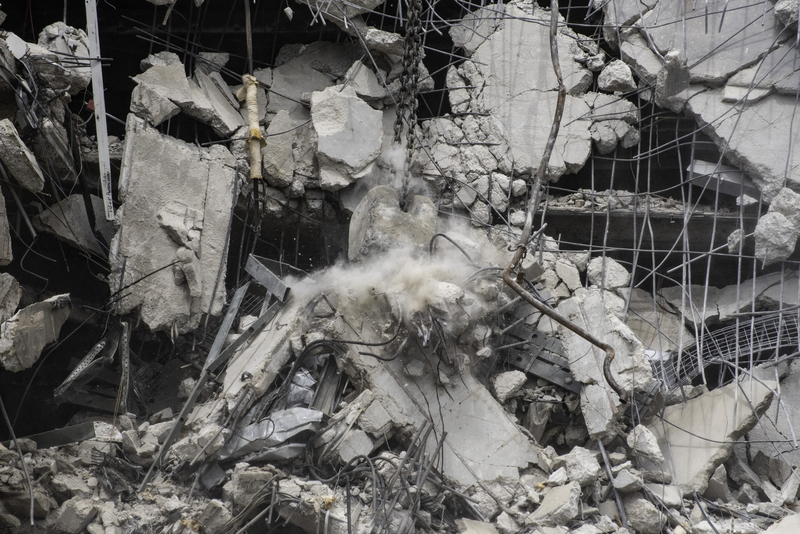
Jesus doubled down on this when He and the disciples were leaving the Temple in Jerusalem. His disciples commented on the magnificent Temple and Jesus replied that it was all going to be reduced to rubble, and it was just 40 years later.

Jesus’ taught that the “church” was not bricks and mortar but flesh and blood. When the Jesus Movement was changing the known world in the first two centuries, it had no churches or temples, no basilicas or cathedrals. The “church” was millions of followers who met, almost clandestinely, in people’s homes. It was only when the church became the Holy Roman Empire that the institution decided that God needed opulent cathedrals. The motivation wasn’t divine. It’s what human institutions do to centralize power and control masses of people. Jesus’ successful paradigm was that of Spirit-filled people loving, serving, and sharing in every home, neighborhood, and business. God was released from a box and carried by flesh-and-blood “temples” everywhere in the world. Jesus was wherever His followers happened to be. In Jesus’ paradigm “sacred space” was now the coffee shop, the office, the home, the pub, the park; It was wherever a believer, filled with Spirit and Truth was physically present in the moment. This is what Jesus meant when He said, “Wherever two or three of you are together, I’m there, too.”

The Holy Roman Empire put God back in a box. Then they made sure that only an institutionally educated and approved class of elites were qualified to be God’s representatives. Way too many people still believe that God is confined in the building on the corner and that only educated men in robes represent Him.

Today’s chapter is also about “God in a box.” The Ark of the Covenant was literally a box that represented God’s presence among the Hebrew people. The Hebrews reduced the notion of God’s holy presence to a good luck charm that would secure victory. They were defeated and the box was taken by the Philistines who put the Ark in the sacred space of their patron god, Dagon, underneath Dagon’s statue. Mesopotamian peoples routinely saw battles as not just contests between peoples, but contests between deities. The Hebrews’ God was now subject to Dagon.

But, God will never be contained inside a box of human design. The statue of Dagon fell, its head and hands breaking off. This was significant because heads, hands, and limbs were often cut-off and brought home by victorious armies as proof of victory and as a way of tallying up the body count. It was an omen the Philistines would have instantly understood. There was also a plague of tumors that broke out among the Philistines, which is ironically the outcome God warned His own people about in Deuteronomy 28, should they stray from His ways.

In the quiet this morning, I’m reminded that if I truly believe what Jesus taught, then my home office where I’m writing/recording these words is sacred space because God’s Spirit indwells me. I take Him with me everywhere I go today. God’s temple isn’t a building, it’s my body, and that should change my perspective on everything in my daily life.

If you know anyone who might be encouraged by today’s post, please share.