Tag Archives: Sacred

Across the Divide

Across the Divide (CaD Lev 8) Wayfarer

“You must stay at the entrance to the tent of meeting day and night for seven days and do what the Lord requires, so you will not die; for that is what I have been commanded.”
Leviticus 8:35 (NIV)

Throughout the Great Story, there is a clear separation established between the kingdoms of this world and our earthly realities, and the Kingdom of God which exists in a different realm, a heavenly realm, a realm of Spirit. Dotted through the Great Story are experiences in which the divide between these two realms is breached. Angelic visits are a great example. Individuals like Isaiah, Ezekiel, and John being given a glimpse of God’s throne room are another. Typically, when humans experience these breaches of the spiritual divide, the human being is reported to be scared to death.

In his exploration of Near Death Experiences (NDEs) in the book Imagine Heaven, John Burke reports what people who have physically died, experienced the other side, and were sent back describe of their experiences. He found that most described it as more real than anything in this earthly existence. Those who’ve experienced say that this earthly life is a shadow world compared to that world.

As I have considered these accounts and descriptions, I have begun, I believe, to understand holiness in a deeper way. Holiness always seemed to me to be defined as some kind of super-powered moral perfection, but the further I get in my spiritual journey, the more I realize that’s not it. The divine reality of God’s presence on the other side of the divide is overwhelming and indescribable Light, Love, Life color, beauty, wholeness, knowledge, and infinity. That’s holy.

What we experience daily on this earthly journey in a realm of sin and death is not holy. Throughout the Great Story, God is trying to reveal the glory of His Kingdom to me, allow me to choose into that Kingdom by faith, and to live my earthly life in this world of sin and death according to the principles of a Kingdom that is not of this world.

Today’s chapter is a major transformation for Aaron and his sons. Yesterday, they were just normal Hebrew dudes like every other Hebrew dude. After the events of today’s chapter and a week of camping out at the entrance to God’s tent temple, they are priests. They have a uniform, a detailed instruction manual, and they’ve been ceremonially cleansed and purified for the role of being priests for the Hebrew people with all the responsibilities that go along with it. Welcome to a whole new reality.

As I meditated on the chapter in the quiet this morning. I pondered what God is doing with these ancient Hebrews in the toddler stages of human development in history. Just the other day our granddaughter Sylvie was with us. She’s at the stage in which she’s having to learn that there are things of Papa and Yaya’s that are special. They aren’t toys to be mindlessly and carelessly played with or discarded. God is doing the same thing with the Hebrews. He’s giving them an earthly sense of a spiritual Life and death realities of God’s Kingdom. The heavenly and the earthly. The holy and the ordinary. The sacred and the profane. These are things they can hardly fathom in the same way Sylvie can hardly fathom why that fragile family heirloom she just grabbed off the table is holy in Papa and Yaya’s kingdom.

In the quiet this morning, I find myself reflecting back on the kids and grandkids visit for a few hours on Sunday. There were colorful light saber fights, playing make believe, running in circles, wrestling on the bed, video games, intense energy, laughter, love, cuddles, sharing challenges, celebration of goodness, food, drink, and did I mention love? Yes, there was a lot of love. It was holy. At least it was a taste, a hint of that ultimate reality on the other side of the divide. How might I reflect and infuse my day with a little of that holiness for those around me?

If you know anyone who might be encouraged by today’s post, please share.

These chapter-a-day blog posts are also available via podcast on all major podcast platforms including Apple, Google, and Spotify! Simply go to your podcast platform and search for “Wayfarer Tom Vander Well.” If it’s not on your platform, please let me know!

Chaos and Order

Chaos and Order (CaD Ezk 40) Wayfarer

The man said to me, “Son of man, look carefully and listen closely and pay attention to everything I am going to show you, for that is why you have been brought here. Tell the people of Israel everything you see.”
Ezekiel 40:4 (NIV)

For the past quarter of a century, our family has had a place on Lake of the Ozarks in Missouri. My parents bought the property around the time of retirement. The girls grew up there along with their cousins visiting Grandpa Dean and Grandma Jeanne. Wendy and I purchased the property from them and built a new house on it. It’s been a special place for us, our family, and friends.

In fact, our family long ago realized that our place at the lake was sacred space. It has been a place of rest away from the chaos of our everyday lives. It has been a place of healing and restoration. It’s where my sister retreated to recover from chemo in her battle with cancer. It has been a place full of life as children have grown up, families have vacationed, and relationships have been strengthened through countless conversations that would never have happened in the hectic worlds of our lives back home.

Over the next several chapters, the prophet Ezekiel describes a vision he was given of a sacred space, a temple. When this vision arrives, it has been fourteen years since the city of Jerusalem and the temple that Solomon built had been destroyed. Ezekiel and his fellow Hebrews are living in exile in Babylon. They are feeling lost and hopeless in the chaos of life in a foreign land where nothing is familiar. The rituals and routines by which they lived and measured life are gone. They are longing for hope and a future.

For casual readers, today’s chapter and the next several chapters are the kinds of passages that leave you scratching your head. Wait. What?! What can this ridiculously detailed description of an ancient temple possibly have any significance for my life in the twenty-first century? One of the things that I’ve come to learn about these kinds of passages is that I have to back up and look at the bigger picture of what God has done, is doing, and will do.

For the Hebrew people, this sacred space of a temple was not only a huge part of their story a people, but it was also a metaphor for the Great Story itself. Way back in Exodus when God is first introducing Himself to the Hebrews, He instructs them to create a mobile sacred space that could travel with them and be set up wherever they camped. The language that was used in the creation of this sacred space mirrored the creation poem in the first two chapters of Genesis. The creation poem begins with chaos and God creates order out of the chaos and then places humanity in this ordered place that is very good.

When God gave the Hebrews instructions for this sacred space they understood that it was like a new creation. An entire nation of people leaves the chaos and chains of slavery, they wander into the wilderness, and God is creating something new in them. What does God do in creation? He creates distinctions and order.

I have to believe that Ezekiel and his compatriots were recognizing that they had returned to chaos and slavery. They are longing for the hope that God will begin a new creation in them just as He had done in Genesis and in Exodus when He brought order and sacred space.

Everywhere I turn, people talk about lives being busy, crazy, frazzled, and hectic. There’s so much to do, so many distractions, and so much stress. Life happens and we feel worry and anxiety. How often do I feel the chaos of everyday life? And yet, Jesus said He came that we might know peace. What did Jesus do? He regularly went up a mountain by Himself where he would spend hours and sometimes spend the night praying. He sought out sacred space and spent time with God where He reordered His heart, mind, and soul.

Do you think that this ancient, recurring message about creating order out of chaos and having sacred space to order my life and world might have something to teach me about my chaotic twenty-first-century life today?

If you know anyone who might be encouraged by today’s post, please share.

Wells and Walls

Wells and Walls (CaD Acts 7) Wayfarer

“You stiff-necked people! Your hearts and ears are still uncircumcised. You are just like your ancestors: You always resist the Holy Spirit!”
Acts 7:51 (NIV)

Of late, I’ve been reading a series of posts by a fascinating Orthodox believer and mystic in Ireland. I’d never heard of this before, but there are a great number of “holy wells” scattered across Ireland and he’s been seeking them out and documenting the adventure. There are all sorts of legends and stories that surround each well and many of them are located in extremely remote locations. Finding some of them sounds like a bit of a pilgrimage in and of itself. No matter how hard they are to find, I’m always surprised at the photos showing many people had been there and left tokens of their visit. Many obviously still believe that these wells are “thin places” where the veil between the physical realm and the spiritual realm is more permeable.

I find the “holy well” phenomenon intriguing, and it’s obviously rooted in the history of 1500 years ago when wells, and fresh water, were more critical for survival. With Jesus’ claim to be “living water springing up to eternal life,” it makes sense how a well could take on layers of metaphorical and spiritual significance. It’s unlike anything I’ve experienced here in America, though our modern history only goes back a couple of hundred years and was arguably rooted in more “enlightened” times.

Along my life journey, it has always been church buildings that I have observed people treating like sacred spaces. I can remember being taught this as a child, literally as if the building was holy and had some special divine indwelling. While I fully understand that a building dedicated to the gathering of believers in worship can take on all sorts of significance for people, the very idea of a church building goes against the core of what Jesus taught.

In today’s chapter, a young believer named Stephen is brought before the same religious rulers who conspired to have Jesus killed. The charges against him included him “speaking against this holy place” (meaning the Temple in Jerusalem) as Stephen quoted Jesus saying He would “destroy this Temple and rebuild it in three days.” For the Jews, the Temple was sacred, so when Stephen argues that “God does not dwell in houses made with human hands” he was taken out and stoned to death.

One of the things that I love most about Jesus was that He moved God’s presence out of buildings with walls made with human hands to the table where “two or three are gathered” over a good meal and conversation. God is there because God indwells the believers at the table, and there’s a shared presence in the gathering together. My body is the temple. God’s Spirit is in me and goes everywhere I go. To ignore this and believe that God resides in a sacred church building down the street where I visit Him on Sunday means I don’t get Jesus’ teaching at all. In fact, it makes me no different than the stiff-necked religious rulers throwing stones at Stephen.

So, in the quiet this morning I am reminded once again that God is in me, and my body is the temple. This means that the divine is a part of every piece of my day, even the mundane and ordinary bits. It means that when Wendy and I gather for coffee and our usual blueberry and spinach smoothies in just a few minutes there is something holy taking place if we will simply take time to recognize it. And, I don’t have to go hunting in remote locations to find a holy well, though that does seem like a really fun adventure.

If you know anyone who might be encouraged by today’s post, please share.

Sacred Things

Sacred Things (CaD 2 Ki 18) Wayfarer

[King Hezekiah] broke into pieces the bronze snake Moses had made, for up to that time the Israelites had been burning incense to it. (It was called Nehushtan.)
2 Kings 18:4 (NIV)

Wendy and I had the joy of visiting a local high school yesterday to provide feedback on two student theatre pieces on their way to All-State contests this weekend. It was so much fun for us.

Before leaving, we got into a conversation with one of the teachers regarding the ways individuals get offended and bent out of shape by different things. It’s not unusual. In the years that I was President of our local community theatre, I got to field many calls and personal visits from people who were offended by this or that.

One of the things that I observed amidst the anger and the criticism I listened to is that people sometimes hold the most unusual things personally sacred – things I would never expect.

I’ve experienced the same with church. I remember once getting into hot water because the ratty, old, falling-apart King James pew bibles were replaced with new pew bibles in a more modern translation. The ratty, old, falling-apart bibles had become sacred to someone.

In today’s chapter, we begin the story of ancient King Hezekiah of Judah. As the author lists all of the things Hezekiah did to abolish idolatry in the kingdom, he mentions that people had been burning incense to a most unusual object.

Around 750 years before Hezekiah, Moses was leading the Hebrew tribes out of slavery in Egypt. Snakes were biting and killing the wandering tribes. God told Moses to make a snake on a pole out of bronze and anyone bitten by a snake could look at it and they would live. Fast forward to the days of Hezekiah (a time when snake worship was common), and individuals had begun worshipping the bronze pole rather than the God who miraculously used it for a specific purpose at a specific point in time to address a specific situation.

In the quiet this morning, I am simply reminded of the human tendency to make certain things sacred and worship them. I’ve observed people making sacred and worshipping homes, buildings (especially churches), children (deceased or living), ancestors, traditions (lots of these), memories, treasures, celebrities, hobbies, clothes, cars, et cetera.

It is especially easy for me to do exactly as the people of Hezekiah’s day had done. I can hold certain trappings of religion more sacred than the living God to which those trappings are supposed to point me.

So, what do I hold sacred? Are there things, other than God, that I actually worship without thinking about it in those terms?

If you know anyone who might be encouraged by today’s post, please share.

Note: The featured image on today’s post was created with Wonder AI

Sacred Space

Sacred Space (CaD 1 Ki 6) Wayfarer

In building the temple, only blocks dressed at the quarry were used, and no hammer, chisel or any other iron tool was heard at the temple site while it was being built.
1 Kings 6:7 (NIV)

This past week, Wendy and I were tickled as we watched a young girl in our weekly gathering of Jesus’ followers. She was laying on the floor in the front of the gathering coloring in her coloring book, kicking her legs up and down as she hummed while the morning message. When I later told her mother that Wendy and I had enjoyed watching her daughter she commented, “Only [in our gathering] could that be acceptable.”

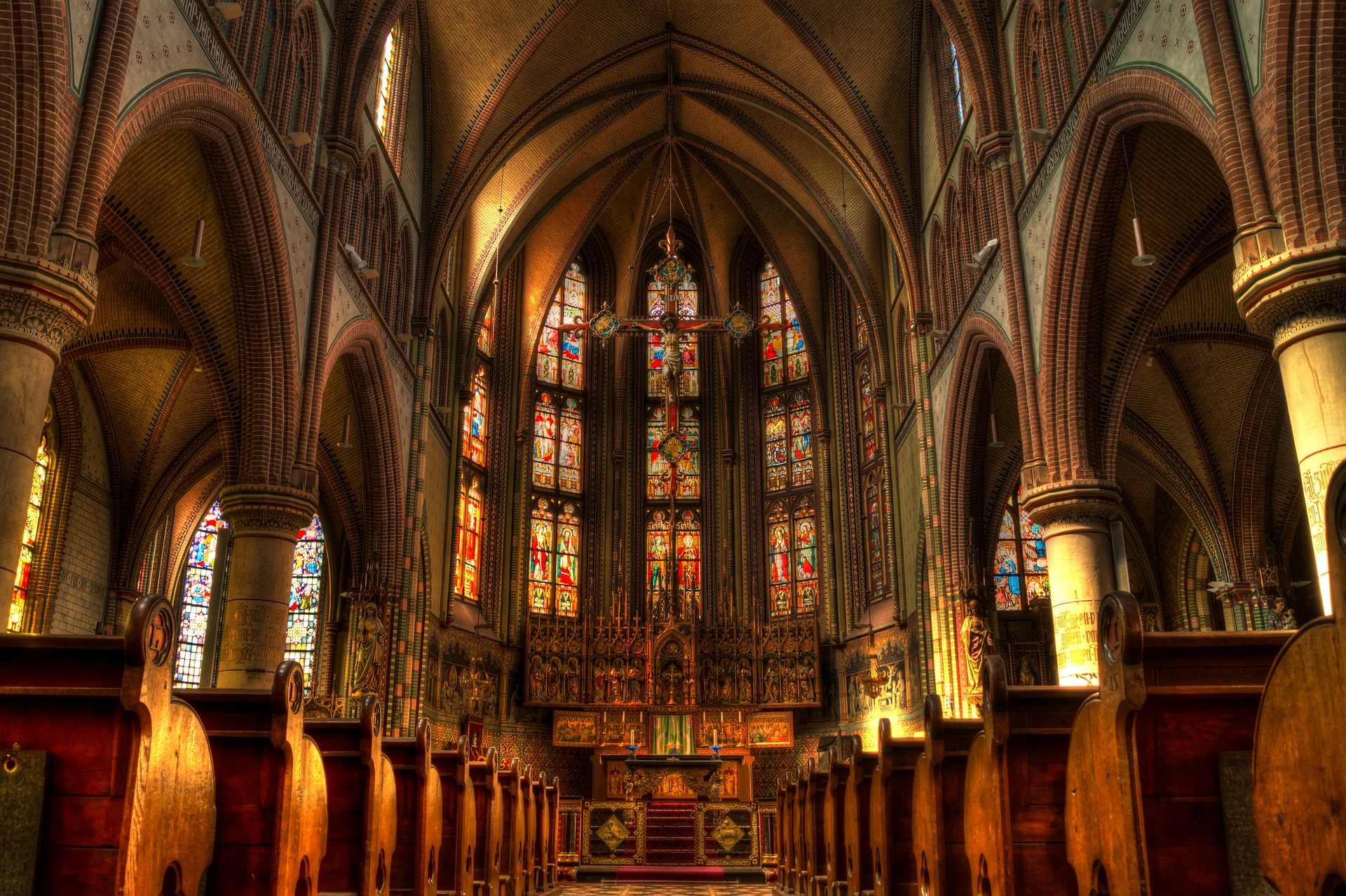
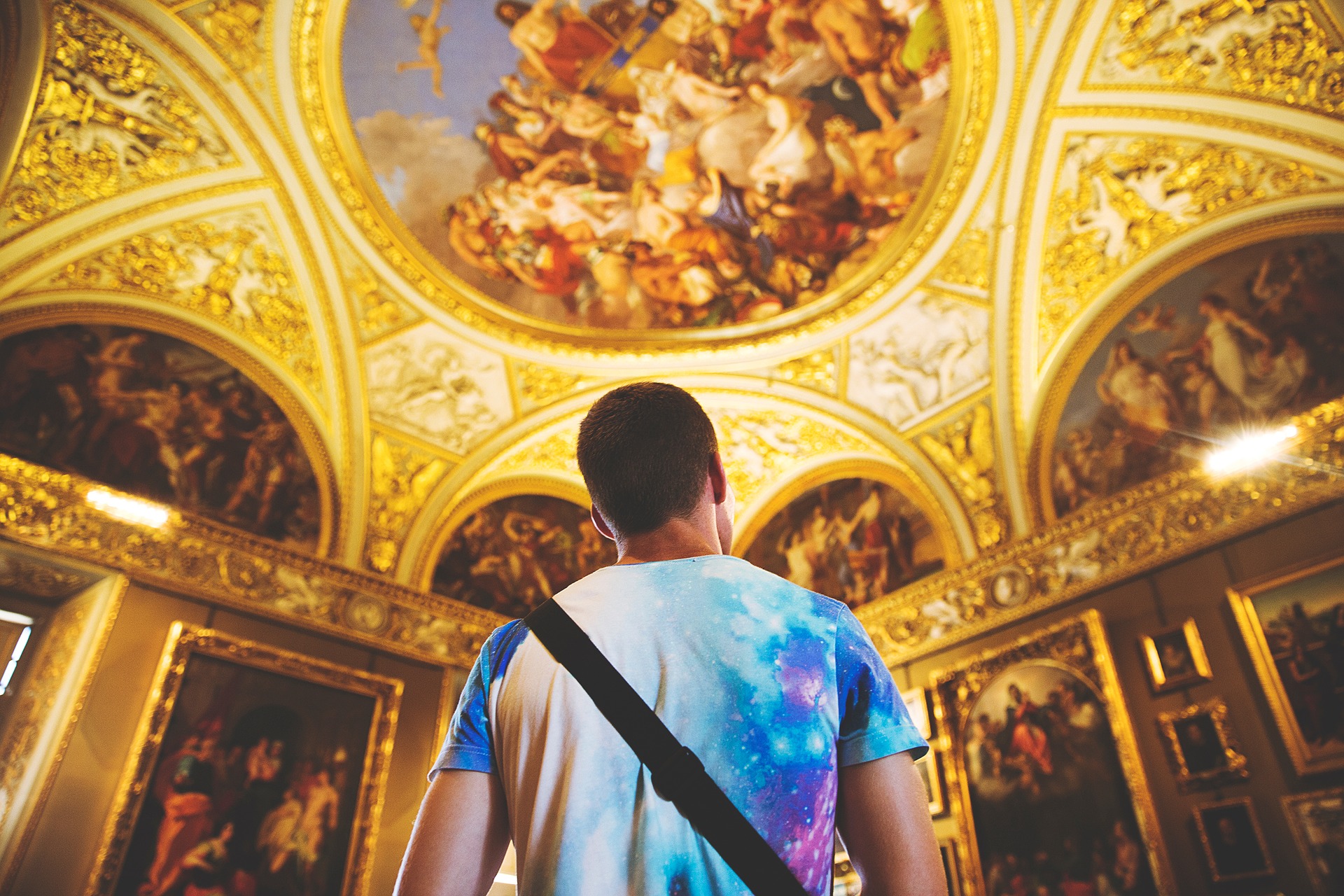
What she was poking at was the tradition of reverence and sacredness that people have traditionally had around church buildings, sanctuaries, and places of worship. I was raised in such a tradition. When entering the church, you were to be quiet, dignified, and respectful. Children were never supposed to run. The altar area in the sanctuary was a forbidden space. Wear your best clothes, sit up straight in the pew, behave, be quiet, be reverent. You’re in a sacred space!

After becoming a follower of Jesus and reading Jesus’ teachings and the teachings of the apostles for myself, I was amazed by the realization that almost everything about my experiences of church was nowhere to be found in either the teachings or examples of Jesus and His early followers. In fact, Jesus on at least two occasions speaks about the religious tradition of worshipping God at a temple being torn down and replaced. He was dismissive of His disciples’ awe and wonder at the Temple ( the same Temple we read about being built in today’s chapter) and tells them that it will ultimately be razed to rubble. In another episode, a woman from Samaria questions Jesus about one of the major differences between the Jews, whose worship was centered around the Temple in Jerusalem, and the Samaritans, whose worship was centered at Mount Gerizim. Jesus responds, “Believe me, a time is coming when you will worship the Father neither on this mountain nor in Jerusalem…a time is coming and has now come when the true worshipers will worship the Father in the Spirit and in truth, for they are the kind of worshipers the Father seeks.”

Jesus never prescribed church buildings, cathedrals, basilicas, sanctuaries, altars, or sacred spaces. The teaching of Jesus is that when I as a follower am indwelt by the Holy Spirit then I become the Temple of God. Sacred space, therefore, is wherever I happen to be. I bring the sacred with me because God’s Spirit is in me. The Jesus movement in the first century exploded as followers and disciples met anywhere and everywhere in homes, outdoors, and in public places.

We human beings, however, love our religious traditions. I found it interesting in today’s chapter that even at the building of the Temple the work area was to remain silent in reverence. It reminded me of the plethora of rules I was taught as a child about the church building being a sacred space.

Which reminded me of our sweet little girl Wendy and I watched in worship this past Sunday. Our local gathering has taken a different stance than the historic traditions about the place of worship being sacred and thus requiring silence, reverence, and rules like the removal of headwear. In our gatherings, children are allowed to be children. For many years, we had a weekly gaggle of little girls who would literally apply Psalm 149’s call to praise God with dancing as they would jump and spin and improvise dances in the corner of the room during songs. We have people who quite literally exercise the freedom to worship God with clapping, shouting, and raising hands as prescribed in the book of Psalms and elsewhere. On a few occasions, we’ve had an individual who expresses praise by applying Psalm 20’s encouragement to “lift up banners in the name of our God” and would quite literally do a flag routine like you’d see with a marching band. And, sometimes we are silent and reverent, not because of the room or the building but because silence is a form of both individual and corporate worship, too.

It is in the quiet where I find myself each morning as I read and ponder, and write each one of these chapter-a-day posts. My home office becomes sacred space, not because of anything having to do with the room, but because of everything having to do with God’s Spirit in me and communing with me in spirit, heart, and mind.

If you know anyone who might be encouraged by today’s post, please share.

From Bricks-and-Mortar to Flesh-and-Blood

From Bricks-and-Mortar to Flesh-and-Blood (CaD Ex 26) Wayfarer

You shall hang the curtain under the clasps, and bring the ark of the covenant in there, within the curtain; and the curtain shall separate for you the holy place from the most holy.
Exodus 26:33 (NRSVCE)

When I was a child, I had a fascination with spaces that were off-limits to me. Perhaps it was simply part of my personality or the fact that, as the youngest of four siblings, there were so many places that were forbidden and so many things from which I was banned from touching, looking at, or checking out.

As I grew up, I was keenly aware of the rites of passage I passed through. Some where public and institutional like church confirmation, getting my driver’s license, and graduation. Others were more subtle and social, like being an underclassman invited to a party with all upperclassmen, or my older brother letting me have a beer during my weekend visiting him at college. In each of these cases there was an understanding that I had reached a new level of experience. Things that were once off-limits had opened up to new possibilities.

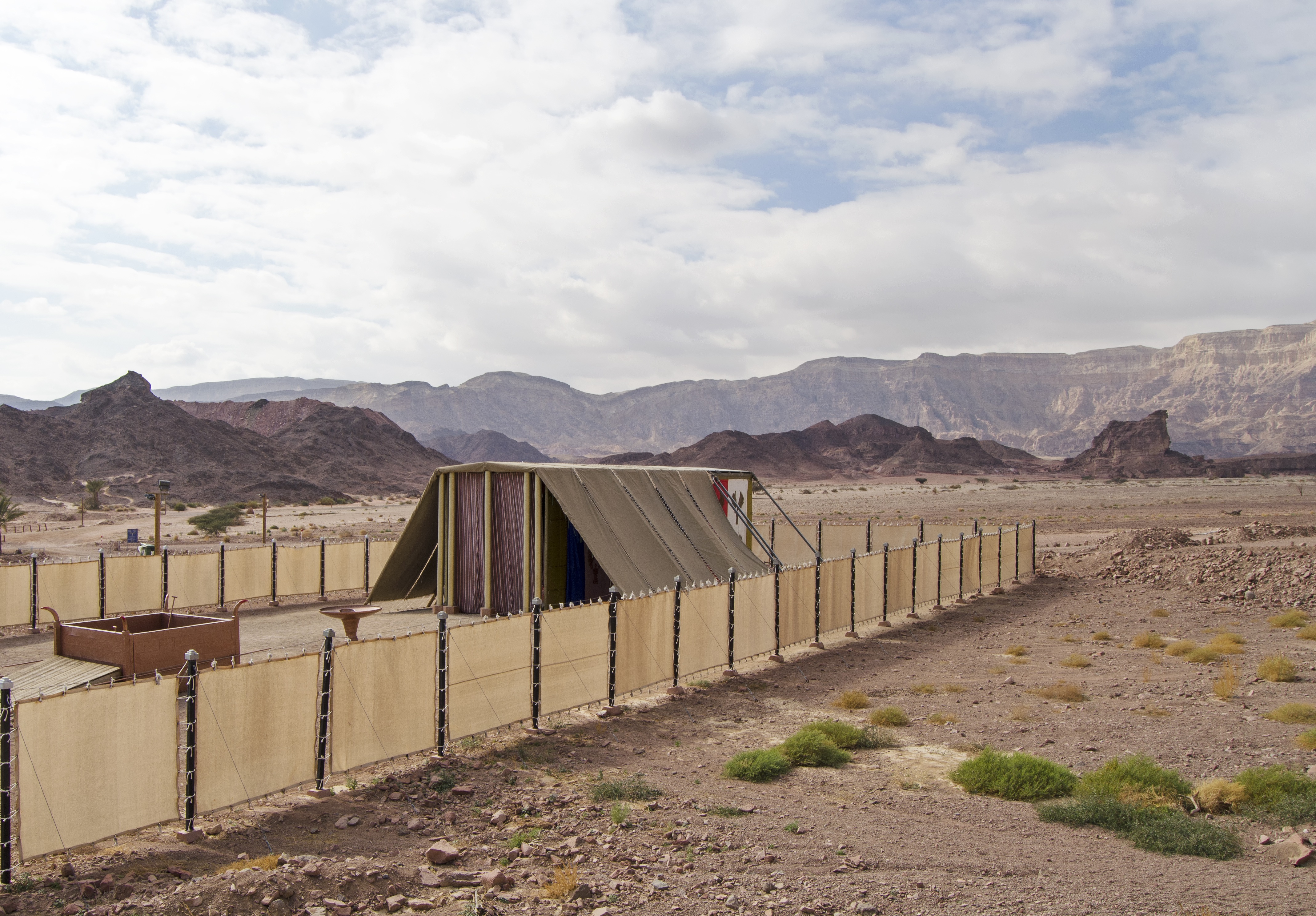
In today’s chapter, God provides Moses with instructions for what is commonly referred to as the Tabernacle, or the Tent of Meeting. It was basically a large, portable temple that they could take with them as they wandered their way to the Promised Land and set up wherever they were encamped.

The design for the Tabernacle included three concentric spaces. There was an open outer courtyard. Then there was a smaller covered inner section known as “The Holy Place,” with a third even smaller section known as “The Most Holy Place” or “The Holy of Holies.” This smallest area was the most sacred, and it was where the Hebrews put the Ark of the Covenant. There was a giant, thick, and colorful curtain that separated this Most Holy space from everyone. Only the High Priest was allowed in this space, and that happened only once a year. It was exclusive. It was special. It was a sacred space that constantly reminded the Hebrew people of the clear divide between them and the divine.

Granted, all of the instructions for the design of this temple tent in today’s chapter are not the most inspiring thing to read. Nevertheless, I find a really cool and inspiring lesson buried in the blueprint. As with yesterday’s chapter, the lesson is hidden in the understanding of the maturing relationship between God and humanity.

An often overlooked detail recorded in Luke’s biography of Jesus is something that happened the moment Jesus died on the cross. Luke records:

It was now about noon, and darkness came over the whole land until three in the afternoon, while the sun’s light failed; and the curtain of the temple was torn in two. Then Jesus, crying with a loud voice, said, “Father, into your hands I commend my spirit.” Having said this, he breathed his last.

I find the curtain separating the Hebrews from God’s Holy Presence was like a parent telling their young child that there are some things that are simply off-limits. When Jesus died and rose from the dead, it was a spiritual rite of passage for humanity. The off-limits curtain was torn. The Spirit of God would be poured out for any and all. Now, the focus shifted from sacred space being a 16’x48’x15′ inner sanctum fixed in Jerusalem to the possibility that sacred space could be anywhere at any time.

Along my journey, I have sat in small corporate conference rooms while clients have shared with me some of the most intimate things. In that moment, it was sacred space. I was once in a humble Junior High camp chapel in rural Iowa when Holy Spirit poured out like at Pentecost. In that moment it was a sacred space. I have communed with God and received the Spirit’s guidance driving in the car, taking a shower, and while mowing the lawn. A Volkswagen, a bathroom, and a yard were sacred spaces. Perhaps most commonly, I have experienced sacred space around the dinner table just as I shared in yesterday’s post.

I have observed that for many in the generations before me this fundamental spiritual paradigm shift was never understood. For the majority of believers I observed in my childhood and youth, the bricks-and-mortar church building and inner sanctum of the church building’s sanctuary were treated like modern versions of the Tabernacle. After Jesus’ death tore the curtain and made it possible for sacred space to be any place at any time, it seems to me that the institutional church sewed the curtain back together and hung it back up in their Cathedrals.

I believe, however, that we are moving into a time when followers of Jesus are tearing the curtain once more and rediscovering the fullness of what Jesus meant when He told his followers, “I will destroy this temple and raise it in three days.”

A rite of passage for all of humanity. From bricks-and-mortar to flesh-and-blood.

“Old things pass away. Behold, new things come.”

If you know anyone who might be encouraged by today’s post, please share.

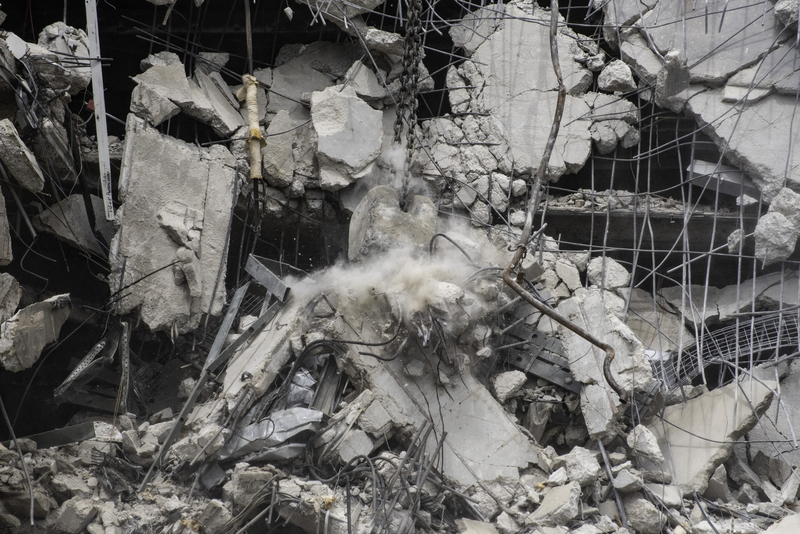
Taking a Wrecking Ball to the Edifice Complex of Christianity

Some of his disciples were remarking about how the temple was adorned with beautiful stones and with gifts dedicated to God. But Jesus said, “As for what you see here, the time will come when not one stone will be left on another; every one of them will be thrown down.”
Luke 21:5-6 (NIV)

When I was a child, I attended a small neighborhood church that was liturgical in practice. This meant that the sanctuary was laid out in a very specific way that catered to the ancient liturgy. There was a lectern on one side that was “lower” and served common uses such as announcements and a non-clergy member reading scripture or a responsive reading. Then there was a taller lectern on the other side which was only for the reverend to preach his sermon. There was an altar where communion was served which most people in the church believed sacred space. Children were taught to stay away and be careful of offending God by going where we weren’t allowed or treating the space disrespectfully.

As a young man, I attended a giant church that had no such liturgical trappings. In this church, everything was functional. It was all about the audience’s experience. Great lighting and great sound that allowed for a great product. The pastor of this church was rabid about building bigger and better buildings for the weekly show and attracting bigger names to perform in the area.

Along my spiritual journey I’ve had to come to terms with the “edifice complex” I was taught, have witnessed, and in which I confess I have participated. There is definitely something to be said for a nice, functional space for a local gathering to meet, organize, worship, teach, learn, pray, meditate, and serve one another and the community. More about that in a moment.

There is also the spiritual reality that Jesus exemplified and taught. It was a paradigm shift massive as to be difficult for people to believe and embrace 2000 years later. It is simply this: God does not dwell in buildings.

God is omnipresent (that is, everywhere) because Jesus is the force of creation holding the universe together: “He is before all things, and in him all things hold together” (Colossians 1:17). Jesus said that after his death, resurrection and ascension, He was sending Holy Spirit to dwell in us: “And I will ask the Father, and he will give you another advocate to help you and be with you forever— the Spirit of truth. The world cannot accept him, because it neither sees him nor knows him. But you know him, for he lives with you and will be in you” (John 14:16-17). Therefore, God’s “Temple” is no longer a place in Jerusalem or a bricks-and-mortar edifice down the street. God’s Temple is the bodies, hearts, minds, lives of those who believe and follow: “Do you not know that your bodies are temples of the Holy Spirit, who is in you, whom you have received from God? You are not your own” (1 Corinthians 6:19).

For the first few centuries after Jesus’ ascension, local gatherings of believers met in one another’s homes where they shared meals, worshipped, prayed together and supported one another. Some scholars estimate that over a million followers of Jesus were meeting regularly in tens of thousands of homes around the known world.

In 312 A.D. the Roman Emporer Constantine became a Christian and Christianity quickly became the state religion of Rome. The Jesus Movement, almost overnight, became the Holy Roman Empire.

[cue: Star Wars: Vader’s Theme]

Empires are concerned with controlling masses. Controlling masses requires authority that people will respect, follow, serve, and obey. One way to control the masses is to control their religious beliefs and routines. Therefore:

  • Only “priests” or “ordained clergy” can preach, teach, marry, bury, and absolve you of your sins. (You are a “common” person with no access to God except through the Empirical structures)
  • Only individuals appointed by the supreme authority and his minions (Caesar, Pope, Cardinal, Bishop) are allowed to be priests or ordained clergy. (You have little hope of becoming clergy unless you jump through many difficult and expensive academic and religious hoops set up by the Empire’s institutions. Probably not unless you know someone or a have a lot of money to bribe, oops, I mean, “donate” to the Empirical authorities – which is how we will wind up with wealthy children and corrupt individuals becoming the Pope)
  • The words used for teaching and the worship of God will now only be sung, written, read and spoken in Latin, which the uneducated masses will not understand. (This makes it easier for the Empirical religious authorities to control said masses of uneducated followers as they become dependent on the Empirical authorities for everything including knowledge, forgiveness, salvation, the salvation of loved ones prayed out of purgatory, and et cetera [<– that’s Latin, btw])
  • Worship must now be centered within an opulent, massive, awe-inspiring structure that stands out in the middle of the squalid little local shacks and structures people live in and use for daily business. (The Empirical institution thus reminds people wordlessly, day and night, that both God and the Empirical institution are higher, better, and different than you are in your poor little common life. It is both something for you to ever reach for and something to which you will never reach without the Empirical institution itself making a way for you)

And, that was the beginning of the edifice complex for followers of Jesus. I find it a fascinating contrast to today’s chapter. Jesus is in Jerusalem. It is the last week of His earthly journey. Jesus has spent most of His three-year ministry speaking to crowds on hillsides, fields, and from a boat to throngs of people sitting on the shore. He also spoke in small-town synagogues. His followers of backwater fishermen and men from small towns in Galilee were awed by the massive Temple in Jerusalem. Jesus, however, shrugged it off with the foreknowledge of what would become of it:

“As for what you see here, the time will come when not one stone will be left on another; every one of them will be thrown down.”

A couple of thoughts this morning as I ponder these things along side of almost 40 years regularly journeying through God’s Message:

  • I believe a functional, central location for followers of Jesus to gather is a good thing.
  • I believe that making meeting spaces beautiful, inviting, welcoming, clean, and efficient are good things, even God-honoring things, for everyone who gathers there.
  • I believe that architecture is both a highly specialized craft and a creative art form that can powerfully embody and express many things with breathtaking beauty.
  • I believe that the churches and cathedrals built throughout history are works of art that have much to offer in both history lessons and inspiring us creatively and spiritually.
  • I also believe that a building can become an object of worship rather than a setting for it.
  • I don’t believe that a church building, it’s rooms, altars, stained-glass, podiums, and decorations are sacred in any way (though they can be special in many different ways and on many different levels).
  • I believe that it is the individual human beings of simple and sincere faith who gather within a church building and it is their corporate and collective worship, prayer, and fellowship that are sacred.
  • I believe that a church building and an institution’s emphasis can subtly convince individuals that they attend the church rather than being the church as Jesus intended.
  • I have observed very sincere individuals who believe the following, perhaps without giving it much thought: God resides in the church building. I visit God an hour every Sunday to pay respect and spiritually make the minimum premium on my eternal fire insurance policy which, I hope and trust, will get me into heaven and avoid hell. I leave God there at church to go about the other 167/168ths of my week.

This morning I imagine Jesus shrugging as he looks up at the Temple. “It’ll be a rubble heap in about 40 years,” He says to His disciples.

Then what is sacred? What lasts? What remains?” Simon the Zealot asks.

You are sacred, as is every person in whom my Spirit dwells,” Jesus replies. “What remains? The faith, hope, and love that is in you and flows out of you, Simon. And all fruit your faith, hope, and love produce in those whom you love. You are my church, Simon. You are God’s temple. And, you are more beautiful than this temple or any building a human being could construct.

What Jesus actually taught was that when individuals believe and follow, they become living, breathing, active temples of worship in which God’s Spirit dwells. What is sacred and/or profane is what we put in, what flows out and how we relate to God and others from the inside out.

Not Bricks and Mortar, but Flesh and Blood

“However, the Most High does not live in houses made by human hands.”
Acts 7:48 (NIV)

I remember going to church as a kid and being taught a certain reverence for the sanctuary of our church. It was a classically designed sanctuary with an altar that sat on a dais at the back. Over the altar hung a giant cross and from the bottom of the cross hung an old-style lamp which was “the eternal flame.” Just in front of the altar was a lectern that sat on one side from which the scripture readings and announcement were made. On the opposite side was the pulpit which was larger, and stood higher.

As children we were taught that this santuary was special. This was where you went to worship God on Sunday. There was sacredness attached to the room, the altar, and the pulpit. You were to be quiet when you were in there. No running. No playing. Don’t go near the altar unless Reverend Washington is up there serving communion.

After I became a believer and began reading God’s Message for myself, I came to realize that the entire notion of a “sacred” church building was never a part of Jesus’ paradigm. Jesus never asked his followers to build buildings. Quite the opposite. Jesus said, “I will destroy the Temple and rebuild it in three days.” With His death, resurrection, and the subsequent pouring out of Holy Spirit, Jesus did away with the old notion that there was a physical building that would be the center of worship. The “church” Jesus came to build is not made of bricks and mortar, but of flesh and blood.

A time is coming,” Jesus said to the Samaritan woman at the well, “when you will worship the Father neither on this mountain nor in Jerusalem…a time is coming and has now come when the true worshipers will worship the Father in the Spirit and in truth, for they are the kind of worshipers the Father seeks.”

In today’s chapter one of Jesus’ early followers, a man named Stephen, is dragged before the Jewish religious authority, called the Sanhedrin, in the Temple in Jerusalem. This is the same council who convicted Jesus and gave Him a death sentence just weeks earlier. Stephen, in his defense, walks the religious leaders through the Great Story from Abraham to Joseph to Moses to the Kings and to the prophets. He tells of Solomon building the Temple where he, himself, was now standing. Stephen then says to religious authorities:

“However, the Most High does not live in houses made by human hands. As the prophet says:

“‘Heaven is my throne,
    and the earth is my footstool.
What kind of house will you build for me?
says the Lord.
    Or where will my resting place be?
Has not my hand made all these things?’”

This morning I’m thinking about sacred spaces, and enjoying the memory of being a kid and finding out that the “eternal flame” that hung over our church’s altar was simply a 40 watt light bulb that sometimes burnt out and had to be replaced by the custodian.

Having a physical building for believers to gather, worship, and create community is a great thing. I just never want to lose sight of the truth that Jesus never intended “the church” to be a building down the street. When Holy Spirit indwells me as a believer my flesh and blood becomes “the church” because God is within me, one with my spirit. I am sacred space. “Don’t you know,” Paul wrote to the Corinthian believers, “that you yourselves are God’s temple and that God’s Spirit dwells in your midst?” So, “the church” is wherever I happen to be. It’s wherever two or more believers gather together.

I don’t go to church. I am the church.

From Bricks and Mortar to Flesh and Blood

English: The Second Jewish Temple. Model in th...
English: The Second Jewish Temple. Model in the Israel Museum. (Photo credit: Wikipedia)

Some of his disciples were remarking about how the temple was adorned with beautiful stones and with gifts dedicated to God. But Jesus said, “As for what you see here, the time will come when not one stone will be left on another; every one of them will be thrown down.” Luke 21:5-6 (NIV)


Along my life’s journey I’ve gathered with fellow believers to worship God in all sorts of places. I’ve been in schools, community centers, football stadiums, convention centers, hospital chapels, homes, parks, and lean-to sheds. I’ve also worshipped in beautiful cathedrals of historic value, prayer towers, and multi-million dollar state-of-the-art facilities.


The truth is, I don’t really care that much where I worship. As with other works of art, I appreciate all the beauty and meaning that architecture can express. Yet, as with all works of human expression, there is a subtle human tendency to shift our focus from the Creator to the created work. All my life I’ve witnessed people attach to church buildings a sacredness that actually runs counter to a fundamental teaching of Jesus.


Jesus’ death and resurrection ushered in a major spiritual shift that Jesus hints at it in today’s chapter. Before Jesus, the center of worship and the symbol of God’s presence had been wherever the ark of God was [cue: Raiders of the Lost Ark Theme]. At the time of Jesus’ teaching, that central location had been the temple in Jerusalem for almost a thousand years, ever since King Solomon had built the original on that spot. Jesus, however, taught that after His resurrection the Holy Spirit would be poured out and would dwell in (or in-dwell) every believer. It happened 40 days after Jesus’ resurrection (you can read about it here).


With the pouring out of Holy Spirit, the shift of worship moved from a central location (the temple in Jerusalem) to, as Jesus put it, “wherever two or three are gathered in my name.” The temple was no longer a building made with human hands. The indwelling Holy Spirit transforms our very bodies into the temple of God. Paul wrote to Jesus’ followers in Corinth:


Don’t you know that you yourselves are God’s temple and that God’s Spirit dwells in your midst?


Do you not know that your bodies are temples of the Holy Spirit, who is in you, whom you have received from God?


The implications of this shift are profound. Jesus says to His disciples that the temple in Jerusalem with all its history, importance in God’s story, and splendorous beauty is simply nothing more than bricks and mortar than will end up on the rubble heap of history. [Note: That very temple was indeed destroyed some 40 years (or one generation) later in 70 A.D., fulfilling Jesus’ prophetic words.] Worship is no longer to be centered in a building but in believers gathered together, and that can happen anywhere. God’s Holy Spirit is not located in this or that place where we must make a pilgrimage to visit. When we invite Jesus into our hearts and lives, the Holy Spirit indwells us and transforms our very own bodies into a mobile temple that we take with us wherever we go 24/7/365.


Today I’m grateful for the beautiful facilities where I get to regularly worship, but I am even more grateful that Wendy and I can worship anywhere and anytime with any other believer. God is not confined to a building, but present wherever we gather and acknowledge His presence.


Not Bricks and Mortar, but Flesh and Blood.

English: Western wall in Jerusalem at night
English: Western wall in Jerusalem at night (Photo credit: Wikipedia)

Exalt the Lord our God,
    and worship at his holy mountain in Jerusalem,
    for the Lord our God is holy!
Psalm 99:9 (NLT)

I have a bit of a rebellious streak in me. I quickly get irritated by senseless rules and misplaced religious orthodoxy. We as humans tend to want to wrap rules around principles and attach sacred  meaning to silly things. I remember a crotchety old fart who got mad at me for letting children run and play in the church sanctuary instead of getting mad and giving them a stern rebuke. In his mind the kids were desecrating the holiness of the room. I told him that the sanctuary was nothing more than a gathering place (adding that I’d be happy to prove the point scripturally) and the sound of children laughing, running and playing where we met to worship was music to my ears. If there are a lot of kids having fun in the place the church just might have a future.

He didn’t like me very much.

In the ancient days when the psalms were written, there was central place where God was to be worshipped in Jerusalem at the temple. One of the things I love most about Jesus  is that he blew away old rules and established radical new paradigms. When a woman asked Jesus about worshipping in Jerusalem, Jesus said, “Believe me, dear woman, the time is coming when it will no longer matter whether you worship the Father on this mountain or in Jerusalem….But the time is coming—indeed it’s here now—when true worshipers will worship the Father in spirit and in truth. The Father is looking for those who will worship him that way. For God is Spirit, so those who worship him must worship in spirit and in truth.”

In the new paradigm that Jesus ushered in, those who believe are indwelt by God’s Holy Spirit and we ourselves become God’s temple. We don’t go to some church building that is somehow special, holy and sacred – we ourselves – our bodies – are the temple. We are made special, holy and sacred by God.  We don’t go to church. We are the church. It’s not bricks and mortar. It’s flesh and blood. Every time I hear a pastor telling me to invite my friends to church I shake my head and groan. Jesus’ intention was never for believers to bring friends to a central location to worship Him. His intention was that believers would worship Him by spreading out into every neighborhood and loving people.