Tag Archives: Dinner

An Open Invitation

Submit yourselves for the Lord’s sake to every human authority: whether to the emperor, as the supreme authority, or to governors, who are sent by him to punish those who do wrong and to commend those who do right.

 Show proper respect to everyone, love the family of believers, fear God, honor the emperor.
1 Peter 2:13-14, 17 (NIV)

I have for many years had a recurring brainstorm that returns every four years or so like the spring rains on the fields of Iowa. Every four years potential Presidential candidates from all political persuasions pass through Iowa for months in anticipation of the Iowa caucuses.

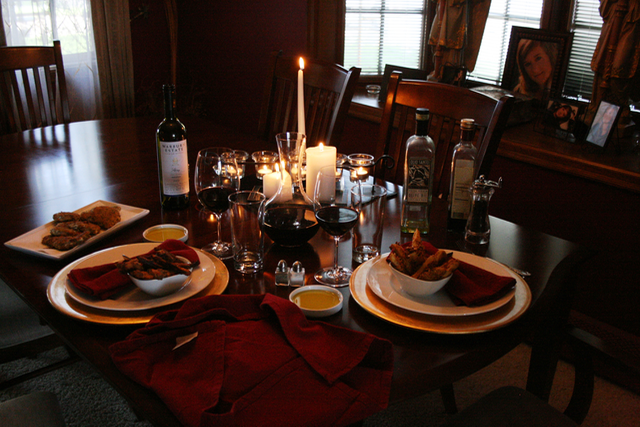
What if we invited them for dinner? We’d extend an invite to every one of them who passes through town. Just the candidate (and perhaps spouse) breaking bread and sharing a meal with just me and Wendy here in our dining room. Nothing fancy. No press. Just a meal and a private chat.

I think we’d learn a lot, not just about the candidate’s views, but the candidates themselves. Wendy and I have long held the position that we may not agree with a candidate’s politics, but we’d be willing to host any candidate – no matter their party or lack thereof – for a nice meal and respectful conversation. (For the record, I am not affiliated with any political party)

Today’s chapter is a head-on collision of Kingdom of God posture in human empire territory where the kingdoms of this world rule. Jesus’ counter-cultural kingdom ethic is on full display through the very man He once called ‘the rock..

First we have to understand the context of Peter’s letter which was written sometime around 60-64 A.D. Peter also references being in “Babylon” in his personal greetings (5:13). ‘Babylon’ was code for Rome.

Why does Peter use code? It is a time of rising hostility toward Christians. The storm clouds are gathering, and within a few short years Nero will unleash brutal persecution. It’s one of the reasons that the letter is being written in the first place. Referencing Rome as “Babylon” served multiple metaphorical purposes:

  • It protects believers if the letter is intercepted.
  • It frames Rome theologically: not merely a city, but an empire embodying exile and oppression.
  • It reminds Jewish believers of the first exile under literal Babylon.

And who is on the throne? Nero. That Nero. Corrupt. The one who will famously fiddle while Rome burns, then blame who? Christians.

Nero was volatile, self-indulgent, increasingly paranoid—and within a few years would unleash brutal violence against Christians.

Peter is not naïve. He knows who sits on the throne.

Which makes his instruction feel less like polite civic advice and more like defiant kingdom theology. Peter doesn’t tell believers to “burn it down.” He says, “honor (literally choose in your hearts to attach worth to him) the Emperor.”

Peter’s logic runs like this:

  • You are aliens and strangers (2:11).
  • Your loyalty is to Christ.
  • Therefore you are free.
  • Therefore you do not need to grasp for power.
  • Therefore you can show honor—even to flawed rulers.

This isn’t endorsement.
It’s witness.

The early Christians were not passive. They were faithful. And faithfulness sometimes meant suffering rather than seizing power.

Peter is not baptizing Nero.
He’s refusing to let Nero define conduct for followers of Jesus.

For me as a disciple of Jesus, this lands like a dagger in the heart of modern outrage culture: God through Peter commands honor in a world where the emperor will kill him. And Nero will have Peter crucified just a few years after this letter is written, the words of the risen Jesus echoing in his soul…

“Very truly I tell you, when you were younger you dressed yourself and went where you wanted; but when you are old you will stretch out your hands, and someone else will dress you and lead you where you do not want to go.”
John 21:18 (NIV)

As I meditate on these things in the quiet this morning, I find that God’s demand that I honor governing authorities is not a demand that I agree with them, approve of them, sanctify them, or remain silent about injustice. The demand is that I refuse to dehumanize them. In a culture that delights in contempt, Peter commands dignity.

That was radical under Nero.

It may be more radical now.

Which brings me back to my recurrent brewing brainstorm. If any candidates thinking about a run in 2028 find themselves coming through Pella on their Iowa Caucus tour, let Wendy and me know. You have an open invitation for dinner and a chat.

If you know anyone who might be encouraged by today’s post, please share.

Promotional graphic for Tom Vander Well's Wayfarer blog and podcast, featuring icons of various podcast platforms with a photo of Tom Vander Well.
These chapter-a-day blog posts are also available via podcast on all major podcast platforms including Apple, Google, and Spotify! Simply go to your podcast platform and search for “Wayfarer Tom Vander Well.” If it’s not on your platform, please let me know!
Icon featuring an open book on an orange background, symbolizing reading or education.

The Place God Dwells

“For the Lord your God moves about in your camp to protect you and to deliver your enemies to you…”
Deuteronomy 23:14a (NIV)

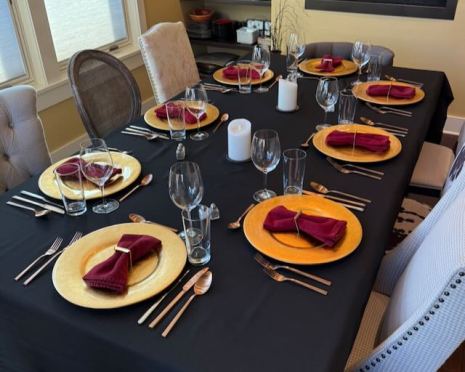
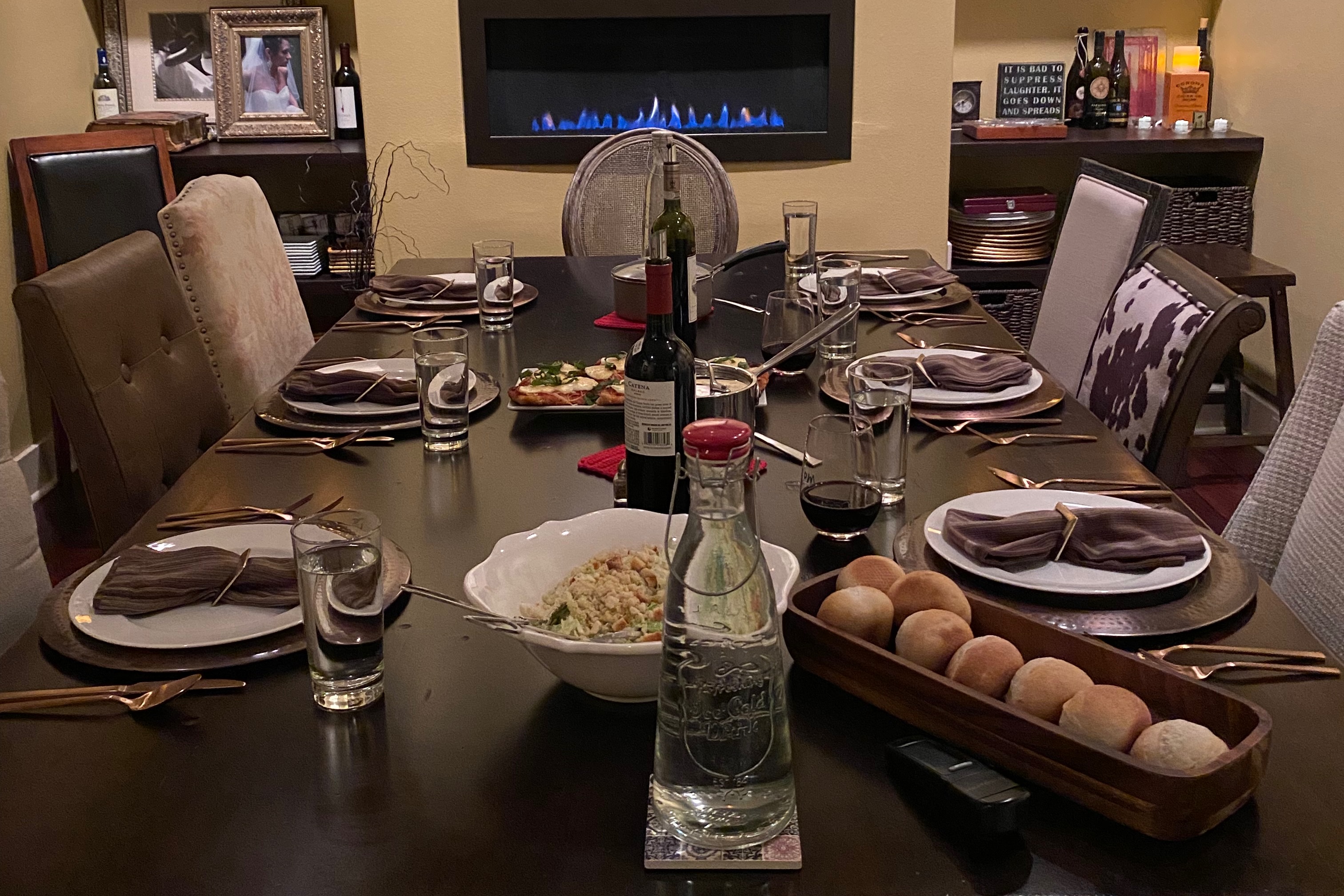
Last weekend, in celebration of our 20th wedding anniversary, Wendy and I hosted a dinner party of special magnificence. Our friends—Chefs Alex and Aidan—came to our house to prepare appetizers and a three-course meal in our own kitchen, served in our dining room, for us and our dear friends.

I can tell you that Wendy and I did little that day but prepare our home for the evening. We thought through and discussed every detail. Tableware, plates, napkins, and the table setting were carefully determined. The house was cleaned top to bottom. The flow of the evening, the spaces our guests would be in, and the facilities our guests would use were each considered. Timing, flow, and execution of the entire evening was thought through anticipating what would be needed, what might be requested, and what would make for the most pleasurable evening for each guest. Who was in our home that evening—both the chefs and our guests—mattered deeply to us. And that reality informed our thoughts, our decisions, and our behavior that day.

Today’s chapter once again reads like a string of random, ancient rules and regulations. It feels kind of…fussy. Who’s in, who’s out, who we should steer clear of, who we should always treat with respect—cleanliness, runaway slaves, bathroom etiquette, financial dealings, vows, and even a neighbor’s property. But, beating at the heart of the seemingly random regulations is the critical point of it all:

God is dwelling among them.

God’s tent tabernacle is at the very center of the camp. He abides in their midst. He strolls among them.

If God is present, life is not mindlessly casual.

The regulations in today’s chapter are not just camp logistics. They are about honoring the place where God dwells. God’s presence makes their camp sacred geography.

God has told them that the entire reason He is in their midst is not tyranny. On the contrary. His presence is about formation. After 400 years of slavery in Egypt, the Hebrews have a lot to learn about life unshackled. God intends to teach them a way of life that is the opposite of the exploitation, violence, power, and cruelty of human empire.

God wants to teach them His way of community and living life together in which:

Healthy boundaries are established and maintained.

Family is honored and respected, even the cousin Eddie the Edomite.

You keep yourself clean out of respect for others, even giving consideration to bathroom etiquette.

You give refuge to runaway slaves. This was a radical and revolutionary idea at the time. In God’s camp no one, no one is to be returned to their shackles. Power bends to mercy.

Debt is never to be about domination.

Promises are sacred, but silence is honored too.

Provision is to be readily available for the poor, but no one is to hoard what is graciously offered.

Today’s chapter is not about rigid rules of a divine dictator. It’s about creating life space where God feels at home. It’s about living in such a way that God and your friends feel welcome, honored, and comfortable. A place where they want to linger at our table.

Which brings me back to our dinner party. God and our guests lingered around the table for well over four hours of life-giving feasting and conversations. Thanks to our generous chefs, everyone had a care package of leftovers to take home.

In the quiet this morning, I’m reminded that Jesus sent His Spirit to dwell within me. God isn’t just dwelling in the camp, at the church, or my neighborhood. God is dwelling in me. My body and my life are the camp. This means that the principles of today’s chapter necessitate me asking an important question:

How can I honor the place where God dwells—and live in such a way that God feels at home in me?

If you know anyone who might be encouraged by today’s post, please share.

Promotional graphic for Tom Vander Well's Wayfarer blog and podcast, featuring icons of various podcast platforms with a photo of Tom Vander Well.
These chapter-a-day blog posts are also available via podcast on all major podcast platforms including Apple, Google, and Spotify! Simply go to your podcast platform and search for “Wayfarer Tom Vander Well.” If it’s not on your platform, please let me know!
Logo featuring an open book icon on an orange background.

Tent to Temple to Table

Tent to Temple to Table (CaD Ex 25) Wayfarer

And have them make me a sanctuary, so that I may dwell among them.
Exodus 25:8 (NRSVCE)

Our children posted a rather hilarious video of Milo over the weekend. At first, we couldn’t figure out what he was doing shaking his bum towards daddy’s legs. As we listened to the audio it became more clear that Milo was making like the Stegosaurus on his shirt and shaking his spiky “tail” to protect himself from the predator, played by daddy, whom I presume was cast in the role of a T-Rex. Yesterday, on our Father’s Day FaceTime, we got to witness Milo reprise his role for us a shake his little dino-booty for Papa and Yaya’s enjoyment.

It’s a very natural thing for us to make word pictures and games for our children and grandchildren to introduce them to concepts, thoughts, and ideas that are still a little beyond their cognitive reach. Even with spiritual things we do this. Advent calendars with numbered doors help children mark the anticipation of celebrating Jesus’ birth. Christmas gifts remind us of the gifts the Magi brought the Christ child. Wendy often recalls the Nativity play she and her cousins and siblings performed each year with bathrobes and hastily collected props which helped to teach the story behind the season.

In leaving Egypt and striking out for the Promised Land, Moses and the twelve Hebrew tribes are a fledgling nation. Yahweh was introduced to Moses in the burning bush. Moses introduced the Tribes to Yahweh through interceding with Pharaoh on their behalf and delivering them from Egyptian slavery. Yahweh has already provided food in the form of Manna and led them to the mountain. In today’s chapter, God begins the process of providing a system of worship that will continue to develop a relationship of knowing and being known.

As I described in my podcast, Time (Part 1), we are still at the toddler stage of human history and development. The Ark of the Covenant (yes, the one from Raiders of the Lost Ark) and the plan for a giant traveling Tent to house God’s presence, are all tangible word pictures that their cognitive human brains could fathom revealing and expressing intangible spiritual truths about God.

Along my spiritual journey, I’ve observed that as humanity has matured so has God’s relationship with us. Jesus pushed our spiritual understanding of God. “You have heard it said,” he would begin before adding, “but I say….” I have come to believe that Jesus’ ministry, death, and resurrection were like the “age of accountability” in which we talk about when children become responsible adults. Jesus came to grow us up spiritually and to mature our understanding of what it means to become participants in the divine dance within the circle of love with Father, Son, and Spirit. On a grand scale, God is doing with humanity what Paul experienced in the microcosm of his own life:

When I was a child, I spoke like a child, I thought like a child, I reasoned like a child; when I became an adult, I put an end to childish ways.

1 Corinthians 13:11

I have also observed, however, that human beings have a way of getting stuck in our development. Many adults I know are living life mired in adolescent patterns of thought and behavior. Many church institutions are, likewise, mired in childish religious practices designed to control human social behavior, but they do very little to fulfill Jesus’ mission of bringing God’s Kingdom to earth. Again, Paul was dealing with this same thing when he wrote to Jesus’ followers in Corinth:

And so, brothers and sisters, I could not speak to you as spiritual people, but rather as people of the flesh, as infants in Christ. I fed you with milk, not solid food, for you were not ready for solid food. Even now you are still not ready, for you are still of the flesh.

1 Corinthians 3:1-3a

There is a great example of this from today’s chapter. God provided the Ark of the Covenant, and a traveling tent called the Tabernacle, as a word picture of His presence and dwelling with the wandering Hebrew people. It was a physical sign that God was with them. Once settled in the Promised land, the temple that Solomon built in Jerusalem became the central physical location of God’s presence. When Jesus came, however, He blew up the childish notion of the God of Creation residing in one place. Jesus matured our understanding of God’s very nature and the nature of God’s presence. With the pouring out of God’s Spirit to indwell every believer, Jesus transformed our understanding of God’s dwelling and presence. “Wherever two or three are gathered,” Jesus said, “I am among them.” The place of worship transitioned from the Temple to the dining room table. After the resurrection, Jesus was revealed during dinner in Emmaus, making shore-lunch for the disciples along the Sea of Galilee, and at the dinner table behind locked doors where the disciples were hiding.

Wendy and I have this quote from Brian Zahnd hanging on the fridge in our kitchen:

“The risen Christ did not appear at the temple but at meal tables. The center of God’s activity had shifted – it was no longer the temple but the table that was the holiest of all. The church would do well to think of itself, not so much as a kind of temple, but as a kind of table. This represents a fundamental shift. Consider the difference between the temple and the table. Temple is exclusive; Table is inclusive. Temple is hierarchical; Table is egalitarian. Temple is authoritarian; Table is affirming. Temple is uptight and status conscious; Table is relaxed and ‘family-style.’ Temple is rigorous enforcement of purity codes that prohibit the unclean; Table is a welcome home party celebrating the return of sinners. The temple was temporal. The table is eternal. We thought God was a diety in a temple. It turns out God is a father at a table.”

In the quiet this morning I find myself thinking about the ancient Hebrew people struggling to mature their understanding from a polytheistic society with over 1500 dieties to the one God who is trying to introduce Himself to them in ways they can understand. I am reminded of the ways Jesus tried to mature our understanding of God even further. I find myself confessing all of the ways through all of the years of my spiritual journey that I have refused to mature in some of the most basic things Jesus was teaching.

As Wendy and I sit down together to share a meal together this week, my desire is to acknowledge Jesus’ presence. To make our time of conversation, laughter, and daily bread a time of communion with God’s Spirit. I think that’s a good spiritual action step.

Bon a petite, my friend. May you find God’s Spirit at your table this week.

If you know anyone who might be encouraged by today’s post, please share.

The Difference a Dinner Makes

So [the king of Israel] prepared a great feast for the [Aramean soldiers], and after they had finished eating and drinking, he sent them away, and they returned to their master. So the bands from Aram stopped raiding Israel’s territory.
2 Kings 6:23 (NIV)

As Wendy and I sit each morning over breakfast and peruse the news of the day, we will often discuss different politicians or other individuals making headlines. Of course, there are always certain individuals for whom we have a certain affinity but we don’t always have the most glowing impressions of other individuals.

I’m not sure how and when this happened, but Wendy and I will commonly discuss the notion of having said individuals over for a meal. I think this idea began during a Presidential campaign years ago. A few months ahead of the Iowa Caucuses you can’t spit without hitting a visiting presidential candidate. One year when the number of candidates was off the charts, Wendy and I discussed the idea of how nice it would be to actually have each of the candidates (from any/all parties) over for dinner one at a time. It’s easier to really get to know a person over a good meal and good table conversation. Somehow, the idea stuck and now it comes up quite regularly in our conversations, what it would be like to have so-and-so over for dinner.

Today’s chapter is filled with extreme events from the miraculous to a horrific human tragedy. I have no recollection of this quiet little episode stuck in the middle. The kingdom of Aram shared a border with the kingdom of Israel, and bands of Aramean soldiers were constantly raiding the towns of Israel. Elisha miraculously blinds one of these raiding parties and leads them straight into Samaria, the capital city of Israel. When the king of Israel suggests killing them, Elisha instructs him to treat them to a feast instead.

So, the king of Israel treats the enemy soldiers as honored guests. They sat around the table and enjoyed a feast together. I imagine they swapped stories, laughed together, and got to know one another to a certain degree. The Arameans, knowing they could have been killed, were treated the way Jesus would later instruct His followers to treat our enemies, by blessing those who intend to persecute us. The result? The border raids stopped.

In the quiet this morning, I am reminded of the conference Wendy and I attended this past week that addressed some of the most controversial and divisive topics of our day. One of the most powerful things that the conference accomplished was to share the complex and intimate stories of individuals struggling at the heart of the issue. When issues are translated into human stories, it changes both my perceptions and understanding of the issues themselves. It’s the same principle that the king of Israel and the Aramean soldiers discovered. They came to bust heads and instead broke bread. It changed their attitudes and behavior toward their enemies.

(BTW: Another Presidential election cycle begins later this year. For any candidate who happens to read this, there’s an open dinner invitation here at Vander Well manor! 😉)

If you know anyone who might be encouraged by today’s post, please share.

Tent to Temple to Table

Tent to Temple to Table (CaD Ex 25) Wayfarer

And have them make me a sanctuary, so that I may dwell among them.
Exodus 25:8 (NRSVCE)

Our children posted a rather hilarious video of Milo over the weekend. At first, we couldn’t figure out what he was doing shaking his bum towards daddy’s legs. As we listened to the audio it became more clear that Milo was making like the Stegosaurus on his shirt and shaking his spiky “tail” to protect himself from the predator, played by daddy, whom I presume was cast in the role of a T-Rex. Yesterday, on our Father’s Day FaceTime, we got to witness Milo reprise his role for us a shake his little dino-booty for Papa and Yaya’s enjoyment.

It’s a very natural thing for us to make word pictures and games for our children and grandchildren to introduce them to concepts, thoughts, and ideas that are still a little beyond their cognitive reach. Even with spiritual things we do this. Advent calendars with numbered doors help children mark the anticipation of celebrating Jesus’ birth. Christmas gifts remind us of the gifts the Magi brought the Christ child. Wendy often recalls the Nativity play she and her cousins and siblings performed each year with bathrobes and hastily collected props which helped to teach the story behind the season.

In leaving Egypt and striking out for the Promised Land, Moses and the twelve Hebrew tribes are a fledgling nation. Yahweh was introduced to Moses in the burning bush. Moses introduced the Tribes to Yahweh through interceding with Pharaoh on their behalf and delivering them from Egyptian slavery. Yahweh has already provided food in the form of Manna and led them to the mountain. In today’s chapter, God begins the process of providing a system of worship that will continue to develop a relationship of knowing and being known.

As I described in my podcast, Time (Part 1), we are still at the toddler stage of human history and development. The Ark of the Covenant (yes, the one from Raiders of the Lost Ark) and the plan for a giant traveling Tent to house God’s presence, are all tangible word pictures that their cognitive human brains could fathom revealing and expressing intangible spiritual truths about God.

Along my spiritual journey, I’ve observed that as humanity has matured so has God’s relationship with us. Jesus pushed our spiritual understanding of God. “You have heard it said,” he would begin before adding, “but I say….” I have come to believe that Jesus’ ministry, death, and resurrection were like the “age of accountability” in which we talk about when children become responsible adults. Jesus came to grow us up spiritually and to mature our understanding of what it means to become participants in the divine dance within the circle of love with Father, Son, and Spirit. On a grand scale, God is doing with humanity what Paul experienced in the microcosm of his own life:

When I was a child, I spoke like a child, I thought like a child, I reasoned like a child; when I became an adult, I put an end to childish ways.

1 Corinthians 13:11

I have also observed, however, that human beings have a way of getting stuck in our development. Many adults I know are living life mired in adolescent patterns of thought and behavior. Many church institutions are, likewise, mired in childish religious practices designed to control human social behavior, but they do very little to fulfill Jesus’ mission of bringing God’s Kingdom to earth. Again, Paul was dealing with this same thing when he wrote to Jesus’ followers in Corinth:

And so, brothers and sisters, I could not speak to you as spiritual people, but rather as people of the flesh, as infants in Christ. I fed you with milk, not solid food, for you were not ready for solid food. Even now you are still not ready, for you are still of the flesh.

1 Corinthians 3:1-3a

There is a great example of this from today’s chapter. God provided the Ark of the Covenant, and a traveling tent called the Tabernacle, as a word picture of His presence and dwelling with the wandering Hebrew people. It was a physical sign that God was with them. Once settled in the Promised land, the temple that Solomon built in Jerusalem became the central physical location of God’s presence. When Jesus came, however, He blew up the childish notion of the God of Creation residing in one place. Jesus matured our understanding of God’s very nature and the nature of God’s presence. With the pouring out of God’s Spirit to indwell every believer, Jesus transformed our understanding of God’s dwelling and presence. “Wherever two or three are gathered,” Jesus said, “I am among them.” The place of worship transitioned from the Temple to the dining room table. After the resurrection, Jesus was revealed during dinner in Emmaus, making shore-lunch for the disciples along the Sea of Galilee, and at the dinner table behind locked doors where the disciples were hiding.

Wendy and I have this quote from Brian Zahnd hanging on the fridge in our kitchen:

“The risen Christ did not appear at the temple but at meal tables. The center of God’s activity had shifted – it was no longer the temple but the table that was the holiest of all. The church would do well to think of itself, not so much as a kind of temple, but as a kind of table. This represents a fundamental shift. Consider the difference between the temple and the table. Temple is exclusive; Table is inclusive. Temple is hierarchical; Table is egalitarian. Temple is authoritarian; Table is affirming. Temple is uptight and status conscious; Table is relaxed and ‘family-style.’ Temple is rigorous enforcement of purity codes that prohibit the unclean; Table is a welcome home party celebrating the return of sinners. The temple was temporal. The table is eternal. We thought God was a diety in a temple. It turns out God is a father at a table.”

In the quiet this morning I find myself thinking about the ancient Hebrew people struggling to mature their understanding from a polytheistic society with over 1500 dieties to the one God who is trying to introduce Himself to them in ways they can understand. I am reminded of the ways Jesus tried to mature our understanding of God even further. I find myself confessing all of the ways through all of the years of my spiritual journey that I have refused to mature in some of the most basic things Jesus was teaching.

As Wendy and I sit down together to share a meal together this week, my desire is to acknowledge Jesus’ presence. To make our time of conversation, laughter, and daily bread a time of communion with God’s Spirit. I think that’s a good spiritual action step.

Bon a petite, my friend. May you find God’s Spirit at your table this week.

If you know anyone who might be encouraged by today’s post, please share.

Consecrated

I said to them, “You as well as these articles are consecrated to the Lord.”
Ezra 8:28 (NIV)

Growing up in my mother’s house, there was a set of decorative, fine china and silverware that was reserved for the most special of occasions. Typically it was a holiday feast or special event with extended family that brought out the precious place settings on the table.

Perhaps the notion of fine china still exists in homes today, though my personal experience is that society, in general, has become much more functional with our tableware. That’s the way it is in our house. Everyday china is used every day but it is embellished with special decoration or accessories for special occasions. Still, there is a small set of wine glasses handed down to Wendy from her family that  I almost always use whenever we happen to celebrate the Lord’s Supper around our table. It just feels right to use a glass that is connected to family, history, and generations for such a purpose.

Consecration is a word we don’t use very often anymore. It means to be set apart or dedicated for special purpose. It’s like fine china reserved for the most special of occasions or a wine glass that’s only used for the purpose of Communion.

In today’s chapter, Ezra and the Hebrew exiles are preparing for their journey from captivity back to their home in Jerusalem. They are bringing with them special items that had been consecrated for use in the religious system of sacrifices and offerings in the Temple. These items were plundered by the Babylonians when Jerusalem was besieged and Solomon’s Temple was destroyed and plundered. These consecrated items along with gold and silver dedicated to the restoration of the Temple were carefully accounted for and given to individuals who were responsible for their safekeeping and protection during the journey.

Ezra makes an interesting statement to these individuals who were given responsibility for guarding the consecrated items. He tells them they are each consecrated just like the item in their possession.

Peter, writing to Jesus’ followers spread out through the Roman Empire, says something similar:

But you are a chosen people, a royal priesthood, a holy nation, God’s special possession, that you may declare the praises of him who called you out of darkness into his wonderful light.
1 Peter 2:9

Just as Ezra’s exiles were themselves consecrated for carrying special items of worship in the Temple, followers of Jesus are consecrated, “holy” and “special possessions.” Indwelled by God’s Spirit, we carry in and with us the Spirit of God and the Word of God. Along my spiritual journey, I’ve found that believers are slow to accept or embrace this spiritual reality. Perhaps it’s because we don’t want to embrace the responsibility of it. Peter, in the very next paragraph of his letter, goes on to admonish the exiled believers to conduct themselves accordingly with their consecration:

Dear friends, I urge you, as foreigners and exiles, to abstain from sinful desires, which wage war against your soul. Live such good lives among the pagans that, though they accuse you of doing wrong, they may see your good deeds and glorify God on the day he visits us.
1 Peter 2:11-12

In the quiet this morning I find myself thinking about special meals. I’ve enjoyed some wonderful, formal meals with the works: full place settings, fine china, special silver, and cloth napkins. I enjoy those special occasions. I’ve also, however, experienced some special meals that were just as special and meaningful in which the table setting and bill of fare was nothing extraordinary. It was the “consecrated” individuals sitting around that table that made all the difference.

I head into a new work week and a new month this morning reminded that Jesus Himself acknowledged that God had “set Him apart” and “sent into the world.” Jesus was consecrated for God’s purpose, and He knew it. It motivated what He did and said. I confess that I often lose sight of the reality that God has said He “consecrated” me. I forget that Jesus said “As the Father sent me (consecrated, with purpose), so I am sending you (consecrated, with purpose).” I wonder how different this week and month will go if I embrace and embody this reality?

Discussion Question Over Appetizers

The Spirit of the Sovereign Lord is on me,
    because the Lord has anointed me
    to proclaim good news to the poor.
He has sent me to bind up the brokenhearted,
    to proclaim freedom for the captives
    and release from darkness for the prisoners,
to proclaim the year of the Lord’s favor….
Isaiah 61:1-2a (NIV)

I love “If” questions and discussion starters. For years our family used them around the table to kick-start dinner conversations…

  • If you could have dinner with three people from history, who would you choose?
  • If you were only allowed one song to sing for the rest of your life, what would it be?
  • If you had the power to eliminate one illness from the world, which would you eliminate?

I love “If” questions because the answers can vary so greatly from person to person, and those answers allow you to learn new things about even the closest of friends and relatives.

Having journeyed through God’s Message for many years, it is impossible to read today’s chapter and not connect it immediately to Jesus. Because the record of Jesus’ teaching indicates that He chose this passage for His inaugural sermon in His own home synagogue:

Jesus went to Nazareth, where he had been brought up, and on the Sabbath day he went into the synagogue, as was his custom. He stood up to read, and the scroll of the prophet Isaiah was handed to him. Unrolling it, he found the place where it is written:

“The Spirit of the Lord is on me,
    because he has anointed me
    to proclaim good news to the poor.
He has sent me to proclaim freedom for the prisoners
    and recovery of sight for the blind,
to set the oppressed free,
    to proclaim the year of the Lord’s favor.”

Then he rolled up the scroll, gave it back to the attendant and sat down. The eyes of everyone in the synagogue were fastened on him. He began by saying to them, “Today this scripture is fulfilled in your hearing.” Luke 4:16-20 (NIV)

So, Jesus,” I imagine myself saying to the young carpenter from Nazareth as we sit at the table with a glass of wine and an appetizer of freshly made pita bread and hummus. “If you could choose one passage from all of scripture to epitomize your life, what would you choose?”

I don’t have to wonder what He would say, because I know of all the passages He could have chosen for that message in the Nazareth Synagogue, Jesus chose this passage from Isaiah. This was His mission statement. This was His stake in the ground. He didn’t state it as a desire, or a hope, or a goal. He declared it an indisputable fact. Jesus starts His message with Isaiah’s prophetic, messianic proclamation and then begins His sermon with: “Today this scripture is fulfilled in your hearing.” 

Many people think of Jesus as a nice teacher who was eventually deified by His followers. Others think of Jesus as a kind of confused mystic who said a lot of amazing things, but might have been a little deluded. I don’t find anything confused in Jesus first recorded sermon. It was a shot across the spiritual bow. It was declarative. So much so, in fact, that it created a violent reaction among His neighbors:

All the people in the synagogue were furious when they heard this. They got up, drove him out of the town, and took him to the brow of the hill on which the town was built, in order to throw him off the cliff.

This morning I’m reminded that Jesus didn’t stumble onto the scene. Jesus didn’t just happen to be at the right place and the right time so as to fall into this teaching gig. Jesus came wrapped in swaddling clothes and lying in a manger because, from the beginning, there was a purpose. It was there when Simeon broke into song at Jesus consecration. It was there when Jesus was twelve years old and confounded the elders of Israel with His words. Good news to the poor, healing for the broken, sight to the blind, freedom to the enslaved, this was the mission from day 1.

So, Tom,” Jesus says to me over morning coffee in my office. “If you had one passage from all of God’s Message to epitomize your life, what would you choose?”

chapter a day banner 2015

Easter at Grandpa Spec & Grandma Golly’s

Easter with the Hall family last week got me thinking about family Easter celebrations when I was a kid. The day would always begin with mom having hid a bunch of small, bright, foil-wrapped milk chocolate Easter eggs around the house. My sister Jody and I would take our baskets and scour the house. When I was younger there were what looked like bunny tracks the folks made with flour and their fingers across the counters and tables of the house. We usually took in a pretty good haul of candy. Mom always had a sweet tooth. I remember her giving us warnings about not eating too much, but she never really policed it. Our older brothers, Tim and Terry, were seven years older than me, so by the time I can remember the easter egg hunt, they’d already kind of outgrown it.

More often than not, I remember going to my Grandpa Spec and Grandma Golly’s house for Easter dinner. They lived on the east side of Des Moines on Hull Avenue. After church services at Immanuel United Methodist Church, where my family attended until I was in high school, we would make the cross town trek in our Mercury Marquis station wagon (complete with wood paneling on the sides!).

Our "Merc" was a lot like this one from a 1973 ad.
Our “Merc” was a lot like this one from a 1973 ad.

A Mercury dashboard with 8-track player.

The “Merc” (as dad called it) was stylin’ transportation in those days. There was a rumble seat that flipped up in the “way back” so that two children (that would be Jody and me) could sit and look out the back window as you drove along. Tim and Terry are always in the back seat together. Mom and Dad were, of course, in the front. Tim and Terry would make sure they had their favorite 8-track tapes in the car and would encourage mom and dad to play their requests on the 15-20 minute drive across town. We might have listened to the best of Simon & Garfunkel, the Beatles, or the Guess Who.

Me with my Grandpa Spec & Grandma Golly

When you got to Grandpa Spec and Grandma Golly’s the first stop would always be a hug and kiss from grandma and grandpa. They were both smokers. I can still smell the smoke from grandma’s cigarettes and grandpa’s pipe as you hugged them. The next stop was the candy dish that sat on the end table next to the living room couch. Jody always beat me there. It was always filled with Brach’s hard candies or maybe some mint patties.

I loved my grandma, but cooking was never her strong suit. So, when a lot of family came over she often let “the Colonel” do the cooking. There would be a big bucket of chicken with all the “fixin’s” and sides. I always wanted the drumstick. On big holidays, we would occasionally get grandma’s sister, Aunt Ardie, joining us. I remember inexpensive red wine being served. Grandpa might enjoy a beer with his meal, though he often saved that for later in the afternoon when he’d have a “beer and a bump” which was a can of beer (e.g. Schmitz, Pabst, or Old Style) with a shot of Old Crow whiskey. Some people’s motto is “Go big or go home,” but Grandpa Spec’s motto would’ve been “Go cheap and go home.”

We would sit as a family around the dining room table and enjoy conversation while we ate. Grandpa liked to tuck his napkin in the top of his shirt and let it drape over his tie like a poor man’s bib. Dessert would usually be homemade pie (Grandma Daisy’s chocolate pie recipe or Graham Cracker Cream which was basically vanilla pudding in a graham cracker crust) along with ice cream. Grandma also kept a steady supply of ice cream cookies and fig newtons on hand. When dinner was over, grandpa would push back from the table and light a Dutch Masters cigar.

The adults would continue to visit while we kids would go off to find things to do. We often would hit practice golf balls with grandpa’s clubs in the backyard or play croquet. There was a park right across the street, so we also loved playing on the swings and jungle gym if the weather was nice. If we were confined indoors, then the fun was in the unfinished basement exploring through grandpa’s huge desk or all of the junk piled on the shelves. The basement was one giant room and you could kind of make an oval track out of it and chase each other around in circles or have races if you had a mind.

It’s funny the things you remember. Some things change, but it’s nice to know that there is still family, good food, good conversation and good times spent together.


After Dinner Blessing

When you have eaten and are satisfied, praise the Lord your God for the good land he has given you.
Deuteronomy 8:10 (NIV)

The harvest here in Iowa is in full swing. Gorgeous, dry fall weather means that the corn and bean fields are full of combines and grain trucks bringing in the land’s bounty. When you live in Iowa, even if you have nothing to do with farming, you feel a keen connection to the land and the seasons of cultivating, planting, growing, and harvesting. It’s part of the fabric of daily life in the heartland.

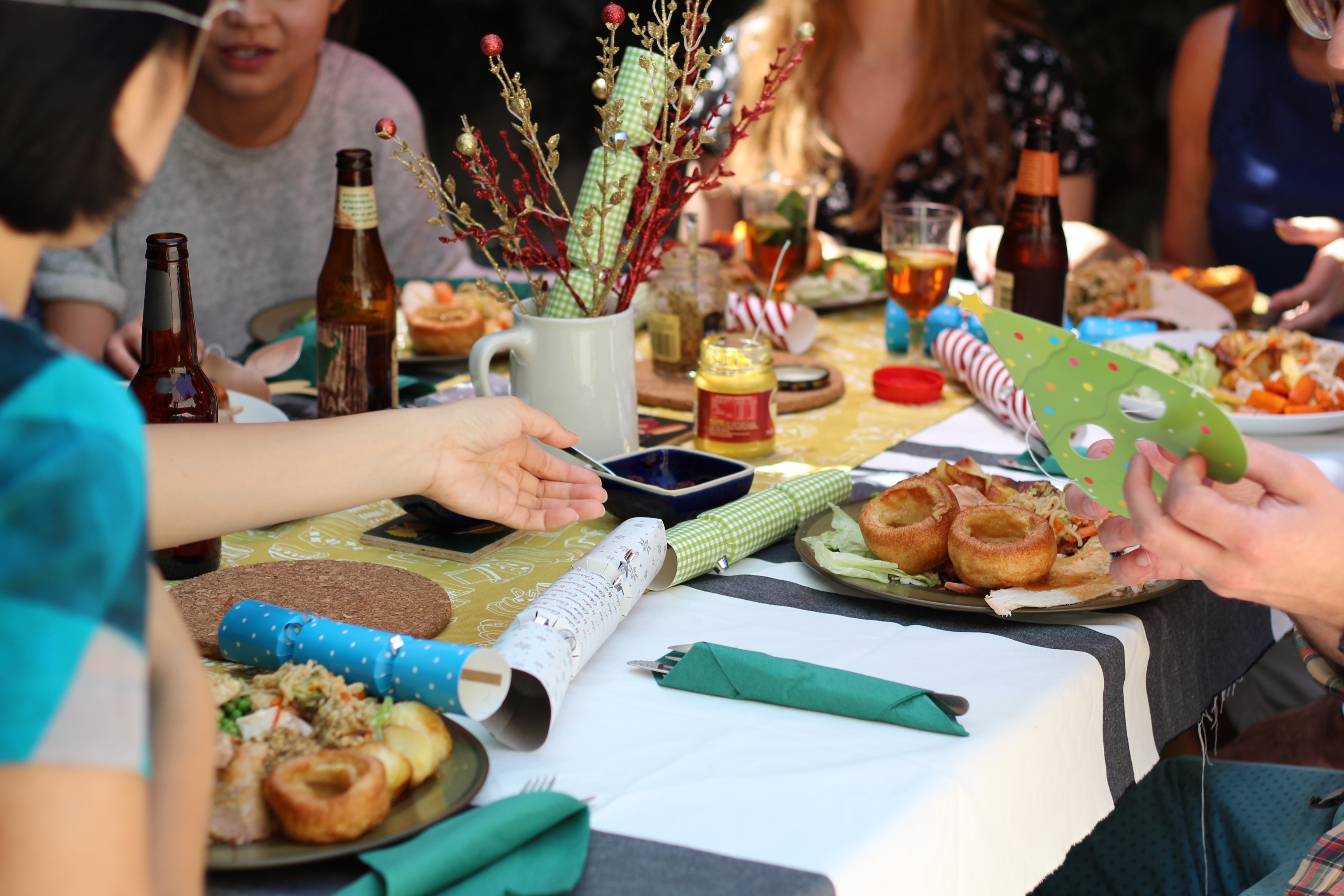
Wendy and I love our meals with family and friends. We love setting the table, making a good meal, opening the wine, and sharing long hours of laughter and conversation over the food and drink. Especially during the harvest season there is a extra sense of gratitude I feel for God’s provision, the land which produces the abundance we enjoy, and those who labor to produce it.

The verse above is one that I have memorized and, quite regularly, at the end of a good meal it will come to mind as we sit in the contented afterglow of our feast. It is tradition at our table to say a prayer of blessing at the beginning of our meal, but this verse has taught me that it is every bit as appropriate to say a word of thanks and gratitude after “you have eaten and are satisfied.”

chapter a day banner 2015

Top Five Beauties

We have a long standing family dinner tradition at our house. There is a book the girls gave me when they were young called “If…”. It is a book of discussion starters that all begin with an “If.” Last night we gathered to celebrate Suzanna’s 19th birthday (Is she really 19? I thought it was just 18. Where does the times go?) and Suzanna wanted to do “If…” questions.

One of the questions that came up at the table was if you had to choose the most beautiful person in history, who would it be? That’s a tough question because we don’t tend to know a lot about historic beauties other than from artist’s depictions and then the person’s beauty is highly dependent on the quality of the artist. Then there is the subjective definition of beauty. We immediately think of physical beauty, but if we’re talking about spiritual beauty then the likes of Mother Theresa are going to the top of the list. Such are the interesting discussions that the “If…” book raises around a dinner table.

So, here are my Top Five beauties, which has more to do with what I find beautiful than any kind of objective standard of beauty. Four of these came up at the table last night, and I can’t argue with any of them though they are all relatively recent as history goes. They are also all women. There were male names that were bandied about at the table, but this is my list and as beauty goes, there is not a man that can get anywhere near the Top Five, perhaps the Top 100.

(in alphabetical order)

 Laetitia CastaLaetitia Casta

Audrey_Hepburn_1956

Audrey Hebpurn

Elizabeth HurleyElizabeth Hurley

sophia lorenSophia Loren

Grace_Kelly_1956Grace Kelly