Tag Archives: Space

Chaos and Order

Chaos and Order (CaD Ezk 40) Wayfarer

The man said to me, “Son of man, look carefully and listen closely and pay attention to everything I am going to show you, for that is why you have been brought here. Tell the people of Israel everything you see.”
Ezekiel 40:4 (NIV)

For the past quarter of a century, our family has had a place on Lake of the Ozarks in Missouri. My parents bought the property around the time of retirement. The girls grew up there along with their cousins visiting Grandpa Dean and Grandma Jeanne. Wendy and I purchased the property from them and built a new house on it. It’s been a special place for us, our family, and friends.

In fact, our family long ago realized that our place at the lake was sacred space. It has been a place of rest away from the chaos of our everyday lives. It has been a place of healing and restoration. It’s where my sister retreated to recover from chemo in her battle with cancer. It has been a place full of life as children have grown up, families have vacationed, and relationships have been strengthened through countless conversations that would never have happened in the hectic worlds of our lives back home.

Over the next several chapters, the prophet Ezekiel describes a vision he was given of a sacred space, a temple. When this vision arrives, it has been fourteen years since the city of Jerusalem and the temple that Solomon built had been destroyed. Ezekiel and his fellow Hebrews are living in exile in Babylon. They are feeling lost and hopeless in the chaos of life in a foreign land where nothing is familiar. The rituals and routines by which they lived and measured life are gone. They are longing for hope and a future.

For casual readers, today’s chapter and the next several chapters are the kinds of passages that leave you scratching your head. Wait. What?! What can this ridiculously detailed description of an ancient temple possibly have any significance for my life in the twenty-first century? One of the things that I’ve come to learn about these kinds of passages is that I have to back up and look at the bigger picture of what God has done, is doing, and will do.

For the Hebrew people, this sacred space of a temple was not only a huge part of their story a people, but it was also a metaphor for the Great Story itself. Way back in Exodus when God is first introducing Himself to the Hebrews, He instructs them to create a mobile sacred space that could travel with them and be set up wherever they camped. The language that was used in the creation of this sacred space mirrored the creation poem in the first two chapters of Genesis. The creation poem begins with chaos and God creates order out of the chaos and then places humanity in this ordered place that is very good.

When God gave the Hebrews instructions for this sacred space they understood that it was like a new creation. An entire nation of people leaves the chaos and chains of slavery, they wander into the wilderness, and God is creating something new in them. What does God do in creation? He creates distinctions and order.

I have to believe that Ezekiel and his compatriots were recognizing that they had returned to chaos and slavery. They are longing for the hope that God will begin a new creation in them just as He had done in Genesis and in Exodus when He brought order and sacred space.

Everywhere I turn, people talk about lives being busy, crazy, frazzled, and hectic. There’s so much to do, so many distractions, and so much stress. Life happens and we feel worry and anxiety. How often do I feel the chaos of everyday life? And yet, Jesus said He came that we might know peace. What did Jesus do? He regularly went up a mountain by Himself where he would spend hours and sometimes spend the night praying. He sought out sacred space and spent time with God where He reordered His heart, mind, and soul.

Do you think that this ancient, recurring message about creating order out of chaos and having sacred space to order my life and world might have something to teach me about my chaotic twenty-first-century life today?

If you know anyone who might be encouraged by today’s post, please share.

Sacred Space

Sacred Space (CaD 1 Ki 6) Wayfarer

In building the temple, only blocks dressed at the quarry were used, and no hammer, chisel or any other iron tool was heard at the temple site while it was being built.
1 Kings 6:7 (NIV)

This past week, Wendy and I were tickled as we watched a young girl in our weekly gathering of Jesus’ followers. She was laying on the floor in the front of the gathering coloring in her coloring book, kicking her legs up and down as she hummed while the morning message. When I later told her mother that Wendy and I had enjoyed watching her daughter she commented, “Only [in our gathering] could that be acceptable.”

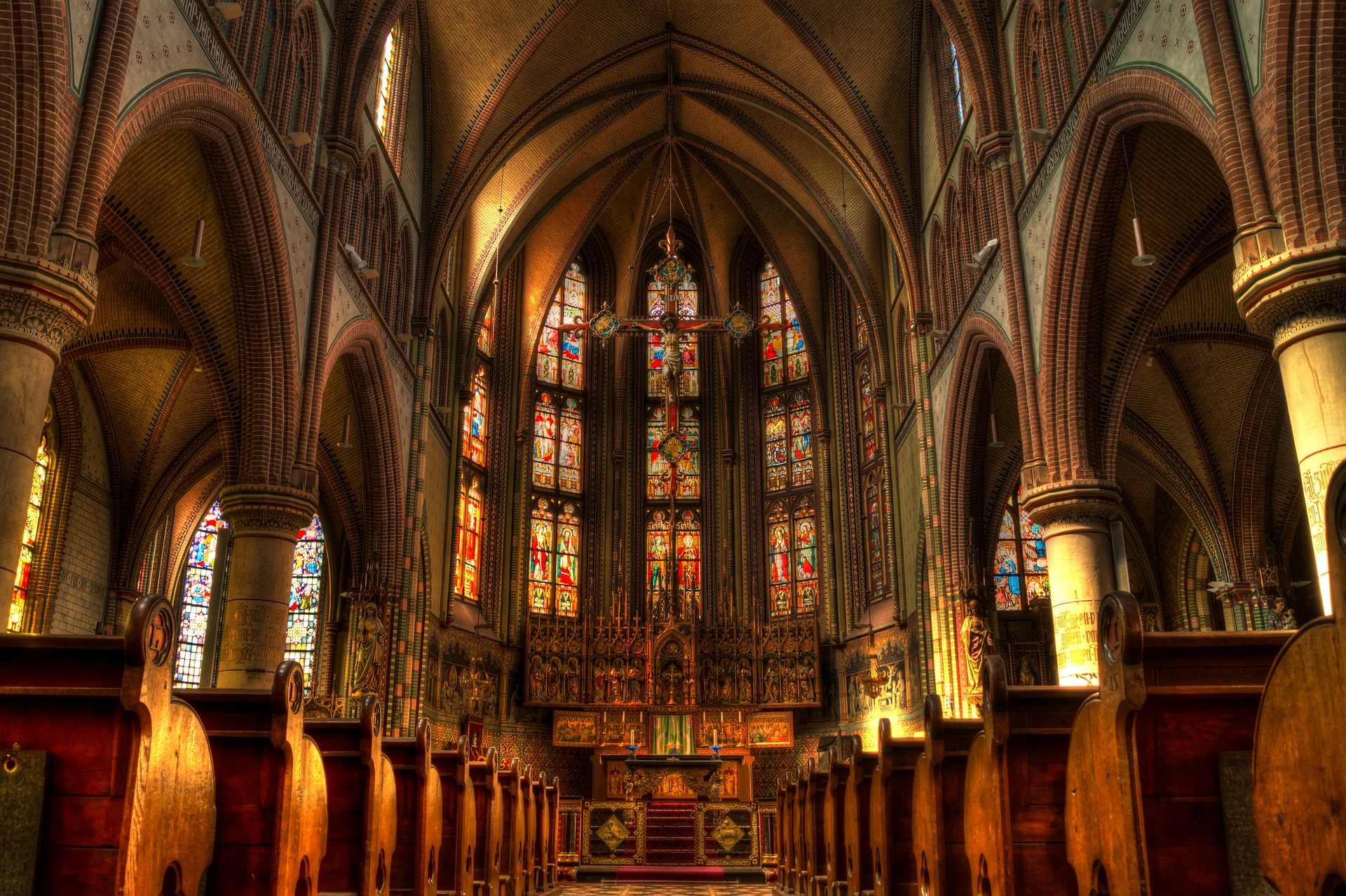
What she was poking at was the tradition of reverence and sacredness that people have traditionally had around church buildings, sanctuaries, and places of worship. I was raised in such a tradition. When entering the church, you were to be quiet, dignified, and respectful. Children were never supposed to run. The altar area in the sanctuary was a forbidden space. Wear your best clothes, sit up straight in the pew, behave, be quiet, be reverent. You’re in a sacred space!

After becoming a follower of Jesus and reading Jesus’ teachings and the teachings of the apostles for myself, I was amazed by the realization that almost everything about my experiences of church was nowhere to be found in either the teachings or examples of Jesus and His early followers. In fact, Jesus on at least two occasions speaks about the religious tradition of worshipping God at a temple being torn down and replaced. He was dismissive of His disciples’ awe and wonder at the Temple ( the same Temple we read about being built in today’s chapter) and tells them that it will ultimately be razed to rubble. In another episode, a woman from Samaria questions Jesus about one of the major differences between the Jews, whose worship was centered around the Temple in Jerusalem, and the Samaritans, whose worship was centered at Mount Gerizim. Jesus responds, “Believe me, a time is coming when you will worship the Father neither on this mountain nor in Jerusalem…a time is coming and has now come when the true worshipers will worship the Father in the Spirit and in truth, for they are the kind of worshipers the Father seeks.”

Jesus never prescribed church buildings, cathedrals, basilicas, sanctuaries, altars, or sacred spaces. The teaching of Jesus is that when I as a follower am indwelt by the Holy Spirit then I become the Temple of God. Sacred space, therefore, is wherever I happen to be. I bring the sacred with me because God’s Spirit is in me. The Jesus movement in the first century exploded as followers and disciples met anywhere and everywhere in homes, outdoors, and in public places.

We human beings, however, love our religious traditions. I found it interesting in today’s chapter that even at the building of the Temple the work area was to remain silent in reverence. It reminded me of the plethora of rules I was taught as a child about the church building being a sacred space.

Which reminded me of our sweet little girl Wendy and I watched in worship this past Sunday. Our local gathering has taken a different stance than the historic traditions about the place of worship being sacred and thus requiring silence, reverence, and rules like the removal of headwear. In our gatherings, children are allowed to be children. For many years, we had a weekly gaggle of little girls who would literally apply Psalm 149’s call to praise God with dancing as they would jump and spin and improvise dances in the corner of the room during songs. We have people who quite literally exercise the freedom to worship God with clapping, shouting, and raising hands as prescribed in the book of Psalms and elsewhere. On a few occasions, we’ve had an individual who expresses praise by applying Psalm 20’s encouragement to “lift up banners in the name of our God” and would quite literally do a flag routine like you’d see with a marching band. And, sometimes we are silent and reverent, not because of the room or the building but because silence is a form of both individual and corporate worship, too.

It is in the quiet where I find myself each morning as I read and ponder, and write each one of these chapter-a-day posts. My home office becomes sacred space, not because of anything having to do with the room, but because of everything having to do with God’s Spirit in me and communing with me in spirit, heart, and mind.

If you know anyone who might be encouraged by today’s post, please share.

From Bricks-and-Mortar to Flesh-and-Blood

From Bricks-and-Mortar to Flesh-and-Blood (CaD Ex 26) Wayfarer

You shall hang the curtain under the clasps, and bring the ark of the covenant in there, within the curtain; and the curtain shall separate for you the holy place from the most holy.
Exodus 26:33 (NRSVCE)

When I was a child, I had a fascination with spaces that were off-limits to me. Perhaps it was simply part of my personality or the fact that, as the youngest of four siblings, there were so many places that were forbidden and so many things from which I was banned from touching, looking at, or checking out.

As I grew up, I was keenly aware of the rites of passage I passed through. Some where public and institutional like church confirmation, getting my driver’s license, and graduation. Others were more subtle and social, like being an underclassman invited to a party with all upperclassmen, or my older brother letting me have a beer during my weekend visiting him at college. In each of these cases there was an understanding that I had reached a new level of experience. Things that were once off-limits had opened up to new possibilities.

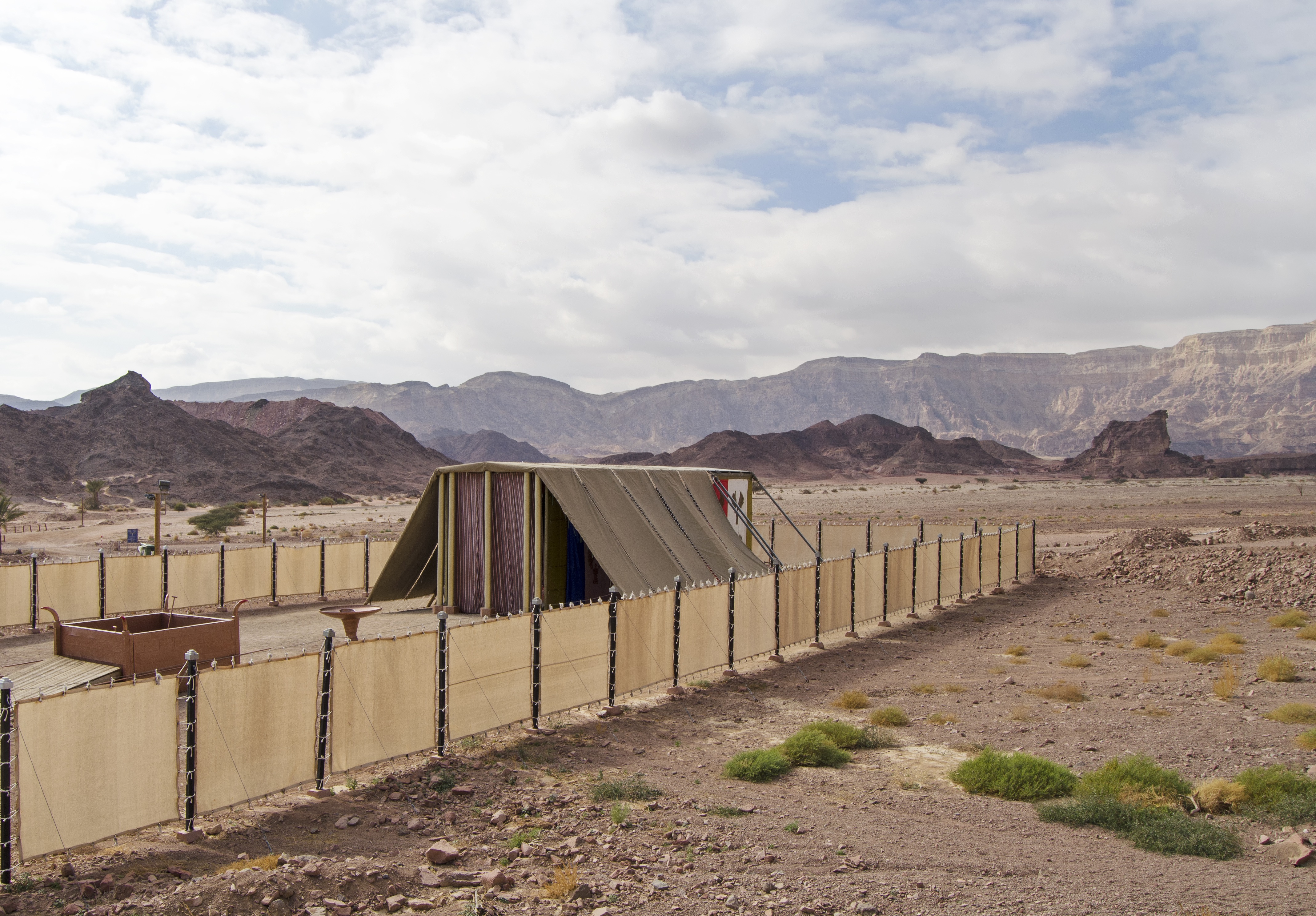
In today’s chapter, God provides Moses with instructions for what is commonly referred to as the Tabernacle, or the Tent of Meeting. It was basically a large, portable temple that they could take with them as they wandered their way to the Promised Land and set up wherever they were encamped.

The design for the Tabernacle included three concentric spaces. There was an open outer courtyard. Then there was a smaller covered inner section known as “The Holy Place,” with a third even smaller section known as “The Most Holy Place” or “The Holy of Holies.” This smallest area was the most sacred, and it was where the Hebrews put the Ark of the Covenant. There was a giant, thick, and colorful curtain that separated this Most Holy space from everyone. Only the High Priest was allowed in this space, and that happened only once a year. It was exclusive. It was special. It was a sacred space that constantly reminded the Hebrew people of the clear divide between them and the divine.

Granted, all of the instructions for the design of this temple tent in today’s chapter are not the most inspiring thing to read. Nevertheless, I find a really cool and inspiring lesson buried in the blueprint. As with yesterday’s chapter, the lesson is hidden in the understanding of the maturing relationship between God and humanity.

An often overlooked detail recorded in Luke’s biography of Jesus is something that happened the moment Jesus died on the cross. Luke records:

It was now about noon, and darkness came over the whole land until three in the afternoon, while the sun’s light failed; and the curtain of the temple was torn in two. Then Jesus, crying with a loud voice, said, “Father, into your hands I commend my spirit.” Having said this, he breathed his last.

I find the curtain separating the Hebrews from God’s Holy Presence was like a parent telling their young child that there are some things that are simply off-limits. When Jesus died and rose from the dead, it was a spiritual rite of passage for humanity. The off-limits curtain was torn. The Spirit of God would be poured out for any and all. Now, the focus shifted from sacred space being a 16’x48’x15′ inner sanctum fixed in Jerusalem to the possibility that sacred space could be anywhere at any time.

Along my journey, I have sat in small corporate conference rooms while clients have shared with me some of the most intimate things. In that moment, it was sacred space. I was once in a humble Junior High camp chapel in rural Iowa when Holy Spirit poured out like at Pentecost. In that moment it was a sacred space. I have communed with God and received the Spirit’s guidance driving in the car, taking a shower, and while mowing the lawn. A Volkswagen, a bathroom, and a yard were sacred spaces. Perhaps most commonly, I have experienced sacred space around the dinner table just as I shared in yesterday’s post.

I have observed that for many in the generations before me this fundamental spiritual paradigm shift was never understood. For the majority of believers I observed in my childhood and youth, the bricks-and-mortar church building and inner sanctum of the church building’s sanctuary were treated like modern versions of the Tabernacle. After Jesus’ death tore the curtain and made it possible for sacred space to be any place at any time, it seems to me that the institutional church sewed the curtain back together and hung it back up in their Cathedrals.

I believe, however, that we are moving into a time when followers of Jesus are tearing the curtain once more and rediscovering the fullness of what Jesus meant when He told his followers, “I will destroy this temple and raise it in three days.”

A rite of passage for all of humanity. From bricks-and-mortar to flesh-and-blood.

“Old things pass away. Behold, new things come.”

If you know anyone who might be encouraged by today’s post, please share.

“Wait for it…”

Ten days later the word of the Lord came to Jeremiah.
Jeremiah 42:7 (NIV)

Just yesterday I was reading a fascinating article about Peter Wohlleben the scientist and forester who wrote The Hidden Life of Trees. How fascinating to find that Tolkien’s characterization of trees as living characters is more true than I ever thought possible. Science is discovering that trees connect to one another through a vast underground network. Trees act communally, share resources, communicate danger to one another, and care for their young. The more I learn about creation, the more amazed I am by it and our Creator.

Take time and space, for example. I, like most people, have spent most of my life journey stuck in the paradigm of time being flat and linear. Physicists (thank you, Einstein), have come to understand that both time and space bend. There is far more dimension to it than a linear plane. Depending on the school of thought to which one prescribes there are at least 10, perhaps 11 or even 26 dimensions of space and time. This does not shake my faith any more than Galileo’s discovery that Earth wasn’t the center of the universe. Rather, it only expands my faith to consider and discover new facets of Life, Spirit, and eternity.

In today’s chapter of Jeremiah, the armed contingent who rescued the captives of the governor’s house in yesterday’s chapter have decided to head to Egypt. They are afraid that when the King of Babylon finds out about his Governor’s assassination that head’s will literally roll. Before leaving, they decide to ask Jeremiah to inquire of the Lord what Word He has for them. Jeremiah agrees to do so, and the Word comes to Jeremiah ten days later.

Ten days. Why ten days? Why not immediately? Was there something wrong with Jeremiah’s antenna or spiritual satellite dish? Were solar flares creating signal interference? What’s up with having to wait ten days?

As I meditate on this question there are two major thoughts that come to mind.

First, the number ten is not without significance in the Great Story. It is a number of completion. Ten commandments, ten plagues, ten generations, ten as percentage of tithe, ten lepers, ten virgins, ten talents, and etc. So, the contingent having to wait ten days has spiritual weight. Would the fearful contingent display the completeness of faith to wait for God’s word from Jeremiah, despite the pressure of knowing Nebuchadnezzar’s wrath could arrive before then? The ten days was, perhaps, less about God being out on a coffee break, and more about the revealing of the contingent’s heart and motives.

Second, I have found along my own spiritual journey that the concept of time and season described by the author of Ecclesiastes (see Ecclesiastes chapter 3) is far deeper than mere poetry. In the complex fabric of time and space (which is far beyond my comprehension) there seems to be a spiritual weaving of circumstances, events, and places into the tapestry of the Great Story. Things happen at a particular time and place in our journeys. We call them happenstance, coincidence, and fortune. As a believer, I have faith that these things aren’t random. God exists outside of time, and I’m beginning to understand that our Creator has layered and bent time and space in ways my finite mind cannot imagine.

At the end of this morning’s chapter Jeremiah’s words suggest that by the time the Word from the Lord came to him, the contingent who asked for it were already packed for their escape to Egypt. How often has that been true in my own life? I say I want to ask for God’s guidance and direction, but my will was decided before I asked. I really don’t have the patience to wait for God’s time and season. The sand is slipping through the hourglass, baby. I can’t wait anymore. Gotta head on down the line. Gonna make something happen!

This morning I’m feeling the need to admit the impatience that has dotted my own journey’s story line. As I take the final sip from my first cup of morning coffee, I’m reminded that at times I will wait ten days, ten months, or ten years for God to reveal, speak, move, or act in the space-time continuum He’s created for the telling of the Great Story (and my place in it).

Rest…breathe…chill…relax…flow….

Wait for it….

“God makes all things beautiful in their time.” (Ecc 3:11)

Chapter-a-Day Luke 10

Painting by Bueckelaer via Flickr and Jim Forest

As they continued their travel, Jesus entered a village. A woman by the name of Martha welcomed him and made him feel quite at home. She had a sister, Mary, who sat before the Master, hanging on every word he said. But Martha was pulled away by all she had to do in the kitchen

. Luke 10:38-39 (MSG)

My wife, Wendy, and I are blessed to spend more time together than most couples I know. We both work out of a home office, so a normal day is spent in the house together. We eat breafast together, we eat lunch together, and we eat dinner together. If I take a break from my work, I usually walk down stairs to talk to Wendy. Much of our free time is spent working together on stage or in administrating the local community theatre. We worship together and serve together on the visual tech team at church. Wendy and I have an intimate relationship that is built on the foundation of shared time, shared space, shared interest, and shared conversation.

The story of Mary and Martha, and the simple lesson of it, keeps popping in my path the past few weeks. I was reminded of it once again in worship yesterday morning. So often I approach my relationship with Jesus like Martha, in which my relationship is really about doing things around him. Yet, Mary had the more initimate relationship with Jesus because she spent time centered on conversation with him.

My relationship with Jesus and my relationship with my wife are really no different. If I want to find intimacy in the relationship, then it’s going to require a foundation of time, proximity, and focused communication.