Tag Archives: Reverence

Sacred Space

Sacred Space (CaD 1 Ki 6) Wayfarer

In building the temple, only blocks dressed at the quarry were used, and no hammer, chisel or any other iron tool was heard at the temple site while it was being built.
1 Kings 6:7 (NIV)

This past week, Wendy and I were tickled as we watched a young girl in our weekly gathering of Jesus’ followers. She was laying on the floor in the front of the gathering coloring in her coloring book, kicking her legs up and down as she hummed while the morning message. When I later told her mother that Wendy and I had enjoyed watching her daughter she commented, “Only [in our gathering] could that be acceptable.”

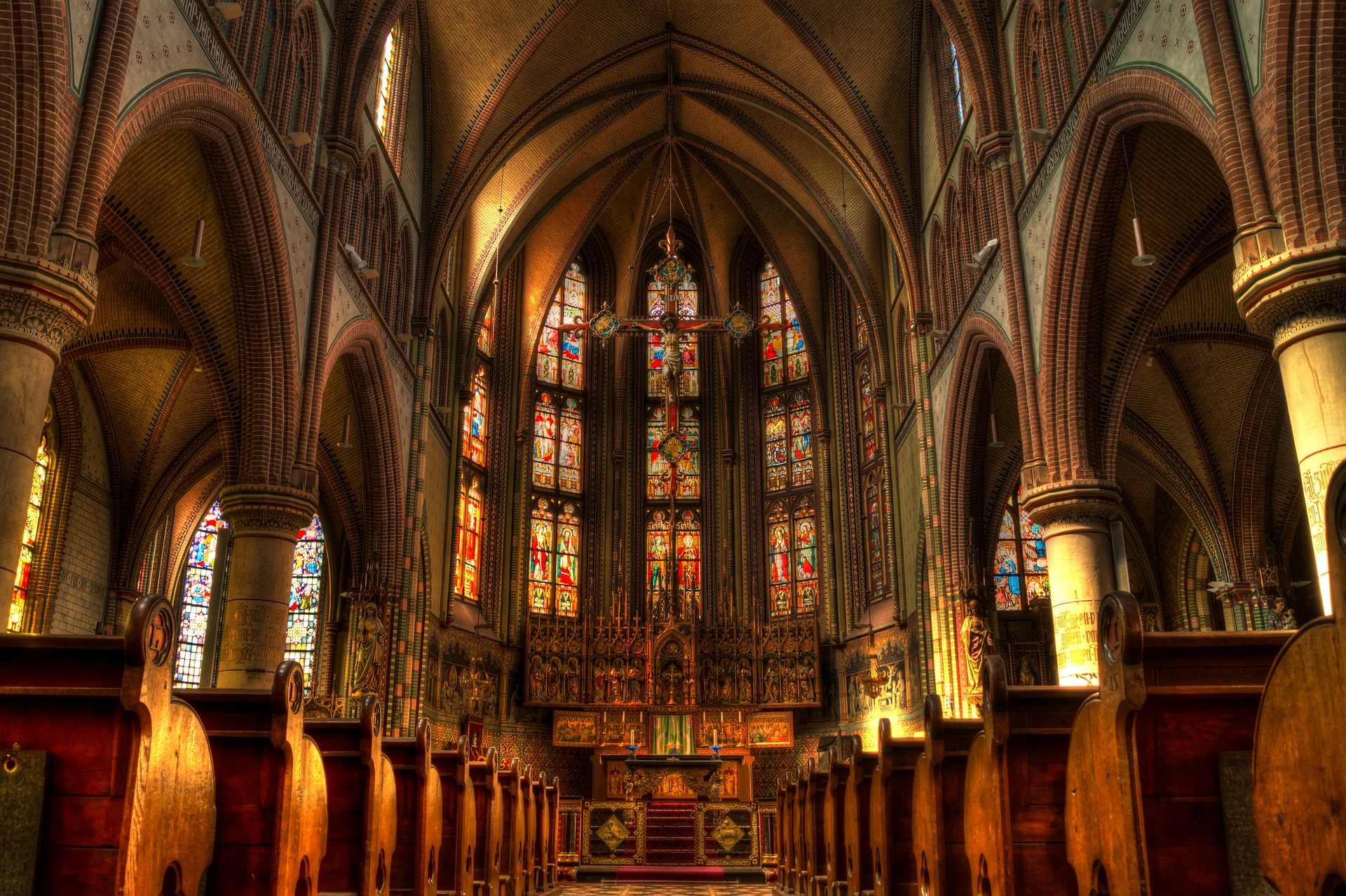
What she was poking at was the tradition of reverence and sacredness that people have traditionally had around church buildings, sanctuaries, and places of worship. I was raised in such a tradition. When entering the church, you were to be quiet, dignified, and respectful. Children were never supposed to run. The altar area in the sanctuary was a forbidden space. Wear your best clothes, sit up straight in the pew, behave, be quiet, be reverent. You’re in a sacred space!

After becoming a follower of Jesus and reading Jesus’ teachings and the teachings of the apostles for myself, I was amazed by the realization that almost everything about my experiences of church was nowhere to be found in either the teachings or examples of Jesus and His early followers. In fact, Jesus on at least two occasions speaks about the religious tradition of worshipping God at a temple being torn down and replaced. He was dismissive of His disciples’ awe and wonder at the Temple ( the same Temple we read about being built in today’s chapter) and tells them that it will ultimately be razed to rubble. In another episode, a woman from Samaria questions Jesus about one of the major differences between the Jews, whose worship was centered around the Temple in Jerusalem, and the Samaritans, whose worship was centered at Mount Gerizim. Jesus responds, “Believe me, a time is coming when you will worship the Father neither on this mountain nor in Jerusalem…a time is coming and has now come when the true worshipers will worship the Father in the Spirit and in truth, for they are the kind of worshipers the Father seeks.”

Jesus never prescribed church buildings, cathedrals, basilicas, sanctuaries, altars, or sacred spaces. The teaching of Jesus is that when I as a follower am indwelt by the Holy Spirit then I become the Temple of God. Sacred space, therefore, is wherever I happen to be. I bring the sacred with me because God’s Spirit is in me. The Jesus movement in the first century exploded as followers and disciples met anywhere and everywhere in homes, outdoors, and in public places.

We human beings, however, love our religious traditions. I found it interesting in today’s chapter that even at the building of the Temple the work area was to remain silent in reverence. It reminded me of the plethora of rules I was taught as a child about the church building being a sacred space.

Which reminded me of our sweet little girl Wendy and I watched in worship this past Sunday. Our local gathering has taken a different stance than the historic traditions about the place of worship being sacred and thus requiring silence, reverence, and rules like the removal of headwear. In our gatherings, children are allowed to be children. For many years, we had a weekly gaggle of little girls who would literally apply Psalm 149’s call to praise God with dancing as they would jump and spin and improvise dances in the corner of the room during songs. We have people who quite literally exercise the freedom to worship God with clapping, shouting, and raising hands as prescribed in the book of Psalms and elsewhere. On a few occasions, we’ve had an individual who expresses praise by applying Psalm 20’s encouragement to “lift up banners in the name of our God” and would quite literally do a flag routine like you’d see with a marching band. And, sometimes we are silent and reverent, not because of the room or the building but because silence is a form of both individual and corporate worship, too.

It is in the quiet where I find myself each morning as I read and ponder, and write each one of these chapter-a-day posts. My home office becomes sacred space, not because of anything having to do with the room, but because of everything having to do with God’s Spirit in me and communing with me in spirit, heart, and mind.

If you know anyone who might be encouraged by today’s post, please share.

A Time to Shout!

A Time to Shout! (CaD Ps 100) Wayfarer

Shout for joy to the LORD, all the earth.
Psalm 100:1 (NIV)

I have shared over the years that one of the things Wendy and I enjoy doing is being sports fans. We’re not “rabid win-at-all-costs because our lives are ruled by it” fans, which is a good thing since most of the teams we cheer for have long histories of being underdogs and perennial losers. We just enjoy choosing a team, following the team and the players, rooting for them through the season, and generally being loyal fans.

January in Iowa has typically been made even more bleak for Wendy and me because of the lack of sports that we enjoy. Our Vikings season generally ends early in disappointing fashion. Spring training for our Cubs is weeks away. Our son-in-law, Clayton, influenced Wendy and me to find a English Premier League team to cheer for in order to bridge the gap. It just so happens that his team and our team have a big match this weekend. We’re already planning our watch party. It will be something fun in the midst of quarantine.

Today’s chapter, Psalm 100, is the final in a series of ten ancient Hebrew songs of praise. This little ditty is only five verses long and it begins by calling the worshiper to “Shout with joy to the LORD.”

Throughout my spiritual journey, I have heard teachers challenge congregations with the fact that we cheer more for our teams than we do for God. This, in the institutional and denominational churches I’ve attended throughout my journey, is very true. When Christianity became the official religion of Rome, the Jesus movement became a political empire that was more interested in controlling the masses than it was in sincere worship. The Holy Roman Empire controlled worship in the Western world for 1200 years. When the Protestant Reformation came along, it led into the “age of reason” in which head knowledge of the scriptures and theology was held as utmost in importance. Thus, the Catholic Church and the vast majority of Protestant denominations were given to quiet, reverent, and generally passive worship styles.

And yet, throughout the Great Story the examples of worship and calls to worship I’ve been reading in the psalms are active, loud, and participatory. Shout, sing, dance, raise your hands, clap your hands, and raise the roof! King David got in trouble with his wife when he was so worked up in dancing and singing to God that he had peeled down like silly shirtless college boys in a December Iowa State football game. I confess that the last time Wendy and I got that excited was the Cubs winning the World Series and the Minneapolis Miracle.

At the same time, the further I’ve gotten in my spiritual journey, the freer I’ve become in worship among my local gathering of Jesus’ followers. I sing loud. I’ll lift my hands in prayer. Yes, I’ll even shout. And what’s hilarious is that this is not the worship tradition of my local gathering. I once had an elder of the church who was a pious, multi-generational loyalist of the denomination ask me sincerely why I raised my hands when I sang in worship. I pointed him to a number of places in the Great Story where God’s people are called to lift hands in praise and prayer. Funny how individuals who claim to live in devout obedience choose to ignore those things with which they are uncomfortable. Greet anyone with a holy kiss lately?

Don’t hear what I’m not saying. There are times for spiritual quiet, silence, and reverence. Lord knows we need a lot of it right now amidst the 24/7 din of politics and pandemic conflict in the news and on social media. The Sage who wrote Ecclesiastes would tell us that there is a time for quiet reverence, and there’s a time to shout, dance, and blow the roof off. And, I get that there are individuals who will forever be hands-in-your-pockets mouth shut type of followers, and that’s cool too. Whatever.

It’s just that Wendy and I have noticed as we worship that there’s often what feels like a spiritual lid on the room. You can feel people waiting for an excuse, or for someone to give permission to shout, cheer, and let out some God-given, human emotion. Countless times we’ve witnessed that when one person breaks the ice, then the praise really begins to flow.

In the quiet this morning, I’m thinking about all the worship traditions I’ve experienced and enjoyed along my spiritual journey from the silence of the Quakers to the call and response of a black Baptist congregation. From the pomp of a Roman Catholic cathedral in Ireland to the down-home fire-and-brimstone of a back-woods Pentecostal church in Appalachia. I find that so often people put their own spiritual experiences in the box of their traditions. Along the way, I’ve found that it’s not a right-or-wrong either-or thing. Once again, it’s a “yes, and.” I can learn from experiencing and participating in diverse styles and traditions of worship. I take things that are meaningful for me and find ways to weave them into my own spiritual expressions. It’s been good. It’s helped me grow. It’s expanded my spiritual understanding.

I promise that if/when I see you next I won’t greet you with a holy kiss.

Finally, it was a bit of synchronicity that I saw this post this morning of a mother shouting her praise as she finds out her son passed the bar exam. It’s worth the watch!

Corporate Confession

JapanSMP_1213
(Photo credit: openg)

When they had assembled at Mizpah, they drew water and poured it out before the Lord. On that day they fasted and there they confessed, “We have sinned against the Lord.”
1 Samuel 7:6 (NIV)

Over the past few weeks I have witnessed and been part of multiple moments of corporate confession in gatherings of fellow Jesus followers. Individual confession is, no doubt, good for the soul and necessary for on-going spiritual health. Nevertheless, I find it an amazing experience when a group of people publicly acknowledge that we’ve all blown it, we regret our failures, and we need both forgiveness and the opportunity of a fresh start. In a culture that seems ever to reward arrogance and bravado, there is something quietly powerful in a group of people together finding strength in humility and reverence.