Tag Archives: Presidential

An Open Invitation

Submit yourselves for the Lord’s sake to every human authority: whether to the emperor, as the supreme authority, or to governors, who are sent by him to punish those who do wrong and to commend those who do right.

 Show proper respect to everyone, love the family of believers, fear God, honor the emperor.
1 Peter 2:13-14, 17 (NIV)

I have for many years had a recurring brainstorm that returns every four years or so like the spring rains on the fields of Iowa. Every four years potential Presidential candidates from all political persuasions pass through Iowa for months in anticipation of the Iowa caucuses.

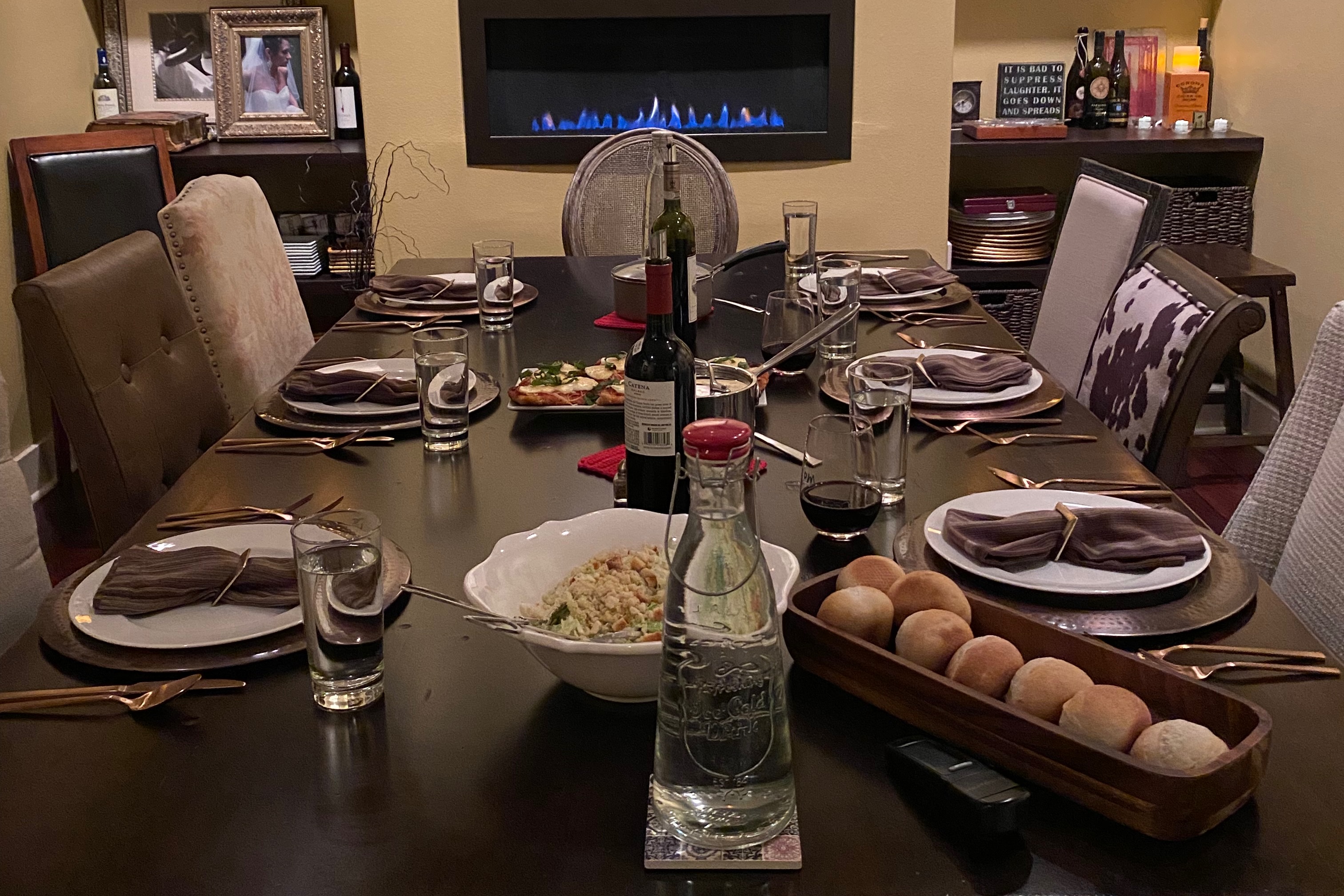
What if we invited them for dinner? We’d extend an invite to every one of them who passes through town. Just the candidate (and perhaps spouse) breaking bread and sharing a meal with just me and Wendy here in our dining room. Nothing fancy. No press. Just a meal and a private chat.

I think we’d learn a lot, not just about the candidate’s views, but the candidates themselves. Wendy and I have long held the position that we may not agree with a candidate’s politics, but we’d be willing to host any candidate – no matter their party or lack thereof – for a nice meal and respectful conversation. (For the record, I am not affiliated with any political party)

Today’s chapter is a head-on collision of Kingdom of God posture in human empire territory where the kingdoms of this world rule. Jesus’ counter-cultural kingdom ethic is on full display through the very man He once called ‘the rock..

First we have to understand the context of Peter’s letter which was written sometime around 60-64 A.D. Peter also references being in “Babylon” in his personal greetings (5:13). ‘Babylon’ was code for Rome.

Why does Peter use code? It is a time of rising hostility toward Christians. The storm clouds are gathering, and within a few short years Nero will unleash brutal persecution. It’s one of the reasons that the letter is being written in the first place. Referencing Rome as “Babylon” served multiple metaphorical purposes:

  • It protects believers if the letter is intercepted.
  • It frames Rome theologically: not merely a city, but an empire embodying exile and oppression.
  • It reminds Jewish believers of the first exile under literal Babylon.

And who is on the throne? Nero. That Nero. Corrupt. The one who will famously fiddle while Rome burns, then blame who? Christians.

Nero was volatile, self-indulgent, increasingly paranoid—and within a few years would unleash brutal violence against Christians.

Peter is not naïve. He knows who sits on the throne.

Which makes his instruction feel less like polite civic advice and more like defiant kingdom theology. Peter doesn’t tell believers to “burn it down.” He says, “honor (literally choose in your hearts to attach worth to him) the Emperor.”

Peter’s logic runs like this:

  • You are aliens and strangers (2:11).
  • Your loyalty is to Christ.
  • Therefore you are free.
  • Therefore you do not need to grasp for power.
  • Therefore you can show honor—even to flawed rulers.

This isn’t endorsement.
It’s witness.

The early Christians were not passive. They were faithful. And faithfulness sometimes meant suffering rather than seizing power.

Peter is not baptizing Nero.
He’s refusing to let Nero define conduct for followers of Jesus.

For me as a disciple of Jesus, this lands like a dagger in the heart of modern outrage culture: God through Peter commands honor in a world where the emperor will kill him. And Nero will have Peter crucified just a few years after this letter is written, the words of the risen Jesus echoing in his soul…

“Very truly I tell you, when you were younger you dressed yourself and went where you wanted; but when you are old you will stretch out your hands, and someone else will dress you and lead you where you do not want to go.”
John 21:18 (NIV)

As I meditate on these things in the quiet this morning, I find that God’s demand that I honor governing authorities is not a demand that I agree with them, approve of them, sanctify them, or remain silent about injustice. The demand is that I refuse to dehumanize them. In a culture that delights in contempt, Peter commands dignity.

That was radical under Nero.

It may be more radical now.

Which brings me back to my recurrent brewing brainstorm. If any candidates thinking about a run in 2028 find themselves coming through Pella on their Iowa Caucus tour, let Wendy and me know. You have an open invitation for dinner and a chat.

If you know anyone who might be encouraged by today’s post, please share.

Promotional graphic for Tom Vander Well's Wayfarer blog and podcast, featuring icons of various podcast platforms with a photo of Tom Vander Well.
These chapter-a-day blog posts are also available via podcast on all major podcast platforms including Apple, Google, and Spotify! Simply go to your podcast platform and search for “Wayfarer Tom Vander Well.” If it’s not on your platform, please let me know!
Icon featuring an open book on an orange background, symbolizing reading or education.

The Difference a Dinner Makes

So [the king of Israel] prepared a great feast for the [Aramean soldiers], and after they had finished eating and drinking, he sent them away, and they returned to their master. So the bands from Aram stopped raiding Israel’s territory.
2 Kings 6:23 (NIV)

As Wendy and I sit each morning over breakfast and peruse the news of the day, we will often discuss different politicians or other individuals making headlines. Of course, there are always certain individuals for whom we have a certain affinity but we don’t always have the most glowing impressions of other individuals.

I’m not sure how and when this happened, but Wendy and I will commonly discuss the notion of having said individuals over for a meal. I think this idea began during a Presidential campaign years ago. A few months ahead of the Iowa Caucuses you can’t spit without hitting a visiting presidential candidate. One year when the number of candidates was off the charts, Wendy and I discussed the idea of how nice it would be to actually have each of the candidates (from any/all parties) over for dinner one at a time. It’s easier to really get to know a person over a good meal and good table conversation. Somehow, the idea stuck and now it comes up quite regularly in our conversations, what it would be like to have so-and-so over for dinner.

Today’s chapter is filled with extreme events from the miraculous to a horrific human tragedy. I have no recollection of this quiet little episode stuck in the middle. The kingdom of Aram shared a border with the kingdom of Israel, and bands of Aramean soldiers were constantly raiding the towns of Israel. Elisha miraculously blinds one of these raiding parties and leads them straight into Samaria, the capital city of Israel. When the king of Israel suggests killing them, Elisha instructs him to treat them to a feast instead.

So, the king of Israel treats the enemy soldiers as honored guests. They sat around the table and enjoyed a feast together. I imagine they swapped stories, laughed together, and got to know one another to a certain degree. The Arameans, knowing they could have been killed, were treated the way Jesus would later instruct His followers to treat our enemies, by blessing those who intend to persecute us. The result? The border raids stopped.

In the quiet this morning, I am reminded of the conference Wendy and I attended this past week that addressed some of the most controversial and divisive topics of our day. One of the most powerful things that the conference accomplished was to share the complex and intimate stories of individuals struggling at the heart of the issue. When issues are translated into human stories, it changes both my perceptions and understanding of the issues themselves. It’s the same principle that the king of Israel and the Aramean soldiers discovered. They came to bust heads and instead broke bread. It changed their attitudes and behavior toward their enemies.

(BTW: Another Presidential election cycle begins later this year. For any candidate who happens to read this, there’s an open dinner invitation here at Vander Well manor! 😉)

If you know anyone who might be encouraged by today’s post, please share.

A Cynic’s Confession

I urge, then, first of all, that petitions, prayers, intercession and thanksgiving be made for all people— for kings and all those in authority, that we may live peaceful and quiet lives in all godliness and holiness.
1 Timothy 2:1-2 (NIV)

When you live in Iowa, you get a larger dose of American presidential politics than most. Iowa is the first state in the parties selection process for presidential nominees. Therefore, Iowans tend to have a more generous dose of candidates, surveys, and political ads before everyone else. I kind of like it, in the general sense. About 95 percent of the time the major media outlets ignore us here in flyover country. If there’s not a tragedy, natural disaster, or the need for a heart warming Americana story, then they prefer to keep their cameras and microphones grounded on the coast. It’s nice to have the opportunity for our thoughts and opinions to matter for a few months.

At the same time, I will admit that the whole presidential circus gets a bit silly at times. I was once avidly involved in the political process, but confess that I have become jaded and cynical the further I’ve progressed in life’s journey. I vote regularly and do my civic duty, but I am increasingly appalled at how elected leaders look out for themselves and leverage our collective future to solidify their personal standing in the present. I’m talking both sides of the aisle here.

As I read Paul’s admonishment to pray for “all those in authority” this morning, I was struck by just how cynical I’ve become. It’s almost to the point of being a fatalist. If I’m truly honest, I have to admit that I find myself thinking, “What will be will be and my prayers, petitions, and intercessions won’t make a bit of a difference.”

Then, I think of Paul and Timothy out there under Roman occupation  and sandwiched between persecution from both Jewish authorities and Roman authorities. Theirs was not a representative republic. They didn’t have a vote. The media of the day was not surveying everyone in Ephesus to find out what they thought, and Caesar was not pandering to the backwater Hellenists. Their political impotence was far greater than mine, and still Paul urged vigilant prayers for all in authority.

Today, I’m a bit humbled to admit how hard my heart has become towards those in governmental authority. I am revising my prayer list. If you’ll excuse me, I have a few petitions to bring before the highest authority of all.

The Problem of Power

source: allen brewer via flickr

Her leaders judge for a bribe,
    her priests teach for a price,
    and her prophets tell fortunes for money.
Yet they look for the Lord’s support and say,
    “Is not the Lord among us?
    No disaster will come upon us.”
Micah 3:11 (NIV)

As I write this the next Presidential election here in the States is 16 months off, but already the candidates are queueing up and the political machinations have begun. We had a family gathering at Wendy’s folks yesterday afternoon and casual conversation has already turned to be all about elections. It’s going to be a long one, I’m afraid. It’s times like this that I wish life had a fast forward button.

I am glad I live in a land with free elections and representative republic. As a lover of history, however, I’m constantly reminded that political power is a corrupting force. As Lord Acton observed, “absolute power corrupts absolutely.” Even in a system with checks and balances, I’ve observed that political offices (both elected and appointed) become places from which individuals and parties make rules to entrench their position and take advantage for themselves and their friends.

In the days of the prophet Micah, the situation was no different, as Micah observes in today’s chapter. God’s Message teaches that we live in a fallen world. Our sin leads us, despite our best altruistic efforts to the contrary, to make self-centric decisions for ourselves and our own. The more powerful and influential position we yield the more difficult it becomes to succumb.

Today, I’m feeling a bit cynical, but I’ve got plenty of evidence from events past and present to justify my cynicism. Perhaps that is why God’s Message exhorts us so directly to pray for our leaders and those in power. At the same time that I’m pointing the finger at politicians, I’m also mindful that power’s corrupting force is present in any human system from families to churches to companies to neighborhoods and service organizations. In my admittedly meager positions of influence I am aware of the negative affects power can have on me if I am not aggressively mindful, humble and accountable.