Tag Archives: Seed

Soil and Spirit, Weather and Weeds

Soil and Spirit, Weather and Weeds (CaD Matt 13) Wayfarer

Still other seed fell on good soil, where it produced a crop—a hundred, sixty or thirty times what was sown.
Matthew 13:8 (NIV)

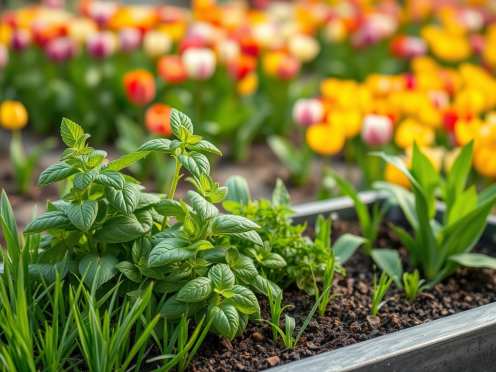
Happy Easter! It is spring and here in Iowa the landscape is quickly changing from the dull neutral tones of gray, beige, and deep brown that dominate the death of winter into vibrant and lush green of new life and a rainbow of blossoms that it brings. Here in Pella, the tulip beds are in full bloom and our annual Tulip Time festival is just ten days away.

In today’s chapter, Jesus famously teaches the crowds in parables, and the subject of His parables are all about soil, seeds, and weeds. This got me thinking a bit about the spiritual parable of my own experiences this season…

I’ve already mowed my lawn a couple of times. It was 10 years ago that Wendy and I moved into our newly constructed house. The company we hired to do our lawn was one of the more difficult contractors we worked with in the process. The soil on our property wasn’t the greatest and we had loads of black dirt brought in to supplement it. Even so, the yard was not grated well, and the soil was not spread well. The result has been a decade of trouble and hard work. Every spring as I break out the lawn mower and begin working the lawn I confess feeling a bit embittered regarding how much better and easier it would be if the soil had been done well, and done right, from the beginning.

Meanwhile, inside the house I’ve been experimenting with one of those countertop herb gardens advertised online. I have confessed many times in these posts/podcasts to my brown thumbs and lack of ability to successfully garden, even while living my entire life on the richest, most productive farmland on the face of the earth. I’m happy to say that my tiny little herb garden has been highly productive despite the multiple mistakes I’ve made getting started. I’ve been supplementing my dinner salads with Romain lettuce from countertop. Our supply of fresh Basil is slowly growing, and I’ve got plenty of fresh mint growing to mix some Mojitos to enjoy on the back patio this summer.

One of the things I’ve noticed about my little countertop herb garden has been both the soil, which I’ve never seen anything like it in my life, and the watering system which is genius in allowing the soil to soak up what the plants need without drowning them and takes my human incompetence and lack of disciplined attention out of the equation.

Which has me thinking about Jesus’ parable in the quiet this morning. The difference between the 25% of seeds that became productive and fruitful plants in Jesus’ parable and the 75% of seeds who didn’t make it was the quality of the soil. Which has me thinking about my contrasting experiences with my lawn and my countertop herb garden. The profoundly simple question Jesus’ parable, and my experience, leads to is: “What is the quality of the spiritual soil of my heart, mind, and life?”

As I meditated on Jesus’ parable, I realized that there are both things that I control and things that are out of my control with regard to the spiritual cultivation of my heart and mind. I don’t completely control the weather of life, the circumstances around me, or even the weeds that might have been sown to my right or left and are flourishing to my perpetual aggravation. I do, however, control the inflows of what I draw into my eyes, my ears, my heart, my mind, and my body. I control my time and my energy expenditure. I can push my spiritual roots deeper where springs of Living Water can nourish me, or I can simply choose to soak up the shallow and toxic run-off this world ceaselessly sheds from its surface.

The words of the Serenity Prayer came to me as I pushed my roots deeper this morning:

Lord, grant me the serenity to accept the things I cannot change,
the courage to change the things I can,
and the wisdom to know the difference.

Or, in other words:

Lord, help me to be the best spiritual soil I can be for Your Word to take root that my life might be as fruitful and productive as possible today. Grant me patience, grace, and peace amidst the weeds and weather of this world that I do not control. And give me wisdom to know the difference.

If you know anyone who might be encouraged by today’s post, please share.

These chapter-a-day blog posts are also available via podcast on all major podcast platforms including Apple, Google, and Spotify! Simply go to your podcast platform and search for “Wayfarer Tom Vander Well.” If it’s not on your platform, please let me know!

Seed and Heart-Soil

Seed and Heart-Soil (CaD Acts 14) Wayfarer

[Paul and Barnabas] returned to Lystra, Iconium and Antioch, strengthening the disciples and encouraging them to remain true to the faith. “We must go through many hardships to enter the kingdom of God,” they said.
Acts 14:21b-22 (NIV)

Living in Iowa, one tends to earn a great appreciation for farmers. Even the Iowa Hawkeye football team wears a sticker on their helmets with the letters ANF (“America Needs Farmers”). I was raised in the city of Des Moines, but I still have learned a lot about farming simply by living here and knowing many people who did grow up on a farm, including Wendy.

I have a friend in the seed business. His job is to help his company’s seed produce as much of a yield as possible. As I asked him about his job, I found out that it had a lot to do with helping their farmer customers make sure the soil has the right chemical balance for the seed to thrive.

In today’s chapter, Paul and Barnabas conclude their first missionary journey, in which they visited towns on the island of Cyprus and Greek towns on the mainland north of there. By the end of the chapter, they return to home base in Antioch to report that many people believed in Jesus and they were able to establish gatherings of Jesus followers in towns throughout the region. That said, their experiences were mixed.

On Cyprus, they were invited to speak with the Roman Governor, who became a believer.

In Pisidian Antioch the reaction was mixed. The Jews there largely rejected Jesus’ Message, but many of the Gentiles in the town believed.

In the town of Iconium, many believed but this created great division within both the Jewish and Gentiles communities. Those who rejected Jesus’ Message plotted to have Paul and Barnabas stoned to death.

In Lystra, the large Greek community were wowed by a miracle, but they missed the connection to Jesus’ Message. The crowd declared Paul and Barnabas the incarnation of Zeus and Hermes and tried to offer sacrifices to them. The plotters from Iconium arrive in Lystra and the crowds end up turning on Paul and Barnabas, stoning Paul until they thought he was dead.

In Derbe, everything seems to have gone well and many people believed Jesus’ Message.

As I meditated on the diverse general responses Paul and Barnabas received to Jesus’ Message, I couldn’t help but think of Jesus’ parable of the Sower. The seed is tossed, but it falls on different kinds of soil. The success of the seed to end up taking root, growing, and producing a yield was dependent on the condition of the soil on which it landed.

I had a friend and fellow blogger who just last week asked me about these chapter-a-day posts, and how I manage my expectations with regard to the number of visits, clicks, and likes I receive. The truth is that the only way I’ve been able to keep doing these posts is by constantly reminding myself to surrender any expectations I might have. Like Paul and Barnabas, and like Jesus’ parable, I am the sower. The yield is dependent on the heart-soil of each one who reads or listens.

The same is true as I attempt to live, act, and relate to others in the fruit of God’s Spirit and share Jesus’ love with others. Some may sense something in me that attracts them. Others may be repelled. I can’t control the heart-soil of those around me, I can only control the quality of the seed I’m sowing in how I live and love.

If you know anyone who might be encouraged by today’s post, please share.

Soil Samples

Soil Samples (CaD Mk 6) Wayfarer

…Herod feared John and protected him, knowing him to be a righteous and holy man. When Herod heard John, he was greatly puzzled; yet he liked to listen to him.
Mark 6:20 (NIV)

Here in Iowa, the science of agriculture is big business. Each autumn when harvest rolls around the crop yield is a make-it or break-it reality for farmers. Which is why I know friends whose livelihoods are spent studying soil and seeds to try and grow as much as the land can possibly yield. As I have often confessed, agriculture is not something about which I have vast knowledge. Just enough to appreciate a good parable.

As I’ve trekked my way through the Great Story again and again over the past forty years, I’ve learned that sometimes the lesson is not in microscopically mining the minutia of the text, but in stepping back and looking at the bigger picture.

Back in chapter four, Mark records Jesus parable of the sower, in which the Word falls like seed on different human hearts that each are like a different quality of soil. A quick recap:

  • Like seed fallen on a hardened footpath: A soon as this person hears it, the enemy snatches it away like a bird.
  • Like seed fallen on rocky ground: Life sprouts in them, but it doesn’t put down roots and can’t survive through difficult weather.
  • Like seed fallen among thornbushes: Sprout and grow, but the things of this world choke it and render it unfruitful.
  • Like seed fallen on good soil: Sprout, put down roots, grow, and bear fruit.

Starting in chapter Five and continuing in today’s chapter, Mark records stories of different people who rejected Jesus, His teaching, and His miracles.

Despite the fact that Jesus drove the demons from the heart of the man living among the tombs of the Gerasenes, the townspeople wanted nothing to do with Jesus. Their hearts are like the hardened footpath. It’s as if the demons snatched the Word from their hearts on their way from the man to the pigs.

In today’s chapter, Jesus goes home to Nazareth. The people of Nazareth listened to Jesus’ teaching, and some were amazed as if the Word was sprouting new life in them. But ultimately, nothing took root as their hearts couldn’t see past their prejudices: “How could Jesus Bar Joseph, the Carpenter’s boy who fixed my chair that one time, be a rabbi?”

Then we get to Herod Antipas, the local ruler of Galilee. Herod sits atop one of the “kingdoms of this world,” the descendant and co-heir of a ruthless tyrant who amassed wealth, political power, and all the luxuries it affords through corruption, deceit, and bloodshed. When Satan went “all-in” and offered Jesus with all the “Kingdoms of this World,” Herod’s kingdom was there in the pot, and Jesus knew it. Jesus grew up knowing all about Herod’s wealth, power, fortunes, women, and fame.

Mark then does something unusual compared to what we’ve read thus far in his biography of Jesus. Mark tells a story that is not about Jesus, but about Jesus’ cousin, John the Baptist. It gives us a picture of seed that falls among the world’s thorn bushes.

Some quick gossip from the tabloids at the checkout line at the Galilean grocery stores: There was a whole sex scandal in Herodian royal family, and Herod Antipas ends up marrying his brother’s wife. John the Baptist is a local religious figure who is extremely popular and extremely revered by all the deplorable religious types in Herod’s constituency. John publicly preaches against the immorality in the Herodian palace, and Herod can’t risk a drop in his approval rating so he has John arrested. He even has John brought before him (and his guests on occasion) to hear his religious rants. Mark tells us that Herod, “liked to listen to him.”

To Herod, John and his message are playthings. They are one more thing that wealth and power afford him. He has his own holy man at his beck-and-call. John is God’s little vine surviving amidst the entrenched hedge of Herod’s prickly power. Herod might have John preach for him and his party-guests. He might have John beheaded at the whim of his lust for his own step-daughter. It is of little consequence for him. He can always find another holy man: “I keep hearing about this Nazarene,” I can hear him say to his dinner guest after John’s head is carried out on a platter. “Maybe I should arrest him. John’s sermons were so entertaining. I’ll miss them.”

In the quiet this morning, I am reminded that Jesus had as many enemies, detractors, and people who dismissed His teaching as He had disciples. Perhaps 3 to 1 if the parable is any indication. My experience is that Jesus’ followers rarely think much about this reality.

And so I find myself thinking about the soil of my own heart.

Is my heart hard and unyielding?

Is my heart shallow and unwilling to put down spiritual roots?

Is my heart choked, overshadowed, and/or overgrown by the things of this world?

Is my heart fruitful with the mixed-fruit of faith, hope, and love?

As I meditated on the metaphor again this morning, I found myself mulling over the fact that the seed among the thorns and the seed on the good soil both sprout, take root, and grow. The only difference Jesus described was that the good-soil plant was fruitful while the plant choked by the thorns of this world didn’t yield fruit.

I also find myself thinking about these chapter-a-day blog posts and podcasts that I scatter across the internet each weekday wondering where in the world they might land. Hard soil? Rocky soil? Thorn bushes? Good soil? I have learned that there is both grief and freedom in not knowing the answer. Such is the lot of the sower who must wait until harvest to know the yield.

I hope this lands well with you, my friend.

Have a great day.

If you know anyone who might be encouraged by today’s post, please share.

Sow What?

Sow What? (CaD Mk 4) Wayfarer

Again [Jesus] said, “What shall we say the kingdom of God is like, or what parable shall we use to describe it? It is like a mustard seed, which is the smallest of all seeds on earth. Yet when planted, it grows and becomes the largest of all garden plants, with such big branches that the birds can perch in its shade.”
Mark 4:30-32 (NIV)

It is spring in Iowa, arguably the best place to grow things in the world. Growing up, our state used the tag line: “A place to grow.” I always found this a great tag line full of metaphorical layers. I’m sad it got buried under slogans like “You make me smile!” and “We do amazing things with corn.”

Spring brings my perennial desire to plant something and make it grow. I have to confess that when it comes to being a child of Iowa I’m a bit of a prodigal. Growing things has never come naturally to me. I’ve done okay with my rosebushes, but I think it’s because they do well on their own despite me. Last spring we planted some herbs on the patio. I even got to use them to make fresh seasoning a few times before they died.

It’s a beautiful thing about the cycles of life, isn’t it? It is perennial. Hope springs eternal with Easter. Every spring the Cubs have a chance to win the World Series and I have a chance to successfully grow something. It doesn’t matter that the odds are 1:108. There’s still a chance, and each spring the hope is intoxicating.

Last year, Wendy and I bought actual herb plants. Undeterred by their premature death, I decided that this year we’re going to grow them from seeds. If I’m going to commit serial herbicide, I might as well make it more difficult. So, we got three grow-kits with pots, dirt, and seeds.

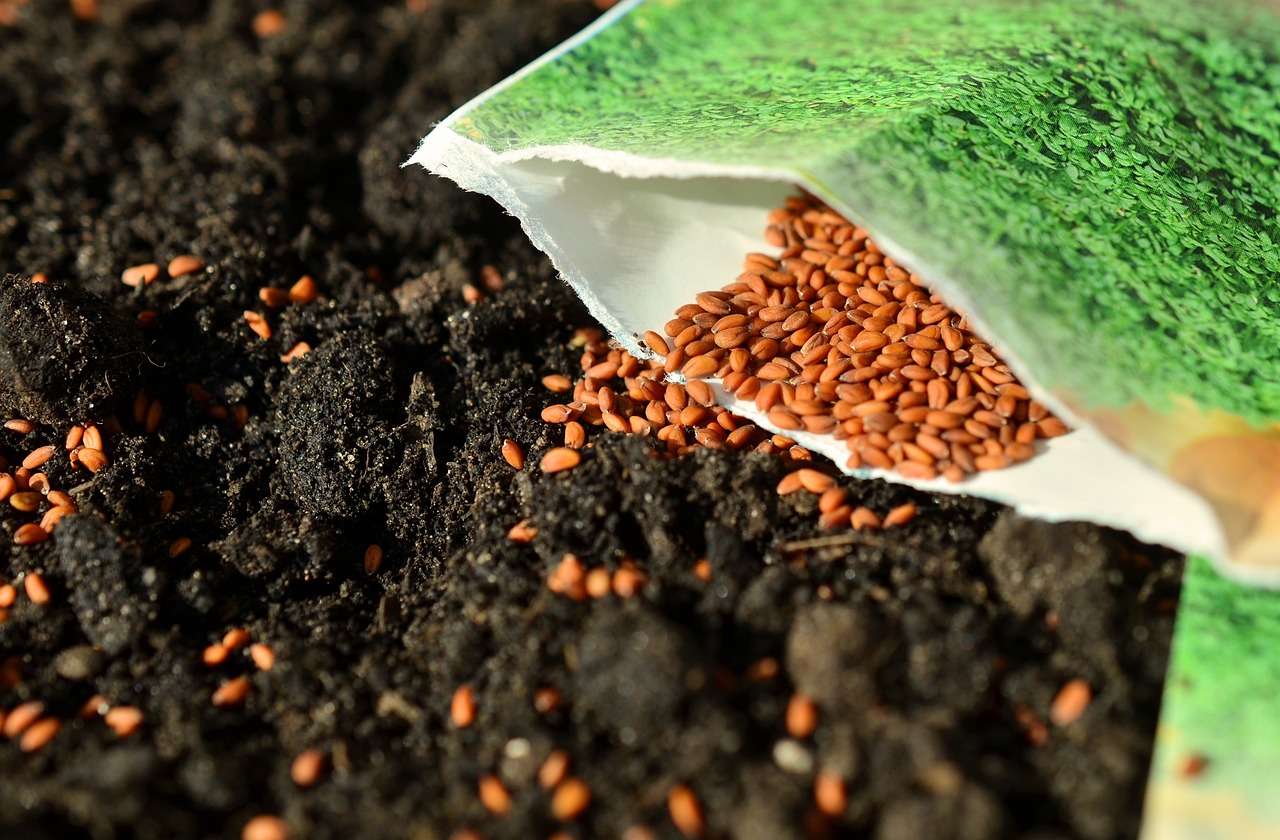
What struck me as I planted the seeds was how minuscule they were. Seriously, I felt like I was sprinkling dust particles in the dirt! I followed the instructions for watering and a week or so later Wendy and I went to the lake for a long weekend. When we got back, there were actual plants growing in two of the three pots. What did I do wrong with the third plant? I’m telling you: I can kill a plant before it even sprouts! When I contacted the grow-kit company I was told that sometimes you can get “bad seed.” I’m not sure what that means, but it felt like a pardon from the Governor. I sanded out a couple of notches off the handle of my garden trowel.

I thought about my little herb garden as I read today’s chapter. Jesus uses planting seeds as a word picture of God’s Kingdom. The seed can be as small as a speck of dust, but it can sprout and grow into something huge. Which is why earlier in the chapter Jesus told another story about a person who was sowing seed as they journeyed along. The seed was sown everywhere, which got me mulling this over.

Jesus told His followers that the seed is the Word. In the Great Story, I learned that Jesus is the living Word and also incarnate Love. So, one way I sow the Word along my life journey is by sowing love that is joyful, peaceful, patient, kind, gentle, faithful, good, and self-controlled. In doing this, I’m scattering that hopeful possibility of spring that the seed might happen to fall upon a soul that it good soil for that seed to germinate and grow into something exponentially huge in relation to that little seed sown in a gentle word, a gesture of forgiveness, a random act of kindness, or a timely hug.

Of course, the Great Story also talks about bad seed that can equally be sown. The seeds of hatred, anger, malice, chaos, violence, rage, jealousy, envy, selfishness, dissension, and division. Bad seeds don’t grow much of anything.

In the quiet this morning, I find myself once again looking within and without. What am I sowing in my thoughts, words, actions, reactions, posts, tweets, replies, and comments? I look outward at the things I see in the media, on social media, and the people I “follow.” What is being sown? Good seed? Bad seed?

I don’t want to be judgmental, but I do want to be wise.

I can’t control others, but I can control myself.

I am embarking on yet another day. Day number 20,088 of my earthly journey.

It’s spring in Iowa. A place to grow.

What am I going to sow today?

If you know anyone who might be encouraged by today’s post, please share.

Jesus: Unwanted

Then the people began to plead with Jesus to leave their region.

As Jesus was getting into the boat, the man who had been demon-possessed begged to go with him.
Mark 5:17-18 (NIV)

Wendy and I have a recurring conversation about life. There is no doubt in either of our minds that we were supposed to walk this journey together. It’s a story that I should write someday. Our relationship has been such a good thing that we often wonder: “What if we had experienced our younger adult years together?”

While the hypothetical question is a natural one, we both agree in this recurring conversation that the younger versions of ourselves (me the religious rule keeper and good little preacher boy, she the rebellious wild-child) would likely not have hitten it off. My personal journey, walking through my “Prodigal” years, the failure of my first marriage, becoming a father to Taylor and Madison, were all part of what prepared me for the waypoint in which our story could begin.

Yesterday I wrote about the fact that every follower of Jesus has a unique story. Some follow in one season of life, while it takes others until a later season and waypoint further down the road before they are at the right place to follow. Some don’t reach that waypoint until their final moments on this earth. There is a mystery to the flow of it.

As I read today’s chapter, I found a connected truth. Mark’s version of the Jesus Story continues. While Mark has previously alluded to the miracles Jesus is performing, in today’s chapter he gives three major illustrations: a man possessed by a legion of demons, a woman who is miraculously healed by Jesus without His conscious decision to do so, and a twelve-year-old girl raised from the dead. I feel like Mark is telling me “Look, Jesus wasn’t just healing people from a runny nose or a tummy ache. We’re talking dead people being raised back to life kind of stuff!”

In the midst of these three episodes is a curious event. The people in the towns where Jesus cast the demons out of the man begged him to leave their region. The very next sentence has Jesus getting into the boat to shove off. I am reminded that when Jesus sends out His disciples to do their own internship practicum (coming up in the next chapter) He tells them if they are not welcomed by the people in a town to “shake the dust off your feet” and leave. In today’s chapter, Jesus exemplifies what He will command His followers to do in the next chapter.

In the quiet this morning I find myself mulling over the notion that Jesus does not force His way in. Tell Him to stay away and He is perfectly willing to move along. To the point of yesterday’s post, it may not have been the right season for the people of that region. Curious that the demon-delivered man asks to follow Jesus and Jesus tells him to stay and tell everyone in the region his story. In doing so, Jesus scatters “the seed” through this man’s story and witness which may take root and bear fruit in a future season.

Through many years of my journey, I observed the institutional church often trying to force itself in where it was not welcome and to manufacture converts via what I would liken to a process of systemic spiritual cloning. As I read through the Jesus story, I find Jesus’ actual example to be far more natural, more organic, more authentic, and more trusting of what God’s Spirit is doing in the Great Story and in the story of individuals within it.

Which brings me back to the journey of Tom and Wendy that began when two very different lives found themselves in the right season and at the right waypoint on life’s road to become one.

The Sower and the Seeds

From Peter, an apostle of Jesus the Anointed One, to the chosen ones who have been scattered abroad like “seed” into the nations living as refugees…
1 Peter 1:1 (TPT)

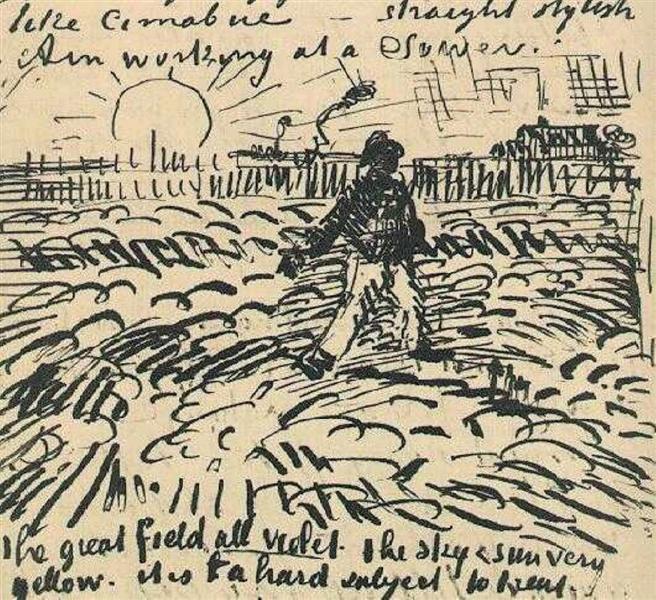
I’ve always had an appreciation for Vincent Van Gogh. The tragic Dutch artist who failed at almost everything in his life, including his desire and failed attempt to become a pastor. The story of his descent into madness is well known, along with his most famous works of a Starry Night, sunflowers, and his haunting self-portraits.

I find that most people are unaware that one of Van Gogh’s favorite themes was that of a sower sowing his seed. He sketched the sower from different perspectives and painted multiple works depicting the lone sower, his arm outstretched and the seed scattered on the field.

This morning I’m jumping from the ancient prophet Zechariah to a letter Peter wrote around 30 years after Jesus’ death, resurrection, and ascension. In recent months, I’ve been blogging through texts that surround the Babylonian exile 400-500 years before Jesus. But that wasn’t the only exile recorded in God’s Message. Peter wrote his letter to followers of Jesus who had fled persecution from both Jews and Romans in Jerusalem. As I’ve mentioned in previous posts, exile is a consistent theme in the Great Story.

At that point in time, thousands upon thousands of people had become followers of Jesus and were creating social upheaval by the way they were living out their faith. They were caring for people who were marginalized, sick, and needy. When followers of Jesus gathered in homes to worship and share a meal, everyone was welcome as equals. Men and women, Jews and non-Jews, and even slaves and their masters were treated the same at Christ’s table. This was a radical shift that threatened established social mores in both Roman and Jewish culture. So, the establishment came after them with a vengeance.

Peter begins his letter to the Christian exiles by immediately claiming for them a purpose in their exile. He gives the word picture of being the “seed” of Christ scattered by the Great Sower to various nations. They were to take root where they landed, dig deep, and bear the fruit of the Spirit so that the people around them might come to faith in Christ. God’s instructions through the prophet Jeremiah to the Babylonian exiles could just as easily apply to them:

This is what the Lord Almighty, the God of Israel, says to all those I carried into exile from Jerusalem to Babylon: “Build houses and settle down; plant gardens and eat what they produce. Marry and have sons and daughters; find wives for your sons and give your daughters in marriage, so that they too may have sons and daughters. Increase in number there; do not decrease. Also, seek the peace and prosperity of the city to which I have carried you into exile. Pray to the Lord for it, because if it prospers, you too will prosper.”

Jeremiah 29:4-7 (NIV)

And, in the quiet this morning I realize that it can also apply to me wherever my journey leads me. There is a purpose for me wherever that may be. I am the seed of Christ. I am to dig deep, create roots, draw living water from the depths, grow, mature, and bear the fruit of love, joy, peace, perseverance, patience, kindness, goodness, faithfulness, gentleness, and self-control.

I can’t help but think of Van Gogh, the failed minister who found himself in several exilic circumstances that inspired his paintings. I’ve read his letters, and I find that scholars tend to diminish or ignore the role of faith in Vincent’s life and work, despite his many struggles. Then I think of that sower who shows up again and again in his work. I can’t help but wonder if when he repeatedly sketched and painted the sower, if he thought about his works being the seed of God’s creativity he was scattering in order to reflect the light which he saw so differently than everyone else, and so beautifully portrayed. I find it tragic that he never lived to see the fruit of his those artistic seeds. Yet, I recognize that for those living in exile, that is sometimes the reality of the journey.

Seed in the Chaff

“I will scatter you like chaff
    driven by the desert wind.
This is your lot,
    the portion I have decreed for you,”
Jeremiah 13:24-25a (NIV)

The community where Wendy and I live, and our local gathering of Jesus’ followers, is experiencing a season of acute grief. This past week a young man, the youngest son of our senior pastor and his wife, passed away unexpectedly. He should have been experiencing the prime of his life. It is unnerving when tragedy strikes like this. There are so many unanswerable questions.

In Sunday morning’s message the teacher gave us a word picture of a man who initiated a controlled burn of his lawn. The teacher watched as the fire spread across the grass turning the lawn into a field of scorched and blackened death. Confused, the teacher stopped and spoke to the man. “I don’t understand,” he said. “You’re killing your lawn.

Oh no,” said the man. “The seed’s already in the ground. Come back in a few months and you will see how lush and green it is with new life.”

I couldn’t help but think of that parable as I read Jeremiah’s prophetic poem this morning. He foresaw that God’s people would experience unspeakable tragedy. They would be conquered. Their city and their Temple would be destroyed. They would be “scattered like chaff driven by the desert wind.” This was their lot in life.

Why me? Why him? Why us? Why now?

So many unanswerable questions.

Then in the quiet this morning I pictured and watched the chaff driven and scattered by the wind. What Jeremiah did not see in his vision is that there is seed mixed in with the chaff. Jeremiah does not see Daniel raised to a position of unbelievable authority and honor within the Babylonian palace. Jeremiah does not see Shadrach, Meshach and Abednego standing with God in the flames of the fiery furnace without getting one hair of their head singed. Jeremiah does not see the repentance of Nebuchadnezzar, doesn’t read the handwriting on Beltshazzar’s wall, does not hear the beautiful lyrics of the psalmists’ lament from exile, and does not see the incredible ministry and visions the prophet Ezekiel will have in that land. Jeremiah does not see the return of the remnant under Nehemiah or the miraculous work of his people rebuilding the Temple and the walls of the city. The prophet’s does not foresee Jesus entering the walls of rebuilt Jerusalem, God’s Son sacrificed for sin once for all, and then resurrected to new and eternal Life.

We all experience tragedy along our our life journeys; We all will have times when we are shaken to the core of our souls. In such times our eyes become intensely focused on our lot in life and we ask unanswerable questions. In the moment, Jeremiah just sees himself, his people, and their lot in life; Their lot in life that cannot be changed any more than a leopard can change his spots. He stands and looks out and all he can see is dry chaff scattered on the scorching desert wind.

Look more closely.

There’s seed in that chaff.

The Sower is not finished with the Story.


Chapter-a-Day Mark 4

source: Google Earth

Jesus said, “How can I describe the Kingdom of God? What story should I use to illustrate it? It is like a mustard seed planted in the ground. It is the smallest of all seeds, but it becomes the largest of all garden plants; it grows long branches, and birds can make nests in its shade.” Mark 4:30-32 (NLT)

In front of our house is a majestic oak tree. Its branches spread out over both our house and the house next door, and when you approach our house from down the street you can see the tree towering over our neighborhood. I’ve often wondered how long the tree has stood there. I sometimes imagine that it first emerged from the ground when Dutch settlers founded our town over a hundred and fifty years ago.

Each year, our tree drops acorns. Our tree drops a lot of acorns. In the late summer they begin dropping from the tree like little bombs shelling our roof around the clock. A fortunate family of squirrels incessantly patters across the roof right above my home office, gathering the acorns for winter storage. I suspect that our mighty oak tree alone feeds a whole pack of squirrels for the entire winter.

Some days I walk into the house, crunching acorn shells beneath my feet, and I think about those tiny little seeds. Our sprawling oak tree started out just like one of those small seeds I trample underfoot. Through harsh winter blizzards, sub-zero temperatures, violent spring thunderstorms, and blistering midwest doughts our tree has continued to slowly grow. Each year it experiences a cycle of death and rebirth. With each season the tree  puts roots deeper down into the Iowa soil to draw nourishment for its perpetual reach toward heaven.

I want to be like that old oak tree. Weathering all that life throws at me, I want to keep digging deeper so that I can continue reaching higher. As I grow, I want to spread myself out to shade and protect those around me. I want to provide for the little ones who scurry around, almost forgotten, at my feet. I want to offer a continuous supply of life giving oxygen for others to breathe. I hope that some day, when my trunk lays rotting on the ground, an entire forest will stand around me as a silent, living, and perpetuating memorial to this life that I have lived.