Tag Archives: City of Refuge

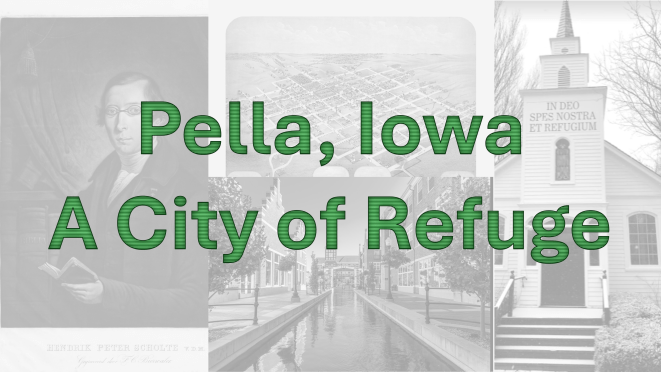
Pella: A City of Refuge

This past Sunday I was asked to give an hour-long presentation about the history of our community and its founder. Our church is spending an entire year focused on one of our core values: Refuge Over Rejection.

Our little Iowa community was envisioned, planned, and created by one amazing man, Hendrik Pieter Scholte. In the 1840s he was a pastor who desired to leave religious persecution in the Netherlands and create for his flock “A City of Refuge” on the Iowa prairie.

This is the story.

It is also a prompting of what this legacy means for our faith community seeking to be a “refuge” in our world today.

Make Up Your Mind

“But make up your mind not to worry beforehand…
Luke 21:14 (NIV)

Something new is coming.
It’s already here.
It will change everything.
And everyone can feel it.

Artificial Intelligence.

Everyone is talking about AI. It’s everywhere.

Among clients and business circles, it is the number one topic of conversation.

What can AI do for us?
How will AI transform our business?
What does the future look like with AI?

And whenever something comes along with the transformative power to change “normal” life as we know it, it stirs within human minds…

Doubts.
Fears.
Anxieties.

What is going to happen to me?

On April 26th I’ve been asked to give a presentation about the story behind our little town of Pella, Iowa. It’s a fascinating story about one man, a Pastor in the Netherlands, who was suffering persecution from the religious establishment for not submitting to their authority — not unlike how I described Jesus in yesterday’s post/podcast. He also saw little or no long-term future for the poor among his flock in the social and economic class system of Europe.

He envisioned creating a little town on the Iowa prairie in America. It would be a “city of refuge” to which he and his flock could flee, be free, and find hope and a future.

He called the town he envisioned Pella.

He called it this for a very good reason.

Today’s chapter is fascinating. Jesus prophetically tells His disciples about the future. It’s not a pretty picture.

The Temple they’re standing in will be reduced to rubble.
Armies will surround Jerusalem.
They will be seized and persecuted.

And when they see that happening Jesus said,

“Then let those who are in Judea flee to the mountains, let those in the city get out, and let those in the country not enter the city.”

What most people don’t know is that around 65 A.D. the political tension in Jerusalem was at an all-time high. The Jewish people were rebelling against the Roman Empire. The Roman Empire was persecuting both Jews and Christians. In 70 A.D. Rome will surround and destroy the city and the Temple — just as Jesus said.

A prophet rose among the Christians in Jerusalem.
The prophet told all the Christians to flee to a city of refuge near Galilee.
They packed up their lives.
They fled with everything they had.

Historians have suggested that had they not done this, Christianity may have ended with the Roman destruction of Jerusalem.

The city to which they fled was called Pella.

As Jesus speaks to His disciples about this time of transformative turbulence, change, and even hardship He tells them something interesting.

“Make up your minds beforehand not to worry…”

Trust God.
Trust the Story God is authoring.
Remember the sparrows.
Your heavenly Father’s got you.

And faith is a mindset.
It’s planted long before it’s harvested.
It’s prepared well before it’s needed.
It’s a choice I make long before I see armies gathering.

In the quiet this morning, this reminds me of the fears and anxieties that come with any transformative time of change and turbulence.

Like AI changing life as we know it.

“Make up your minds beforehand not to worry,” Jesus said.

The believers fled to Pella, just as Jesus prophetically suggested they should in today’s chapter. They found a city of refuge. They lived and flourished.

The persecuted believers in the Netherlands fled to the Iowa prairie and created their own city of refuge called Pella. They lived and found hope and a future. I know. I live here amidst their legacy.

As David (who knew a thing or two about transformative life-change) wrote in his lyrics to Psalm 62:

Trust in him at all times, you people;
    pour out your hearts to him,
    for God is our refuge.

Psalm 62:8 (NIV)

I’ve seen a lot of change in life in my 60 years.

Man walking on the moon.
The advent of the personal computer.
The internet connecting the world.
The phone in my hand with more computing power than the technology that put man on the moon.

And now… AI.

I don’t know how it’s going to transform life and business.

But I’ve made up my mind beforehand not to worry.

I know where to run.

Faith isn’t the absence of chaos.
It’s knowing where to go when the chaos comes.

If you know anyone who might be encouraged by today’s post, please share.

Promotional graphic for Tom Vander Well's Wayfarer blog and podcast, featuring icons of various podcast platforms with a photo of Tom Vander Well.
These chapter-a-day blog posts are also available via podcast on all major podcast platforms including Apple, Google, and Spotify! Simply go to your podcast platform and search for “Wayfarer Tom Vander Well.” If it’s not on your platform, please let me know!
An orange square icon featuring an open book illustration in white.

Trust Amidst Troubles

This is an illustration for the present time, indicating that the gifts and sacrifices being offered were not able to clear the conscience of the worshiper. They are only a matter of food and drink and various ceremonial washings—external regulations applying until the time of the new order.
Hebrews 9:9-10 (NIV)

Troubled times.

Political corruption. Nationalism zealously on the rise. Assassinations increasingly common.

Political resentments. Religious fervor. Arrogance of the ruling class.

I’m not talking about today. This was Jerusalem and Judea as the author of Hebrews is writing to his audience. It is a time of increasing tension, political upheaval, and rising violence. Rome has forcefully appointed their own handpicked priests to serve in Jerusalem’s temple. They are, of course, corrupt and the Jews are livid. Angry young nationalists begin committing acts of terror, sparking Roman crackdowns. Then, a Roman procurator embezzles money from the temple’s bank accounts. When the news breaks protests erupt throughout the city. Jerusalem is a powder keg, and the fuse has just been lit.

For the Christians to whom the author is writing, the political situation is simply insult to injury. The persecution of Christians had already begun. Nero had already blamed the Christians for the burning of Rome. Paul, if he hasn’t already been executed, is languishing deep in the dungeons of Mamertine prison Rome. In Jerusalem, a prophetic oracle had spoken telling all the Christians to flee to a City of Refuge east of the Jordan River, a city named Pella. They listened. They fled, and it would ultimately mean the survival of the Jesus Movement.

Fear, anxiety, and uncertainty are the daily realities of any follower of Jesus. Rejected by Jews and despised by Rome, being a follower of Jesus was an invitation to suffering. For Jewish believers, there was the ever present temptation to simply renounce Jesus and return to the tradition they had known their entire lives. At least within Judaism there were still legal rights and social protections amidst the troubles. It was a matter of physical human survival.

Was being a follower of Jesus really worth it?

These are the people the author of Hebrews is addressing. It is possible that the Jewish believers now in Pella are his core audience. How easy it would be to simply walk away from the persecution, the threat suffering, and the constant fear. Just say, “I made a mistake. I don’t think I believe this Jesus stuff after all.”

If I place my feet into the sandals of a Jewish believer in Pella, the message of today’s chapter takes on an entirely new layer of meaning. The author is telling me that that the old order I’ve known my entire life, the religious tradition in which I was raised, is passing away. Jesus came to spiritually fulfill what the old order never could. Jesus’ ultimate sacrifice, once for all, completed the work of spiritual redemption for everyone for all eternity. The old system is now obsolete.

“Don’t go back,” the author is gently pleading with his readers. “It may seem like a pragmatic choice in the moment, but there’s nothing for you back there. Old things have passed away. Trust the Story that Jesus gave us. Out of this chaos, new things are coming – eternal things which will make our momentary earthly afflictions pale in comparison.

Then the author weaves in Christ as the eternal God in a trinity of “appearances.”

God who was

“But now once at the end of the ages He has appeared to put away sin by the sacrifice of Himself.” Hebrews 9:26

God who is

“Christ has entered… into heaven itself, now to appear in the presence of God for us.” Hebrews 9:24

God who is yet to come

“He will appear a second time, not to bear sin, but to bring salvation to those who eagerly wait for Him.” Hebrews 9:28

In the quiet this morning, I can’t help but find encouragement here in my own home office in a little city of refuge named Pella. In an hour or so I will sit with Wendy and we will peruse the headlines.

Political corruption. Nationalism zealously on the rise. Assassinations increasingly common. Political resentments. Religious fervor. Arrogance of the ruling class.

Within a few years of today’s chapter being penned, the author of Hebrews‘ readers would know for certain that he had been correct. Roman Legions would march on Jerusalem. The temple would be reduced to rubble, just as Jesus had prophesied. Jews would be scattered through the known world. All of the Jewish genealogical records required to determine who was a descendant of Aaron and therefore could be priest were utterly destroyed. The old sacrificial system was finished for good.

What remains?

A High Priest in heaven appearing right now in God’s presence to make intercession for me and you. One who will appear to bring salvation and redeem all things.

Like the believers in ancient Pella who first read the words of today’s chapter for the very first time, I just have to trust the Story.

If you know anyone who might be encouraged by today’s post, please share.

Promotional graphic for Tom Vander Well's Wayfarer blog and podcast, featuring icons of various podcast platforms with a photo of Tom Vander Well.
These chapter-a-day blog posts are also available via podcast on all major podcast platforms including Apple, Google, and Spotify! Simply go to your podcast platform and search for “Wayfarer Tom Vander Well.” If it’s not on your platform, please let me know!
Icon depicting an open book, symbolizing access to scripture and biblical teachings.

City of Refuge

“Say to the Israelites, ‘Appoint the cities of refuge, of which I spoke to you through Moses….'”
Joshua 20:2 (NRSV)

“City of refuge” was an ancient legal concept in which those accused of manslaughter could flee and find refuge from the family of the deceased who might seek revenge for the death. The “city of refuge” had a legal obligation to hear out the person fleeing and, if they decided that the person’s story was honest and worthy, to protect that person until an official hearing could be established.

Over the centuries, the term “city of refuge” expanded in meaning. Many who fled persecution of various kinds would call their new home a “city of refuge.”

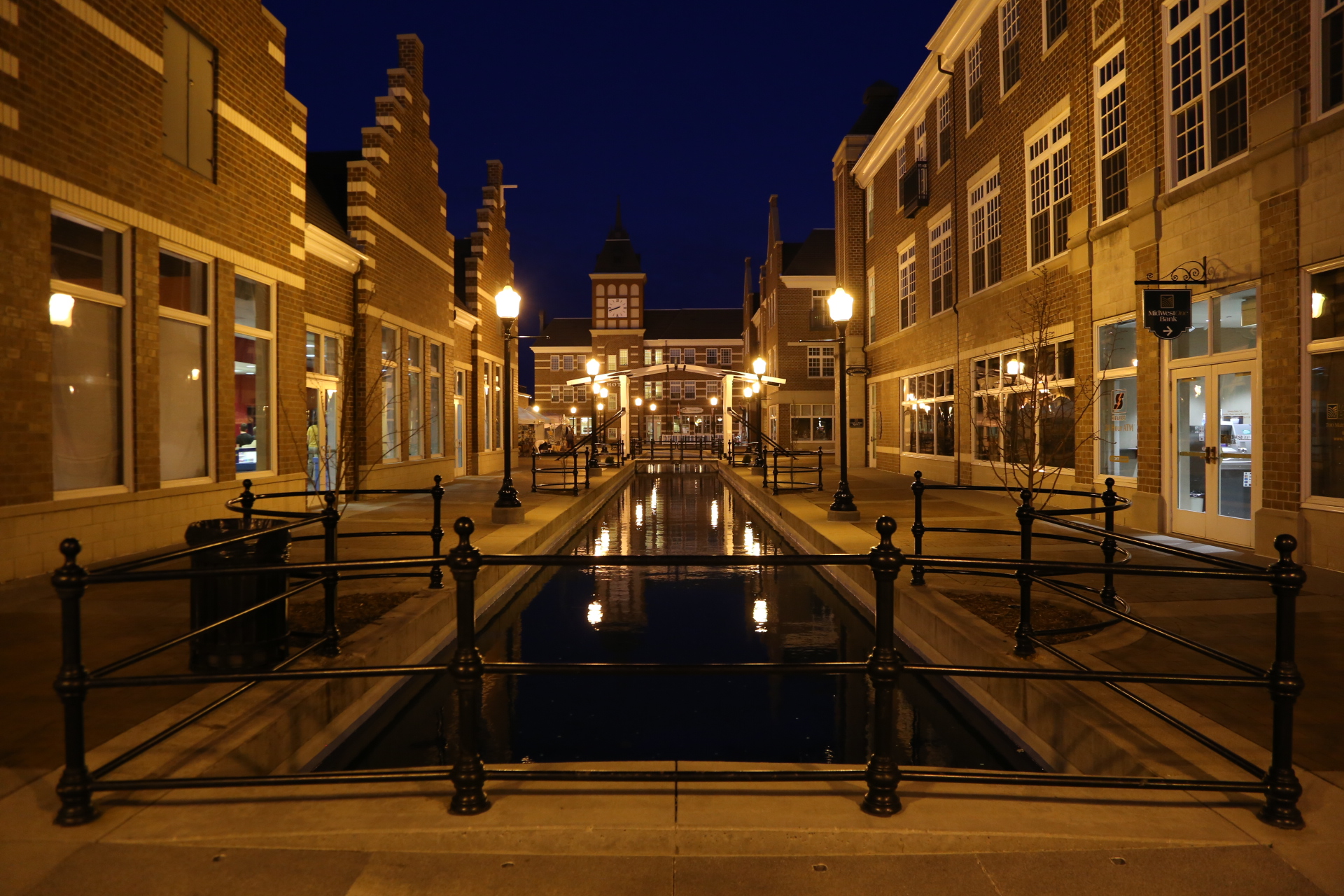
Wendy and I live in a small Iowa town that was settled by a few hundred Dutch immigrants in 1847. They were led by their pastor, H.P. Scholte, who was an amazing mix of theologian, businessman, lawyer, artist, and visionary. He and his followers fled Holland because the state church of the Netherlands had imprisoned Scholte for not towing their doctrinal line. Scholte and a group of his faithful followers pooled their resources, purchased land from the United States in the new state of Iowa, and created a town from Scholte’s vision. He had the town completely mapped out and zoned before the group even arrived. Scholte gave his new town the name Pella, after a “city of refuge” in the country of Jordan where early followers of Jesus fled Jewish and Roman persecution. Pella, Scholte said, would be a “city of refuge” for the fleeing Hollanders.

To this day, our little town of Pella continues to hang on to the “city of refuge” moniker that was given to us by our town’s founder. Long ago the residents of Pella forgave native Holland for its persecution.  We now embrace our Dutch heritage to a fault. Scholte’s resentment towards the Netherlands also tempered later in life. He even sought to return to his native land as an ambassador of the U.S. (it never came to be). Still, residents of Pella find refuge of a sort in our little town. It is common for children raised in Pella to return and raise their families here. Life in Pella is relatively quiet. The pace is slow compared to most places, and the residents still cling to values that other places seem to have abandoned. And, we have great food and a Tulip Time Festival every May (Join us May 5-7!).

Today I’m thinking about the concept of refuge. Today’s chapter speaks of refuge from revenge in ancient legal terms. Still, the broader concept has equal merit. We all need a place, or places, where we can find refuge. We all need shelter from life’s storms.