Tag Archives: Anxiety

Make Up Your Mind

“But make up your mind not to worry beforehand…
Luke 21:14 (NIV)

Something new is coming.
It’s already here.
It will change everything.
And everyone can feel it.

Artificial Intelligence.

Everyone is talking about AI. It’s everywhere.

Among clients and business circles, it is the number one topic of conversation.

What can AI do for us?
How will AI transform our business?
What does the future look like with AI?

And whenever something comes along with the transformative power to change “normal” life as we know it, it stirs within human minds…

Doubts.
Fears.
Anxieties.

What is going to happen to me?

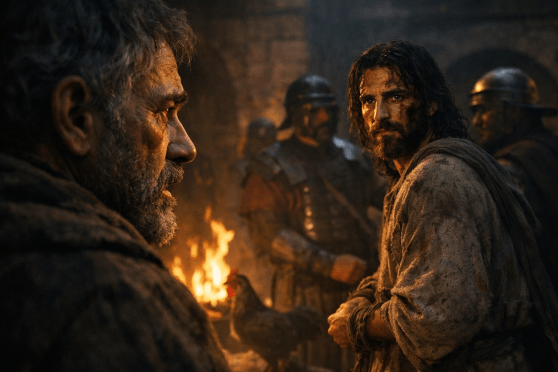
On April 26th I’ve been asked to give a presentation about the story behind our little town of Pella, Iowa. It’s a fascinating story about one man, a Pastor in the Netherlands, who was suffering persecution from the religious establishment for not submitting to their authority — not unlike how I described Jesus in yesterday’s post/podcast. He also saw little or no long-term future for the poor among his flock in the social and economic class system of Europe.

He envisioned creating a little town on the Iowa prairie in America. It would be a “city of refuge” to which he and his flock could flee, be free, and find hope and a future.

He called the town he envisioned Pella.

He called it this for a very good reason.

Today’s chapter is fascinating. Jesus prophetically tells His disciples about the future. It’s not a pretty picture.

The Temple they’re standing in will be reduced to rubble.
Armies will surround Jerusalem.
They will be seized and persecuted.

And when they see that happening Jesus said,

“Then let those who are in Judea flee to the mountains, let those in the city get out, and let those in the country not enter the city.”

What most people don’t know is that around 65 A.D. the political tension in Jerusalem was at an all-time high. The Jewish people were rebelling against the Roman Empire. The Roman Empire was persecuting both Jews and Christians. In 70 A.D. Rome will surround and destroy the city and the Temple — just as Jesus said.

A prophet rose among the Christians in Jerusalem.
The prophet told all the Christians to flee to a city of refuge near Galilee.
They packed up their lives.
They fled with everything they had.

Historians have suggested that had they not done this, Christianity may have ended with the Roman destruction of Jerusalem.

The city to which they fled was called Pella.

As Jesus speaks to His disciples about this time of transformative turbulence, change, and even hardship He tells them something interesting.

“Make up your minds beforehand not to worry…”

Trust God.
Trust the Story God is authoring.
Remember the sparrows.
Your heavenly Father’s got you.

And faith is a mindset.
It’s planted long before it’s harvested.
It’s prepared well before it’s needed.
It’s a choice I make long before I see armies gathering.

In the quiet this morning, this reminds me of the fears and anxieties that come with any transformative time of change and turbulence.

Like AI changing life as we know it.

“Make up your minds beforehand not to worry,” Jesus said.

The believers fled to Pella, just as Jesus prophetically suggested they should in today’s chapter. They found a city of refuge. They lived and flourished.

The persecuted believers in the Netherlands fled to the Iowa prairie and created their own city of refuge called Pella. They lived and found hope and a future. I know. I live here amidst their legacy.

As David (who knew a thing or two about transformative life-change) wrote in his lyrics to Psalm 62:

Trust in him at all times, you people;
    pour out your hearts to him,
    for God is our refuge.

Psalm 62:8 (NIV)

I’ve seen a lot of change in life in my 60 years.

Man walking on the moon.
The advent of the personal computer.
The internet connecting the world.
The phone in my hand with more computing power than the technology that put man on the moon.

And now… AI.

I don’t know how it’s going to transform life and business.

But I’ve made up my mind beforehand not to worry.

I know where to run.

Faith isn’t the absence of chaos.
It’s knowing where to go when the chaos comes.

If you know anyone who might be encouraged by today’s post, please share.

Promotional graphic for Tom Vander Well's Wayfarer blog and podcast, featuring icons of various podcast platforms with a photo of Tom Vander Well.
These chapter-a-day blog posts are also available via podcast on all major podcast platforms including Apple, Google, and Spotify! Simply go to your podcast platform and search for “Wayfarer Tom Vander Well.” If it’s not on your platform, please let me know!
An orange square icon featuring an open book illustration in white.

Without Words

Wives, in the same way submit yourselves to your own husbands so that, if any of them do not believe the word, they may be won over without words by the behavior of their wives…

Always be prepared to give an answer to everyone who asks you to give the reason for the hope that you have….
1 Peter 3:1, 15 (NIV)

In my upcoming book I share the story of how as a young man I believed with certainty that I was supposed to become a pastor, and how God made clear that He had purposed for me a quirky career analyzing business phone calls (a la “This Call May Be Monitored”).

My mother was greatly disappointed by the abrupt change in my vocational trajectory. My mother was a sweet lady. She was never given to overt confrontation. She was, however, an expert at letting her concerns made known through what she thought were subtle messages that we as her children could see coming a mile away.

As least once a year, sometimes more often, my mother would wait for us to be having an enjoyable casual conversation.

“Are you ever going to go back to ministry?” she would ask quietly.

Only, it really wasn’t that quiet. She asked the question repeatedly. It was always the same question. She never heard my answers above the din of her own internal fear.

I know my mother loved me. I know she was proud of me. I also know she had her heart set on me spending my career in vocational ministry. I don’t think she ever shook her angst that perhaps I was outside of God’s will. I think she loved having a son who was a preacher.

And boy, did she remind me. Again. And again.

My mother was not alone. Along my life journey, I have observed many well-intentioned parents perpetually express their spiritual concern for their adult children to their adult children. It comes in many different forms.

The annual Christmas gift of a Bible or the latest, bestselling devotional, testimonial biography, or that popular Christian movie.

[cue: Children’s eye roll]

The letter (or email) of concern because “you just have to know how I feel” or, “What we believe.”

Children: “Seriously, do you actually think I don’t know how you feel?”

The passive aggressive comments, questions, and not-so-casual asides that get slipped into almost every conversation.

Followed by hurt and wonder when the adult children, inexplicably, don’t seem to want to hang out all the time.

Today’s chapter begins with a statement that creates such surface angst and outrage in modern culture that the principle of what Peter is getting at is easily lost. He starts by telling wives who are followers of Jesus to submit to their husbands “so that they may be won over without words.”

“Without words…”
Behaviors that speak louder than words.
Life example that shows the way like metaphorical bread crumbs.
Trusting God with the soul of my loved one — and recognizing that my fear may say more about my faith than about their future.

What’s often lost in the cultural outcry of Peter’s encouragement is that Peter isn’t singling out women or wives. He is calling on everyone who is a follower of Jesus to be an example of Jesus to those in their circle of influence “without words.”

Slaves (2:18)
Husbands (3:7)
All of you (3:8)

Peter then goes on to write what is a well-known and well-worn instruction:

“Always be prepared to give an answer to everyone who asks you to give the reason for the hope that you have…”

But the context that Peter has established is that a person is asking me the reason for the hope that I have ibecause my life, my behavior, my relationships, and my example have made them curious…

…without using words.

The wise teacher of Ecclesiastes said, “there is a time to speak, and a time to be silent.” (Ecclesiastes 3:7)

When our daughters were young, it was time for me to speak. I taught. I answered. I guided.

When they became adults, it was time for me to learn silence.

They know what I believe. They grew up in my home.
They know desire for them to believe. I made my heart known long ago.
They know they can always talk to me. They bring it up when they’re ready.

In the meantime, I continue to walk my own journey. I pray for them. To Peter’s instruction, I remain ready and available to assist and provide as needed. To answer when asked. To speak when spoken to. Otherwise, I do my best to continue to model the spiritual life and relationship with Jesus that I would love for them to experience…without words.

And then, in the quiet, I surrender to Jesus any notion I have that their relationship with Him has to look exactly like the relationship I have with Him. I surrender my desire for their relationship with Him to be exactly what I desire for it to be. I let go of my desire to think that their stories should look like my story, or the story I would write for them if I was God…if I was in control.

And, that’s the point Peter is getting at.

I’m not in control of others whether it’s a boss, spouse, parent, friend, or child. I don’t write their stories. I don’t know the story God is authoring in their stories, nor has God ever asked me to be a co-author.

He asks me to love.
He asks me to pray.
He asks me to live as such an example that he can leverage that as a theme as He writes their own personal, individual stories.
He asks me to be ready with words —
but to live so faithfully that the question comes before the speech.

If you know anyone who might be encouraged by today’s post, please share.

Promotional graphic for Tom Vander Well's Wayfarer blog and podcast, featuring icons of various podcast platforms with a photo of Tom Vander Well.
These chapter-a-day blog posts are also available via podcast on all major podcast platforms including Apple, Google, and Spotify! Simply go to your podcast platform and search for “Wayfarer Tom Vander Well.” If it’s not on your platform, please let me know!
Icon of an open book on an orange background

Presence, not Possession

If what a prophet proclaims in the name of the Lord does not take place or come true, that is a message the Lord has not spoken. That prophet has spoken presumptuously, so do not be alarmed.
Deuteronomy 18:22 (NIV)

It is New Year’s Eve day. It’s always a special day for Wendy and me as we celebrate our anniversary. This year marks 20 years, which makes it all the more special. There are many things I love about having our anniversary on New Year’s Eve. We always have the evening off, along with the rest of the world. I have never forgotten my anniversary. And, it’s already a fun day of celebration, so celebrating our marriage just adds another layer to the festivity.

On the day of our wedding, I remember feeling another apt connection with holiday. Old things pass away. New things come.

New Year’s by its nature causes a pause for reflection on what has been. It prompts a view toward the road ahead with a curiosity for the path forward and what lies ahead. There will be many prognosticators and prophets throughout media today making proclamations and predictions.

In a very similar fashion, the Hebrews in our chapter-a-day trek through Deuteronomy stand at a precipice in time. The wanderings are over. The promised land awaits on the other side of Jordan. Moses’ message in the entirety of Deuteronomy is a father’s heartfelt preparation for his children and grandchildren regarding what has been, and what is yet to come. Today’s chapter whispers wisdom for me on this precipice of time between 2025 and 2026.

The chapter begins with a reminder that the tribe of Levi will not inherit land once the dust settles in the promised land. No acreage. No deed. No security blanket tucked into a filing cabinet. “The Lord is their inheritance.”

It’s a strange economy, isn’t it?
Everyone else gets fields and vineyards. The priests get… presence.

Not everything valuable can be owned. Kingdom economics never promises deeds, dividends, or earthly security. Jesus asks me to forego earthly treasure and invest in valuables of an eternal kind . Some callings are intentionally unmoored. Some lives are meant to be lean so they can listen. As the year exhales its last breath, that question hovers: What have I been holding that was never meant to be possessed?

Then Moses turns, almost urgently, to forbidden shortcuts.
No divination.
No sorcery.
No necromancers knocking on the thin wall between worlds.

Why? Because uncertainty makes us desperate—and desperation makes us sloppy lovers of truth. When the future feels slippery, we reach for anything that promises control. The people are warned not against curiosity, but against counterfeit certainty. And counterfeit certainty comes cloaked in many guises.

Ouija boards.
Retirement funds.
Spreadsheets and infographics.
Fundamentalist rulebooks.
Charismatic leaders.
Preachers with prophesies.

Counterfeit certainty seduces me into believing I don’t need faith..

But, without faith, it is impossible to please God.

And here—oh here—is the heart of the chapter. Moses promises his Hebrew progeny that God will not leave them guessing.

“The Lord your God will raise up for you a prophet like me from among you… You must listen to him.”

This is not a vague spiritual shrug. It is intimacy offered. God knows their fear—that unmediated holiness once made them beg at Sinai, “Do not let God speak to us or we will die.” And so God leans closer, softer, clothed in flesh and voice and language they can bear.

The true prophet, Moses says, is not measured by charisma or confidence, but by fidelity. Does the word align with the character of God? Does it call people forward into faithfulness rather than sideways into fear? Does it come true—not because it was clever, but because it was obedient?

False prophets, by contrast, speak with urgency but no authority. They rush. They seduce. They promise control instead of covenant.

And that brings me back to New Year’s Eve. To the road forward and what awaits Wendy and me the 21st year of our marriage. What awaits this nation in the celebration of 250 years. What awaits our globe in the approximately 2026th journey around the sun since Jesus’ own earthly journey.

Moses wisdom whispers to my soul at this precipice of time.

Presence. Faith. Listening with discernment.

As the year turns its page, that distinction matters. Not every loud voice is a true one. Not every confident prediction deserves my trust. And not every silence means God has stopped speaking—sometimes it means He is waiting to be trusted.

If you know anyone who might be encouraged by today’s post, please share.

Promotional graphic for Tom Vander Well's Wayfarer blog and podcast, featuring icons of various podcast platforms with a photo of Tom Vander Well.
These chapter-a-day blog posts are also available via podcast on all major podcast platforms including Apple, Google, and Spotify! Simply go to your podcast platform and search for “Wayfarer Tom Vander Well.” If it’s not on your platform, please let me know!
Logo of Bible Gateway, featuring an open book icon against an orange background with the text 'Bible Gateway' below.

Words for “The Anxious Generation”

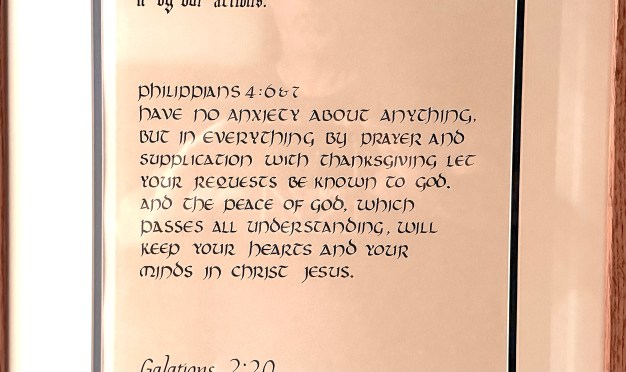
Do not be anxious about anything, but in every situation, by prayer and petition, with thanksgiving, present your requests to God. And the peace of God, which transcends all understanding, will guard your hearts and your minds in Christ Jesus.
Philippians 4:6-7 (NIV)

The paper is so old that it’s faded. I noticed just the other day how it’s showing the wear of time. There’s a large square section that is discolored because of the years it hung where a small ray of sunlight hit it in the same place every day.

When you open the door to my office there hangs a framed piece of paper with three verses written out in three different types of calligraphy. The three verses are among the first I memorized as a young man, and they have spiritually served me more than I can capably communicate along my earthly journey. They were a gift from my brother who was taking a calligraphy class when I was graduating from college almost forty years ago.

One of the verses is from today’s chapter, the verses I pulled and placed/mentioned at the top of today’s post/podcast.

One of the most popular and influential books in the past year or two has been The Anxious Generation by Jonathan Haidt. It tells of the research showing that today’s emerging generation is experiencing unprecedented levels of anxiety and mental illness. I’ve been doing a lot of thinking and meditating on this for multiple reasons. First, the customer and market research my company, Intelligentics, is doing on a regular basis reveals the same things on which Haidt is focused in his scholarly research. Also, I have so many young people in my life, my family, and my circles of influence whom I love deeply. My desire for them is not to be mired in anxiety, but to experience the “peace of God, which transcends all understanding.”

In the quiet this morning, I found myself wondering what I would say to this anxious generation. I think Paul has some sage wisdom for those whose minds and hearts are open to receive it.

First, Jesus is alive, very real, and He offers true hope. Paul experienced a transforming relationship with Christ. I have experienced and am experiencing it, too. If you pay attention, you’ll notice that the world very much wants to dismiss, diminish, and deny this. If you’ll give Jesus a chance, I believe you’ll experience a transformation, as well.

Next, there is power in the words I pasted above. I memorized them. Countless times, in the midst of anxiety, I have recounted them, whispered them, prayed them, thought them, and stated them over and over and over again. I beg you to give it a shot. Can’t hurt, might change your life.

Paul goes on to tell the believers in Philippi “I have learned to be content whatever the circumstances. I know what it is to be in need, and I know what it is to have plenty. I have learned the secret of being content in any and every situation…I can do all things through Christ who strengthens me.” Our world and our economy are based on a system designed to keep us perpetually discontent with ourselves, our lives, our bodies, our circumstances, and our status. It does this because it wants to sell us things and keep us always reaching for the never-ending “more” it claims to offer that will make us happy. There are forces at work that want you to be anxious. Anxious and fearful people are much easier to manipulate and control. Paul, however, discovered a secret that Jesus taught:

“If you decide for God, living a life of God-worship, it follows that you don’t fuss about what’s on the table at mealtimes or whether the clothes in your closet are in fashion. There is far more to your life than the food you put in your stomach, more to your outer appearance than the clothes you hang on your body. Look at the birds, free and unfettered, not tied down to a job description, careless in the care of God. And you count far more to him than birds.

“Has anyone by fussing in front of the mirror ever gotten taller by so much as an inch? All this time and money wasted on fashion—do you think it makes that much difference? Instead of looking at the fashions, walk out into the fields and look at the wildflowers. They never primp or shop, but have you ever seen color and design quite like it? The ten best-dressed men and women in the country look shabby alongside them.

“If God gives such attention to the appearance of wildflowers—most of which are never even seen—don’t you think he’ll attend to you, take pride in you, do his best for you? What I’m trying to do here is to get you to relax, to not be so preoccupied with getting, so you can respond to God’s giving. People who don’t know God and the way he works fuss over these things, but you know both God and how he works. Steep your life in God-reality, God-initiative, God-provisions. Don’t worry about missing out. You’ll find all your everyday human concerns will be met.

“Give your entire attention to what God is doing right now, and don’t get worked up about what may or may not happen tomorrow. God will help you deal with whatever hard things come up when the time comes.”
Matthew 6:25-34 (MSG)

Finally, Paul told the believers to confine our thoughts to things that are:

True
Noble
Right
Pure
Lovely
Admirable
Excellent
Praiseworthy

The next time you find yourself scrolling, I encourage you to ask how much of what you see, hear, and read as you scroll fits these adjectives. May I humbly and respectfully suggest that perhaps there is cause-and-effect at work creating “the anxious generation.”

I was a young man when the personal computer came to be. When I was in high school we had a “computer club” for the very first time in history. The very first thing that I learned in computer club, the first lesson everyone was taught about this emerging technology was this: “Garbage in, garbage out.”

Underlying all of Paul’s sage instructions is a simple truth:

I have free will. I choose.

As a young man I chose to believe words written on what is now faded and discolored paper that reminded me daily not to be anxious but that instead I could pray, be thankful, and seek after things of eternal worth. They served me well. They will serve you well, too.

I’m praying for you.

If you know anyone who might be encouraged by today’s post, please share.

Promotional graphic for Tom Vander Well's Wayfarer blog and podcast, featuring icons of various podcast platforms with a photo of Tom Vander Well.
These chapter-a-day blog posts are also available via podcast on all major podcast platforms including Apple, Google, and Spotify! Simply go to your podcast platform and search for “Wayfarer Tom Vander Well.” If it’s not on your platform, please let me know!
An old and faded piece of paper framed on a wall, featuring three verses written in different styles of calligraphy.

Best of ’24: #9 Antidotes to Fear

Antidotes to Fear (CaD Lk 21) Wayfarer

“But make up your mind not to worry beforehand how you will defend yourselves.”
Luke 21:9 (NIV)

Every January, as a new year launches, the media is filled with thoughts, predictions, meditations, and prognostications regarding what the new year will bring. I would summarize the thoughts, feelings, and outlook for 2024 that I’ve been reading and hearing to be gloomy at best and at worst, doomsday. We have war in Ukraine, war in Israel, tension in Taiwan, terrorism, political division, protests, rampant crime, struggling economy, immigration crisis, and in America an election year that everyone is dreading.

Along my life journey, I’ve observed that we human beings are emotional creatures. Fear is a useful emotion, for politicians in particular, but also for media and business, especially drug companies. Fear short-circuits reason.

Over the past few years, I’ve tried to counter-balance my fear with both facts and faith.

Factually, we live in the best of times for human existence. The folks over at Gapminder.org have been diligently documenting these facts for years. They continue to shout like a voice in the wilderness, and I find it so fascinating that no one wants to listen. I’ve found their information and resources a welcome and useful antidote to the doom and gloom pedalers everywhere. I encourage you click on the graphic below and take a quick perusal of all the facts they present on the linked page on their site. In fact, I encourage you to go through it and the other resources they provide on their site on a regular basis.

When I absorb the facts and then survey the wholesale fear and anxiety in the world around me, I’m struck by two things. First, I’m struck at humanity’s ability, no matter how good things get, to perpetually muck things up. Second, I’m struck at humans’ almost addictive need for fear. It’s ironic and downright Shakespearean.

The other counter-measure I personally employ against fear is faith. As a disciple of Jesus, this isn’t optional. It’s a direct and repeated command from Jesus. If I really believe what I say I believe, then no matter what happens in the world around me I know that all things are moving toward a conclusion that is already determined by Jesus who ultimately has both me and everything else ultimately in His eternal control.

In today’s chapter, Jesus provides His own prophetic doom and gloom outlook for how things are going to eventually go down. As I’ve repeatedly written in my posts over the years, prophecy is layered with meaning. Some of the events Jesus prophesied in today’s chapter happened just 40 years after His death and resurrection. Others have yet to happen. But three times amidst His prophetic outlook of wars, persecution, upheaval, and cataclysmic events Jesus tells His followers not to be frightened or anxious. I particularly loved the words He used in the verse I quoted at the top of the post: “Make up your mind not to worry beforehand….”

Fear is an unconscious emotional reaction. Faith is a conscious Spirit response.

In the quiet this morning, I’m getting ready to sit down with Wendy and read the weekly TGIF column at the Free Press by Nellie Bowles. It’s her witty and sarcastic recap of the news this week which we’ve come to look forward to every Friday morning. We need it because when laughter is combined with faith and facts, it makes a powerful anti-fear cocktail.

If you know anyone who might be encouraged by today’s post, please share.

These chapter-a-day blog posts are also available via podcast on all major podcast platforms including Apple, Google, and Spotify! Simply go to your podcast platform and search for “Wayfarer Tom Vander Well.” If it’s not on your platform, please let me know!

“Just Believe”

Overhearing what they said, Jesus told him, “Don’t be afraid; just believe.”
Mark 5:36 (NIV)

In our daily prayer together, Wendy and I try to regularly be grateful and recount all of the ways God has blessed us. I don’t do it because “giving thanks” is a command. I do it because when I stop for a moment to consider how blessed we really are, I am both grateful and humbled. And, I need a daily dose of gratitude and humility as much, if not more, than the small bowl of vitamins and supplements Wendy puts in front of me each morning.

As I get close the back-end of my sixth decade on this earthly journey, I have a lot of life and life experiences upon which to reflect. There are numerous waypoints on life’s road where my family and/or I have faced failures, tragedies, challenges, loss, struggles, and needs. In fact, I’m quite sure I have quite enough stories to take up a good part of your day and bore you to tears. After all, Jesus Himself told His followers, “In this world you will have troubles.” We all have them, don’t we?

In today’s chapter, Jesus confronts a trio of individuals in their very different but very real troubles. The first is a demon-possessed man, the second is a woman with a medical condition in which she had been bleeding for twelve-years which made her ritually unclean perpetually and a social outcast. Then there is a leader of the local synagogue who had a young daughter near death. Struggle and suffering come in many forms in this life, don’t they?

As Jesus is walking with the anxious father, word arrives from his household that his daughter had passed away. It was too late. Jesus happened to still be speaking with the woman healed from her bleeding. He was telling her that her faith had been the agent of her healing as He overhears the bad news the father just received. Jesus turns to the grieving father and immediately says, “Don’t be afraid; just believe.”

What a learning moment. The woman’s faith had precipitated her miraculous healing. The father had seen it. He was standing right there. Now Jesus calls on him to have the same kind of faith that the woman had. Not just the faith for healing from a medical condition, but faith to bring his daughter back from death.

One of the things that I’ve discovered along my life journey is that faith grows with every waypoint on life’s road in which one is required to trust and God is faithful in providing, healing, and delivering. By regularly recounting those waypoints and expressing gratitude for God’s faithfulness I am strengthening my faith for the unknown troubles, tragedies, and challenges that may be awaiting me just ahead. With them continually fresh in my memory it’s much more likely that I will react to the next challenge by hearing Jesus words, “Don’t be afraid; just believe” in my heart with faith and reacting with faith rather than fear.

By the way, Angel Studios’ production The Chosen did a masterful job of portraying the events in today’s chapter of the woman’s healing and the little girl’s rising. If you have a few minutes, it’s worth a watch. (There’s a link to it in the description of today’s podcast episode).

If you know anyone who might be encouraged by today’s post, please share.

(Never) Abandoned

(Never) Abandoned (CaD Ezk 10) Wayfarer

Then the glory of the Lord departed from over the threshold of the temple and stopped above the cherubim. While I watched, the cherubim spread their wings and rose from the ground, and as they went, the wheels went with them. They stopped at the entrance of the east gate of the Lord’s house, and the glory of the God of Israel was above them.
Ezekiel 10:18-19 (NIV)

When I was a young child, I went through an intense period of time when I never wanted to be separated from my mother. I have very specific memories of freaking out, especially in situations that were strange to me. In one instance, my mom was attending some kind of meeting at place I’d never been before. She dropped me off in the room for child care. Once again, the room was unfamiliar, the people were unfamiliar, and my mother was no where to be seen. I felt abandoned. I had such an intense emotional meltdown that they found my mother to take me home. I’m glad to say that this period eventually ended. I grew into an independent and self-assured child.

Feelings of loneliness, isolation, and abandonment are very real sources of human fear and anxiety.

In today’s chapter, Ezekiel’s vision in Solomon’s Temple continues. First he saw all of the idolatry that was taking place inside the Temple. Next he saw a man placing a mark on the forehead of those faithful to God, while six others destroyed anyone who didn’t have the mark. Now, Zeke watches as the “glory” (e.g. radiance, presence) of God rises and leaves the temple.

It’s important to note that in the ancient Near East, there this was a common theme across pagan religions, as well. There is a genre of lamentation literature around gods who abandon their temples, which then explains why enemies were able to conquer, plunder, and destroy the structures. Ezekiel’s audience would have heard/read today’s vision of God’s glory leaving the temple and they knew exactly what it meant. Without God’s presence, the temple will be plundered and destroyed.

As I meditated on this in the quiet this morning, I couldn’t help but think of a message I gave earlier this summer. One of the things that I’ve observed along my spiritual journey is how often I hear people praying for God to be present and asking for God to come and show up. I have come to believe that these prayers channel the same human fear of abandonment and I felt as a child and that Ezekiel’s vision is tapping into. When bad things happen, we feel that God must have abandoned us. When we feel anxiety or loneliness was assume it’s because God isn’t present.

If I really believe what I say I believe, then this is the most illogical and unreasonable assumption to make and prayer to pray. In my message I talked about three types of God’s presence.

In Colossians 1:17 Jesus is described as both the agent of creation but also that “He is before all things, and in him all things hold together.” If Jesus is the force holding all things together (i.e. I’m thinking of what Physics refers to as Dark Matter), then David is correct in the lyrics of Psalm 139 when he declares there isn’t a place in the universe where you can flee from His presence.

Second, Jesus told His followers on the night of His arrest that He would be leaving, but would never abandon His followers. His Holy Spirit would indwell us and make us part of the circle dance of oneness between Father, Son, and Spirit. As a disciple of Jesus, the Spirit of God lives in me. My body is a temple. He said He’ll never leave me or forsake me. Praying for God to be present makes no sense in this context.

I have come to believe that what many people mean when they ask God to come and be present is that they want to experience and outpouring or a filling of God’s Spirit. There are many examples of this in both the Great Story and even in current events. It happened just a year ago on a college campus in Kentucky. I have personally found it an important distinction to remember that an outpouring of God’s Spirit doesn’t mean He wasn’t there before and suddenly arrived. I refer back to the previous two points. There are, however, times when His omnipresence is infused with momentary power and intensity.

In a time when anxiety and fear are wreaking havoc on the mental health of people in our culture, I find Jesus’ assurances of living in me, never leaving me, and being present wherever I find myself in the universe to be a source of comfort, confidence, and peace. I simply have to have the faith to believe it and the discipline to acknowledge it in each and every moment.

For anyone interested in the extended version, here it is:

If you know anyone who might be encouraged by today’s post, please share.

The Whole Crowd

The Whole Crowd (CaD Ezk 7) Wayfarer

“‘They have blown the trumpet,
    they have made all things ready,
but no one will go into battle,
    for my wrath is on the whole crowd.”

Ezekiel 7:14 (NIV)

It was about 25 years ago that I first heard of the “2G” principle of investing. I was speaking with one of the executives of a client of ours. This individual was not only in a high-paying position but also came from a very wealthy family and had an apocalyptic view of where current events were taking us. It was around the time of Y2K when many believed that all of the world’s computers would stop working when the date changed from 1999 to 2000. There was a lot of fear being stirred up, and my client told me they had switched their investing to the “2G” principle: Gold and Guns. Gold because when you don’t have an electronic record of the money in your accounts, then the only tangible currency is precious metals. Guns because when society breaks down like Lord of the Flies those with guns will be more likely able to protect themselves and their loved ones and survive.

Over the years, I’ve known others who have adopted the 2G investment strategy. As a natural pessimist, I certainly get the logic and the appeal of preparing for a doomsday scenario. If I had a lot of money to invest I might be more tempted to join them, but I don’t so I’m hoping that doomsday’s imminent threat will fizzle out like Y2K.

For the people of Ezekiel’s day, the prophecies of imminent doom were more tangible. The region was at a crossroads, smack dab in the middle of multiple empires, both established and emerging. The Assyrians and already decimated the area and the Babylonians were currently holding sway. Ezekiel was preaching to his people living in exile, so they’d already experienced their own version of doomsday. Ezekiel’s messages proclaimed that there was more, and worse, to come for his people.

Throughout history, those who are rich have a greater chance of riding out doomsday scenarios like war and famine. The 2G investment principle is predicated on it. What’s fascinating about God’s message through Ezekiel in today’s chapter is both his audience and his message. When the Babylonians took Zeke and others into exile, they took the best and the brightest, the rich and the powerful. It was a shrewd strategy. King Nebuchadnezzar knew that rebellion in vassal states required intelligence, power, and money. By bringing the educated, powerful, and wealthy back to Babylon, he reduced the chance that those left in Jerusalem would rebel while giving him and his people access to some of the greatest minds among his enemies from which he and his people would benefit.

One of the overarching themes in Zeke’s message was that God’s judgment was going to fall on “the whole crowd.” Rich and poor, educated and uneducated, white collar and blue collar, urbanites and farmers, there wasn’t a demographic who was going to escape the doomsday that was coming. For the 2G-type investors of their day, Ezekiel writes:

“‘They will throw their silver into the streets,
    and their gold will be treated as a thing unclean.
Their silver and gold
    will not be able to deliver them
    in the day of the Lord’s wrath.
It will not satisfy their hunger
    or fill their stomachs,
    for it has caused them to stumble into sin.”

In a few minutes, I will sit down with Wendy to have our coffee and peruse the headlines over breakfast. There’s a lot of talk about World War III and various doomsday scenarios. Both sides of the political aisle like to whip up a frenzy of fear about doomsday scenarios should their opponents win in November. It’s the same every four years.

As I meditate on these things this morning, I am also mindful of the reality that history is marked by dark periods. We are certainly not immune from bad things happening and having to live through periods of intense difficulty. As a disciple of Jesus, however, I find that His teaching was consistently about faith, contentment, and trust. He repeatedly tells me not to worry, not to be anxious, and not to be afraid. The doomsday that Ezekiel proclaimed happened just as predicted. Jerusalem was besieged and people starved before the entire city was destroyed and burned along with Solomon’s temple. But I also know the end of the story. God’s promises to the exiles were also fulfilled. They returned to Jerusalem and rebuilt the temple.

In the same way, I know the end of the Great Story. After a period of intense doom, there is a new beginning of Light, and Love, and Life. The further I get in my spiritual journey, the more I’ve come to realize that being a disciple of Jesus is about letting go of my fear, anxiety, and worry about the former while embracing my whole-hearted faith in the latter.

If you know anyone who might be encouraged by today’s post, please share.

An Ambitiously Quiet Life

An Ambitiously Quiet Life (CaD 1 Thess 4) Wayfarer

make it your ambition to lead a quiet life: You should mind your own business and work with your hands, just as we told you, so that your daily life may win the respect of outsiders and so that you will not be dependent on anybody.
1 Thessalonians 4:11-12 (NIV)

This past winter and spring our kids and grandkids lived with us for over four months here in Pella, Iowa (see featured photo). They were transitioning back to the States after five years of living in Edinburgh, Scotland.

One day our grandson Milo asked his mother, “Is Papa famous?”

Taylor laughed and asked what prompted the question.

“Everybody knows him,” he replied.

Welcome to a small town, young man.

I have been doing a lot of online networking for business in recent weeks, having Zoom calls with people from all over North America. As we introduce one another, I find that the vast majority of them live in cities, with most of them located on either one of the coasts. When I tell them I live in a little town in Iowa, they often react with surprise. Some will even ask me about it, typically stating that they couldn’t do it and it would be too boring for them. This is often followed by a statement about needing a lot of things to do and places to go for activity and entertainment.

Fascinating.

In today’s chapter, Paul shifts the theme of his letter from personal matters (e.g. discussion of Timothy’s visit and his longing to make a personal visit of his own) to instructions in life for the spiritually young Jesus followers in Thessalonica.

Paul’s first instruction was to avoid sexual immorality. Keep in mind that generally loose sexual mores and attitudes were a hallmark of ancient Greece. As one historian described sex in the city of Athens (where Paul is writing this letter):

“Relationships between men of the same age were not at all common: rather, the standard same-sex relationship would involve an adolescent boy and an older man. Men also used female prostitutes regularly: sex could be bought cheaply in a city that was home to countless brothels, streetwalkers and female ‘entertainers’.”

Paul urges the Thessalonian believers to produce the fruit of self-control in sexual matters for their own spiritual, and physical, well-being.

He then goes on to repeat his encouragement that I wrote about in yesterday’s post, which is to increase in love “more and more.” But he then adds a general instruction for daily life, encouraging them to make it their “ambition” to lead a “quiet life.”

make it your ambition to lead a quiet life: You should mind your own business and work with your hands, just as we told you, so that your daily life may win the respect of outsiders and so that you will not be dependent on anybody.

It was about thirty years ago that these verses first leaped off the page and into my soul. This passage has become somewhat of a guide and a mission. I didn’t think about it when I moved to a small town from the city where I’d spent most of my life, but in retrospect, I find that it was definitely synergistic.

Yes, my life is quieter. I can get anywhere I need in ten minutes or less. I like seeing people I know everywhere. I love that people know my name when I walk into the store, a restaurant, or the pub. I love that the guys at George’s Pizza begin making our pizza as soon as they see our car pull up on Sunday. I love not dealing with the traffic, crime, and cost of a city. And, despite not having all the available activity and entertainment options of a city, Wendy and I never lack things to do nor do we ever feel that our entertainment tank is on empty.

Paul’s words to the Thessalonians have been instrumental in my life journey. I have made it my ambition to lead a quieter life, and it has greatly increased the quality of my life. Please don’t hear what I’m not saying. I don’t think one has to live in a small town to have a quieter life. I’m just saying that I have found it to personally be part of my own journey in being ambitious for more quiet.

And, in the quiet this morning, I find myself thinking of the ambitions I observe in our adventure-seeking, adrenaline-addicted, YOLO culture. I observe individuals who are so ambitious for non-stop activity and entertainment that they never have time to figure out why their relationships aren’t working, their soul feels so empty, or their minds are so constantly afraid and anxious. The answers to those things require contemplation, introspection, and conversation (and I would add prayer), and those things require quiet.

If you know anyone who might be encouraged by today’s post, please share.

Silent and Deadly

Silent and Deadly (CaD Gal 5) Wayfarer

Let us not become conceited, provoking and envying each other.
Galatians 5:26 (NIV)

There are mornings on this chapter-a-day journey when I experience synchronicity. Something in the chapter dovetails perfectly with something else that I’ve read, seen, or considered in the recent past. It happened this morning with regard to a commencement address published in the Free Press by Robert Parham, an Assistant Professor at the University of Virginia’s McIntire School of Commerce. Entitled, “To the Class of 2024: You are All Diseased,” it is well worth the few minutes it will take to read it in its entirety.

The following section, in particular, caught my attention:

You live in the wealthiest country in the history of the world, yet you feel economic anxiety. The late Charlie Munger summarized it succinctly: “The world is not driven by greed. It’s driven by envy.” And in this era of instantaneous communication networks and social media, envy has been put into hyperdrive.

But envy has also been transformed and rebranded. Once a deadly sin, it became a virtue. We call it “fairness” (or sometimes “equity”) now and concentrate our attention on all the ways the world is “unfair.” Mostly the ways that lead to others in our peer group having more than us.

The world is unfair. Deeply so. It’s just that you’re the lucky ones. You won the birth lottery.

In today’s chapter, envy makes the list of “works of the flesh” that stand in opposition to the “fruits of the Spirit” that should be increasingly evident in the lives of every follower of Jesus. Envy makes the list along with things like sexual immorality, orgies, witchcraft, and drunkenness. Along my life journey, I’ve observed that it’s much easier for the institutional church to hone in on the ugly, scandalous, and often public sins like being an addict, sexually immoral, or a member of the local Wiccan coven. Envy is a “pretty” sin that gets both overlooked and ignored. I don’t remember one lesson or sermon in 40 years that took a good look at how destructive envy can be to both our spiritual health and our very lives.

If you’ve had your head buried in the sand somewhere, it should be noted that we are living in a culture with epidemic mental health issues in children and young adults. Drug overdoses, suicides, anxiety, and depression have increased to epidemic proportions. Researcher Jonathan Haidt traces this epidemic back to the introduction of the iPhone with a front-facing camera and an app called Instagram. Suddenly, everyone is taking selfies and publicly sharing their lives with the masses hoping to get “likes,” comparing themselves to others, and wanting to become “influencers.” It’s all driven by envy. We don’t compare ourselves to the billions of human beings who would love to live in our affluent sneakers. We compare ourselves to those few who have more than us: more likes, more fame, more followers, more money, more fashionable clothes, more prestige, more influence, prettier homes, cuter kids, etc.

I think we’re overdue in giving envy the attention it deserves. It is destroying the spiritual and mental health of an entire generation. The institutional church is silent on the subject.

I confess to you that one of the reasons that this topic resonates so deeply within me is because I have always struggled with envy. I didn’t even realize it until I started to really dig into my own flaws and weaknesses as an adult. One of the things I recognized in myself was the fact that I would feel intense antipathy, even hatred, towards certain people. In most cases, it was people I didn’t even know personally. As I confessed this and began digging into why I had these intensely negative feelings towards people I didn’t even know (and were probably really nice people), I realized that underneath it was envy. I wanted to experience the fame, influence, popularity, and prosperity these individuals had experienced. It was silly. It was nonsense. I feel awkward even admitting it, but it’s the truth. I had to repent of my attitude and address the envy that had crept into my heart and brain, silently influencing me for years without me recognizing it.

In the quiet this morning, I find myself grateful for the abundant blessings I enjoy every moment of every day without even thinking about it or stopping to recognize how good I have it. I am reminded of the unhealthy ways envy affected my life without me even recognizing it. I am motivated to continue to reduce the influence that the “works of the flesh” had in my life and increase the “fruits of the Spirit” in my motivations, my thoughts, my words, and my actions.

If you know anyone who might be encouraged by today’s post, please share.