Tag Archives: History

Maturing Takes Time

“Say to the Israelites: ‘Any man or woman who wrongs another in any way and so is unfaithful to the Lord is guilty and must confess the sin they have committed.’”
Numbers 6:6-7 (NIV)

About a month ago, our grandson Milo attended worship with us among our local gathering of Jesus’ followers. Milo is seven and is an explosive bundle of unbridled, kinetic, little-boy energy. Underneath the exterior of all that normal physical energy lies one of the softest, most genuinely open hearts I’ve ever experienced in a boy his age. He asks big questions. He thinks big thoughts. He feels big feels. And, he has a passionate curiosity about God.

What was fascinating to watch that morning was the mixture of both. He was, at once, a squirrelly little boy who at times needed discipline and a sweet little boy who was genuinely trying to understand and interact with the divine. He was so eager to go up for the bread and cup that Yaya had to hold him back multiple times while it was still being prepared.

He is a boy. He is maturing. It takes time.

Today’s chapter is one of those chapters with which casual modern readers struggle. It has to do with purity and fidelity, but it is easy for the surface of the text to produce intense negative reactions. At the heart of it, God is repeating what He has already established in the priestly instruction manual, Leviticus. If God, who has delivered them from slavery, is going to live in the midst of the Hebrews, if He is going to travel with them through the wilderness and lead them to the Promised Land, then there are going to be some ground rules. He is a holy God and they have to learn to be clean from the outside in. That means dealing with their bodies, their relationships, their emotions, and their consciences.

Specifically, what God deals with in today’s chapter is:

Skin diseases (physical issues on the outside)
Interpersonal conflicts (issues within the community)
Marital infidelity (issues within the marriage covenant)
Jealousy (intense negative emotions that may cause unjust harm)
Guilt and honesty (being spiritually honest with God and self)

The example given for the last three is man who feels jealous and believes his wife has been unfaithful. He has no proof and she is adamant about her fidelity. He is to bring her to the priest. The priest is to bring her before the Lord. A test is rendered to determine if she is being honest, in which case she is cleared – or if she is lying, in which case she is potentially cursed.

By modern standards it seems harsh and politically incorrect. For human civilization in the ancient near east, this was a radical, revolutionary, giant leap of social development. In that day, and that culture, a man would typically just follow his jealousy into violence against both his wife and the man he suspected she slept with. There would be no accountability and no civil recourse. There was no law. In most small people groups there was no developed or official justice system. It was a king-of-the-mountain free-for-all in which the powerful beat, clawed, and killed their way to the top. Those who were weak simply tried to survive the powerful doing whatever they wanted however they wanted because no one would stop them.

Now Yahweh, the miraculous God who freed these weak, just surviving Hebrews from slavery to the king-of-the-mountain Egyptian empire, is telling them “You must do things differently.” He is a holy God. He demands people to be clean outside-in.

But they’re not.

They have physical ailments they can’t control.
They have conflicts and misunderstandings.
They have intense negative emotions that lead to conflicts.
They are at times not honest with themselves or others.

In each case, God provides a process for addressing each of these.

This is a human civilization in the toddler stage of development. They throw tantrums. They can’t control their emotions, and they are constantly acting out of their sheer emotion. They aren’t educated, can’t write, can’t read, and have been slaves for generations.

Father God is doing what good parents do with toddlers. He is teaching them one step at a time.

“Let’s wash your hands.”
“Give her back her ball. It’s hers, not yours.”
“Now, say you’re sorry and give her a hug.”
“Did he really hit you? I didn’t see anything.”
“Are you lying to me?”

In other words, like Milo trying to understand why he can’t just run up in his excitement and grab the bread and cup, this fledgling group of humans is slowly maturing.

It takes time.

In the quiet this morning, I find myself meditating on the reality that human civilization has matured over thousands of years. We are more educated and more developed than any generation in the history of human civilization. Yet, with all we’ve learned…

We have physical ailments and tragedies we can’t control.
We have conflicts and misunderstandings.
We have intense negative emotions that lead to those conflicts.
We are at times not honest with ourselves or others.

Lord, have mercy.

Obviously, there’s something broken we can’t fix ourselves.

And, Father God is still holy. He still demands we be clean outside in.

So, He sacrificially made a way for that to happen. It’s a gift.

I just have to receive it.

If you know anyone who might be encouraged by today’s post, please share.

Promotional graphic for Tom Vander Well's Wayfarer blog and podcast, featuring icons of various podcast platforms with a photo of Tom Vander Well.
These chapter-a-day blog posts are also available via podcast on all major podcast platforms including Apple, Google, and Spotify! Simply go to your podcast platform and search for “Wayfarer Tom Vander Well.” If it’s not on your platform, please let me know!
A gathering of people in worship, reflecting a sense of community and spirituality.

Echoes in the Ancient

“Appoint Aaron and his sons to serve as priests; anyone else who approaches the sanctuary is to be put to death.”
Numbers 3:10 (NIV)

Just a few weeks ago, Wendy and I had the rare joy of having our entire family with all our grandkids together in our house for a couple of days. Having all three grandchildren on my lap was deep, unspeakable joy. As they grow and begin to ask all of the simple-yet-profound questions that children ask, I have found myself reminded of both the wonder and perplexity with which wee ones engage this world.

Whenever this chapter-a-day trek wanders into the ancient texts, I am struck once again by how foreign and strange some of the stories, events, and commands. It is not unlike a child encountering strange stories for the first time. At least, I have always endeavored to approach them with the curiosity and wonder of a child. Too often, I find that the texts quickly dismissed, discarded, and ignored as only the closed, educated mind of adults do. After all, Jesus said that unless I change and become like little children I’ll never see the Kingdom of Heaven.

As always, I am also reminded that these stories and events happened when human civilization was in the toddler stage of development. The Hebrews were recently freed slaves, uneducated, ignorant, and without any knowledge of how to do life on their own as a people and a nation. Despite it being a people and a time that is strange to me, I see echoes of my own stories and experiences on this life journey. That is where I typically find the applicable lessons.

In today’s chapter, there continues to be a whole lotta countin’ going on, thus the title of the book Numbers. Today’s counting was of the Hebrew tribe of Levi who are appointed by God for being priests and caring for God’s traveling tent temple called the Tabernacle. Two echoes from my own human experience.

I was in my teens when the tragic reality of human abduction and trafficking came into the spotlight. Sadly, it started with a boy delivering papers in my hometown of Des Moines. It happened just a year or two after I had been a paperboy in the same city. Suddenly milk producers began putting ads for missing children on milk cartons trying to bring awareness to the cause. Of course, parents used this daily reminder children were given as they poured milk on their Fruit Loops. Parents warnings to be safe, walk with friends, and get home on time were immediately followed with, “You don’t want to end up on a milk carton.”

First, right up front in the chapter God reminds the people of the tragic story of Nadab and Abihu. They were sons of Aaron who, right after God’s instructions for worship were given in the book of Leviticus almost immediately refused to follow the instructions and died. God then goes on to repeat, not once but twice, that if anyone other than Moses, Aaron, or the Levites approach the holy Tabernacle where God’s presence resided, they would end up like Nadab and Abihu. Father God is warning His toddlers, “You don’t want to end up like Nadab and Abihu!”

Which leads to my second observation. The mystery, pageantry, and spectacle of the ancient worship served for helping this fledgling humanity to understand the chasm between human and the divine. It provided metaphors for understanding spiritual concepts deeper than could be fathomed at the time. Surprisingly, there is no real record of Jesus giving detailed instructions for worship. Even the sacraments of Communion and Baptism come with nothing more than a command to do them and very little detail. Jesus never instructed that church buildings be erected, He gave no order for worship, did not say one word about choirs, music, pews, altars, robes, head coverings, or the like. Yet, over time Jesus’ followers adapted and adopted a vast range of worship traditions. As a child, I was told that the altar of our Methodist church was “holy” like the Tabernacle in today’s chapter and only our Reverend could approach and stand there. They stopped short of the Nadab and Abihu warning of sure death for doing so, but the sentiment was definitely there.

Of course, Jesus said nothing about those things. In fact, the only thing He really said about a “sacred” building was when He told His followers that the Temple would be reduced to rubble. This leaves me to observe and wonder why over the centuries, Jesus’ followers have adopted ancient religious traditions that Jesus Himself did not command nor instruct. Personally, I have come to the conclusion to embrace the reality of different traditions in all of their forms. I learn things from all of them, both positive and negative, and in the end I must follow God’s Spirit within me to inform my own personal choices.

Nevertheless, in the quiet this morning I see echoes of the same humanity wrestling with the same relationship with the divine today that the Hebrews were wrestling with in today’s chapter. It echoes the reality that I continue to work out the mysteries of father-son relationship with my own dad the same way I was doing so when I was a toddler. It just looks different today than it did fifty years ago as I and our relationship have developed with time.

If you know anyone who might be encouraged by today’s post, please share.

Promotional graphic for Tom Vander Well's Wayfarer blog and podcast, featuring icons of various podcast platforms with a photo of Tom Vander Well.
These chapter-a-day blog posts are also available via podcast on all major podcast platforms including Apple, Google, and Spotify! Simply go to your podcast platform and search for “Wayfarer Tom Vander Well.” If it’s not on your platform, please let me know!

Uncomfortable History

Masters, provide your slaves with what is right and fair, because you know that you also have a Master in heaven.
Colossians 4:1 (NIV)

Late last week Wendy and I read a fascinating article by Coleman Hughes in The Free Press entitled What American Students Aren’t Taught About Slavery. Hughes taught a class for Freshmen at the University of Austin on the legacy of slavery. What he discovered was that most of his students were completely unaware that slavery existed outside of the United States. Hughes writes:

What I learned from teaching slavery to a group of college freshmen is that many (perhaps most) American kids graduate high school believing, falsely, that slavery happened only in America. Their minds are not blown by rehearsing the brutal facts of American slavery. Their minds are blown to learn that other brutal slaveries also existed all over the world.

Being a life-long student of the Great Story has forced me to grapple with the uncomfortable realities of history. Slavery is one of them. One of the things I’ve observed along my journey is that many people are wholly dismissive of the Great Story because its contents contain bits that are uncomfortable and politically incorrect to modern sensibilities and ideologies. I consider this tragic and it makes me sad.

Slavery was a common part of every day life and society throughout the world in the first century. There was no emancipation because human civilization itself had yet to mature to a place that it could even envision a world without slavery. Expecting Paul and the early Jesus Movement to have taken up the emancipation of slavery as a cause is like me expecting my granddaughter, Sylvie (who turns 3 this week!) to be able to have an intellectual conversation with me about string theory.

In his letter to the believers in Colossae, Paul addresses six distinct people groups within the local gathering there: wives, husbands, children, fathers, slaves, and slave masters. For some reason, those who added chapter and verse numbers to the text put five of the six into chapter three, and started chapter four with the sixth and final group: slave masters. Yet another reminder that sometimes the chapters and verses get in the way of understanding the text. (BTW, a dear friend gifted me The Lectio Bible for my birthday this year. It provides the text without the chapter and verse numbers and it is a fascinating way to read it!)

What is fascinating as I meditated on the text is that Paul expects the faith of the believers in Colossae to inform their behavior within the context of their life realities. And, in fact, based on the teaching of Jesus and practicing the love of Jesus, the Jesus Movement was already moved the ball forward on societal understanding in ways that were revolutionary and radical for their times. When the believers gathered together to share a meal, worship, and learn together everyone was welcome at the table together: Male and female, Jew and Gentile, slave master and slave. This practice, radical for its time, was a seed that would germinate, take root, and eventually bear fruit in the emancipation movement.

In the quiet this morning, as I meditate on these things, I’m reminded that while the societal realities of history are forever changing, the principle of what Paul is addressing with the Colossian believers never changes. My faith in Jesus should make a difference in my behavior and relationships, especially with my immediate and most intimate of human relationships with family, friends, neighbors, coworkers, and colleagues. Paul tells slaves to serve well and with integrity, considering that they are ultimately serving “Lord Christ.” He then tells slave masters to treat slaves with fairness and justice because they also have a “master” in heaven, Christ, to whom they are ultimately accountable and answerable.

I also find myself regularly in circumstances and in relationships that I don’t control. In the midst of it, as a disciple of Jesus, I am expected to be accountable to control the things that I can: to be loving in my words and actions, to be servant-hearted and forgiving towards others, and to conduct myself with integrity.

If you know anyone who might be encouraged by today’s post, please share.

These chapter-a-day blog posts are also available via podcast on all major podcast platforms including Apple, Google, and Spotify! Simply go to your podcast platform and search for “Wayfarer Tom Vander Well.” If it’s not on your platform, please let me know!

One-Side Correspondence; Two-Sides Love

For I wrote you out of great distress and anguish of heart and with many tears, not to grieve you but to let you know the depth of my love for you.
2 Corinthians 2:4 (NIV)

My mother was an only child. I’ve observed along my journey that there is a unique dynamic common among mothers and children when it’s just the two of them. My grandmother saved all of the letters that she received from my mother. When she died, my mother kept those letters. They’re now sorted chronologically in an archival box in the room next to my office.

Having one side of an on-going correspondence is a bit like a puzzle when it comes to understanding the story behind the letters. There are things that are obvious and things that are a mystery. Then there are the additional contextual layers of time, location, and historic events. I have read my mother’s letters from around the times of historic events like Kennedy’s assassination to find out if she recorded any thoughts or feelings about the events. To be honest, there wasn’t much there. She was a young mother with twin toddler boys. Her world was pretty small and her attention understandably focused on two little rug rats.

As I read today’s chapter, I thought about my mother’s letters. It’s amazing to me that people forget that the “book” that we know as 2 Corinthians is not a book at all. It’s a letter. It’s a correspondence between Paul and the believers in Corinth and it was written to address the particular circumstances and situations between them at that time.

As with my mother’s letters, we only have Paul’s side of the story. We also don’t have all of the letters. There were at least four letters he wrote to the believers of Corinth. There may have been others. Only two survived, adding even more mysteries of context. As I meditated on the first few chapters of this second of the two surviving letters, one thing is certain: It was a complete soap opera.

From Paul’s first letter, which we trekked through on this chapter-a-day journey last January, we know that there was conflict and all sorts of internal trouble within the local gathering of Corinthian believers. There was conflict of loyalties between the Corinthian believers and different leaders. There were domestic problems among the group like an incestuous relationship and other believers who were so mad at one another that lawsuits were being filed. On top of that were divisions among the Corinthians over matters of conduct like whether it was proper for a follower of Jesus to buy and eat meat from the local market that had started out as a sacrifice in one of the local pagan temples. Then there was the socio-economic divisions in which the wealthier members of the gathering were hanging out in a clique and shunning the poor, lower class brothers and sisters. To top it all off, some people were stuffing themselves at the weekly potluck and getting drunk on the Communion wine.

Paul was off sharing Jesus’ message with other people in other places. So, hearing what was going on, he wrote letters to address the soap opera. In these first two chapters of 2 Corinthians he is addressing where he’s been, what news he’s received in return, and his feelings about the Corinthians and their situation. What becomes clear from today’s chapter is that he loves these people a lot. He feels for them like a spiritual father. He is emotional about it.

I’ve learned along my journey that love has two sides. Sometimes I need the hard side of love to hone the rough edges and blind spots in my imperfect character and behavior. Other times, I need the soft side of love to comfort and encourage me in my discouragement and despair. In his letters to the believers in Corinth, Paul obviously delivered both.

In the quiet this morning, I’m reminded that life is often a soap opera. I can’t help the reality of that. I’m an imperfect human being living with other imperfect human beings in a fallen world. Also, most of the time I have limited knowledge of what other people have experienced or are going through at any given time. It’s like having one-side of the correspondence and there are letters I’m missing. The only thing I do control is my own thoughts, words, and actions towards others. Will I approach and respond to others with thoughtful love and concern like Paul did with his friends in Corinth, or will I respond with judgment, derision, and dismissal?

I pray that others find in me the former.

If you know anyone who might be encouraged by today’s post, please share.

These chapter-a-day blog posts are also available via podcast on all major podcast platforms including Apple, Google, and Spotify! Simply go to your podcast platform and search for “Wayfarer Tom Vander Well.” If it’s not on your platform, please let me know!

Arrogant Luxury

Arrogant Luxury (CaD Matt 3) Wayfarer

“[The one who comes after me], his winnowing fork is in his hand, and he will clear his threshing floor, gathering his wheat into the barn and burning up the chaff with unquenchable fire.”
Matthew 3:12 (NIV)

We live in very unique times. In fact, I believe that we are in one of the most tectonic shifts in the history of Christianity. It is, perhaps, the most significant shift since the Reformation. Mainline denominations who held sway over the lives of millions of believers around the globe for centuries have imploded and fractured into countless factions. Some are still in the process of their implosions. After Covid, millions of regular and semi-regular church goers simply stayed home and never returned to church. Here in rural Iowa where Wendy and I live, small churches have shut their doors in record numbers. The institutions of academia and government around the globe, many of them founded by Christians and/or Christian principles, have become hostile to Christianity, some claiming it to be the worst thing that ever happened to humanity.

I can see the result of these things in our own local gathering of believers. It broke with the mainline denomination it was part of for a century and a half. Suddenly it is a melting pot of sincere and committed Jesus’ followers from widely diverse denominational backgrounds and theological bents. It is forcing our gathering to reexamine all of our beliefs and ritual practices. I personally consider this a great thing.

A while back I ran into someone among our gathering who came from a slightly different theological bent than our gathering’s tradition. One of the differences, which I consider to be minor, is in the interpretation of the prophesies of the end times such as in the book of Revelation. My friend was obviously disturbed, believing their interpretation to be the one true way of belief, and the gathering’s traditional interpretation to be heretical. These are the kinds of hair-splitting that created so many denominational silos over the centuries. In my mind, we can no longer afford such proud luxuries of smug assuredness in our interpretation of theological non-essentials, especially as it relates to the prophetic.

The truth of things is that humans have a long tradition of getting God’s prophecies wrong. The greatest, most educated theological minds of Jesus’ day had interpreted that God’s Messiah would be a warrior King (wrong) who would wipe out Rome (wrong), establish Himself as a human monarch on a throne in Jerusalem (wrong), and rule over all the kingdoms of this world (wrong).

In today’s chapter, we meet John the Baptist. John was the fulfillment of multiple prophesies. He was a herald and forerunner of Jesus as proclaimed by Isaiah. The prophet Malachi, in the final prophetic words of the Great Story before the time of Jesus, said that the prophet Elijah would return. In the story of Elijah, he did not physically die but was taken up to heaven. So, naturally all of the great theological minds in Jesus’ day with the proud luxury of espousing and proclaiming their learned thought were assured that Elijah himself would physically return in bodily form. They were all wrong.

Of John, Jesus said, “Truly I tell you, among those born of women there has not risen anyone greater than John the Baptist.” Yet as I pondered John’s words in the chapter it was obvious that John had his own preconceived notions about who Jesus would be and how things would play out. John expected Jesus to immediately be the superhero Messiah in his cape, wiping out the bad guys and ushering in a new world order. In fact, in just a few chapters John will find himself unjustly languishing in Herod’s prison. The fact that Jesus has not dashed into a phone booth, come out wearing his cape, given Herod his just desserts, and freed John from prison has John at the point of having a crisis of faith.

In the quiet this morning, I find myself asking a simple question. If the prophet whom Jesus said was greater than everyone was completely wrong in his interpretation of the ancient prophesies and what Jesus’ life, ministry, and mission would actually be, then how can I possibly afford to be smug in my own personal theological interpretations? History proves that humans regularly get the prophetic wrong. God through Isaiah made it clear that God’s ways are not our ways and His ways and thoughts are infinitely higher than our own. Why on earth would I conclude that I am one-hundred percent right and other learned, sincere believers are one-hundred percent wrong in their interpretation of how things will play out at the end of the Great Story? Why on earth would I judge them and let our differences of opinion divide us?

The further I get in my journey, the more humbly I find myself simply choosing not to ascend theological hills to die on. I find myself more open than ever to loving and learning from my brothers and sisters in our diversity of thought, experience, and backgrounds. I am more convinced than ever that we are entering a time when believers will find unity in the essentials of our faith and learn to appreciate and learn from our diversity in the non-essentials. The world has shunned the arrogance, division, and pride of our forebears in their denominational kingdoms. Perhaps we can learn to be the Light of the World in our humility and love for one another in the age to come.

If you know anyone who might be encouraged by today’s post, please share.

These chapter-a-day blog posts are also available via podcast on all major podcast platforms including Apple, Google, and Spotify! Simply go to your podcast platform and search for “Wayfarer Tom Vander Well.” If it’s not on your platform, please let me know!

Connected

Connected (CaD Matt 2) Wayfarer

After Jesus was born in Bethlehem in Judea, during the time of King Herod, Magi from the east came to Jerusalem and asked, “Where is the one who has been born king of the Jews? We saw his star when it rose and have come to worship him.”
Matthew 2:1-2 (NIV)

I am currently in the process of preparing a message I’ve been asked to deliver among my local gathering of Jesus’ followers on Good Friday, the Friday before Easter when we remember Jesus’ arrest, trials, suffering, and crucifixion. As I’m preparing the message, I’ve been reminded about all of the connections between the unholy trinity of worldly kingdoms who put Jesus through a kangaroo court of six different trials. By the way, I’m quite certain that Matthew the Quirk would certainly have noted that six is “man’s number” (Rev 13:18).

Along my spiritual journey, I’ve come to learn that everything is connected. Christian mystics have pushed into this concept for centuries and I have come to embrace it the more I seek the things of God on this chapter-a-day journey and find it to be true. God wove it into the fabric of the universe. Even science has stumbled onto it and call it Quantum Entanglement. Though I prefer Einstein’s description. He theorized it and called it, “Spooky Action at a Distance.”

In today’s chapter, there are all sorts of connections for those who have eyes to see them.

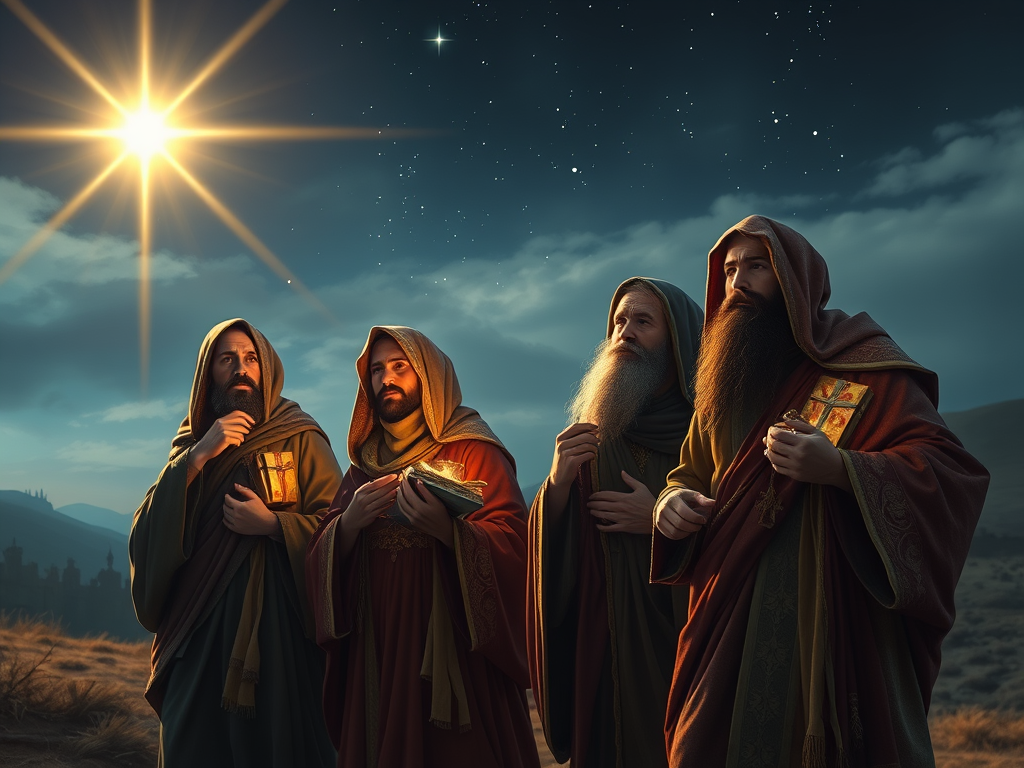
In the opening verses, Matthew records that “Magi from the East” came to Jerusalem because they’d seen a star signifying that the “King of the Jews” was born. Haven’t you ever wondered what was up with these wise guys? Keep in mind that at the end of the previous chapter, Matthew the Quirk calls out three (there’s that number again) key events in the history of the Hebrews: Abraham the father of their faith, David their Great King and the line through whom the Messiah was prophesied to come, and the exile of the Hebrews in Babylon roughly 400-500 years before the events in today’s chapter.

The Babylonians, the ancient Persians, and the peoples of Mesopotamia were known throughout the world at that time for their mastery of mathematics, science, and astronomy. When God sent His people into exile in this land of their enemies, He didn’t tell them to fight those enemies, He told them to bless them. God told the prophet Jeremiah write to the exiles in Babylon, urge them to settle in, make lives for themselves, and “seek the peace and prosperity of the city to which I have carried you into exile. Pray to the Lord for it, because if it prospers, you too will prosper.” Prophets like Daniel were there in Babylon and Persia, rubbing shoulders with the wisest, most learned, and most powerful people there. It stands to reason that he would have shared with them the Great Story of God, Abraham, Moses, and David. Perhaps it was even through Daniel that he spoke a prophesy (lost to history) of a star that would signify the Messiah’s birth.

Matthew the Quirk would have been absolutely enamored with the math and science knowledge of those in Persia. Why do you think he made sure to relate this particular episode of the Jesus Story?

The next connection is Herod. The Magi ask “Where is the one born King of the Jews?” Talk about asking the wrong person that question. Herod is the one with the title “King of the Jews” (even though he wasn’t a Hebrew). He was appointed by Rome. He clung to his power as “King of the Jews” and killed multiple family members including a wife and three sons to ruthlessly hold on to power. In addition, Herod has lucrative business dealings with the Jewish leaders. He’s rebuilding their Temple and making it into a palatial complex, a development deal that will make them all a fortune. The Magi’s visit signals a threat to his position, his power, and his fortune.

Having delivered their three gifts (there’s that number again – and by the way Matthew said there were three gifts not three Magi – we don’t know how many there were), God, looking out for the non-Hebrew Magi, sends an angel to warn them not to return to Herod but flee back home.

God then sends an angel to Joseph and sends him, Mary, and Jesus in to their own exile in Egypt of all places. When Herod the Great dies, they return. Matthew is quick to make the connection between Jesus being sent to Egypt and then called out of Egypt. It’s a direct connection to the entire Hebrew story we’ve just been talking about in Leviticus. God sent his people to Egypt to deliver them from famine, then delivered them out of Egypt through Moses and lead them back. Matthew sees the connection. Jesus’ life was a literal fulfillment of the entire Hebrew story. Matthew makes direct connection to this episode of Jesus’ infancy and three (there’s that number again) prophetic words from the ancient prophets.

Everything is connected.

In the quiet this morning, I’m reminded that these connections aren’t just trivial literary observations. There are spiritual truths present here that are true for me. God was at work in and through the non-Hebrew, Persian astronomers (not just in this moment, but had been at work in-and-through them five hundred years earlier during the exile). Every person I come into contact with, believer or not, is a person God loves and died for. His Spirit is at work in that person, drawing them to Himself whether they are listening or not. How might God want to use them in my life and in my story? Perhaps there is Spooky Spiritual Action at a Distance at work. Am I open to the reality that God might use the most unlikely of people to speak to me, teach me, or lead me in some way?

Not only that, but the theme of the Kingdoms of this world (Herod and the religious leaders in the Temple) in conflict with what the Kingdom of God is doing is directly connected to my every day spiritual reality. Paul described it to the believers in Ephesus:

For our struggle is not against flesh and blood, but against the rulers, against the authorities, against the powers of this dark world and against the spiritual forces of evil in the heavenly realms.

I can’t be engaged in the spiritual struggle if I don’t recognize it within and around me.

Finally, the events today surrounding Jesus’ birth are connected to His death. These “authorities” and “powers of this world” (e.g. the Herods, the Temple religious establishment, and Rome ) are one-and-the-same as the unholy trinity who will send baby Jesus to the cross in about 33 years later on Good Friday. They are direct ancestors of the kingdoms and empires of this world (government, commerce, and religion) that continue to hold sway today under the dominion of the Prince of this World, even as I daily attempt to bring the Love and Light of the Kingdom of God to earth through my words and actions in my circles of influence.

It’s all connected to me, and to you, in ways we can’t even fathom. Thanks for connecting and joining me on the journey today. Have a great weekend, my friend.

If you know anyone who might be encouraged by today’s post, please share.

These chapter-a-day blog posts are also available via podcast on all major podcast platforms including Apple, Google, and Spotify! Simply go to your podcast platform and search for “Wayfarer Tom Vander Well.” If it’s not on your platform, please let me know!

“Break This Wild Pony!”

“Break This Wild Pony!” (CaD Lev 26) Wayfarer

“‘If after all this you will not listen to me, I will punish you for your sins seven times over. I will break down your stubborn pride and make the sky above you like iron and the ground beneath you like bronze.’
Leviticus 26:18-19 (NIV)

Last week I wrote about our granddaughter Sylvie and her two-year-old willfulness. I will never forget the words of our son-in-law as he and our daughter addressed the subject of their daughter’s stubborn self-will.

“We’re going to break this wild pony!” her father proclaimed with all of the love and resolve of a parent who ultimately wants what is best for his daughter. He knows instinctively that allowing her self-centered tenacity to continue will not be healthy for her or those around her in the future.

Exactly.

We are down to the final two chapters of God’s ancient priestly manual for His ancient Hebrew people in the toddler stages of humanity. Today’s chapter reads like a father addressing his toddler in simple and direct terms.

“Trust me on this, kiddo. If you obey and do as daddy says, then things are going to be good between us. Life is going to be better and more enjoyable all around for you. If, however, you refuse to obey and continue in your stubborn, willful disobedience, then I’m afraid life is going to get extremely difficult and not at all enjoyable for you. You can learn this the easy way or the hard way. It’s your choice, but I love you and I am not going to let you get away with being a self-centered little shit-hill.”

[By the way, “shit-hills” is what my grandma Vander Well called me and my siblings after spending a week with us while our parents were on vacation in the UK. I was five. I’m sure we earned the four-letter-laden moniker. It seemed apt in this context.]

What really blew me away as I read through God’s warning to His brood of toddlers is that it is a prophetic foreshadowing of exactly what is going to happen 750 years in the future:

“I will set my face against you so that you will be defeated by your enemies; those who hate you will rule over you, and you will flee even when no one is pursuing you.”

Eventually, about 500 years after God warns His children about this in today’s chapter the Hebrew family splinters into two with the siblings factions at war with one another. That’s what happens when stubborn toddlers grow up to be pig-headed adolescents. About 200 years later, one set of siblings is conquered by the Assyrian Empire. About 150 years after that, the other set of siblings falls to the Babylonian Empire.

“When you withdraw into your cities, I will send a plague among you, and you will be given into enemy hands. When I cut off your supply of bread, ten women will be able to bake your bread in one oven, and they will dole out the bread by weight. You will eat, but you will not be satisfied.
Leviticus 26:25-26

When they were conquered, the city of Jerusalem was surrounded in a siege by the Babylon. The Hebrew people stuck inside the walls slowly used up all of their provisions until starvation set in. Jeremiah describes it in his poem of Lamentations:

All her people groan
    as they search for bread;
they barter their treasures for food
    to keep themselves alive.
“Look, Lord, and consider,
    for I am despised.”

Lamentations 1:11

God goes on in Leviticus:

“You will eat the flesh of your sons and the flesh of your daughters.” (vs 29)

Jeremiah goes on to describe this eventuality:

“Look, Lord, and consider:
    Whom have you ever treated like this?
Should women eat their offspring,
    the children they have cared for?

Lamentations 2:20

God continues in today’s chapter:

“I will scatter you among the nations and will draw out my sword and pursue you. Your land will be laid waste, and your cities will lie in ruins.” (vs. 33)

Jerusalem was utterly destroyed along with Solomon’s famous temple, one of the seven wonders of the ancient world. Both the Hebrew children of the northern kingdom and southern kingdom were taken into exile by the Assyrians and Babylonians, just as God foreshadowed.

But the bitter consequences of a child’s stubborn will and rebellion do not change the love of a parent. The hope is that those harsh life lessons will eventually lead to a change of heart. God even foreshadows this in today’s chapter.

“‘But if they will confess their sins and the sins of their ancestors—their unfaithfulness and their hostility toward me… I will remember my covenant with Jacob and my covenant with Isaac and my covenant with Abraham, and I will remember the land. Yet in spite of this, when they are in the land of their enemies, I will not reject them or abhor them so as to destroy them completely, breaking my covenant with them.’ (vss. 40, 42, 44)

It was while in exile in Babylon that the stories of Daniel, Esther, and Ezekiel take place. Just as promised, God does not abandon them in exile, but uses them to encourage His people and bear witness to their enemies. In the books of Ezra and Nehemiah, God brings His humbled and repentant children back home to Jerusalem like the Prodigal Son in Jesus’ parable. They rebuild Jerusalem and their lives.

There are even more direct prophetic connections and spiritual truths in today’s chapter than I have time and space to unpack. I hope you get the picture. In the quiet this morning I am amazed at the layers of meaning and spiritual truth contained in one chapter. God and humanity, parents and children, prophecy and fulfillment, historical events and metaphorical spiritual lessons that are applicable for me today are all crammed into 46 verses.

As I enter my day, I am reminded that no matter how old I get in physical human terms I never stop being a child of God. Each day my heart, my mind, my actions, and my choices can search out and follow my Father’s will. I can also choose to follow my own stubborn will, self-centered desires, and indulge my base human appetites. It is the same every day. It is my choice. My choices have natural consequences of both flesh and Spirit.

What choices will I make today?

If you know anyone who might be encouraged by today’s post, please share.

These chapter-a-day blog posts are also available via podcast on all major podcast platforms including Apple, Google, and Spotify! Simply go to your podcast platform and search for “Wayfarer Tom Vander Well.” If it’s not on your platform, please let me know!

Owning and Being Owned

Owning and Being Owned (CaD Lev 25) Wayfarer

The more I think I own something, the more it ends up owning me. A chapter-a-day podcast from Leviticus 25. The text version may always be found and shared at tomvanderwell.com.

“The land cannot be sold permanently because the land is mine and you are foreigners—you’re my tenants.”
Leviticus 25:23 (MSG)

According to the United States Census Bureau, 80 percent of the U.S. population lives in urban areas. I have learned along my life journey that when you live your life in urban America, there are certain realities of rural living that are completely lost on you. For example, here in rural Iowa, land is gold. It is among the most productive farmland in the entire world, and to those families who have owned it and worked it for generations it is priceless. I have learned that this didn’t just evolve over time. It’s part of the land’s heritage.

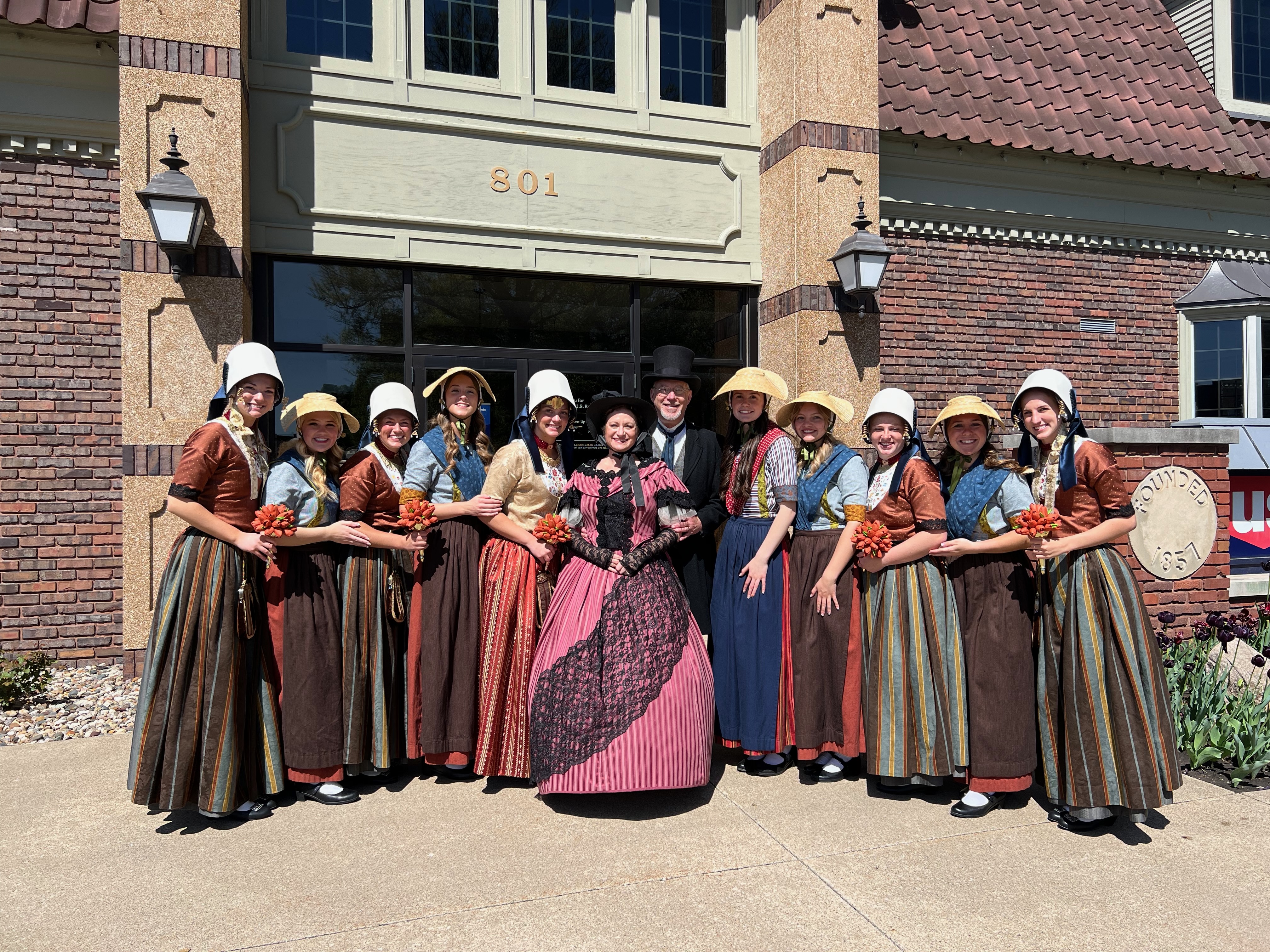
Our own small town here on the Iowa prairie was envisioned and founded by a Dutch pastor and his flock of largely uneducated farmers and peasants right as Iowa became a state and the Federal Government was selling the land. Our town’s founder had collected and consolidated his congregation’s monies in order to make it most efficient to purchase, survey, plat, and divide the land. It was a wise thing to do. However, his simple flock failed to understand the complexities, bureaucracy, and inefficiencies of a Federal Government 1,000 miles away in a time 15 years before the Pony Express. The process took so long that they accused their own pastor of being a con-man, cheat, and stealing their money and all of the land that they’d been promised. They threw him out of the pulpit.

The deeds for the land eventually arrived from Washington, the land was distributed appropriately, and tempers eventually eased. Nevertheless, I have observed that the precious, priceless land only grew in covetous value in the hearts of those who owned it. Ironically, the land became a modern-day golden calf to people who were among the most religiously devout people you’d ever meet. It seems they majored on some of the minor religious lessons of the Great Story and failed to learn one of the most major spiritual lessons it communicates. Families have divided, sometimes violently, over the land. In the farm crisis of the 1980s, some committed suicide when they realized that they were going to lose their family’s land to foreclosure. Along my journey, I have observed that these are the kinds of things that happen if and when I allow the things I own to own me.

Today’s chapter is incredibly fascinating. God continues to instruct His ancient Hebrew people regarding the way He wants them to live, and now He begins to get into some details of how He wants them to handle both land and property. God instructs them to give the land a sabbath rest every seven years, just like He gave people rest every seven days. How amazing that God viewed His creation, the land, as a living thing that He cared about. He wanted humanity to care about His creation, too, just as He has cared about them, delivered them from slavery, and is choosing to live among them.

God goes on to tell the Hebrews that every fiftieth year (the year after seven periods of seven years) is to be a year of Jubilee which is a giant reset button. Everyone takes the entire year off. People all return to their family land. Lands revert back to the families to whom they were originally allotted. Debts are cancelled. Reset, refresh, and restart.

This entire system is predicated on one major truth: God owns the land. It is His and the families to whom it has been allotted are merely chosen stewards to whom it has been given for caretaking and graciously providing for their own daily needs. Any perception they may have that the land is theirs and they own it is a mirage.

In the quiet this morning, that is the core spiritual lesson that erupted for me out of the text. It is the same core lesson that Jesus continued to teach.

“Don’t hoard treasure down here where it gets eaten by moths and corroded by rust or—worse!—stolen by burglars. Stockpile treasure in heaven, where it’s safe from moth and rust and burglars. It’s obvious, isn’t it? The place where your treasure is, is the place you will most want to be, and end up being.
Matthew 6:19-21 (MSG)

Jesus is the Alpha Point from which everything in creation flows. Jesus is the Omega Point to which everything in creation will return. Nothing that I own is really mine. This is the lesson I’ve watched Iowa farmers and families miss as they tear themselves and one another apart over the land they believe they own.

Everything that I am and have is from God. I am just a caretaker, an earthly manager, and a steward to whom everything I have has been given and entrusted. God was trying to communicate this to the ancient Hebrews. Jesus was trying to communicate the same thing to everyone.

The further I progress in my spiritual journey, the more I’ve come to understand and embrace that the only priceless thing in the grand scheme of things is the sacrificial gift of Jesus’ grace and mercy. The more I embrace this treasure, the more I see everything I am and have in perspective of the economy of God’s Kingdom.

The more I think I own something, the more it ends up owning me.

If you know anyone who might be encouraged by today’s post, please share.

These chapter-a-day blog posts are also available via podcast on all major podcast platforms including Apple, Google, and Spotify! Simply go to your podcast platform and search for “Wayfarer Tom Vander Well.” If it’s not on your platform, please let me know!

TGIF

TGIF (CaD Lev 23) Wayfarer

“‘There are six days when you may work, but the seventh day is a day of sabbath rest, a day of sacred assembly. You are not to do any work; wherever you live, it is a sabbath to the Lord.’
Leviticus 23:3 (NIV)

It has been so woven into the fabric of our lives for so long that we don’t even think about it. It is universal. It is unequivocally a basic human right.

The weekend.

It wasn’t always so. For most of human history, the toil of daily survival and commerce ground on mercilessly without fail. There was no stop. There were no weekends, or PTO, or rest from the grind. It was just as God poetically told Adam it would be after he and Eve ate the forbidden fruit:

“Cursed is the ground because of you;
    through painful toil you will eat food from it
    all the days of your life.
It will produce thorns and thistles for you,
    and you will eat the plants of the field.
By the sweat of your brow
    you will eat your food
until you return to the ground
…”
Genesis 3:17-19 (NIV)

And so, the painful toil had been going on for the ancient Hebrews all the days of their lives. As slaves in Egypt, they toiled seven days a week, 52 weeks a year, every year of their miserable existence in chains.

Then God showed up.

God introduced Himself to Moses, delivered them from Egypt, and is now instituting a fresh start with them. He is going to live with them at the center of their camp. He is going to teach them a new way of living in community with Him and with each other.

I’ve observed along my life journey that God gets generally characterized as a tyrannical killjoy. I’d like to refute that generalization by offering as Exhibit A today’s chapter. For the record, God has laid down plenty of rules to live by so far. The most repeated rules have been don’t commit child sacrifice and don’t have sex with your own family members. Other rules include don’t drive your daughter into prostitution. Then there’s If you’ve got a festering sore, you might want to spend some time in quarantine outside the camp. Oh my goodness, what a killjoy.

We get to today’s chapter and God demands of His people a series of festivals, celebrations, and it begins with A DAY OFF FROM WORK EVERY WEEK! A day of celebration and rest EVERY WEEK!

What a tyrant.

The “sabbath” was a radical social concept in 1500 B.C. Take a day off every week. Rest from your labor. Gather with your loved ones, your community, and with God. This pattern, by the way, had already been set when Father, Son, and Holy Spirit finished creation in six days and then took a day off to rest, celebrate, and enjoy what had been created. God is teaching His people to follow His own divine example.

But it doesn’t end with just a weekend day off. God goes on to establish annual festivals and celebrations for the whole nation to rest, gather, celebrate, mourn, and remember. Once again, NO WORK! There are eight in total when you break it down, which we’ve already learned in this chapter-a-day journey through Leviticus is an important metaphorical number. Seven is the number of completion (e.g. seven days of creation) and eight is a new beginning after the completion. So the annual festivals God ordains follow the flow of His peoples annual trip around the sun and then the beginning of a new one. God is teaching His people about the flow of life and time, and God is all about flow. It’s an essential part of who He is.

So, when we get to the end of the work week and say, “Thank God it’s Friday” we can take that literally. Sabbath was a particularly Hebrew tradition until the first Christian Roman Emperor, Constantine, learned about God’s Sabbath and decreed that the entire Roman Empire would get one day off each week. With that, what became the modern weekend was born.

By the way, the two-day weekend would not be firmly established until the 1800s in the midst of the industrial revolution. This time it was the British Empire (which had become, and remains, the largest empire in human history) that became the source of the social change. While the additional day of rest evolved over time and the lobby for it came from a host of sources, church leaders were on the front line of the crusade arguing that having Saturdays off would lead to a refreshed workforce and higher church attendance on Sundays.

So, in the quiet on this Thursday morning as I approach the end of another work week, I find myself feeling grateful for God who by His very nature enjoys rest, celebration, gathering, and festivity. I’m consciously thankful for something I have always taken for granted. I am reminded once again that the God I encounter in the Great Story stands in contrast to the killjoy tyrant that others have perceived Him to be, often twisted by humanity’s own fundamentalist religious perversions of His intended guidelines for life.

Tomorrow morning, when my eyes open and I climb out of bed, I can truly, sincerely, and genuinely utter, “Thank you God. It’s Friday.”

If you know anyone who might be encouraged by today’s post, please share.

These chapter-a-day blog posts are also available via podcast on all major podcast platforms including Apple, Google, and Spotify! Simply go to your podcast platform and search for “Wayfarer Tom Vander Well.” If it’s not on your platform, please let me know!

Ritual and Spiritual

Ritual and Spiritual (CaD Lev 22) Wayfarer

“‘The priests are to perform my service in such a way that they do not become guilty and die for treating it with contempt. I am the Lord, who makes them holy.’
Leviticus 22:9 (NIV)

As I have shared before on this chapter-a-day journey, I was raised in the Methodist church that was steeped in the “high church” liturgical tradition. Robes, candles, pipe organ, two choirs, processionals, recessionals, lectern, altar, pomp, and circumstance. Every Sunday morning was a pageant.

Along with the pageantry, I remember being taught as a child about certain things being sacred. The minister was a special individual. He was special and you treated him as such. The altar in the church was special and children weren’t to be playing around it. The pulpit, which stood higher than anything else at the front of the sanctuary was reserved for the minister giving his message. On the opposite side was the lectern which was just like the pulpit only lower. This is where the lowly common people could read from or lead in worship. Above the altar was a giant cross from which hung a candle-holder. I was taught that this was the “eternal flame” that shone at all times over the altar.

Imagine my surprise when I discovered that the “eternal flame” was just a 40-watt light-bulb that sometimes when out until the janitor replaced it.

I couldn’t help but think about all of the pageantry of my childhood worship experiences as I read today’s chapter. God is addressing the High Priest, Aaron, and his sons, and He makes it clear that the offerings and sacrifices are to be taken seriously. He warns them about the propensity for perpetual human rituals to lose their luster and become so routine that they are no longer held sacred. When that happens, God warns them, it’s easy to begin treating the whole process with contempt.

“It’s just another sacrifice, like all the other sacrifices I’ve offered every day like the day before. Whatever.”

“It’s technically supposed to be an offering without defect, but hey, I’ve seen worse. I’m sure this isn’t the first lamb with a blemish to sneak through. Won’t be the last. Plus, the guy slipped me a couple of shekels to look the other way. Whatever.”

When this attitude prevails, it empties the entire ritual of its intended meaning. The whole thing becomes profane.

After responding to God’s call on my life, I wandered from the religious, liturgical traditions of my childhood. My journey led me through very different worship traditions that weren’t at all like what I experienced growing up. I’ve experienced and participated in all kinds of worship traditions along my journey. I have some observations.

First, much of the high-church traditions that developed out of the Holy Roman Empire have nothing to do with scripture or following the teachings of Jesus. Jesus and his early followers met together in people’s houses. They shared a meal together around the table and sang songs like you do around the campfire. Other than some relatively loose leadership structure mentioned by Paul, there is nothing in scripture that hints at anything like what “church” became once Christianity became the state religion of the Roman Empire.

The Holy Roman Empire was both a church and a government, which the empire had learned over the centuries required social order. Having proclaimed itself the one-true Christian church, religion added a whole new arsenal for maintaining law and order. First, they took the existing structure of church and created an official authoritarian class (popes, cardinals, bishops, priests) who alone held the power to control God’s word, grace, and the eternal status of a persons soul. Then, with all of the financial resources of the empire, they built breathtaking churches and cathedrals that were unlike any places most people had ever imagined. Inside these opulent edifices they created the mystery, metaphor, and pageantry of ritual worship that daily reminded every day commoners that there was the sacred or “clean” (the authoritarian class) and the common or “unclean” (everybody else).

“Clean” and “unclean.” Sound familiar? The Holy Roman Empire took the basic playbook that God had established in Leviticus and updated it for the purposes of political, social, and cultural control. Leviticus, however, was given to and for humanity in the toddler stage of development, teaching fledgling humanity about basic things like what is sacred and holy, how to live in community with God and others, and being different than those who indulge their sinful nature and chase after every base human appetite without restraint.

By the time Jesus arrived, humanity was ready for something new from a spiritual perspective. Humanity had grown and matured. An age of accountability had been reached. Jesus taught His disciples that the plan after his death and resurrection was for His Spirit to pour out and indwell each and every believer. Every believer’s body would now become the temple, the cathedral, and the Most Holy Place. No longer would people come to God in some physical cathedral fixed at a central location in every town, God would go out to everyone in the world through millions of flesh-and-blood temples, enlightened with the eternal flame of God’s Spirit, interacting daily with those stuck in darkness.

The institutional church of the Holy Roman Empire recreated a worship and societal system that perpetuated the spiritual day-care we’re learning about in Leviticus. As a child growing up in the liturgical high church, I learned the same lessons God is teaching the Hebrews. I learned that God is in the church on 49th street. The sanctuary and altar are “sacred” and to be considered “holy.” The minister is a special, holy person who alone can serve Communion, who can alone stand above us all in the sacred pulpit, and who alone can share with us God’s word. I am just a common, lowly sinner who should stay away from the holy altar and be awed by the mystery of the eternal flame (pay no attention to the janitor behind the curtain getting ready to change the light-bulb to LED and save the church a few pennies).

It’s no wonder in my mind that the “the dark ages” were soon to follow, both in history, and in my own personal spiritual journey.

Still, in the quiet this morning, I find myself reminded that Jesus said He came to fulfill what God started in Leviticus, not abolish it. He was not throwing spiritual babies out with the bath water the way humans have repeatedly done throughout the history of Christianity. The mystery, metaphor, and pageantry of the liturgical high church did, and does, have important spiritual lessons for me to learn and experience. Along my spiritual journey, however, I’ve had to learn to be spiritually discerning regarding the differences between what God says and prescribes in-and-through the Great Story, and what human religious traditions have chosen to do with it.

If you know anyone who might be encouraged by today’s post, please share.

These chapter-a-day blog posts are also available via podcast on all major podcast platforms including Apple, Google, and Spotify! Simply go to your podcast platform and search for “Wayfarer Tom Vander Well.” If it’s not on your platform, please let me know!