Tag Archives: High Church

Ritual and Spiritual

Ritual and Spiritual (CaD Lev 22) Wayfarer

“‘The priests are to perform my service in such a way that they do not become guilty and die for treating it with contempt. I am the Lord, who makes them holy.’
Leviticus 22:9 (NIV)

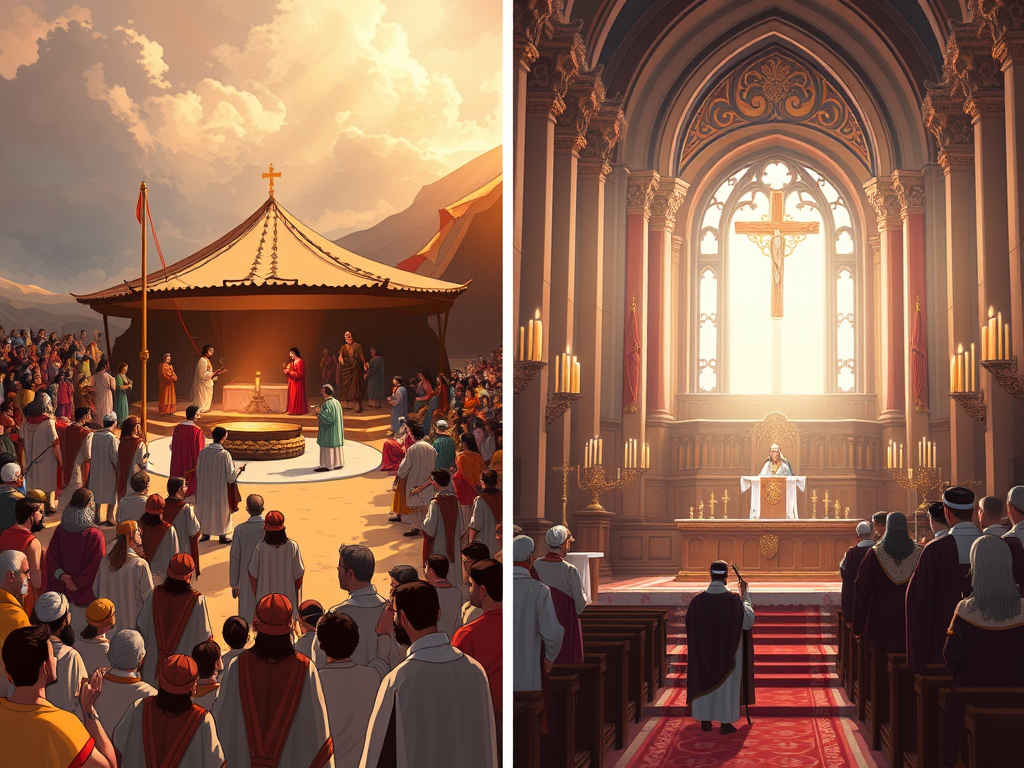
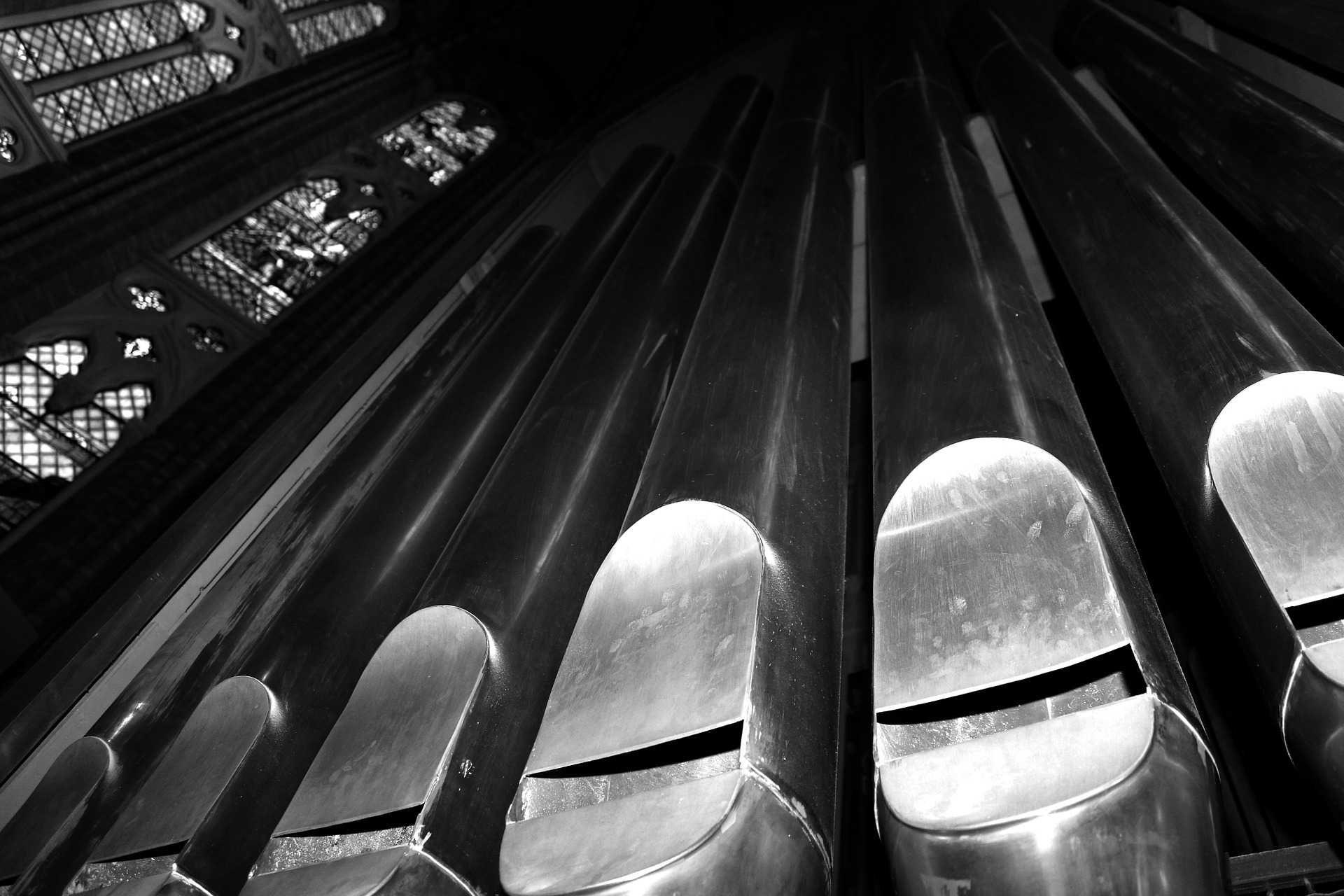
As I have shared before on this chapter-a-day journey, I was raised in the Methodist church that was steeped in the “high church” liturgical tradition. Robes, candles, pipe organ, two choirs, processionals, recessionals, lectern, altar, pomp, and circumstance. Every Sunday morning was a pageant.

Along with the pageantry, I remember being taught as a child about certain things being sacred. The minister was a special individual. He was special and you treated him as such. The altar in the church was special and children weren’t to be playing around it. The pulpit, which stood higher than anything else at the front of the sanctuary was reserved for the minister giving his message. On the opposite side was the lectern which was just like the pulpit only lower. This is where the lowly common people could read from or lead in worship. Above the altar was a giant cross from which hung a candle-holder. I was taught that this was the “eternal flame” that shone at all times over the altar.

Imagine my surprise when I discovered that the “eternal flame” was just a 40-watt light-bulb that sometimes when out until the janitor replaced it.

I couldn’t help but think about all of the pageantry of my childhood worship experiences as I read today’s chapter. God is addressing the High Priest, Aaron, and his sons, and He makes it clear that the offerings and sacrifices are to be taken seriously. He warns them about the propensity for perpetual human rituals to lose their luster and become so routine that they are no longer held sacred. When that happens, God warns them, it’s easy to begin treating the whole process with contempt.

“It’s just another sacrifice, like all the other sacrifices I’ve offered every day like the day before. Whatever.”

“It’s technically supposed to be an offering without defect, but hey, I’ve seen worse. I’m sure this isn’t the first lamb with a blemish to sneak through. Won’t be the last. Plus, the guy slipped me a couple of shekels to look the other way. Whatever.”

When this attitude prevails, it empties the entire ritual of its intended meaning. The whole thing becomes profane.

After responding to God’s call on my life, I wandered from the religious, liturgical traditions of my childhood. My journey led me through very different worship traditions that weren’t at all like what I experienced growing up. I’ve experienced and participated in all kinds of worship traditions along my journey. I have some observations.

First, much of the high-church traditions that developed out of the Holy Roman Empire have nothing to do with scripture or following the teachings of Jesus. Jesus and his early followers met together in people’s houses. They shared a meal together around the table and sang songs like you do around the campfire. Other than some relatively loose leadership structure mentioned by Paul, there is nothing in scripture that hints at anything like what “church” became once Christianity became the state religion of the Roman Empire.

The Holy Roman Empire was both a church and a government, which the empire had learned over the centuries required social order. Having proclaimed itself the one-true Christian church, religion added a whole new arsenal for maintaining law and order. First, they took the existing structure of church and created an official authoritarian class (popes, cardinals, bishops, priests) who alone held the power to control God’s word, grace, and the eternal status of a persons soul. Then, with all of the financial resources of the empire, they built breathtaking churches and cathedrals that were unlike any places most people had ever imagined. Inside these opulent edifices they created the mystery, metaphor, and pageantry of ritual worship that daily reminded every day commoners that there was the sacred or “clean” (the authoritarian class) and the common or “unclean” (everybody else).

“Clean” and “unclean.” Sound familiar? The Holy Roman Empire took the basic playbook that God had established in Leviticus and updated it for the purposes of political, social, and cultural control. Leviticus, however, was given to and for humanity in the toddler stage of development, teaching fledgling humanity about basic things like what is sacred and holy, how to live in community with God and others, and being different than those who indulge their sinful nature and chase after every base human appetite without restraint.

By the time Jesus arrived, humanity was ready for something new from a spiritual perspective. Humanity had grown and matured. An age of accountability had been reached. Jesus taught His disciples that the plan after his death and resurrection was for His Spirit to pour out and indwell each and every believer. Every believer’s body would now become the temple, the cathedral, and the Most Holy Place. No longer would people come to God in some physical cathedral fixed at a central location in every town, God would go out to everyone in the world through millions of flesh-and-blood temples, enlightened with the eternal flame of God’s Spirit, interacting daily with those stuck in darkness.

The institutional church of the Holy Roman Empire recreated a worship and societal system that perpetuated the spiritual day-care we’re learning about in Leviticus. As a child growing up in the liturgical high church, I learned the same lessons God is teaching the Hebrews. I learned that God is in the church on 49th street. The sanctuary and altar are “sacred” and to be considered “holy.” The minister is a special, holy person who alone can serve Communion, who can alone stand above us all in the sacred pulpit, and who alone can share with us God’s word. I am just a common, lowly sinner who should stay away from the holy altar and be awed by the mystery of the eternal flame (pay no attention to the janitor behind the curtain getting ready to change the light-bulb to LED and save the church a few pennies).

It’s no wonder in my mind that the “the dark ages” were soon to follow, both in history, and in my own personal spiritual journey.

Still, in the quiet this morning, I find myself reminded that Jesus said He came to fulfill what God started in Leviticus, not abolish it. He was not throwing spiritual babies out with the bath water the way humans have repeatedly done throughout the history of Christianity. The mystery, metaphor, and pageantry of the liturgical high church did, and does, have important spiritual lessons for me to learn and experience. Along my spiritual journey, however, I’ve had to learn to be spiritually discerning regarding the differences between what God says and prescribes in-and-through the Great Story, and what human religious traditions have chosen to do with it.

If you know anyone who might be encouraged by today’s post, please share.

These chapter-a-day blog posts are also available via podcast on all major podcast platforms including Apple, Google, and Spotify! Simply go to your podcast platform and search for “Wayfarer Tom Vander Well.” If it’s not on your platform, please let me know!

Connect, Disconnect, Reconnect

The whole company that had returned from exile built temporary shelters and lived in them. From the days of Joshua son of Nun until that day, the Israelites had not celebrated it like this. And their joy was very great.
Nehemiah 8:17 (NIV)

As a child growing up, I attended a protestant church that practiced what I would call a very “high church” worship. I was part of a children’s choir. We wore robes with embellishments that corresponded to the season of the church calendar, as did the minister. There was a lot of pomp and grand tradition complete with a pipe organ and stained-glass windows. The service contained many prescribed liturgical practices, responsive readings, and the like. As a child, it was at first all I knew and I found meaning in it all. As I got older, however, it all seemed a bit boring and empty. There grew within me a huge disconnect between my spirit and all the rote repetition of those high-church liturgical practices.

I became a follower of Jesus in my teens and quickly left the church of my childhood. I connected with a different church that had what I would characterize as a freer and more laid-back worship style. It felt more personal to me.

The ironic thing is, as I have continued on in my spiritual journey I have found myself reconnecting with some of the types of liturgical tradition I abandoned in my childhood. When I was a child they were empty of meaning for me, but as I have returned to them I have found them to have all sorts of rich meaning for me at this particular waypoint of life.

In today’s chapter, Ezra reads the law of Moses (the first five books of the Bible: Genesis, Exodus, Leviticus, Number, and Deuteronomy) out loud to all of the assembled exiles who had returned to Jerusalem and repaired the walls of the city. This is some 400-500 years before Jesus. The vast majority of the people were illiterate and had lived all or most of their lives in Babylon. Many had likely never heard the law of Moses read before.

In the Hebrew tradition, the law of Moses prescribed various feasts and festivals throughout the seasons of the year. The “Feast of Tabernacles” (a Tabernacle is like a tent or temporary shelter) happened in the fall and commemorated the Hebrew people camping out as they left slavery in Egypt and returned to the land of Canaan. When the Ezra and the people read about this festival, they realized that they should be celebrating it right then. So, they did.

Ezra and the people of Jerusalem reconnected to a tradition that had been lost and forgotten for centuries, and it was filled with all sorts of meaning for them.

Along my life journey, I have observed that this happens to us a lot as human beings. Traditions and rituals get abandoned and fade away as they lose meaning and connection for those of us repeating them. At some point down life’s road, we rediscover them at a point in our spiritual journey when they meaningfully connect and become spiritually filling. What was old becomes new, what was lost to us as meaningless and boring we find to have all sorts of meaning.

In the quiet this morning I am revisiting the many spiritual traditions that I have experienced in my journey. I’ve experienced a plethora of traditions from the liturgical high-church of my childhood to the Evangelical show. I have sat in the silence of a Quaker meeting house, been in the frenzy of a Charismatic revival meeting, and the energetic worship of a black Baptist church. I long ago abandoned any notion of any tradition being “right” or “wrong.” They are all simply different traditions that have something to teach me. Some connect with my spirit in ways others do not, but each tradition and ritual has something to teach me at different waypoints of my spiritual journey if I’m open and willing to learn them.