Tag Archives: Connections

Connected

Connected (CaD Matt 2) Wayfarer

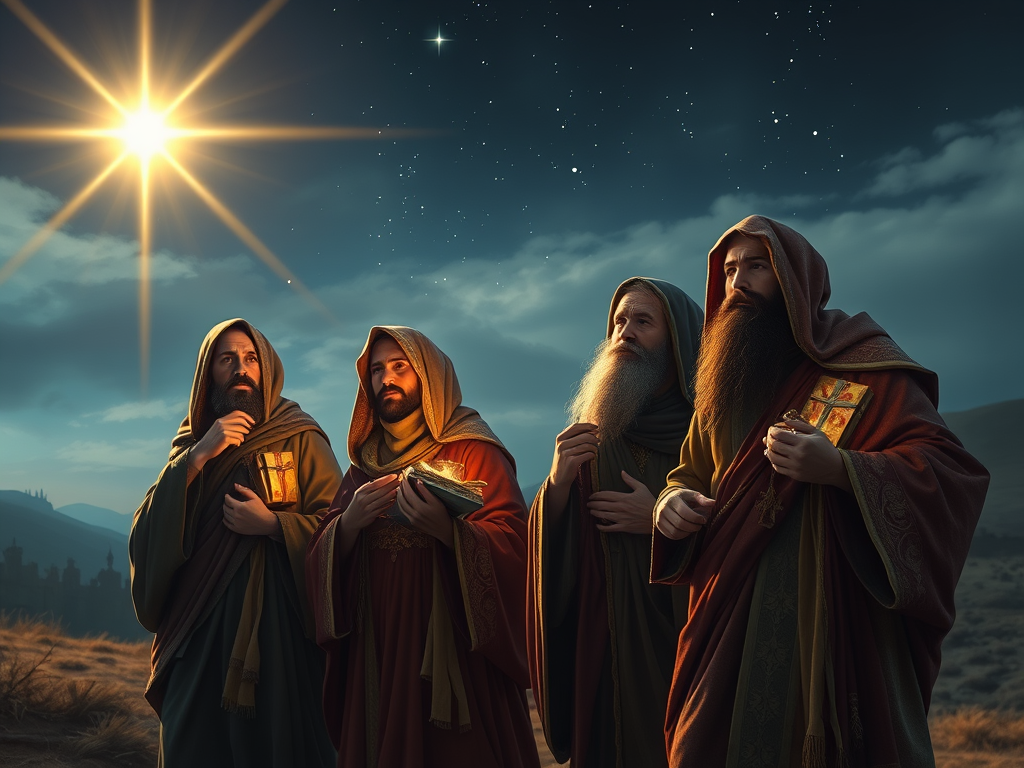
After Jesus was born in Bethlehem in Judea, during the time of King Herod, Magi from the east came to Jerusalem and asked, “Where is the one who has been born king of the Jews? We saw his star when it rose and have come to worship him.”
Matthew 2:1-2 (NIV)

I am currently in the process of preparing a message I’ve been asked to deliver among my local gathering of Jesus’ followers on Good Friday, the Friday before Easter when we remember Jesus’ arrest, trials, suffering, and crucifixion. As I’m preparing the message, I’ve been reminded about all of the connections between the unholy trinity of worldly kingdoms who put Jesus through a kangaroo court of six different trials. By the way, I’m quite certain that Matthew the Quirk would certainly have noted that six is “man’s number” (Rev 13:18).

Along my spiritual journey, I’ve come to learn that everything is connected. Christian mystics have pushed into this concept for centuries and I have come to embrace it the more I seek the things of God on this chapter-a-day journey and find it to be true. God wove it into the fabric of the universe. Even science has stumbled onto it and call it Quantum Entanglement. Though I prefer Einstein’s description. He theorized it and called it, “Spooky Action at a Distance.”

In today’s chapter, there are all sorts of connections for those who have eyes to see them.

In the opening verses, Matthew records that “Magi from the East” came to Jerusalem because they’d seen a star signifying that the “King of the Jews” was born. Haven’t you ever wondered what was up with these wise guys? Keep in mind that at the end of the previous chapter, Matthew the Quirk calls out three (there’s that number again) key events in the history of the Hebrews: Abraham the father of their faith, David their Great King and the line through whom the Messiah was prophesied to come, and the exile of the Hebrews in Babylon roughly 400-500 years before the events in today’s chapter.

The Babylonians, the ancient Persians, and the peoples of Mesopotamia were known throughout the world at that time for their mastery of mathematics, science, and astronomy. When God sent His people into exile in this land of their enemies, He didn’t tell them to fight those enemies, He told them to bless them. God told the prophet Jeremiah write to the exiles in Babylon, urge them to settle in, make lives for themselves, and “seek the peace and prosperity of the city to which I have carried you into exile. Pray to the Lord for it, because if it prospers, you too will prosper.” Prophets like Daniel were there in Babylon and Persia, rubbing shoulders with the wisest, most learned, and most powerful people there. It stands to reason that he would have shared with them the Great Story of God, Abraham, Moses, and David. Perhaps it was even through Daniel that he spoke a prophesy (lost to history) of a star that would signify the Messiah’s birth.

Matthew the Quirk would have been absolutely enamored with the math and science knowledge of those in Persia. Why do you think he made sure to relate this particular episode of the Jesus Story?

The next connection is Herod. The Magi ask “Where is the one born King of the Jews?” Talk about asking the wrong person that question. Herod is the one with the title “King of the Jews” (even though he wasn’t a Hebrew). He was appointed by Rome. He clung to his power as “King of the Jews” and killed multiple family members including a wife and three sons to ruthlessly hold on to power. In addition, Herod has lucrative business dealings with the Jewish leaders. He’s rebuilding their Temple and making it into a palatial complex, a development deal that will make them all a fortune. The Magi’s visit signals a threat to his position, his power, and his fortune.

Having delivered their three gifts (there’s that number again – and by the way Matthew said there were three gifts not three Magi – we don’t know how many there were), God, looking out for the non-Hebrew Magi, sends an angel to warn them not to return to Herod but flee back home.

God then sends an angel to Joseph and sends him, Mary, and Jesus in to their own exile in Egypt of all places. When Herod the Great dies, they return. Matthew is quick to make the connection between Jesus being sent to Egypt and then called out of Egypt. It’s a direct connection to the entire Hebrew story we’ve just been talking about in Leviticus. God sent his people to Egypt to deliver them from famine, then delivered them out of Egypt through Moses and lead them back. Matthew sees the connection. Jesus’ life was a literal fulfillment of the entire Hebrew story. Matthew makes direct connection to this episode of Jesus’ infancy and three (there’s that number again) prophetic words from the ancient prophets.

Everything is connected.

In the quiet this morning, I’m reminded that these connections aren’t just trivial literary observations. There are spiritual truths present here that are true for me. God was at work in and through the non-Hebrew, Persian astronomers (not just in this moment, but had been at work in-and-through them five hundred years earlier during the exile). Every person I come into contact with, believer or not, is a person God loves and died for. His Spirit is at work in that person, drawing them to Himself whether they are listening or not. How might God want to use them in my life and in my story? Perhaps there is Spooky Spiritual Action at a Distance at work. Am I open to the reality that God might use the most unlikely of people to speak to me, teach me, or lead me in some way?

Not only that, but the theme of the Kingdoms of this world (Herod and the religious leaders in the Temple) in conflict with what the Kingdom of God is doing is directly connected to my every day spiritual reality. Paul described it to the believers in Ephesus:

For our struggle is not against flesh and blood, but against the rulers, against the authorities, against the powers of this dark world and against the spiritual forces of evil in the heavenly realms.

I can’t be engaged in the spiritual struggle if I don’t recognize it within and around me.

Finally, the events today surrounding Jesus’ birth are connected to His death. These “authorities” and “powers of this world” (e.g. the Herods, the Temple religious establishment, and Rome ) are one-and-the-same as the unholy trinity who will send baby Jesus to the cross in about 33 years later on Good Friday. They are direct ancestors of the kingdoms and empires of this world (government, commerce, and religion) that continue to hold sway today under the dominion of the Prince of this World, even as I daily attempt to bring the Love and Light of the Kingdom of God to earth through my words and actions in my circles of influence.

It’s all connected to me, and to you, in ways we can’t even fathom. Thanks for connecting and joining me on the journey today. Have a great weekend, my friend.

If you know anyone who might be encouraged by today’s post, please share.

These chapter-a-day blog posts are also available via podcast on all major podcast platforms including Apple, Google, and Spotify! Simply go to your podcast platform and search for “Wayfarer Tom Vander Well.” If it’s not on your platform, please let me know!

Hidden in Plain Sight

Hidden in Plain Sight (CaD Lk 18) Wayfarer

Those who led the way rebuked [the blind man] and told him to be quiet, but he shouted all the more, “Son of David, have mercy on me!”
Luke 18:39 (NIV)

Happy New Year!

One of the things I can expect every New Year in the media is the so-called experts’ picks of the “best” and “worst” things from the previous year. I’ve come to learn that my agreement with such lists is highly dependent on how aligned the “expert” and I am in the determination of what makes a good movie, song, or book.

When I was in college, there was quite a bit of consensus among movie critics and experts that Orson Welles’ classic Citizen Kane was the greatest movie ever made. If you’ve never seen it, it’s worth watching. The tale of a man who gains the whole world and loses his soul along the way is truly a masterpiece.

One of the things I love about both great movies and great books is the way that stories are crafted. The entire story of Charles Foster Kane is presented to us in the opening scene of Citizen Kane. As viewers, we simply don’t know it yet. I can watch great movies countless times because I can perpetually find things I’ve never seen before. The writers and directors placed things into scenes and dialogue that are hidden from me in plain sight.

In the same way, as I make my way over and over again through the Great Story, I perpetually see things that have been hiding in plain sight. I long ago realized that one of the mistakes I made for years was allowing myself to focus too intently on one word, one verse, or one passage a time that I missed the larger picture that the Author of Creation has connected throughout the Great Story. Today’s chapter is a great example.

In most modern Bibles, the text is broken up into chapters. Within each chapter, there are sections and verses. In today’s chapter, there are six different episodes or sections that the editors have called out for me with titles. This very paradigm of layout causes me to mentally compartmentalize as I’m reading and thinking. Yet, I’ve learned on this chapter-a-day journey that the meaning is often in the connection between the episodes just as there are connections between the books in the larger Great Story. I’ve had to train my brain to look at the larger story, books, chapters, and episodes for the connections between them.

Today’s chapter begins with a parable about a poor widow who pesters a Judge begging for justice. He ignores her at first, but her persistence leads to him taking her case just to shut her up. Jesus says prayer works like this. Keep praying, He says. Don’t give up.

In the very next episode, Jesus tells a parable contrasting a self-righteous religious leader who thinks he’s all that and a bag of chips with a poor wretch of a tax collector who knows the depth of his own sins and failures. The latter simply prays for the same thing over and over again (just like the persistent widow), “Lord, have mercy on me, a sinner.”

Later in the chapter, Jesus once again tells The Twelve that He’s been a dead man walking on this trip to Jerusalem that they’ve been on since chapter nine. He’s going to Jerusalem to be betrayed, arrested, and executed, before rising from the dead. Luke then makes the observation that The Twelve did not get what Jesus was talking about even though this is the third time He has said it plainly. “Its meaning was hidden from them,” Luke writes.

In the final episode of the chapter, Jesus has a huge crowd around Him as He approaches the city of Jericho. Jericho is eighteen miles from Jerusalem, so Jesus is getting close to His destination. There is a blind man who is told that the commotion he’s hearing is because Jesus the Nazarene preacher everyone has been talking about is passing by. The blind man immediately begins shouting, “Jesus, Son of David, have mercy on me!

Let’s connect the dots.

The blind man begins shouting the same thing over and over, just like the persistent widow, so that everyone around him is annoyed just like the judge in Jesus’ parable.

What this poor blind wretch shouts is “Have mercy on me” just like the tax collector in Jesus’ parable.

In his repeated cries, the blind man calls Jesus “Son of David.” In Jesus’ day, this was a term people used to refer to the coming Messiah because the prophets had declared the Messiah would come through the line of David (which Jesus did, btw, Luke established that in the genealogy he put into chapter three, yet another connection. In recognizing Jesus as the Messiah, the “Son of David,” this blind man on the side of the road saw what others couldn’t see just as we learned that things were “hidden” in plain sight from Jesus’ closest followers.

The blind man saw who Jesus was while the fullness of Jesus and His mission were hidden from those with 20-20 vision. Jesus heals the annoying man who was shouting his repeated prayer for mercy, showing mercy just as the Judge had done for the poor widow in His parable.

By the way, how fascinating that this happens in Jericho, where God once miraculously caused the walls to come a tumblin’ down. I find something prescient in this connection.

In the quiet this morning, I’m once again blown away by how the Great Story connects. I’m humbled to think that I am not persistent enough in my prayers, and for all my knowledge I acknowledge just how many spiritual realities of God’s kingdom are hiding from me in plain site just like the story of Charles Foster Kane is hidden in a falling snow globe and the cryptic whisper, “Rosebud.”

As I enter a new year, a new work week, a new day – the echo of my heart is set on a persistent, repeating prayer: “Lord Jesus Christ, Son of God, have mercy on me.”

If you know anyone who might be encouraged by today’s post, please share.

Shift in the Story

Shift in the Story (CaD Lk 9) Wayfarer

While he was speaking, a cloud appeared and covered them, and they were afraid as they entered the cloud.
Luke 9:34 (NIV)

I have a friend whose story intersected with mine in college. As happens, our paths on life’s journey took us in different directions. A few years ago, our paths brought us back together. My friend is going through a particularly painful chapter of his personal story. As we have talked over the last few years, my friend regularly mentions one of our college professors. This professor meant a lot to him, and he always expresses how he would love to connect and what an encouragement it would be to him.

Yesterday, that very professor posted a comment on my blog and said that one of my blog posts unexpectedly “popped up” and prompted him to send a “remember me?” comment to the blog post.

Hmmmm.

In yesterday’s post/podcast, I talked about stories. My story. Your story. How my story has intersected with countless other people and their stories. They become part of my story and I become part of theirs whether it is for a moment, a season, a few different seasons, or the whole earthy journey.

I believe that every person’s story, and our respective intersections with each other’s stories, are ultimately about our respective intersections with the Great Story that God is authoring in the grand scheme. I believe they are all connected in ways we can’t humanly fathom.

The further I get in my spiritual journey, the more I recognize that everything is connected.

Today’s chapter marks a definitive shift in Luke’s version of the Jesus Story. We’re less than halfway through, but having given a broad brush summary of Jesus’ first two years of ministry he’s going to shift to the climactic final months. Here’s how the good doctor clues us in:

First, Jesus asks The Twelve who they think He is. Peter says he thinks Jesus is God’s Messiah. Jesus warns them to keep this to themselves and immediately tells them what is going to happen: He will be handed over to the religious institution, be killed, and rise from the dead. (vs 18-27)

A second time Jesus tells The Twelve that He will be “delivered into the hands of men.” (vs 43-45)

Dr. Luke then states that as these events approached Jesus “resolutely set out for Jerusalem” where all these things would take place. (vs 51)

Smack dab in the middle of this setup (vs 28-36) is one of the funkiest episodes of the Story, also referenced by both Matthew and Mark in their versions.

Jesus takes Peter, James, and John up to the top of a mountain. The three amigos start to nod off, and when they wake up Jesus is standing there shining like the sun talking to two others talking to Him. The two others turn out to be Moses and Elijah and they are talking to Jesus about His “departure.” Then a thick cloud appears and the boys are freaking out. The cloud is so thick they can’t see anything and a voice from the cloud says, “This is my Son, whom I have chosen; Listen to Him.”

What most casual readers miss is that this entire episode is rooted in the ancient story of the Exodus (you can read it in Exodus 20), when God delivers the Hebrews from slavery in Egypt and makes a covenant with them, that they will be His people and He will be their God. Everything in the Great Story is connected. If I don’t learn the whole Story, I’ll always miss the connections. Let me break it down:

Moses was the appointed deliverer of the Hebrews from slavery in Egypt, just as Jesus is about to be the deliverer of all humanity from slavery to sin. Both episodes happen on mountains, Moses on Mount Sinai, Jesus on an undisclosed mountain (probably Mount Hermon). In both cases, a cloud covers the mountain and God speaks from within the cloud. Moses (the Lawgiver) and Elijah (representing the Prophets) speak to Jesus about his impending “departure” (literally, the Greek word “exodos”) from this earth to establish a new “covenant” in which all who believe are His people, and He our God.

Everything in today’s chapter is a foreshadowing of the rest of the story. The mysterious mountaintop miracle connects what’s happening to Jesus’ story to what God was doing thousands of years earlier. The events are connected. It’s all part of one big story.

As I sit in the quiet this morning, I’m simply resting in the connections and flow of this Great Story. Daily circumstances so easily take up so much of my mindshare and they demand so much of my emotional reserves. It’s easy to forget the bigger picture. These momentary circumstances are connected to a larger story – my story – which is connected to other peoples’ stories – which is connected to the Great Story. If I lose sight of this, the daily circumstances easily become overwhelming, meaningless, futile even. Jesus reminds me that I need to shift focus and pull back on the camera to see the larger story.

And, I need to trust the Story.

I’m looking forward to connecting my dear friend with his beloved professor today.

If you know anyone who might be encouraged by today’s post, please share.