Tag Archives: Tribes

The Blessing

“This is the blessing that Moses the man of God pronounced on the Israelites before his death….
Deuteronomy 33:1 (NIV)

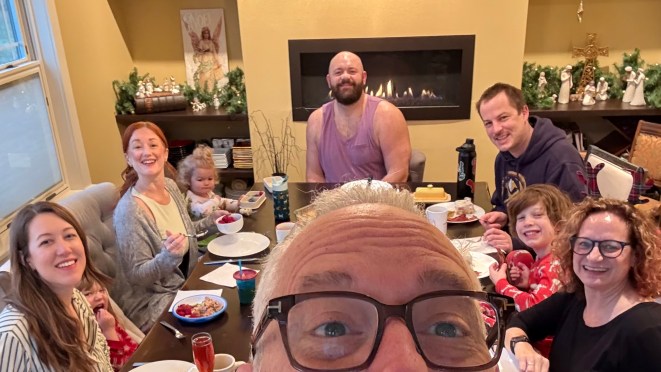
This past Sunday I delivered the morning message among our local gathering of Jesus’ followers. At the beginning of the message I showed a photograph of our family gathered on New Year’s weekend, just a few weeks ago. The entire crew was gathered at the table for a meal in all the glorious mess of three generations.

The table, the dining room floor, indeed the entire house – they get messy when the whole family gathers. And, I’m not just referring to food crumbs. That was the metaphor that carried through my message. Jesus invites the whole family to the table. It gets messy, and yet He asks us to stay.

In family (both nuclear and spiritual), every individual part contributes to the love of the whole.

Today’s chapter is Moses’ final act. His role as leader-judge-prophet-priest will end with him. His is not a box on the org chart to be filled. A succession plan was never a consideration. There’s no favored son groomed for elevation. Moses does not pout or demand a severance of legacy. He foreshadows and embodies the sentiment Paul would later express when he wrote, “I have fought the good fight, I have finished the race, I have kept the faith.”

Moses’ final act is to bless the twelve Hebrew tribes one-by-one. As I meditated on the blessings. A couple of things stood out.

First, in Jewish tradition, blessings are less about forecasting the future and more about naming reality—calling forth what is already true beneath the surface. Moses is not predicting outcomes; he is bestowing identity.

Just as I look around the table from toddler grandchildren to adult daughters and sons. Each is unique. No two are the same. They each, in their own unique identity, bring themselves to the table and with each of them comes a part of the blessing of family.

And, this leads to the next observation.

No tribe is cursed. Even the complicated ones—and, honestly they each have their own “troubles”—are not shamed. Silence, yes. Erasure, no. Where earlier stories carried fracture, Moses now offers healing through words.

And, to me, most importantly: Israel is blessed together. No tribe receives fullness apart from the others. The blessing is communal—interdependent, embodied, shared.

In the quiet this morning, I find the chapter inviting me to do something wildly countercultural:

Receive blessing without scrambling to deserve it.

Moses blesses warriors and poets, priests and homebodies, the strong and the sheltered. Not because they nailed it—but because God chose them.

It’s easy for me to slip into “blessing is a performance review” mode. Others times, my Enneagram Type Four shame whispers to my soul that God’s blessing has been passed out and I was skipped altogether.

Moses says “no” to both lies.

I am blessed before I arrive.
I am carried even when I wander.
I am named even in the silence.

That’s the beauty, and the shalom, that I find in the Great Story. Moses exits stage left. The Story goes on, even to this.very.day.

The God who went before them…
is the God who goes before me.
Jesus invited me to the table, and asked me to stay.

If you know anyone who might be encouraged by today’s post, please share.

Promotional graphic for Tom Vander Well's Wayfarer blog and podcast, featuring icons of various podcast platforms with a photo of Tom Vander Well.
These chapter-a-day blog posts are also available via podcast on all major podcast platforms including Apple, Google, and Spotify! Simply go to your podcast platform and search for “Wayfarer Tom Vander Well.” If it’s not on your platform, please let me know!
An orange square icon featuring an open book symbol in white, representing reading or education.

Silos

Silos (CaD 1 Chr 15) Wayfarer

Now David was clothed in a robe of fine linen, as were all the Levites who were carrying the ark, and as were the musicians, and Kenaniah, who was in charge of the singing of the choirs. David also wore a linen ephod.
1 Chronicles 15:27 (NIV)

I have a bit of a fascination with words and their origins. There is a weekly column in the Wall Street Journal in which the author, an etymologist, chooses one word that was used a lot in the news that week and explores its origins and uses. I know. It’s geeky, but it’s my kind of geeky.

When working in business, one hears a lot of references to silos, which I find fascinating living in Iowa. An agricultural staple used for storing grain on the farm became a universally used metaphor describing strict divisions within a business or corporation. In my career, I’ve had to struggle with our client’s silos regularly. The Sales and Marketing silo usually pays for customer research, but the results have all sorts of important data for the Customer Service team who is in the Operations silo. At best, they don’t communicate well. At worst, they consider each other internal rivals. Silos prevent the data from having a maximum impact on the client and their customers’ experiences.

In the ancient world of the Hebrews, there were also silos that God had established in the Laws of Moses. Only members of the tribe of Levi were priests and caretakers of God’s ark and the temple. Hundreds of years later, the Hebrews established a monarchy. But King David, despite being anointed by God and established as a man after God’s own heart, was from the tribe of Judah. That’s a different silo.

The Chronicler, unlike the earlier account of David’s reign in Samuel, is writing hundreds of years later and with knowledge of all that has happened since, including the writings of all the prophets. He knows from the prophets that the Messiah will come from David’s line and that the Messiah will be both King and High Priest.

In today’s chapter, I noted that the Chronicler was careful to explain that it was King David who ordered that no one but the Levites should carry the Ark of the Covenant and that they should all consecrate themselves before doing so as prescribed in the Law of Moses, a mistake they had made two chapters earlier. So it’s the King who is commanding the priestly tribe of Levi to do their job.

Later in the chapter, the Chronicler provides a little detail about the big event of the Ark of the Covenant’s big arrival celebration in Jerusalem. King David was wearing the same priestly garments as the Levites.

The Chronicler is establishing with David there was a tearing down of the silos between King and Priest. David had authority and told the Levites to do their job. David wore priestly garments as the Ark was brought into Jerusalem. The Chronicler sees David as the precursor of the King-Priest that will eventually be fully realized in the Messiah.

Note: The Priest-King issue as it relates to Jesus was eventually explained by the author of Hebrews, and it’s pretty cool. The answer lies in a mysterious figure who appears briefly in Genesis. I introduce him briefly in this post.

So what does this have to do with my life today? As a disciple of Jesus, I find that He’s all about tearing down the silos. He tore down cultural silos and religious silos. He burned the silo of a priestly class system to the ground and made every follower a member of the royal priesthood. I just talked about that in a message I gave to our local gathering of Jesus’ followers a few weeks ago.

So in the quiet this morning, I find myself asking “Where have I built silos in life that need to be torn down?” Where do I see distinctions between me and others that Jesus would say don’t exist? If I’m a member of the royal priesthood as God tells me I am, then how am I supposed to live that out in my life, my words, and my actions today? Or, have I built a silo around my heart and mind so that I can ignore this spiritual truth and tell myself “It’s not my job!”?

If you know anyone who might be encouraged by today’s post, please share.

And So, it Begins

And So, it Begins (CaD Jud 12) Wayfarer

Jephthah then called together the men of Gilead and fought against Ephraim. The Gileadites struck them down because the Ephraimites had said, “You Gileadites are renegades from Ephraim and Manasseh.”
Judges 12:4 (NIV)

Feuds between family members are as old as Cain and Abel, and they have always been part of the human condition. Both within my own family history and in families I know well, I can find multiple stories of feuding family members. Some of these feuds center on very specific issues (e.g. inheritance) while others seem to be of a mysterious origin that gets labeled simply as “bad blood” between feuding members.

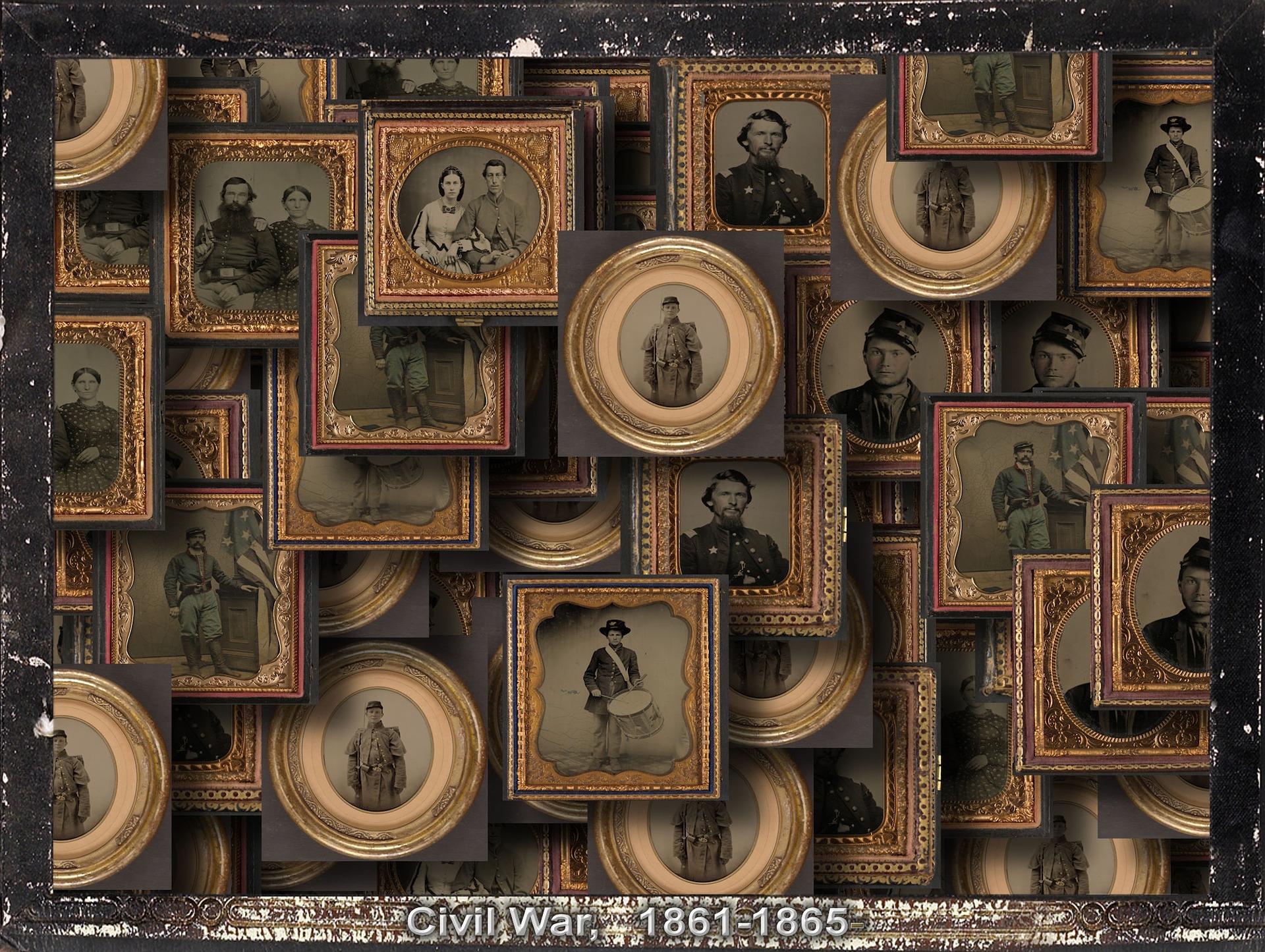
Our place at the lake is in central Missouri, a border state between North and South during the U.S. Civil War. Missouri hosted 29 of the 384 principle battles in the war. The third most behind Virginia and Tennessee. My great-great-grandfather fought on the Union side in the Missouri Infantry. It’s been over a hundred and fifty years since the end of the war, but vestiges of the conflict remain to this day. You can find it in the recorded history of our land, which originally stated that no person of color or “mixed-blood” could ever own any of the lots in our development. On our way to the lake, we pass a giant flagpole that sits prominently by the state highway surrounded by a tall fence and razor wire. It flies the Confederate flag. Feuds run deep and can last for many generations.

I found that today’s chapter is best understood in context. In the books of Moses and Joshua, there were two-and-a-half tribes who wanted to settle lands on the east side of the Jordan River, rather than in the Promised Land on the west side of the river. The half-tribe of Manasseh was one of them, and these east-siders became known as “Gileadites.” Jephthah led his tribe to military victory against the Ammonites.

In today’s chapter, the military contingent of the tribe of Ephraim arrives to complain that they weren’t included in the Ammonite campaign. Remember that military campaigns during this ancient period were lucrative for the victors, as the soldiers were allowed to take their share of the plunder. Jephthah attempts a diplomatic solution to the situation, but circumstances degrade into fighting with the Ephraimites insulting the half-tribe of Manasseh as “renegades” from the other side of the Jordan River. Keep in mind that Ephraim and Manasseh were the sons of Joseph, adopted by Jacob. They had every reason to be closely allied to one another as descendants of the favored son, Joseph. Instead, they fight and slaughter one another.

And so, it begins. This is the first hint of trouble between the Hebrew tribes since the settlement of the Promised Land, but it will certainly not be the last. Eventually, ten of the twelve tribes will form their own nation (Israel) and fight the other two (Judah) in their own version of North against South.

In the quiet this morning, I find myself thinking about feuds and families. I can’t help but be reminded that Jesus predicted that He would be the lightning rod that divided families as individuals leave family behind to follow Jesus. This reality, however, does not excuse feuding behavior. As the follower of Jesus, I am called to do all in my power to live at peace, to love, to bless, and to forgive even with feuding antagonists. In some cases, I’ve come to the conclusion that the loving thing to do is to place time and distance between me and thee.

If you know anyone who might be encouraged by today’s post, please share.

Success(ion) and Failure

Success(ion) and Failure (CaD Jos 23) Wayfarer

“Now I am about to go the way of all the earth. You know with all your heart and soul that not one of all the good promises the Lord your God gave you has failed. Every promise has been fulfilled; not one has failed.”
Joshua 23:14 (NIV)

When I was a young man, I was part of an organization that had enjoyed strong leadership for a number of years. In fact, it was one of the strong leaders who invited me to participate. It was obvious that over time the organization had grown, enjoyed repeated success, and became increasingly influential. I learned a tremendous amount in my first few years. Some of the lessons have helped me throughout my entire life.

Then the senior leadership left the organization.

It was one of the first experiences in my journey (there have been others) in which a change in leadership completely changed the system for the worse. In this case, the new leadership was tragically unprepared for the role they’d been given. Over the course of a few years, I watched the entire system implode.

In today’s chapter, we’re reaching the end of Joshua’s life. Since Moses showed up to lead the Hebrews out of slavery in Egypt, the tribes have benefitted from having a strong leader in charge. Moses led them out of Egypt to the Promised Land then Joshua led them to conquer the land and settle in it. Having finished the task, Joshua knows that his earthly journey is nearing its end. He calls the nation together to deliver a final message to them.

We’re on the verge of a massive change in leadership.

Joshua structures his message to the people as nations in that day structured treaties with one another. In presenting this treaty, Joshua assumes the role of God’s representative who is making a treaty with the nation. The people are reminded of all that God has done for them, reminded of God’s command to have no other gods, and warned that failure to keep those commands will have disastrous consequences. Just as God has kept his promises, Joshua explains, He will also make good on His warnings should they fail to keep their end of the covenant.

There is a major issue looming in the background as we approach the end of the Joshua administration. There’s no succession plan.

The fledgling Hebrew nation is made up of millions of people, scattered into twelve tribes, each made up of numerous family clans. Think of it as the 48 contiguous states in America with no central federal government. What’s going to keep them together? What happens to the small tribes when there are no checks and balances on the power and influence of the larger tribes? How do you keep tribal relationships from breaking down into feuds and civil wars?

Humanity is still in the toddler stage of development and relationship with God. Today’s chapter reads like a parent laying down the law with a three-year-old: “Do what I tell you because I know what’s good for you and have your best interests at heart. If you don’t do what I tell you, there will be consequences you’re not going to like.” Having parented a couple of three-year-olds, I can tell you confidently that eventually there will be willfulness, disobedience, attitude, stubbornness, and tantrums. There are always tantrums.

In the quiet this morning, I find myself recalling some of the best leaders I’ve worked with along my life journey and the things I learned from them. I’m whispering prayers of gratitude for all that I’ve learned through both relationship and example. As I have trekked along this life journey, I have learned that for the good of the group I’m leading, it’s important to try and have a succession plan, whenever I knew I would be leaving a leadership position. I’ve experienced both success and failure in that department.

And, I’m thinking about the Hebrew tribes, about to lose their central leadership with no succession plan. The next stage in their national development is not going to be pretty.

There will be tantrums.

If you know anyone who might be encouraged by today’s post, please share.

Go!

Go! (CaD Jos 18) Wayfarer

So Joshua said to the Israelites: “How long will you wait before you begin to take possession of the land that the Lord, the God of your ancestors, has given you?
Joshua 18: 3 (NIV)

Early in my career, our company was contracted by a large, national corporation to produce and present a training program to all of their contact center employees across the nation. It was the largest project, to date, that our company had ever landed. And it was on me to write, produce, and present it.

I froze.

One of the things that I’ve learned about being an Enneagram Type Four is that there is a pessimism that runs deep in us. Perhaps that was what was gnawing at me as I drug my feet in getting started. I feared failure. I wasn’t sure I was up to a task this big and the lofty expectation of my superior and the client.

Today’s chapter begins with the setting up of the Hebrew’s traveling tent temple, called the Tabernacle, in a town called Shiloh which means “place of peace.” This is a significant act. Since it was created in the days of Moses and their exodus from slavery in Egypt, the Tabernacle has been the center of their camp wherever they went as they wandered in the wilderness. Now that they’ve settled into the Promised Land, the Tabernacle will have a fixed spot, and Shiloh is, roughly, at the center. It will remain at Shiloh for hundreds of years.

The setting up of the Tabernacle in a fixed spot is a sign of the beginning of permanence in the Promised Land, but there are still seven tribes who haven’t received their inheritance. Joshua asks them what they are waiting for, and this suggests that there was some hesitancy on their behalf. An allotment of land came with the expectation and responsibility to drive the remaining inhabitants from it. The tribes who are left are smaller in size and strength. The largest of the tribes like Judah, Ephraim, and Manasseh, already had their allotments and were busy settling their own lands. The smaller tribes could not depend on the aid of all the fighting men these larger tribes had at their disposal. The hesitancy of the smaller tribes may have been simply that they feared they didn’t have enough fighting men and military strength to get the job done.

We celebrated the resurrection of Jesus just a few weeks ago. His resurrection appearances were scattered across about 40 days before He ascended to heaven and left His followers with the task of taking His message to the world. Talk about a monumental challenge of a task. And there was no Elon Musk among them. Twelve largely uneducated men with no worldly wealth or power were tasked by the Son of God with changing the world.

I find it fascinating that Jesus’ “great commission” to His followers started with the word “Go.” He had told them in the Garden the night before His crucifixion not to worry when they were drug before rulers and princes. They would be given what they need to say and the power to say it in the moment they needed it. The first step was to “go.”

And, that’s where I was stuck with my major work project. I froze. I was sitting still. I was paralyzed like the seven tribes, hoping that maybe someone else with more experience and knowledge would miraculously show up and do it for me. Fortunately, I had a wise and learned boss who saw what was happening. He kicked me from behind, then grabbed my hand and pulled me along until I found my momentum. Our client said it was the best, most creative, and most empowering corporate training he’d ever seen in his career.

Mission accomplished. Yet, it wouldn’t have happened with that kick from behind and a pull to get me moving forward. I learned through that experience that when I’m feeling that pessimistic paralysis my first step is simply to “go” and get moving forward.

For example, almost every weekday morning I sit down at my keyboard to write this chapter-a-day post. Many days I’m tired, my brain is fogged over, and I stare at a blank screen. If I sit there waiting for a fully formed and structured thought to form itself in my brain I’ll sit there all morning. I’ve learned to just “go.” I start typing, and the words begin to flow.

That’s what happened this morning, in fact. And here was are at the end of my post, and the end of another work week.

Go…have a good weekend.

If you know anyone who might be encouraged by today’s post, please share.

Connected

Connected (CaD Gen 36) Wayfarer

This is the account of the family line of Esau (that is, Edom).
Genesis 36:1 (NIV)

A few years ago, Wendy and I participated in a cemetery walk for our local historical society. We have, for many years, portrayed our community’s founding couple (Hendrick Peter and Maria Scholte) at the town’s annual Tulip Festival, and so we were asked to participate in the cemetery walk. Basically, we stood by the gravestones of the couple we were portraying and when people walked by we would share a brief, scripted story about individuals we were portraying. There were other actors in different costumes stationed by gravestones around the cemetery.

While we were waiting between visitors, I began investigating the gravestones within the Scholte family plot. I was shocked to see a name I thought I recognized. When we got home that afternoon I looked it up. Sure enough, a woman buried in the Scholte family plot, Harriett Yeater Vander Linden (see featured photo on this post), was a relative of mine. Why she was buried with the Scholte family is a bit of a mystery. Especially since she wasn’t Dutch, but came from my mother’s side of the family whose ancestors all came from the British Isles. Never in a million years would I have thought I would end up living in this town portraying its founder. Never in a billion years would I have expected to find my own relative buried with his family.

It’s a small world.

Let’s face it, today’s chapter is one of those that is easily skipped over. It’s one of the genealogical records that everyone hates. All the descendants of Esau are seemingly irrelevant to my life. As an amateur historian and genealogist, however, I spent some time this morning thinking about the bigger picture of Esau’s descendants, who became a small nation called Edom.

It begins with twin brothers, Esau and Jacob. Despite Jacob’s deceit, Esau appears to have prospered on his own. In today’s chapter, they seem to have amicably separated. Esau went to an area east and south of the Dead Sea to settle. The descendants of each brother would grow to become their own tribes which, in turn, would eventually become their own nations, Edom and Israel. Later in the Great Story, the two nations will become enemies. They will war with one another. The prophet Obadiah, for example, wrote his prophetic poem specifically against Edom, predicting its destruction as he recalls that the two nations were rooted in a fraternal relationship.

As time went by and the descendants expanded, the connection was lost. Families became enemies.

One thing that has always appealed to me about history and genealogy is that it is about making connections. It’s kind of the opposite of the Israel/Edom effect I just described. As I make connections to people and the past, I learn things and grow in appreciation for others.

Genetic science has proven that we all descended from one woman referred to as “genetic Eve.” The truth is that we are all connected. Feuds, wars, prejudice, and hatred are the fruit of disconnection. When Jesus calls me to bless my enemies and to pray for those who persecute me, I believe He is calling me to make a reconnection. My enemy is my family. Jesus loves and died for my enemy just as He did for me. While the Kingdoms of this world continue to divide, disconnect, separate, and antagonize, Jesus calls me to be an Ambassador of God’s Kingdom where the goal is to be one Body, connected, unified, and loving.

I may not be able to make a difference on a national level, but I can make a difference in my circles of influence each day. The grave of my great-great-aunt Harriett Yeater Vander Linden reminds me: The connections are closer than I imagine.

If you know anyone who might be encouraged by today’s post, please share.

The Motivation Behind Life’s Blocking

Nevertheless, in their presumption they went up toward the highest point in the hill country, though neither Moses nor the ark of the Lord’s covenant moved from the camp.
Numbers 14:44 (NIV)

Faith is an amazingly powerful, amazingly mysterious spiritual root force. Jesus said that faith as small as a speck could move mountains.   Repeatedly, Jesus told those whom He healed that their faith was the active ingredient in their healing. The author of Hebrews wrote that without faith it is impossible to please God.

Today’s chapter is an object lesson in faith (or lack thereof). Yesterday the Hebrew tribes spy out the promised land, but swayed by the exaggerated claims of ten of the twelve spies, the people doubt that their conquest will be successful. Swayed by their fears they speak of going back to slavery in Egypt and threaten to stone Moses to death.

When a mysterious plague afflicts the ten doubting spies, the people’s’ fear of God becomes instantly more powerful, in the moment, than the fear of death in conquest that had felt so powerful the previous day. Their fear prompts a hasty decision to move forward with the conquest despite Moses warning that their impromptu actions is doomed to fail. Why? They were acting out of fear, not faith.

What a word picture the tribes provide for fear-based thinking and reasoning. Their actions over the past few chapters have perpetually been motivated by what they feared most in the moment: starvation, discomfort, death, or plague. Fear is the constant and consistent motivator; It is the active ingredient in their words, decisions, and actions. Their fear leads them to false presumptions on which their decisions and actions were based.

This morning I’m reminded that it is that which motivates my actions that is critical to my spiritual progression in this life journey and the activator of spiritual power. If I am primarily motivated by fear or shame, by pride or personal desire my actions will certainly propel me down life’s path just like the Hebrew tribes climbing the hill. My movement, however, will be void of any real progress or direction of Spirit. As any well-trained actor knows, it is the motivation that drives the action of the character. Blocked movement disconnected from the characters underlying motivation becomes prescriptive, mindless action that empties the performance of any real power.

In the quiet this morning I find myself thinking about the actions on my multiple test lists. If, as the Bard wrote, “all the world’s a stage” then my task lists are my prescribed blocking in life’s script. Go here, do this bit of business, then go there and do that bit of necessary action so that she can proceed with her bit. Family tasks, business tasks, personal tasks… What’s the active, motivating ingredient?

Is it faith?

The Struggle for Unity Among Many

The Israelites went up and wept before the Lord until evening, and they inquired of the Lord. They said, “Shall we go up again to fight against the Benjamites, our fellow Israelites?”
Judges 20:23 (NIV)

The violent gang rape that had taken place in the previous chapter of Judges now becomes national news and sparks corporate outrage. The other 11 tribes of Israel muster an army and demand that the perpetrators of the act be delivered up for justice. Their fellow countrymen from Benjamin refuse. The tribes of Israel find themselves on the brink of civil war.

This morning as I read of the events described I thought of our own civil war here in the United States. I thought about the name itself: “United States.” Many smaller states united as one. It was not unlike the 12 tribes of Israel, spread out and occupying their own geographic territory, but with no strong central government to bring unity. In Ken Burns’ classic documentary of the American Civil War it is explained that, prior to the war, it was common to say “the United States are” (plural). After the war, we began to say “the United States is” (singular). As the end of the book of Judges, the nation of Israel is having a similar experience.

Today, I’m thinking about the need we have as humans in society for strong central leadership and authority. Without it, smaller societal groups with strong identity and disparate ideas quickly fall into conflict that can turn divisive, violent, and deadly. We need law, order, and the freedom to express our ideas. We need a system that allows for reasonable exchange and compromise.

Without it, things get ugly.