Tag Archives: Ephraim

And So, it Begins

And So, it Begins (CaD Jud 12) Wayfarer

Jephthah then called together the men of Gilead and fought against Ephraim. The Gileadites struck them down because the Ephraimites had said, “You Gileadites are renegades from Ephraim and Manasseh.”
Judges 12:4 (NIV)

Feuds between family members are as old as Cain and Abel, and they have always been part of the human condition. Both within my own family history and in families I know well, I can find multiple stories of feuding family members. Some of these feuds center on very specific issues (e.g. inheritance) while others seem to be of a mysterious origin that gets labeled simply as “bad blood” between feuding members.

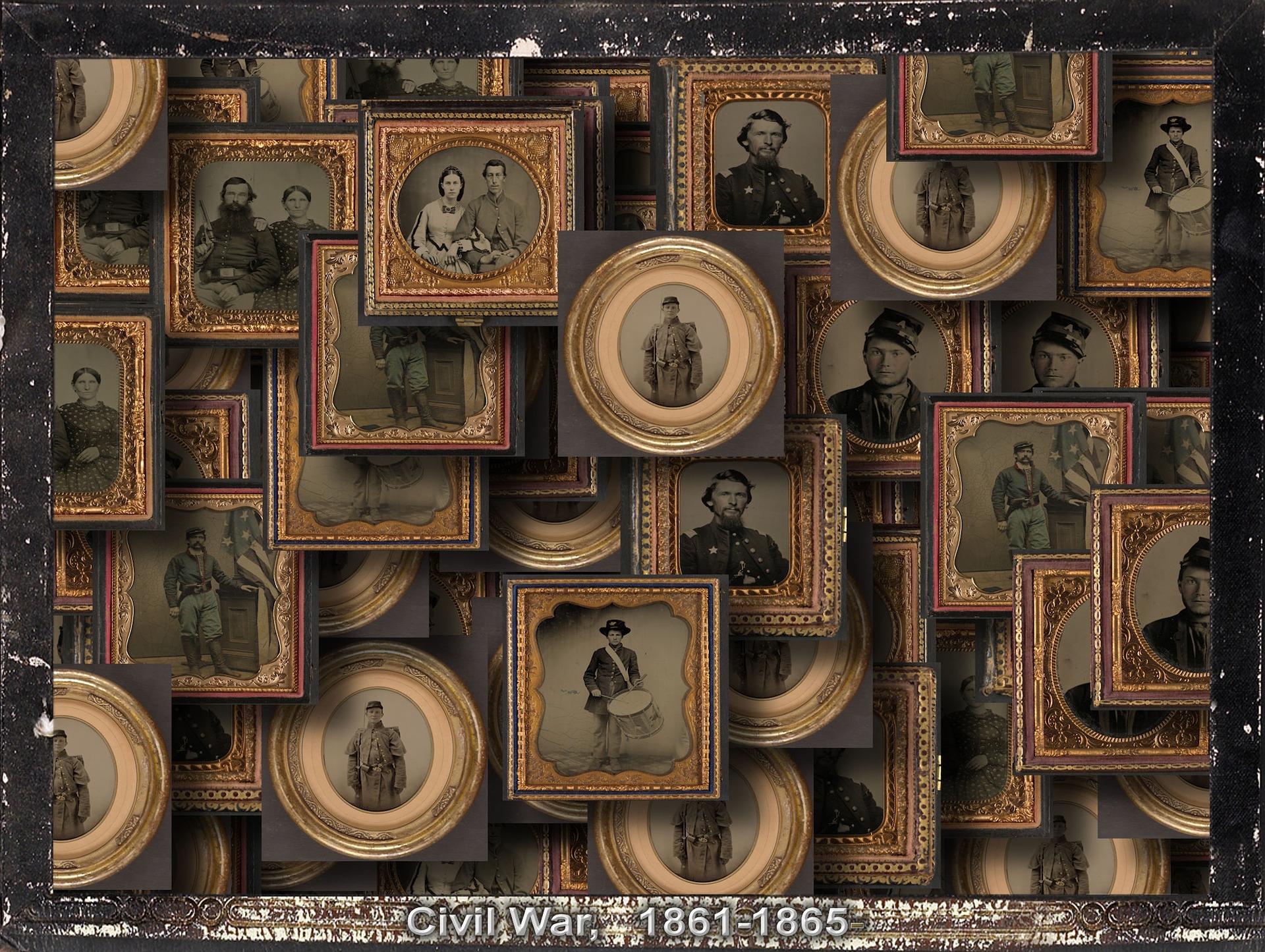
Our place at the lake is in central Missouri, a border state between North and South during the U.S. Civil War. Missouri hosted 29 of the 384 principle battles in the war. The third most behind Virginia and Tennessee. My great-great-grandfather fought on the Union side in the Missouri Infantry. It’s been over a hundred and fifty years since the end of the war, but vestiges of the conflict remain to this day. You can find it in the recorded history of our land, which originally stated that no person of color or “mixed-blood” could ever own any of the lots in our development. On our way to the lake, we pass a giant flagpole that sits prominently by the state highway surrounded by a tall fence and razor wire. It flies the Confederate flag. Feuds run deep and can last for many generations.

I found that today’s chapter is best understood in context. In the books of Moses and Joshua, there were two-and-a-half tribes who wanted to settle lands on the east side of the Jordan River, rather than in the Promised Land on the west side of the river. The half-tribe of Manasseh was one of them, and these east-siders became known as “Gileadites.” Jephthah led his tribe to military victory against the Ammonites.

In today’s chapter, the military contingent of the tribe of Ephraim arrives to complain that they weren’t included in the Ammonite campaign. Remember that military campaigns during this ancient period were lucrative for the victors, as the soldiers were allowed to take their share of the plunder. Jephthah attempts a diplomatic solution to the situation, but circumstances degrade into fighting with the Ephraimites insulting the half-tribe of Manasseh as “renegades” from the other side of the Jordan River. Keep in mind that Ephraim and Manasseh were the sons of Joseph, adopted by Jacob. They had every reason to be closely allied to one another as descendants of the favored son, Joseph. Instead, they fight and slaughter one another.

And so, it begins. This is the first hint of trouble between the Hebrew tribes since the settlement of the Promised Land, but it will certainly not be the last. Eventually, ten of the twelve tribes will form their own nation (Israel) and fight the other two (Judah) in their own version of North against South.

In the quiet this morning, I find myself thinking about feuds and families. I can’t help but be reminded that Jesus predicted that He would be the lightning rod that divided families as individuals leave family behind to follow Jesus. This reality, however, does not excuse feuding behavior. As the follower of Jesus, I am called to do all in my power to live at peace, to love, to bless, and to forgive even with feuding antagonists. In some cases, I’ve come to the conclusion that the loving thing to do is to place time and distance between me and thee.

If you know anyone who might be encouraged by today’s post, please share.

“Effed Up Family”

"Effed Up Family" (CaD Gen 48) Wayfarer

Joseph said to [Israel], “No, my father, this one is the firstborn; put your right hand on his head.”

But his father refused and said, “I know, my son, I know. He too will become a people, and he too will become great. Nevertheless, his younger brother will be greater than he, and his descendants will become a group of nations.”

Genesis 48:18-19 (NIV)

Wendy and I became hooked on Yellowstone in its first season. It’s now in its fourth season. Sunday night has become a weekly watch party with our friends. Wendy and I have often described Yellowstone to family and friends as “The Godfather meets modern day Montana.”

Kevin Costner plays John Dutton, the widowed patriarch of a family who has owned a million-acre ranch of the most beautiful and desirable land in Montana for over a century. Everyone wants the land and they will do literally anything to wrench it from Dutton’s control. Dutton will do literally anything to prevent that from happening. Let’s just say, if he asks one of the ranch hands to drive you “to the train station” you’ve just been given a one-way ticket to the end-of-the-line. Dutton finds himself forced to manipulate and coerce his own adult children to “protect” the family and the ranch. Each of his children is, respectfully and understandably, his or her own form of messed up.

Our daughter and her husband watch Yellowstone every week along with another show about a wealthy, dysfunctional family empire. They’ve dubbed the evening “Effed up family night.”

I couldn’t help but think of it as I read today’s chapter. The book of Genesis is known by many as simply the story of creation and Noah’s ark. The truth is that about 80 percent of Genesis is the story of one man, Abraham, being given a promise that his descendants will become a great nation. It then tells how Abraham builds a wealthy nomadic herding operation and has a son, who expands the family and the family business. By the third generation, they grow to become a wealthy clan that other peoples fear as they wander the land. In the fourth generation, the clan continues to grow into the making of twelve tribes, who will become a people before the book of Exodus in which God makes them into a nation.

I’ve often said that all good stories are a reflection of the Great Story. Families growing into tribes, people, and empires is a common theme in some of the epic stories we love, as is the struggle of flawed human family systems to protect and perpetuate the family legacy. The story of Abraham, Isaac, Jacob, and Joseph is the seminal source material.

In today’s chapter, two recurring themes are present. First is the ancient patriarch on his death bed blessing his children. It’s the conduit through which power and privilege are passed down to the subsequent generation. The second recurring theme is the bucking of the embedded cultural tradition of the day in which the firstborn son inherits everything. Israel, the second-born son of Isaac who stole the birthright and deceived his father into receiving the blessing, is now the dying Patriarch. His first move is to call Joseph to him. Joseph was at one time his youngest son and his favorite. Joseph was the firstborn of Rachel, who was the younger sister, whom Israel loved. Two important things happen.

First, Israel raises Joseph’s sons, his grandsons, to the status of sons and heirs of their grandfather. Joseph’s sons, Manasseh and Ephraim, will become the head of their own tribes next to their uncles. In doing this, Joseph’s family is receiving a double-portion of Israel’s overall blessing.

Second, Israel willfully crosses his arms when blessing Manasseh and Ephraim. He places his right hand (the hand of favor) on the younger son’s head. He places his left hand (often the metaphor of disfavor or secondary favor in that culture) on the firstborn son’s head. Joseph is ticked-off at this and tries to reverse it. The tradition of honoring the firstborn son runs deep in family systems to this day. Israel refuses. Like Isaac, like Jacob/Israel, and like Joseph himself, the younger brother Ephraim will be the greater. Hundreds of years later, when the nation of Israel splits into two after Solomon’s reign, the southern kingdom will be called Judah (the fourth-born son who emerges as the leader of the tribes) and the northern kingdom will be often referred to as Ephraim. Prophecy fulfilled.

Along my earthly journey, I’ve observed that one’s place and position within the family system can often have a tremendous impact on how one sees and perceives themselves, their self-worth, and their place in this world. One of the things that Jesus taught, one of the spiritual realities He put into place, was that anyone who follows Him will be lifted into the potion of child of God, heir of God, and co-heir with Christ Jesus Himself. It’s good news for everyone who grew up with real family stories that would fit right in with “Effed up family night.”

While he was still talking to the crowd, his mother and brothers showed up. They were outside trying to get a message to him. Someone told Jesus, “Your mother and brothers are out here, wanting to speak with you.”
Jesus didn’t respond directly, but said, “Who do you think my mother and brothers are?” He then stretched out his hand toward his disciples. “Look closely. These are my mother and brothers. Obedience is thicker than blood. The person who obeys my heavenly Father’s will is my brother and sister and mother.”
Matthew 12:46-48 (MSG)

…in Christ Jesus you are all children of God through faith.
Galatians 3:26 (NIV)

You can tell for sure that you are now fully adopted as his own children because God sent the Spirit of his Son into our lives crying out, “Papa! Father!” Doesn’t that privilege of intimate conversation with God make it plain that you are not a slave, but a child? And if you are a child, you’re also an heir, with complete access to the inheritance. Galatians 4:6-7 (MSG)

This resurrection life you received from God is not a timid, grave-tending life. It’s adventurously expectant, greeting God with a childlike “What’s next, Papa?” God’s Spirit touches our spirits and confirms who we really are. We know who he is, and we know who we are: Father and children. And we know we are going to get what’s coming to us—an unbelievable inheritance!
Romans 8:15-16 (MSG)

If you know anyone who might be encouraged by today’s post, please share.