Tag Archives: Transfiguration

Mountains

After six days Jesus took Peter, James and John with him and led them up a high mountain, where they were all alone. There he was transfigured before them.
Mark 9:2 (NIV)

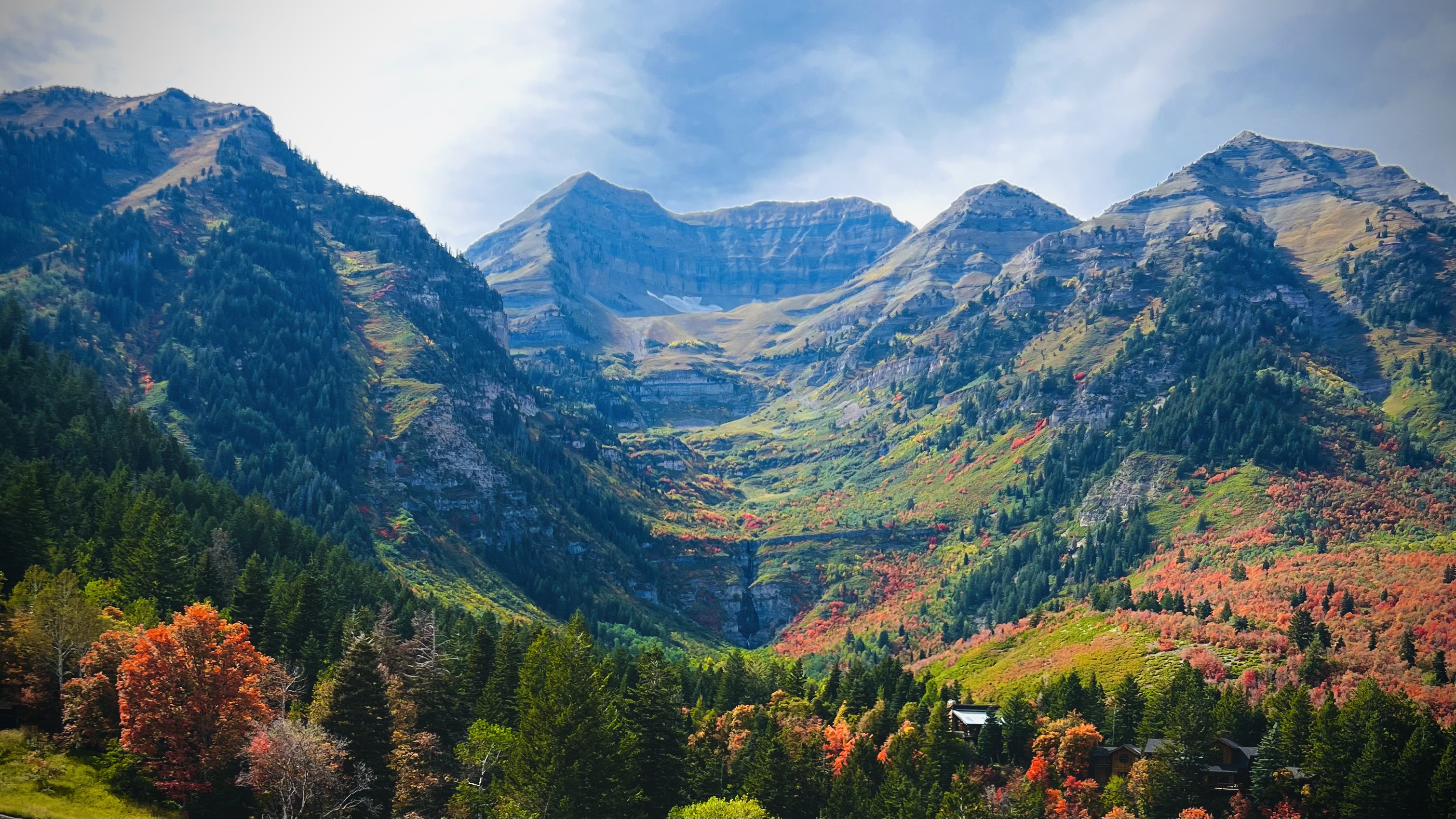
This fall, Wendy and I were invited to join friends at their place in Park City, Utah. We happened to be there for four days when the fall colors exploded in the mountains. The weather was gorgeous, and one day we drove to Sundance and rode the series of chairlifts to the top. The views were definitely not what you’ll ever see in Iowa. It was definitely a mountaintop experience in multiple ways. (I took the featured photo on today’s post as we were riding the chair-lift)

I mentioned in yesterday’s post/podcast that I’ve been listening to a series of podcasts about the meaning of mountains throughout the Great Story. And, it’s true that there are so many stories and events in the Story that happen on mountains. Mountains on which action takes place include, but are not limited to, Mount Sinai, Mount Carmel, Mount Tabor, Mount Horeb, Mount Zion, and the Mount of Olives. Mark has mentioned that Jesus commonly retreated up a mountain to be alone and pray. That was Mount Arbel off the coast of the Sea of Galilee.

Now I’ve been to Israel and I’ve been to the top of Mount Carmel, Mount Zion, and the Mount of Olives. Make no mistake, they are no Sundance Mountain. They are more in line with the bluffs in Iowa that line the Missouri and Mississippi River valleys. People who live anywhere near the rockies would laugh at the thought of them even being called mountains.

But the “mountains” in the Great Story are not meant to be accurate examples of scientific, geological definition. Building on yesterday’s post/podcast, the “mountains” are metaphors. They are high places that stretch toward the heavens relative to the area surrounding it. They are thin places where the veil between the physical and spiritual are more transparent. Mountaintops are isolated and exclusive places, in part because they require effort and sacrifice to access them. Like the narrow road that Leads to life that Jesus talked about, few are willing to do what’s required to reach the top.

In today’s chapter, there is one of the funkiest stories in the entire Jesus Story. Jesus takes his inner circle of three disciples (Peter, James, and John) and goes up a “mountain.” While there, Jesus is “transfigured.” In other words, his physical human form is transformed into the spiritual, heavenly, glorified, Light of the World that was His reality before He came to earth to be born a baby in Bethlehem. Then Moses (Law-giver) and Elijah (Prophet) appear and have a chat with Jesus. There’s a cloud that envelopes them all.

In order to understand this mountaintop moment, it’s necessary to know about Moses’ mountaintop moment on Mount Sinai where God began something new with the recently freed Hebrew slaves. On Sinai there was light in the forms of lightning and what looked like fire, and a cloud that covered the mountain. God gave Moses His guidebook for Life for the Hebrews, a blueprint for how to conduct themselves as individuals and as a community in order to be an example to all the other nations. Just as the Law came through Moses, Elijah was the great prophet who had his own mountain top experiences on Mount Carmel and Mount Horeb. He represents God’s prophets and prefigures John the Baptist.

Everything in the transfiguration event connects to the larger Story. This is a fulfillment moment that has been thousands of years in the making. It’s Mount Sinai 2.0. God Himself has come to, once again, announce that He’s doing something new. Jesus says it Himself in today’s chapter. God’s Son is going to suffer and die a human death, just as the prophets like Elijah had prophesied. Then, He will conquer death and the grave and be resurrected, pour out His Spirit and usher in a Kingdom age of grace.

“Therefore, if anyone is in Christ, the new creation has come: The old has gone, the new is here!
2 Corinthians 5:17 (NIV)

In the quiet this morning, I’m thinking back to mountain top memories like ascending Sundance mountain Utah with our friends and climbing Arthur’s Seat with our daughter Taylor in Edinburgh, Scotland. But I’m also reminded all of the ways that mountains are metaphorically layered with meaning. When the ancient Hebrews traveled to the Temple in Jerusalem to worship, they considered themselves ascending Mount Zion where they would worship God. As they made their way up the “mountain” to worship, they would sing “songs of ascent” as they journeyed. Some of them are in the Psalms, like Psalm 121:

I lift up my eyes to the mountains—
    where does my help come from?
My help comes from the Lord,
    the Maker of heaven and earth.

Wendy and I live on the Iowa prairie. I confess, there’s nothing resembling a mountain physically nearby. Yet every week as we gather with others in our community to worship we metaphorically and spiritually ascend a mountain to a thin place where “two or three are gathered” and Jesus Himself is in our midst by His Holy Spirit just as He promised. It is there that I am being transfigured and transformed into the person He is calling me to be. It is there that new things come. It is there that I catch a glimpse of the Light and Glory to come on another mountain where God is preparing an eternal City and a place for me there.

If you know anyone who might be encouraged by today’s post, please share.

These chapter-a-day blog posts are also available via podcast on all major podcast platforms including Apple, Google, and Spotify! Simply go to your podcast platform and search for “Wayfarer Tom Vander Well.” If it’s not on your platform, please let me know!

Distinctions

Distinctions (CaD Ezk 41) Wayfarer

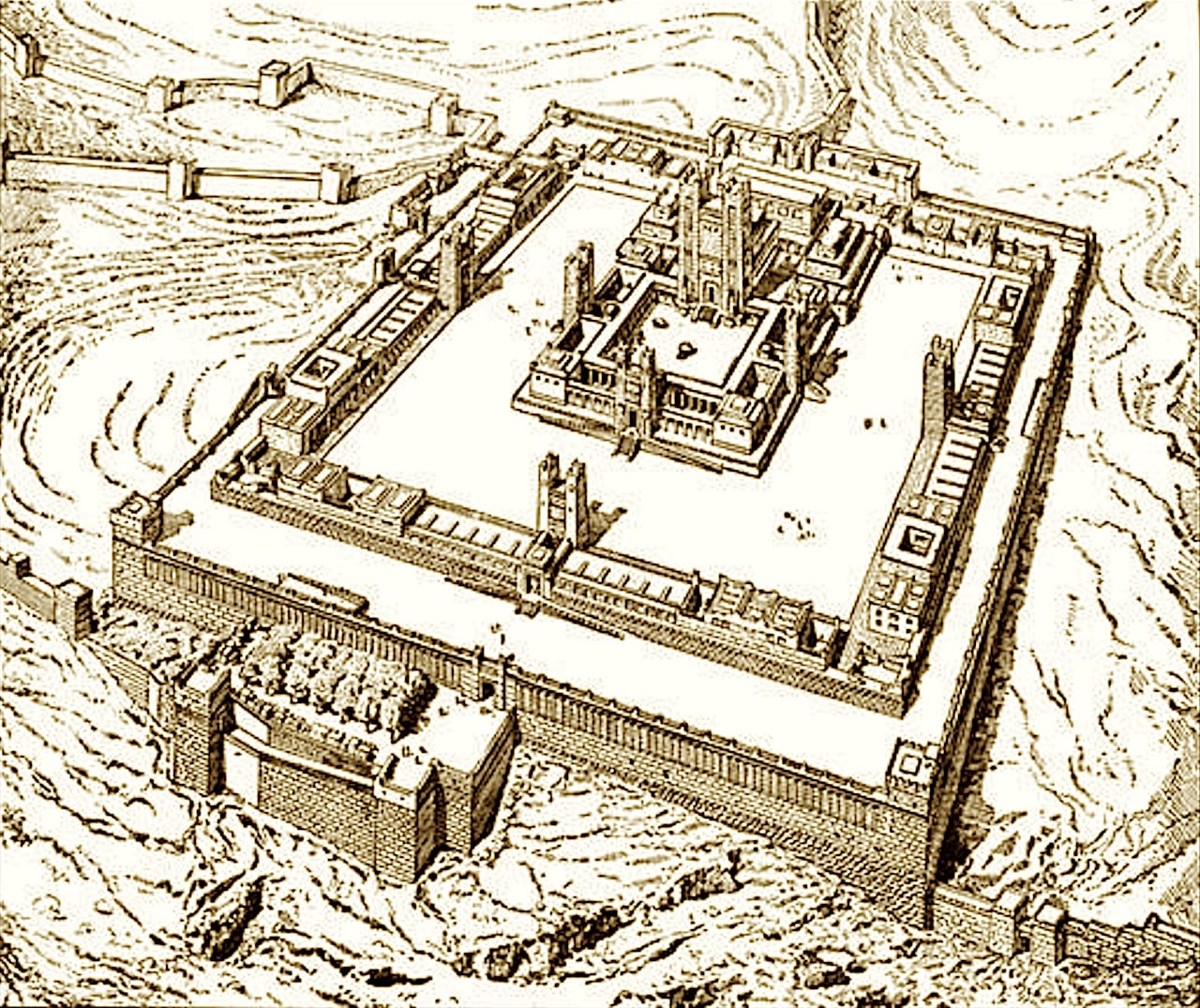
Then he measured the temple; it was a hundred cubits long, and the temple courtyard and the building with its walls were also a hundred cubits long. The width of the temple courtyard on the east, including the front of the temple, was a hundred cubits. Then he measured the length of the building facing the courtyard at the rear of the temple, including its galleries on each side; it was a hundred cubits.
Ezekiel 41:13-15 (NIV)

For the recently freed Hebrew slaves, everything about life had changed. All they knew about the God of their ancestors Abraham, Isaac, and Jacob was what Moses had told them. But they’d witnessed what God could do in the ten plagues that had been inflicted on Pharaoh and Egypt. They’d seen God part the waters of the Red Sea so they could cross and then bring the same waters crashing down on the Egyptian army.

But they still know relatively little about God. But in Exodus 19, they are about to learn a whole lot more. Moses goes up on a mountain by himself. From below they watch as lightning strikes, then smoke starts billowing, and the whole mountain trembles. When Moses descends, he not only has the Ten Commandments, but he has the blueprints and instruction manual for a Temple, a priesthood, rituals, and sacrifices that prescribe an entirely new way of living with God and with one another in community.

One of the things that became quickly clear to the ancient Hebrews when God, through Moses, gave them instructions for a temple and its rituals is that God made distinctions. Again, this parallels the Creation poem in Genesis 1 and 2 where God made a distinction between “this” and “that” parts of creation. There are consistent structural designs from the tent tabernacle, to Solomon’s Temple, and to the Temple Ezekiel sees in his vision. With each, there were distinctions of space. There were spaces between the common and the sacred, the space that was everyday people, and the “most holy” space where God’s presence resided.

The Most Holy Place, sometimes called the “Holy of Holies” was a perfect square. The only person who could enter was the high priest.

Fast forward to Jesus, some 400 years after Ezekiel. In Luke 9, Jesus takes his three inner-circle disciples and goes up a mountain. Suddenly, Jesus is transformed into blinding, bright light. There is lightning and then there’s smoke everywhere and then Moses shows up in his glorified, heavenly body along with Elijah. Does this sound familiar?! Jesus would descend that mountain and consequently usher a completely new blueprint and new distinctions that build on the old.

Jesus subsequently told His disciples that the Temple would soon be reduced to rubble, and 40 years later it was. After His death and resurrection, Jesus sent His Holy Spirit. This is an important new distinction. God’s presence was in Jesus’ people. The human soul became the “Most Holy Place” where God’s Spirit dwells and the body is its Temple.

But wait, we’re not done. The night before Jesus’ was executed, He told His followers, “I’m going to prepare a place for you.” When John is given a vision in Revelation this place is revealed as a new Jerusalem. Just like with Ezekiel, John had to watch as it was measured and wouldn’t you know it, this heavenly city is perfectly square just like the Most Holy Place. The distinctions from beginning to end have been transformed and flipped inside out. What began as a small (about 15 feet square) Sacred Space with the distinction that only God’s Presence is holy enough to be there, becomes at the end of the Great Story a “Most Holy Place” that is 1200 miles square where all of God’s people dwell together with God because, through the sacrificial death and resurrection of Jesus, they have been made holy, as well.

In the quiet this morning, I am reminded that the tremendously precise and ordered details that Ezekiel describes are a part of how God metaphorically reveals Himself to us. He is a God of detail and distinctions who transforms chaos into order, death into life, and the common into that which is holy. Paul wrote to the believers in Corinth that if anyone is joined with Christ, that person is a new creation, old things pass away and new things come. In other words, I am a microcosm of the very thing that God is doing throughout the entire Great Story, transforming that which wasn’t holy into that which is eternally holy.

I am in process, and as my local gathering of Jesus’ followers continues to remind everyone, this journey is about progress, not perfection.

And so, I progress into another day of the journey.

If you know anyone who might be encouraged by today’s post, please share.

Sharks and Leviathans

Sharks and Leviathans (CaD Job 41) Wayfarer

Who has a claim against me that I must pay?
    Everything under heaven belongs to me.

Job 41:11 (NIV)

Wendy and I have a little library of children’s books that resides just past the entrance of our home in a corner of the living room. It’s there for grandchildren and wee friends who come over for a visit. Among some of our favorites, there are also a couple of picture books with an exhaustive number of different creatures, critters, and creepy-crawlers from the animal kingdom.

Milo quickly learned that Ya-Ya (Grandma Wendy) has this thing with sharks. She doesn’t like them. Sharks produce a fear in Wendy that she’ll admit is slightly irrational. She doesn’t even want to see pictures of them.

So, of course, Milo always wants to read the creatures book and make Ya-Ya look at sharks.

God’s final discourse to Job ends with two poems that are somewhat mysterious. Each describes a mighty creature. The first describes a Behemoth and the other a Leviathan. The words are transliterations of the original Hebrew words because the exact identification of the animal or creature being described has been lost. Thus, the mystery. Both the Behemoth and Leviathan are mentioned multiple times in other biblical texts.

Scholars over the years have suggested that Behemoth’s description as an amazingly strong, dangerous, semi-aquatic, herbivore might suggest it is a hippopotamus. Hippos are often mistaken as docile creatures. Hippo attacks account for the deaths of about 500 people each year.

Leviathan is a bit different story because while some scholars suggest that it could refer to a crocodile. If that is true, then the description is hyperbolic and exaggerated. It’s certainly possible that hyperbole was a literary device in the ancient Hebrew poem.

As I read the Leviathan poem in the quiet this morning, it appeared to me to describe your standard dragon. Other scholars agree and suggest that Leviathan is a variation on a mythological creature from ancient Canaan called Lôtan. Lôtan was a seven-headed dragon who mythologically symbolized almost invincible power that stands in opposition to God. This caught my eye as I read about it this morning because our local gathering of Jesus’ followers is studying the book of Revelation which describes an enormous red dragon with seven heads (Rev 12:3).

No matter what the mysterious Behemoth and Leviathan are, the point that God is making is perfectly clear. Each represents an untamed, dangerous creature that would immediately strike fear in Job. It’s kind of like young Milo showing Ya-Ya pictures of sharks. God is in essence saying, “If you’re afraid of confronting a Behemoth or a Leviathan, how much more afraid should you be of the Creator who made them? Isn’t the Creator far greater in power and danger than either of them?”

Which, in the quiet this morning, has me thinking once again about that which is holy. When Jesus took Peter, James, and John with him up on the mountain and they saw Him transfigured into blinding, glorious light before their eyes while the voice of God thundered. Matthew writes that the three disciples “fell facedown to the ground, terrified.”

I think about the three disciples who enjoyed an intimate, human relationship with Jesus. They laughed with Him, ate meals with Him, and told stories around the campfire at night. They enjoyed familiar friendship and companionship with Him. When they experienced His unveiled power and glory on the mountain, they got a dose of his holiness and they hit the ground face down.

God is reminding Job of His holiness, and it’s a good reminder for me. I have experienced a relationship with Jesus full of grace, love, and forgiveness. But I should always be mindful that Jesus love and grace does not diminish His holiness, and neither should I.

If you know anyone who might be encouraged by today’s post, please share.

Behind the Veil

Behind the Veil (CaD Matt 17) Wayfarer

After six days Jesus took with him Peter, James and John the brother of James, and led them up a high mountain by themselves. There he was transfigured before them. His face shone like the sun, and his clothes became as white as the light. Just then there appeared before them Moses and Elijah, talking with Jesus.
Matthew 17:1-3 (NIV)

I was never much of a science guy back in school. It just wasn’t my jam. The further I get in my life journey, however, the more fascinated I’ve become by it. In particular, I find it fascinating the mysteries being uncovered and discovered. I learned as a child that the atom was the smallest “building block” of matter, but physicists have discovered a number of subatomic particles, with even more of them theorized. What’s crazy is that they behave in strange ways we don’t understand. I find it fascinating that we are at once discovering the expanding universe and its mysteries at the same time we’re discovering newer layers of the building blocks of the universe and their mysteries. In either direction, macro or micro, we’re making mind-blowing discoveries beyond our current comprehension. Amazing.

I mention this because the further I get in my spiritual journey, the more aware I’ve become of the connectedness of the Great Story and the mysteries of eternity to which it points. Jesus was always making a distinction between earth-bound thinking and eternity-centric thinking. He continually contrasted the kingdoms of this world to the kingdom of God, earth as opposed to heaven, temporal as opposed to eternal. This is not confined to Jesus. In fact, it’s connected throughout the Great Story.

In today’s chapter, Matthew records one of the most mysterious episodes in Jesus’ story. Jesus takes His inner circle of followers and goes up a mountain. In an instant, Jesus is revealed in His eternal glory. Light brighter than you can imagine, a dense cloud, a voice from within the cloud, and then two beings appearing with Him: Moses and Elijah.

Jesus said in His message on the hill that He didn’t come to “abolish the Law and the Prophets, but to fulfill them.” The climactic event for the Hebrew people was their deliverance from slavery in Egypt and the God giving of the Law to Moses on a mountain. If you go back and read about that event in Exodus chapters 19 and 20, there are amazing parallels between that episode and the episode described in today’s chapter.

Both events happened on mountains. Jesus shines like the sun, just like Moses whose face was so bright after returning from the mountain that he had to wear a veil over his face (Ex 34:29-35). Both involved seemingly natural phenomena of clouds/smoke and God’s voice from the midst. The former event precipitated the giving of the Law, the latter precipitated the fulfillment of it. Why did Moses and Elijah appear with Jesus? Moses was the instrument of giving. Jesus was the instrument of fulfillment. Moses represented the Law, Elijah represented the Prophets, and Jesus was the fulfillment of both just as He said He came to do. The Transfiguration was a bookend event to Moses’ receiving the Law on Mt. Sinai.

What struck me as I read the episode again today was the instantaneous transfiguration from temporal normal to eternal glory and then the instantaneous transfiguration back from eternal glory to temporal normal, along with the disciples’ terror.

In the quiet this morning, I find myself contemplating the probability (based on evidence in the Great Story) that the veil between earth and glory is thinner than I’ve ever imagined. I live, move, and have my being in an earthbound, three-dimensional world which frames my thinking and perception. But physicists now theorize that there are actually 11 dimensions (or more). There’s more to it than I ever realized, which is exactly what Jesus continually tried to get His followers to understand.

“Truly I tell you, if you have faith as small as a mustard seed, you can say to this mountain, ‘Move from here to there,’ and it will move. Nothing will be impossible for you.”

In essence, Jesus is saying that there is an eternal reality that is more real than the earthy reality I experience in three dimensions with my five senses. He called it “the Kingdom of God” and He asked me as His follower to seek it, find it, see it, believe it, and allow it to transform the way I live, move, and have my being on this earthly journey.

Jesus chastised Peter in yesterday’s chapter for being so bound to his earthy perceptions that he couldn’t see heaven’s intentions. The further I get in my spiritual journey, the more convinced I am that every time Jesus tells His followers to expand their faith, He’s encouraging me to open my mind and spirit to see what is beyond my human senses yet just as real as physical matter. It is already woven into creation itself. I believe it’s right there behind the veil that is thinner than I imagine.

If you know anyone who might be encouraged by today’s post, please share.

Positively “Horny” with Light

Positively "Horny" with Light (CaD Ex 34) Wayfarer

When Aaron and all the Israelites saw Moses, his face was radiant, and they were afraid to come near him.
Exodus 34:30 (NRSVCE)

“Let there be light.”

That’s the first act of creation in the poetic description of the beginning of everything in the opening verses of Genesis. This simple beginning, however, is not so simple. In fact, it’s hard to contain its meaning. It is part of the mystery of God and the universe that both theology and science have endlessly been attempting to understand. I can’t explain it any better than the Encyclopedia Brittanica does:

No single answer to the question “What is light?” satisfies the many contexts in which light is experienced, explored, and exploited. The physicist is interested in the physical properties of light, the artist in an aesthetic appreciation of the visual world. Through the sense of sight, light is a primary tool for perceiving the world and communicating within it. Light from the Sun warms the Earth, drives global weather patterns, and initiates the life-sustaining process of photosynthesis. On the grandest scale, light’s interactions with matter have helped shape the structure of the universe. Indeed, light provides a window on the universe, from cosmological to atomic scales. Almost all of the information about the rest of the universe reaches Earth in the form of electromagnetic radiation. By interpreting that radiation, astronomers can glimpse the earliest epochs of the universe, measure the general expansion of the universe, and determine the chemical composition of stars and the interstellar medium. Just as the invention of the telescope dramatically broadened exploration of the universe, so too the invention of the microscope opened the intricate world of the cell. The analysis of the frequencies of light emitted and absorbed by atoms was a principal impetus for the development of quantum mechanics. Atomic and molecular spectroscopies continue to be primary tools for probing the structure of matter, providing ultrasensitive tests of atomic and molecular models and contributing to studies of fundamental photochemical reactions.

In the same way, light is fundamentally a part of the spiritually supernatural:

  • Light was the first order of creation on the first day of creation in the Genesis creation ( keep in mind the sun, stars, and moon weren’t created until the fourth day).
  • After healing a boy born blind, Jesus said, “I am the light of the world.”
  • In the sermon on the mount, Jesus told his followers, “You are the light of the world.”
  • Jesus took his inner-circle (Peter, James, and John) up on a mountain (just like Moses in today’s chapter) and was “transfigured” before them (e.g. Matthew records the He shone like the sun while Luke describes it as bright as a flash of lightning). And Moses appeared with Him.
  • Angelic beings are consistently described throughout the Great Story as shining radiantly.
  • At the very end of the Great Story in Revelation (spoiler alert: the end is a new beginning) “There will be no more night. They will not need the light of a lamp or the light of the sun, for the Lord God will give them light.”

In today’s chapter, Moses returns to the top of the mountain and spends another 40 days with God. When he returns, the text says that his face was so radiant that it freaked out the Hebrews (for the record, Peter, James, and John were equally freaked when Jesus revealed the light of His glory).

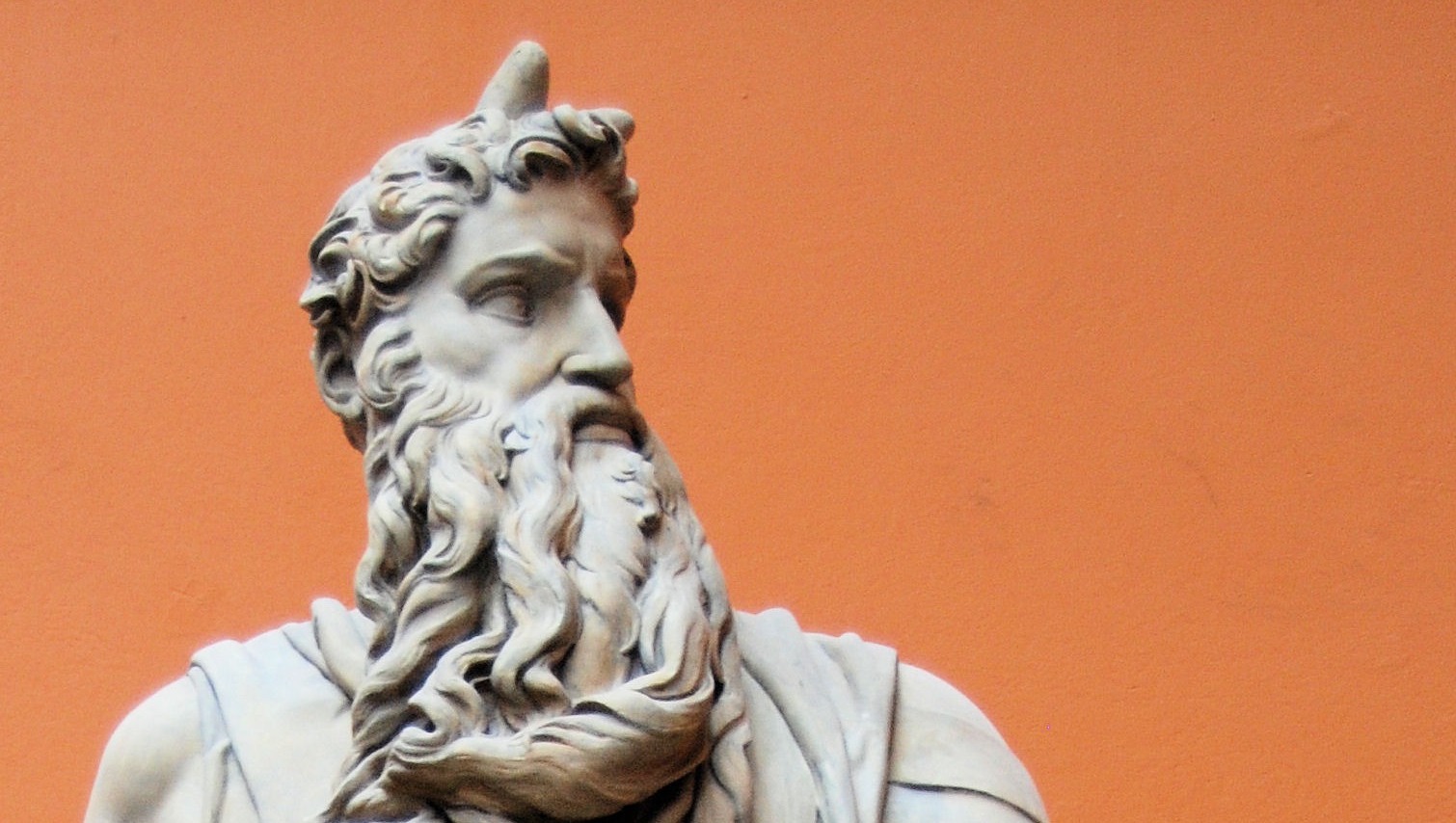
Here’s a bit of additional mystery for you. The Hebrew word used here is actually translated “horns.” That’s why many artistic depictions of Moses (the most famous is Michaelangelo) show him having horns on his head:

Moses

So, what’s up with that?! I talked in my podcast, A Beginners Guide to the Great Story Part 1 about the fact that when thinking about the ancient stories we have to consider the context of the times in which they were living. The mystery of Moses’ horns is a great example. There is an ancient Babylonian text that uses the Sumer word si which is also the word for “horn” to describe a solar eclipse in which the sun’s light appears like “horns” (think “rays of light”) shooting out from behind the darkened moon. It’s quite possible that the word “horns” was layered with meaning and the ancients understood what we call “rays” of light to be “horns of light.”

In the quiet this morning, I find my brain buzzing with all sorts of thoughts about light and how it is part of the mystery of both the spiritual and the scientific. Humanity has so often made the two into binary, either-or, opposites and enemies. The further I get in my journey, the more I am convinced that, in the end, we will understand that they are two parts of the same mystery. It’s a “both, and.”

As a follower of Jesus, I can’t help but go back to Jesus’ call for His followers to be “light” to the world”:

“Let me tell you why you are here. You’re here to be salt-seasoning that brings out the God-flavors of this earth. If you lose your saltiness, how will people taste godliness? You’ve lost your usefulness and will end up in the garbage.

“Here’s another way to put it: You’re here to be light, bringing out the God-colors in the world. God is not a secret to be kept. We’re going public with this, as public as a city on a hill. If I make you light-bearers, you don’t think I’m going to hide you under a bucket, do you? I’m putting you on a light stand. Now that I’ve put you there on a hilltop, on a light stand—shine! Keep open house; be generous with your lives. By opening up to others, you’ll prompt people to open up with God, this generous Father in heaven.”

-Jesus (Matt 5:13-16 [MSG])

What does that mean for me? Am I a light-bearer? Do these posts and podcasts shine? More importantly, do my daily words and interaction with family, friends, neighbors, strangers, community, enemies, acquaintances, and foreigners radiate with love, joy, peace, patience, kindness, goodness, gentleness, faithfulness, and self-control? Am I being generous with my life? Is my house open? Am I opening up to others?

It’s what I’m endeavoring to do increasingly today, each day of this earthly journey. I want the words of my mouth, the meditations of my heart, the work of my hands, and my interactions with everyone to be positively “horny” with Light.

If you know anyone who might be encouraged by today’s post, please share.

Chapter-a-Day Psalm 17

Isenheimer
Isenheimer (Photo credit: Wikipedia)

Because I am righteous, I will see you.
    When I awake, I will see you face to face and be satisfied.
Psalm 17:15 (NLT)

This morning as I read David’s lyric that he would “see [God] face to face” I was struck by the notion. In fact, what seems to be a simple thought seemed to be an audacious statement. In all my journeys through God’s Message, I’ve come to understand that seeing God “face to face” is a momentous deal. Few people in the recorded histories of God’s Message actually saw God face-to-face and those who did reacted to the experience – most commonly falling face down to the ground in awe and righteous fear. In fact, whether they knew it or not, their encounter with seeing God’s face was a life threatening experience from which they were graciously spared. God told Moses directly: “No one may see me and live.” (Exodus 33:20)

If you’re interested in a little extra-credit research, here is a short list of a few who saw God face-to-face and their experiences:

  • Abram (Genesis 17)
  • Jacob (Genesis 32)
  • Moses (Exodus 3)
  • Isaiah (Isaiah 6)
  • Peter, James & John (Luke 9:28ff)
  • Saul (Acts 9)

Today, I’m reminded that I serve Jesus who, God’s Message says, is the risen and glorified Creator of the universe. I trust His promise that I will someday see Him face-to-face and will dwell with Him in His glory. I’m equally reminded that my finite human mind cannot comprehend the enormity of it.

Chapter-a-Day Matthew 17

Spa Treatment at Le Telfair Golf & Spa Resort ...
Image by whl.travel via Flickr

His appearance changed from the inside out, right before their eyes. Sunlight poured from his face. His clothes were filled with light. Matthew 17:2 (MSG)

God’s glory is an inside out proposition. The change that God wants to make in us is not a cosmetic one. The beauty and light that God wants to emerge from us as a calling card of His grace begins as a change of heart and pours out as a change of countenance and a change of behavior.

Feeling ugly? There is only so much that make-up and new clothes can do – and it’s a temporary fix at best. Radiant beauty starts with God giving your heart and life a makeover. Gorgeousness eminates from a spiritual spa treatment of the soul.

In just over one week we will be celebrating Easter and Jesus’ resurrection. Many of us are, no doubt, contemplating Easter dresses, bonnets and looking good for Easter Sunday. Perhaps this year when I put on my “Sunday best” for Easter it should not be clothes I’m talking about, but the attitude of my heart, the purity of my thoughts, the love in my words and actions.

Enhanced by Zemanta