Tag Archives: Small Town

An Ambitiously Quiet Life

An Ambitiously Quiet Life (CaD 1 Thess 4) Wayfarer

make it your ambition to lead a quiet life: You should mind your own business and work with your hands, just as we told you, so that your daily life may win the respect of outsiders and so that you will not be dependent on anybody.
1 Thessalonians 4:11-12 (NIV)

This past winter and spring our kids and grandkids lived with us for over four months here in Pella, Iowa (see featured photo). They were transitioning back to the States after five years of living in Edinburgh, Scotland.

One day our grandson Milo asked his mother, “Is Papa famous?”

Taylor laughed and asked what prompted the question.

“Everybody knows him,” he replied.

Welcome to a small town, young man.

I have been doing a lot of online networking for business in recent weeks, having Zoom calls with people from all over North America. As we introduce one another, I find that the vast majority of them live in cities, with most of them located on either one of the coasts. When I tell them I live in a little town in Iowa, they often react with surprise. Some will even ask me about it, typically stating that they couldn’t do it and it would be too boring for them. This is often followed by a statement about needing a lot of things to do and places to go for activity and entertainment.

Fascinating.

In today’s chapter, Paul shifts the theme of his letter from personal matters (e.g. discussion of Timothy’s visit and his longing to make a personal visit of his own) to instructions in life for the spiritually young Jesus followers in Thessalonica.

Paul’s first instruction was to avoid sexual immorality. Keep in mind that generally loose sexual mores and attitudes were a hallmark of ancient Greece. As one historian described sex in the city of Athens (where Paul is writing this letter):

“Relationships between men of the same age were not at all common: rather, the standard same-sex relationship would involve an adolescent boy and an older man. Men also used female prostitutes regularly: sex could be bought cheaply in a city that was home to countless brothels, streetwalkers and female ‘entertainers’.”

Paul urges the Thessalonian believers to produce the fruit of self-control in sexual matters for their own spiritual, and physical, well-being.

He then goes on to repeat his encouragement that I wrote about in yesterday’s post, which is to increase in love “more and more.” But he then adds a general instruction for daily life, encouraging them to make it their “ambition” to lead a “quiet life.”

make it your ambition to lead a quiet life: You should mind your own business and work with your hands, just as we told you, so that your daily life may win the respect of outsiders and so that you will not be dependent on anybody.

It was about thirty years ago that these verses first leaped off the page and into my soul. This passage has become somewhat of a guide and a mission. I didn’t think about it when I moved to a small town from the city where I’d spent most of my life, but in retrospect, I find that it was definitely synergistic.

Yes, my life is quieter. I can get anywhere I need in ten minutes or less. I like seeing people I know everywhere. I love that people know my name when I walk into the store, a restaurant, or the pub. I love that the guys at George’s Pizza begin making our pizza as soon as they see our car pull up on Sunday. I love not dealing with the traffic, crime, and cost of a city. And, despite not having all the available activity and entertainment options of a city, Wendy and I never lack things to do nor do we ever feel that our entertainment tank is on empty.

Paul’s words to the Thessalonians have been instrumental in my life journey. I have made it my ambition to lead a quieter life, and it has greatly increased the quality of my life. Please don’t hear what I’m not saying. I don’t think one has to live in a small town to have a quieter life. I’m just saying that I have found it to personally be part of my own journey in being ambitious for more quiet.

And, in the quiet this morning, I find myself thinking of the ambitions I observe in our adventure-seeking, adrenaline-addicted, YOLO culture. I observe individuals who are so ambitious for non-stop activity and entertainment that they never have time to figure out why their relationships aren’t working, their soul feels so empty, or their minds are so constantly afraid and anxious. The answers to those things require contemplation, introspection, and conversation (and I would add prayer), and those things require quiet.

If you know anyone who might be encouraged by today’s post, please share.

Jews and Romans

Jews and Romans (CaD Acts 13) Wayfarer

But the Jewish leaders incited the God-fearing women of high standing and the leading men of the city. They stirred up persecution against Paul and Barnabas, and expelled them from their region.
Acts 13:50 (NIV)

I once spent three years living in a small town of just over 300 people. It was a great experience, and it inspired a play I wrote many years later called Ham Buns and Potato Salad. One of the things I learned living in such a small town was how the community operates, unofficially. Sure, there was an official mayor and city council, but that doesn’t mean they actually ran things. There were individuals who held sway behind the scenes if they felt strongly enough about a matter. It’s the way the world works.

In today’s chapter, Luke records the events of the first missionary journey taken by Saul and Barnabas. Luke has just spent the previous few chapters explaining how the Holy Spirit led the Jewish leaders of the Jesus Movement to understand that Jesus’ Message was for all people, both Jews and non-Jews (Gentiles). Today’s chapter provides a great example of how Saul and Barnabas operated in taking Jesus’ Message to places that had never heard that message.

The first stop they made upon entering a town was the local Jewish synagogue. Saul and Barnabas started with the Jewish locals. Luke records the message Saul gave in the synagogue in Pisidian Antioch proclaiming Jesus was the resurrected Messiah. This created quite a stir and people crowded to hear more, but it angered the local Jewish leaders, so they “incited the God-fearing women of high standing and the leading men of the city. They stirred up persecution against Paul and Barnabas, and expelled them from their region.

The Jewish leaders knew the individuals in their community who held sway. Paul and Barnabas quickly went from being popular visitors to having the welcome mat yanked out from underneath them. Their response to this persecution was right out of Jesus’ playbook. They shook the dust off their feet and switched focus from the Jews to Gentiles in the area.

One of the Gentiles who became converts on this journey was a man named Sergius Paulus. He was the Roman proconsul on the island of Cyprus. He was a documented historical figure. To have a Roman official of such a high level become a believer would have been a huge deal. He wasn’t big fish in a small pond like the “women of high standing” in Pisidian Antioch. He was a big fish in a big pond. Sergius Paulus was a powerful man within the Roman Empire. As a believer, he could influence all sorts of people throughout the Empire itself. Some have argued that it was this high-profile conversion that led to Saul taking on the name Paul. He’s first called Paul in today’s chapter and will be referred to as Paul by Luke from this point on.

In the quiet this morning, I meditated on the contrasting experiences that Paul and Barnabas had with the small-town power brokers of Pisidian Antioch and the Roman Governor of Cyprus. It’s the beginning of a major shift in the Jesus Movement. It will not be long before the burgeoning number of non-Jewish Greek and Roman believers outnumber the original core of Jewish believers in the leadership of the Movement. There’s a storm on the horizon.

As a disciple of Jesus, I’ve had to understand that things change and the spiritual journey is one of constantly managing those changes. I’ve observed that organized religion, on the other hand, loves tradition and will often shun change at all costs to avoid the discomfort of change. I find this to be a tragic mistake, and one I want to avoid for the rest of my earthly journey.

Featured image is Sergius Paulus by Raphael

If you know anyone who might be encouraged by today’s post, please share.

Community

Community (CaD Lk 1) Wayfarer

“All the neighbors were filled with awe, and throughout the hill country of Judea people were talking about all these things.”
Luke 1:65 (NIV)

The last few nights, Wendy and I have visited one of our local eating establishments. It’s always enjoyable to eat out, but living in a small town makes it a bit different experience. You tend to know people. You not only know people but you tend to know their stories. People stop and have conversation. It’s a communal experience.

I get that small town life isn’t for every one. I wouldn’t trade it for the world. Community has become one of the things I have grown to value most on this earthly journey. People walking life’s journey together, sharing experiences and sharing tragedies. I have found there to be a psychological, social, and spiritual strength in being an active part of healthy community.

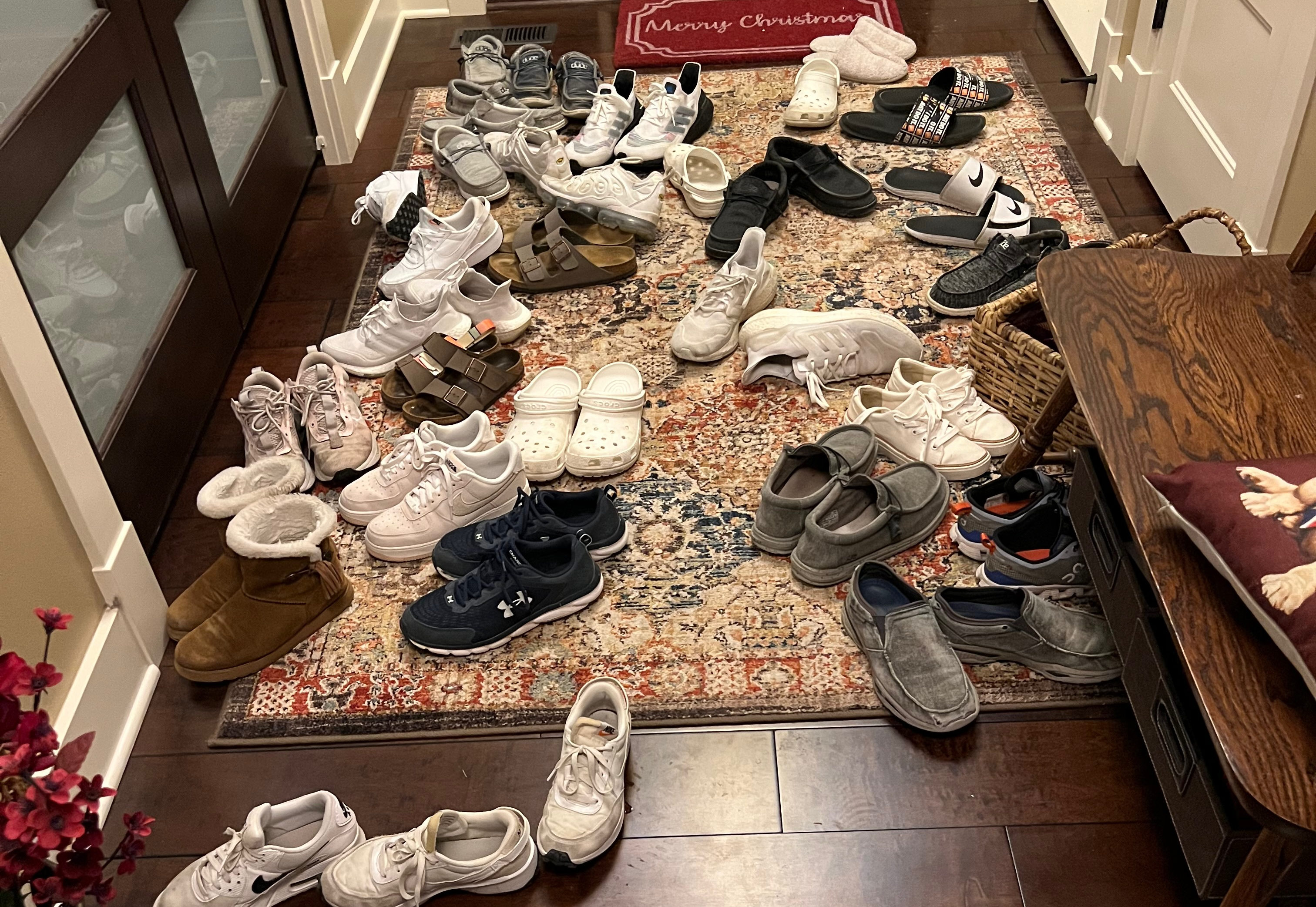
One of the reasons Wendy and I went out to eat last night is that every Wednesday night we allow our house to be used by four small groups of high schoolers and their youth program. Twenty or thirty kids and their adult leaders invade our home for two hours, while we have a date (see featured photo of our front door on Wednesday evenings). As Wendy and I drove home last night from our very sociable dinner and entered the house filled with a cacophony of teen voices, we were filled once again with gratitude for living in community.

As the holidays approach, I thought I’d go back to Luke’s version of Jesus’ story on our chapter-a-day journey. Luke was a doctor, and he was one of the many believers who became a follower of Jesus based on the witness and stories of those who’d been with Jesus and testified to Jesus’ message, miracles, death, and resurrection. Luke decided to thoroughly investigate all of these stories, interview those who were part of the story, and write them down for his friend Theophilus and other believers back in his own home community. Luke became a companion of Paul on his missionary journeys and documented those experiences, as well.

I love Luke’s version of the story because of the fullness he brings. In his opening chapter, it is Luke who fills in the stories of the miraculous birth of John the Baptist, Mary’s account of her angelic visitation and subsequent visit to John the Baptist’s mother, Elizabeth who was a relative. A woman who had been childless suddenly gets pregnant in her old age. Her husband, a respected priest in the community, is struck dumb yet claims an angel appeared to him in the Temple and told him this would happen. Mary arrives to add her own angelic experiences and miraculous conception to an already miraculous story.

I found it interesting when Luke the investigator adds, “All the neighbors were filled with awe, and throughout the hill country of Judea people were talking about all these things.” That’s what happens in a small, close-knit community. Word travels. Stories get shared. People both know and care about other people in their community. Personal events are communally felt. As an investigator and chronicler of these events, Luke is saying that people in that small Judean hill country were still talking about it: Zac and Liz’s miracle boy who became the famous Baptizer. Local boy makes good, then tragically loses his head because of Herod.

Our small town here in Iowa has produced a well-known professional athlete and a rock-star. Everyone in our town knows it. We know their parents and their siblings. People feel a communal connection. They feel part of the story. It was no different for the community in the Judean hill country where Zechariah and Elizabeth lived.

In the quiet this morning, I find myself meditating on living in community. Yes, I’ve known and experienced some of the unhealthy and annoying things that living in a small community of other flawed human beings brings with it. I have, nevertheless, found the positives to far outweigh the negatives. In our post-covid world, I continue to read about the negative consequences created by forced isolation. The psychological affects were felt by everyone from children who couldn’t be with their classmates to elderly individuals who were virtually shut off from any physical contact with their loved ones. It takes a mental and spiritual toll.

I need community. Jesus modeled with his disciples and the entourage of men and women who accompanied Him on His ministry. Luke experienced it as the followers of Jesus in his day met regularly in people’s homes to share meals and share lives. I’m convinced I would find community no matter where I lived. I’d seek it out. I need it for my own mental and spiritual health. But I’m here in a small Iowa town where I’m blessed to have it in abundance.

Today, I’m going to bask in the sheer joy of it.

If you know anyone who might be encouraged by today’s post, please share.

Prudent Silence, Bold Speech

Prudent Silence, Bold Speech (CaD Am 5) Wayfarer

Therefore the prudent keep quiet in such times,
    for the times are evil.

Amos 5:13 (NIV)

I remember Garrison Keillor once saying that a small town newspaper isn’t really the news, it’s just the table of contents. The real news, the stuff that’s really going on, never made it into print. Having lived in a few different small towns along my life journey, I feel the truth of Keillor’s statement. Yes, every small town has a City Council, but I’ve observed that there are always unelected individuals in small towns who wield unofficial power.

In the ancient days of the prophet Amos, the seat of justice was always at the local city gate. Small towns handled their own justice right inside the gates of the city. The town’s elders met there regularly to visit, share news, and conduct business. If there was a criminal or legal matter, it was the town elders who heard the case and meted out justice.

There was only one problem with this system, of course. Just like any small town, there were those individuals who wielded unofficial power. The wealthy and prominent puppet-masters pulled the strings of justice as they saw fit. And because the populace feared the threat of what the puppet masters could do in retaliation, they kept their mouths shut and their heads down.

Enter the prophet Amos.

Amos, the blue-collar prophet from Judah, strolls into town with words that bite. He calls the people of Israel to repent from the shady local politics and power games in which the poor and weak suffered at the hands of the rich, local puppet masters.

Today’s chapter was written as lyrics to a funerary lament. It was a way of Amos saying to his audience, “You’re already dead, you just don’t know it yet.” Amos then ends his lament with a proclamation of the “day of the Lord” when God would pronounce judgement on Israel. The justice of God contrasting the injustice of the local puppet-masters.

In the quiet this morning, I was struck by Amos’ description of the silent bystanders who are “prudent” in keeping silent. That is a theme that resonates deeply in the current events of today. Researchers say that the level of anxiety in young people today is off-the-charts, and one of the reasons is the daily fear that saying the wrong thing will get them cancelled and ostracized in the classroom or social media. Just yesterday I listened to an interview with Palestinians inside Gaza explaining that they must prudently keep quiet about what’s really happening inside Gaza or their Hamas puppet masters will torture and kill them and their families. On college campuses, the administrations who have always been quick to speak out about social justice issues suddenly find it prudent to keep silent about terrorists indiscriminately torturing, raping, and murdering innocent people, including children.

One of the things that I love about the prophets is their willingness to say the things that needed to be said. Of course, things did not always end well for them. The power brokers and puppet masters regularly found ways to silence their prophetic critics. Jesus offered His own lament over this reality:

“Jerusalem, Jerusalem, you who kill the prophets and stone those sent to you, how often I have longed to gather your children together, as a hen gathers her chicks under her wings, and you were not willing.”

Just last week I was reminded of the words of Martin Niemöller, a Lutheran pastor who initially supported Hitler’s rise to power, but then became the leader of clergy who opposed the regime. He wrote:

First they came for the Communists
And I did not speak out
Because I was not a Communist

Then they came for the Socialists
And I did not speak out
Because I was not a Socialist

Then they came for the trade unionists
And I did not speak out
Because I was not a trade unionist

Then they came for the Jews
And I did not speak out
Because I was not a Jew

Then they came for me
And there was no one left
To speak out for me

May God grant me the boldness of a prophet to speak and to pen the right words at the right time with a heart that is ever motivated by love.

If you know anyone who might be encouraged by today’s post, please share.

Living in Community

If there is among you anyone in need, a member of your community in any of your towns within the land that the Lord your God is giving you, do not be hard-hearted or tight-fisted toward your needy neighbor. Deuteronomy 15:7 (NRSV)

Last week our daughter, Taylor, and I were having lunch together. Taylor returned from Graduate school in Scotland this past summer and has been living with us as she applies for jobs around the country. We talked about our move to the small town of Pella from the suburbs over a decade ago and how that move changed our lives.

Growing up in the midwest there is a spirit of community that still exists, even in the cities. When you live in Pella, however, the idea of community is taken to a whole different level. Neighbors look out for one other. Neighbors lend freely and return favors. Almost everyone is involved in volunteering in the community in some way. It’s a wonderful town. “There’s no town quite like it,” I said to Taylor as we ate our lunch, and she agreed.

I was struck this morning by the number of times the word “community” was used in the chapter. The rules and commands were really geared toward the concepts of how to live together in community. The overarching principles that come out of the chapter is goodwill, generosity and forgiveness. As I read, I thought of numerous examples of how I’ve experienced these principle with my neighbors and examples of how I’ve attempted to live out the same.

Today, I’m thankful for community. No community is perfect. We live in a fallen world and even the Hebrews who received the commands through Moses would find that reality always falls short of God’s ideal in this fallen world. Nevertheless, there are places where you find the spirit of community more than others. I live in one of those places, and I’m very grateful.

chapter a day banner 2015

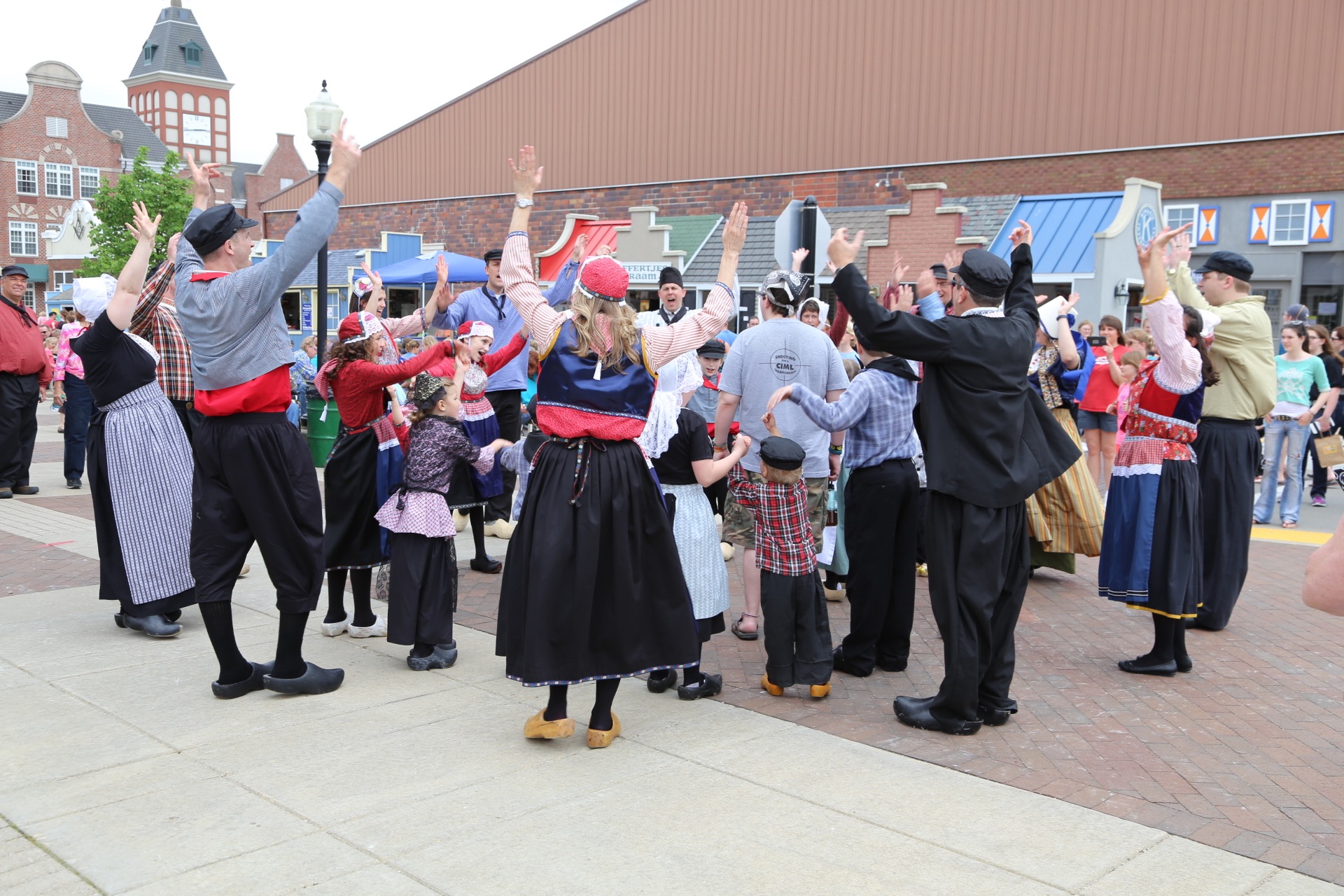
Featured photo: Dutch Dancers (all volunteers) entertain crowds and teach traditional Dutch dances on the streets of Pella Iowa during that annual “Tulip Time” festival.

Complacency

When you have had children and children’s children, and become complacent in the land….
Deuteronomy 4:25 (NRSV)

It has been fascinating for me to live in a small town. Growing up in the city, I never had much of a sense of community heritage and generational patterns, but you see these things more clearly in a small town. Families stick closer together. Lives are more intertwined. Businesses and farms are generational. Faith is part of the fabric of both family and community. Traditions bind generations.

I have also observed that there is a subtle sense of complacency that sets in across generations, especially as it relates to faith. Rather than being the personal, intimate relationship Jesus talked about and called us to it seems to me that, for some, faith slowly becomes just another communal tradition. Go through the motions. Keep up the tradition. It’s simply what we do; It’s what we have always done.

The older I get the more I realize that it takes effort not to experience complacency in our spiritual journey. Moses warned the people about it in today’s chapter as they prepared to enter the promised land.  Along the way the patterns become habits, habits become traditions, and traditions are mindlessly acted out as they have always been done for generations. But, there’s no real investment of heart or mind in it. It’s Life-less. And then, bad things can happen.

This week I’m taking up the task of thinking about the things I continually do from work to faith to recreation and relationships. I want to be aware of areas in which complacency is setting in and try to understand how it affects me and those around me. Perhaps there are some changes I need to make to consciously re-engage my heart and mind.

chapter a day banner 2015

Hangin’ with the Homeys

“But now, our God, what can we say after this? For we have forsaken the commands you gave through your servants the prophets when you said: ‘The land you are entering to possess is a land polluted by the corruption of its peoples. By their detestable practices they have filled it with their impurity from one end to the other. Therefore, do not give your daughters in marriage to their sons or take their daughters for your sons. Do not seek a treaty of friendship with them at any time, that you may be strong and eat the good things of the land and leave it to your children as an everlasting inheritance.’”
Ezra 9:10-12 (NIV)

I grew up in a great neighborhood on the northwest side of Des Moines. The neighborhood was packed full of young families, not only on our block but on the surrounding streets. There were a lot of kids running around the area, but you tended to hang with your homeys on the street you lived. You’d stick close to the kids on your own block. They were the nearest to you, you knew them well, and more importantly your parents knew their parents.

On occasion, kids from another street would migrate over to play and hang out. I can remember the rare occasion when my mom would tell me that certain kids were “bad news” and she didn’t want me hanging out with them. In fact, I was to steer clear of that kid altogether. Looking back, I know exactly why mom gave me the order and it was a wise thing to do. Some of those kids were, in fact, bad news.

In the melting pot of modern America, reading a chapter like today’s regarding the strict commands the Hebrews had not to intermarry with neighboring peoples can feel strange and prejudiced. “Pureblood” wasn’t an idea J.K. Rowling dreamed up for the Harry Potter series. The truth of the matter is that history is full of examples of peoples and socio-economic groups desperately trying to remain homogeneous; Sometimes rabidly so.

Ancient Egyptian royalty, who believed themselves divine, would sometimes only marry their own immediate family members to keep the bloodline pure. European royalty, who would only marry their children to other royals, became so intertwined that to this day the royal families of Europe are all related to one another. Living in a small Iowa town settled by a handful of Dutch families, I experience the same thing at any community social event as people constantly play a game we call “Dutch Bingo” discovering how community members are related to one another (and, they usually are).

I found it interesting, however, that as I read today’s chapter Ezra pointed to the motivation God had for telling them not to intermarry. Just like my mother back in the ‘hood, Father God knew that some of these other tribes were bad news. In many cases, the area religions were glorified excuses for sexual indulgence and got into some really nasty stuff including child sacrifice. The command not to intermarry was not some elitist attempt to keep bloodlines pure but about cultural and spiritual self-protection.

This morning I am once again reminded that reading ancient sections of the Great Story is often difficult in light of the immense changes of culture and civilization over time. As an adult, my parents would never tell me who I can and can’t hang out with, but as a child they knew that hanging with the homeys from our block was a wise thing and that I needed help in discerning that some kids were bad news. So it is that I believe God’s relationship with humanity changes as civilization matures and as the relationship itself has changed between God and humanity through the person and work of Jesus.

chapter a day banner 2015


featured photo: adwriter via Flickr

Sweet Corn: An Iowa Feast

Speaking of traditions, our friends came down from Des Moines last night to join us for Fiddler on the Roof and see Suzanna performing in the chorus. After the matinee performance we all came back to the house for a traditional Iowa summer cookout. Burgers on the grill and freshly picked Iowa sweet corn.

For those of you not from Iowa, late July and early August are a very special time of year around here. The sweet corn is finally ripe and the landscape in every community is dotted with pick-up trucks in lawns and parking lots selling beds full of freshly picked corn on the cob. I have often said that a pint of Guinness tastes different and better in Ireland than it does anywhere else in the world. So I would tell you that sweet corn on the cob tastes different and is better in Iowa than anywhere else in the world. It’s nature’s candy and it comes on its own ready-made stick.

Between my sophomore and junior years in college I interned as youth pastor of the Community Church in Kamrar, Iowa (population 110, SAL-UTE!). I lived that summer with a sweet retired couple named Stoffer and Vianna Gelder. I will never forget the late July weekend when the sweet corn was finally ripe. Vianna cooked up several big pots of sweet corn and we feasted on sweet corn on the cob. That’s all we ate for two evenings straight. Cob after cob of juicy, sweet corn dripping with fresh, melted Iowa butter and salted to perfection.

If you’ve never had it like that, just swing by in late July or early August and let us know you’re coming. We’ll buy a dozen ears of peaches n’ cream sweet corn out of the pick-up truck just off the town square. It’s the honor system, by the way. Just take a dozen ears and put your money in the box. Then we’ll boil ’em up to perfection and have a feast.

My Life: A Photo Abecedarius

IMG_7948

P is for Pella, Iowa my hometown for the past decade. It is an amazing, beautiful, quaint, community and I never planned nor imagined myself living here. I have come to fully appreciate all that is special and absolutely unique about it, even those things that drive you absolutely nuts.

Related Links:

Ham Buns and Potato Salad Downloads

Photo Pete Zarria via Flickr

Sometimes you have no choice but to go home.

When Thomas Prins was 18 his hometown of Hebron, Iowa (population 318) was boiling in  a scandal that was never resolved. He packed his bags and left for college in New York City. He went to school, found unexpected success as a writer and never looked back.

Twelve years later, after his parents lose their lives in a tragic auto accident, Thomas has no choice but to return home. The town prepares for the funeral and the local residents are atwitter that “Tommy” is coming home. With his return, heat is turned up on the old scandal which has quietly simmered in the town’s collective conscience since his departure.

Ham Buns and Potato Salad is a play about going home. It’s about grief and hope. It’s about confronting our past and stepping into our future. It’s about small town quirks and human frailties. It’s about fear and love and grace and forgiveness.

I’ve received requests from those who’d like to read the script and so I’m making it available for download in a PDF format along with a low-tech MP3 recording of an informal table reading of the script (in the event you’d rather listen than read). In addition, this post will remain as a page on my blog. Simply click on the “Ham Buns and Potato Salad” link in the header of my blog’s homepage for quick access. Feel free to pass it along if you know of anyone who’d be interested.

The Skinny on the Play

Ham Buns and Potato Salad is a full-length play in two acts.
Ten Characters:
Five Adult Males (Ages 30-60)
Four Adult Females (Ages 30-60)
One adolescent female (Age 12)
All action takes place in one setting and can be performed with minimal set.

All copyrights and production rights for Ham Buns and Potato Salad are held by the author. The downloadable script and corresponding audio recording are intended for private individual perusal and/or listening. They may not be copied, produced, performed or broadcast without the expressed, written consent of the author.

Please direct any questions or requests to tomvanderwell@gmail.com.

Downloads:

Ham Buns and Potato Salad.pdf

Ham Buns & Potato Salad Reading.mp3 (1 hr 40 minutes; 45 Mb)

Please note that the MP3 audio recording is of a table reading of the second draft of the script. Changes to the script were made after this reading.  Be advised that the audio version will not match perfectly with the PDF (but it’s close!).