Tag Archives: Roman Empire

Fiery Ordeals

Dear friends, do not be surprised at the fiery ordeal that has come on you to test you, as though something strange were happening to you.
1 Peter 4:12 (NIV)

Wendy and I have been reading a growing number of articles in the morning that chronicle individuals who have been singled-out and persecuted for failing to march lock-step with the prevailing dogma of whatever group is in control. In one article we read this week, a woman and her husband moved their entire family from one part of the country to another because of the way they’d been blackballed by entire social groups to which they’d been blissfully a part of for decades.

This is not a one-sided phenomenon. It’s happening on both sides of the political spectrum. It’s happening in politics, religion, business, and academia. What I am observing — and at times personally experiencing — in our current social landscape is a return of social ostracism as a form of punishment.

None of this is new. It is as old as human empire itself. If Peter were to pay us a visit, he would say, “Welcome to the club.”

In the Roman Empire of Peter’s day, social standing was everything. It was an adult version of high school on steroids. If you accepted Roman culture and went with the flow every little thing was going to be alright. If you failed to participate, if you hinted at not accepting the prevailing Roman rites, religions, and cultural norms – you would quickly find yourself on the outs in all sorts of ways.

It is exactly what Peter’s audience was experiencing. When a person, or an entire household became followers of Jesus, they no longer joined the drunken, sexually permissive festival culture. They stopped participating in sacrifices to local gods. They refused to honor the imperial cult (e.g. the Emperor is a god). They withdrew from trade guild feasts that involved offerings to idols.

Believers were therefore seen as suspicious, held in contempt. Colleagues unfollowed them on Roman LinkedIn. Their membership at Roman Rotary was revoked. The neighborhood moms’ club made it obvious they were not welcome.

Not only that, but suddenly believers were held with suspicion and became the subject of outrageous rumors in their neighborhood and social circles. They were labeled atheists (because they rejected visible gods). They were accused of cannibalism (the sacrament of Communion misunderstood). They were suspected of sedition (refusal to call Caesar “Lord”).

It gets even more intimate. If a member of a Roman household became a believer, the ostracism and suffering began in the home. A wife, a child, a servant, or a slave who became a believer in a socially entrenched Roman household could expect domestic violence, expulsion from the household, loss of inheritance, and social severing.

This is the situation that Peter is addressing in his letter. When Peter writes of a “fiery ordeal,” he is not reaching for poetic flourish. Fire is already licking at the edges of their world.

On the surface, Peter is speaking directly to the social suffering I’ve just described.

He is also prophetic. Because in a short time the city of Rome will experience a tragic and catastrophic fire. Emperor Nero will scapegoat and blame the fire on Christians.

The types of suffering Peter’s audience are experiencing is only going to get worse. Rome will unleash a brutal campaign against the Jesus Movement. Believers will be tossed into arenas to be torn apart by wild animals for Roman entertainment. Christians will be impaled alive, covered in pitch, and become living torches at the Emperor’s garden parties. They will be rounded up and executed in mass crucifixions.

It is likely that Peter himself was crucified in the “fiery” persecution he prophetically foreshadows in today’s chapter.

I find my heart focused on two things as I meditate on these things in the quiet this morning.

The first focus is placing the current realities I experience and read about in proper historical context. The rising pressures, sufferings, and persecutions that Peter’s audience was experiencing was personally more devastating. The physical threat far greater. One of the reasons that I love history is that it provides a necessary contextual mirror. If I think I have truly experienced suffering, I need to slip my feet into the sandals of a first-century Roman slave who informs his owner that he is now a follower of Jesus and will no longer swear that the Emperor is a god and bow down in loyalty to him.

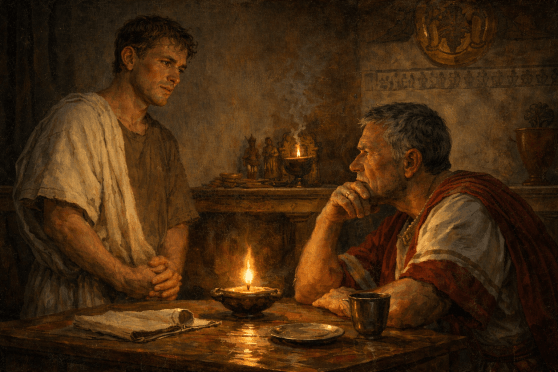
Imagine the quiet in that room. The oil lamp flickering. The master staring. The slave’s voice steady but trembling.

The second focus of my meditations is that context alone does not alleviate the sting of what some have experienced and suffered of late. Peter’s counsel still lands:

  • Don’t be surprised.
  • Don’t retaliate.
  • Don’t be ashamed.
  • Entrust myself to Jesus who is faithful, and who suffered for me.

As I head into the weekend, I find myself deeply grateful for the relatively safe, free, and peaceful life I enjoy each day. It is more safe, free, and peaceful than the vast majority of human beings experienced in all of human history.

I am also mindful of Peter’s prophetic foreshadowing. There’s no guarantee things on this earth will get better. The Great Story, and Jesus Himself, made clear that things will get worse in the final chapters.

But we’re not there yet. And so, I will enjoy my weekend with gratitude — and open with hands.

If you know anyone who might be encouraged by today’s post, please share.

Promotional graphic for Tom Vander Well's Wayfarer blog and podcast, featuring icons of various podcast platforms with a photo of Tom Vander Well.
These chapter-a-day blog posts are also available via podcast on all major podcast platforms including Apple, Google, and Spotify! Simply go to your podcast platform and search for “Wayfarer Tom Vander Well.” If it’s not on your platform, please let me know!
An orange icon featuring an open book outline.

Best of ’24: #6 When Rest Becomes Work

Jesus withdrew with his disciples to the lake, and a large crowd from Galilee followed.
Mark 3:7 (NIV)

Wendy and I are in the process of selling our place at the lake. For those who know us and for those who have followed my blog for any length of time, this may come as a surprise. “The Playhouse” has been a part of my family for over 25 years, and for the past 15 years it has been regular place of retreat, refreshment, and relationship for ourselves, our family, and many, many friends. The featured image on today’s post is our final farewell to the Playhouse as we moved things home.

The truth is that Wendy and I have been praying about the end of this season in our lives for a few years. We’ve talked about it with friends, but circumstances consistently told us that it wasn’t time. This summer, we once again prayed in earnest whether it was time and everything rapidly fell into place in a way that told us the time was right.

One of the themes that God weaves into the Great Story from the very beginning of Genesis is the blessing of rest. God creates everything in six days, and on the seventh day He rests. Then, in the book of Exodus when God through Moses prescribes how His people should live and conduct themselves, He emphasizes rest in multiple ways on multiple levels. This was a radical idea. For 400 years God’s people had been slaves in Egypt without a day off. Now God prescribes that they need a day off every seven days. In fact, whether you’re a believer or not, you can thank God every weekend because the weekend was born when the Roman Emperor, who was a Christian, followed God’s prescription and declared that everyone in the Roman Empire gets Sundays off.

In today’s chapter, Mark’s choice of scenes reveals several things. Jesus’ teaching and miracles are drawing huge crowds from all over. Word has spread and people are traveling from far away places. Between the crowd scenes, Mark shares that Jesus “withdrew” from the crowds. Once He withdrew to a lake. Another time He withdrew up a mountain. What that tells me is that Jesus knew He needed rest from the crowds, the teaching, the miracles, the exorcisms, and the chaos of His Miraculous Mystery Tour.

But Mark plants another seed when he begins by telling the story of Jesus teaching in the synagogue. Jesus challengers, who I wrote/talked about in yesterday’s post/podcast, have now become His outright enemies. No longer simply challenging Jesus, they’re seeking a way to accuse Him, discredit Him, and bring Him down. So, they lie in wait to see if Jesus would perform a miracle on the Sabbath day of rest. Because the good religious fundamentalists had deemed that performing a miracle was work.

Mark says that this “angered” Jesus, and He was “deeply distressed at their stubborn hearts.” Why? Because they had perverted and profaned the plan. The Sabbath, which had been prescribed as a blessing of rest, had been transformed into a burden in which people had to expend time, energy, and resources to track and follow all the rules that had been made around it. What was meant for rest became work.

Which brings me back to our place on the lake. As Wendy and I prayed and discussed it over this past spring and summer, we realized that things had changed. What was meant to be, and used to be, full of retreat, refreshment, and relationships had slowly become a burden on multiple levels. And, the opportunity arose to pass it on as a blessing to others in answer to their prayers

So, in the quiet this morning I’m reminded that the prescription for rest remains. Like Jesus, Wendy and I need to find our new places to withdraw and find retreat, refreshment, and relationship amidst the chaos of work and worry. We are excited for the new season ahead. And, in the wake of a long and wonderful Thanksgiving weekend, I’m also grateful as I think about what a blessing God has woven into the plan of creation in prescribing, and exemplifying, regular periods of rest.

If you know anyone who might be encouraged by today’s post, please share.

These chapter-a-day blog posts are also available via podcast on all major podcast platforms including Apple, Google, and Spotify! Simply go to your podcast platform and search for “Wayfarer Tom Vander Well.” If it’s not on your platform, please let me know!

Paul & the Prisoners of Rome

Paul & the Prisoners of Rome (CaD 1 Cor 4) Wayfarer

We work hard with our own hands. When we are cursed, we bless; when we are persecuted, we endure it; when we are slandered, we answer kindly. We have become the scum of the earth, the garbage of the world—right up to this moment.
1 Corinthians 4:12-13 (NIV)

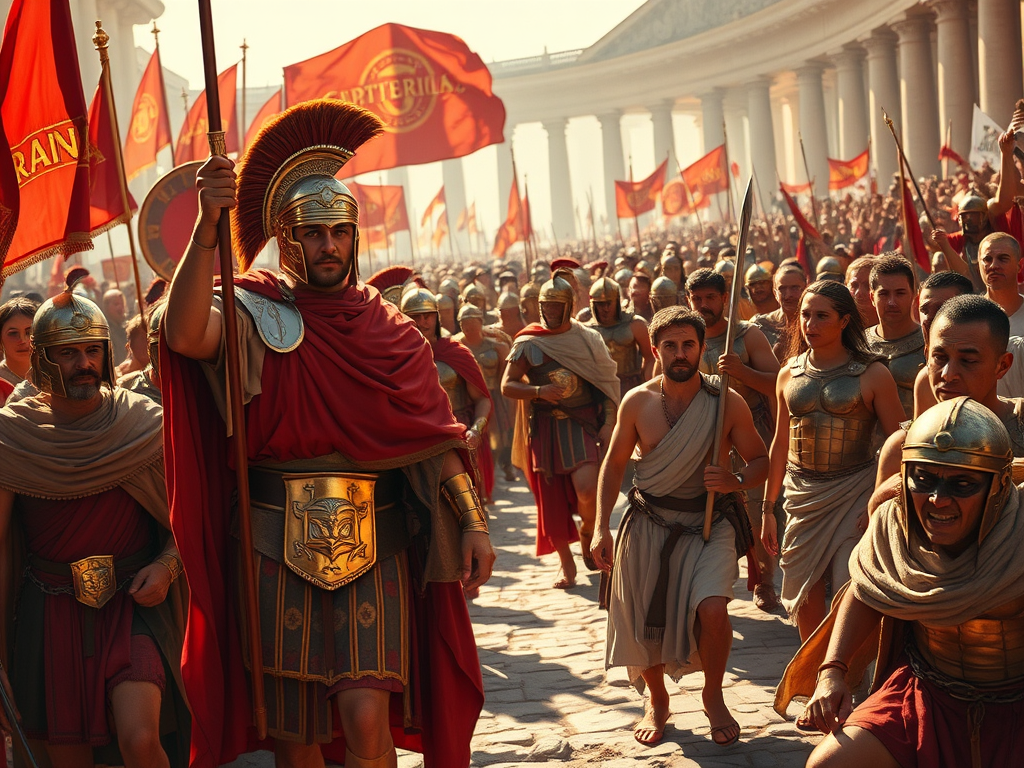
In ancient Rome, successful military conquests and campaigns ended with a triumphant homecoming parade. It was spectacle on a grand scale and the crowds loved it. The victorious general would lead his legion through the streets with their banners flying while the masses lined the streets and cheered.

Of course, every parade has to end, and in this case, at the end of the Roman victory parade were the prisoners of war, chained, beaten, and condemned. What a sharp contrast to the glorious, polished and pompous army who had just inspired and energized the adoring crowd. The prisoners provided the Roman masses with the opportunity to gloat in Roman greatness and bask in schadenfreude at their worthless enemies. The prisoners could be mocked, jeered, and pelted with whatever rocks or refuse was available along the street. In many cases, they’d already suffered abuse at the hands of their captors. They’d been ill-treated and marched for hundreds of miles against their will.

Ultimately, these prisoners would be marched to the Roman arena where, to the delight of the Roman crowds, they would face a horrific death. Among the most popular with the Roman masses was watching people getting ravaged and eaten by packs of wild beasts who had been starved in preparation for the occasion. But that wasn’t enough. The Romans would build contraptions that gave prisoners a false hope of being able to climb and escape from the beasts, but they were rigged to fall apart or fail, giving the crowds a little extra entertainment.

In yesterday’s post, I wrote about our human penchant for turning leaders into celebrities. In today’s chapter, Paul turns that entire notion on its head. He compares himself, and his fellow apostles to one of Roman prisoners being drug through the streets at the end of the parade. And, it wasn’t total hyperbole. When you study the persecution, punishment, and injustice that Paul and his fellow apostles endured, it’s both astounding and gut-wrenching.

Which makes his attitude even more amazing to me. “When we are cursed, we bless; when we are persecuted, we endure it; when we are slandered, we answer kindly.” Which, is not only what Jesus taught, but what Jesus exemplified as He was bound, beaten, mocked, and unjustly executed in a horrific way.

The struggle, of course, is to even connect with these realities here in my 21st century reality. I live in the most affluent country in the world in arguably the greatest time to be alive in human history. So, what am I supposed to take away from Paul’s reality and example?

First, I’m taking perspective with me into this day. I can list every single trouble, worry, or anxiety I might be feeling and then consider a Roman prisoner-of-war’s reality, Paul’s reality, and Jesus’ reality. Talk about a reality check. What am I complaining about?

Second, even in my own rather comfortable realities, I can think of specific instances of people being unkind towards me, unjustly accusing me of things, and using their power or influence against me. What’s my response?

Anger, vengeance, retribution, playing the victim card?

Or, like Paul, do I bless, endure, and answer kindly?

That, is a reminder I need every day.

If you know anyone who might be encouraged by today’s post, please share.

These chapter-a-day blog posts are also available via podcast on all major podcast platforms including Apple, Google, and Spotify! Simply go to your podcast platform and search for “Wayfarer Tom Vander Well.” If it’s not on your platform, please let me know!

When Rest Becomes Work

Jesus withdrew with his disciples to the lake, and a large crowd from Galilee followed.
Mark 3:7 (NIV)

Wendy and I are in the process of selling our place at the lake. For those who know us and for those who have followed my blog for any length of time, this may come as a surprise. “The Playhouse” has been a part of my family for over 25 years, and for the past 15 years it has been regular place of retreat, refreshment, and relationship for ourselves, our family, and many, many friends. The featured image on today’s post is our final farewell to the Playhouse as we moved things home.

The truth is that Wendy and I have been praying about the end of this season in our lives for a few years. We’ve talked about it with friends, but circumstances consistently told us that it wasn’t time. This summer, we once again prayed in earnest whether it was time and everything rapidly fell into place in a way that told us the time was right.

One of the themes that God weaves into the Great Story from the very beginning of Genesis is the blessing of rest. God creates everything in six days, and on the seventh day He rests. Then, in the book of Exodus when God through Moses prescribes how His people should live and conduct themselves, He emphasizes rest in multiple ways on multiple levels. This was a radical idea. For 400 years God’s people had been slaves in Egypt without a day off. Now God prescribes that they need a day off every seven days. In fact, whether you’re a believer or not, you can thank God every weekend because the weekend was born when the Roman Emperor, who was a Christian, followed God’s prescription and declared that everyone in the Roman Empire gets Sundays off.

In today’s chapter, Mark’s choice of scenes reveals several things. Jesus’ teaching and miracles are drawing huge crowds from all over. Word has spread and people are traveling from far away places. Between the crowd scenes, Mark shares that Jesus “withdrew” from the crowds. Once He withdrew to a lake. Another time He withdrew up a mountain. What that tells me is that Jesus knew He needed rest from the crowds, the teaching, the miracles, the exorcisms, and the chaos of His Miraculous Mystery Tour.

But Mark plants another seed when he begins by telling the story of Jesus teaching in the synagogue. Jesus challengers, who I wrote/talked about in yesterday’s post/podcast, have now become His outright enemies. No longer simply challenging Jesus, they’re seeking a way to accuse Him, discredit Him, and bring Him down. So, they lie in wait to see if Jesus would perform a miracle on the Sabbath day of rest. Because the good religious fundamentalists had deemed that performing a miracle was work.

Mark says that this “angered” Jesus, and He was “deeply distressed at their stubborn hearts.” Why? Because they had perverted and profaned the plan. The Sabbath, which had been prescribed as a blessing of rest, had been transformed into a burden in which people had to expend time, energy, and resources to track and follow all the rules that had been made around it. What was meant for rest became work.

Which brings me back to our place on the lake. As Wendy and I prayed and discussed it over this past spring and summer, we realized that things had changed. What was meant to be, and used to be, full of retreat, refreshment, and relationships had slowly become a burden on multiple levels. And, the opportunity arose to pass it on as a blessing to others in answer to their prayers

So, in the quiet this morning I’m reminded that the prescription for rest remains. Like Jesus, Wendy and I need to find our new places to withdraw and find retreat, refreshment, and relationship amidst the chaos of work and worry. We are excited for the new season ahead. And, in the wake of a long and wonderful Thanksgiving weekend, I’m also grateful as I think about what a blessing God has woven into the plan of creation in prescribing, and exemplifying, regular periods of rest.

If you know anyone who might be encouraged by today’s post, please share.

Jews and Romans

Jews and Romans (CaD Acts 13) Wayfarer

But the Jewish leaders incited the God-fearing women of high standing and the leading men of the city. They stirred up persecution against Paul and Barnabas, and expelled them from their region.
Acts 13:50 (NIV)

I once spent three years living in a small town of just over 300 people. It was a great experience, and it inspired a play I wrote many years later called Ham Buns and Potato Salad. One of the things I learned living in such a small town was how the community operates, unofficially. Sure, there was an official mayor and city council, but that doesn’t mean they actually ran things. There were individuals who held sway behind the scenes if they felt strongly enough about a matter. It’s the way the world works.

In today’s chapter, Luke records the events of the first missionary journey taken by Saul and Barnabas. Luke has just spent the previous few chapters explaining how the Holy Spirit led the Jewish leaders of the Jesus Movement to understand that Jesus’ Message was for all people, both Jews and non-Jews (Gentiles). Today’s chapter provides a great example of how Saul and Barnabas operated in taking Jesus’ Message to places that had never heard that message.

The first stop they made upon entering a town was the local Jewish synagogue. Saul and Barnabas started with the Jewish locals. Luke records the message Saul gave in the synagogue in Pisidian Antioch proclaiming Jesus was the resurrected Messiah. This created quite a stir and people crowded to hear more, but it angered the local Jewish leaders, so they “incited the God-fearing women of high standing and the leading men of the city. They stirred up persecution against Paul and Barnabas, and expelled them from their region.

The Jewish leaders knew the individuals in their community who held sway. Paul and Barnabas quickly went from being popular visitors to having the welcome mat yanked out from underneath them. Their response to this persecution was right out of Jesus’ playbook. They shook the dust off their feet and switched focus from the Jews to Gentiles in the area.

One of the Gentiles who became converts on this journey was a man named Sergius Paulus. He was the Roman proconsul on the island of Cyprus. He was a documented historical figure. To have a Roman official of such a high level become a believer would have been a huge deal. He wasn’t big fish in a small pond like the “women of high standing” in Pisidian Antioch. He was a big fish in a big pond. Sergius Paulus was a powerful man within the Roman Empire. As a believer, he could influence all sorts of people throughout the Empire itself. Some have argued that it was this high-profile conversion that led to Saul taking on the name Paul. He’s first called Paul in today’s chapter and will be referred to as Paul by Luke from this point on.

In the quiet this morning, I meditated on the contrasting experiences that Paul and Barnabas had with the small-town power brokers of Pisidian Antioch and the Roman Governor of Cyprus. It’s the beginning of a major shift in the Jesus Movement. It will not be long before the burgeoning number of non-Jewish Greek and Roman believers outnumber the original core of Jewish believers in the leadership of the Movement. There’s a storm on the horizon.

As a disciple of Jesus, I’ve had to understand that things change and the spiritual journey is one of constantly managing those changes. I’ve observed that organized religion, on the other hand, loves tradition and will often shun change at all costs to avoid the discomfort of change. I find this to be a tragic mistake, and one I want to avoid for the rest of my earthly journey.

Featured image is Sergius Paulus by Raphael

If you know anyone who might be encouraged by today’s post, please share.

Kingdom and Empire

Kingdom and Empire (CaD Jer 50) Wayfarer

For I will stir up and bring against Babylon
    an alliance of great nations from the land of the north.
They will take up their positions against her,
    and from the north she will be captured.
Their arrows will be like skilled warriors
    who do not return empty-handed.

Jeremiah 50:9 (NIV)

Human history is, at a glance, the story of one conquest after another. Families became tribes. Tribes became nations. Nations became empires. Empires rise and fall. That, in a nutshell, is the Great Story from Genesis through the fall of Jerusalem that Jeremiah predicted. It starts with Abraham having a family. The family grows into the twelve tribes. God delivers them from slavery in Egypt and makes them into a nation. Under King David and Solomon they became a regional empire. As with most empires, a combination of internal implosion and external enemies lead to decline and defeat at the hands of the next emerging empire.

We are nearing the end of the voluminous compilation of Jeremiah’s prophetic messages. For 49 chapters the prophet has been proclaiming the defeat and exile of his own people at the hands of what he referred to early on as a “nation from the north” and later revealed to be the emerging Babylonian empire. Now, at the very end of his prophetic works, Jeremiah turns the tables 180 degrees.

In today’s chapter it is Babylon who receives God’s prophetic word of doom. This time it is the Babylonians who will fall to an alliance of nations from the north (i.e. the Medes and Persians). And, while Jeremiah proclaims this event from afar, the prophet Daniel is present in Babylon for the event as God presents the Babylonian regent with the literal handwriting on the wall (see Daniel 5) as Babylon falls to the invaders and a new empire takes over.

I found myself mulling this over in the quiet this morning.

Amidst the prophecy against Babylon, God reminds His people in exile of the promise He’s been making to them all along. A remnant will return to Jerusalem. Jerusalem will be rebuilt. The temple will be rebuilt. Out of her a messiah will emerge as Jeremiah prophesied back in chapter 23.

What a contrast Jesus was to the human history of empire building. He came, not as earthly monarch, but as the King of Heaven. “My kingdom is not of this world,” He told Pilate. The paradigm He gave His followers was antithetical to human empire building. His paradigm was for a radical love to change the heart of an individual. The individual then spreads that radical love to change the hearts of others in their spheres of influence. The love spreads exponentially and begins to change communities, tribes, and nations from the inside out. The Jesus Movement of the first century rocked the Roman Empire with this paradigm.

Then, in what I consider to have been a brilliant chess move by the evil one, whom Jesus referred to as the Prince of this World, he gave control of the Empire itself to the Jesus Movement. Slowly, absolute power corrupts absolutely, and humans turned the Movement into another human empire, just like we always seem to do throughout history.

I also thought this morning about the prophetic end of the Great Story that was laid out for John in his Revelations. It ends with the Prince of this World and all the nations of the world, the human empires, lined up against the King of Heaven.

And, I think that’s a macrocosm of the spiritual journey as a follower of Jesus. Jesus asks me, as an individual, to turn away from the human way of doing things, the rat-race of wealth and earthly success, the dynamics of power and personal empire building. Jesus wants me to live with radical love, extravagant generosity, and a servant-hearted kindness to others, even my enemies who want to roll over me with their own power-plays and personal empires.

In the end, Jeremiah reminds me that what goes around comes around. Empires rise, they fall, and other empires emerge on this earth.

Or, as U2 put it:

Kingdoms rise, and kingdoms fall,
but You go on,
and on,
and on,
and on…

Personally, I want to be part of a Kingdom that’s not of this world.

If you know anyone who might be encouraged by today’s post, please share.

The People v. Paul of Tarsus (Part 1)

Several days later Felix came with his wife Drusilla, who was Jewish. He sent for Paul and listened to him as he spoke about faith in Christ Jesus.
Acts 24:24 (NIV)

I and my team at work have had many different business engagements over the years with a number of very different companies. I’m glad to say that our team has had several on-going engagements with clients that have lasted 15, 20, and even 25 years and counting. Others engagements have been relatively small projects that lasted a week or a month. The difference between a long engagement and a short one is often dependent the level of person we’re working with within the organization.

If we’re working with the CEO and/or senior executives of a client company, we have the opportunity to positively influence the client’s entire operation along with the  health and well-being of the customer experience for decades. A middle manager, on the other hand, typically has limited means and influence. They usually bring us in for a moment in time to treat a symptom in their service delivery system.

In today’s chapter, we find Paul in the midst of a tectonic shift in his ministry. For years he has traveled the Roman Empire in Judea, Asia Minor, and Greece. He’s been among the people. He’s expanded the number of believers and followers of Jesus. He’s organized them into local groups. He’s provided for himself by keeping his day job as a maker of tents. Paul has been on a grass-roots, boots-on-the-ground, non-stop mission among the common, everyday people in the streets. Now, like Jesus before him, Paul finds himself in the justice system of the Roman Empire being accused by the leaders of the Hebrew religion who want him dead. Unlike Jesus, Paul is a citizen of Rome, and that affords him the ability to appeal his case all the way to Caesar himself.

The first trial Paul faces against the religious leadership of the Jews is before the Roman Procurator, Antonius Felix, who had authority over Judea. Felix, like many Roman regional authorities of the time, was a corrupt official with a reputation for both cruelty and debauchery. The trial, as recorded in today’s chapter, should have ended with Paul’s release. The Jewish leaders had no accusation that should have stood up in Roman court. They did not produce a single corroborating witness willing to be cross-examined, and they had no evidence. Paul’s defense was persuasive and, as a Roman citizen, he should have been released immediately. Felix, however, was in a tough spot politically.

One of the top responsibilities of Roman provincial leadership was keeping the peace. The Jewish leaders bringing charges against Paul had tremendous political and social influence, and Felix knew it. His predecessor, Ventidus Cumanus, failed to respond to a racially motivated murder of a Jew in Samaria. The result was riots and uprising. Cumanus was held responsible by Caesar and exiled. Felix wants to avoid this fate so he decides to appease the Jewish leaders by keeping Paul in prison. But the Jesus movement has been gaining popularity, as well. Tens of thousands of people had become believers and Paul is one of their leaders. So, Felix can’t just have him killed without potentially igniting a backlash.

The compromise Felix came up with was to keep Paul under a relatively comfortable house arrest within the palace. For two years Felix and his wife (the daughter of Herod Agrippa) regularly meet with Paul to have lengthy discussions. Felix, being a corrupt Roman official, is hoping Paul will offer him a bribe to let him go. Paul is on a very different mission, however. He could have easily stolen Peter’s line: “Silver and gold I don’t have, but what I have I give to you.”

This morning as I read, I thought about Paul’s situation in terms of my own experience in business. For years Paul has been working with the front-line workers of the corporate Roman Empire. Now Paul finds himself invited into the executive suite. Paul has the opportunity to influence an influencer. To convert a Roman official, to even make him aware of the Message of Jesus, could have a tremendous ripple effect throughout the Empire. Paul is fulfilling the very mission Jesus spoke of to his disciples: “On my account you will be brought before governors and kings as witnesses to them and to the Gentiles.” (Matt 10:18)

Convert an Ephesian shopkeeper and you change a life. Convert a Roman official and you might just change an empire (which is exactly what eventually happened two hundred years later with the Roman Emperor Constantine).

Firing a Warning Shot Across Religion’s Bow

But when [John the Baptist] saw many of the Pharisees and Sadducees coming to where he was baptizing, he said to them: “You brood of vipers! Who warned you to flee from the coming wrath? Produce fruit in keeping with repentance. And do not think you can say to yourselves, ‘We have Abraham as our father.’ I tell you that out of these stones God can raise up children for Abraham. The ax is already at the root of the trees, and every tree that does not produce good fruit will be cut down and thrown into the fire.”
Matthew 3:7-10

As Jesus appeared on the scene, the political landscape in the land of Palestine was a complex one. The Roman Empire occupied the territory and the occupational forces maintained law and order. Rome maintained regional civil ruler which gave the residents of the area a local authority. Herod the Great died a few years after he slaughtered all the baby boys of Bethlehem, and his rule was divided between his sons. If you were Jewish, however, your life and religion was subject to the authority of the High Priest and religious leaders who managed the Temple in Jerusalem. It operated much like a city-state under Roman authority. The temple had its own currency (thus the need for the money changers that Jesus would throw out) and economy.

Both Rome and Herod knew that the Jewish people held allegiance to their religion above any civil ruler. They’d been living under one foreign power or another for over 500 years. Medes, Persians, Greeks, and Romans had all occupied their land. The Jewish people had no allegiance to any of them. They High Priest and religious leaders ruled their people through their intricate system of laws and held the power of salvation by cutting people off from making their sacrifices or deeming their sacrifices unacceptable. Religion had become a powerful racket.

John the Baptist was a prophet, an outsider, and a troublemaker for the status quo. People flocked to the wasteland outside of Jerusalem to hear him preach a message that resonated with those marginalized by the Righteous Racket of the Temple’s power brokers. John told people to change their hearts, to repent of their sins, and he washed them in the waters of the Jordan rather than insisting they go pay exorbitant currency exchange rates to purchase “official” temple goods for sacrifice at the Temple. In other words, the more popular he became, the more he cut into Temple profits and represented a potential for uprising that threatened the power of the Sanhedrin’s powerful syndicate.

So, the High Priest sends envoys to check out this vagabond upstart. John wastes no time. He fires a prophetic shot across their bow. One is coming who will change everything. Tectonic plates in the spiritual realm are going to shift and the Temple’s racket will be no more. The first shot in a conflict is fired which will ultimately lead those same religious racketeers to pay 30 pieces of silver for Jesus’ betrayal and they will stop at nothing until He is executed.

Yet, just like Herod the Great in yesterday’s chapter, in God’s economy those who stop at nothing to cling to power will ultimately find it slipping from their grasp. The Jesus they executed would not stay in the grave, and His followers would “turn the world upside down” within a generation. At the end of that same generation the Romans would destroy the Temple in Jerusalem, and with it they would torch all of the Jewish genealogical records. If you can’t substantiate who is from which tribe then you can’t determine who the Levites are, or who descended from Aaron and qualified as a priest. The Temple and its sacrificial system were no more.

Come gather around people
Wherever you roam
And admit that the waters
Around you have grown
And accept it that soon
You’ll be drenched to the bone
And if your breath to you is worth saving
Then you better start swimming or you’ll sink like a stone
For the times they are a-changing

featured photo courtesy WallyG via Flickr

Contrasting Events; Contrasting Outcomes

prison2Suddenly there was an earthquake, so violent that the foundations of the prison were shaken; and immediately all the doors were opened and everyone’s chains were unfastened. When the jailer woke up and saw the prison doors wide open, he drew his sword and was about to kill himself, since he supposed that the prisoners had escaped. But Paul shouted in a loud voice, “Do not harm yourself, for we are all here.”
Acts 16:26-28 (NRSV)

Earlier in the book of Acts, Luke chronicled the story of Peter being held in prison by Herod. When an angel appeared to Peter and led in his miraculous escape Herod quickly executed all of the guards for letting Peter escape (Acts 12:19). Justice in the Roman Empire in those days was swift, severe, and not always just. If your job was to guard a prisoner and the prisoner escaped, the penalty was death.

It was interesting to read a contrasting story in this morning’s chapter about Paul and Silas being thrown into prison in Philippi. When a violent earthquake frees them to make a run for it, Paul and Silas choose to stay in prison. They were, in effect, saving the jailer’s life, and their unexpected act of grace leads to the jailer and his household choosing to become followers of Jesus.

I find myself pondering the differences and the outcomes of these two stories this morning. Peter followed the angel to freedom and all of the guards were executed. When given an opportunity for escape, Paul and Silas chose to stay as an act of love and grace towards the jailer. Why didn’t Peter stay as a witness to his captors?

The situations were different. Peter was instructed to leave by the angel and was under heavy guard. He was in Jerusalem and being persecuted by Herod who was a ruthless, violent, insane dictator. In contrast, Paul and Silas were in a relatively small backwater Greek town being held in jail with only one jailor being mentioned. The stakes were much lower and Paul held a trump card which he plays at the end of the chapter. He was a Roman citizen which came with it a host of privileges that were being denied him. Despite the momentary suffering of incarceration, Paul knew that he actually held an unknown advantage.

Along life’s road I have observed that the institutional church and many Jesus followers desire faith and life to be simple and one-size-fits-all. As I wander through God’s Message I am reminded time and time again that following Jesus isn’t always that simple. God through Paul was merciful to the Philippian jailer, but all of Herod’s guards were summarily executed. Where was the mercy for them? Different time. Different place. Different circumstance. Different stakes. Different outcome.

Today, I’m pondering the reality that God sometimes chooses to move in different ways in different times, places, and circumstances. My job is not to try and categorize, confine, and control what God will do, but be open to the fact that God, His intentions, and His actions are beyond my categorization, confine, and control. My job is, by faith and obedience, to continue following where I am led and let God work as He wills.

Contrasts in Corruption

Jan_Luyken's_Jesus_21._Zacchaeus._Phillip_Medhurst_Collection

A man was there by the name of Zacchaeus; he was a chief tax collector and was wealthy.

When Jesus entered the temple courts, he began to drive out those who were selling. “It is written,” he said to them, “‘My house will be a house of prayer’; but you have made it ‘a den of robbers.’” Luke 19:2, 45-46 (NIV)

In Jesus’ day corruption was everywhere. I realized as I read this morning that today’s chapter is bookended with a fascinating parallel. It begins with the story of Zacchaeus.

Zac was a “chief tax collector.” In the days of Roman occupation, the empire broke up territory into tax regions. The tax collectors were locals who knew their neighborhoods, local businessmen, and had first hand knowledge of where the local money was. Tax collectors had a base amount of tax that the Roman Empire demanded they raise and send to Rome. There were, no doubt, others in the regional political machine getting their cut, but beyond that the tax collectors could keep whatever they could extort from their own people. The more money they squeezed out of their neighbors the richer they became, and Zac was a very wealthy man. As a “chief tax collector” Zacchaeus would not only have extorted his own share, but he was likely getting a piece of the action from other collectors in his territory. He was a extortionist and racketeer, the first century equivalent of a local mob boss.

Contrast this with the Pharisees and religious leaders who ran the temple. They judged Zacchaeus as a traitor and a sinner and they would look down their ecclesiastical noses at the extortionist. But, the religious leaders were total hypocrites. They had a thriving racket of their own. Good Jews were required to make regular pilgrimages to the temple to make sacrifices and offerings for their sins. Jews regularly came from all over the known world to make their annual sacrifices. To take advantage of this, the Pharisees in charge of the temple minted their own currency and the priests demanded that people buy the supplies for their offerings from the approved temple merchants. Of course, the temple merchants only took temple currency, so people would have to visit the temple “money changers” to exchange their local currency at exorbitant exchange rates. At least with Zac and the money changers there was no pretense about what they did with their money. The high priest and the religious leaders were corrupt extortionists, but they cloaked their racket in pious religiosity. They used God to launder their public image and both social and religious leverage to line their own pockets.

Jesus visits Zacchaeus’ house (creating all sorts of gossip, whispers and condemnation from all the good religious people). By the end of the visit, Zac’s heart and life had changed. He agrees to give away half of his wealth and make amends with all whom he’d cheated (the list was likely to be very long).

Jesus visits the temple. Unlike the sinner, Zac, the Pharisees and religious leaders refuse to repent of their extortion and racketeering. They choose, instead, to plot to have Jesus killed. His teaching, and his driving of the money changers from the temple were a threat to their power and their income. They would have none of it. Jesus needed to be rubbed out.

God’s Message teaches that sin is common to all. Both the tax collectors and the religious leaders were infected with the same appetite for greed and power. There was no difference in their sin, only in their response to Jesus. The traitorous “sinner” Zacchaeus opens his heart to Jesus’ words and turns away from his racketeering ways. The good religious people close their hearts to Jesus’ words and sink to even lower into corruption in order to safeguard their wealth and power.

Today, I’m thinking about the contrast in these two stories. I’m aware some people think of me as a good, religious person like the Pharisees, but I don’t ever want to be like the temple leaders who played a religious game to hide their lust for wealth and power. I’m also aware that some religious people think that I am not being religious enough and I don’t tow the line on their religious standards. I am divorced, I have tats, I don’t hide my love for a pint of good beer and an occasional cigar. And, I hang out with those sketchy artists and theatre types.

I am admittedly not perfect, but I hope that, like Zacchaeus, my heart and soul will always be open to Jesus’ teachings and that my life will always be enthusiastically responsive to Spirit and Truth.

jesus_money