Tag Archives: Judgement Day

The Reckoning

“Again, [the kingdom of heaven in the end times] will be like a man going on a journey, who called his servants and entrusted his wealth to them.”
Matthew 25:14 (NIV)

In yesterday’s post/podcast I talked about it being the beginning of my 60th lap around the sun and being mindful of wanting to finish this earthly journey well. I continued to think about that yesterday and it was still rattling around in my heart and mind as I entered the quiet to read today’s chapter.

This week I’ve been looking at these final chapters of Matthew’s version of the Jesus Story with a wide-angle lens. Each chapter connects to the events around them, and I found it profitable again this morning to be aware of the context of today’s chapter.

Jesus is on the Mount of Olives in the final week of his earthly journey. During the day He taught in the Temple to the crowds during the week of the Passover festival. The Temple leaders were humiliated by Jesus’ criticism of them and their resounding defeat in every attempt to debate and refute Jesus. Now He is having an intimate evening conversation with His closest followers.

This intimate evening conversation began in yesterday’s chapter, when the disciples asked Jesus about the end times and His return. I found it important this morning as I read to consider that the three parables Jesus tells in today’s chapter (and there’s that number three again) are all told in reference to Jesus return and to what is referred to as Judgement Day.

The first parable is about young women who are bridesmaids for a member of their household. As bridesmaids, one of their tasks is to be ready to welcome the Bridegroom when he arrives to take his bride. Because they don’t know when he will arrive they have to constantly keep watch and have oil lamps ready as his arrival could be in the middle of the night. This illustrates Jesus’ command to His disciples in yesterday’s chapter to “keep watch” for His return. It’s about living this day mindful of the end versus living daily being mindless of it.

The second parable is like it. Once again the important figure, this time it’s a boss, is away and those in the parable don’t know the day or time of his return. His servants have been entrusted with their boss’ gold. Two invested it and earned interest. The third hid it in a mattress. This parable is about diligence versus complacency, once again in light of being mindful of what will happen in the end.

The third and final parable is about Judgement Day events. It relates back to another parable Jesus told regarding weeds and crops growing together in a field. At harvest time the farmer had to harvest the crop and separate the weeds at the same time. The harvest was put into the barn and the weeds burned. It also hearkens back to Jesus telling His followers that true disciples are those who do the things He taught and put them into practice.

In this final parable, a King separates people like sheep and goats. He rewards the sheep and punishes the goats. What’s fascinating in this parable is that there are sheep who do the right thing and had no idea that they were doing it while there are goats who thought they were doing the right thing but completely missed the point. Those whose lives were marked by tangibly loving the down-and-out, the poor-and-needy versus those who went through religious motions but didn’t bear the fruit of God’s Spirit in how they treated others each day.

In each of the three parables of today’s chapter, there is a final reckoning. Those who do well in this reckoning are:

Mindful
Diligent
Loving servants of others

In the quiet this morning, I find that the lesson is pretty clear. As a disciple of Jesus, I am to be mindful of this day that lies before me in light of another Day that I know is eventually coming.

If you know anyone who might be encouraged by today’s post, please share.

These chapter-a-day blog posts are also available via podcast on all major podcast platforms including Apple, Google, and Spotify! Simply go to your podcast platform and search for “Wayfarer Tom Vander Well.” If it’s not on your platform, please let me know!

The Great Omission

The Great Omission (CaD Matt 11) Wayfarer

When John, who was in prison, heard about the deeds of the Messiah, he sent his disciples to ask him, “Are you the one who is to come, or should we expect someone else?”

Jesus replied, “Go back and report to John what you hear and see: The blind receive sight, the lame walk, those who have leprosy are cleansed, the deaf hear, the dead are raised, and the good news is proclaimed to the poor. Blessed is anyone who does not stumble on account of me.”
Matthew 11:2-6 (NIV)

I have been working diligently on some upcoming messages of late. I have the honor this year of delivering the Good Friday message this year before my local gathering of Jesus’ followers. The story of Jesus climactic final day on earth is more dramatic than most people realize. It is a microcosm of the base conflict of the entire Great Story between good and evil, the Kingdom of God and the Prince of this World and the Kingdoms of the Earth. I’m looking forward to unpacking it for those spiritually trekking through Holy Week on the way to Resurrection Sunday.

I’m also working on a trinity of messages I’ll be delivering in May that will together form a unified whole. The first of those three messages is based on the episode in today’s chapter. Jesus’ cousin, John the Baptist, is languishing in Herod’s prison. His crime? He was publicly critical of Herod’s incestuous marriage to his brother’s ex-wife, Herodius, who was also his niece. The playbook of those with earthly power was the same then as it is today: silence and suppress your critics. Thus, John sat silenced and suffering in Herod’s dungeon while Jesus was launching His ministry around the Sea of Galilee.

In the discomfort of his prison cell, John was growing impatient. What was he expecting? Luke tells us what John preached to his followers:

 “The ax is already at the root of the trees, and every tree that does not produce good fruit will be cut down and thrown into the fire.”

‘His winnowing fork is in his hand to clear his threshing floor and to gather the wheat into his barn, but he will burn up the chaff with unquenchable fire.”

John envisioned Jesus the righteous judge on the great “Day of the Lord” in the end times (see Revelation 20). John envisioned what everyone else had envisioned the Messiah doing: Wiping out all the bad guys (including Rome and the Herods), making sure they got their just desserts, and setting up a kingdom on earth from which He would rule the world. Sitting in the darkness of Herod’s dungeon, John couldn’t wait for Jesus to storm Herod’s fortress, free him from his chains, and punish Herod for all the pain and suffering he’d inflicted on His cuz. Then John would be right there by Jesus side as He reigned over all the earth.

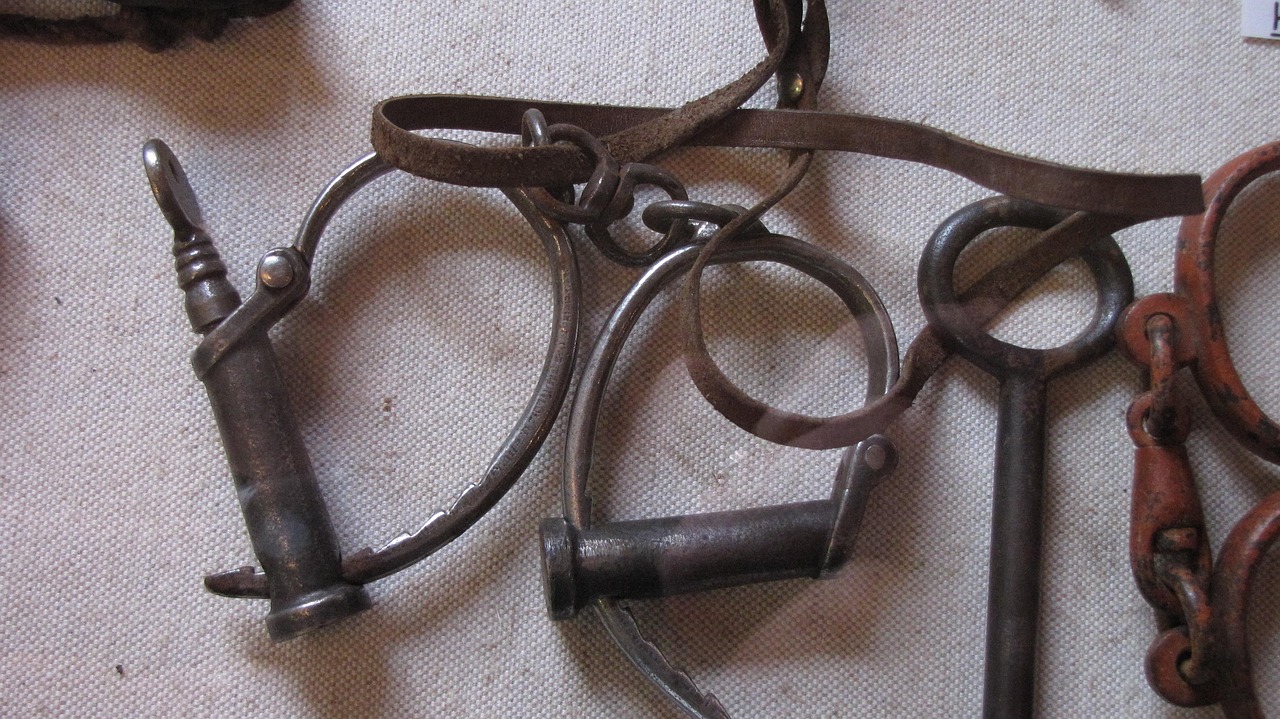
While Jesus Himself proclaimed that Judgement Day will eventually come, He first had to fulfill His purpose as the suffering servant and the sacrificial lamb prophesied by Isaiah and others. Yet, this was hidden even from John. So, when John grows impatient, the shackles chafing his wrists and ankles, he begins to doubt. Jesus is disappointing him. This is not the Messiah John told his followers to expect. So, he sends his disciples to ask Jesus, “Hey cuz! Dude? What gives? Get me outta here!”

In His reply, Jesus alludes to the prophet Isaiah whom Jesus quoted in His first public sermon at his hometown synagogue in Luke 4:

“The Spirit of the Lord is on me,
    because he has anointed me
    to proclaim good news to the poor.
He has sent me to proclaim freedom for the prisoners
    and recovery of sight for the blind,
to set the oppressed free…”

But in His allusion to John’s disciples Jesus mentions proclaiming the good news to the poor and giving sight to the blind. He even adds that “the lame walk, those who have leprosy are cleansed, the deaf hear, the dead are raised.” Jesus, however, omits from His report proclaiming “freedom for the prisoners” and “setting the oppressed free.”

Ouch. What a great and deliberate omission.

Jesus’ earthly mission on this go round will not look like John wants it to look. There’s a freedom that must first be proclaimed that has nothing to do with the physical shackles of a temporal world, but rather the spiritual chains of sin and their eternal realities and consequences.

“Sorry, cuz. I’m afraid that you must suffer as I must suffer. Believe me, your chains are temporary. Your reward is eternal. You can’t see it now, but you will. You’re almost to the finish line. Don’t stumble now, bruh.”

In the quiet this morning, I find myself thinking about the spiritual posture that Jesus is asking of John. It is a kneeling, open, and surrendered posture. It is the same that He has demanded of His disciples and anyone else who would follow, including me. Anyone who wants to follow must deny themselves, their expectations, their desires, and their demands. They must be willing to sacrifice and to suffer. The path to Life lies through death. There are no shortcuts, workarounds, or easy detours.

“Not my will, but Yours be done.”

If you know anyone who might be encouraged by today’s post, please share.

These chapter-a-day blog posts are also available via podcast on all major podcast platforms including Apple, Google, and Spotify! Simply go to your podcast platform and search for “Wayfarer Tom Vander Well.” If it’s not on your platform, please let me know!

The Day

Swing the sickle,
    for the harvest is ripe.
Come, trample the grapes,
    for the winepress is full
    and the vats overflow—
so great is their wickedness!”

Joel 3:13 (NIV)

I have been fascinated of late by the headlines. Corruption is everywhere. That is not news, of course. Corruption is always there, on both sides of the aisle, and around the world. History has taught me this. Corruption is woven into the fabric of the kingdoms of this world. Netflix is rife with documentaries uncovering the breadth of it. Corruption is part of the human condition since the Snake slithered in the Garden of Eden. The kingdoms of this world create systems to keep their corruption from public view and most of the time those systems work to protect corrupt elites from both exposure and consequences. Of late, the reality of corruption has been seeping out the cracks of the closed doors and smoke-filled rooms across the political spectrum. I’m not convinced that it will amount to anything. Along my life journey, I’ve observed that the systems meant to protect the corrupt will occasionally crack but rarely do they break.

Once again, I’m talking about both sides of the aisle and across the gobal political spectrum. Corruption has always been an equal opportunity racket for powerbrokers of all persuasions, even religious ones. The Godfather taught me this, not to mention the events of Jesus’ arrest and execution.

The result of corruption is always suffering and injustice. You’ll see it everywhere is you have the stomach to honestly look, and let’s face it, most of the time I don’t. I hold endless mental distractions in the palm of my hand most of the day, every day.

The Great Story, however, never ceases to remind me of what I often would choose to ignore. The overarching storyline from Genesis to Revelation is the human condition and the havoc it wreaks on everything from my individual willingness to make wrong choices to the corrupt systems you’ll find lurking in every human institution, especially those of global politics and finance.

The prophetic message of the ancient prophet Joel stands out among the ancient prophets because his metaphorical message points to a Day of Judgement at the end of the Story. It goes by different names like Judgement Day, the Day of the Lord, a Day of Reckoning, and sometimes just The Day. It is described as the day when the “books are opened” and everything, both good and evil, is accounted for. Justice is meted out on the grand scale of God’s Kingdom once, and for all.

As I read today’s final chapter of Joel, it echoed everywhere. In fact, the verse I quoted at the top of the post is clearly present in John’s Revelations:

I looked, and there before me was a white cloud, and seated on the cloud was one like a son of man with a crown of gold on his head and a sharp sickle in his hand. Then another angel came out of the temple and called in a loud voice to him who was sitting on the cloud, “Take your sickle and reap, because the time to reap has come, for the harvest of the earth is ripe.” So he who was seated on the cloud swung his sickle over the earth, and the earth was harvested.

Another angel came out of the temple in heaven, and he too had a sharp sickle. Still another angel, who had charge of the fire, came from the altar and called in a loud voice to him who had the sharp sickle, “Take your sharp sickle and gather the clusters of grapes from the earth’s vine, because its grapes are ripe.” The angel swung his sickle on the earth, gathered its grapes and threw them into the great winepress of God’s wrath. 

Revelation 14:14-19 (NIV)

As a disciple of Jesus, I cannot escape the fact that He mentions this Day of Judgement again, and again, and again.

In the quiet this morning, I feel myself holding a certain tension. It is both the cynical weight of human corruption and the seemingly foolish hope that The Day will, indeed, one day arrive.

A good man brings good things out of the good stored up in him, and an evil man brings evil things out of the evil stored up in him. But I tell you that everyone will have to give account on the day of judgment for every empty word they have spoken. For by your words you will be acquitted, and by your words you will be condemned.”
-Jesus (Matthew 12:35-37)

If you know anyone who might be encouraged by today’s post, please share.

From Monochrome to Living Color

You, therefore, have no excuse, you who pass judgment on someone else, for at whatever point you judge another, you are condemning yourself, because you who pass judgment do the same things.
Romans 2:1 (NIV)

When I was a young man first endeavoring to follow Jesus, life was far more monochromatic. I was unaware just how black and white my world really was. I delineated life into binary camps: good and evil, godly and ungodly, believers and unbelievers, things allowed and things not allowed, right and wrong.

Towards the end of his ministry, Jesus said that He would, on the day of Judgement, divide the nations into sheep and goats. Those on His right would go to their reward in eternity and those on His left would go to the fire prepared for the devil and his angels. One of the most important lessons, and one that is oft forgotten, is that judgement will be Jesus’ job.

The further I get on this life journey, the more clearly I see that when I presume to sit in judgement on others I am presuming to take up Jesus’ job. If I presume to do Jesus’ job for Him then I am setting myself up to be equal to Him; making myself God. That is really the core sin of Eden. Therefore, when I do this I am proving exactly the opposite of what I presume. When I presume to sit in judgement on others I am proving that I am as much a sinner in need of salvation as the person I condemn.

Life is much less monochromatic than it used to be. While there are things that I can perceive are still clearly black and white in this world, my view from the path is a colorful place with infinite hues. I seem to have lost my label maker somewhere along the way, and I haven’t really missed it. Life is an interesting place, a mysterious place, a beautiful place. I find that I am more fascinated and feel less need to understand. I am more intrigued and feel less need to be convinced. I am more given more to faith and less concerned with my doubts. I am more given to grace and am happy to let Jesus have the job of Judge.


chapter a day banner 2015

featured image: vinothchandar via Flickr

Bad News; Good News


The Book of Life 2
(Photo credit: Waiting For The Word)

And I saw the dead, great and small, standing before the throne, and books were opened. Another book was opened, which is the book of life. The dead were judged according to what they had done as recorded in the books. Revelation 20:12 (NIV)

This morning as I read through this verse I had a bit of a panic attack. It’s the end. I’m standing before God. The books are opened, and everything I’ve done is recorded in those books. I’m going to be judged according to what’s in the books. Yikes. This is bad news.

All of a sudden the memories of all the shameful things I’ve done come flooding into my mind. Every heinous thought. Every secretive deed. Every self-centered act. Every errant and angry word. I’ve thought, said, and done so many shameful things. There’s no way I’ll make the cut. I’m doomed.

Then I remember all that we’ve read and learned in this story that’s unfolded as we’ve gone through God’s Message a chapter a day. This is the good news and the core theme of the story:

  • Everyone is doomed. Everyone falls short. Once the books are opened and the truth is revealed there isn’t a person living or dead (Billy Graham, Mother Theresa, and the Pope included) who is “good enough” to earn salvation.
  • There is another book. If you read the chapter then you know that, along with the book that reveals all we’ve said and done, there is a second book mentioned: The Book of Life. This is the book of those who have “received Jesus, who have believed in His name.”
  •  Grace. Jesus promised that any who seek after him and seek forgiveness for all the crap they’ve every done will be forgiven. This is the crux of the story: Jesus suffering and dying on the cross was, in essence, Him choosing to pay the just penalty for all the shameful thoughts, words, and actions recorded under my name (and yours too) in those books John was describing. Jesus paid the penalty for all I’ve done, so that I don’t have to. I don’t deserve what He did for me. That’s called grace: unmerited favor.
  • Covered. In the ancient sacrificial system we’ve read about, the people would bring their sins and sacrifice to the priest. The word picture of the sacrifice was that their sins were place beneath the altar. As the lamb was slain and the blood ran across the altar and fell to the ground it was covering the sin underneath the altar. That is why in John’s vision of heaven Jesus is referred to as the “Lamb of God who takes away the sins of the world.” He was the sacrificial Lamb who made atonement to cover all our sins.
  • Gratitude. So I need not be worried about what is written in those first books John described. My sins are covered by His blood. I have received Him. I have believed in His name and my name is written in the Book of Life. This fact does not give me a sense of pride or arrogance. I am better than no one. I am simply forgiven. I have been given a priceless gift which I do not deserve. I am both eternally humbled and forever grateful.

I find it ironic that we reach this waypoint in our journey the week leading to Easter. This Friday is Good Friday, commemorating the good that Jesus did on the cross for anyone who would seek His grace and forgiveness. It is a good week to think on these things.

Enhanced by Zemanta

Chapter-a-Day Isaiah 13

Judgement. "Watch now. God's Judgment Day comes. Cruel it is, a day of wrath and anger…." Isaiah 13:9a (MSG)

There are two sides to love. There is the soft side of love with warm-fuzzies, hugs, grace, and random acts of kindness. There is also a hard side of love. The hard side of love stands up for what is right, sets clear and appropriate boundaries, and ensures that justice is appropriately carried out. The hard side of love is hard because it requires tremendous strength of character to wield it, and because it appears harmful to the ignorant, casual observer. A doctor will, lovingly, injure his patient to ensure future health and wholeness. The hard side of love seems terrible, unjust, and unfair in the moment while it is utterly necessary in the context of the whole.

Let's face it. We like the idea of a safe God. Give us a God of stained-glass and angelic choruses. We like a God with babies in his arms or a gentle lamb draped over his shoulders. But the God who gathered the innocent child into his arms is the same God who made a whip and went on a violent rampage through the temple. The shepherd who gently carries the wayward sheep home must also be ruthless in killing the lion and the bear who would prey upon his flock.

A father who cares for his children must dispense both praise and punishment appropriately, and with great wisdom. Our Heavenly Father, a God of love, must also by definition be a God of judgement. Love without justice is not true love.