Tag Archives: Dungeon

Darkness & Chains

You know that everyone in the province of Asia has deserted me, including Phygelus and Hermogenes.
2 Timothy 1:15 (NIV)

I have a stack of letters from my college and young adult years. My friend Dave and I became pen pals during those years. It wasn’t something we consciously intended to do. He was still a senior in high school and I was a freshman in college. I told Dave to write me sometime. This was 1984. There was no internet or email. Cell phones were over a decade away from becoming a thing. Long distance phone calls were expensive. Snail mail was the go-to channel of communication for poor students like me.

When I got a letter from Dave, I immediately wrote him back. Then he wrote me back, and we never stopped. Dave went on to study and teach in France. The stack of letters and postcards I have from him in those years number into the hundreds.

Without the immediacy of digital communication, there was a lot that could happen in life between letters. I remember times in which I poured my heart onto the page knowing that Dave would not read it for a week or more and it would be another week or more before I got his response. It was a very different reality.

That reality is evident between Paul’s first letter to Timothy that we finished yesterday and his second letter we begin today. So much has happened between the two letters that it’s impossible to understand the full context of Paul’s words and emotions without knowing the events.

Paul had been a prisoner in Rome previous to the writing of 1 Timothy. He was arrested for creating a public disturbance in Jerusalem. He appealed his case to Caesar as was his right as a Roman Citizen. He sailed to Rome and lived under house arrest while awaiting trial. Eventually, he was released.

Whether his case was dismissed or he was released on furlough, we’ll never know. Paul began traveling and visiting the local gatherings of Jesus’ followers he’s established in various cities. That was the context of 1 Timothy as Paul instructed his young protégé and urged him to pray for all rulers and authorities, which included Roman Emperor Nero “that we may live quiet and peaceful lives.”

Sometimes our prayers don’t yield the results we desire, even for Paul.

Rome burned and the populace blamed Nero. Nero needed a political scapegoat to redirect the blame. He chose a pesky Jewish sect that had been on the rise and creating conversation across the empire. They were called Christians and they were an easy target. Nero blamed the burning of Rome on the Christians. He ordered the rounding up Christians that they might be tortured and executed in the most heinous of ways, and Rome had sadistically created many heinous forms of torture and execution.

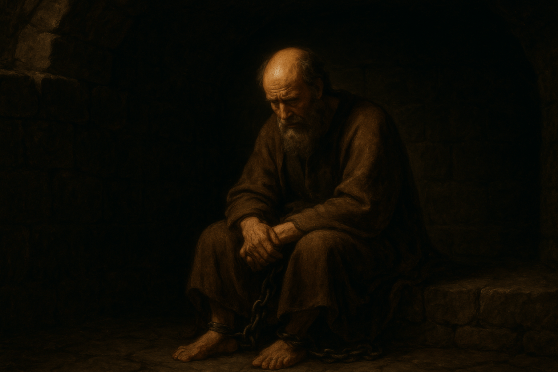
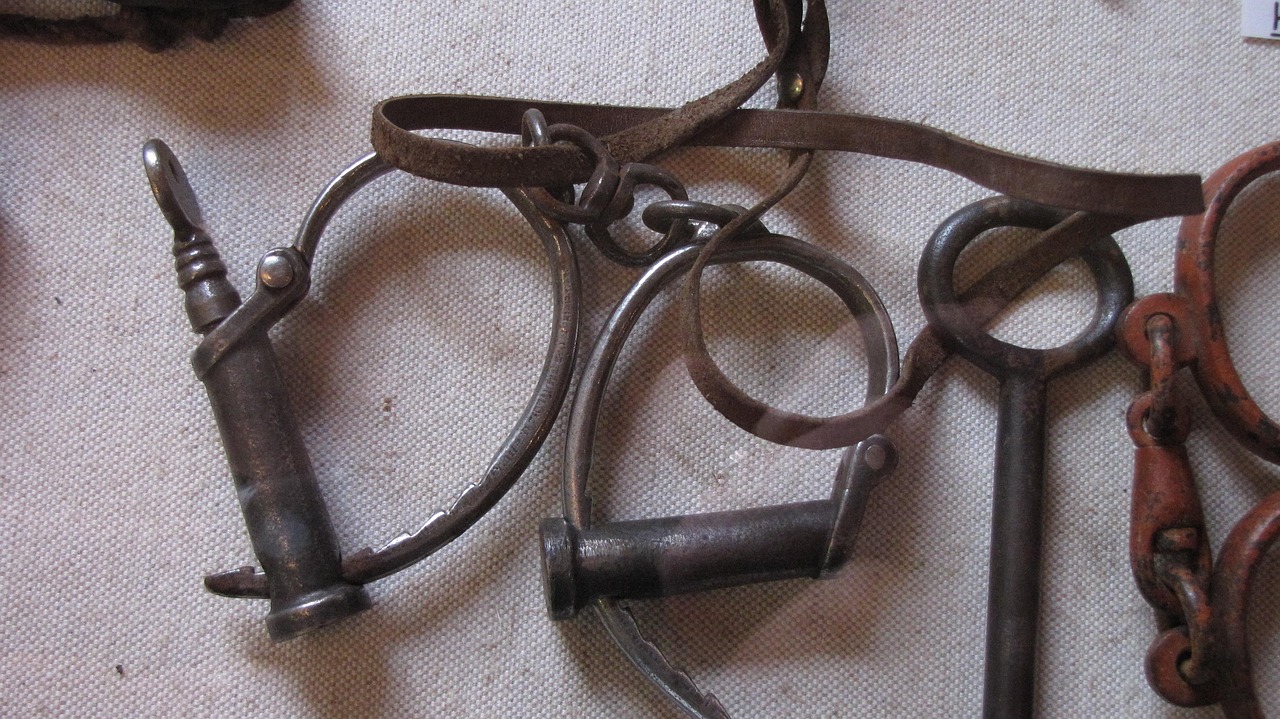
Paul, the firebrand preacher who stirred things up wherever he went, was arrested. No house arrest this time. Paul was thrown into a deep, dark dungeon. He was chained to a wall in the dark. With the Romans arresting, torturing, and executing Christians, many followers decided that maybe they didn’t believe after all. Others distanced themselves from Paul, not wanting to get swept up in his wake and find themselves chained next to him in the dungeon.

Paul was alone in the dark in his chains. He felt abandoned. He knew that his time was short. There would be no dismissing of the charges this time. There would be no furlough. His execution is imminent. His second letter to Timothy is Paul’s final letter. It’s his swan song and his last will and testament.

In today’s opening chapter, Paul is torn in two directions. With his impending death, he knows that Timothy is going to find himself leading the gathering of believers in Ephesus without Paul’s tutelage. He wants to encourage Timothy and provide some final instructions before he dies. At the same time, Paul is desperate for Timothy’s company and wants Timothy to visit him.

Stay and lead well, or leave to be with Paul in Rome?

Yes. The opening of the letter expresses the inner conflict and emotions with which Paul was struggling in his dire circumstances.

There was no postal service in the Roman Empire. You had to find people to carry and deliver letters for you. As Timothy cracks open the letter to read it, there is the added emotion of knowing that Paul might have even been executed in the time it took for the letter to reach him. If he does leave Ephesus to visit Paul in Rome, will he even find Paul alive? Will he be thrown into prison and executed with Paul. Colleagues like Phygelus and Hermogenes had clearly decided that they’d rather not risk their own necks to be associated with Paul. Timothy was faced with the same dilemma.

Meditating on the depressing realities that Paul and all believers were facing under Nero’s persecution, I am once again reminded that life in this fallen world does not always turn out the way we’d hoped. Sometimes prayers for lives of peace and safety are answered with the violence of the kingdoms of this world. Not just for Paul in Rome, but for believers around the world today.

Believers in China and North Korea regularly find themselves at risk for persecution, imprisonment, torture, and execution. Christins in Nigeria are being rounded up and slaughtered. It is estimated that 52,000 Christians have been killed by Muslim militants since 2009. Five million people have been displaced because of persecution against Christians.

In the quiet this morning, I find myself grateful for the peace, the quiet, and the safety with which I can currently pursue my faith and my life. I’m whispering a prayer for those who, like Paul, lie in darkness and chains. Those who feel alone and abandoned in their persecution. Those who face the possibility of being tortured or executed this day because of their faith in Jesus.

Lord, have mercy.

If you know anyone who might be encouraged by today’s post, please share.

Promotional graphic for Tom Vander Well's Wayfarer blog and podcast, featuring icons of various podcast platforms with a photo of Tom Vander Well.
These chapter-a-day blog posts are also available via podcast on all major podcast platforms including Apple, Google, and Spotify! Simply go to your podcast platform and search for “Wayfarer Tom Vander Well.” If it’s not on your platform, please let me know!

The Great Omission

The Great Omission (CaD Matt 11) Wayfarer

When John, who was in prison, heard about the deeds of the Messiah, he sent his disciples to ask him, “Are you the one who is to come, or should we expect someone else?”

Jesus replied, “Go back and report to John what you hear and see: The blind receive sight, the lame walk, those who have leprosy are cleansed, the deaf hear, the dead are raised, and the good news is proclaimed to the poor. Blessed is anyone who does not stumble on account of me.”
Matthew 11:2-6 (NIV)

I have been working diligently on some upcoming messages of late. I have the honor this year of delivering the Good Friday message this year before my local gathering of Jesus’ followers. The story of Jesus climactic final day on earth is more dramatic than most people realize. It is a microcosm of the base conflict of the entire Great Story between good and evil, the Kingdom of God and the Prince of this World and the Kingdoms of the Earth. I’m looking forward to unpacking it for those spiritually trekking through Holy Week on the way to Resurrection Sunday.

I’m also working on a trinity of messages I’ll be delivering in May that will together form a unified whole. The first of those three messages is based on the episode in today’s chapter. Jesus’ cousin, John the Baptist, is languishing in Herod’s prison. His crime? He was publicly critical of Herod’s incestuous marriage to his brother’s ex-wife, Herodius, who was also his niece. The playbook of those with earthly power was the same then as it is today: silence and suppress your critics. Thus, John sat silenced and suffering in Herod’s dungeon while Jesus was launching His ministry around the Sea of Galilee.

In the discomfort of his prison cell, John was growing impatient. What was he expecting? Luke tells us what John preached to his followers:

 “The ax is already at the root of the trees, and every tree that does not produce good fruit will be cut down and thrown into the fire.”

‘His winnowing fork is in his hand to clear his threshing floor and to gather the wheat into his barn, but he will burn up the chaff with unquenchable fire.”

John envisioned Jesus the righteous judge on the great “Day of the Lord” in the end times (see Revelation 20). John envisioned what everyone else had envisioned the Messiah doing: Wiping out all the bad guys (including Rome and the Herods), making sure they got their just desserts, and setting up a kingdom on earth from which He would rule the world. Sitting in the darkness of Herod’s dungeon, John couldn’t wait for Jesus to storm Herod’s fortress, free him from his chains, and punish Herod for all the pain and suffering he’d inflicted on His cuz. Then John would be right there by Jesus side as He reigned over all the earth.

While Jesus Himself proclaimed that Judgement Day will eventually come, He first had to fulfill His purpose as the suffering servant and the sacrificial lamb prophesied by Isaiah and others. Yet, this was hidden even from John. So, when John grows impatient, the shackles chafing his wrists and ankles, he begins to doubt. Jesus is disappointing him. This is not the Messiah John told his followers to expect. So, he sends his disciples to ask Jesus, “Hey cuz! Dude? What gives? Get me outta here!”

In His reply, Jesus alludes to the prophet Isaiah whom Jesus quoted in His first public sermon at his hometown synagogue in Luke 4:

“The Spirit of the Lord is on me,
    because he has anointed me
    to proclaim good news to the poor.
He has sent me to proclaim freedom for the prisoners
    and recovery of sight for the blind,
to set the oppressed free…”

But in His allusion to John’s disciples Jesus mentions proclaiming the good news to the poor and giving sight to the blind. He even adds that “the lame walk, those who have leprosy are cleansed, the deaf hear, the dead are raised.” Jesus, however, omits from His report proclaiming “freedom for the prisoners” and “setting the oppressed free.”

Ouch. What a great and deliberate omission.

Jesus’ earthly mission on this go round will not look like John wants it to look. There’s a freedom that must first be proclaimed that has nothing to do with the physical shackles of a temporal world, but rather the spiritual chains of sin and their eternal realities and consequences.

“Sorry, cuz. I’m afraid that you must suffer as I must suffer. Believe me, your chains are temporary. Your reward is eternal. You can’t see it now, but you will. You’re almost to the finish line. Don’t stumble now, bruh.”

In the quiet this morning, I find myself thinking about the spiritual posture that Jesus is asking of John. It is a kneeling, open, and surrendered posture. It is the same that He has demanded of His disciples and anyone else who would follow, including me. Anyone who wants to follow must deny themselves, their expectations, their desires, and their demands. They must be willing to sacrifice and to suffer. The path to Life lies through death. There are no shortcuts, workarounds, or easy detours.

“Not my will, but Yours be done.”

If you know anyone who might be encouraged by today’s post, please share.

These chapter-a-day blog posts are also available via podcast on all major podcast platforms including Apple, Google, and Spotify! Simply go to your podcast platform and search for “Wayfarer Tom Vander Well.” If it’s not on your platform, please let me know!

Trial by Fire

The Christian Martyrs' Last Prayer
The Christian Martyrs’ Last Prayer (Photo credit: Wikipedia)

You know that everyone in the province of Asia has deserted me, including Phygelus and Hermogenes.

May the Lord show mercy to the household of Onesiphorus, because he often refreshed me and was not ashamed of my chains. 2 Timothy 1:15-16 (NIV)

When Paul writes his second letter to his young protege, Timothy, he is in prison for the second time in Rome. The first imprisonment was five years earlier. Paul had used his Roman citizenship to appeal his arrest to Caesar and had been afforded a rather comfortable arrangement in which he was under house arrest in a rented house. He was released in 62 A.D. but was imprisoned again four years later. Now it was a completely different story. The political climate had radically changed.

Two years after Paul’s release from his House Arrest in Rome, the city of Rome was destroyed by the Great Fire of Rome. The city burned for days and countless people were dead. Ten of the fourteen Roman districts were destroyed. Many accused Emporer Nero of setting the fire himself in order to clear land for his palatial complex. Rumor spread that Nero himself played his lyre and performed on stage, unconcerned, while the city burned. His approval ratings plummeted, and he did what all politicians do when they don’t want to face up to their own failings: find someone to attack and deflect the blame. In Nero’s case, he blamed Christians. Roman historians say that Nero fed Christians to wild dogs and crucified others. He also had Christian dipped into oil, then burned alive to provide light for his garden at night.

When Paul was imprisoned in Rome once again in 66 A.D., Nero’s persecution of Christians was well underway. The fact that Paul was a Roman citizen no longer provided political protection. Paul was an outspoken follower and proponent of Jesus, and that trumped the clout of citizenship as Rome daily tried to rebuild itself out of the ashes. There would be no comfortable house arrest. This time, Paul was thrown into a deep Roman dungeon to rot and suffer.

Now read the verses above once more. Can you imagine why others were abandoning, Paul? He was a pariah. At best, anyone associated with Paul could likely face being thrown into the dungeon with Paul for being a fellow Christian. At worst, they could be put on the schedule to be a human candle in Nero’s garden. Paul is feeling lonely and abandoned. The only person who appeared willing to associate with Paul was Onesiphorus from Ephesus who sought Paul out in his dungeon on a trip to Rome.

I found it interesting that Paul refers to “shame” multiple times in today’s chapter. He encourages Timothy not to be ashamed of following Jesus. Paul is not ashamed of his chains or suffering for his faith in Jesus, but he obviously feels the shame and abandonment of those he considered friends but abandoned him. He’s thankful that Onesiphorus was not ashamed of associating with him.

Today, I’m thinking about the relative ease with which I can be a follower of Jesus. Yes, there are times of being unfairly labeled, misunderstood, and politically skewered. But seriously, some of that is the direct result of the foolish and misguided words, attitudes and actions of Christians themselves. I can easily forgive that and I’m not really suffering in any tangible way. When your life is on the line, it is a true test of what you really believe. What would I be willing to suffer and die for? Would I have been Hermogenes keeping a comfortable distance, or would I have been Onesiphorus throwing caution to the wind to visit and show a little love to Paul?

I’d like to boast that I would be Onesiphorus, but in my heart I know that I have never been tested like that. My honest answer: I pray I would not be ashamed like Paul and Onesiphorus, but I confess that until my very life is on the line, I’m not sure I can say with certainty. I enter my day grateful to live in peace and freedom with blessing beyond measure.