Tag Archives: Hell

Snake on a Stick

They traveled from Mount Hor along the route to the Red Sea, to go around Edom. But the people grew impatient on the way; they spoke against God and against Moses, and said, “Why have you brought us up out of Egypt to die in the wilderness? There is no bread! There is no water! And we detest this miserable food!”
Numbers 21:4-5 (NIV)

Wendy and finally returned last night from what was supposed to have been a six-day trip that began with a client event and ended with a visit to see our kids and granddaughter in South Carolina. What it became is eight days of the worst air travel I’ve experienced in over 30 years of regular business travel.

I’ll spare you the details (and there are many, many details) but United Airlines delayed or cancelled almost every flight we were on. They chose not to put our luggage on the plane from Chicago to North Carolina for weight reasons, but then couldn’t get us our luggage for over two days, which meant we didn’t have our materials for the client event. We had to shop for clothes and necessities for over two days. Our return flight was cancelled and it took over two days for them to get us home. At one point, Wendy said to me, “They’ve completely broken me. I have no more emotional energy to even care.”

It is good to finally be home, but you can imagine that we’re still stinging from our travel week from hell. So, when in today’s chapter the Hebrew tribes grow “impatient” and begin to complain, I feel their pain.

One of the things that has become obvious to me in our current chapter-a-day trek through Numbers is that the events recorded are not random coincidence. Everything is connected to each other. We just had the death of Aaron and Miriam, two of the trinity of sibling leaders of the tribes. As happens when a family experiences the loss of a patriarch or matriarch, there was gathering, grieving, and remembering. It brings family together. There is connection, camaraderie, and commitments made.

The very next thing that happens is a tragic and unexpected attack from a Canaanite king. The Hebrews handle this appropriately. They unify, go to God for direction, and follow the Lord’s command. They are victorious.

But how quickly the afterglow of the unity of grief and the victory over the king of Arad lasts. It doesn’t take long for the people to grow impatient, complain, and grow angry. Their complaint to Moses is strong and bitter. They call the manna God has been providing “detestable.” Scholars have noted that this is spiritually equal to rejecting God’s grace. Their impatience and anger lead them past complaining to the point of rejecting both God and Moses. They’re broken.

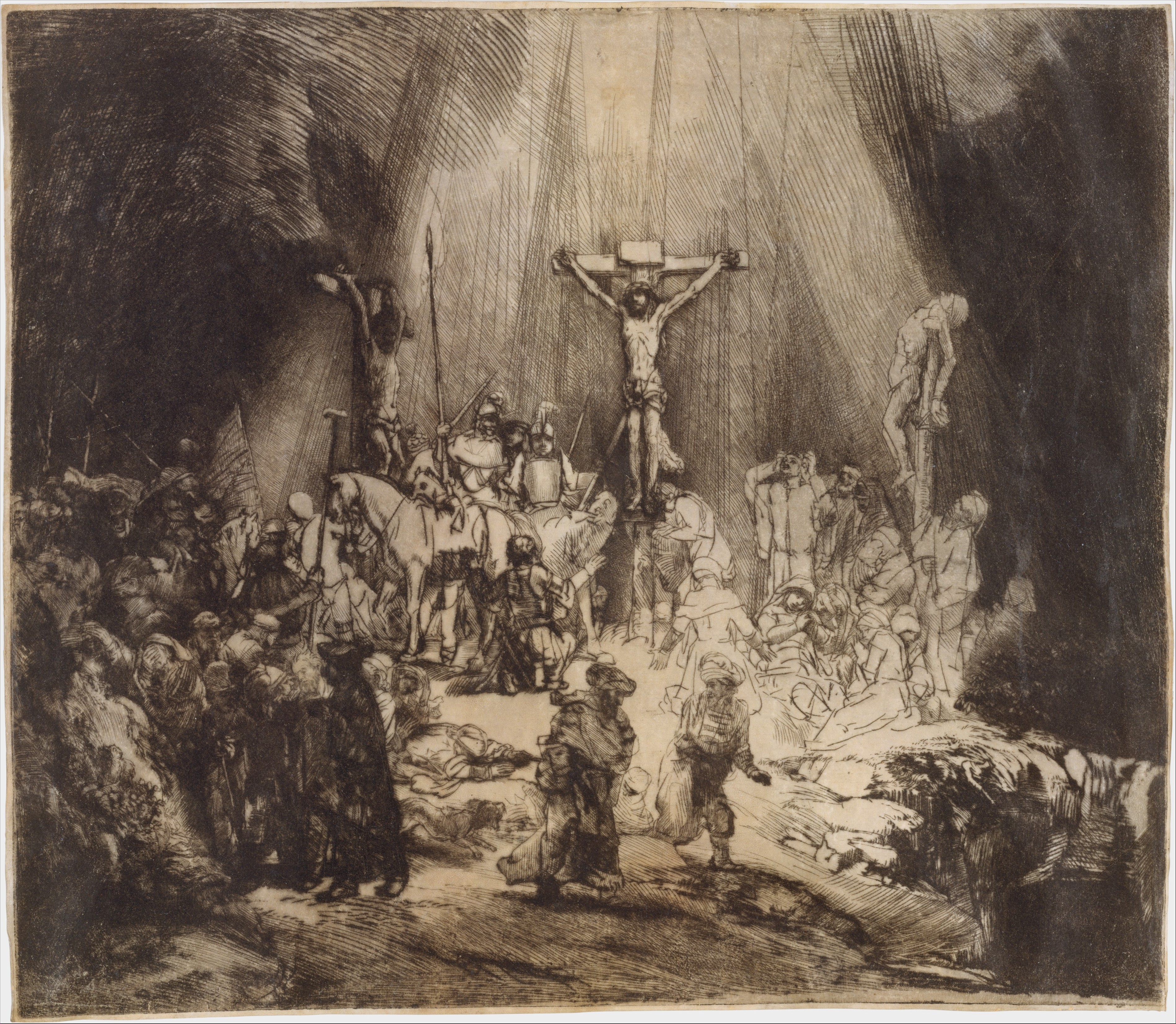
What happens next is a critically important moment in the entire Great Story. Venomous snakes invade the Hebrew camp and start biting people. Now what are snakes and their venom metaphorical for in the context of the Great Story going back to the Garden? Yep, the evil one and his death dealing lies. God does something strange. He has Moses make bronze snake, put it on a pole and lift it up. Anyone who looks at the snake on the pole is healed from their deadly snake bites. They live.

Fast forward thousands of years to a clandestine meeting in the late watches of the night between Jesus and member of the Hebrew leaders named Nicodemus. Jesus tells Nick, “Just as Moses lifted up the snake in the wilderness, so the Son of Man must be lifted up, that everyone who believes may have eternal life in him.” (John 3:14-15 NIV) Jesus, on the cross, took upon Himself the sin of the world. As Paul put it to the believers in Corinth: “God made him who had no sin to be sin for us.” Jesus was the ultimate snake on a pole, “so that in him we might become the righteousness of God.” (2 Corinthians 5:21 NIV).

What happens through the rest of the chapter? After they look at the snake and are healed, the Hebrew tribes go on winning streak like they’ve never experienced before. Blessing, favor, victory.

So, in the quiet this morning I look back to tremendously trying week. Our client event was great despite the fact that we were wearing clothes hastily purchased on a late-night Walmart run. We felt beaten down by a system we didn’t control. We were just small anonymous cogs stuck in the depths of United’s global operations. Yet, even in the midst of our impatience, anger, and frustration Wendy and I took time to initiate the chain reaction of praise. We stopped our bitching for a moment, in prayer we looked up to Jesus – the snake on the stick – and we offered praise in the midst of our pain.

There were no miracles. But, our prayer and praise helped us endure, it pushed us to have faith and persevere, and yesterday afternoon we finally returned home. Now, our week of travel hell will fade into memory. Forgetting what lies behind, keeping our eyes on Jesus, we press on into the good things God has for us.

If you know anyone who might be encouraged by today’s post, please share.

Promotional graphic for Tom Vander Well's Wayfarer blog and podcast, featuring icons of various podcast platforms with a photo of Tom Vander Well.
These chapter-a-day blog posts are also available via podcast on all major podcast platforms including Apple, Google, and Spotify! Simply go to your podcast platform and search for “Wayfarer Tom Vander Well.” If it’s not on your platform, please let me know!

Best of ’24: #3 God’s Righteousness vs. Self-Righteousness

God's Righteousness vs. Self-Righteousness (CaD Rom 10) Wayfarer

For I can testify about them that they are zealous for God, but their zeal is not based on knowledge. Since they did not know the righteousness of God and sought to establish their own, they did not submit to God’s righteousness. Christ is the culmination of the law so that there may be righteousness for everyone who believes.
Romans 10:2-4 (NIV)

I had lunch with a friend this week who is a pastor. As we were catching up they mentioned that they had received a “poisoned pen letter.” I have received my own share of these letters along my spiritual journey. They come from the religious rule-keepers I’ve described in recent posts. “Poisoned pen letters” typically point out one or more rules that the religious rule-keeper considers to be conditional for salvation that you’re not keeping in their eyes. There’s always scripture included, often quoted in the Authorized King James version. A poisoned pen letter always includes the threat that unless you start keeping their prescribed rules you are going to hell, you will be forever damned, you will be thrown into the Lake of Fire, you will burn in hell, or similar. They are almost always sent anonymously.

The poisoned pen letters I know of have dealt with things like not preaching the right things, not using their prescribed version of the Bible (usually the King James Version), not wearing the right clothes, not having the right hairstyle, wearing a hat in church, not having your head covered in church, not keeping the sabbath, being friends with sinful people, drinking alcohol, listening to the wrong kind of music, not using the right kind of music in the church service (e.g. traditional hymns), not being political enough from the pulpit (of their political persuasion, of course), being too political from the pulpit (the side they disagree with), and etc.

In today’s chapter, Paul describes his fellow Jews as zealous for God. Their zeal, he goes on to explain, is misguided. The religious rule-keeping Jews didn’t know the righteousness of God. They only knew self-righteous rule-keeping. The former is sourced only from God through faith. The latter is sourced by keeping prescribed behavioral rules through human effort. The former is a gracious and generous gift from God. The latter is a threatening condemning human demand.

Wendy recently read the story of a person who was raised as a fundamentalist rule-keeper but has since renounced her religious roots. She explains that a religious rule-keeper thinks that they are showing love by pointing out another person’s sins. The condemnation and threat of hell are seen as a loving act that will potentially save the object of their public rebuke or poisoned pen.

How misguided. They ignore the scripture that says it is God’s kindness that leads people to repentance. So also do they ignore the scripture that lists the fruit of the Spirit that a believer produces. Nowhere on the list will you find anger, threats, condemnation, yelling, protesting, or sending anonymous letters. The list is love, joy, peace, patience, kindness, goodness, faithfulness, and self-control. A poisoned pen letter exemplifies the exact opposite of patience, kindness, and self-control.

In the quiet this morning, I find myself being mindful of Paul’s attitude toward his zealous, self-righteous Jewish brothers and sisters. His heart goes out to them. He prays for them to see the Truth and to know the righteousness from God that can only be received, never earned. Paul’s attitude towards these people reminds me of Jesus on the cross saying, “Father, forgive them. They don’t get it.” I think that’s the attitude and posture that God wants me to have when dealing with rule-keepers when they confront me or write me anonymous letters. It’s easy for me to get angry with them, but how will they repent if I use their own angry, condemning tactics against them? They won’t. But perhaps if I respond to their condemnation and anger with kindness, patience, and loving faithfulness they will see in me that there’s a better way.

If you know anyone who might be encouraged by today’s post, please share.

These chapter-a-day blog posts are also available via podcast on all major podcast platforms including Apple, Google, and Spotify! Simply go to your podcast platform and search for “Wayfarer Tom Vander Well.” If it’s not on your platform, please let me know!

God’s Righteousness vs. Self-Righteousness

God's Righteousness vs. Self-Righteousness (CaD Rom 10) Wayfarer

For I can testify about them that they are zealous for God, but their zeal is not based on knowledge. Since they did not know the righteousness of God and sought to establish their own, they did not submit to God’s righteousness. Christ is the culmination of the law so that there may be righteousness for everyone who believes.
Romans 10:2-4 (NIV)

I had lunch with a friend this week who is a pastor. As we were catching up they mentioned that they had received a “poisoned pen letter.” I have received my own share of these letters along my spiritual journey. They come from the religious rule-keepers I’ve described in recent posts. “Poisoned pen letters” typically point out one or more rules that the religious rule-keeper considers to be conditional for salvation that you’re not keeping in their eyes. There’s always scripture included, often quoted in the Authorized King James version. A poisoned pen letter always includes the threat that unless you start keeping their prescribed rules you are going to hell, you will be forever damned, you will be thrown into the Lake of Fire, you will burn in hell, or similar. They are almost always sent anonymously.

The poisoned pen letters I know of have dealt with things like not preaching the right things, not using their prescribed version of the Bible (usually the King James Version), not wearing the right clothes, not having the right hairstyle, wearing a hat in church, not having your head covered in church, not keeping the sabbath, being friends with sinful people, drinking alcohol, listening to the wrong kind of music, not using the right kind of music in the church service (e.g. traditional hymns), not being political enough from the pulpit (of their political persuasion, of course), being too political from the pulpit (the side they disagree with), and etc.

In today’s chapter, Paul describes his fellow Jews as zealous for God. Their zeal, he goes on to explain, is misguided. The religious rule-keeping Jews didn’t know the righteousness of God. They only knew self-righteous rule-keeping. The former is sourced only from God through faith. The latter is sourced by keeping prescribed behavioral rules through human effort. The former is a gracious and generous gift from God. The latter is a threatening condemning human demand.

Wendy recently read the story of a person who was raised as a fundamentalist rule-keeper but has since renounced her religious roots. She explains that a religious rule-keeper thinks that they are showing love by pointing out another person’s sins. The condemnation and threat of hell are seen as a loving act that will potentially save the object of their public rebuke or poisoned pen.

How misguided. They ignore the scripture that says it is God’s kindness that leads people to repentance. So also do they ignore the scripture that lists the fruit of the Spirit that a believer produces. Nowhere on the list will you find anger, threats, condemnation, yelling, protesting, or sending anonymous letters. The list is love, joy, peace, patience, kindness, goodness, faithfulness, and self-control. A poisoned pen letter exemplifies the exact opposite of patience, kindness, and self-control.

In the quiet this morning, I find myself being mindful of Paul’s attitude toward his zealous, self-righteous Jewish brothers and sisters. His heart goes out to them. He prays for them to see the Truth and to know the righteousness from God that can only be received, never earned. Paul’s attitude towards these people reminds me of Jesus on the cross saying, “Father, forgive them. They don’t get it.” I think that’s the attitude and posture that God wants me to have when dealing with rule-keepers when they confront me or write me anonymous letters. It’s easy for me to get angry with them, but how will they repent if I use their own angry, condemning tactics against them? They won’t. But perhaps if I respond to their condemnation and anger with kindness, patience, and loving faithfulness they will see in me that there’s a better way.

If you know anyone who might be encouraged by today’s post, please share.

A Bit Part

A Bit Part (CaD LK 23) Wayfarer

Then [the criminal crucified next to Jesus] said, “Jesus, remember me when you come into your kingdom.”
Luke 23:42 (NIV)

When I was young and involved in theatre, like most people I always wanted the starring roles. I’ve been blessed to have gotten lead roles in a number of great shows. As I studied theatre and began to direct shows myself, I was always struck by individuals at auditions who made it clear that if they didn’t get the lead role, they didn’t want to be in the show. As time went on, I found this sentiment increasingly sad.

The more time I spent on stage, the more I began to realize the joy of playing a “bit” part. It requires less time learning lines, which provides more time for playing with the lines, developing the character, and experimenting with the role. I’ve always loved the process of character development. Even with small roles of only a few lines I will do an entire character study and develop a full back story for the character in order to bring that character to life for the audience. There’s a ton of fun to be had in crafting a bit character who “steals the show.” I think the best role, by far, in Hamilton is King George. He’s only on stage for a few brief moments, but he’s stolen the show every time I’ve seen it.

As I read through the Great Story, I find that my theatre experiences lead me to contemplate those who have bit parts in the narrative. In today’s chapter, Jesus is tried, sentenced, crucified, dies, and is buried. There are a host of bit players in the event. There’s the terrorist and murderer who is pardoned instead of Jesus, who had done nothing wrong. There’s the foreigner traveling to Jerusalem who is forced to carry Jesus’ cross. Luke twice references the women who had traveled with Jesus all the way from Galilee and had the courage to witness the crucifixion while most all the male disciples were hiding in fear. And, there’s Joseph, a member of the ruling council who conspired to have Jesus killed now asking for the body of Jesus and placing it in his own tomb.

All of these bit characters have a story to tell, and I can only imagine how compelling those stories might be as they unpacked the events that led them to be there at that moment on that day. I wonder how the events of that day may have changed their lives.

Of all these bit characters, it was the thief crucified next to Jesus who commanded my attention as I meditated on the chapter in the quiet this morning. First, I found it fascinating that he knew enough about Jesus to be convinced of Jesus’ innocence, and he seemed to know what Jesus taught. Was he among the curious crowds who gathered to listen to Jesus in the Temple earlier in the week? Was he convicted of his own blaring mistakes and poor life choices as he listened?

I also found it fascinating that the thief knew Jesus’ teaching enough to acknowledge that Jesus was a King with a Kingdom. Did he overhear Jesus’ conversation with Pilate when Jesus said, “My kingdom is not of this world”? At what point did the thief decide that Jesus was exactly who He said He was?

Finally, I love that the thief owns his own sins and the painful consequences he is experiencing. Shakespeare’s tragic thieving character, Bardolph, comes to mind when he says to Prince Harry, “When thou art King, don’t hang a thief!” The thief on the cross has no such hopes of escaping with a royal pardon. With the eyes of his spirit, the condemned man sees with perfect clarity what is happening at this moment. He and the angry criminal hanging on the other side of Jesus are getting what they deserve. They committed their crimes and they are paying for it. With the same clarity, he sees that Jesus is an innocent man suffering like a lamb being slaughtered.

At that moment, the nameless thief has one request: “Remember me.”

There is something I find so purely humble and gut-wrenching honest in this ask. He accepts his fate and embraces the certainty that he deserves the eternal punishment to which he knows he is headed. I’m reminded of Jesus’ parable of the rich man and the poor beggar Lazarus. The rich man languishes in Hades and looks across the spiritual chasm to see Lazarus in heaven. This is the reality the thief fully expects. He will be in eternal anguish as across the great spiritual divide Jesus takes up His throne in His eternal Kingdom. He accepts this fate.

“Please. Just think of me. That’s all I ask.”

How magnificent, how beautiful, that in this grand, climactic, spiritual moment in the history of all creation, one undeserved, poor thief finds a mustard seed of faith and the grace that flows freely from it.

When, as an actor, I make an entrance to play a bit character on stage, I am that person in that moment. In the quiet this morning, I find myself similarly hanging on my cross next to Jesus. I know my sins. I know what I deserve. I know that Jesus does not deserve what I deserve. In the quiet, it is my soul whispering, “Remember me.”

If you know anyone who might be encouraged by today’s post, please share.

“What’s My Motivation?”

We remember before our God and Father your work produced by faith, your labor prompted by love, and your endurance inspired by hope in our Lord Jesus Christ.
1 Thessalonians 1:3 (NIV)

In the art of acting there’s a lot of talk about motivation. It’s sometimes called “the want.” Let me give you an example.

An unlearned actor named John goes up on stage. He walks from point A to point B and says the line highlighted in his script. You ask John why he just did that and he tells you: “The Director told me to. It was at our last rehearsal. I have it written right here in pencil in my script. It says walk right then say the line.” As an audience member you’ll probably see John mechanically waiting for his cue, dutifully walking to a prescribed position on stage, and then saying his line out to the audience.

Now an accomplished actor named Tony takes over the role. Tony has internalized that he’s embodying a character named Ricky who is head-over-heels in love with a girl named Jill. In the previous scene Jill has sent a message to Ricky revealing that she mistakenly believes he’s cheated on her. Now, Ricky sees her for the first time since receiving the note. Actor Tony internalizes what Ricky is thinking and feeling at that moment. He is Ricky, seeing the woman he loves. He makes a b-line to her, looks her right in the eye and says his line with a sense of emotional desperation. You ask Tony why he just did that, and he tells you without hesitation: “I want to convince Jill that it’s not true I cheated on her! I want her to know I love her! I want to spend the rest of my life with her!

As an audience member I can tell you, without a doubt, that you’ll have a much different experience, and a much better one, watching Tony play the role than you will with John.

Motivation is at the heart of great acting because motivation is at the heart of who we are as human beings. There’s a reason we do the things we do and say the things we say. There’s always something motivating and driving our behavior, though many people live their entire lives without ever thinking about it. When we begin to examine our motivations, we begin to understand ourselves on a whole new level. And while most Christians I know think that God only cares about the purity of their words and the morality of their actions, Jesus made it quite clear that He was most concerned about our motives. He knew that if the latter in order, the former will naturally fall into place.

Paul begins his letter to the believers in Thessalonica by complimenting their accomplishments, their ongoing toil, and their perseverance in the face of adversity. What’s fascinating is that Paul examines and calls out their motivations for each:

Faith has motivated the works they’ve accomplished.

Love has motivated their ongoing, laborious toil.

Hope has motivated their endurance amidst persecution.

Along my spiritual journey I’ve come to learn that motivation is just as crucial to things of the Spirit as it is to the actor on a stage. Religious people often do and say religious things because they are motivated by any number of things:

  • to keep up appearances in a community that values being religious
  • to earn admittance to heaven
  • to have an insurance policy keeping me out of hell
  • to build my business network with all those potential customers who go to that church

Motivation matters. Jesus called out the crowds following Him one day. He said, “You’re following me because I fed you fish sandwiches. You want to follow me? Eat my flesh and drink my blood.” Jesus didn’t care about the number followers He had, He cared about what motivated their following Him. The resurrected Jesus asked Peter three times, “Do you love me?” and then followed Peter’s affirmative answer with a command to “Feed my sheep.” What was important to Jesus was not Peter’s accomplishment of the task, but the love that motivated it.

In the quiet this morning I once again find myself examining my own motivations. Why do I do the things I do? What is driving me? What do the things I do and the conversations I have reveal about what it is that I really want in life? Spiritually speaking, if I don’t have the motivation right, all the saying and doing won’t matter.

==============
Note to my regular readers:
Our local gathering of Jesus’ followers is  spending most of an entire year (Sep ’18 through Jul ’19) studying the book of Acts. In conjunction with this study, I’ve decided to blog our way through all of Paul’s letters in chronological order. The exact chronology is a matter of scholarly debate. We began with Paul’s letter to the believers in the Asia Minor region of Galatia. Today we’re moving on to his letters to Jesus’ followers in the Greek city of Thessalonica. Many scholars think these two letters preceded his letter to the Galatians.

At this writing it has been roughly 20 years since Jesus’ resurrection and 16 years since Paul’s conversion. Paul had spent just a few months in the provincial capital of Thessalonica. He was forced to leave town quickly because his life was threatened. He didn’t get to spend as much time with the believers there as he had wished. It’s now a year or so down the road and he writes to encourage his friends whom he’d quickly left behind.
==============

I Don’t Want to Ruin the Surprise

“As the new heavens and the new earth that I make will endure before me,” declares the Lord, “so will your name and descendants endure. From one New Moon to another and from one Sabbath to another, all mankind will come and bow down before me,” says the Lord. “And they will go out and look on the dead bodies of those who rebelled against me; the worms that eat them will not die, the fire that burns them will not be quenched, and they will be loathsome to all mankind.”
Isaiah 66:22-24 (NIV)

Today we end our long journey through Isaiah’s prophetic tome. Granted, it’s a long slog at 66 chapters. Yikes! We started in late September last year. Isaiah’s work ends with a vision of the end times. It’s what theologians call eschatology: the study of the end times and the final destiny of humankind. Once again, there are clear connections between Isaiah’s vision in today’s chapter and that of John in Revelation.

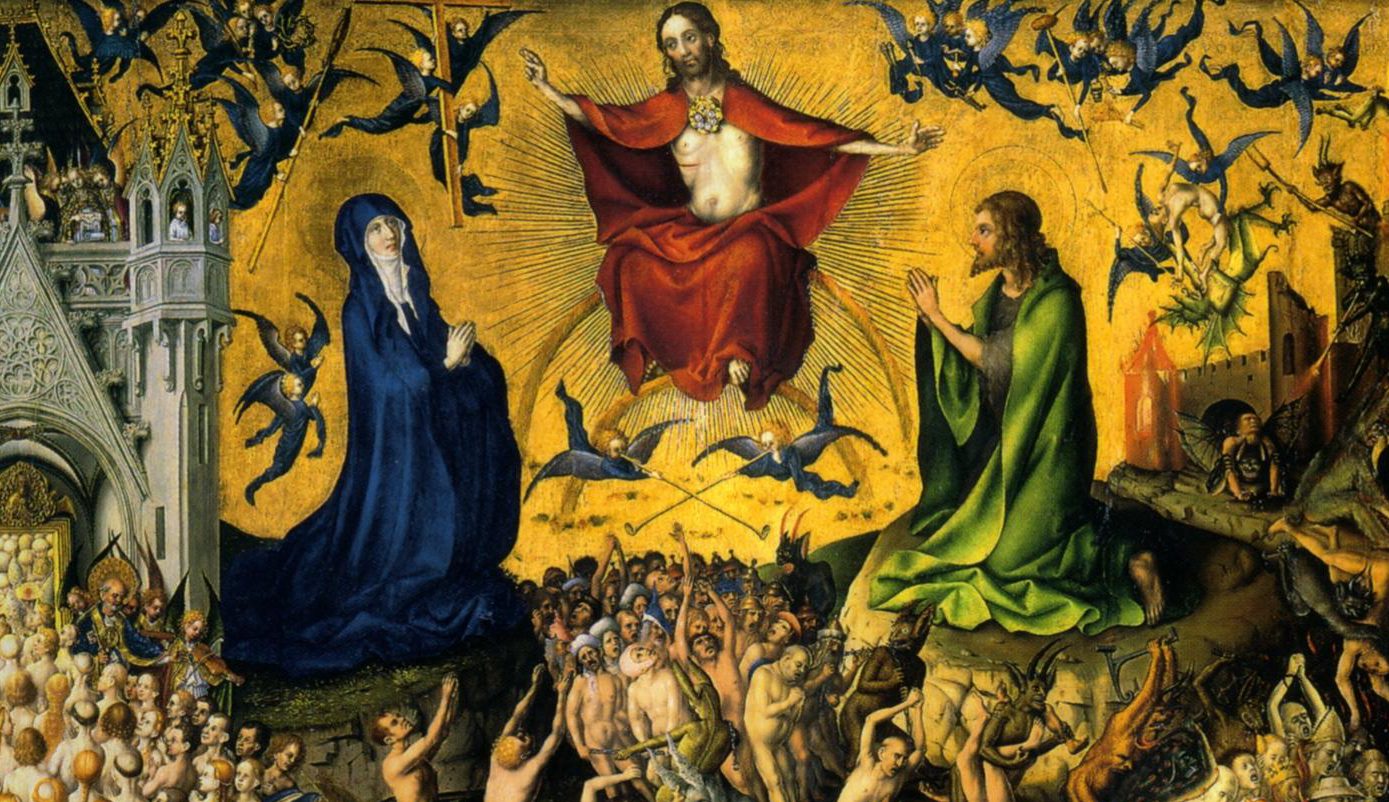
The study of eschatology has never been an exact science.  Intelligent, knowledgable, and sincere scholars have forever argued this theory and that theory regarding how all things are going to end. I was raised in the conservative protestant evangelical tradition to believe that Jesus would someday call all believers on earth to be “raptured” to heaven, triggering a seven-year tribulation of hell on earth, followed by the return of Jesus to earth, the imprisonment of Satan, and a 1,000 year reign of Christ, followed by a final battle and judgment in which the saved go to heaven and the unsaved go to hell.

There are countless other versions of the end times in which the same Biblical texts are interpreted a myriad of different ways. There are versions in which there is no rapture, or the rapture will happen half-way into the tribulation, or the rapture will happen after the seven years of tribulation. There are versions in which there is no 1,000 year reign, or perhaps the 1,000 year reign has all already happened, or perhaps it’s happening all right now, or perhaps it will never happen literally, or perhaps it will happen but with no real eternal damnation, or perhaps… you get the picture.

When I was younger I studied it all more fervently, presented my own interpretation more dogmatically, and took it all more seriously. The longer I’ve continued in my journey following Jesus the less important it has become to me. Please don’t read what I’m not writing. I will forever continue my journey into God’s Message and pursue Christ. I have just noticed along my journey that we who claim to follow Jesus have historically been quick to place too much importance on theological litmus tests at the expense of the only two things that Jesus Himself said were truly important.

This morning I’m thinking about Wendy. My wife hates when surprises are ruined. She will blissfully ignore hints, turn a blind eye, and put things out of her mind if she thinks that it might ruin what is intended to be an eventual surprise. When Jesus was asked about His return He deferred knowledge and said, basically, “it’s a surprise.” I think I’ve adopted Wendy’s attitude as my theological bent toward eschatology. It was obviously meant to be a surprise.

So, taking a cue from Wendy, I think I’ll let the whole end-time thing be the surprise Jesus intended. Today, I’ll just keep focused doing the two things Jesus said were important for me to do:

  • Love Him.
  • Love others (even Amillenialists)

chapter a day banner 2015

Needed: A Good Samaritan in a Hell-Fire and Brimstone World

An illustration of the Parable of the Good Sam...
An illustration of the Parable of the Good Samaritan from the Rossano Gospels, believed to be the oldest surviving illustrated New Testament. (Photo credit: Wikipedia)

“Such is the fate God allots the wicked,
the heritage appointed for them by God.”
Job 20:29 (NIV)

Zophar now responds to job, and there is a subtle yet major twist to the rhetoric. Up to this point, the three amigos have been making the case that, in this life, the righteous are blessed and the wicked suffer. Job continues to argue that he has done nothing to deserve the calamities he is suffering.

Zophar now expands the rhetoric and introduces the theme of death into the mix:

Though the pride of the godless person reaches to the heavens
    and his head touches the clouds,
he will perish forever, like his own dung;
    those who have seen him will say, ‘Where is he?’
Like a dream he flies away, no more to be found,
    banished like a vision of the night.
The eye that saw him will not see him again;
    his place will look on him no more.
His children must make amends to the poor;
    his own hands must give back his wealth.
The youthful vigor that fills his bones
    will lie with him in the dust.

Their appeals are clearly not working, and the self-righteous trio are hell-bent on satiating their judgmental blood-lust. Zophar decides on escalate things to another level. It’s time to pull out the big guns. He brings out a little hell-fire and brimstone from the rhetorical arsenal to convince Job to repent before he dies and returns to the dust and remembered no more.

http://www.cbsnews.com/common/video/cbsnews_video.swf

I remember seeing a story on CBS Sunday Morning several weeks ago (the show is part of the Sunday morning ritual for Wendy and me) exploring our concepts of heaven and hell. They interviewed an old hellfire and brimstone preacher and included a clip of his fear inducing rants from the pulpit. It seems to me he must be a spiritual descendant of Zophar. I sometimes have a hard time reconciling the appeal to fear with the example of Jesus who said He didn’t come to condemn, but to save. At the same time, even Jesus was known to utter a stern warning now and then, and I have come to realize along the journey that God uses all sorts of messengers and messages to reach the ears of His lost children.

Today, I am thinking about Zophar and his friends, who seem more concerned with proving themselves right than about loving, comforting, and easing Job’s pain. It’s as if their spiritual world view carries more importance than a simple act of kindness. They seem like the good religious folks who passed by the mugging victim in the parable of the Good Samaritan. It wasn’t the righteous, religious folks who acted in accordance with the heart of God, but the unrighteous, on-his-way-to-hell-in-a-handbasket bloke from the other side of the tracks in Samaria who simply acted with compassion and kindness.

Job needs a Samaritan. So do a lot of other hurting people. That’s who I want to be.

Chapter-a-Day Proverbs 11

Riches won’t help on the day of judgment, 
      but right living can save you from death.
Proverbs 11:4 (NLT)

Silvio

Stake my future on a hell of a past
Looks like tomorrow is coming on fast
Ain’t complaining ’bout what I got
Seen better times, but who has not?

Silvio
Silver and gold
Won’t buy back the beat of a heart grown cold
Silvio
I gotta go
Find out something only dead men know

Honest as the next jade rolling that stone
When I come knocking don’t throw me no bone
I’m an old boll weevil looking for a home
If you don’t like it you can leave me alone

I can snap my fingers and require the rain
From a clear blue sky and turn it off again
I can stroke your body and relieve your pain
And charm the whistle off an evening train

I give what I got until I got no more
I take what I get until I even the score
You know I love you and furthermore
When it’s time to go you got an open door

I can tell you fancy, I can tell you plain
You give something up for everything you gain
Since every pleasure’s got an edge of pain
Pay for your ticket and don’t complain

One of these days and it won’t be long
Going down in the valley and sing my song
I will sing it loud and sing it strong
Let the echo decide if I was right or wrong

Silvio
Silver and gold
Won’t buy back the beat of a heart grown cold
Silvio
I gotta go
Find out something only dead men know

Copyright © 1988 by Special Rider Music