Tag Archives: Second Coming

Perhaps Today…Likely Not

Therefore, dear friends, since you have been forewarned, be on your guard so that you may not be carried away by the error of the lawless and fall from your secure position. But grow in the grace and knowledge of our Lord and Savior Jesus Christ.To him be glory both now and forever! Amen.
2 Peter 3:17-18 (NIV)

Along the journey I continually find spiritual truth hiding in plain sight in the most unexpected of places.

The subject of AI is everywhere right now. Yesterday morning in our daily perusal of the news, Wendy and I read an article in the Free Press in which various thinkers gave their personal takes on AI. Wendy and I were both struck by these words from Eric Markowitz:

Over the last few hundred years, we began to see ourselves as separate from the natural world—masters of it, rather than participants in it. We built systems that prize speed above all else, and in doing so we lost the most fundamental lesson that nature teaches: Speed of growth makes you fragile. The tree that shoots up fastest is the first to fall in a storm. The ecosystems that endure—the ones that survive fire and drought and ice—are the ones that grew slowly, developed deep root systems, and built interdependence with the living things around them.

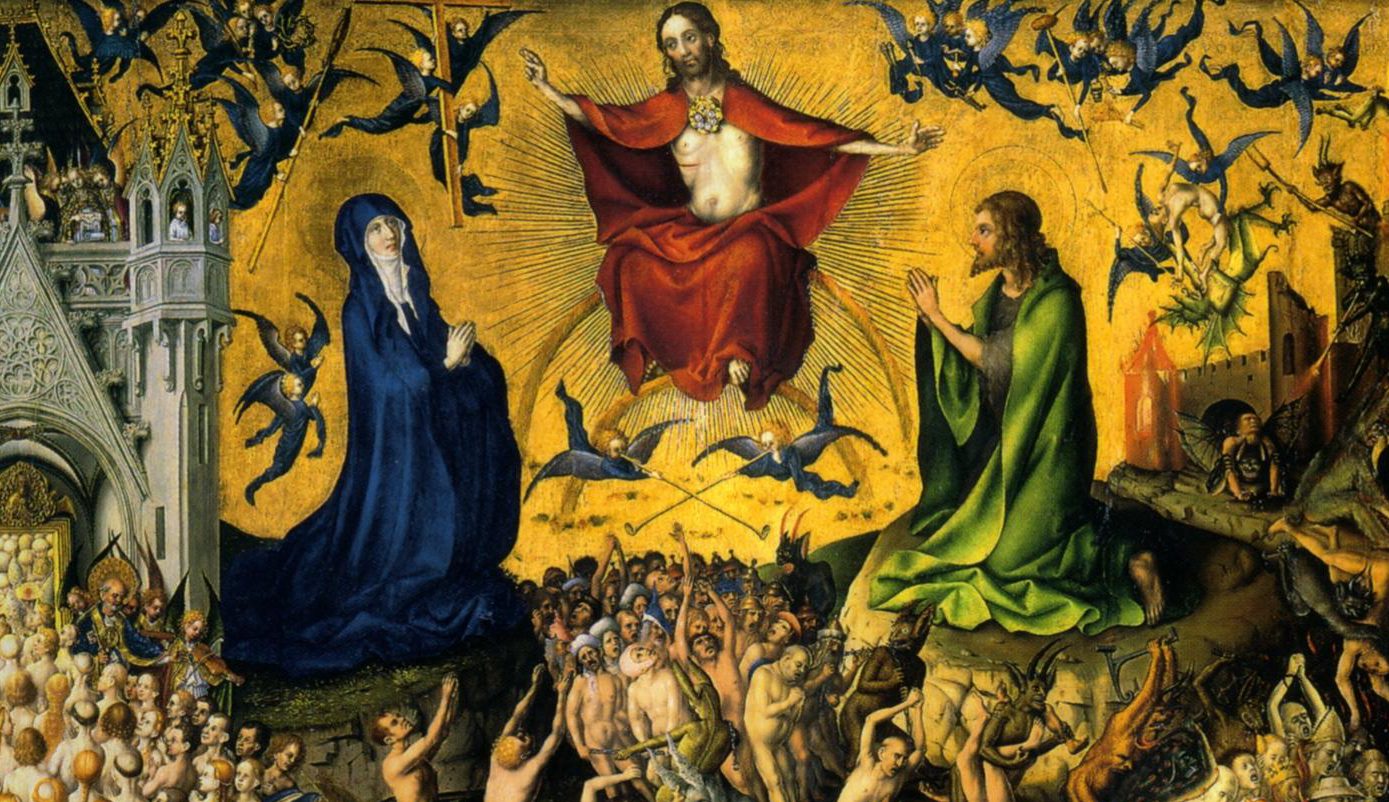
In today’s chapter, Peter confronts a burning issue of his day, and one that remains. Jesus promised His return. He promised a Day of Judgement. Even though He told His followers that “no one knows the day or hour” — that even He didn’t know when it would be, they were convinced that it was imminent. They expected it to be quick — in their lifetime.

The result was scoffers, doubters, and mockers.

“He’s obviously not coming. The whole things a sham. I may as well live however I want.”

What a very modern sentiment.

That’s the anthem of materialism. The creed of consumer culture. If there’s no reckoning, then indulge. If there’s no ending, then accumulate.

Peter whispers back: You mistake patience for absence.

Peter approaches this attitude head-on as he wraps up his second letter. He responds with three sweeping movements:

  1. God has acted before.
    The world was formed by God’s word. The flood came by that same word. History is not random. It bends to a Voice.
  2. God’s delay is not forgetfulness.
    “With the Lord a day is like a thousand years.” The delay is mercy. God is patient, not wanting anyone to perish.
  3. The Day of the Lord will come.
    Like a thief. The heavens will disappear with a roar. Elements will be laid bare. A new heaven and a new earth will emerge — “the home of righteousness.”

And then the piercing question:

Since everything will be destroyed in this way, what kind of person ought I be?

He ends with the same admonition as Mr. Markowitz in response to the current doomsday predictions of AI destroying our world.

Grow.

Take a deep breath. Cultivate a life rooted in Word and Spirit. Sink deep where Living Water nourishes unseen. Reach wide into the Light. Grow slow enough to withstand the storm, and to bear fruit in increasing measure.

Jesus is coming.
AI might destroy the world — if you read the headlines.

I find it fascinating how humanity gets enamored with doomsday scenarios. Fear motivates. Media knows it creates clicks and views — it sells books.

As a disciple of Jesus I believe Jesus is coming.

Perhaps today.

Likely not.

As a human I know that I will die one day.

Perhaps today.

Likely not.

What I do know is that the sun is rising on this, another day of my earthly journey. I get to choose how I will live, think, speak, act, and relate to others.

No matter how far I get in the journey, it’s always a good day to grow. Growth is not passive. Roots deepen because they push through resistance.

If you know anyone who might be encouraged by today’s post, please share.

Promotional graphic for Tom Vander Well's Wayfarer blog and podcast, featuring icons of various podcast platforms with a photo of Tom Vander Well.
These chapter-a-day blog posts are also available via podcast on all major podcast platforms including Apple, Google, and Spotify! Simply go to your podcast platform and search for “Wayfarer Tom Vander Well.” If it’s not on your platform, please let me know!
An orange square icon featuring a white open book graphic.

You Never Know

You Never Know (CaD 2 Pet 3) Wayfarer

You therefore, beloved, since you are forewarned, beware that you are not carried away with the error of the lawless and lose your own stability. But grow in the grace and knowledge of our Lord and Savior Jesus Christ.
2 Peter 3:17-18 (NRSVCE)

As a young man, I was asked by a friend to accompany him to a friend’s wedding. I didn’t know the couple getting married, but my friend didn’t want to go to the wedding alone. “Tom? Do you know what a young, single man is at a wedding?” he asked me. I shrugged, wondering where he was going with this. “A carcass,” he answered as though bestowing his wisdom upon me.. “Every single, unmarried woman at a wedding sees you as nothing more than the piece of meat who might be the one to marry her.”

It was then that I realized that my egotistical friend, who happened to be engaged, asked me to be his wingman to help ward off the single women he assumed would be flocking around him. Arrogance and cynicism aside, I have attended and officiated a lot of weddings along my life journey. From what I have observed, there is a thread of truth beneath my friend’s hubris. When you’re young and unmarried and all your other friends seem to be getting married, it’s fairly common to wonder “What about me?” And then you start dreaming of a story in which you met “the one” at your friend’s wedding. Come on. We’re all human. It happens.

Jesus told a story about a wedding. In the Hebrew tradition of His day, weddings were at night. The groom and his entourage would arrive at the bride’s house where the bride and her virgin, unmarried bridesmaids waited to escort the wedding party to the groom’s house where the wedding would take place and the marriage consummated. Keep in mind there were no street lights in those days. The bridesmaid’s job was to carry an oil lamp or torch to illuminate the wedding party’s trek across town. The lamp/torch served a dual purpose. Not only did it light the way for the wedding party, but it also illuminated the bridesmaid herself who was an unmarried virgin looking for a husband. You just never know when one of the groom’s unmarried friends might “see her in a good light,” shall we say, and decide he wants to marry her. If a virgin bridesmaid was unprepared and missed the entourage or didn’t have enough oil in her lamp or on her torch to make the entire journey it would be considered a disgrace and a bad omen, but she might miss out on winning the eligible groomsman lottery.

In Jesus’ story. The bridegroom was waylaid. He and his entourage were taking forever to arrive. Some of the bridesmaids got distracted and felt like they had plenty of time. They didn’t have their lamps oiled and ready to go. The groom shows up suddenly, the unprepared bridesmaids ask to borrow some of their fellow bridesmaids oil, but no virgin bridesmaid is going to freely hand her ticket for the eligible groomsman lottery away. Besides, the less competition the better the odds. Are you with me?

So the unprepared bridesmaids run to the local Walmart for some oil. By the time they get back, the wedding has taken place. The reception is in full swing and the DJ has the whole crowd dancing to Love Shack. The groom’s servant at the door takes the young bridesmaids for wedding crashers and won’t let them in.

That’s the story. So, what was the point of the story?

Jesus was very adamant that someday He would return from heaven in what will be the climax of the Great Story being told from Genesis through Revelation. Jesus didn’t just hint at it. He was very clear about it. In fact, after Peter saw the risen Jesus ascend into heaven, there were angels who said to him and the other disciples: “In the same way you just saw Him ascend, someday He’s going to come back.” Peter, Paul, and the rest of Jesus’ original followers were convinced that Jesus could return at any moment. In fact, they fully believed it would happen in their lifetime even though Jesus said that even He didn’t know when it would take place. The original Jesus followers used a Greek word, maranatha, meaning “He’s coming back” as a salutation when greeting and parting with one another.

Of course, we’re still waiting 2,000 years later.

Today’s final chapter of Peter’s letter to Jesus’ followers, Peter addresses the issue of Jesus’ return for two reasons. The believers who were raised in Greek culture didn’t have any kind of developed understanding of apocalypse, eternity, or a judgment day that had developed as part of Hebrew and Christian teaching. So, the Greek believers struggled to understand it. Second, there were cynics who were like, “You keep talking about Jesus returning, but it isn’t happening.”

In essence, today’s chapter is Peter addressing the bridesmaids in Jesus’ parable. They were acting as if they could do whatever they wanted and there would be no accountability for their choices. Jesus wanted His followers to behave as though today is the day that He will return and settle accounts on a grand, eternal scale; Not being so foolish as to not plan for the future, but being wise enough to live each day with the understanding that tomorrow is never guaranteed.

With that, I head into day 19,890 of my earthly journey. I’m going to do my best to do it well.

If you know anyone who might be encouraged by today’s post, please share.

I Don’t Want to Ruin the Surprise

“As the new heavens and the new earth that I make will endure before me,” declares the Lord, “so will your name and descendants endure. From one New Moon to another and from one Sabbath to another, all mankind will come and bow down before me,” says the Lord. “And they will go out and look on the dead bodies of those who rebelled against me; the worms that eat them will not die, the fire that burns them will not be quenched, and they will be loathsome to all mankind.”
Isaiah 66:22-24 (NIV)

Today we end our long journey through Isaiah’s prophetic tome. Granted, it’s a long slog at 66 chapters. Yikes! We started in late September last year. Isaiah’s work ends with a vision of the end times. It’s what theologians call eschatology: the study of the end times and the final destiny of humankind. Once again, there are clear connections between Isaiah’s vision in today’s chapter and that of John in Revelation.

The study of eschatology has never been an exact science.  Intelligent, knowledgable, and sincere scholars have forever argued this theory and that theory regarding how all things are going to end. I was raised in the conservative protestant evangelical tradition to believe that Jesus would someday call all believers on earth to be “raptured” to heaven, triggering a seven-year tribulation of hell on earth, followed by the return of Jesus to earth, the imprisonment of Satan, and a 1,000 year reign of Christ, followed by a final battle and judgment in which the saved go to heaven and the unsaved go to hell.

There are countless other versions of the end times in which the same Biblical texts are interpreted a myriad of different ways. There are versions in which there is no rapture, or the rapture will happen half-way into the tribulation, or the rapture will happen after the seven years of tribulation. There are versions in which there is no 1,000 year reign, or perhaps the 1,000 year reign has all already happened, or perhaps it’s happening all right now, or perhaps it will never happen literally, or perhaps it will happen but with no real eternal damnation, or perhaps… you get the picture.

When I was younger I studied it all more fervently, presented my own interpretation more dogmatically, and took it all more seriously. The longer I’ve continued in my journey following Jesus the less important it has become to me. Please don’t read what I’m not writing. I will forever continue my journey into God’s Message and pursue Christ. I have just noticed along my journey that we who claim to follow Jesus have historically been quick to place too much importance on theological litmus tests at the expense of the only two things that Jesus Himself said were truly important.

This morning I’m thinking about Wendy. My wife hates when surprises are ruined. She will blissfully ignore hints, turn a blind eye, and put things out of her mind if she thinks that it might ruin what is intended to be an eventual surprise. When Jesus was asked about His return He deferred knowledge and said, basically, “it’s a surprise.” I think I’ve adopted Wendy’s attitude as my theological bent toward eschatology. It was obviously meant to be a surprise.

So, taking a cue from Wendy, I think I’ll let the whole end-time thing be the surprise Jesus intended. Today, I’ll just keep focused doing the two things Jesus said were important for me to do:

  • Love Him.
  • Love others (even Amillenialists)

chapter a day banner 2015