Tag Archives: Health

Spiritual Arteriosclerosis

Schematic of a transplanted heart with native ...
(Photo credit: Wikipedia)

Why do you harden your hearts as the Egyptians and Pharaoh did? When Israel’s god dealt harshly with them, did they not send the Israelites out so they could go on their way? 1 Samuel 6:6 (NLT)

The events described in the past few chapters occurred some 400 years after the Israelites were delivered from their captivity in Egypt. How fascinating that the events of the Exodus were well known to Israel’s neighbors hundreds of years later. Not only were they aware that the events happened, but they knew the story of the hardness of Pharaoh’s heart. The pagan priests of the Philistines knew the story, and believed the story, well enough to warn their own leaders against making Pharaoh’s mistake.

There is a consistent theme in God’s Message of people being afflicted with spiritual arteriosclerosis, the hardening of the arteries. Pharaoh had it. The Philistines warned against it. Solomon warned of it’s consequences in his proverbs. Belshazzar was afflicted with it in Daniel’s day. The prophet Zechariah warned the people of Israel against the condition.  Jesus said that many did not understand His parables because of the spiritual hardness of their hearts and later chastised many in the throng of those who followed him because of the condition. Paul warned in his letter to the Jesus followers in Ephesus that the condition leads to darkened understanding and continued separation from God.

Thank God there is a cure. The prophet Ezekiel wrote that God desires to perform a spiritual heart transplant on each of us. When we enter into a relationship with Jesus and receive Holy Spirit into our hearts He takes away our “heart of stone” and gives us “a heart of flesh.” It’s actually a simple procedure. Better yet, it’s totally free to us because God paid for the operation Himself. All you have to do is agree to it.

Our culture is well aware of the risks of heart disease and cardiac health. Today, I’m thinking both about the condition of my physical heart, but also my spiritual one. As long as I sojourn in this life, I want my spiritual heart free of the plaque that builds up over time and slowly reduced the life flowing in me. Even as my body ages and fails, I want my spiritual heart pumping life in and through me.

Maintaining a Healthy Spiritual Heart

English: Arthur Saxon performing a bent press....
 (Photo credit: Wikipedia)

The Lord says, “Don’t harden your hearts as Israel did at Meribah,
    as they did at Massah in the wilderness.
Psalm 95:8 (NLT)

We all know the basics of cardiac health. A healthy heart depends on what you consume and exercise. I have found that the same parallel pertains to the spiritual heart. Our spiritual hearts can get just as easily gummed up with the plaque of anger, hatred, negativity, doubt, fear, or anxiety.

To avoid the hardening of our spiritual arteries, we need to regulate what thoughts, messages, books, stories, posts, images, audio and videos we feed to our heart and brain. We also need to regularly engage our spirits in the conscious exercise of gratitude, generosity, kindness, forgiveness, goodness, and grace. A little strength training of prayer and worship helps, too.

Health is not only about our physical condition, but also about the conditioning of our hearts and minds.

Weighty Issues

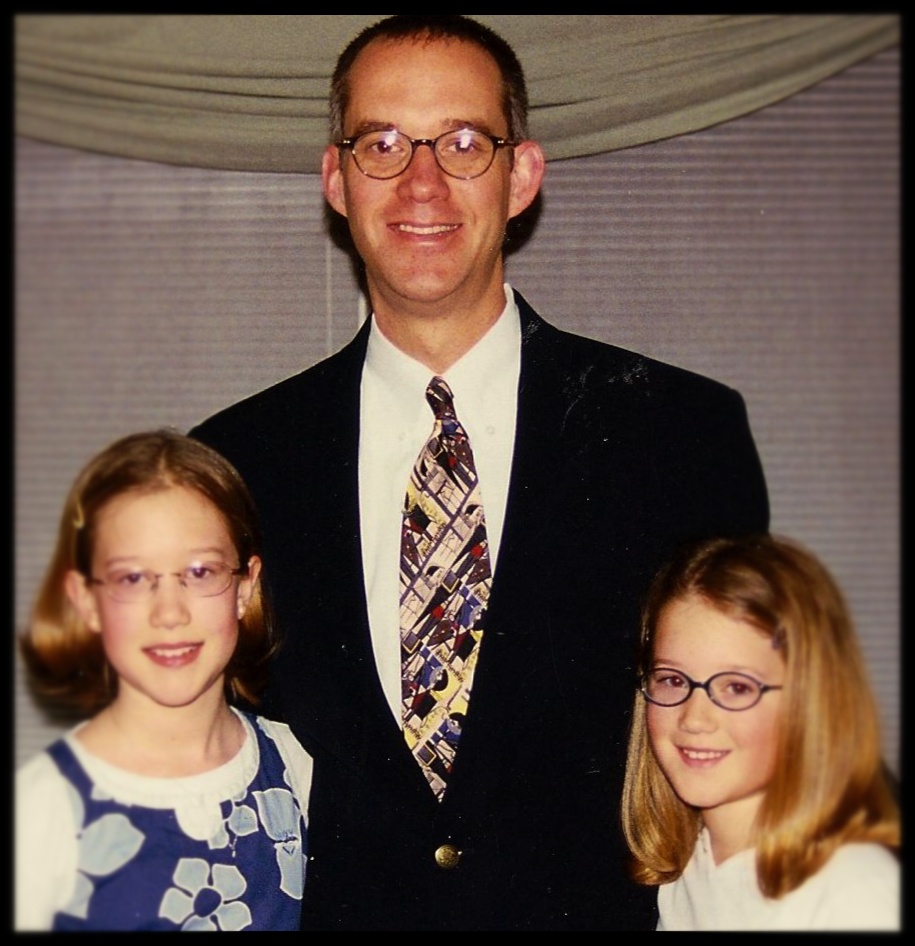
“Fat Daddy” c1996

Wendy and I have recently had friends asking questions about my weight so I thought I’d address them here and just get it out in the open. Yes, I have intentionally lost weight over the last seven or eight months. I’m perfectly healthy and within what is the normal weight range for a man my age and height. I’m feeling great.

For the record, while I’ve never considered myself tremendously overweight, this is the second time in my life that I’ve dropped a significant amount of weight. In both cases, it was seeing myself in photographs that motivated me to act. The first instance came somewhere around 1997. While going through a bunch of photographs it was a young Madison (never one for mincing words) who pointed to a picture of me and said, “Look, it’s FAT DADDY!” She was right. For the first time in my life the scale was reading above 200 pounds and heading upwards.

40 Pounds Lighter c.1999

It was just about this time that the Atkins low-carb diet was all the rage. I can’t say that I ever followed it or any other kind of strict diet plan. I just cut my carbs to the bone, ate smaller portions of high protein foods and started moving.  Over the next couple of years I dropped from around 205 lbs down to just under 160. My weight moderated around 160 for several years as I transitioned into maintaining a moderate diet.

It’s amazing how easy it is for life changes to affect your habits. Over the past few years I slowly began eating bigger portions, snacking more and exercising less. I never felt tremendously unhealthy or fat, but at the beginning of 2012 I saw some pictures of myself. I didn’t like what I saw and I heard in my head a five-year-old Madison’s voice saying “Look, it’s FAT DADDY!” I realized that something once more had to change. Without saying much to Wendy, I began to quietly change my eating habits and dropped a few pounds.

The Return of Fat Daddy

As this past winter began giving way to spring, Wendy and I had a meeting with one of our co-workers whom we had not seen in some time. When he walked into the meeting we were both shocked to see how much weight he’d lost and how good he looked. He shared with us that he’d joined Weight Watchers On-line and it had worked for him. Wendy began investigating the program and encouraged me to join with her and work together on getting healthy.

My first reaction to Wendy’s suggestion was: “No way! I’ve lost weight before on my own and I don’t need to spend money on some program that’s going to tell me what I can and can’t eat.” It took me about a day to be thoroughly convicted that I was acting like a stubborn, hard-headed ass when I needed to partner with my wife in getting healthy together. In March we signed-up for Weight Watchers On-line and began working together on changing our eating habits.

What can I say? It worked. This post is not intended to be an advertisement or endorsement for Weight Watchers, but the thing we’ve liked about Weight Watchers On-line is that there are no special meals to buy. The process simply helped us realize what foods were good for us, which foods were actually bad for us, and how to modify our portions to appropriate sizes. As a result, Wendy and I are eating healthier and eating appropriate portions. Over six months I dropped just over 35 pounds. I’ve started exercising to build strength and muscle tone. I’m now wearing clothing sizes I’ve not worn since high school and college. For anyone who may have been worried, I’m done losing and feeling like I’m at the right place. Now it’s time to maintain and stay healthy!

Chapter-a-Day Hebrews 3

Icon from Nuvola icon theme for KDE 3.x.
Image via Wikipedia

Remember what it says: “Today when you hear his voice, don’t harden your hearts….” Hebrews 3:15 (NLT)

We all know about heart disease. Exercise and healthy eating is what keeps our heart and arteries from getting hard and crusted over until the blood can’t flow freely through our bodies. When we are motionless and continually take in unhealthy things, the opposite occurs occurs. Our arteries harden, blood can’t flow properly, and we eventually die when the heart can’t operate.

So it is with our spiritual hearts. When we remain spiritually sedate and feed our souls on selfishness, greed, anger, hatred, gluttony, gossip, and the like, then God’s life giving Spirit gets choked out and can’t flow. There is a build up of muck in our soul and our heart eventually becomes spiritually hard, constricting the ability to feel and hear God’s Spirit within us. When God tries to call to us, we are deaf to His still, small voice.

Today, I’m not only thinking about my physical health, but my spiritual health as well. I want my heart, both physically and spiritually, to be healthy. I want to feel Life flowing strong and free within my veins and my spirit.

Chapter-a-Day Mark 7

Official seal of the National Organic Program
Image via Wikipedia

“Don’t you understand either?” he asked. “Can’t you see that the food you put into your body cannot defile you? Food doesn’t go into your heart, but only passes through the stomach and then goes into the sewer.” (By saying this, he declared that every kind of food is acceptable in God’s eyes.) And then he added, “It is what comes from inside that defiles you. For from within, out of a person’s heart, come evil thoughts, sexual immorality, theft, murder, 22 adultery, greed, wickedness, deceit, lustful desires, envy, slander, pride, and foolishness. All these vile things come from within; they are what defile you.” Mark 7:18-23 (NLT)

I have watched with interest as the growth of the natural, healthy, and organic food market. Ten or fifteen years ago the health food market was confined to small mom and pop stores in major cities and food co-ops for the granola set. Today, almost every major grocery store carries a plethora of all natural and organic foods. There are now large, national chains of health food stores.

Our culture has increasingly embraced more healthy and organic foods in contrast to the highly processed mass market foods available in every grocery aisle. I’m not adverse to this. I think it is a good thing. God advocates taking care of our bodies and treating them like a temple.

Nevertheless, I remember Jesus’ words: “What does it profit you to gain the whole world and lose your soul.” Reading Jesus’ words about food in today’s chapter, I hear Him making a corresponding point. What does it profit you to eat all natural and organic food, and work to keep your body in optimum health, if on the inside your spirit is withering in anger, depression, malice, greed, lust, or shame?

Our bodies are good for, at best, eighty to just over a hundred years. Our spirit is eternal. Where should I make the greatest investment?

Enhanced by Zemanta

Chapter-a-Day Mark 2

Cold?
Image by foshydog via Flickr

When Jesus heard this, he told them, “Healthy people don’t need a doctor—sick people do. I have come to call not those who think they are righteous, but those who know they are sinners.” Mark 2:17 (NLT)

I once worked with a man who had a crazy notion that any kind of illness was simply in his head. “It’s just mind over matter,” he would say. If he denied that he was sick and believed he was well, then he thought he was truly healthy. He could have a hacking cough, high fever, and no voice, but he would continue to hoarsely say to me “Don’t worry about me. I’m fine. I feel great.”

My old co-worker came to mind this morning as I read Jesus’ words. Jesus made it clear that His saving power is rendered impotent for those who steadfastly claim their own spiritual health despite plenty of life evidence to the contrary. His teaching, and His saving power are unleashed on those who know, and are willing to admit, that they are in need of spiritual medicine they themselves do not possess.

Enhanced by Zemanta

Chapter-a-Day Mark 1

Lakhovsky: The Convesation; oil on panel (Бесе...
Image via Wikipedia

Before daybreak the next morning, Jesus got up and went out to an isolated place to pray. Mark 1:35 (NLT)

Over the past few weeks I’ve had a handful of encounters with people in which I’ve mainly listened as the person on the other side of the conversation talked, and talked, and talked. Don’t get me wrong; It wasn’t a big deal. In each case, I understood that the person needed to get something out, and I was generally happy to listen. It was not, however, a conversation. It was a running monologue.

Healthy relationships required a steady stream of two-party communication. Both sides of the relationship must actively listen and actively speak. When the dialogue is skewed towards either person, the relationship begins to strain.

It is no different in our relationship with God. It requires an on-going conversation. Reading God’s Message to us is actively listening to what God has to say to us. Prayer is how we actively communicate to God. When either is lacking, our spiritual health strains.

Enhanced by Zemanta

Chapter-a-Day Ezra 9

The Rebuilding of the Temple Is Begun (Ezr. 1:...
Image via Wikipedia

“My dear God, I’m so totally ashamed, I can’t bear to face you. O my God—our iniquities are piled up so high that we can’t see out; our guilt touches the skies.” Ezra 9:6 (MSG)

I’ve been doing a lot of thinking about shame, lately. My friend and I are preparing a weekend workshop for men that explores the impact that shame has on our lives and relationships (more about that in a subsequent post today). Because of that, Ezra’s prayer leaped off of the page as I read it this morning.

In the Garden of Eden, Shame was the first result of Adam and Eve’s sin. Having disobediently violated the one and only prohibition God gave them, they immediately saw their nakedness and were ashamed. In response to the shame, they covered their nakedness and hid themselves from God. Some scholars believe that shame, that nagging sense that deep down there’s something horribly wrong with me, is the root issue from which all of our other troubling issues blossom. I feel shame, so I seek to hide it in a false self. I feel shame, so I try to escape from it in any number of unhealthy distractions. I feel shame, so I try to tear down those around me so that they will be at my level. I feel shame, so I attack myself constantly. I feel shame, so I obsessively strive for perfection.

There is, however, a healthy side to shame when we choose to face it honestly and courageously. Shame can make me more aware of who I truly am. Shame can alert me to something wrong in life that I can address and change to the betterment of my self and my relationships. Shame can foster humility, humanity, autonomy, and competence in my life.

When Ezra felt the shame of his people’s iniquity, his response was not to brush it aside and pretend it didn’t exist. He didn’t act out in rage against them. He didn’t give his followers a million new rules intended to create some legalistic goodness in them. He didn’t withraw into solitary depression. He didn’t become hyper-critical of himself and his people. Ezra hit his knees.

In his gut-level, honest prayer, Ezra acknowledged that improper actions from previous generations to his own day had resulted in the disastrous consequences which led to the fix they found themselves in at that moment. He took the first step toward seeking a positive change of heart, a positive change of life, and a restoration of relationship with God.

Today, I’m thinking about my own nagging feelings of inadequacy and failure. I’m identifying the unhealthy ways I try to escape my own shame. I’m seeking to be more like Ezra, and humbly respond by taking healthy steps forward.

Enhanced by Zemanta

Chapter-a-Day Deuteronomy 29

getting arrested in Knoxville, Tennessee
Image via Wikipedia

…lest some poisonous weed sprout and spread among you, a person who hears the words of the Covenant-oath but exempts himself, thinking, “I’ll live just the way I please, thank you,” and ends up ruining life for everybody. Deuteronomy 29:18 (MSG)

Much of the life-pain any of us experience can be traced back to the type of covenant breaking attitude expressed in this verse from today’s chapter. Moses was dealing specifically with the laws God gave him for the nation of Israel, but in any society the laws and social constructs are a covenant between the people and the community around them. I have both experienced this pain due to the wreckless attitude of others and have heedlessly broken covenant which has created considerable pain to others.

  • “I’ll live the way I please, thank you” breaking covenant with my community by getting drunk and then getting behind the wheel of a car to the endangerment of everyone in my path.
  • “I’ll live the way I please, thank you” breaking covenant with spouse by sleeping with another, thus wreaking havoc in expanding concentric circles of family, friends, community and society.
  • “I’ll live the way I please, thank you” breaking covenant by ending another human life, thus denying the being and the community to benefit from the touch and limitless potential good of that life, permanently diminishing my own soul and respect for life on the whole of the community.
  • “I’ll live the way I please, thank you” by refusing to work and contribute to society when I am perfectly capable of doing so, choosing to drain the society of resources as I drain my own soul of purpose and dignity.
  • “I’ll live the way I please, thank you” breaking covenant by turning a selfish eye away from the needs of others to focus on myself, thus expanding societal problems while reducing the health of my own soul.
  • “I’ll live the way I please, thank you” breaking covenant by cheating on studies, taxes, time cards, and/or responsibilities, thus slowly eroding my own character and breaking covenant with the community as a whole.

Our penchant for breaking covenant, in small ways or large ways, hurts ourselves, our loved ones, and our community. And still, we choose to do so. God made a covenant with human beings who could not, would not keep covenant with Him. Covenant, and our breaking of it, reminds us all of our need for grace and forgiveness – and our need of a saviour who will save us from our own selfish attitudes, words, and actions.

Enhanced by Zemanta

Chapter-a-Day Deuteronomy 21

Molengracht Canal Night
Image via Wikipedia

Finally, all the leaders of that town that is nearest the body will wash their hands over the heifer that had its neck broken at the stream and say, “We didn’t kill this man and we didn’t see who did it. Purify your people Israel whom you redeemed, O God. Clear your people Israel from any guilt in this murder.” Deuteronomy 21:6-8 (MSG)

I watched with interest this past Sunday night as my beloved Cubs played the New York Mets. It was the 10th annviersary of the terrorist attack on the World Trade Center and during the pregame memorial service the camera panned across the crowd. There were many hardy New Yorkers, both men and women, who were reduced to tears. Ten years later, the events of that day are still felt deeply in the community.

I grew up in the city and have lived in small towns with populations from 300 to 10,000. It’s interesting to look back at events that affected the collective community. Some of them a very public events like the floods of 1993 that left an entire city without running water for ten days. Even more private tragedies and shameful events, that people don’t care to acknowledge or discuss publicly, can have a tremendous effect on the community as a whole.

In today’s chapter, I found it interesting that God prescribed a very public ceremony in the event of an unexplained, mysterious death. It reminded me that communities, like individuals, sometimes need to experience a period of introspection, acknowledgement, and confession coupled with ritual to seek forgiveness or absolution. When a community fails to process tragedy in a healthy way, the suppression of fear, anxiety, and guilt will surely attach itself to the community in unhealthy ways.

Today, I’m reminded to be aware of and pray for the local community in which I live, and the people around me with whom I carry out daily life.

Enhanced by Zemanta